wtf//:suryansh (b/acc)

4.1K posts

wtf//:suryansh (b/acc) banner
wtf//:suryansh (b/acc)

wtf//:suryansh (b/acc)

@alphabreacher

venky | jnu || Schizoposter || Illuminaughty triptych || sf5 || chimeric organic

🌫ॐᵍᵐ Katılım Mayıs 2018
1.2K Takip Edilen104 Takipçiler
wtf//:suryansh (b/acc) retweetledi

Ming "Tommy" Tang
Ming "Tommy" Tang@tangming2005·
4/ Learn genetics from University of Utah learning center. learn.genetics.utah.edu This is an awesome resource, and it is free!
English
1
1
0
138
wtf//:suryansh (b/acc) retweetledi
Alex Koulakov
Alex Koulakov@AlexKoulakov·
Excited to announce our new study in which we convert mouse neural responses into natural language (English) descriptions of odorants. Comments, suggestions, retweets are highly appreciated as always: biorxiv.org/content/10.648…
English
0
1
4
267
wtf//:suryansh (b/acc) retweetledi
PRX Life
PRX Life@PRX_Life·
Why does biological temperature dependence deviate from the Arrhenius equation? A new study paints a more nuanced portrait of diverse temperature-scaling behaviors and could help predict how biological processes respond to environmental shifts. 🔗 go.aps.org/4uklJo9
PRX Life tweet media
English
0
10
22
1.1K
wtf//:suryansh (b/acc) retweetledi
Quanta Magazine
Quanta Magazine@QuantaMagazine·
“It’s by far the most exciting time to be a biologist, ever, in my opinion — maybe with the exception of going right back to Darwin.” —evolutionary geneticist Sean Stankowski quantamagazine.org/how-ecotypes-h…
English
0
9
46
5.6K
wtf//:suryansh (b/acc) retweetledi
Steven Strogatz
Steven Strogatz@stevenstrogatz·
If you like thinking about what math can do for biology and vice versa, you might like this public talk I gave a year ago. It contains a lot of stories from my own life. "From Math to Bio and Back: Reflections on a Two Way Street" youtu.be/feLiP5-lkV0?si…
YouTube video
YouTube
English
5
95
350
35K
Kresten Lindorff-Larsen
Kresten Lindorff-Larsen@LindorffLarsen·
Everything you wanted to know about the protein chemistry behind how amino-acid changes affect the cellular abundance of proteins Effects of residue substitutions on the cellular abundance of proteins doi.org/10.7554/eLife.…
Kresten Lindorff-Larsen tweet media
English
2
36
203
10.1K
wtf//:suryansh (b/acc) retweetledi
Anshul Kundaje
Anshul Kundaje@anshulkundaje·
Just want to give a shout-out to David Kelley @drklly who I think often does not get the credit he deserves (outside our core community). I want to highlight why I think he is such a fantastic scientist and leader in regulatory genomics. 1/
English
7
28
236
37K
wtf//:suryansh (b/acc) retweetledi
Niko McCarty.
Niko McCarty.@NikoMcCarty·
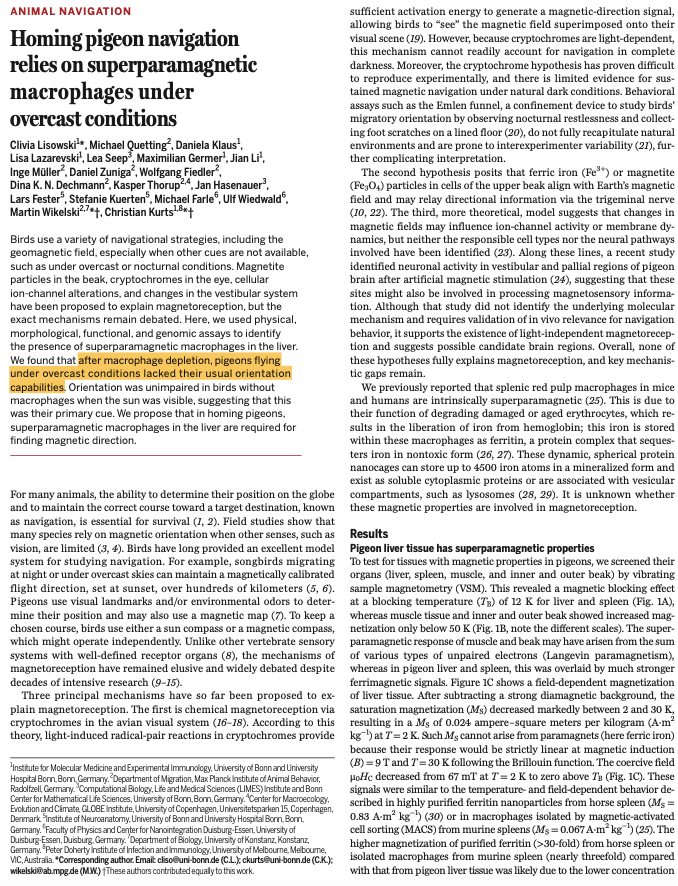
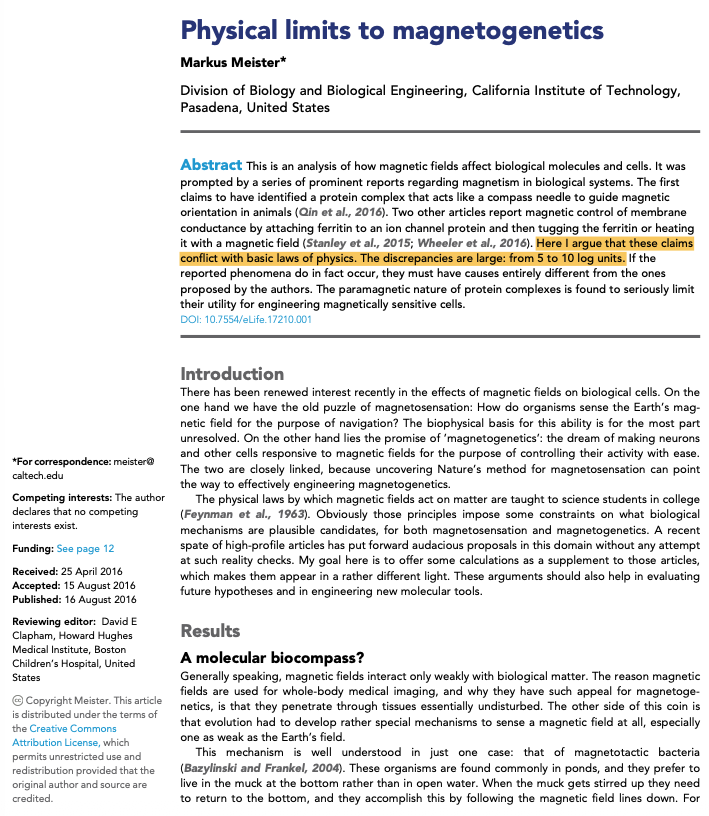
There is a new paper in Science proposing a mechanism for how homing pigeons navigate on cloudy days. (Hint: It's magnetic fields.) As with many magnetobiology papers, though, I'm skeptical of their proposed mechanism. These researchers, from Germany, found that pigeons have macrophages in their liver that accumulate lots of iron. They confirmed this with staining and other analyses. These macrophages also tend to cluster near nerve fibers in the liver (this is important for later). Then they did a really interesting experiment: - Train 34 pigeons to fly a particular 19-kilometer route. Ensure they all do this well. - Split the pigeons into two groups: treatment and control. - Inject the treatment group pigeons with liposomes loaded with clodronate. The macrophages eat these liposomes, and then clodronate kills the cells and scatters the iron. - Release the pigeons, from both groups, on an overcast day (it's thought that pigeons use magnetic fields to navigate when there is no sun). - All of the control pigeons reached their destination within 70 minutes, but the treated pigeons scattered in random directions. - (Important control experiment: The treated pigeons, released on a sunny day, flew like normal and reached their destination.) - This is taken as evidence that ??? macrophages --> iron --> navigation ??? via magnetic fields. But the mechanism is fuzzy. This experiment is super interesting, and it's clear that the treated pigeons really are unable to home to their destination using a magnetic field. But I'm not entirely convinced by the mechanism these authors propose. The main claim is that these iron-loaded macrophages "align" in a magnetic field, and that they shift according to the bird's orientation so that it can fix its direction. These macrophages (somehow) send signals to the nerve fibers in the liver, which then pass the messages to the brain, which allows the bird to navigate. The news coverage for this story suggests how this might happen: "One idea is that as the bird shifts its position relative to Earth’s magnetic field lines, the ferritin changes orientation and tugs on the web of fibers within a macrophage, possibly triggering the release of signaling molecules." (All you need to do is read the 2016 Meister paper, from the images below, to understand why such a mechanism is physically dubious.) The problem, though, is that the authors show (in their own study) that the iron in these pigeons' livers only act as a stable magnet at super low temperatures, below about 12 degrees Kelvin (or -260 degrees Celsius). At normal, physiological temperatures, the iron would be scrambled by the thermal motions of the tissue. Every measurement in the paper is taken at cryogenic temperatures, but a bird's body temperature is much higher, which means heat would likely destroy any magnetic alignment. The authors claim that MILLIONS of iron particles in the liver are all acting together to escape this effect, but they don't demonstrate the mechanism convincingly at all. If this claim is true, why not take homing pigeons (control vs. macrophage-depleted) and then rotate a magnetic field around them? You could record their neurons to see if there is some kind of signal coming from the liver.
Niko McCarty. tweet mediaNiko McCarty. tweet media
English
7
43
240
20.7K
wtf//:suryansh (b/acc) retweetledi
Arjun Raj
Arjun Raj@arjunrajlab·
Can someone start a journal called “Cell Atlases” so that the rest of the journals can go back to publishing interesting things?
English
31
118
1.1K
76.6K
wtf//:suryansh (b/acc) retweetledi
Michael Levin
Michael Levin@drmichaellevin·
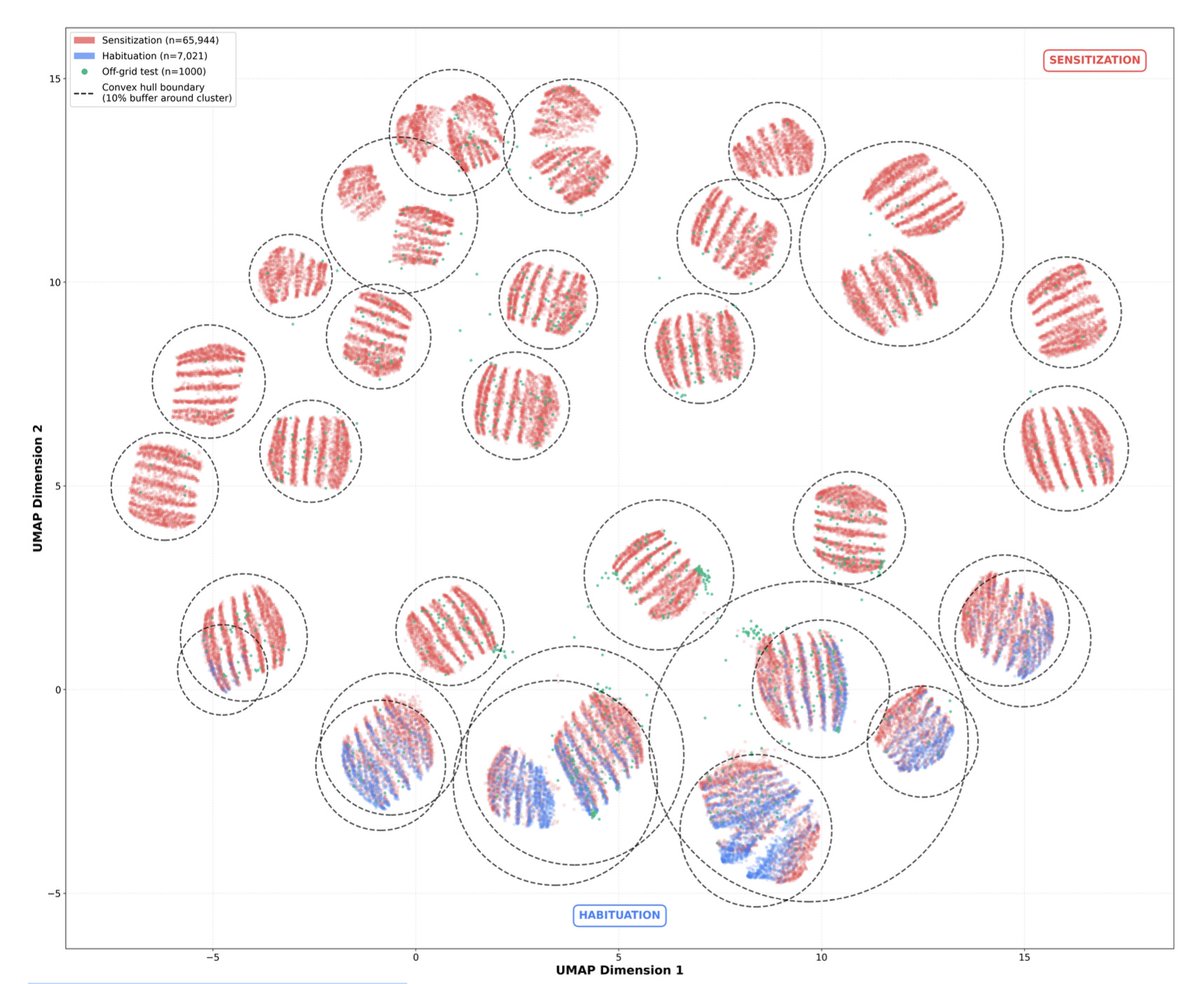
A lot of people have suggested over the centuries that ecosystems might have some degree of cognition. What would that look like? Could there be recognizable memory phenomena on the scale of population dynamics? Here's a #preprint where amazing high-school student @asamanta42, @HananelHazan, and I use a model system - in silico predator-prey dynamics - and analyze the possibility of several kinds of learning: arxiv.org/abs/2605.30109 (the basics are kind of like thoughtforms.life/but-where-is-t…, but some very cool new stuff here, including the interesting and unique pattern of learning-compatible values in the parameter space).
Michael Levin tweet mediaMichael Levin tweet media
English
49
193
1.2K
84.6K
wtf//:suryansh (b/acc) retweetledi
Melanie Weber
Melanie Weber@mweber_PU·
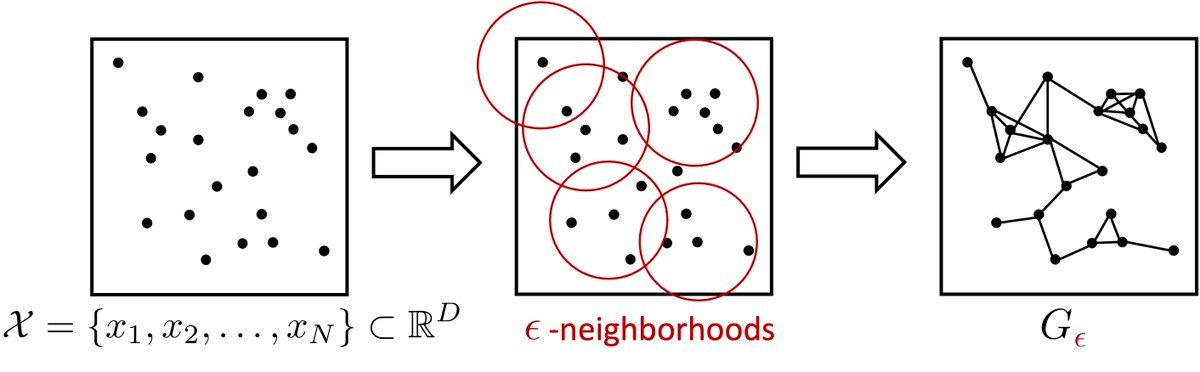
Can we learn the curvature of a data manifold from a finite sample? We study continuum limits of Ollivier’s Ricci curvature on geometric graphs, proving pointwise consistency and showing that positive lower bounds on the underlying manifold are inherited by the graph with high probability. We further discuss applications to heat kernels and manifold learning. With Nicolás García Trillos. Now published in Discrete & Computational Geometry: link.springer.com/article/10.100…
Melanie Weber tweet media
English
0
38
272
14.7K
wtf//:suryansh (b/acc) retweetledi
Sathvik Redrouthu
Sathvik Redrouthu@_sathvikr·
Last night at @Caltech some friends and I got the chance to have dinner and chat with a Nobel Laureate. Some interesting points: > he came in without knowing calculus (still considered behind at the time) and described himself as "slower than his peers" > he worked 60-80 hrs/week, missing out on social life > he maintained notebooks where he re-wrote theorems in his own words, with custom derivations > he took 1.5 years to "catch up" to his classmates and get a solid foothold > he married his highschool sweetheart in the middle of his undergrad
English
10
39
887
80.7K
wtf//:suryansh (b/acc) retweetledi
Niko McCarty.
Niko McCarty.@NikoMcCarty·
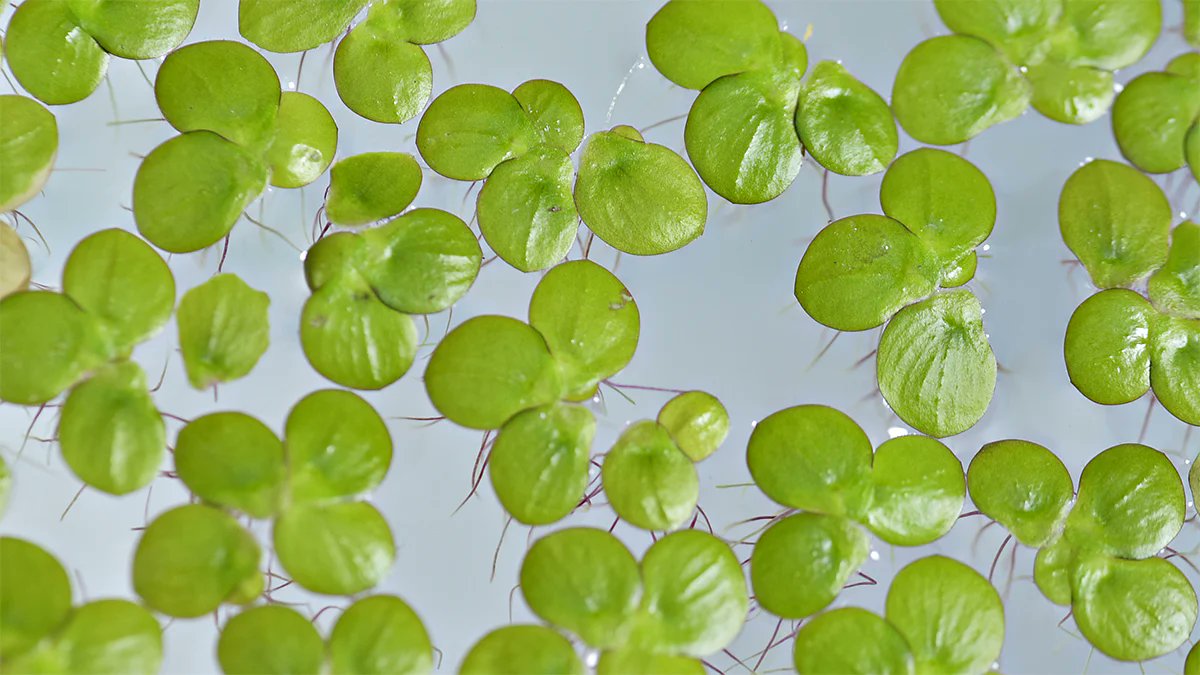
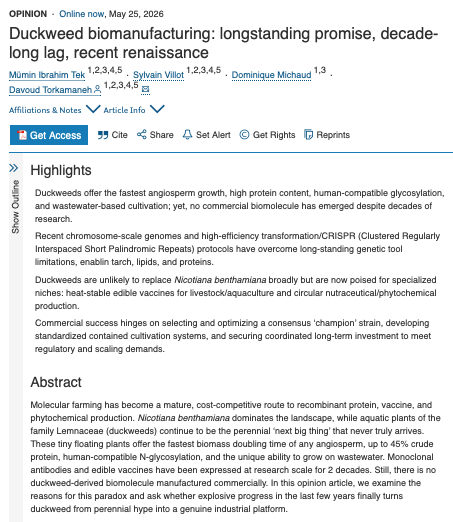
We should manufacture drugs and vaccines using duckweed. A few reasons: - They're the fastest-growing flowering plants. - Duckweed is up to 45% protein by biomass. - They grow in wastewater. - Duckweed can be transformed by "dipping" them into a liquid with plasmids and carbon nanotubes; very simple. - Both monoclonal antibodies and edible vaccines have been made with duckweeds at small scales for ~two decades. But there are lots of duckweed strains. We should sequence all of them, pick a strain, and start building better biotechnology tools. There is room for a focused philanthropy effort here (and companies), too.
Niko McCarty. tweet mediaNiko McCarty. tweet mediaNiko McCarty. tweet media
English
41
56
496
25.9K
wtf//:suryansh (b/acc) retweetledi
Ming "Tommy" Tang
Ming "Tommy" Tang@tangming2005·
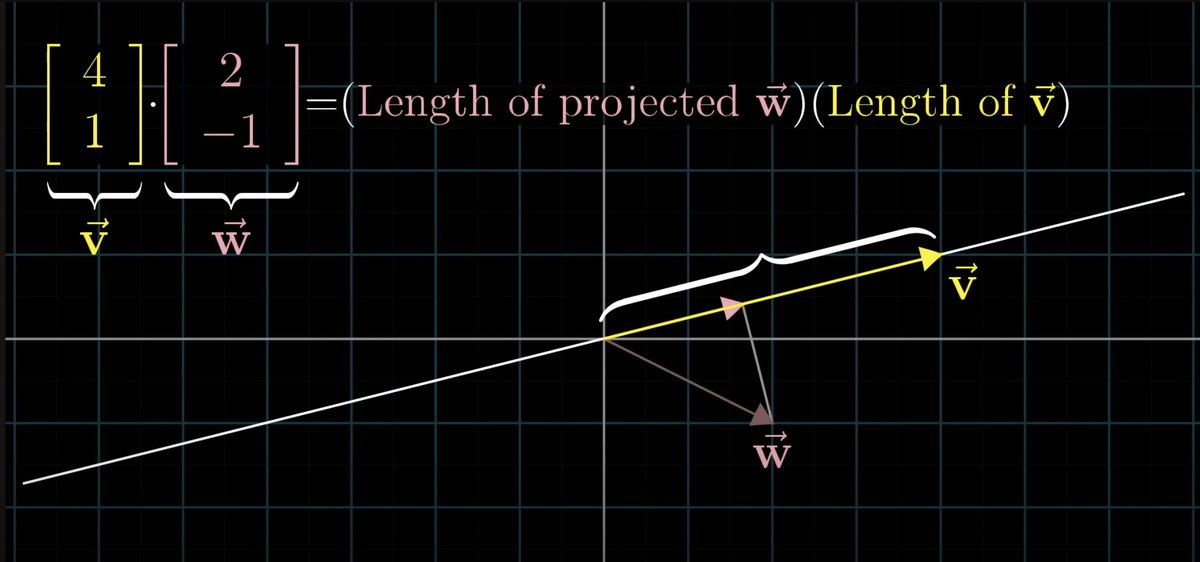
1/ What does the dot product have to do with bioinformatics? A lot. If you work with gene expression data, this is for you.
Ming "Tommy" Tang tweet media
English
1
9
41
4.4K
wtf//:suryansh (b/acc) retweetledi
Sergey Ovchinnikov
Sergey Ovchinnikov@sokrypton·
@anshulkundaje To me, a world model for proteins would be the one that goes beyond simply looking up the stored conservation/coevolutionary statistics of motifs (as in pLM) or extracting these from MSA (as in AlphaFold), but learns a general energy function (4/4).
English
3
6
68
2.7K
wtf//:suryansh (b/acc) retweetledi
Physical Review E
Physical Review E@PhysRevE·
Coarse-grained models for Langevin dynamics. This paper presents a thermodynamically consistent framework that captures slow molecular transitions and metastable dynamics. Read more: go.aps.org/3RObL00
Physical Review E tweet media
English
3
6
25
1.1K
wtf//:suryansh (b/acc) retweetledi
Sergey Ovchinnikov
Sergey Ovchinnikov@sokrypton·
@anshulkundaje To me, a foundation model learns a good representation and statistics of the training data but can be limited if the data does not cover the full space, thus often failing to generalize out-of-distribution (1/4).
English
2
3
51
3.4K