Amy li retweetledi
Amy li
115 posts




Amy li retweetledi

1/ Wall Street 2.0 is here.
Ondo Global Markets is now live, providing one of the largest-ever selections of tokenized U.S. stocks & ETFs onchain with the liquidity of traditional finance, starting on @Ethereum.
100+ assets now live, with hundreds more on the way.
English
Amy li retweetledi

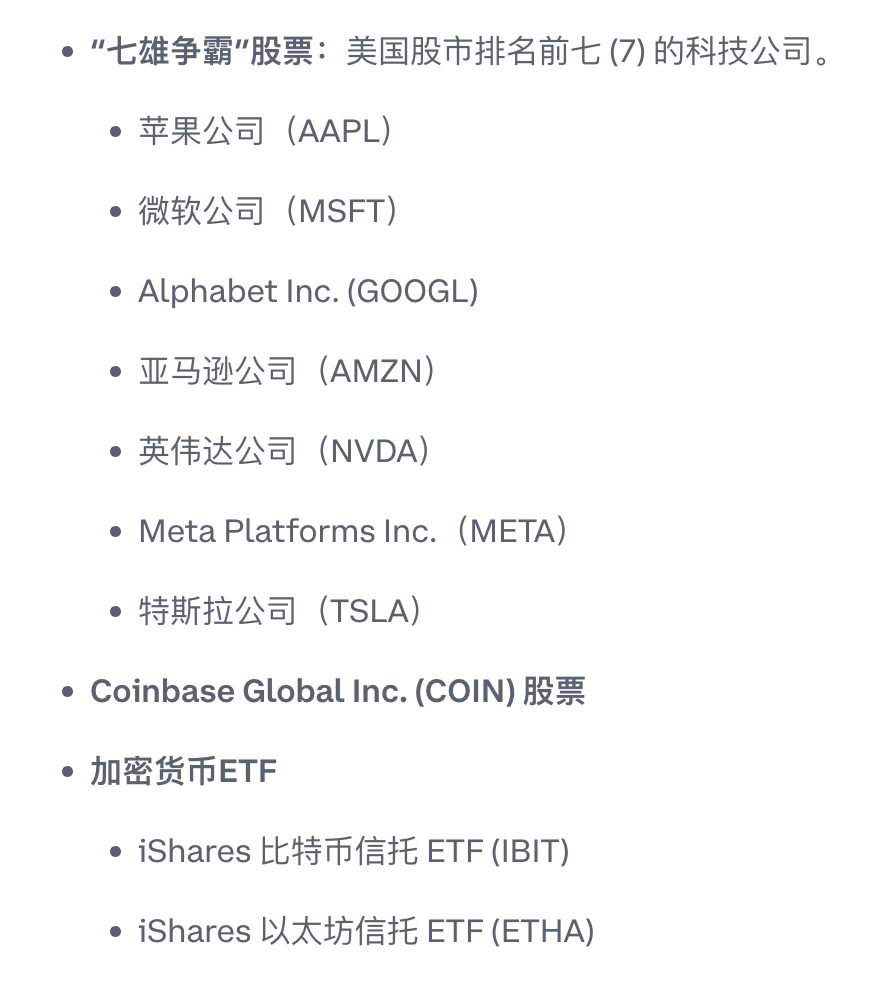
Coinbase 将于 9 月 22 日,上线股票 + 加密货币指数合约,由 8 只美股:
苹果、微软、谷歌、亚马逊、英伟达、Meta、特斯拉、Coinbase
和 2 只加密货币:
比特币 ETF、以太坊 ETF 所组成。
每个成份占比均为 10%。
预计最高可开 10 倍杠杆。

AB Kuai.Dong@_FORAB
Coinbase CEO 表示,正在让团队,每天超 12 小时工作,全力加急推进 Everything Exchange (万物交换)项目。 根据之前电话会议的透露,该功能是把加密货币 + 股票代币 + 衍生品 + 预测市场等,全部集成在一个平台 APP 内,做到 7 x 24 小时,可多资产交易。 也就是华尔街这波,全美金融资产上链。 重大的叙事。 目前市场猜测,这个上线时间点预计在 9、10 月之间,内部有多个小组,正在赛马比拼,高强度办公。 怀疑 Coinbase 最近应该招了不少华人。 面对 Robinhood 的危机感。
Minato-ku, Tokyo 🇯🇵 中文
Amy li retweetledi

Amy li retweetledi
最佳方案往往高估了收益(优化者的诅咒)→ 几次没出事就把冒险当本事(偏差常态化)→ 越自信越敢赌(风险补偿)
每个"成功的优化"都在悄悄削薄你的安全边际。
最肥的火鸡,感恩节前一天还在庆祝自己的"最优生存策略"。
宁可"差不多"地活着,别"完美"地死去。
中文
Amy li retweetledi

商业空间站会是继商业火箭发射之后另一个大的太空板块,本期视频梳理了从小布什到特朗普时期对于太空私有化的政策推动,探讨了商业空间站的需求与潜力,解读了三家领先公司-Axiom Space,VAST与Starlab。
视频链接:youtu.be/nx_1UA1_rDw?si…
时间轴:
00:00 政策与时局
01:55 奥巴马,特朗普执政时期的太空政策
05:29 商业太空站的需求与Blue Origin的轨道礁
10:24 NASA重点扶持-Axiom Space
10:37 进展最快的空间站- VAST
16:11 国际联手-Starlab

YouTube
中文
Amy li retweetledi
Amy li retweetledi

Amy li retweetledi

Productivity gains, new tax legislation, and AI’s impact on the job market — could these forces help offset the drag of a rolling recession? @CathieDWood analyzes employment trends and the complex interplay of policy, tech, and growth on "In The Know."
ark-invest.com/videos/market-…
English
Amy li retweetledi
Amy li retweetledi

Amy li retweetledi
Amy li retweetledi

其本质是,注意力 -- 流量的上游 --的证券化,证卷化进一步强化注意力,由此形成正反馈飞轮。下一步,注意力的上游和下游都将证券化。RWA 正式规模性登场。
Neso@neso
一直想写写关于meme coin的底层价值,但没有形成体系,这里零散的写一个Threads: 人类的消费,归根结底,除了基本的生理需求之外,绝大部分是欲望和情绪消费。绝大部分商品的溢价,来自于满足你基础生理需求之外的情绪需求。 /1 🧵
中文
Amy li retweetledi
I wonder how many really understand the bitter opposition by policymakers to Bitcoin and especially an ETF.
Gary Gensler doesn't really hate it because of investor protection (that's only a minor reason). Elizabeth Warren doesn't actually think its criminal use is significant. Obscure members of Congress who seem to pop up out of nowhere -- with Bitcoin, of all things, strangely on their minds -- and who repeat these tiresome objections (often in laughable letters to the SEC) are in many cases quietly pushed to do so by others, including from the Fed, who understand the real threat:
In a system that depends on irresponsible government spending (especially for perpetual war) and fiat printing to cover that irresponsibility, alarm bells cannot be allowed to work. There must be no pure price signals. And above all, an alarm bell must not also serve as a life-raft that's easily accessible to everyone, especially the general public, in the form of an ETF. There must be no escape hatch.
This is an unstated but important motivation for the longstanding resistance to Bitcoin and especially an ETF. It's also why the three-judge panel of a federal appeals court that in 2023 essentially forced the SEC to approve the ETFs may ultimately turn out to be the most unsung but consequential people in the history of U.S. financial markets. After that court's ruling, you could almost hear public policymakers and some influential private-sector figures -- names that everyone knows, and some very important ones who stay out of the news -- smack their foreheads and say, "Those damn judges, don't they realize what they've done?"
The system's defenders have always understood that life-rafts and escape hatches can't be allowed. Here's Christine Lagarde talking about Bitcoin in 2021 (ostensibly about the need for global cooperation on regulation, but the larger point was clear): "If there is an escape, that escape will be used." Here's a seminal essay by Alan Greenspan in 1966, when he was still in the private sector:
An almost hysterical antagonism toward the gold standard is one issue which unites statists of all persuasions...In the absence of the gold standard, there is no way to protect savings from confiscation through inflation. There is no safe store of value. If there were, the government would have to make its holding illegal, as was done in the case of gold. The financial policy of the welfare state requires that there be no way for the owners of wealth to protect themselves.
I'd say the antagonism towards Bitcoin qualifies as "hysterical," wouldn't you? And in terms of "protection," in a political system defined by profligacy and incompetent policy (especially monetary policy in recent years), a free-trading asset that serves as protection and -- via its price action -- starkly highlights those two faults is resented and hated.
This is why the Bitcoin ETFs in particular are so important, and why they were bitterly resisted for so long and the SEC only approved them after being forced to do so by a court decision. Gold is usually slow-moving and can be suppressed -- and even if it does rise to $2500 or $3000, DC and the Fed certainly won't like it, but it won't set off systemic alarms and the public mostly wouldn't notice. But if the ETFs help drive Bitcoin into the hundreds of thousands of dollars, the headlines will be screaming and the public will start asking uncomfortable questions. With the Fed desperate to cut rates and a potential second inflation wave looming, it's easy to see why, from a policymaker perspective, the timing of ETF approval could not have been worse. And now Bitcoin and the ETFs -- as permanent, fast growing and highly visible canaries in the financial system -- will be perpetual burrs under the policy saddle.
A telling postscript: Decades after Alan Greenspan wrote that essay about gold, Ron Paul asked him to autograph a copy of it as Fed chairman, and he asked if Greenspan wanted to add a disclaimer to it. Greenspan replied "I stand by every word" and signed it.
English
Amy li retweetledi


Amy li retweetledi

Amy li retweetledi

Amy li retweetledi