Anand Dudhe

72 posts

Anand Dudhe

Anand Dudhe

@anandmd447

Engineer by profession, avid traveller, infrastructure enthusiast

Mumbai, India Katılım Kasım 2009
404 Takip Edilen12 Takipçiler
Anand Dudhe
Anand Dudhe@anandmd447·
@dhruvesh_naik The natural freq of a bridge can be estimated using FEA, incorporating geometric nonlinearity. For wind-sensitive bridges, wind tunnel testing is essential to evaluate aeroelastic effects such as flutter and vortex shedding for determining the true dynamic behavior under wind.
English
0
0
5
751
Nalini Unagar
Nalini Unagar@NalinisKitchen·
I always wonder how a minister earning just ₹1.25 lakh salary manages to own ₹100+ crores in property, several houses, 5 cars, luxury watches, designer outfits, premium shoes and belts, ₹2 lakh bags, frequent international trips, and a lavish lifestyle.
English
204
365
1.5K
29.6K
Anand Dudhe retweetledi
Vijay Kedia
Vijay Kedia@VijayKedia1·
"Nuclear : Energy of the Future " China is rapidly expanding its nuclear power capacity and is currently the fastest builder of nuclear energy in the world. It has approx 55 - 60 GW installed and is adding another 25 -30 GW through 25-30 reactors. (A reactor is a single power generating unit, while a plant can have multiple reactors . Which is why saying “30 plants” can be misleading.) China is approving 8 to 10 new reactors every year, far ahead of any other country. At this pace, its total nuclear capacity could reach around 100- 120 GW by 2030. Nuclear power is capital intensive, costing around $5- 7 billion (Rs 45,000 to 65,000 crore) per GW - significantly higher than thermal and hydro. This implies a total investment of $125–200 billion ( Rs 10–16 lakh crore) by 2030. However nuclear also offers continuous (baseload) power unlike solar and wind, requires far less land, produces near-zero emissions unlike thermal, and is more scalable than hydro. Despite the high cost, nuclear provides stable, clean electricity for 60+ years and helps reduce coal dependence, strengthen energy security, power EVs and industry.
English
59
110
1.2K
131.8K
Anand Dudhe retweetledi
Anish Moonka
Anish Moonka@anishmoonka·
Before 1994, India was home to 50 million vultures. A cheap cattle painkiller wiped out almost all of them within a decade. Then about half a million people died. The drug was called diclofenac. Indian farmers started giving it to cows around 1994 to treat pain and inflammation. It was fine for the cows. But when vultures fed on the carcasses, the drug destroyed their kidneys within days. This was the fastest collapse of any bird species since the passenger pigeon went extinct. The white-rumped vulture dropped 99.9% between 1992 and 2007. The long-billed vulture dropped 97.9%. In 2024, two economists, Eyal Frank at the University of Chicago and Anant Sudarshan at the University of Warwick, published a paper tracking the human toll. Their method was clever. They compared death rates in Indian districts that used to have lots of vultures against districts that never did. Where the birds disappeared, human deaths rose 4.7% above baseline. That came out to roughly 100,000 extra deaths a year between 2000 and 2005. About half a million in total. The economic damage from those early deaths: $69.4 billion a year. A group of vultures can strip a cow carcass clean in under an hour. Their stomach acid is strong enough to kill the germs behind anthrax, salmonella, and botulism. Remove the vultures and you get dead cattle rotting in fields or dumped in rivers. Feral dogs filled the gap, about 5 million more of them showing up. India is now the world's biggest hotspot for rabies, and rabies vaccine sales rose right alongside diclofenac use. I went looking for good news in the recovery data and couldn't find much. A 2024 Cambridge survey found vulture numbers have flatlined at very low levels, not rebounding. In 2025 the Wildlife Institute of India reported that 72% of the bird's old nesting sites sit empty. Part of the problem is biology. Vultures lay one egg a year and take years to reach breeding age. Part of it is policy. Diclofenac is still sold illegally for cattle, and other painkillers that also kill vultures stayed legal in India for years after the 2006 ban. Twenty years after the ban, the birds are still mostly gone.
Give A Shit About Nature@giveashitnature

Vulture populations in India collapsed. 500,000 people died as a result. In the 1990s, Indian farmers started using a cheap painkiller called diclofenac on their cattle. When vultures ate the carcasses, the drug destroyed their kidneys. Without vultures, cattle carcasses rotted in fields instead of being stripped clean in 45 minutes. Feral dog populations exploded by five million. Rabies cases surged. Pathogens spread through water supplies. University of Chicago economists compared death rates in districts that used to have vultures to districts that never did. Human mortality rose more than 4% after the collapse. Over 100,000 extra deaths a year. Half a million in five years. India banned the drug in 2006. The vultures still haven't recovered. This is what a keystone species is to us. This is why we protect the animals nobody finds cute.

English
7
96
248
19.8K
Anand Dudhe
Anand Dudhe@anandmd447·
@Ankittskedia Good road infrastructure is required for efficient goods transportation. For efficient people transportation, we should accelerate development of semi high speed rail systems between major cities which will benefit people in the entire spectrum of income group.
English
0
0
0
523
Ankit Kedia
Ankit Kedia@Ankittskedia·
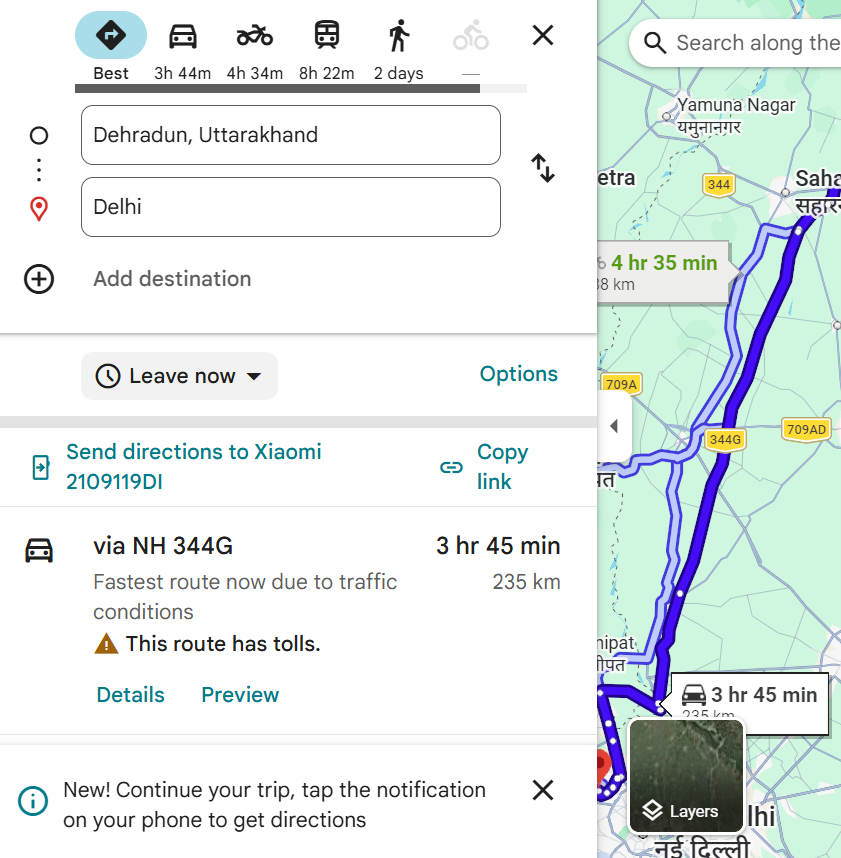
I travel frequently between Delhi and Dehradun. The media keeps hyping the Delhi–Dehradun Expressway like it’s a game changer. Earlier, it took 4–5 hours with a break. Now, even with the expressway, it’s still around 4 hours. Google Maps shows 3:45. Add a 15-minute break and you’re back to roughly the same time. ₹12,000 crore spent to save barely 40–50 minutes.
Ankit Kedia tweet media
English
185
31
263
126.3K
Anand Dudhe
Anand Dudhe@anandmd447·
@mumbaimatterz @mybmc @MNCDFbombay Whether the engineer in charge of work inspected the job after it was completed? If yes, he might have failed to understand this issue 🥲! and if not, only God can save us 🤐.
English
0
0
0
2
Anand Dudhe
Anand Dudhe@anandmd447·
@RajeshwariRW Such measures are difficult to enforce. Instead we need to slowly and steadily nature our children to acquire the values required to become a good citizen. These "good citizens" will definitely become the "good administrators"!
English
1
0
0
365
Dr. Rajeshwari Iyer
Dr. Rajeshwari Iyer@RajeshwariRW·
India can fix most of its bureaucratic problems if the government implements just three laws: 1. No guaranteed salary or lifetime job security for government employees until their assigned work is completed. 2. Immediate termination of any government employee if they are caught engaging in corruption. 3. Time-bound public services, if a government employee fails to complete a citizen’s work within the fixed deadline, a penalty should be deducted from their salary.
English
186
307
1.2K
31.3K
Anand Dudhe
Anand Dudhe@anandmd447·
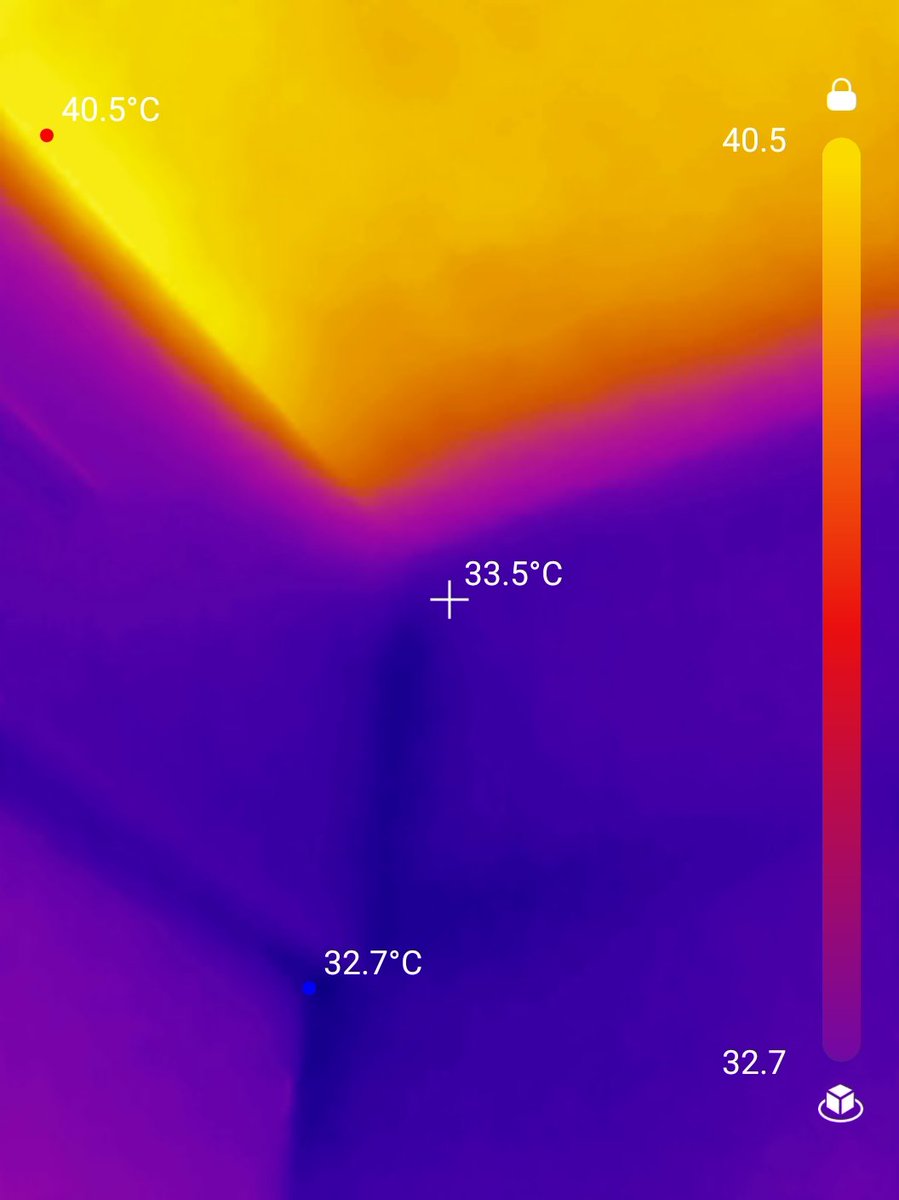
@isenditbacc If the roof is under your custody, try to put solar radiation reflective roof coating. To test effectiveness, take a thermal image afterwards.
English
1
0
2
2.2K
Arun
Arun@isenditbacc·
Took this thermal image of my room's ceiling and walls last night at 7pm. Yes, that's the roof at 40 deg c when the temperature outside has already dropped to 31 deg c. Not a lot of people know this but concrete is an amazing absorber and radiator of heat. If you're on the top floor and your roof has direct contact with sunlight it's absorbing heat all day and dumping it on you for much longer than sunset. Worth solving this before you get an AC. AC will make your room cool for sure but it's still fighting this bigass heat dump and burning a lot of electricity to do it.
Arun tweet media
English
185
258
2.7K
267.5K
Anand Dudhe retweetledi
Muthukrishnan Dhandapani
Muthukrishnan Dhandapani@dmuthuk·
When you go to Japan and see their Prime Minister waiting for space to join the traffic and come back to India and see, a municipal corporator surrounded by dozens of people in many vehicles, definitely the heart pains. I've not given up on India. At the same time, as is my view, I'm not very bullish on India too. Not that we would not grow. We would chug along. For us to grow and aim to become developed nation, lot of change in complete mindset is required. Not sure whether we are capable for it as a nation.
English
120
311
2.1K
47.4K
Anand Dudhe retweetledi
Akshat Shrivastava
Akshat Shrivastava@Akshat_World·
Your grandfather made wealth by buying land. Your dad made wealth by buying stocks. You will make wealth by diversification. To understand this, you need to observe the biggest trend playing out right now:- "the death of globalization" Every country right now now is in a survival mode. This is very different from the last 20 years. For the last 20 years, the world followed Ricardo's Principle of Comparative Advantage. What this meant that if China could produce goods cheap, it would be the manufacturing basket of the world. And, would keep supplying the world with cheap goods. In simple words: because China had the Comparative advantage to manufacture things, the world will go to China for manufacturing. This made logical sense. And, the world benefitted from it. Especially emerging economies. The world right now however, DOES NOT make sense. Global powers wants dominance, not mutual cooperation. The rise of far-right politicians across the globe has ensured this. Your portfolio needs to reflect this reality. What this means is: 1) You can't tie your wealth to 1 country (India for example has made a lot of changes to its Real Estate taxation). Eg. indexation benefits on RE gone. 2) You can't tie your wealth to 1 currency. The level of wealth erosion we have seen in India in the last few years is unreal. Why? largely due to INR depreciation 3) You can't tie your wealth to 1 stock market. Why? stock markets are there to give promoters/early investors an exit. You need to time the cycle. If you are wrong, you are the one giving exit to others. Your only alpha is valuation: invest everywhere (when there is value). When things look uncertain it reflects in the price of the asset. Unlike old times: buy and hold won't work. You need to learn when to "enter" and "exit". Capital rotation is a diversified format is where the game is now.
English
54
39
601
70K
Anand Dudhe retweetledi
Narendra Modi
Narendra Modi@narendramodi·
Today, India takes a defining step in its civil nuclear journey, advancing the second stage of its nuclear programme. The indigenously designed and built Prototype Fast Breeder Reactor at Kalpakkam has attained criticality. This advanced reactor, capable of producing more fuel than it consumes, reflects the depth of our scientific capability and the strength of our engineering enterprise. It is a decisive step towards harnessing our vast thorium reserves in the third stage of the programme. A proud moment for India. Congratulations to our scientists and engineers.
English
4.6K
30.1K
176.3K
41.5M
Anand Dudhe retweetledi
No filter Skin
No filter Skin@NoFilterSkin·
Why do you want to have children? ​This is the best answer. ​Someday in your thirties or forties, you will suddenly realize the best things in life have already happened. The rest is just repetition and growing old, year after year, day after day. But a child washes away the repetition, making life unknown once again. They cause you worry, make you care, bring you joy, bring you surprise, and let you experience childhood all over again. They make you understand your parents' state of mind from back then, give you an excuse to buy the toys you once yearned for but couldn't have, make you strong in pain, and calm in a crisis. They let you see your childhood self, so that you can better understand and accept yourself. Parents raise the child, and the child also accompanies the parents. Parents and children nourish each other, and fulfill each other. In the fleeting time, the child gives us something to look forward to in the future. I think, this is the reason for having children. Why do you want to have children? Leave your comment below.
English
62
215
1.8K
154.4K
Anand Dudhe
Anand Dudhe@anandmd447·
@AbijitG Good ahead, do not delay. The executives who will walk you through the process can be a little bothersome but the process is sorted.
English
0
0
0
79
Abijit Ganguly
Abijit Ganguly@AbijitG·
Do term insurances in Indian have actually have any point or do insurance company just try to find out some loophole and squeeze out of it. Any advice and anyone have any experience with it? Feel very conflicted. And hate the fact that even if you check once on the likes of policybazaar they just start calling endlessly, actually pushing you away from it. Last 2 weeks convinced myself and looked for a quote on Pb but now they've begun their calling and already feel like not going for it.
English
83
12
265
84.9K
Nicholas J. Stelzner
Nicholas J. Stelzner@stelzner_n1150·
So if we hit Iran hard and send them to the Stone Age how does that help America exactly?
English
803
650
7.9K
268.7K
Anand Dudhe retweetledi
Aariv Khanna
Aariv Khanna@AarivKhanna·
Your cell phone does not listen to you “by accident.” It's a feature, not a bug. I talked about traveling to Rome just once and 10 minutes later I started getting flight ads. It's called “Shadow-Logging” and it happens through 5 settings you've never touched. Here's how to remove eavesdropping once and for all:
English
18
275
1K
455.9K
Anand Dudhe retweetledi
Ramanuj Mukherjee
Ramanuj Mukherjee@law_ninja·
The most dangerous person in any industry right now is not the AI expert. It is the domain expert who learned AI. And almost nobody understands why. Let me explain. India produces roughly 1.5 million engineers every year. A huge number of them are now learning AI. Watching YouTube tutorials. Getting certifications. Building chatbots that talk to PDFs. LinkedIn is full of them. "AI/ML enthusiast." "Prompt engineering certified." "Building the future with Gen AI." Most of them are unemployable. Not because they lack technical skill. But because they lack context. They know how the tool works. They have no idea what problem to point it at. Now look at the other side. A CA with 15 years of experience who spent 2 months learning AI tools: he knows exactly where the pain is in an accounting workflow. He has felt it in his bones. He knows that the real bottleneck isn't the balance sheet. It is the 47 WhatsApp messages it takes to collect one client's documents and various OTPs. He doesn't need someone to explain the problem. He lived the problem for 15 years. When this person learns AI, something terrifying happens. He doesn't just optimize. He eliminates. A litigation lawyer in Kolkata who handles bail matters. She spent 20 years drafting the same kind of applications with minor variations. She learned Claude Code in 3 weeks. Now she generates first drafts in 4 minutes that used to take her junior 4 hours. Also, she can map evidence and find contradictions in the prosecution case that would have taken a team of 20 juniors without AI. She can even simulate how a judge may react based on a judicial profile model she creates of a judge. She didn't learn "AI." She learned how to give a machine the context she already had in her head. That is a completely different thing. The AI expert builds a generic document summarizer. Impressive demo. Works on anything. Understands nothing. The domain expert builds a bail application drafter that knows the difference between what Prosecutor A argues v Advocate B. Knows which judges want shorter arguments. Knows that the medical ground needs to be in the second paragraph, not the fifth. No AI course teaches this. No certification covers this. This is 20 years of courtroom experience compressed into a prompt. This is why the domain expert is more dangerous. The AI expert sees technology. The domain expert sees the bottleneck. And the bottleneck is where all the money is. Real example. A garment exporter in Tirupur. He processes 200 orders a week. Each order requires email parsing, PO data entry into Tally, production schedule updates, shipping documents, buyer follow-ups. Currently: 2 data entry operators. 8 hours each. 5 days a week. Errors constant. Follow-ups missed. Buyers frustrated. An AI engineer looks at this and says "let me build a custom NLP pipeline." The exporter's son, a 24-year-old commerce graduate who spent 6 weeks learning Claude Code, looks at this and says "Papa, I'll build you a system that reads your buyer emails and whatsapp queries, enters PO data into Tally, and sends WhatsApp follow-ups automatically." Not with drag-and-drop. With actual code. Written by AI. Guided by a kid who understands his father's Tuesday afternoon better than any engineer ever will. He didn't write the code himself. He described the problem to Claude Code and it built the connectors, the parsers, the integrations. In days, not months. Built in 3 weeks. Runs on a Rs 200 per month GCP server. No data entry operators needed. The AI engineer would have quoted Rs 15 lakh and taken 6 months to make something remotely usable. The commerce graduate did it for almost nothing. Because he wasn't solving a technology problem. He was solving his father's business. This is the pattern everywhere. And the tools available today make it absurd. Claude Code and Cursor don't just help you code. They build entire applications from a conversation. You describe what you want. It writes, tests, and deploys. The barrier between "I understand the problem" and "I built the solution" has collapsed to near zero. But coding tools are just the beginning. Look at what else exists right now: HeyGen and ElevenLabs. A single domain expert can now create professional video content and voiceovers in any language. That CA in Jaipur? He can create a client onboarding video in Hindi, English, and Marathi. Personalized. Professional. Without a camera, a studio, or a production team. Kling and Runway. Generate product videos, explainer content, visual demos. The Tirupur exporter can send his international buyers a product showcase video generated from photographs of fabric samples. No videographer. No editor. No 2-week turnaround. No filming budget. OpenClaw and similar AI agent platforms. Build autonomous agents that don't just automate a task but run entire workflows end to end. Client intake to document generation to follow-up. Without a human in the loop. Hermes and open-source models you can run locally. Process sensitive client data without sending it to the cloud. A law firm that won't put case files on ChatGPT can run Hermes on a local machine and get the same AI power with full confidentiality. This is the new stack. Not no-code drag-and-drop. Not Zapier. Not "if this then that." The stack is: AI that builds software + AI that creates content + AI that runs autonomously + AI that runs privately. And any domain expert can learn it. The doctor who learns this stack will build better diagnostic workflows than any health-tech startup. Because she knows that the real problem is not diagnosis. It is that patients lie about their symptoms, forget their medication history, and bring reports from 3 different labs in 3 different formats. She uses Claude Code to build a patient intake system. ElevenLabs to create voice-guided instructions in the patient's language. An AI agent to chase lab reports automatically. The teacher who learns this stack will build better learning tools than any ed-tech company. Because he knows that the problem is not content delivery. It is that a student who failed the last test is too embarrassed to ask a doubt in front of 40 classmates. He uses Claude Code to build a private doubt-clearing bot. HeyGen to create video explanations that feel personal. Kling to generate visual demonstrations of physics concepts that no textbook can show. The HR manager who learns this stack will build better hiring workflows than any recruiting platform. Because she knows that the problem is not resume screening. It is that hiring managers don't read the JD they approved, and then reject candidates for not matching a JD they never actually wanted. She uses an AI agent to align JDs with actual team needs before posting. Claude Code to build a candidate evaluation system tuned to what actually predicts success in her company. Domain knowledge is the moat. This new AI stack is the weapon. The combination is unstoppable. Here is what this means for you. If you are a domain expert in any field, your 10 or 15 or 20 years of experience just became the most valuable asset in the market. Not less valuable. More. Every frustration you had. Every broken process you complained about. Every time you said "there has to be a better way." That was training data. Your training data. You don't need to become a programmer. You don't need a CS degree. You don't need to understand transformer architectures. You need to learn the new stack: 1. How to talk to AI and get what you want (prompting): 2 weeks 2. How to build apps and tools with Claude Code or Cursor: 3-4 weeks 3. How to create content with HeyGen, ElevenLabs, Kling: 1-2 weeks 4. How to deploy AI agents that work autonomously: 2-3 weeks 5. How to read a business process and map it: you already know this The entire stack. Under 3 months. No CS degree. No coding bootcamp. The AI experts are competing with each other. Fighting over the same startup jobs. Building demos that impress other AI experts. The domain expert who learns this stack has no competition. Because nobody else has their context. The CA who builds his own practice management system with Claude Code. The lawyer who runs case research on a local Hermes model with full confidentiality. The factory owner's daughter who creates multilingual buyer presentations with HeyGen and closes international orders her father never could. These people are not on AI Twitter. They are not posting demos. They are not collecting certifications. They are quietly making themselves irreplaceable. The most dangerous person in any room is not the one who knows the most about AI. It is the one who knows the most about the problem. And just learned enough AI to solve it
English
29
68
309
38.1K
UFO Hunter
UFO Hunter@iamufohunter·
Need a honest opinion, What's stopping humans to just live in peace together ?
English
12.9K
772
7.7K
1M
Anand Dudhe
Anand Dudhe@anandmd447·
@RitikaChopra__ Our house help, who stays in mankhurd told me today morning भैया, आमच्या कडे गॅस ची बाटली ३००० ला देताय! The issue may be transitory, but it is causing trouble to the most vulnerable.
English
0
0
1
20
Ritika Chopra
Ritika Chopra@RitikaChopra__·
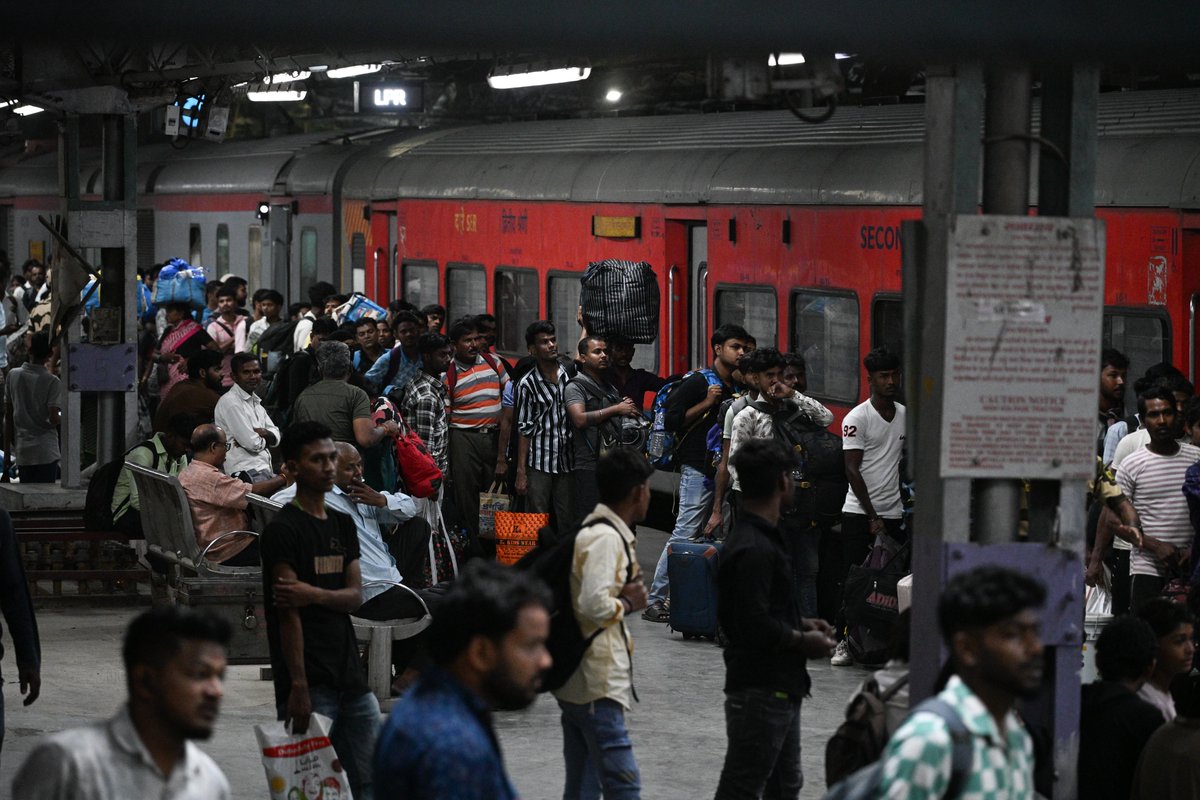
She spent FIVE days at TWO Mumbai railway stations (CST & LTT) tracking THREE long-distance trains & spoke to 130 migrant workers boarding them. Nearly half said they were leaving for one reason: no gas cylinder, no way to cook, eating out too expensive. Their workplaces were running. But without a way to feed themselves, staying made no sense. (2/7)
Ritika Chopra tweet media
English
5
136
327
34.8K
Ritika Chopra
Ritika Chopra@RitikaChopra__·
For days, there's been a question in our minds: Is Mumbai's LPG crisis quietly pushing migrant workers to head home? Construction sites are running. Factories are open. The city offered no clear answer. So my colleague @ishiwrites did something simple, but hard... 🧵(1/7) @IndianExpress
English
21
341
771
167.5K