Sabitlenmiş Tweet
Ross Andersen
3.8K posts

Ross Andersen
@andersen
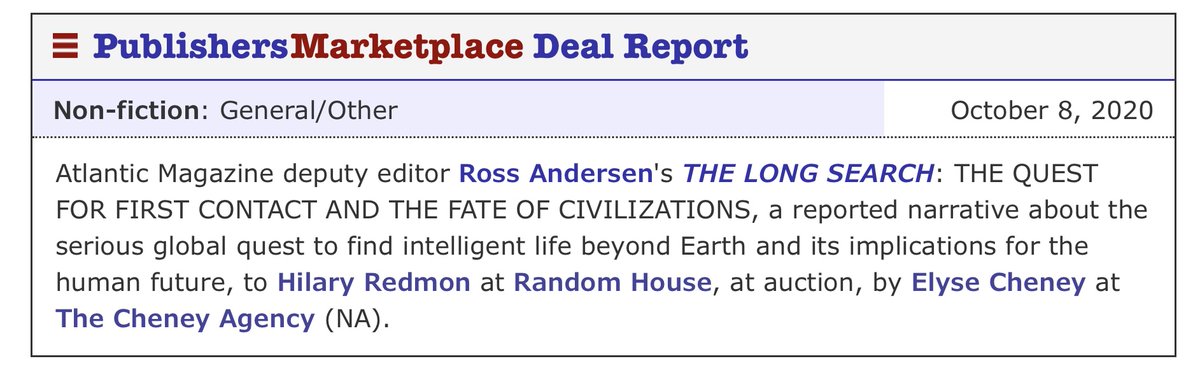
staff writer @theatlantic // writing a book for @randomhouse // rep’d by @elysecheney // [email protected]
Washington, DC Katılım Temmuz 2008
1.9K Takip Edilen16.7K Takipçiler
Ross Andersen retweetledi

Images that would kill Don DeLillo #5832
Modern Notoriety@ModernNotoriety
Pope Leo XIV rocking Nikes with his clerical vestments

English
Ross Andersen retweetledi

A new drug aims to extend the lifespan of dogs—but the scientist behind it tells @andersen that she doesn’t plan to stop at man’s best friend: theatlantic.com/science/2026/0…
English
Ross Andersen retweetledi

@robkhenderson What? Trump is constantly crashing out in the most unhinged emotional ways over minor slights.
English

Lots of ppl have been comparing Zohran to Obama but one interesting generational difference is Obama—who no doubt received plenty of ugly racist comments—never thought to start crying about them like this. Even if Zohran's emotional expression here is inauthentic it's still interesting that he thinks this is what will play with his overeducated young demo.
End Wokeness@EndWokeness
Zohran is a textbook sociopath. Look at him trying to imitate human emotions. Obvious detachment.
English
Ross Andersen retweetledi

Glad to see the inimitable @danengber offer his take on the infuriating Woody Brown saga: theatlantic.com/books/2026/04/…
English
Ross Andersen retweetledi

What happens when agents can do schoolwork? My latest for @TheAtlantic on the next phase of AI in the classroom:
theatlantic.com/technology/202…
English
Ross Andersen retweetledi

The Artemis II Mission has produced some stunning images of our planet from afar and of the moon up close. @andersen shares his favorites: theatln.tc/9ibIqEKI
English
Ross Andersen retweetledi

I wrote about the most beautiful moment of the Artemis II mission theatlantic.com/science/2026/0…
English
Ross Andersen retweetledi

My dad died on Valentine’s Day—ever the mischievous cherub—after a decade-long battle w dementia. My essay on what it’s like to lose someone you love, before they’re even gone: theatlantic.com/family/2026/04…
English
Ross Andersen retweetledi

"Every Scientific Empire Comes to an End"
great post by @andersen. a few of my fav bits:
begins with how Soviet Science declined.
"When Joseph Stalin took power, he funded some research generously, but insisted that it conform to his ideology. Sagdeev said that his school books described Stalin as the father of all fields of knowledge, and credited the Soviets with every technological invention that had ever been invented. Later, at scientific conferences, Sagdeev heard physicists criticize the uncertainty principle of quantum mechanics on the grounds that it conflicted with Marxism."
- US scientists considering relocating labs and multiple foreign universities reaching out.
- EU's $500 million slush fund for "science refugees".
- China too obviously.
- Eisenhower's granddaughter married Roald Sagdeev (soviet scientist, director of USSR Space Research Institute, advisor to Soviet president) who moved to US in 1990.
- when Carl Sagan visited the institute in Moscow, Roald showed him around. He is 93 yo today.
archive.ph/YMnvo


English
Ross Andersen retweetledi

Going to the moon is objectively awesome. Even when you don't land on it. I love this @andersen dispatch from the Artemis II launch:
theatlantic.com/science/2026/0…
English
Ross Andersen retweetledi

On the Florida bridge watching the new mission to the moon take off with @andersen and realizing that much of the nation may not be aware it's happening. theatlantic.com/science/2026/0…
English
Ross Andersen retweetledi

This is how we lose the 21st century to China.
nxthompson@nxthompson
The US has canceled hundreds of millions in science grants and driven thousands of Ph.D.s out of the federal workforce. China, meanwhile, has poured evermore resources into its research efforts. If they pass us as a scientific superpower, we shouldn't act surprised. theatlantic.com/science/2026/0…
English