

Andrei Rebrov
13.6K posts

Andrei Rebrov
@andrebrov
Chief Agentic Officer and Co-founder @ Finlens | ex-CTO @ Scentbird | Subscription Advocate | Excellent ambition and inconsistent execution
Russia Katılım Ağustos 2009
2.1K Takip Edilen1.7K Takipçiler

4/7- Triple Whale: what happened with your ads – Lifetimely: what your customers will do – Inventory Planner: when to reorder – Klaviyo: sends the email
Each tool, brilliant at its slice. None sit at the same table.
English

@F1 3 weeks to ship merch from official site to USA is a way to win the fan base
English
A subscription brand was ready to kill their Facebook prospecting - numbers said they were losing six figures.
Layered in retention data. Those campaigns brought in customers with 2x the LTV of any other channel.
Attribution without retention context is expensive guessing.
English

this is why the @ReferralCandy team built referralcandy.com/moments
Jay Myers@jasonnmyers
Points are boring. @raulgalerad from @ReferralCandy explains why "surprise & delight" beats traditional loyalty programs every time. Are you treating customers like data, or building real relationships? bit.ly/s1p68
English
A subscription brand's #1 cancel reason wasn't price or quality - it was "too much product."
Customers loved it but couldn't consume fast enough. Black Friday buyers pushed reorders from 30 to 60 days. Q1 revenue dropped 10%.
Your best customers can churn you into a hole.
English
Most brands treat churn like a marketing problem. But 20-30% of subscription cancellations are failed payments and expired cards. You're running win-back flows for people who never wanted to leave.
English
Summer cohorts retain 30-40% worse than fall/winter for consumable subscriptions.
Most brands run the same acquisition playbook year-round and wonder why Q3 cohorts underperform. Your best customers sign up in October.
English
@get_untitled This is the shift we're seeing too. Brands spending $50K/mo on Meta but can't tell you their 90-day cohort LTV. The ones who flip to retention-first usually find 20-30% of revenue they were leaving on the table.
English

most Shopify stores are still optimizing for the wrong metrics
> CAC keeps climbing while everyone chases vanity metrics
> the real money is in LTV, retention, and owned data
> these 10 apps actually solve conversion and attribution problems
> not just another "must-have tools" listicle
getuntitled.ai/blog/top-10-sh…
English
@christopherep29 The $40K/mo subscription base is the real asset here. With the right retention data, you'd know exactly how sticky those subscribers are before writing the check. SKU concentration risk drops fast if cohort LTV is strong.
English

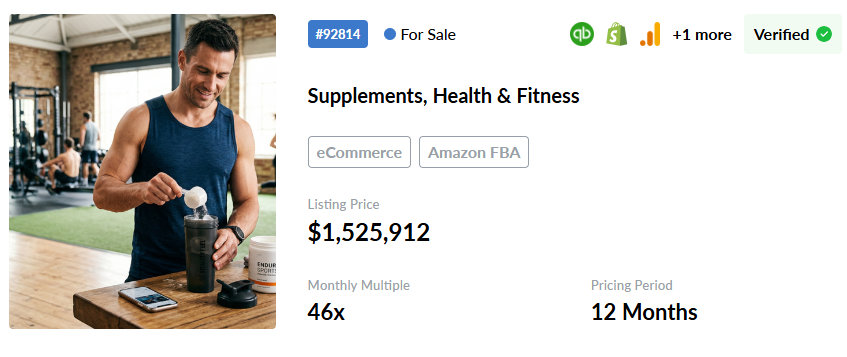
$1.53M ask on a supplement brand doing $33.2K avg monthly profit and roughly $40K/mo in subscriptions. Strong numbers, but the paid social dependence, 3-SKU concentration, and cross-border friction make this a diligence-heavy buy, not an automatic yes. Here is the full listing: empireflippers.com/listing/92814/…
#Ecommerce #DTC #BusinessForSale #Shopify #AmazonFBA
English
Klaviyo says this brand gets 52% of revenue from email. Shopify says 32%.
Same month. Same revenue.
Customers open the email, then type the URL in a new tab. Klaviyo claims the sale anyway. Your email ROI might be 40% inflated.
English
@G33_Solutions Ha, see this all the time. One of the reasons @FinsiAI was created
English

We found a brand doing £10–15k per email…
According to Klaviyo.
Reality?
They were losing money.
Why?
Klaviyo counts all revenue.
But subscription tools (Recharge, Loop, etc.) showed:
>rising churn
>weak subscriber quality
>negative LTV impact
They were emailing people already subscribed…
…accelerating churn.
We fixed one thing:
Stopped blasting subscribers.
Result:
>more new subscribers
>lower churn
>actual profit
Most brands aren’t reading the wrong numbers.
They’re reading incomplete ones.
English
@m1keyly you can actually look at Shopify Native Subscription or Appstle, once it takes off - choose between Loop, Stay AI or Skio
English

@MR_B2B_ECOMM Works with: Claude Code, Cursor, Gemini CLI, GitHub Copilot, Codex CLI, Kiro, OpenCode, and any AI assistant that supports context files.
English

@andrebrov Awesome! So what platform are they targeted at? Claude Skills?
English
We just open-sourced 178 e-commerce skills that make AI assistants actually useful for running an online store.
Not generic code snippets — real workflow guides for Shopify, WooCommerce, and BigCommerce.
Free. github.com/finsilabs/awes…
English
@itsbhaveshp The beating will continue until marketing start talking to ops and finance. And forgets about ROAS
English

The most dangerous lie sold to any DTC founder is that you can 100x your brand just by handing more money to growth agencies.
Every Ecom CEO wants to print effortless internet money.
But the brutal reality of trying to scale is this: you cannot out-market a bleeding supply chain.
While you are obsessing over front-end ROAS, your warehouse and operations are quietly eating every dollar of actual profit.
Stop building a machine that only enriches your vendors, and start building a backend that actually lets you keep what you kill.
English
@arthuryuzbashew @mediafa_st Then just keep analyzing it regularly and improving the product.
English

Day 81 of growing @mediafa_st to $10k MRR
Decided to work on my churn rate for subscription users
Sent them all emails asking WHAT went wrong 📊
Top reasons:
> I can't spend that much time daily (10 mins)
> I didn't "feel" it would go well (why buy then if you know better?)
> I thought it would do all for me (we clearly state we don't do that)
People are so lazy and brainwashed with "fast" success ideas 💀
The only light here: good reviews from people WHO DO USE the app
God bless you! 🙏

Arthur@arthuryuzbashew
Day 79 of growing @mediafa_st to $10k MRR 👓 Second video with Ray-Ban glasses Last one in Baku before I take off ✈️ Woke up, had breakfast, went to cafe to work (5 hours), bought some sweets before holidays, back home for lunch and work on @mediafa_st Lately I've been working a lot on scaling and found a few strategies! 📈 Wish me luck!
English
@arthuryuzbashew @mediafa_st Give them a list of reasons they cancel + a text box where they can input stuff. Analyze the latter - that's your real signal.
English
@psaccomani pop-ups generate first-party data (emails, preferences) that feed retention systems. you need to capture traffic coming to the website one way or another
English

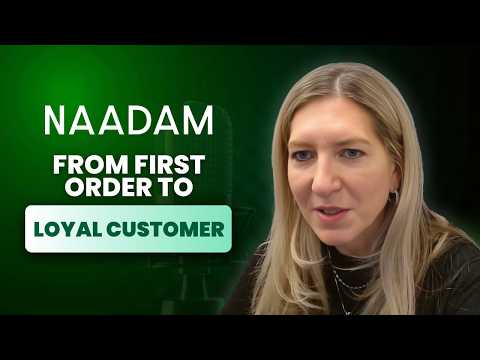
On the latest Retention Edge, we talk with Sarah Sathaye, Chief Revenue Officer at NAADAM about something many ecommerce brands overlook: pop-ups.
Physical retail can be expensive.
But a short-term pop-up can create something digital stores can’t.
Real-world excitement around the brand.
When customers show up in person, interact with products, and meet the team, something interesting happens.
Order frequency often increases even after the pop-up ends.
Check out the full episode on YouTube: youtu.be/-G6U8xLLIOQ
YouTube
English
@noelcetaSEO At 6% monthly churn, you need ~17 months to break even on a $60 CAC. Most boxes fold by month 8. The brands that survive obsess over Month 2-3 retention, not acquisition.
English

1/ Why most subscription boxes die:
The typical launch strategy:
- Raise capital or bootstrap savings
- Spend heavily on paid ads
- Acquire customers at $50-80 each
- Hope they stay subscribed long enough to profit
Reality check:
- Average subscription churn: 5-8% monthly
- Breakeven timeline: 6-8 months per customer
- Ad costs keep rising
- One bad month kills cash flow
90% run out of money before achieving profitability.
English
Subscription boxes fail fast.
Most don’t survive past 18 months.
The reason? Customer acquisition costs.
One brand did it differently.
Launched Feb 2024 with zero ad budget, zero following.
12 months later: 10,347 subscribers. $310k revenue. $8.50 CAC.
Here’s the SEO playbook that made it possible 🧵👇
English