Andy Bodea

563 posts

Andy Bodea

Andy Bodea

@andybodea

Proud American. Believer in the American dream for the common American. Expert in productivity and socialism. Believer in safe Artificial General Intelligence.
Atlanta, GA Katılım Aralık 2015
249 Takip Edilen315 Takipçiler
Andy Bodea
Andy Bodea@andybodea·
@JDVance We must take action and put safeguards in place to make sure our hard earned tax money is not spent fraudulently. Glad to see you lead this, Mr. VP!
English
0
0
1
104
JD Vance
JD Vance@JDVance·
These shocking allegations, if true, show why the Fraud Task Force’s work is so important. I’m directing the task force to look into it and take immediate action to prosecute any fraudsters involved and stop all further payments as appropriate.
Luke Rosiak@lukerosiak

94 Medicaid "home health" companies purport to occupy this office building, taking more than $66 million of your money. They provide free butlers to immigrants. "No windows on the outside hides the fact that there's no one on the inside." There's an entire street of these.


English
2.5K
14K
62.5K
1.5M
Susie Wiles
Susie Wiles@SusieWiles47·
I’m joining X to share occasional updates about the work we do at the White House. We are relentlessly focusing on advancing President Trump’s agenda and delivering on promises to the American people. I welcome different viewpoints. Follow along for insights and information.
English
11.6K
10.7K
106.5K
10.2M
Andy Bodea
Andy Bodea@andybodea·
@ylecun @Ph_Aghion @erikbryn Productivity from labor reductions enabled by AI is bound to happen. The only question is one of what the rate of absorption of AI tech by companies and consumers will be. Nobody knows!
English
0
0
0
583
Yann LeCun
Yann LeCun@ylecun·
Dario is wrong. He knows absolutely nothing about the effects of technological revolutions on the labor market. Don't listen to him, Sam, Yoshua, Geoff, or me on this topic. Listen to economists who have spent their career studying this, like @Ph_Aghion , @erikbryn , @DAcemogluMIT , @amcafee , @davidautor
TFTC@TFTC21

Anthropic CEO Dario Amodei: “50% of all tech jobs, entry-level lawyers, consultants, and finance professionals will be completely wiped out within 1–5 years.”

English
1.2K
2.8K
21.4K
4.1M
Andy Bodea
Andy Bodea@andybodea·
@aakashgupta An AI crash is certain to happen, the question is when, and who are the sound business models and companies that will emerge or last.
English
0
0
1
514
Aakash Gupta
Aakash Gupta@aakashgupta·
Jeff Bezos just said an AI crash would be the best thing that ever happened to AI. Sounds insane until you look at what happened last time. Telecom companies invested $500 billion into fiber optic cable between 1996 and 2001. Most of it financed with debt. The growth in capacity outstripped demand by orders of magnitude. By 2005, 85% of the fiber they laid was still dark. Unused. The companies that built it went bankrupt. WorldCom. Global Crossing. 360networks. Exposed as fraud, overleveraged, or both. $2 trillion in telecom stock value evaporated. The cable stayed in the ground. 80.2 million miles of fiber, representing 76% of all digital wiring in the United States at that point, survived every bankruptcy filing and liquidation sale. The glass in the ground didn't care who owned the company above it. Amazon launched Prime Video on that fiber. Netflix streamed its first original on it. Google built YouTube on bandwidth that cost 90% less than it would have before the crash because dead companies had already paid for the capacity. Every cloud platform, every streaming service, every video call you've taken in the last decade runs on infrastructure that bankrupt telecom companies subsidized with investor money they never returned. Now look at 2026. Big Tech is spending $400 billion on data centers this year alone. Amazon's capex plan is $200 billion, the largest in corporate history. The AI bubble, by one estimate, is 17 times the size of the dot-com bubble. Bezos himself called it an "industrial bubble" at Italian Tech Week. Here's why he's calm about it. He watched the exact same movie in 2001. Amazon nearly died in that crash. Stock dropped 90%. But when the dust settled, Bezos had cheap bandwidth, empty data centers looking for tenants, and a trained workforce of engineers that the dead dot-coms had paid to train. AWS was built on the rubble. The pattern is specific. Investors fund infrastructure. Companies die. Infrastructure survives. The next generation builds on it at a fraction of the original cost. Data centers don't disappear when an AI startup folds. Chips depreciate, but the buildings, the power connections, the cooling systems, the land with energy contracts attached to it: all of that persists. When AI companies fail, they'll leave behind computing capacity that someone else will rent for pennies on the dollar. Bezos is making a $200 billion bet with full awareness that much of the industry around him will collapse. He's seen this before. The last time the bubble popped, it handed him the raw materials to build a $2 trillion company. The investors who funded the fiber never saw a return. The company that inherited it became the most valuable on earth.
English
37
127
573
103.9K
Dustin
Dustin@r0ck3t23·
Jeff Bezos just made the most counterintuitive argument in tech. An AI crash wouldn’t destroy the future. It would fund it. Jeff Bezos: “If we go back 25 years ago when the internet was in that bubble-ish moment, no one would have predicted a lot of the industrial benefits.” The dot-com bubble erased trillions in market value. Companies that raised hundreds of millions were gone within months. The money vanished. The infrastructure didn’t. Bezos: “All of that fiber optic cable that got laid, and by the way, the companies who laid all that cable went out of business.” Billions worth of fiber optic cable buried under oceans and across continents. Laid by companies that no longer exist. They went bankrupt. The cable stayed in the ground. Bezos: “Like literally went bankrupt. But the fiber optic cable was still there. And we got to use it.” Amazon. Google. Netflix. Uber. Every cloud platform. Every streaming service. All built on infrastructure paid for by dead companies. They funded the future. They just didn’t survive long enough to see it. That exact pattern is about to repeat. Hundreds of billions are flooding into AI infrastructure right now. Data centers. Chip fabrication. Power generation. Cooling systems. Some of the companies writing those checks will not exist in five years. The market will correct. Valuations will crater. The bubble narrative will be everywhere. And the infrastructure will still be standing. Data centers don’t vanish when the stock price hits zero. GPUs don’t disappear when the company folds. Power grids don’t downgrade when investors pull out. Every dollar being spent right now is permanently reshaping the physical world. It doesn’t matter which companies survive to use it. The bubble isn’t the risk. The bubble is the funding mechanism. The railroad bubble overbuilt track that connected a continent. The telegraph bubble laid wire that enabled global communication. The dot-com bubble buried fiber that carries the modern internet. Each time, the investors lost. Each time, civilization gained. AI is that same pattern running at a scale we’ve never seen. The crash will feel like a catastrophe. In hindsight, it will look like something else entirely. The largest involuntary infrastructure investment in human history. The companies that fail will have already served their purpose. The compute layer stays. And the survivors build on top of it. The question was never whether the AI bubble will pop. It’s who will be standing in the rubble with a blueprint.
English
56
136
623
140.2K
Andy Bodea
Andy Bodea@andybodea·
@JDVance JD - Keep negotiating with Iran even if no comprehensive result yet. Negotiating again and again is a must do for reaching agreement on nuclear, free martime navigation and regional security. Good luck!
English
0
0
2
515
Andy Bodea
Andy Bodea@andybodea·
@JDVance @DrOzCMS @USAttyEssayli Terrific to see you aim to eliminate fraud! For positive change to take hold, please put in place escalation machanisms so those who qualify for benefits get them when they have issues, the only way the culture change and impact of your effort will work.
English
0
0
0
9
Andy Bodea
Andy Bodea@andybodea·
@BillAckman Some of the rich have completely captured the leadership of our country, making us a democracy of the rich, for the rich, run by the rich. Working hard and escaping the bottom 20% has become near impossible. We need fix the system!!!!
English
0
0
1
113
Andy Bodea
Andy Bodea@andybodea·
@r0ck3t23 The only true measure of AI impact is productivity growth at the level of the economy.
English
0
0
2
56
Dustin
Dustin@r0ck3t23·
Marc Andreessen named the winner of the AI era. Not a lab. Not a chip company. Not a model. The user. Andreessen: “99.9999% of the value of AI is gonna accrue to the users, not to the companies that make the AI.” Everyone is measuring the wrong thing. The headlines chase fundraising rounds. Model benchmarks. CEO valuations. That is not where the wealth lands. Andreessen: “If you look at the total amount of economic value creation downstream of the internet, something like 99% of that accrued to the users of the internet, not the companies that built the internet.” This pattern has never broken. Electricity. The internet. The smartphone. The builders absorbed the cost, the risk, and the competition. The users captured nearly everything. Andreessen: “Who gets the economic value of the smartphone? Everybody in the world who uses a smartphone to become more productive in their life or in their business gets 99% of the value. Apple and Google get 1%.” Apple and Google built the device that changed the world. They kept one percent. The rest went to the people who simply used it. AI is the same equation. The scale has no ceiling. The trillion-dollar labs are burning hundreds of billions on compute, infrastructure, and talent. They will capture a sliver of what they create. Solve one real problem with these tools. You extract more value than most of the companies building them. Andreessen: “It’s almost like dark matter. Everybody’s gonna experience that in their own life and in their own business.” No one will track it. No one will rank it. It will not announce itself. It will be the largest wealth transfer in history. It will move in silence. You do not need to build the grid. You need to know what to plug into it. The race everyone is watching is not the one that matters. The grid is already live. The largest wealth transfers in history never trended. They just completed. Most people will spend their lives powered by something they never thought to own.
English
29
40
208
22.8K
Andy Bodea
Andy Bodea@andybodea·
@mcuban @DavidSacks @JDVance Mark, great points. Healthcare Costs are significantly due to Epic and Cerner-Oracle, which have 65% of the market, and to their policy of slowing down any application integrations with their systems. How can we destroy their duopoly?
StockMarket.News@_Investinq

MIT released a devastating number. 95% of all corporate AI projects are failing. Because nobody knows how to install it. @mcuban says this is the biggest job opportunity since the personal computer. Cuban built his first fortune doing one thing: Walking into offices in the 1980s and showing people who had never touched a computer how to use one. He says the exact same thing is happening right now with AI. Except the gap is even bigger. There are 33 million companies in the United States. 30 million of them are one person operations. Millions more have under 500 employees. No AI budget, team or strategy in place and they are completely in the dark. MIT looked at generative AI inside big companies and the numbers are insane. Most have AI initiatives and run pilots. Almost all fail to deliver real business results. Because nobody knows how to wire them into actual workflows. Cuban’s advice to his own kids, ages 15, 19, and 21: Learn to implement AI, Walk into a shoe store , law firm or a trucking company. Show them exactly what AI does for their specific business. That is the big opportunity now.

English
0
0
0
45
Thomas Massie
Thomas Massie@RepThomasMassie·
We’ve spent $8 trillion in the Middle East That’s 100 X annual federal spending on roads and bridges Picture how great our country could be if we’d spent that $ here Imagine how affordable groceries & housing would be if we hadn’t printed all that $ grok.com/share/bGVnYWN5…
English
5.7K
14.5K
67.7K
1.8M
Daniel
Daniel@danielisdizzy·
Larry Ellison $ORCL highlighted something critical: models like ChatGPT, Gemini, Grok, and Llama are all trained on largely the same public internet data. When everyone trains on the same information, models inevitably converge. That’s why AI is moving toward commoditization. The real moat isn’t the model itself. It’s the proprietary data behind it. Companies that can train on exclusive datasets gain an advantage competitors can’t replicate. Having data that no one else has will allow you to dominate your market.
English
357
515
5.1K
1.1M
Andy Bodea retweetledi
Thomas Sowell Quotes
Thomas Sowell Quotes@ThomasSowell·
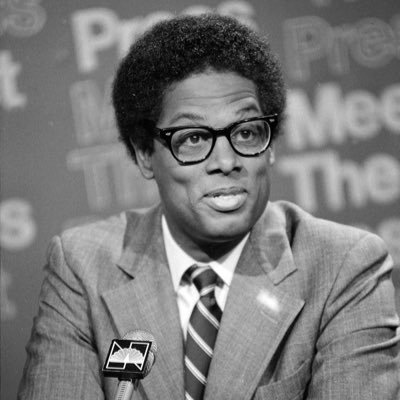
Warren Buffet: "Anytime there is a deficit of more than 3% of GDP, all sitting members of Congress are ineligible for reelection."
English
28
220
1.5K
26K
Andy Bodea
Andy Bodea@andybodea·
@BillAckman @realDonaldTrump President Trump is right. Cupping at 10% is not an issue! Banks borrow at some 2-4% and lending at 10% is plenty of margin to play with.
English
0
0
0
26
Bill Ackman
Bill Ackman@BillAckman·
I think President @realDonaldTrump’s goal of reducing credit card interest rates is a worthy and important one. My concern about capping rates at 10% is that doing so will inevitably cause millions of Americans to have their cards cancelled as credit card companies lose the ability to adequately price subprime credit risk. Consumers denied credit cards will be forced to turn to loan sharks whose rates and terms will be vastly worse for borrowers. While 20% or more is a high rate, loan sharks can charge multiples of these rates, and the cost of default can be physical harm or worse. I have no investments in the credit card space so I am not the expert, but the market for credit cards appears highly competitive. The best way to bring down rates would be to make it more competitive by making the regulatory regime more conducive to new entrants and new technologies. I commend the President for his focus on affordability for all Americans. Mortgage spreads and rates are coming down significantly due it his actions. Finding a way to bring down credit card rates without taking credit away from many Americans would have a very positive impact on the most disadvantaged Americans.
English
2.3K
496
5.8K
1.9M
a16z
a16z@a16z·
Marc Andreessen says that America's greatest strategic advantage lies not in mimicking China's centralized system, but in doubling down on its chaotic, competitive, entrepreneurial spirit. “What if we become more like us? And what if we lean even harder into innovation, and even harder into creativity, and even harder into entrepreneurship?”
English
109
146
1.2K
76.3K