
Sabitlenmiş Tweet
Cryoboy
6.6K posts


The highest-value human work in the AI era will be in domains with sparse reward signals. Internalize this, or watch your value erode over the next decade.
Math, programming, rote memorization, data science, all fucked. The classic “smart nerd” jobs are exactly where AI is strongest, because the feedback loops are dense. You can check the answer. You can run the test. That means AI can improve quickly, and humans will rapidly fall behind.
Your advantage as a human is in messy domains.
Taste. Judgment. Negotiation. Risk-taking. Politics. Sales. Science at the frontier. Anything you can only really learn by doing. Cross-disciplinary stuff.
The valuable domains will be the ones guarded by secrets, tacit knowledge, weak labels, long feedback cycles, and ambiguous outcomes. Places where the training data is scarce, the ground truth is disputed, and it's impossible to explain why something is good.
AI will still enter these domains. But we will be slower to trust it unsupervised there, because it will be harder to tell when it is right, harder to prove when it is wrong, and difficult to construct secure sandboxes. The stakes will be too high to YOLO it.
I find myself saying this over and over again to young people today: the future does not belong to people who are able to get good grades on tests. It belongs to people who can operate under uncertainty, in domains where correctness is hard to define.
Those domains will become the thin waist of the economy: as productivity everywhere else accelerates, the humans who excel there will become our economic Strait of Hormuz. The best humans in these domains will demand an enormous cut of the growing economic pie.
Your imperative going forward is to make sure you're one of these people.
(Or become an electrician. That probably works too.)
English

I’m pretty sure I now have a very accurate idea who Satoshi Nakamoto is, aka the founder of Bitcoin $BTC.
Thank you Tucker Tooley for allowing me to see the private screening before your release.
Absolutely amazing work, research, documentation and investigation.
I love Bitcoin even more now. The story is incredible.
#FindingSatoshi
English
@DrJesseMorse one anecdotal evidence might also be that there are jacked up bodybuilders who do intermittent fasting
English

A common myth in nutrition was that you couldn’t absorb more than 25-30g of protein at a time.
So the previous recommendation was to limit eating more than 30 g of protein at 1 time (every three hours) to avoid "wasting" it.
In actuality this only applies to certain patient populations, especially old adults.
Most younger people can still absorb large amounts of protein (100+ grams) but it takes about 12 hours instead of the initial 4 hours they tested.
Larger meals extend the anabolic window rather than capping it.
Make sure you are eating enough protein people, at least 100 grams per day, likely more for males.
William A. Wallace, Ph.D.@WilliamWallace
"Your body can only use 25-30g of protein per meal. Anything above that gets wasted." This claim has been repeated in fitness nutrition for over a decade, and it was built on studies that measured the right thing over the wrong timescale. Moore 2009 gave six young men 0, 5, 10, 20, or 40g of egg protein after leg-only resistance exercise and tracked muscle protein synthesis for four hours. MPS plateaued at 20g. Witard 2014 repeated a similar dose-response with whey protein after unilateral leg exercise in 48 resistance-trained men and found MPS rose 49% at 20g and 56% at 40g over four hours, with the authors concluding 20g was sufficient for maximal stimulation. Case closed, or so it seemed. The problem wasn't the dose. It was that a 4-hour window captures the peak response to 20g but only the opening chapter of what 40g is doing. Think of digestion as a funnel with a fixed flow rate. Pour a cup of water through it and it drains in minutes. Pour a gallon and it doesn't overflow. The funnel just drains at the same rate over a longer period. Protein behaves the same way. A smaller dose gets absorbed and used quickly. A larger dose digests over a longer window because the stomach slows gastric emptying and the intestine releases amino acids gradually. Muscle tissue keeps incorporating them wave after wave. The "ceiling" in those early studies wasn't a biological saturation point. It was what you see when you stop watching before the larger dose finishes working. Trommelen et al. (2023, Cell Reports Medicine) tested this directly. They randomized 36 recreationally active young men to 0g, 25g, or 100g of milk protein after a 60-minute whole-body resistance session and tracked muscle protein synthesis for twelve hours using a quadruple isotope tracer. In the first four hours, myofibrillar protein synthesis was only about 20% higher after 100g than after 25g. In the four-to-twelve-hour window, that gap widened to roughly 40%. That later window is where the bigger dose actually separates from the smaller one, and it's exactly where every prior dose-response study stopped measuring. The authors also reanalyzed the oxidation data from Moore and Witard and concluded that postprandial amino acid oxidation represents less than 15% of the increment in ingested protein. The paper states it plainly: "Protein ingestion has a negligible impact on whole-body protein breakdown rates or amino acid oxidation rates." Caveats belong in the read. This was young recreationally active men following a single bout of resistance exercise. Not trained athletes, not women, not older adults, not a longitudinal hypertrophy trial. A 2024 Witard commentary in the International Journal of Sport Nutrition and Exercise Metabolism flagged that the finding may not translate to resistance-trained young women with different anabolic kinetics. Practically: you don't need to portion exactly 25-30g of protein every three hours to avoid "wasting" it. Larger meals extend the anabolic window rather than capping it. Distribution across the day still matters for satiety, blood sugar, and hitting your daily target. But the rigid per-meal rule has weaker biology behind it than previously believed. Sources: pubmed.ncbi.nlm.nih.gov/19056590/ pubmed.ncbi.nlm.nih.gov/24257722/ pubmed.ncbi.nlm.nih.gov/27511985/ pubmed.ncbi.nlm.nih.gov/38118410/ pubmed.ncbi.nlm.nih.gov/38991545/
English
@Alice_comfy For people not working in tech it actually works totally fine : ) + I get 5TB of storage
English

Gemini is a masterclass in scoring highly on every benchmark while being totally useless in the real world
METR@METR_Evals
We estimate that Gemini 3.1 Pro with thinking level `high` has a 50%-time-horizon of around 6.4 hrs (95% CI of 4 hrs to 12 hrs) on our suite of software tasks.
English
Excellent analogy: Post-Mythos, LLMs have fully surpassed human hackers. Proving something is safe means spending more tokens than attackers will.
That's the PoW security model to a tee. Cryptoeconomics now applies to all software.
Recommended reading👇
dbreunig.com/2026/04/14/cyb…
English


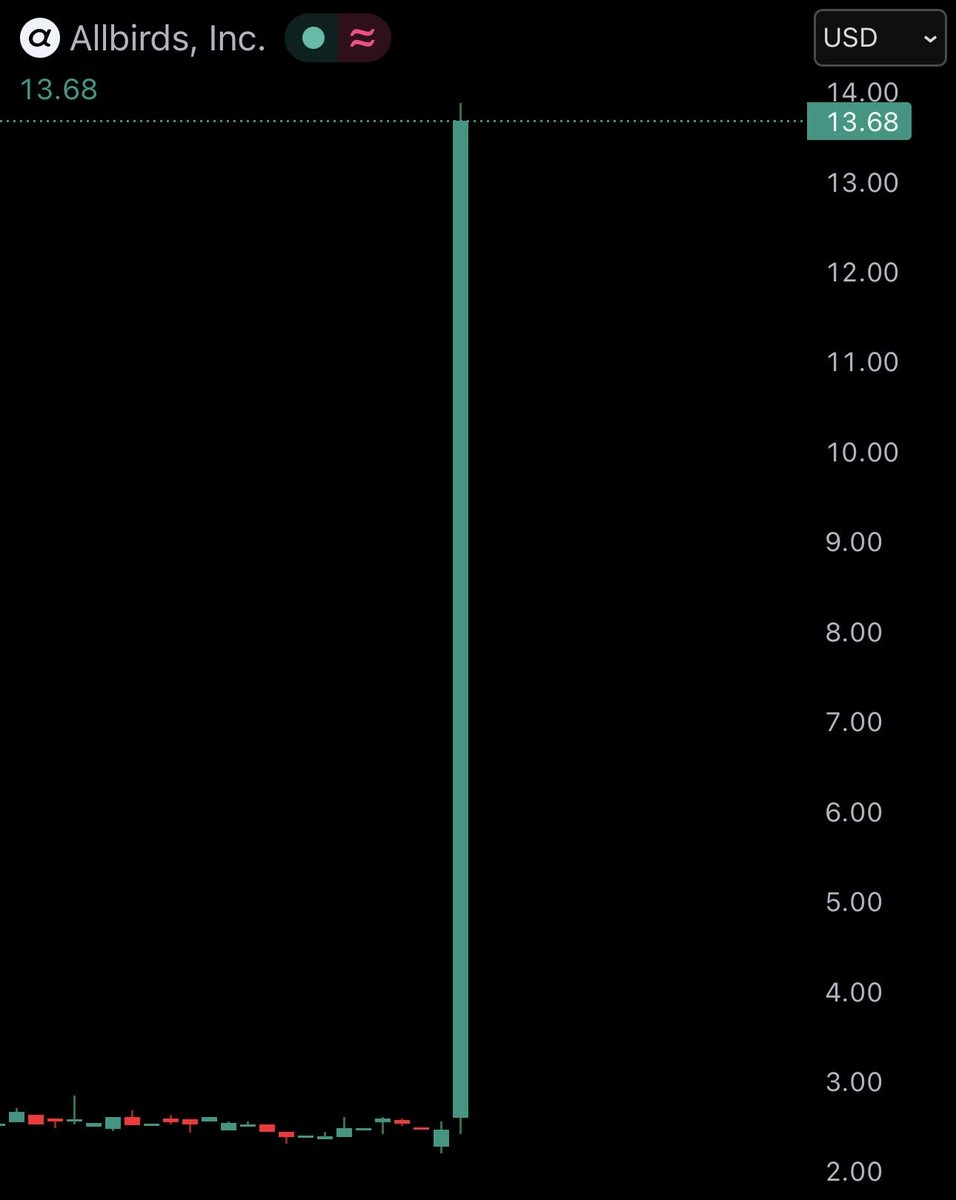
JUST IN: Allbirds $BIRD stock rises over 420% after announcing shift from shoes to AI.
English
@brian_armstrong @newlimit do you think we defeat aging if we get ASI ?
English

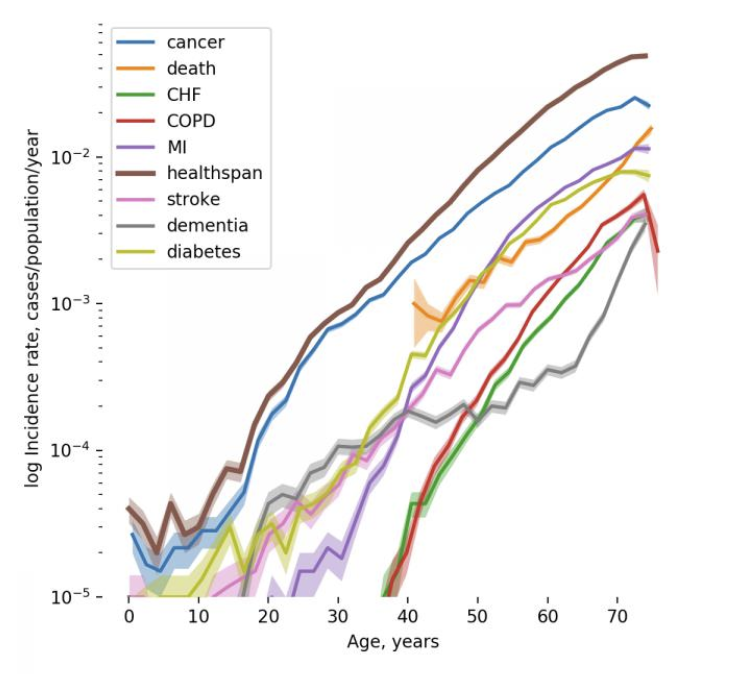
Aging is arguably the root cause of most major diseases. Our cells lose function as we age, allowing various conditions to manifest, which is why most major diseases correlate with age.
Yes, it is more complex than this, but this is a major component. @newlimit is working on treating a root cause of disease (aging) using epigenetic reprogramming.
English

⚡ FACT: Some altcoins collapsed 40% to 80% during the October 2025 crash.
English

If you haven't missed a flight in your life - you are probably not taking enough risk 😂😎

English
@kory_kilpatrick What was the rock bottom point in your life and how did you recover from that ?
English

Hypothesis: we actually CAN teach old dogs new tricks...if we start extremely simple and gradually scale up. Lets hunt for some science 🧐
GIF
English

Pretty sure God vibe-coded this world on a $200M/month Claude/Codex plan, kept saying “fix the bug” until hitting the rate limit, then pushed to prod anyway, and never looked back.
English

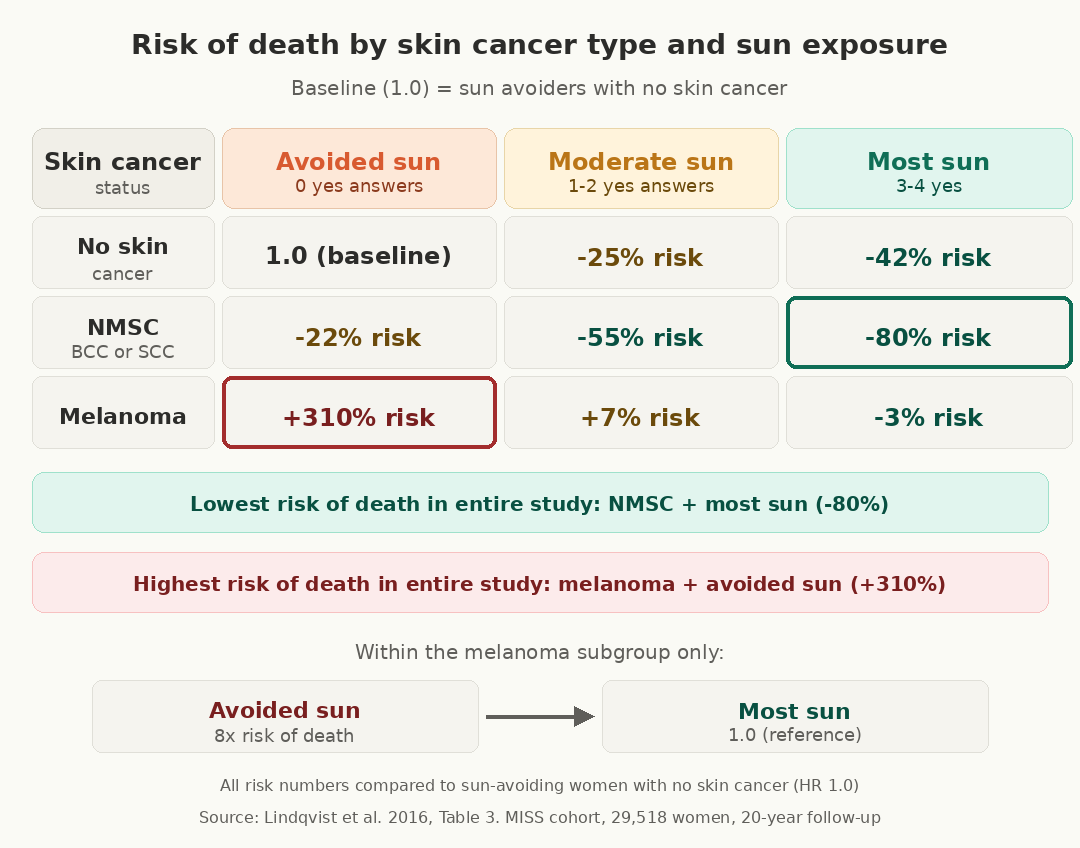
Guess who lived the longest in a 20-year landmark study of 30,000 women looking at sun exposure and mortality?
The ones who got non-melanoma skin cancer and the most sun! Not the cancer-free women. Not the sun avoiders. The ones who got skin cancer.
Counterintuitive, yes. But not wrong.
The sun has immense benefits for reducing cancer (including skin cancer), heart disease, diabetes, all-cause mortality risk.
More surprising details below.
English

My maternal grandfather was a house servant in Mumbai. Every time he had to send money back home to my grandmother and kids, he had to walk 3-4 km to reach the nearest post office. Home was a small village near Dwarhat in Uttarakhand, which didnt even have road access back then, the closest road came much later and was still about a km away from the village.
And sending that money wasnt a quick errand. He had to take half a day off, sometimes a full day, just to stand in long lines at the post office and send a "money order". The maalik he worked for would get pissed about it and cut his Sunday leave, and Sunday was the only day he had off in the entire week. He paid a fee that wasnt cheap for him, and even when everything went smoothly the money would still reach days later.
That was the reality of being poor, you had to toil just to move your own money. The fees were somewhat manageable because India had a nationalised postal service, but they were still harsh for a guy like my grandfather. The delays were the worst part. If a money order got stuck for a week or two my grandmother would end up borrowing wheat and dal from neighbours, especially in peak winter when supply was already tight.
Sometimes during strikes or disruptions he had to trust random intermediaries to carry the cash for him. You just didnt have many other options.
And this isnt some old story. The global average cost of sending remittances today is still around 6-7%. Thats what the poor are still paying just to move their own money across a border.
Now someone can send dollar stablecoins across borders in seconds for less than a cent, no bank sitting in between taking its cut. In Latin America, Africa, Southeast Asia, stablecoins are already becoming part of how people actually live. When your own currency is devaluing year after year, nobody has to sell you on the idea, you just want something stable you can hold and send whenever you need to.
My Nanaji deserved this convenience 50 years ago. Billions of people still deserve it today. Thats why @0xPolygon wants to move all money onchain 💜
English
@brainenergy4me One way to make wrong choice/decision is believing things won’t workout
English

I’m almost 34, had a million unforeseen things not go my way, some very major, and still haven’t let go of the belief things will work out for me in the end
/d\@kontrabana
it's rly funny how in your early 20s you just kind of assume things will work out for you and fall into place eventually and then you slowly realize they aren't going to
English
@indiranegi @bryan_johnson Interesting but Negi ji are you from Himachal or Utrakhand ?
English

@bryan_johnson I actually did this experiment with a continuous glucose monitor. 2 monitors side by side actually
Glucose dips rapidly from squats, but also comes back up rapidly when you stop.
Indira Negi@indiranegi
2. 🦵 Squats helped… briefly When I saw the steep fruit spike I did 50 squats. As soon as I stopped, it resumed spiking. A 20-min easy walk is better. Surprising because I thought short high intensity activity is better. What I'll do differently - allocate 20 mins of movement after meals
English

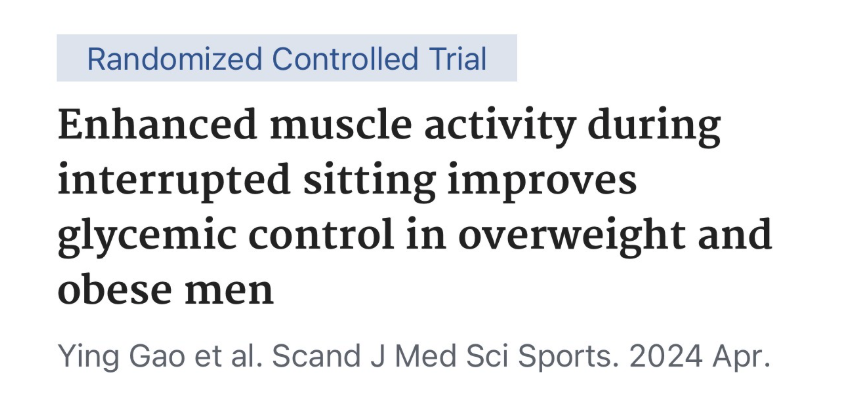
10 squats beats a 30 min walk.
For blood sugar control after a meal, doing 10 squats every 45 minutes outperforms a dedicated 30 min walk by 14%.
The mechanism: your quadriceps and glutes are the largest glucose sponge in your body. Activating them repeatedly clears more glucose than one sustained effort.
The 30 min walk isn't wrong, it's just not as effective.
English
@JacobTref Thank you so much for putting work into this. It really needed some help.
English

Alzheimer’s is one of medicine's hardest unsolved problems, and one of the most devastating.
At the OpenAI Foundation, we believe AI is well suited to its complexity. We're directing over $100M to scientists mapping the disease, designing drugs, & more.
I wrote about it here:
openaifoundation.org/news/ai-for-al…
English
