Artyom Gadetsky

41 posts

Artyom Gadetsky

Artyom Gadetsky

@artygadetsky

Phd student at EPFL

Lausanne, Switzerland Katılım Ekim 2015
583 Takip Edilen168 Takipçiler
Artyom Gadetsky retweetledi
Nikita Morozov
Nikita Morozov@nvimorozov·
(1/n) The usual assumption in GFlowNet environments is acyclicity. Have you ever wondered if it can be relaxed? Does the existing GFlowNet theory translate to the non-acyclic case? Is efficient training possible? We shed new light on these questions in our latest work! @icmlconf
Nikita Morozov tweet media
English
1
6
13
2K
Jiaxin Wen
Jiaxin Wen@jiaxinwen22·
New Anthropic research: We elicit capabilities from pretrained models using no external supervision, often competitive or better than using human supervision. Using this approach, we are able to train a Claude 3.5-based assistant that beats its human-supervised counterpart.
Jiaxin Wen tweet media
English
35
158
1.4K
241.2K
Artyom Gadetsky
Artyom Gadetsky@artygadetsky·
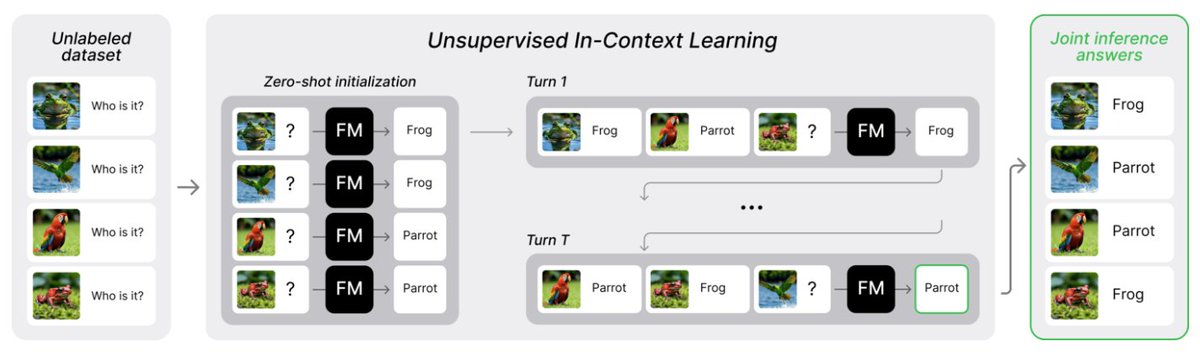
@AlexGDimakis @wzhao_nlp You may find our recent ICLR paper (openreview.net/forum?id=ohJxg…) interesting as well. We show that one can perform fully unsupervised adaptation of an LLM by seeking for answers that maximise their joint likelihood defined by an LLM itself. Works for reasoning tasks too.
English
0
0
5
177
Alex Dimakis
Alex Dimakis@AlexGDimakis·
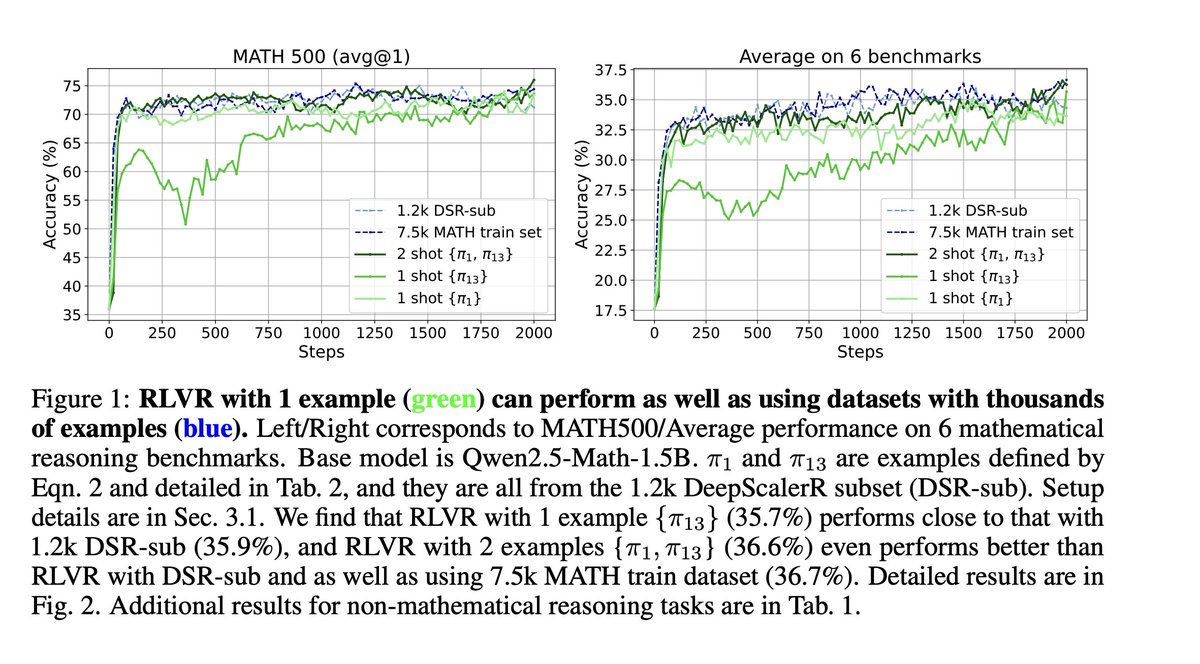
"RL with only one training example" and "Test-Time RL" are two recent papers that I found fascinating. In the "One Training example" paper the authors find one question and ask the model to solve it again and again. Every time, the model tries 8 times (the Group in GRPO), and a gradient step is performed, to increase the reward which is a very simple verification of the correct answers, repeated thousands of times on the same problem. The shocking finding is that the model does not overfit to this one question: RL on one example, makes the model better in MATH500 and other benchmarks. (If instead you did SFT repeating one training question-solution finetuning, the model would quickly memorize this answer and overfit). But with RL, the model has to solve the problem itself, since it only sees the question, not the answer. Every time it produces different answers, and this seems to prevent overfitting. The other papers are relying on the same phenomenon: you can have a small number of training questions and re-solve them thousands of times. You can do this for the test set (as test-time RL does) and still not overfit. We also independently saw this by doing RL training on half the test set and seeing benefits in the other half for BFCL agents. My thought now is that this shows our RL learning algorithm must be extremely inefficient. When a human is learning by solving a math puzzle, they immediately learn what they can learn by solving it once (or twice). No further benefit would come by assigning the same homework problem to students a tenth time. But in RL, we keep asking the model to re-solve the same question thousands of times, and the model slowly gets better. We should be able to have much better RL learning algorithms since the information is there. (1/2)
Alex Dimakis tweet media
English
38
192
1.4K
351.7K
Artyom Gadetsky retweetledi
𝚐𝔪𝟾𝚡𝚡𝟾
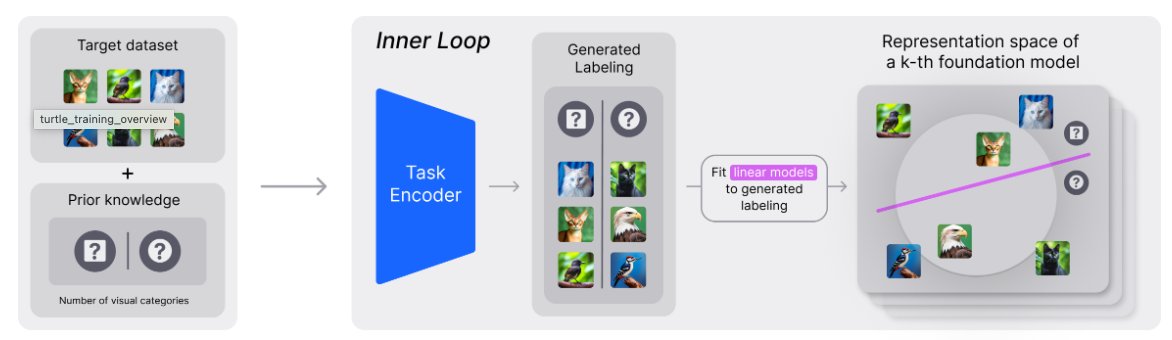
Large (Vision) Language Models are Unsupervised In-Context Learners Joint inference enables fully unsupervised adaptation for LLMs and VLMs (no labels, no prompts). Instead of per-input zero-shot prediction, it solves all inputs together, uncovering structure across tasks. Two scalable forms: unsupervised fine-tuning and ICL. Achieves +39% on GSM8K, matching supervised methods across NLP, math, vision, and API-only models like GPT-4o.
𝚐𝔪𝟾𝚡𝚡𝟾 tweet media
English
4
23
113
5.6K
Artyom Gadetsky retweetledi
Maria Brbic
Maria Brbic@mariabrbic·
Tired of manual prompt engineering to solve new task with your LLM? We introduce Joint Inference—a framework for fully unsupervised adaptation of large (vision) language models that often performs on par with supervised approaches 🔥 #ICLR2025 In collaboration with @zamir_ar lab — huge kudos to our amazing students: @artygadetsky, @andrew_atanov, @YulunJiang, @zhitong_gao, Ghazal Hosseini Mighan 🔗 Website: brbiclab.epfl.ch/projects/joint… 📄 Paper: openreview.net/pdf?id=ohJxgRL… 💻 Code: github.com/mlbio-epfl/joi…
Maria Brbic tweet media
English
1
11
48
7.6K
yobibyte
yobibyte@y0b1byte·
this is a very counterintuitive result
yobibyte tweet media
English
13
84
881
90.7K
Artyom Gadetsky
Artyom Gadetsky@artygadetsky·
@norpadon @EmilMieilica You can also use Plackett-Luce in case the function being optimized is defined only for hard permutations, i.e., imagine you learn a custom order of generating words in the sentence instead of left-to-right. arxiv.org/abs/1911.10036
English
0
0
1
71
Artur Chakhvadze
Artur Chakhvadze@norpadon·
@EmilMieilica This allows you to define smooth relaxations to the permutation operators similar to how you can use softmax to make a smooth version of an argmax You can also apply the classic Gumbel-softmax trick to Sinkhorn matrices to get a stochastic approximation: arxiv.org/abs/1802.08665
English
2
0
1
159
Artur Chakhvadze
Artur Chakhvadze@norpadon·
By the way, if you didn't already know, sorting is a (kinda sorta) differentiable operation
Artur Chakhvadze@norpadon

@swnelson_ @eshear There is a trivial unbiased O(1) estimator for the number of inversions. You can optimise it with stochastic gradient descent (use something like Gumbel-Sinkhorn trick to backpropagate through permutations)

English
1
0
9
853
Artyom Gadetsky retweetledi
Timofei Gritsaev
Timofei Gritsaev@gritsaev·
1/ GFlowNets are known for training a forward policy to generate complex objects step by step. However, an equally important piece specific to the GFlowNet paradigm is a backward policy, which undoes these steps and plays a crucial role in training.
Timofei Gritsaev tweet media
English
1
3
12
1.5K
Artyom Gadetsky retweetledi
François Fleuret
François Fleuret@francoisfleuret·
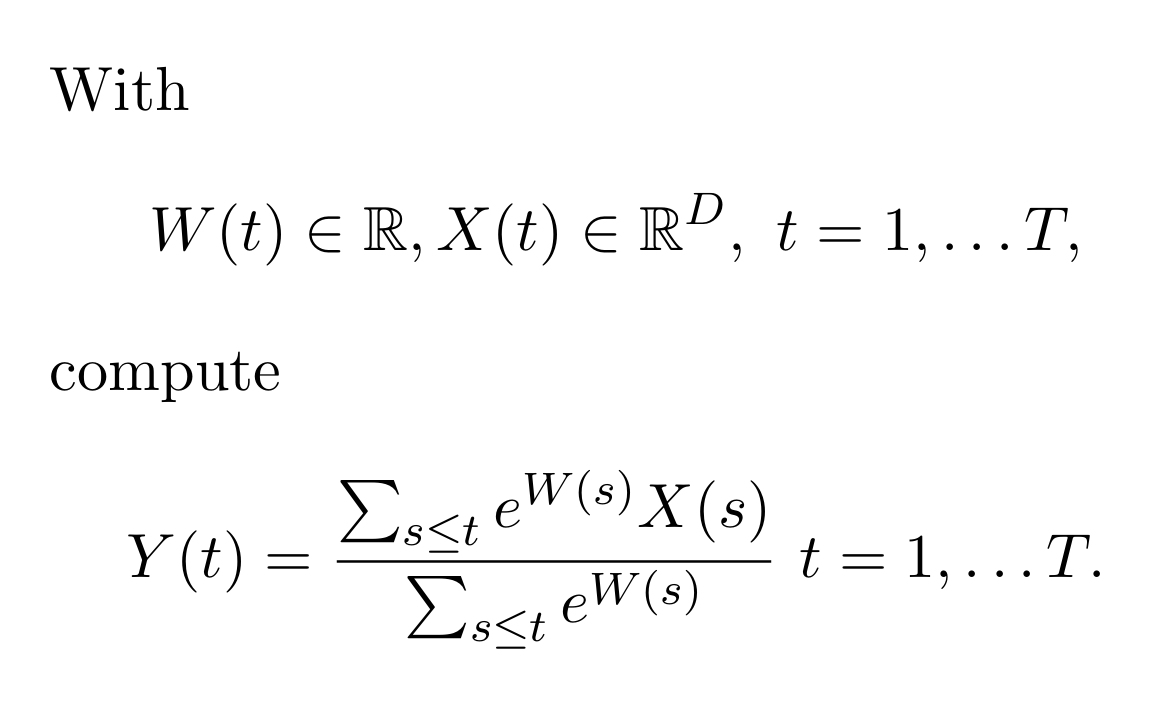
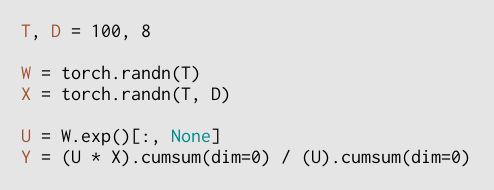
I want to compute the stuff formalized in the first pic in O(log(T)). The implementation in the second pic is correct but numerically unstable. I have a solution that requires a full-fledged associative scan. Is there a simpler one?
François Fleuret tweet mediaFrançois Fleuret tweet media
English
2
0
13
4.4K
Artyom Gadetsky retweetledi
Kirill Neklyudov
Kirill Neklyudov@k_neklyudov·
Je vais à Montréal! This June I'm starting a new position as an assistant professor at @UMontreal and as a core academic member of @Mila_Quebec. Drop me a line if you're interested in working together on problems in AI4Science, Optimal Transport, and Generative Modeling.
English
14
13
129
12K
Artyom Gadetsky retweetledi
Maria Brbic
Maria Brbic@mariabrbic·
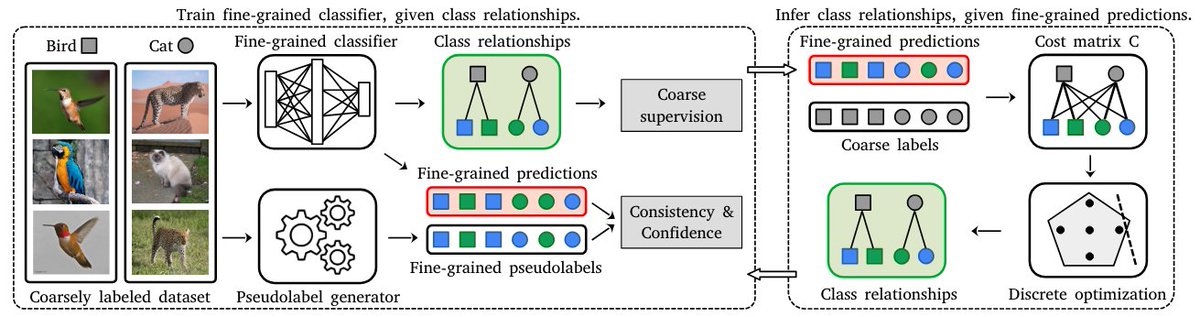
How to infer human labelling of a given dataset in a model-agnostic way? Check our new method HUME accepted at @NeurIPSConf as #spotlight!🌟 HUME provides a new view to tackle unsupervised learning. Kudos to my fantastic PhD student @artygadetsky! Paper arxiv.org/abs/2311.02940
Maria Brbic tweet media
English
1
21
102
24.5K
Alexander Novikov
Alexander Novikov@SashaVNovikov·
#AlphaTensor: adapting AlphaZero to symbolically find better (exact) matrix multiplication algorithms. By putting coefficients of the symbolic expression into a tensor, the algorithm design task becomes an (NP-hard) low-rank tensor decomposition problem, which we attacked with RL
Google DeepMind@GoogleDeepMind

Today in @Nature: #AlphaTensor, an AI system for discovering novel, efficient, and exact algorithms for matrix multiplication - a building block of modern computations. AlphaTensor finds faster algorithms for many matrix sizes: dpmd.ai/dm-alpha-tensor & dpmd.ai/nature-alpha-t… 1/

English
4
8
119
0
Artyom Gadetsky
Artyom Gadetsky@artygadetsky·
@andrey_oshev Если бы ты не бы женат, то подумал бы, что это таргетированная реклама тебе от Насти
Русский
0
0
0
0
OSHEV 🍉
OSHEV 🍉@andrey_oshev·
В чем прикол? Аккаунт под замком, я не подписан и никогда не был, но все равно вижу твиты и даже ответы к ним. Имейте ввиду :)
OSHEV 🍉 tweet mediaOSHEV 🍉 tweet media
Русский
1
0
0
0
Artyom Gadetsky retweetledi
Kirill Struminsky
Kirill Struminsky@k_struminsky·
We will be presenting “Leveraging Recursive Gumbel-Max Trick for Approximate Inference in Combinatorial Spaces” during #NeurIPS2021 poster session 8! We iteratively apply the Gumbel-Max trick to obtain structured variables instead of categorical. Poster: neurips.cc/virtual/2021/p…
GIF
English
1
8
27
0
Artyom Gadetsky retweetledi
Taisiya Glushkova
Taisiya Glushkova@glushkovato·
“Uncertainty-Aware Machine Translation Evaluation” is now on arXiv! A first step towards informative confidence estimates for MT quality predictions. Accepted to #EMNLP2021 findings. arxiv.org/abs/2109.06352 [1/7]
English
2
7
56
0