
Ashwin

491 posts

Ashwin banner
Ashwin

Ashwin

@ashwin_dev0x

building @SuiVer1fy | prev @alkimiexchange

Katılım Kasım 2023
769 Takip Edilen190 Takipçiler
Sabitlenmiş Tweet
Ashwin
Ashwin@ashwin_dev0x·
i was just cleaning my gallery, and I came across a video of me trying to fix a broken monitor at the start of the year and turning it into a backlight source. It had a bunch of complications and took me almost half a day to make it work. sometimes it’s just patience and focus that help something new click. this year or the next, it’ll all count for the path ahead.
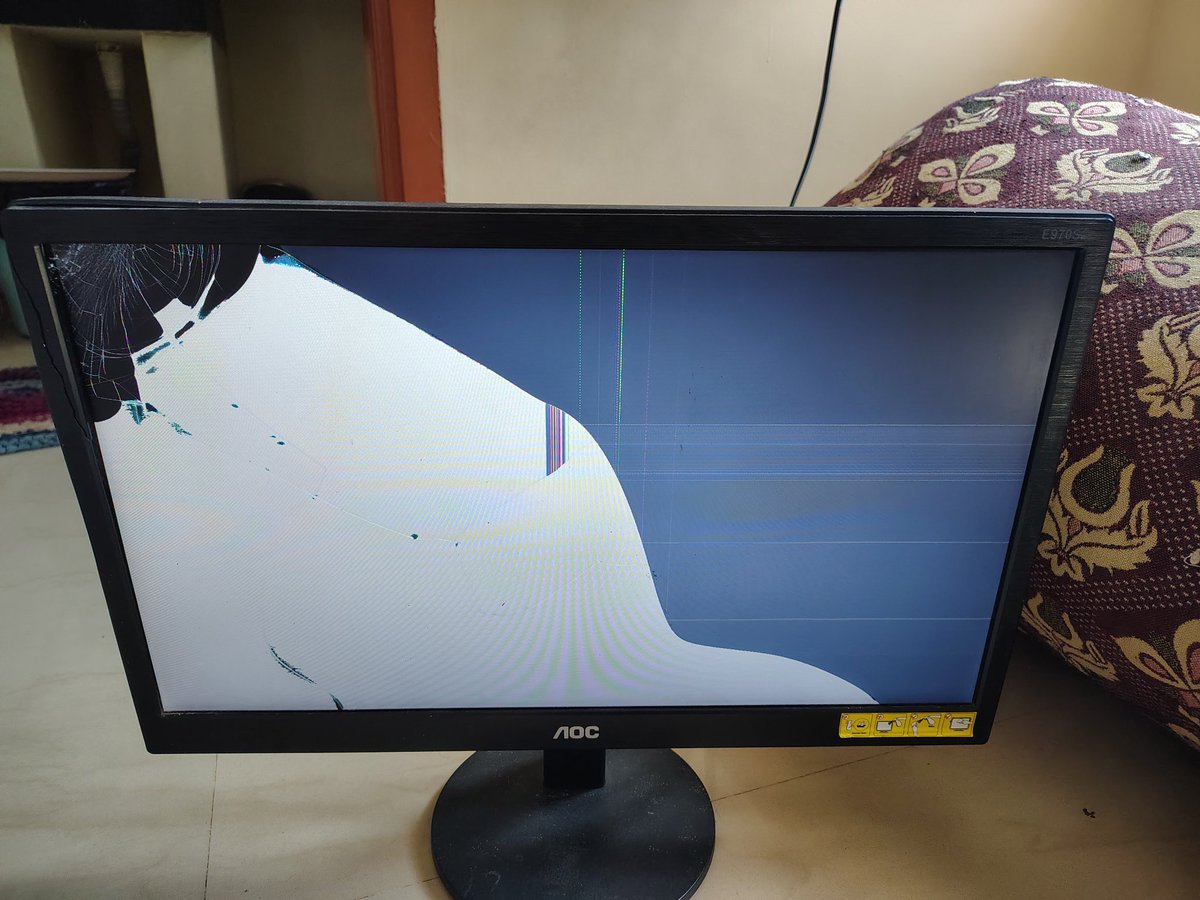
Ashwin tweet mediaAshwin tweet media
English
0
0
16
1.1K
Ashwin retweetledi
BL
BL@_smbrian·
In the future, music releases won't be coordinated with paper contracts. They'll be coordinated by agents on behalf of artists and labels running on @CodaNetwork infrastructure backed by @SuiNetwork.
English
1
8
49
1.6K
Ashwin retweetledi
Kaushik
Kaushik@0xkaushik_k·
Excited to announce that we won yesterday's @encodeclub hackathon with our Private Inference project, and the product is already live. Here's why we believe this matters: Current AI providers have centralized control. Companies can change policies, restrict access, or shut down services at any time. The recent Fable-related ban is a good example of how access can be limited when a central authority decides to flip the switch. At the same time, users contribute valuable data that helps improve AI models, but they rarely receive any direct benefit or discounts for doing so. We're building Private Inference, a decentralized network where anyone can access and run local AI models while preserving greater control and privacy. Instead of GPUs sitting idle or being used for proof-of-work mining, node operators can contribute compute power to run AI workloads and get paid by consumers who use the network. Open-source models like @Zai_org GLM 5.2 are already available for free, but running them still requires significant hardware resources. Our goal is to create a distributed compute marketplace that makes these models accessible to everyone while rewarding people who provide the infrastructure. @PinaivuAi chose the @SuiFoundation stack because three Sui-native components solve core problems in decentralized AI inference: Sui (Gasless Stablecoins & Settlement) → @SuiNetwork 's recent support for gasless stablecoin transactions makes decentralized inference payments practical at scale. GPU node operators can receive payouts without needing to maintain a SUI balance for gas, reducing onboarding friction and simplifying participation. Combined with Sui's object-centric architecture, this provides a clean and efficient settlement layer for a global network of independent compute providers. Nautilus → Enables verifiable off-chain infrastructure. The coordinator and chat-relayer run inside @awscloud Nitro Enclaves, and Nautilus allows their attestations to be registered and verified on-chain, turning these services from trusted black boxes into cryptographically verifiable components. @WalrusProtocol (Context Layer) → Consumer inference is fundamentally stateless, and there is no KV-cache sharing between independent GPU nodes. Without a shared memory layer, multi-turn conversations would become tied to whichever node handled the first request, creating hidden centralization.@WalrusProtocol solves this by acting as a decentralized context layer: encrypted conversation history is stored as content-addressed blobs that any node can fetch, decrypt, and continue from. A node serving turn ten does not need to have served turn one. This allows inference routing to remain flexible while preserving conversational continuity. Routing receipts are archived to Walrus as well, creating a tamper-evident audit trail that persists independently of Pinaivu's infrastructure. would love to get feedback on it ?@EvanWeb3 @GDanezis @abhinavg6 @b1ackd0g @kostascrypto @EmanAbio @0xAmoghGupta @SuiCommunity @suidevelopers @DTDaun
Pinaivu@PinaivuAi

What if AI inference wasn't limited by a single machine? Heres what we've been building

English
1
4
14
676
Anastasios Nikolas Angelopoulos
Anastasios Nikolas Angelopoulos@ml_angelopoulos·
Just to be clear, if you remove Fable which is unavaialble, GLM-5.2 (Max) is the #1 model in the world for frontend coding. This is a huge moment. OSS has caught up with proprietary, and China has caught up with the US, in this very important domain.
Arena.ai@arena

Exciting news: GLM-5.2 (Max) ranks #2 in Code Arena: Frontend, with +29pt over Claude Opus 4.7 (Thinking) and only behind Fable 5! GLM-5.2 is the best open model vs Kimi-K2.6 and Minimax-M3 by a large margin. - #2 React and #4 HTML sub-leaderboards - Ranks as the top model in nearly all sub categories: Brand & Marketing, Reference-Based Design, Data & Analytics, Consumer Product, Gaming, and Simulations. Congrats @Zai_org for the incredible milestone!

English
144
358
4.3K
596.4K
Ashwin
Ashwin@ashwin_dev0x·
what’s actually working well? agent + local model combo that’s reliable?
English
0
0
2
29
Ashwin
Ashwin@ashwin_dev0x·
spent hours debugging local llm tool-calling with claw code + ollama on a 16gb amd gpu. tried: qwen3:14b, gemma4-26b (16gb quant), gemma4:e4b. root causes: thinking-token corruption + ollama’s default 4k context silently truncating tasks.
English
1
0
1
92
Ashwin retweetledi
Kostas Kryptos
Kostas Kryptos@kostascrypto·
AI builders, users, agents: you can finally take your memory and context with you. Walrus Memory works across all major LLMs in just a few lines of code, OpenClaw / NemoClaw via plugin & more. IMO this is where we'll see the access control and verifiability of Walrus really shine. Putting users for the first time in full control of their AI data and making it possible for agents to collaborate with shared context / without trust assumptions. I think this is a profoundly important primitive for AI. Expect some fascinating use cases coming out of this
Walrus 🦭/acc@WalrusProtocol

Today, we're going after one of AI's most important unsolved problems. Introducing: Walrus Memory. 🦭 A portable memory layer that lets your AI agents carry context across every app you run them in. No more starting from zero. No more being locked into one platform. Portable, verifiable, and fully under your control. Take your agent's memory anywhere:

English
20
19
159
8.3K
Ashwin retweetledi
BL
BL@_smbrian·
We’re working on an open-source package for hardware attestation on Sui. Rust verifiers plus Move witness packages that turn Apple App Attest, Android Key Attestation, and NTAG 424 blobs into typed witness structs consumable in any PTB. Verification runs inside an AWS Nitro Enclave, and every on-chain call re-checks the enclave PCRs against an immutable Policy object, with no long-lived signing key to trust or rotate. Apple App Attest is live on testnet, end-to-end through a real iPhone. Android and NFC are up next. If you're wondering where @_StudioMirai and @CodaNetwork are going, this is alpha. github.com/unconfirmedlab…
English
2
6
27
1.7K
Ashwin retweetledi
Sui Developers
Sui Developers@suidevelopers·
Imagine writing payment logic where you never have to debug a "partially completed" multi-party transaction again. How? Payment Intents on Sui. ⬇️
English
2
3
32
2K
Ashwin retweetledi
Walrus 🦭/acc
Walrus 🦭/acc@WalrusProtocol·
🦭 Building Walrus, the foundations were always going to be the prerequisite. The harder question is what gets built on them. @GDanezis and @RJ_Simmonds on decentralization, data ownership, and what's next. YouTube link below 👇
Walrus 🦭/acc tweet media
English
12
12
96
4.2K
Ashwin
Ashwin@ashwin_dev0x·
5/ every recall, remember, analyze, ask response is BCS-signed by the enclave key. verify off-chain with ed25519.verify or on-chain via move module deployed in @SuiNetwork using verify_signature<T, Response>. we can mitigate relayer operator trust by using nautilus.
English
1
0
1
37
Ashwin
Ashwin@ashwin_dev0x·
1/ just shipped the MemWal relayer template for nautilus-ops. Rust (Relayer) + TypeScript (Sidecar) inside one Nitro enclave. Relayer spawns a TypeScript sidecar component (Node 22 + tsx) and manages it. all networking auto-configured. zero manual socat wiring.
Walrus 🦭/acc@WalrusProtocol

Building a memory layer for agents takes time. Redis for caching. S3 for storage. A vector DB for retrieval. And somehow it still doesn’t work right. Today, we’re excited to announce MemWal: a single, verifiable memory layer for agents — persistent, shareable across systems, and no more fragmented infrastructure. Just memory that works. 🦭 Learn more about MemWal, now on Devnet 👇

English
2
0
5
133