Dr. Ashwin Saboo
13.5K posts

Dr. Ashwin Saboo
@ashwinrsaboo
MD (PGIMER) Pediatrician/Neonatologist, researcher w/ interest in politics, economics, travel, entrepreneurship, digital health and writing. RT≠endorsement
Abu Dhabi & Mumbai Katılım Ekim 2009
3.5K Takip Edilen1.2K Takipçiler
Dr. Ashwin Saboo retweetledi

Video: Massive Dust Storm Plunges Rajasthan's Bikaner Into Near-Darkness ndtv.com/india-news/vid…
English
Dr. Ashwin Saboo retweetledi

Different parts of India are witnessing soaring temperatures and the challenges that come with it. This heat is harsh on all of us and I urge you all to take as many precautions as possible. Please stay hydrated, keep water with you when stepping out. Offer a glass of water to others. In weather like this, such kindness goes a long way.
English

@StableInvestor We are neither ships, nor we are built for travel
English


As I embark on a journey through North India over the next few days, crossing into Haryana, Punjab, Delhi, Rajasthan and more I’m struck by a stark contrast. The strides these states have made in the past 15 years especially in industrialization and business scale are truly inspiring.
I don’t mean to say that Bengal is behind in every sense Bengal has carved out a unique niche for itself. But when it comes to the magnitude of industrial growth and large-scale business expansion, Bengal has missed a step in the last 15 years.
I sincerely hope the next decade turns that around bringing rich opportunities for both business owners and employees alike.
Here’s to a future where Bengal thrives with renewed industrial momentum.

English
Dr. Ashwin Saboo retweetledi

Your Salary May Rise, But Your Lifestyle Inflation Will Rise Faster
Don’t fool yourself by assuming your family expenses will rise only by 5-6% every year. In reality, most families today are facing 6-15% inflation depending on their lifestyle, commitments, and financial habits. The dangerous part is that this inflation is not driven only by essentials like groceries or electricity bills. It is increasingly driven by “want-based living” disguised as “need-based spending.” Bigger homes, premium schools, frequent vacations, gadgets, eating out, branded living, multiple subscriptions, and social-status spending are silently becoming permanent monthly commitments. Once these expenses enter your lifestyle, reducing them becomes emotionally painful. The result? Even a decent salary hike starts feeling insufficient within months.
The bigger risk is that future inflation may hit harder where it hurts the most - education and medical costs. These are already rising much faster than normal inflation and can easily cross double digits annually. A single medical emergency or higher education goal can derail years of savings if you are financially unprepared. Families who built their lifestyle assuming stable income and moderate inflation may face severe stress if economic conditions worsen. Hence, the real financial planning is not about calculating today’s expenses. It is about identifying which expenses are genuine needs and which are lifestyle traps. The more your spending depends on status and comfort, the more vulnerable your financial life becomes during uncertain times.
English
Dr. Ashwin Saboo retweetledi

His name was Yellapragada Subbarao.
He was born on January 12 1895 in Bhimavaram, in present-day Andhra Pradesh. His family was poor. Several of his siblings died young from disease.
He studied at Madras Medical College but his British professor deliberately gave him a lesser diploma instead of a full MBBS degree.
He scraped together enough money and sailed to America in 1923. He arrived in Boston with almost nothing.
To pay his fees at Harvard Medical School he worked as an attendant at a hospital, cleaning rooms and changing bedsheets at night. Colleagues called him the Indian who cleans toilets.
He did not stop.
At Harvard he began research with chemist Cyrus Fiske. Together they developed the Fiske-Subbarao method for measuring phosphorus in body fluids, still used in biochemistry today.
He then discovered the role of phosphocreatine and adenosine triphosphate in muscular activity. That discovery entered biochemistry textbooks worldwide.
It is what we now call ATP, the energy currency of every living cell.
Harvard denied him a full professorship. He was a foreigner and had few friends in the right circles.
His colleague Cyrus Fiske suppressed and destroyed many of his contributions out of jealousy. Years of Subbarao’s work had to be rediscovered by other scientists because Fiske would not let them be published.
He joined Lederle Laboratories instead. There he developed the first method to synthesise folic acid, Vitamin B9.
He showed it could treat megaloblastic anaemia and tropical sprue. He then helped develop methotrexate, one of the first chemotherapy drugs, still used today to treat cancer and rheumatoid arthritis.
He led the team that discovered Aureomycin, the first tetracycline antibiotic, more powerful than penicillin, which saved hundreds of thousands of lives during and after World War II.
He never became an American citizen. He lived in the United States for 25 years on a temporary visa. He applied for permanent residence and never received it.
On August 8 1948 he died of cardiac arrest in New York. He was 53 years old. No citizenship. No Nobel Prize. No fame.
A writer named Doron Antrim wrote this about him in 1950. “You have probably never heard of Dr. Yellapragada Subbarao. Yet because he lived, you may be alive today.”
The drug that treated your anaemia. The antibiotic that fought your infection. The chemotherapy that gave someone more time.
All of it traces back to a man from Bhimavaram who cleaned hospital rooms to pay his Harvard fees.
India forgot him. Science did not.
Follow for stories India deserves to remember.

English
Dr. Ashwin Saboo retweetledi

Price Increases over last 5 years...
New Cars: +20%
Groceries: +26%
Family Health Insurance: +27%
Shelter: +29%
Restaurants: +30%
Home Prices: +37%
Electricity: +39%
Dozen Eggs: +39%
Gas Utilities: +42%
Gasoline: +42%
Transportation: +43%
Auto Insurance: +58%
Fuel Oil: +63%
Ground Beef: +68%
Coffee: +105%

English
Dr. Ashwin Saboo retweetledi

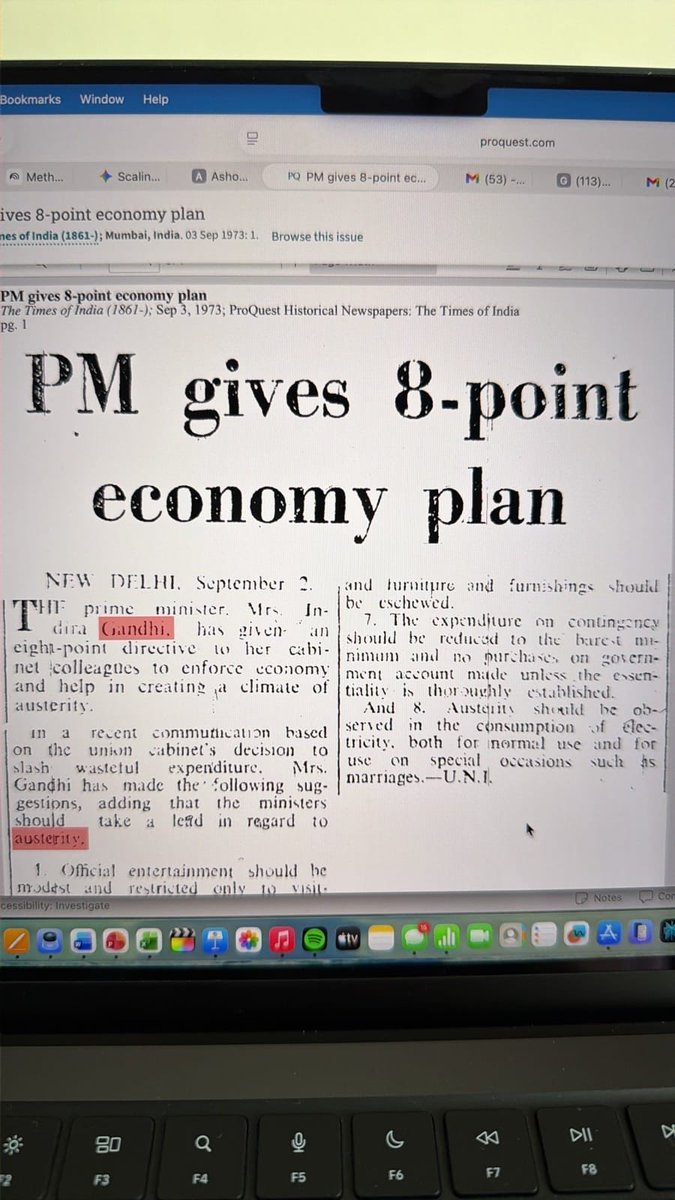
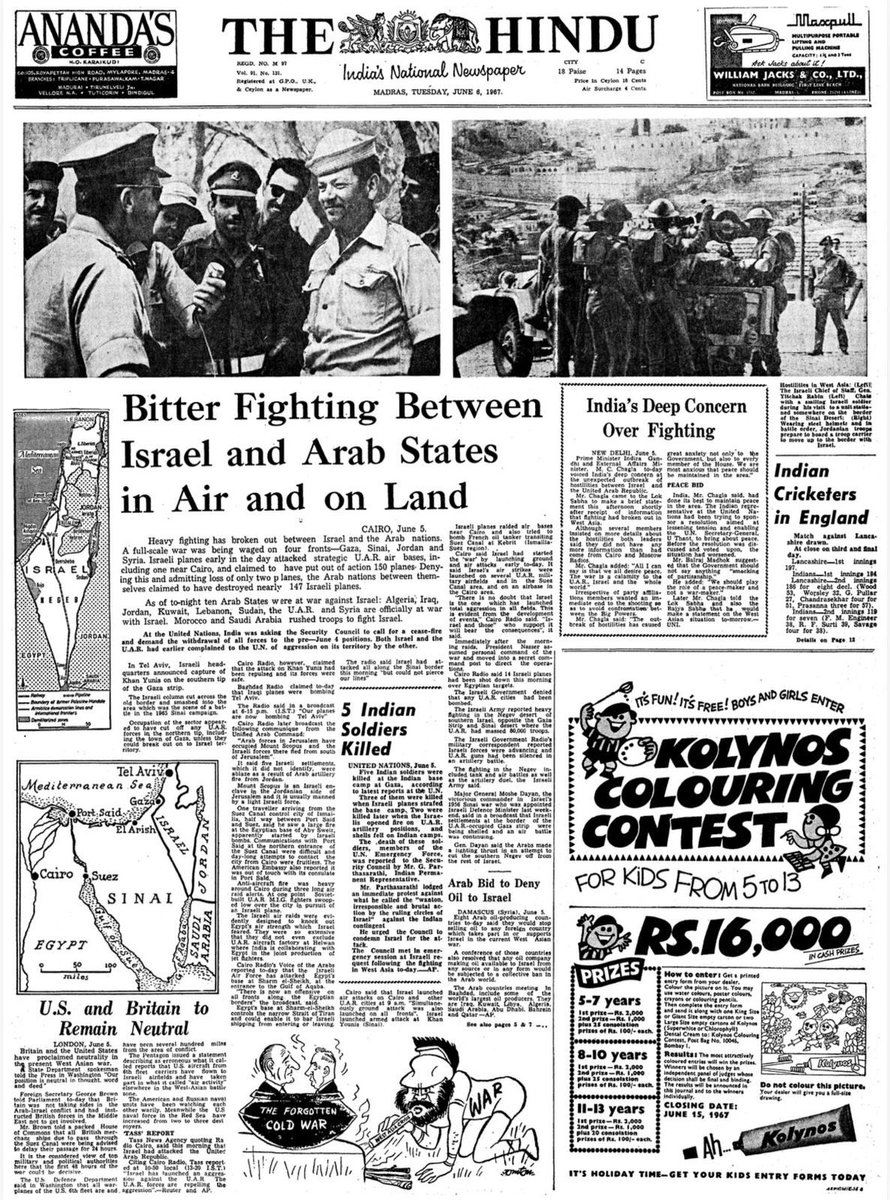
NOTE: the @the_hindu front page of 1967 of Indira Gandhi appealing not to buy gold is AI GENERATED and NOT GENUINE (REAL front page is below) . Yes, there were austerity measures in place and during the OIL SHOCK of 1973 (TOI image below) but this was an Indian economy struggling to find its feet and not one of the fastest growing economies in the world with $800 billion foreign exchange reserves it is today. So we can’t turn to a socialist economy of the past to explain decisions taken in the present. 🙏


English
Dr. Ashwin Saboo retweetledi

With elections done, PM Modi urges citizens to cut fuel use, avoid foreign travel.
PM to leave for 7-day trip to UAE, Sweden, Netherlands, Norway and Italy on Friday.
thehindu.com/news/national/…
English

@FrustuPlayer @KrsnaTheDarling FD is savings, not investment.
English
Dr. Ashwin Saboo retweetledi

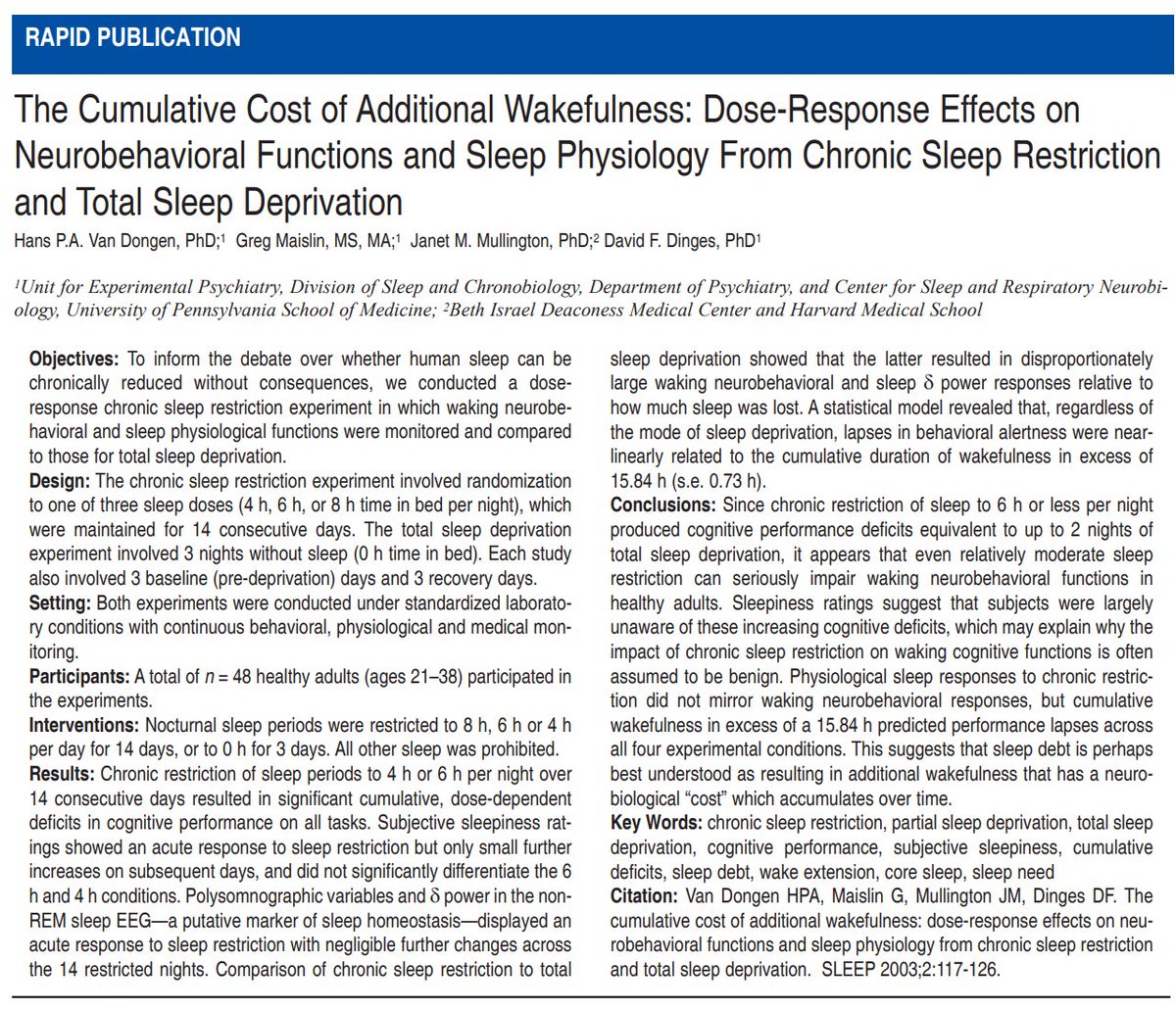
American public schools’ overreliance on YouTube for educational content runs counter to what is clear in several scientific studies: Learning analog is better than digital. on.wsj.com/3Rmrrat 🧵

English

@b50 Gold is good hedge for low ticket Indian investments
English

There's an obvious gap in the markets. Domestic investors are buying thousands of crores SIPs in Indian indices/stocks. BUT, most advisors and experts are saying go global - where there aren't any simple (index fund, not ETF) products. You face hurdles like 'closed for investment', or taxation documentation. All this for a Rs5,000/month SIP isn't worth it. Which is why higher ticket investments are going global while the lower ticket sizes do not have any option so local.
English
Dr. Ashwin Saboo retweetledi

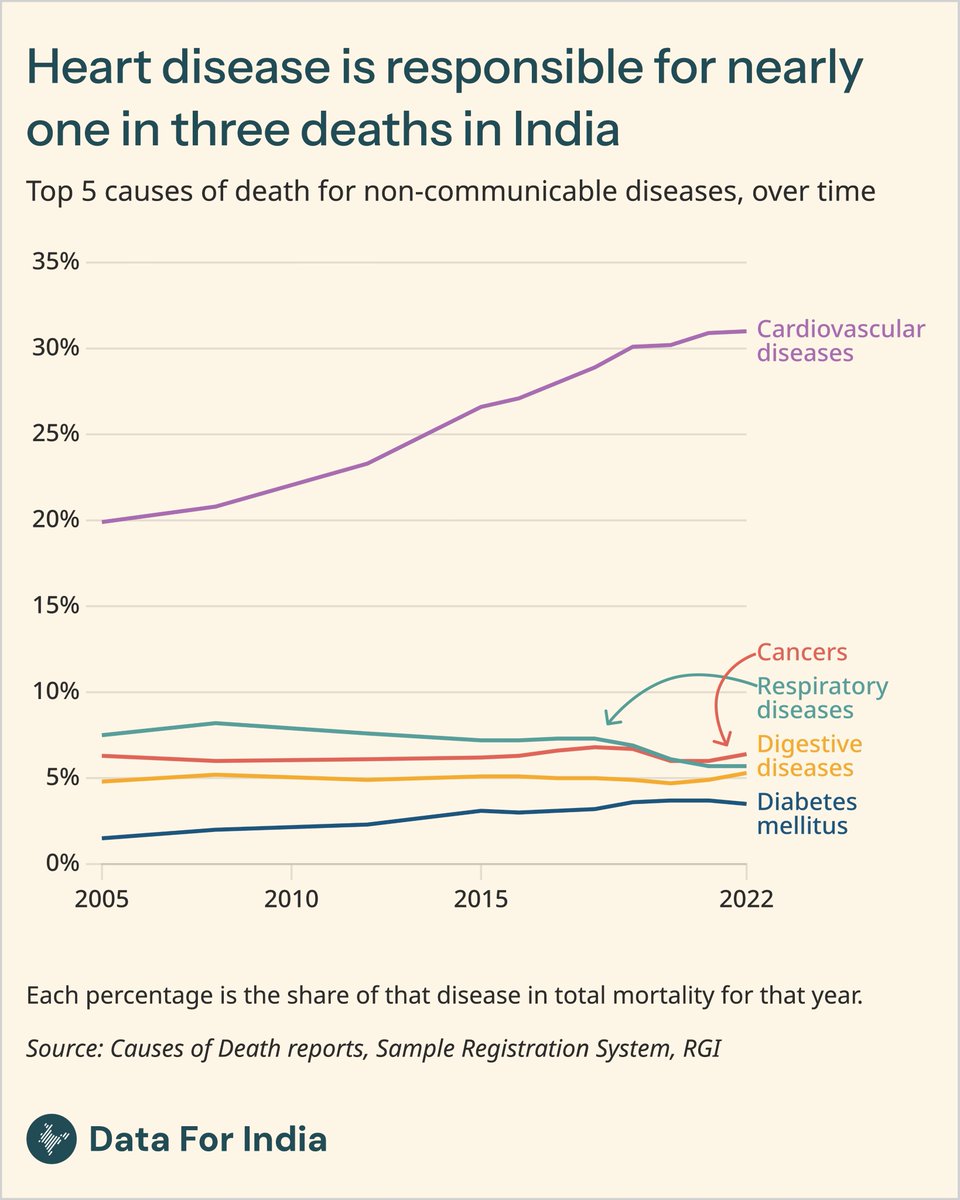
As a country gets richer and simultaneously ages, deaths from communicable diseases and conditions related to childbirth become more preventable and less common. Consequently, the relative share of deaths from non-communicable diseases such as heart disease and cancer begins to rise.
India is in the midst of this epidemiological transition. Non-communicable diseases account for over half of all deaths in India as of 2022, the latest year for which this data is available.
Among non-communicable diseases, heart disease is the largest contributor to Indian mortality and is now responsible for one in three deaths. From middle age onwards as the relative risk from infectious diseases declines, age and factors including obesity and hypertension put people at greater risk.
Cancer kills over 6% of Indians every year, with a higher contribution to mortality among those in their late 40s and early 50s in particular. 15% of deaths of women aged 30-54 are from cancer.
What are the top causes of death from communicable diseases in India? Read @Rukmini's piece to find out: dataforindia.com/indias-disease…
#Diseases #Health #PublicHealth #India #DataForIndia

English
Dr. Ashwin Saboo retweetledi

India attracts only ~9 million foreign tourists a year which is roughly the same number as annual visitors to the Louvre alone. Vietnam, a far smaller country, attracted more than double this number last year. Why does a country of our scale and tourism potential remain such an underperformer on the global tourism dashboard?
English
Dr. Ashwin Saboo retweetledi