Asi de Silva, CFA
5.4K posts

Asi de Silva, CFA
@asidesilva
Macro based Digital Asset investing @rockdenadvisors | Previously - UBS, Diamondback, Axiom, SocGen | Not investment advice


CHART OF THE DAY: The White House is fighting to keep the price of WTI crude oil under $100 a barrel. But for America's Main Street what truly matters isn't the price of crude, but the cost of refined products — and those are rising fast. Link to my @Opinion column on reply.

Atlantic Lithium is pleased to announce that it has secured access to funding of up to a combined value of US$16.4m through 1) a Strategic Investment by a group of Ghanaian pension funds and 2) a placement under the Company’s share placement agreement with Long State Investments Ltd. Read in full: bit.ly/47MdrMA. #ALL #A11 $A11 #ALLGH #Lithium #Ghana #Mining


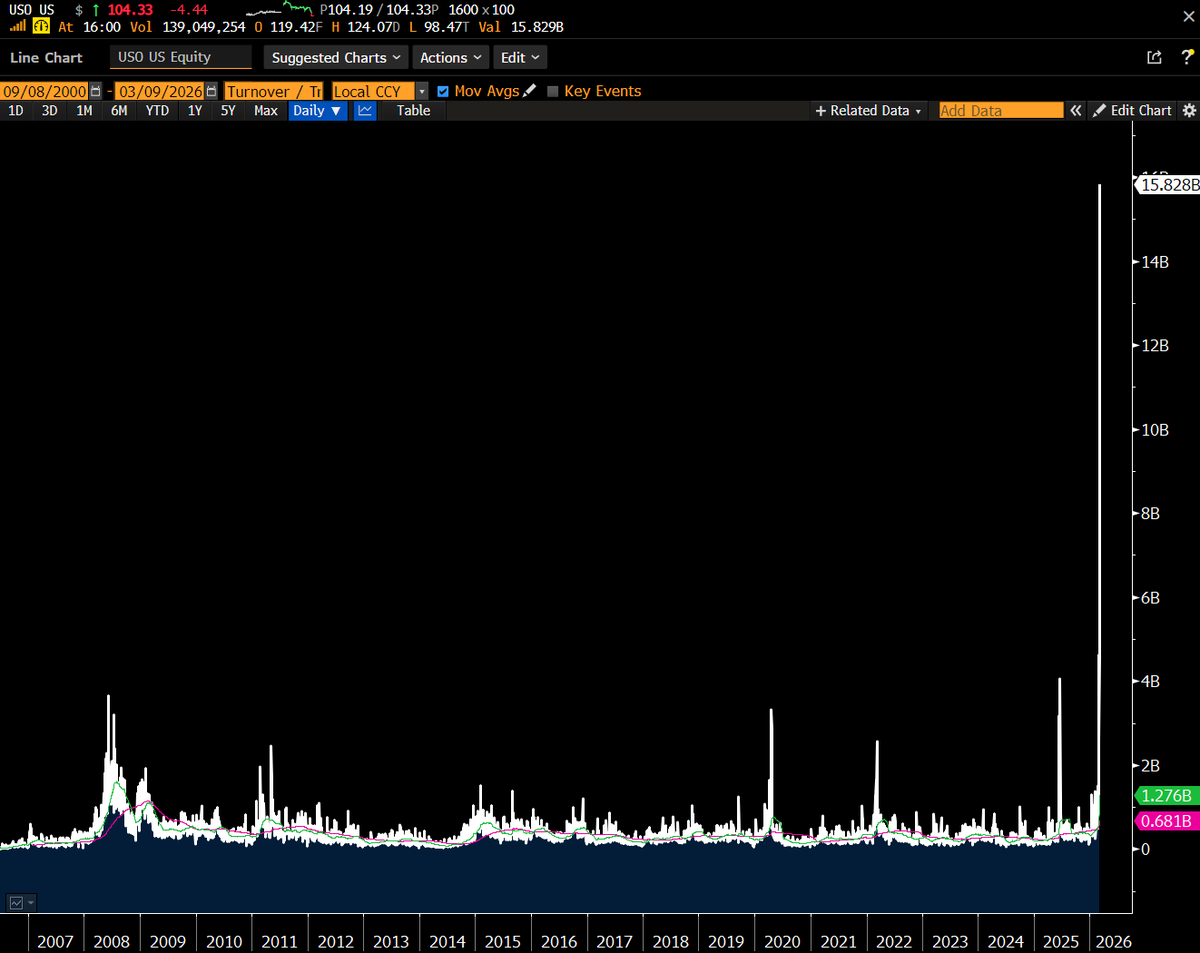
Now $10b of volume for USO, that’s more than MSFT and AMZN for context.

Oil prices surge in expectation of longer war Crude oil prices and calendar spreads are surging to multi-year highs as traders anticipate a longer conflict between the United States and Iran with a prolonged disruption of tanker traffic through the Strait of Hormuz. Front-month Brent futures have traded above $90 per barrel today up from less than $73 before the war erupted and below $60 in early January before the tensions before the United States and Iran began to intensify. After adjusting for inflation, the front-month contract has climbed to an average of $83 so far in March (36th percentile for all months since 2010) up from $69 (18th percentile) in February and just $62 (7th percentile) in December. Price increases have been concentrated in the nearest-to-expiry futures contracts with longer-dated contracts rising much less so far. Brent’s six-month calendar spread has flared into a severe backwardation of $15 per barrel in trading today from less than $3 before the war and less than $1 near the start of the year. The six-month spread is trading at the highest for more than three years and in the 99th percentile for all trading days since 2010. Chartbook: Brent prices and spreads Severe backwardation is consistent with an abrupt shortage of crude as a result of the war and the closure of the Strait to tanker traffic. The shortage is most acute East of Suez, where refiners across South and East Asia are scrambling to replace cargoes stranded in the Gulf. Governments across the region including India and China have also begun to discourage refiners from exporting fuels to conserve supplies for domestic customers. The patchwork of hurriedly introduced export controls is likely to worsen the region-wide supply crisis as each refiner and country races to be first to buy crude and products. In the first days of the war, traders anticipated a relatively brief conflict and swift re-opening of the Strait. But price increases are starting to accelerate and bleed along the futures curve, with rising prices for contracts with delivery dates later in the year, as traders re-evaluate the possibility of a longer war with a much bigger disruption ...


The State of Crypto Capitol: Upcoming DC Events! (expand to view all events)
📌03/16 Crypto Capitol ETH DC II ethdc.xyz (@DCDAOxyz )
-3/02 Blockchain Showcase on Capitol Hill - Reducing Fraud, Waste & Abuse tinyurl.com/3tr4mjn5 (Government Blockchain Association (GBA))
-3/15 Crypto Pickleball Mayhem luma.com/v07tzsep (@Web3DC )
-3/17-3/18 DC Blockchain Summit 2026 dcblockchainsummit.com (@DigitalChamber)
-4/10

Bullish Brent positions at nearly two-year high prior to attack on Iran Before the United States and Israel attacked Iran, hedge funds and other money managers amassed the largest bullish position in Brent crude futures and options for almost two years, anticipating some disruption of oil supplies. Immediately before the attack on Iran, bullish positions were the highest since April 2024, and among the highest since the onset of the coronavirus pandemic in 2020 ...

CHART (AND MAP) OF THE DAY: The Strait of Hormuz is a chokepoint for ~20m b/d of crude and refined products (~19.5% of global consumption). More than 80% of that volume goes to Asia. Alternative routes are limited to the Saudi East-West and the Abu Dhabi-Fujairah pipelines.

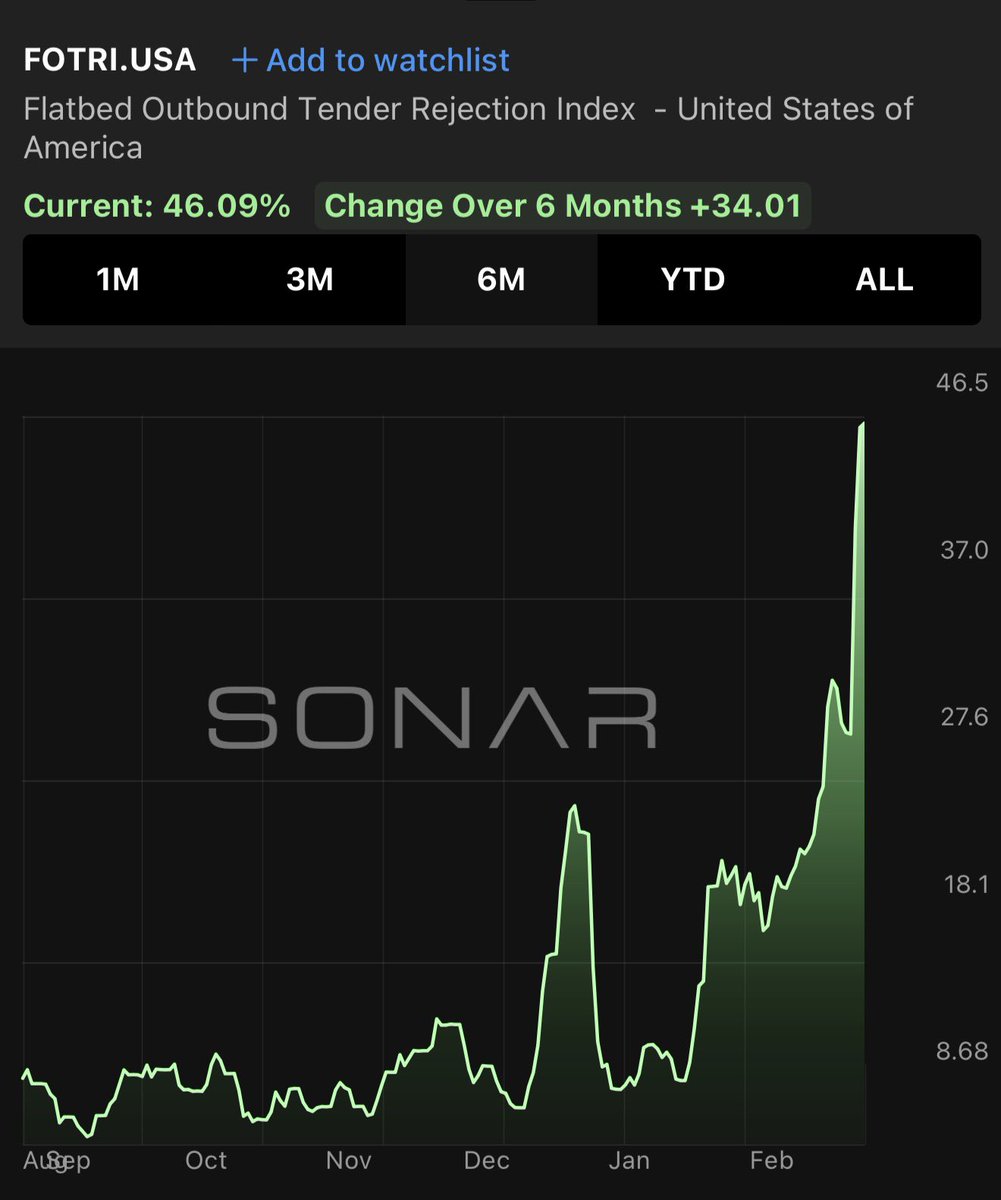
This is historic. Flatbed rejections continue to surge. Now at 46.09%, an all time high. We are still in the slow season. We are two months out before flatbed really ramps.

This column counters doomers who say AI could raise unemployment broadly. First, rarely has any technology directly destroyed more jobs than it creates, and I don't see it now. This chart (H/T @JamesBessen) surprised me: software employment still rising /1 wsj.com/economy/jobs/t…


How expensive is the AI/data center buildout? Glad you asked: via @MeghanBobrowsky @wjrothman & Alana Pipe wsj.com/tech/ai/ai-spe…