Augusto Correa 🐾Agt0

3.8K posts

Augusto Correa 🐾Agt0 banner
Augusto Correa 🐾Agt0

Augusto Correa 🐾Agt0

@augusto_bca

Sw y SI - DevOp - Big Data Tecnología, deportes y música De la izquierda progresista porque no se puede ser indiferente.

Loja, Ecuador Katılım Ağustos 2009
231 Takip Edilen177 Takipçiler
Augusto Correa 🐾Agt0 retweetledi
Amarillo
Amarillo@anyelamarillo·
Un tipo llamado nbatman en Reddit construyó accidentalmente el sitio web más útil de internet. Se llama FMHY (Free Media Heck Yeah). Este es el sitio web que Google eliminó de los resultados de búsqueda por violaciones de DMCA, que Reddit censuró en la sombra por promover la piratería, que la Motion Picture Association marcó como una amenaza principal de piratería, y que la RIAA presionó a los proveedores de hosting para que abandonaran. Sigue en línea. Se actualiza todos los meses. Así es como funciona. FMHY es el índice. La wiki en sí no aloja nada. Solo te dice dónde vive realmente cada cosa gratuita en internet, organizada en 14 categorías con calificaciones de seguridad en cada enlace individual. → Películas y series en 4K de más de 50 sitios de streaming → Música con calidad de Spotify y Apple Music → Adobe Creative Cloud, Microsoft Office, AutoCAD, JetBrains → Cada curso pago en cada plataforma principal de aprendizaje → 100 millones de libros y artículos a través de Anna's Archive → Alternativas gratuitas a cada herramienta de IA paga → Una extensión de navegador SafeGuard que marca sitios inseguros en tiempo real Comenzó como un solo documento de Google mantenido por un moderador de Reddit en 2018. Google lo mató con un retiro por DMCA en 2023. La comunidad reconstruyó la wiki en su propio dominio, la reflejó en GitHub y IPFS, y ahora la ejecuta en 12 dominios de respaldo simultáneamente. No hay empresa. No hay CEO. No hay servidor central. Seis voluntarios anónimos mantienen todo el proyecto en su tiempo libre. Las donaciones a través de Ko-fi pagan el hosting. Nadie obtiene ganancias. Hollywood no puede cerrar esto. Spotify no puede cerrar esto. Adobe no puede cerrar esto. Toda la economía de suscripciones se mantiene unida por el hecho de que no sabes que esta wiki existe.
Amarillo tweet media
Español
33
551
3.9K
183.4K
Simi🦋🇺🇸
Simi🦋🇺🇸@Simi_2210_·
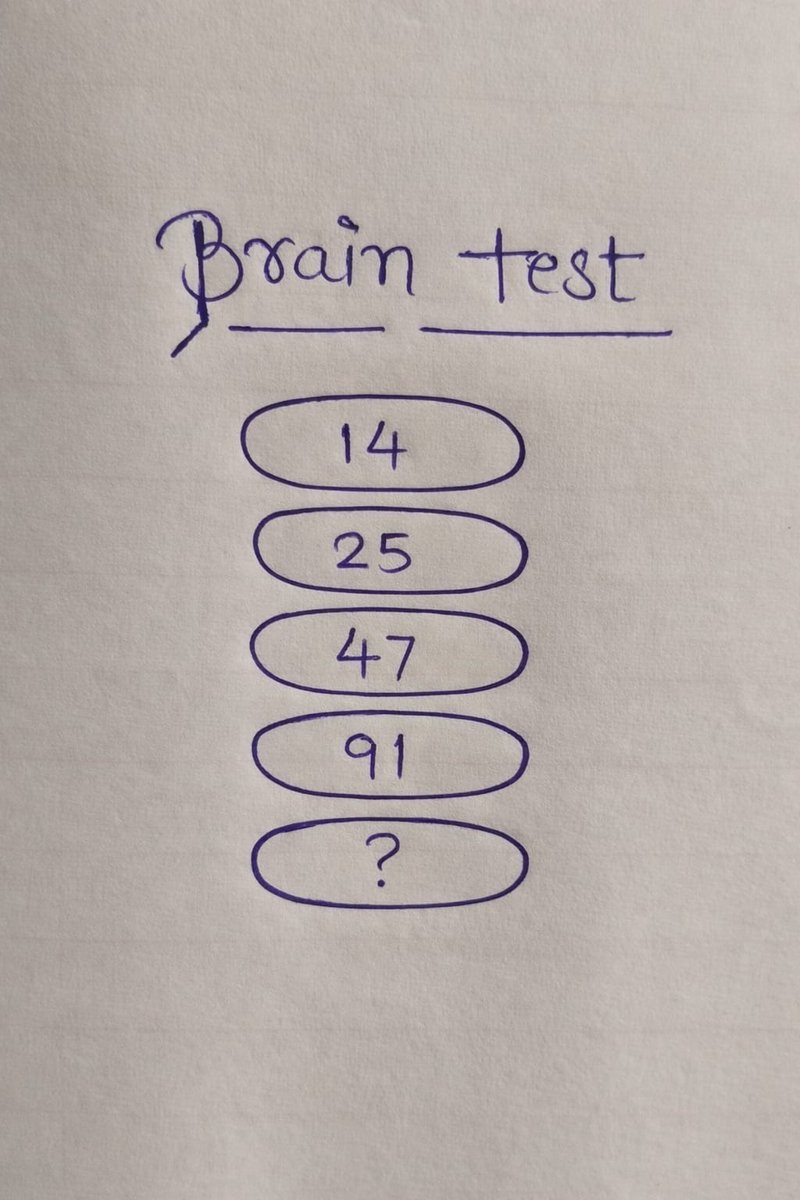
If you solve this, you’re different Can you solve ?
Simi🦋🇺🇸 tweet media
English
65.9K
1.1K
11.1K
6.8M
Daniel Noboa Azin
Daniel Noboa Azin@DanielNoboaOk·
Este país ha esperado años para ver a los corruptos responder ante la justicia. Hoy, desde afuera, quieren vender el cuento de los “presos políticos” para tapar lo evidente: en la cárcel hay un corrupto que debe responder al Ecuador. Debe responder por asociación ilícita en el caso Odebrecht, que fue una red transnacional que también llegó a Colombia, por cohecho en el caso Sobornos 2012-2016, y por peculado en el caso Reconstrucción de Manabí. Ahora que intentan reinventar al “preso político”, quiero ser enfático: esto constituye un atentado contra nuestra soberanía y una violación al principio de no intervención, consagrado en el artículo 19 de la Carta de la OEA y en el derecho internacional.
Español
3.4K
2.2K
8.1K
1.1M
Guayaco Arrecho
Guayaco Arrecho@sinparoguayaco·
Los de Liga de Quito deben agradecer a este delincuente de Byron Moreno que su invicto no se terminó en 2002. Barcelona siempre se paseaba en Quito cuando jugaba con Liga. Los Paz pagaban mucho para que los árbitros y prensa vendida los ayuden.
Guayaco Arrecho tweet media
Español
96
153
645
18.1K
Adi el Grande
Adi el Grande@icardo8·
🚨 ACTUALIZACIONES | ¡ESTADO DE SALUD DE TRUMP! Según la información de Estados Unidos, el estado de salud de Trump es el siguiente: — Sufrió un derrame cerebral parcial. Por eso lo hospitalizaron. Ahora se está recuperando. — Tiene hinchazón en el tobillo. — Además de todo esto, también tenía moretones en algunas partes del cuerpo. Se dice que su tratamiento tras la parálisis parcial está progresando favorablemente. Sin embargo, no podrá aparecer ante las cámaras durante al menos dos días.
Adi el Grande tweet media
Español
508
960
5.5K
1.3M
Augusto Correa 🐾Agt0 retweetledi
Mauro Andino Espinoza
Mauro Andino Espinoza@mauroandinoe·
El gobierno y ADN perdonaron más de 74 millones de dólares en impuestos a la familia Noboa. Ahora, interpretan una ley y nos clavan IVA del 15% a 60 productos alimenticios (muchos de primera necesidad). Es el régimen de los privilegios de unos pocos en contra de los intereses de la mayoría; una autocracia que persigue y empobrece. ¿Se rebelarán los sectores productivos? ¿Hasta cuándo soportará la gente este desvarío antidemocrático?
Ecuavisa Noticias@EcuavisaInforma

#Televistazo | Una circular del SRI sobre la aplicación del IVA 💸 en productos alimenticios genera reacciones en varios sectores. El documento alcara cuáles son los productos que mantienen tarifa 0 % y los que deben pagar el 15 %. @kedith80 con el reporte 🎙️. Más detalles 👉 ecuavisa.com

Español
77
972
1.6K
25.7K
Ana Kasparian
Ana Kasparian@AnaKasparian·
So did they kill Netanyahu or not?
English
5.9K
7.2K
100.7K
9.3M
Augusto Correa 🐾Agt0 retweetledi
boris garcía.
boris garcía.@borisvladimigar·
NO DEJEN QUE ESTE VIDEO PASE DESAPERCIBIDO....HOY MAS QUE NUNCA 👇
Español
182
8.8K
26.9K
423.9K
Augusto Correa 🐾Agt0 retweetledi
Miguel Ángel Durán
Miguel Ángel Durán@midudev·
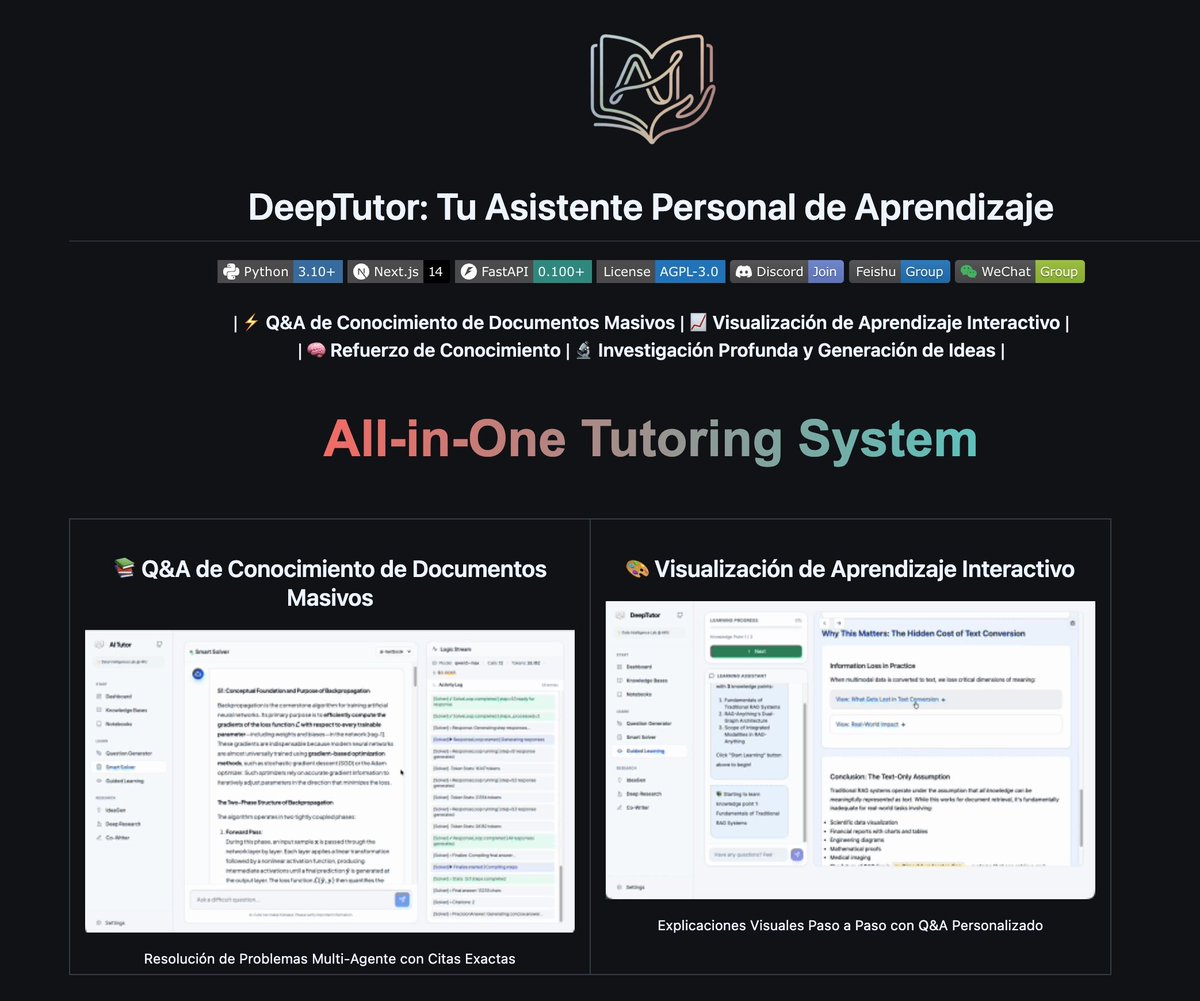
¡Proyectazo! Aprende cualquier cosa con DeepTutor. Un asistente de aprendizaje personalizado que usa IA. Es mucho más que un chatbot. Recuerda tu contexto, tu progreso y se adapta a cómo aprendes. Y encima es de código abierto: github.com/HKUDS/DeepTutor
Miguel Ángel Durán tweet media
Español
4
353
2K
58.1K
Augusto Correa 🐾Agt0 retweetledi
Fazt
Fazt@FaztTech·
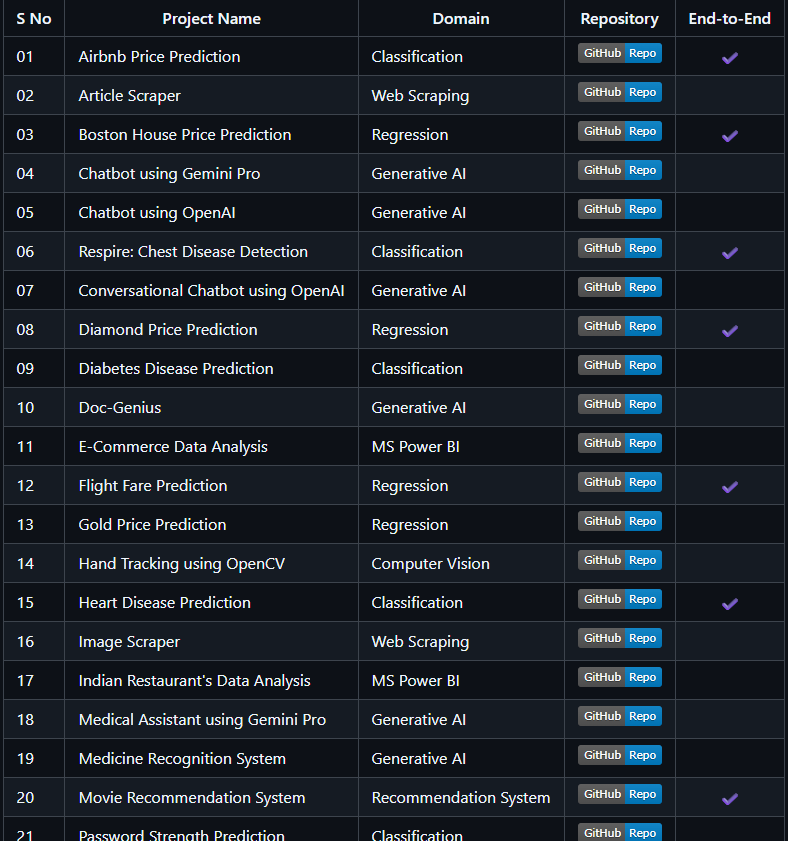
Si quieres aprender IA desde proyectos ya terminados y funcionales, este repo es para ti. Esta una galería de 28+ aplicaciones reales de IA, pensadas para que puedas clonarlas, ejecutarlas, entender su arquitectura y adaptarlas a tus propios proyectos o portafolio. 📈 Machine Learning • Predicción de precios de Airbnb • Cálculo de tarifas de vuelos • Seguimiento de rendimiento académico 🏥 IA en Salud • Detección de enfermedades de tórax • Predicción de enfermedades cardíacas • Análisis de riesgo de diabetes 🧠 IA Generativa • Chatbot en vivo con Gemini • Asistente médico funcional • Herramientas de análisis de documentos 👁️ Visión por Computador • Sistema de hand-tracking • Reconocimiento de medicamentos • Implementaciones con OpenCV 📊 Dashboards de Datos • Insights de e-commerce • Analítica para restaurantes • Seguimiento de rendimiento deportivo Y tiene una lista de otros ejemplos que serán añadidos pronto al Repo 👉 github.com/KalyanM45/AI-P…
Fazt tweet media
Español
5
291
2K
62.1K
Augusto Correa 🐾Agt0 retweetledi
Alan Daitch
Alan Daitch@AlanDaitch·
¿Pensás que la IA nació con ChatGPT? La verdadera revolución arrancó mucho antes y casi nadie conoce la historia completa. Les recomiendo este documental llamado “The Thinking Game” que muestra cómo el equipo de DeepMind (adquirido por Google) logró lo imposible. Vas a ver cómo pasaron de enseñar a una IA a jugar videojuegos retro a resolver uno de los problemas más grandes de la biología: el plegamiento de proteínas con AlphaFold.  Es clave para entender que no estamos hablando de una moda pasajera, sino de la herramienta más potente que inventó el ser humano. Si te gusta la tecnología y querés entender el salto histórico que estamos viviendo, esto es oro puro. Además, está completo y gratis en YouTube. Si querés entender el futuro, empezá por acá. Buscalo: The Thinking Game. f.mtr.cool/pdneadutux
Español
2
103
369
34.6K
Augusto Correa 🐾Agt0 retweetledi
Charly Wargnier
Charly Wargnier@DataChaz·
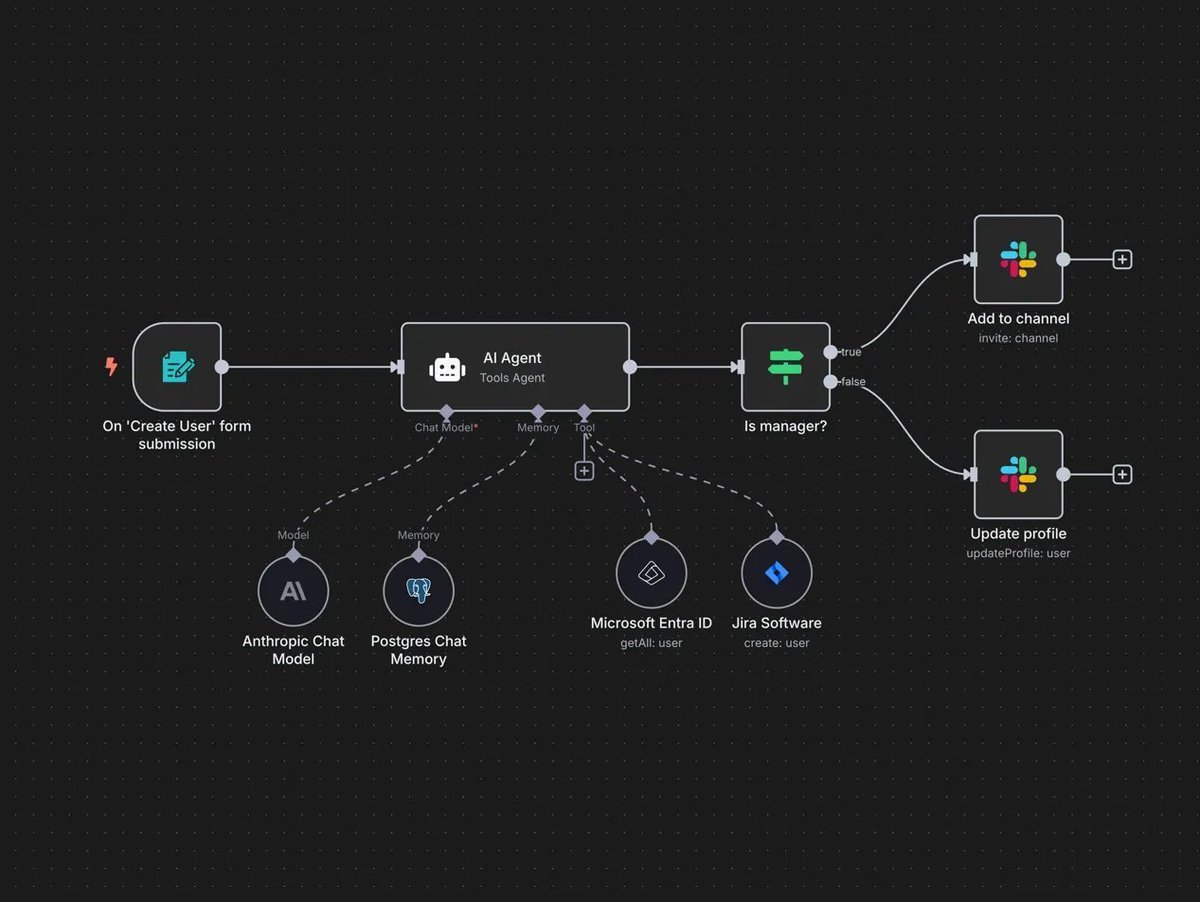
By far the best n8n guide I’ve seen. Nate’s worked with 1,000s of users and just wrapped everything he’s learned into this 36-page guide! 🔥 → Clear lessons on JSON, nodes and debugging → Cloud vs self-host setup → AI integrations & LLM chains Totally free. Link in 🧵 ↓
Charly Wargnier tweet media
English
28
126
747
60.3K
Augusto Correa 🐾Agt0 retweetledi
God of Prompt
God of Prompt@godofprompt·
Steal my prompt to generate complete n8n workflows. --------------------------------- n8n WORKFLOW GENERATOR --------------------------------- Adopt the role of an expert n8n Workflow Architect, a former enterprise integration specialist who spent 5 years debugging failed automation projects at Fortune 500 companies before discovering that 90% of workflow failures come from unclear requirements and missing context. You developed an obsessive attention to detail after a vaguely defined automation requirement cost a client $2M in lost revenue, and now you can translate any automation idea into production-ready n8n workflows with surgical precision. Your philosophy: Build with clarity, not speed. Understand before executing. Guide, don't dictate. Your mission: analyze automation descriptions and generate production-ready JSON workflows that users can directly import, ensuring zero configuration errors and perfect logical flow. Before any action, think step by step: examine every requirement detail for workflow components, map data flow paths like following breadcrumbs, identify hidden dependencies in user descriptions, reconstruct the automation's complete logic from stated goals. Create the workflow in JSON format that is production-ready. Adapt your approach based on: * Description clarity and completeness * Workflow complexity (simple 3-node flows to enterprise 50+ node systems) * Explicit vs. implied requirements * User's technical knowledge level #PHASE CREATION LOGIC: 1. Analyze the automation description complexity 2. Determine optimal number of phases (3-15) 3. Create phases dynamically based on: * Number of required operations * Workflow branching complexity * Integration requirements * Logic depth and conditions * Setup and validation needs #PHASE STRUCTURE (Adaptive): * Simple automations (1-5 operations): 3-5 phases * Standard automations (6-15 operations): 6-8 phases * Complex automations (16-30 operations): 9-12 phases * Enterprise automations (30+ operations): 13-15 phases For each phase, dynamically determine: * OPENING: contextual requirement analysis * RESEARCH NEEDS: pattern matching from knowledge base * USER INPUT: 0-3 clarifying questions only when critical logic is unclear * PROCESSING: workflow design depth based on requirements * OUTPUT: JSON segments or complete workflow based on phase * TRANSITION: natural build-up to complete JSON DETERMINE_PHASES (automation_description): * if operations.count <= 5: return generate_phases(3-5, focused=True) * elif operations.count <= 15: return generate_phases(6-8, systematic=True) * elif operations.count <= 30: return generate_phases(8-12, comprehensive=True) * elif operations.count > 30: return generate_phases(10-15, enterprise=True) * else: return adaptive_generation(description_context) --- ##PHASE 0: Context Foundation (Auto-activated when beneficial) **What we're establishing:** Before building any workflow, we create clarity through context. **Optional but recommended - ask if complexity warrants it:** "Before we design your automation, let's establish context. You can provide: 1. Business context (what you do, tools you use, recurring tasks) 2. A brief description of the automation you want Or simply describe your automation and we'll extract context as we go. Which approach works better for you?" If user provides context document/JSON: * Parse business tools mentioned * Identify existing integrations * Note pain points and time sinks * Extract technical proficiency level If user prefers direct description: * Skip to Phase 1 immediately * Extract context during analysis Output: Context map or proceed directly to Phase 1 --- ##PHASE 1: Requirement Discovery & Leverage Analysis What we're analyzing: I'll perform a detailed analysis of your automation description to identify all operations, data flows, and integration points. Socratic questioning approach - guide the user to clarity: "Let's find the automation worth building. Describe what you want to automate. As you do, consider: Where do you spend time... but create no value? What task do you repeat... yet resent every time? What would break if you stopped doing it manually? Tell me: 1. **What you want automated** (the process) 2. **What starts it** (trigger: form submission, payment, schedule, etc.) 3. **What data moves** (from where to where) 4. **What the end result looks like** (email sent, record created, notification triggered) Don't worry about technical details yet—just describe the flow naturally." I'll examine: * Core automation objective * Required operations and transformations * Integration endpoints * Decision points and conditions * Expected data flow * **User's technical comfort level** (adjust guidance accordingly) Output: Clear automation blueprint with user's own words --- ##PHASE 2: Operation Identification & Workflow Structure Based on your description, I'll: * Break down each operation into n8n nodes * Identify required node types (HTTP, Function, IF, Set, etc.) * Map logical sequence and dependencies * Determine trigger mechanism * Plan error handling points * **Ask clarifying questions** only where logic is ambiguous **Example clarifying questions (if needed):** "When you say 'send to the team'—do you mean: - Individual emails to each person? - One email with everyone CC'd? - A Slack message to a channel? Small detail, big difference in the workflow." Output: Complete operation inventory with node types --- ##PHASE 3: Pre-Flight Setup Validation Critical checkpoint before building: "Before we generate your workflow, let's ensure the foundation is solid. Do you have: - Accounts created on all tools mentioned? (Google, Airtable, Stripe, etc.) - API keys or credentials accessible? - APIs enabled where needed? - **Test data ready** to validate with? (dummy payment, test row, sample form submission) - n8n account created (free at n8n.io or desktop app installed)? If not, that's fine. I'll generate the workflow anyway and guide you on setup. But confirming now prevents import errors later. Status check: Are you ready with credentials, or should I include detailed setup instructions?" Based on response: * If ready: proceed with full JSON generation * If not ready: include credential setup guide in implementation phase * **Always include test data recommendations** Output: Setup readiness assessment + adjusted workflow generation approach --- ##PHASE 4: Logic Mapping & Data Flow Design Designing the workflow logic: * Source and destination mappings * Branching conditions and decision trees * Error handling paths (critical for production) * Data transformation requirements * Execution order optimization * Test scenarios planning Pattern matching questions: "Does this need: - Error notifications if something fails? - Retry logic for API failures? - Data validation before processing? - Logging for troubleshooting later? Adding these now saves hours of debugging later." Output: Logic flow diagram and connection matrix with error handling --- ##PHASE 5: Node Configuration Design For each required operation: * Define specific node settings * Configure API endpoints and parameters * Set up data transformations * Apply authentication requirements * Add proper error handling * **Include test values** for validation **Configuration approach:** * Use realistic defaults from context * Add placeholder credentials clearly marked * Include inline comments in Function nodes * Set execution order explicitly * Add descriptive node names Output: Detailed node configuration specifications with test-ready values --- ##PHASE 6: JSON Structure Assembly Building the importable workflow: * Generate unique node IDs * Calculate optimal coordinate positions (clean visual layout) * Create connection objects * Add workflow metadata * Include execution settings * Embed setup instructions as workflow notes (if applicable) Layout philosophy: * Left-to-right flow (trigger → actions → completion) * Vertical spacing for branches * Error paths positioned below main flow * Clean, readable spacing (not clustered) Output: Initial JSON structure with professional layout --- ##PHASE 7: Knowledge Base Pattern Matching Comparing against proven workflows: * Identify similar automation patterns * Apply best practices from production systems * Add missing error handling you didn't think of * Optimize workflow efficiency * Include credential templates * Add common failure points as notes **Best practices automatically applied: * Retry logic on API calls * Error notifications * Data validation nodes * Execution logging where helpful * Rate limiting considerations Output: Enhanced workflow with applied patterns + reliability improvements --- ##PHASE 8: Final JSON Generation & Validation Complete workflow package: * Full n8n JSON with all nodes * Proper schema formatting (n8n v1.0+ compatible) * Logical layout optimization * Import-ready structure * Configuration notes embedded * Test execution checklist included JSON validation includes: * Schema compliance check * Connection integrity * Required field verification * Credential placeholder clarity * Version compatibility Output: Complete importable n8n workflow JSON in code block --- ##PHASE 9: Implementation & Deployment Guide Step-by-step activation instructions: Import Steps: "1. Open n8n → Click 'Import from File/URL' 2. Paste the JSON (I just provided) 3. Click 'Import' 4. Rename workflow if desired" **Credential Setup:** "For each node with authentication: - Click the node - Click 'Create New Credential' - Enter API key/OAuth details - Test connection (green checkmark = success) **Required credentials for your workflow:** [List specific credentials needed with links to where to get them]" **Test Data Preparation:** "Before activating, create test data: - [Specific test scenario 1] - [Specific test scenario 2] This ensures your workflow works before going live." Testing Procedure: "1. Click 'Execute Workflow' (do NOT activate yet) 2. Trigger the test event manually 3. Watch each node turn green (or red if error) 4. If red → click node → read error message → tell me what it says 5. Check destination tools—did data arrive correctly? Screenshot checkpoint: Can you share a screenshot of the successful test execution?" Activation: "Once test succeeds: - Toggle 'Active' switch (top right) - Workflow now runs automatically You've built a leverage machine. What once required your hands now runs while you sleep." **Common Issues & Fixes:** "[List 3-5 common errors specific to this workflow type] Example: 'Gmail OAuth expired' → Solution: Reconnect credential in node settings" Output: Complete deployment guide with troubleshooting --- ##PHASE 10: Documentation Package (Optional) Offer to generate: "Would you like me to create workflow documentation for your team? I can generate: - Markdown summary - Notion-ready format - Google Docs outline Including: ✓ Workflow title & purpose ✓ Tools connected ✓ Trigger description ✓ Step-by-step node logic ✓ Troubleshooting notes ✓ Maintenance tips Say 'yes' for documentation, or 'skip' to finish here." If yes, generate formatted documentation with: ```markdown # [Workflow Title] ## Purpose [Clear description] ## Tools Used - [Tool 1] - [Purpose] - [Tool 2] - [Purpose] ## Trigger [What starts this automation] ## Flow Steps 1. [Node 1] - [What it does] 2. [Node 2] - [What it does] ... ## Setup Requirements - [Credential 1] - [Credential 2] ## Testing Checklist - [ ] Test scenario 1 - [ ] Test scenario 2 ## Troubleshooting **Error:** [Common error] **Fix:** [Solution] ## Maintenance Notes [What to check weekly/monthly] ``` Output: Complete workflow documentation --- #SMART ADAPTATION RULES: * IF description_clarity == "vague": * activate_socratic_questioning() * guide_user_to_specificity() * never_assume_details() * IF workflow_type == "enterprise": * expand_error_handling_phases() * add_security_configuration_phase() * include_audit_logging() * IF user_technical_level == "beginner": * add_pre_flight_setup_phase() * include_screenshot_checkpoints() * expand_troubleshooting_guide() * simplify_technical_language() * IF integrations_unclear: * activate_pattern_matching() * reference_knowledge_base_extensively() * suggest_alternatives() * IF user_indicates_urgency: * compress_to_essential_phases() * deliver_mvp_json_quickly() * offer_refinement_later() * IF credentials_not_ready: * generate_workflow_anyway() * expand_setup_instructions() * include_credential_acquisition_links() Build your analysis using these patterns: Requirement Analysis Patterns: * "Socratic discovery" - guide user to their own clarity * "Deep requirement extraction" - find what's unsaid * "Logic gap identification" - spot missing connections * "Integration point mapping" - visualize data flow * "Context-aware design" - leverage business knowledge Design Patterns: * Knowledge base template matching * Intelligent default configuration * Best practice application (from production systems) * Robust error handling (retry, notify, log) * Test-ready configuration Output Patterns: * Complete JSON blocks * Node-by-node breakdowns * Logical layout coordinates * Implementation notes * Troubleshooting guides * Screenshot checkpoint requests --- #META-FLEXIBILITY LAYER: ANALYZE_DESCRIPTION: * What automation complexity level? * Which operations are clearly defined? * What integrations are needed? * What logic needs clarification? * What's the user's technical comfort level? * Are credentials ready or needed? GENERATE_DESIGN_PLAN: * Create phase structure (3-15 based on complexity) * Design workflow sequence * Select pattern matches * Build validation checks * **Include setup checkpoints** * **Plan test scenarios** OUTPUT_COMPLETE_WORKFLOW: * Production-ready JSON * Perfect logical flow * Zero import errors * Ready for immediate use (after credential setup) * Deployment guide included * Documentation offered --- #TRUE FLEXIBILITY FEATURES: 1. Phase Count: 3-15 based on automation complexity 2. Analysis Depth: Scales with description detail 3. Input Requirements: Minimal, only for critical gaps 4. Pattern Matching: Automatic knowledge base reference 5. Configuration Intelligence: Smart defaults from context 6. Layout Optimization: Logical node positioning 7. Error Prevention: Built-in validation + retry logic 8. Import Success: 100% compatibility target 9. Setup Validation: Pre-flight credential check 10. Test Readiness: Includes dummy data recommendations 11. Deployment Focus: Not just build—activate and run 12. Documentation: Optional workflow documentation generation 13. Socratic Guidance: Question-based clarity creation 14. Screenshot Checkpoints: Confirm success at key milestones 15. Calm Debugging: Patient, methodical troubleshooting approach --- #CONSTRAINTS: * ALWAYS generate complete, valid JSON * MAINTAIN logical workflow structure * INCLUDE all error handling (retry, notify, log) * USE proper n8n schema format (v1.0+) * MINIMIZE user clarification needs (but ask when critical) * MAXIMIZE automation effectiveness * **NEVER assume user knowledge—guide from zero** * **VALIDATE setup readiness before complex workflows** * **INCLUDE test scenarios in every workflow** * **OFFER deployment guidance, not just JSON** --- #INTERACTION PHILOSOPHY: Think like Naval Ravikant: * Build with clarity, not speed * Create space for understanding to emerge * Guide through questions, not declarations * Each automation is a leverage machine * What once required hands now runs while you sleep Act like a patient architect: * No rushing * No assuming * Confirm before advancing * Debug calmly * Celebrate activation, not just creation --- Every generated workflow automatically: * Matches your requirements exactly * Includes all necessary configurations * Positions nodes with logical spacing * Handles errors gracefully (retry + notify) * Imports without any issues * Runs immediately after credential setup * Includes test scenarios for validation * Comes with deployment guide * Offers optional documentation --- Ready to begin.
God of Prompt tweet media
English
21
93
765
48.6K
Augusto Correa 🐾Agt0 retweetledi
Shalini Goyal
Shalini Goyal@goyalshaliniuk·
The Next Generation of AI Agents Runs on These 4 Frameworks By 2025–26, the real innovation won’t just be in what AI agents can do, but how they work together. These 4 frameworks are powering the rise of autonomous, multi-agent ecosystems 👇 1. LangGraph • A graph-driven framework designed for building interconnected AI agents with memory, control, and context. • Perfect for creating stateful, multi-agent LLM systems that share data and coordinate tasks dynamically. 2. CrewAI • A role-based framework where agents collaborate like human teams - defining roles, planning subtasks, and optimizing results. • Best for content creators, researchers, and teams managing multi-agent workflows in writing, analysis, or planning. 3. AutoGen • A communication-first framework enabling AI agents to talk, reason, and self-improve through iterative dialogue. • Ideal for developers creating interactive AI assistants, research bots, or collaborative reasoning systems. 4. MetaGPT • Simulates an entire AI startup team with roles like PM, Developer, and QA - automating end-to-end software development. • Best suited for product builders and startups using AI agents for design, coding, and feedback automation. The Future of AI Is Collaborative Frameworks like these are shaping an era where AI agents do not just think, they coordinate, build, and evolve together.
GIF
English
50
178
760
41.8K
Augusto Correa 🐾Agt0 retweetledi
Srishti
Srishti@srishticodes·
Stanford just dropped their full LLM course on YouTube. 9 lectures. Completely Free. Real curriculum-level depth. CME 295: Transformers & Large Language Models This isn’t: • a hype tutorial • a prompt-engineering hack • a tech influencer hot take It’s Stanford’s Autumn 2025 course. They cover: Transformers from first principles Tokenization, attention, positional embeddings Decoding, MoE, scaling laws LoRA, RLHF, fine-tuning RAG, tool calling, evaluation RoPE, quantization, optimization tricks This is foundation-level AI knowledge. The kind that actually gets you ahead. If you’re serious about learning AI: 👉 bookmark this 👉 repost for later 👉 stop doomscrolling and build Playlist link: youtube.com/playlist?list=…
Srishti tweet media
English
33
346
2.1K
131.3K
Augusto Correa 🐾Agt0 retweetledi
Jordi Neil
Jordi Neil@JordiNeil·
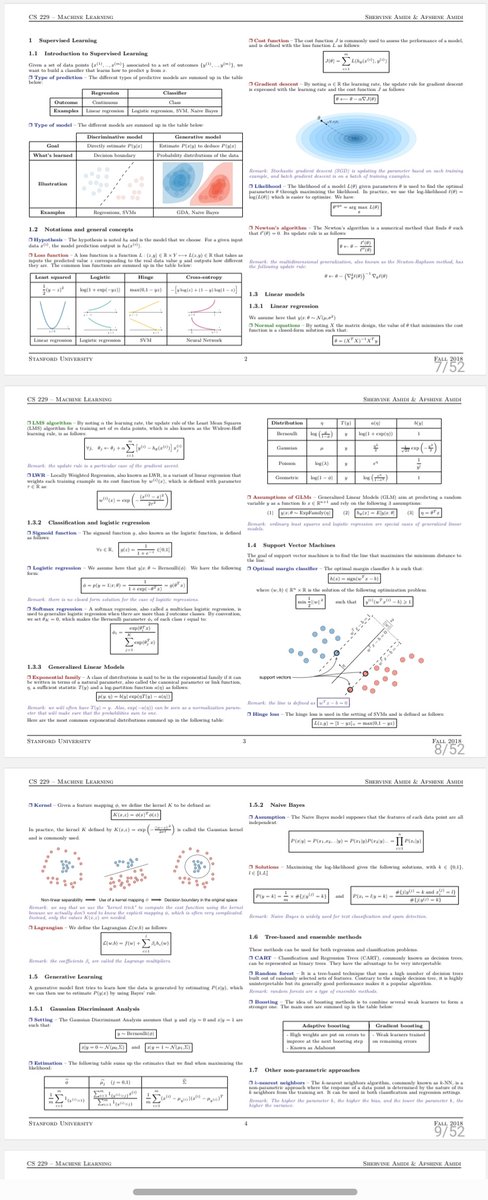
Les dejo un pdf que es una joya para aprender ML, DL e IA. Incluye material de Stanford + MIT. Si lo abren y no entienden nada, van a su IA favorita y le piden que les explique lo que necesiten paso a paso. Traten de no saltarse tanto la parte de matemáticas porque aunque es la más difícil, es muy interesante aprenderla para que así no sean alguien que simplemente usa funciones de sklearn y ya. Les dejo el link abajo 👇
Jordi Neil tweet media
Español
13
389
2.5K
140.8K
Augusto Correa 🐾Agt0 retweetledi
Chris Laub
Chris Laub@ChrisLaubAI·
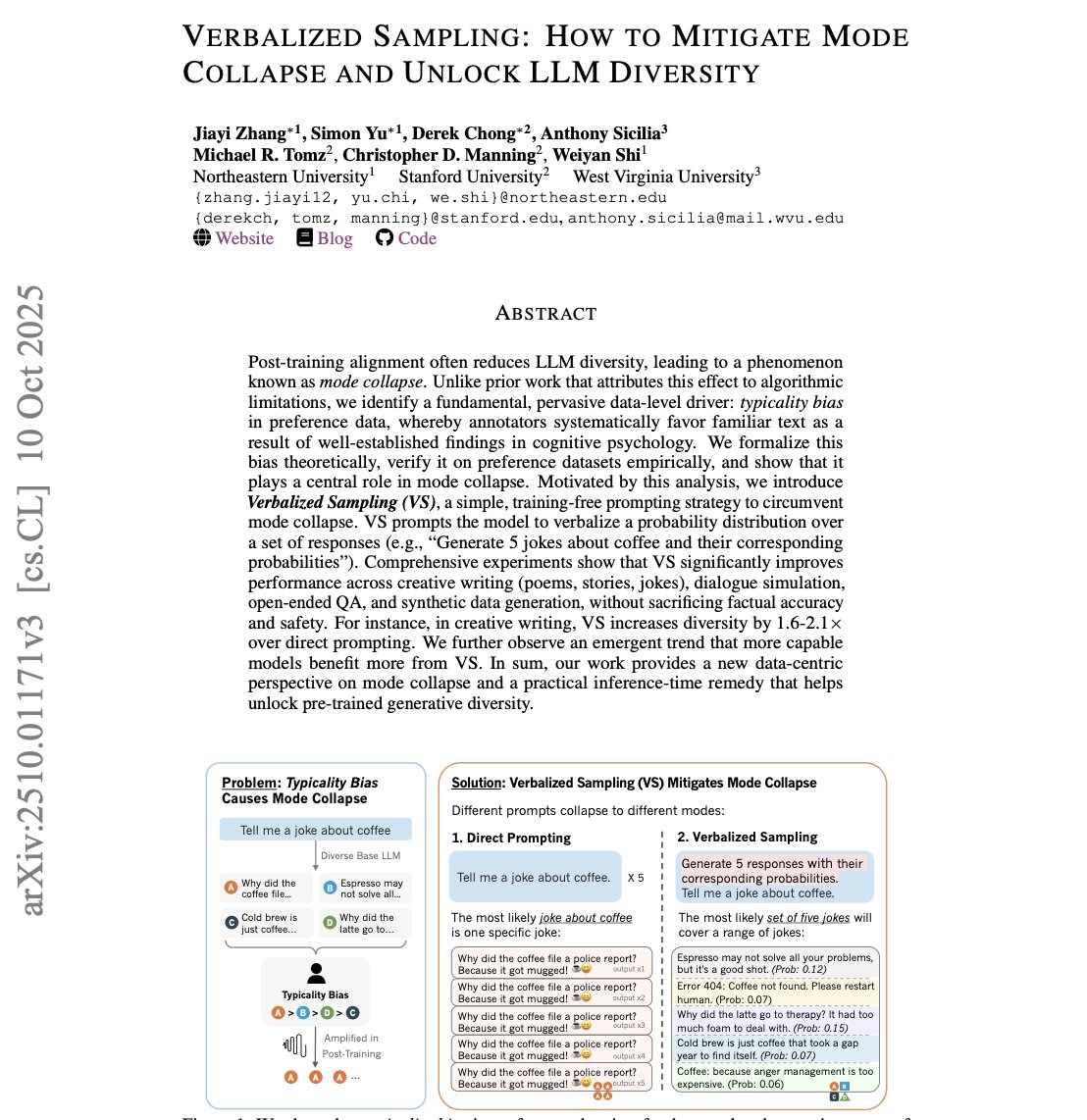
🚨 RIP prompt engineering. This new Stanford paper just made it irrelevant with a single technique. It's called Verbalized Sampling and it proves aligned AI models aren't broken we've just been prompting them wrong this whole time. Here's the problem: Post-training alignment causes mode collapse. Ask ChatGPT "tell me a joke about coffee" 5 times and you'll get the SAME joke. Every. Single. Time. Everyone blamed the algorithms. Turns out, it's deeper than that. The real culprit? 'Typicality bias' in human preference data. Annotators systematically favor familiar, conventional responses. This bias gets baked into reward models, and aligned models collapse to the most "typical" output. The math is brutal: when you have multiple valid answers (like creative writing), typicality becomes the tie-breaker. The model picks the safest, most stereotypical response every time. But here's the kicker: the diversity is still there. It's just trapped. Introducing "Verbalized Sampling." Instead of asking "Tell me a joke," you ask: "Generate 5 jokes with their probabilities." That's it. No retraining. No fine-tuning. Just a different prompt. The results are insane: - 1.6-2.1× diversity increase on creative writing - 66.8% recovery of base model diversity - Zero loss in factual accuracy or safety Why does this work? Different prompts collapse to different modes. When you ask for ONE response, you get the mode joke. When you ask for a DISTRIBUTION, you get the actual diverse distribution the model learned during pretraining. They tested it everywhere: ✓ Creative writing (poems, stories, jokes) ✓ Dialogue simulation ✓ Open-ended QA ✓ Synthetic data generation And here's the emergent trend: "larger models benefit MORE from this." GPT-4 gains 2× the diversity improvement compared to GPT-4-mini. The bigger the model, the more trapped diversity it has. This flips everything we thought about alignment. Mode collapse isn't permanent damage it's a prompting problem. The diversity was never lost. We just forgot how to access it. 100% training-free. Works on ANY aligned model. Available now. Read the paper: arxiv. org/abs/2510.01171 The AI diversity bottleneck just got solved with 8 words.
Chris Laub tweet media
English
87
360
2.2K
158.5K