Australia Defence Association

37.2K posts

Australia Defence Association

Australia Defence Association

@austdef

Australia's independent, non-partisan, national public-interest watchdog org for strategic security, defence & wider national security issues since 1975.

Canberra Katılım Temmuz 2011
208 Takip Edilen5.6K Takipçiler
Australia Defence Association
This is not the issue involved. Historically, in wartime and peacetime, many more Australians have served in the Army rather than the RAN and RAAF. Family and community memories naturally reflect this, but not always in a well-informed manner now. As shown by so few votes in elections being driven by informed understandings of defence issues (last even remotely "khaki election" was 1966). A key structural problem with voter understanding (and government grasp) of defence issues, is that Australia was among the last countries to institute real joint command of our defence force. Most comparable countries did so in the late 1940s to early 1960s. Australia lagged behind until 1982-89 because of five inter-linked causes: - Generally insufficient investment in national defence capabilities by governments of both political persuasions. Especially since the early 1970s, so funding could be redirected to buy votes elsewhere. - Insufficient numbers of supervising Ministers in the Defence portfolio for decades after its 1973 reorganisation. - Longtime bureaucratic culture within the Department of Defence since the 1930s of making the three Services compete for resources. To preserve bureaucratic dominance by convincing Ministers that, in the absence of a joint command structure, such bureaucracy was the only "solution" to real and purported "inter-Service rivalry". - Constant salami-slicing of Service budgets generally affects Army modernisation and re-equipment more than the other Services. Its much easier to cut numbers in projects involving larger numbers of cheaper equipment than for smaller number of far more expensive weapon-platforms such as ships or aircraft. Especially as these more often involve longer-term, more expensive and more international contracts, and/or more jobs (and more voters) in Australian industry. - Finally, with armies, you primarily equip the soldier (and their personnel-heavy tactical units and formations). Whereas in the RAN and RAAF the personnel primarily crew the platforms tactically, or support them ashore or on the ground. Around 40% of annual Defence funding is personnel costs (with 80% being uniformed personnel and 20% being Public Servants). If a government wants to reallocate funding from Defence to other portfolios (to buy votes elsewhere), cutting Army personnel numbers (and making units smaller and/or hollow in terms of deficient capability) is quicker and more easily disguised publicly than cutting ships or aircraft. Historically, cuts to the overall defence budget generally result in the Army being hit, in absolute or comparative terms, more than the other Services. To fund the (undoubtedly) strategically necessary submarine program, other parts of the ADF are being cannibalised. Rather than overall defence investment being increased to properly modernise or sustain all three Services. The real solution is increased defence investment. Noting that defence is the only major responsibility of government wholly funded federally (something not realised by most voters and nearly all public and media commentators on defence issues)! Annual ratios for each of the other major governmental responsibilities (including state and territory funding), to national defence investment, are social security 7.5:1, health 5.5:1 and education 5:1. (Annual repayments of government debt also surpass the defence budget at times). Most Aussies don't realise this because our federal system means these other responsibilities generally expend their larger funding in huge numbers of small and/or dispersed amounts. Whereas most defence investment occurs in small numbers of large amounts highly visible to voters. Most Aussies are therefore surprised to learn that the entire annual defence budget (not just new submarines for example) costs less each year than the NDIS will soon do alone! As many other government programs within other portfolios already do. thenightly.com.au/politics/austr…
English
0
0
2
69
Australia Defence Association retweetledi
GéoPersia
GéoPersia@GeoPersiaMedia·
As a French person whose Norman family lived through the massive destructions caused by Anglo‑American bombings in 1944, I cannot ignore how relevant the comparison is between France in those dark years and today’s Iran, confronted with a destructive regime that oppresses its own people and sacrifices their future. Just as Vichy propaganda once focused obsessively on the suffering caused by Allied air raids, the Islamic Republic now highlights civilian losses to portray itself as a victim. But the historical truth remains the same: Vichy bore responsibility for the tragedy that befell France, and the Islamic Republic bears responsibility for the suffering inflicted on Iranians. In both cases, the occupying or oppressive power created the very conditions that made foreign intervention possible. French resistants fought against Nazi occupation; Iranians today resist an obscurantist and totalitarian ideology that subjugates them against their will. The parallel is not about justifying war, but about understanding its deeper meaning: when a people is held hostage by a brutal regime, the violence of liberation is never the starting point — it is the consequence of oppression. This is what makes the comparison with Vichy propaganda so striking. The images may differ, but the mechanism is identical: a regime that denounces the bombs while refusing to acknowledge why they fall.
حافظه تاریخی@hafezeh_tarikhi

واکنش نیروهای مقاومت فرانسه به رهبری ژنرال دوگل به کشته شدن ۶۶ کودک فرانسوی بر اثر خطای بمباران متفقین در جریان عملیات آزادسازی فرانسه از حکومت تحت حمایت نازی‌ها

English
4
35
114
3.4K
Australia Defence Association retweetledi
Arsen Ostrovsky
Arsen Ostrovsky@Ostrov_A·
Rabbi Wolff, from the Central Synagogue in Bondi, speaking at the Royal Commission on Antisemitism & Social Cohesion: "When crowds march through streets of Sydney and Melbourne … and chant 'death to Israel', 'death to IDF', Jewish Australians do not hear a nuanced political debate. They hear threats directed to their families and to their communities."
Arsen Ostrovsky tweet media
English
7
20
87
3.5K
Australia Defence Association
Hopefully, somewhere in today's dictatorships there are courageous resisters working to end similar aggressive and repressive regimes. To restore freedom and human rights to all citizens of the countries concerned. And end the scourge of aggressive wars affecting neighbouring countries.
Prof. Frank McDonough@FXMC1957

20 July 1944. Adolf Hitler survived a time bomb assassination attempt by German Army Colonel Claus von Stauffenberg (pictured right) who was part of an unsuccessful coup to overthrow the Nazi regime codenamed “Operation Valkyrie”. Stauffenberg was executed the next day.

English
0
0
2
108
Australia Defence Association retweetledi
Uri Kurlianchik
Uri Kurlianchik@VerminusM·
UNESCO is set to declare Beaufort Castle a heritage site in danger after IDF takeover. Funny, how it wasn't in danger during the decades it was used by Hezbollah, which filled it with ammunition and dug tunnels underneath...
English
37
506
2.6K
29.8K
Australia Defence Association retweetledi
UN Watch
UN Watch@UNWatch·
“UN Watch has been the lead organization monitoring UNRWA over the past 10 years, and we’ve concluded, based on hundreds of pages of in-depth reports, that the agency is beyond reform.” — Hillel Neuer in the @dcexaminer washingtonexaminer.com/news/world/465…
English
11
195
581
7K
Australia Defence Association
@StephenTomsen Our membership includes some of Australia's leading historians. And always has. As shown regularly by the absence of informed criticism of ADA commentary covering historical matters.
English
0
0
0
3
Stephen Tomsen
Stephen Tomsen@StephenTomsen·
@austdef Dismissive & irrelevant. Lots of Khaki & not one qualified historian in your staff.
English
1
0
1
18
Australia Defence Association
And the UK's response to the invasion of the Falklands had a major deterent effect on the Soviet Union. And on the USSR's collapse over the next decade. Proving that at least one Western European NATO member would and could resist military aggression. And hadn't gone soft. Against the background of the Soviet-backed "popular" campaigns in several NATO countries ostensibly protesting allied SRBM deployments to bolster deterrence against Soviet aggression/coercion.
Melissa Chen@MsMelChen

It is insane to see this 5th April 1982 interview with Margaret Thatcher from the vantage point of today. At this point, the Argentinians had just invaded and seized the Falklands. You can actually see what they call an "iron will" in her eyes, and hear it in every measured, authoritative word. There's no bluster or misplaced confidence, just a quiet conviction. She was a totally different type of leader unseen in a long time, which Britain sorely needs today. Thatcher’s government staked everything on retaking the islands after Argentina's invasion. Polls showed her deeply unpopular beforehand; victory, thanks to the "Falklands Factor," delivered a landslide in 1983. Defeat almost certainly would have forced her resignation amid national humiliation, collapsing Conservative support and likely ushering in a Labour government amid economic strife and union unrest. More than politics was at stake. Giving up would have meant abandoning British citizens to a right-wing junta’s aggression, a Suez Crisis on steroids for the television age. Images of surrender would have flashed around the world, signaling weakness. It would have shattered the idea that Britain still stood ready to defend its people and its territory. Watch how she explains why fighting was not just necessary, but morally imperative. Listen to the way she deftly handles questions about America, praising their diplomatic efforts while making it crystal clear that this was Britain and only Britain's responsibility to shoulder alone. And when the ITN interviewer asks her at the end if she's prepared to resign if she fails? Trust me.... just watch how and what she answered it with. This type of leadership feels like an extinct species now. It’s exactly the kind of clear-eyed, unflinching European voice the West could use more of today. (Javier Milei has long been an open admirer of Thatcher for precisely these reasons btw)


English
1
1
6
687
Australia Defence Association retweetledi
Stanzin
Stanzin@stanzinnangmo·
As the “Ethnic Unity” Law came into force, China began demolishing over 1,060 more residences at Larung Gar Buddhist Academy. Beijing fears Tibetan Buddhism more than anything. Tibet’s spiritual heart is being crushed. #FreeTibet tibetanreview.net/china-launches…
English
4
18
33
643
Australia Defence Association retweetledi
Dr Kylie Moore-Gilbert
Dr Kylie Moore-Gilbert@KMooreGilbert·
Grinning from ear to ear this morning. Thank God Sepideh, Sima and Houman have been released. Not only that, but without having to pay bail, and without pending charges too. Nobody can fathom the vicissitudes of the regime in Iran, but perhaps all the noise made about their arrest internationally had something to do with it.
Dr Kylie Moore-Gilbert tweet media
English
3
12
112
2.2K
Australia Defence Association retweetledi
NGO Monitor
NGO Monitor@NGOmonitor·
“Throw Amnesty’s genocide report in the garbage.” NGO Monitor Legal Advisor @AnneHerzberg14 explains why: the very first line of @Amnesty’s report reads, “On October 7th, Israel launched an offensive on the Gaza Strip.”
English
133
1.9K
6.2K
213.2K
Australia Defence Association retweetledi
Karel Burger Dirven
Karel Burger Dirven@KBurgerDirven·
Helaas negeren velen dat MH17 12 jaar geleden niet werd neergeschoten door separatisten, maar door een reguliere eenheid van de russische strijdkrachten die Oekraïens grondgebied was binnengedrongen (en dat vervolgens haastig weer verliet). Hun opperbevelhebber was en is poetin.
Karel Burger Dirven tweet media
Nederlands
403
2.2K
9.9K
116.8K
Australia Defence Association retweetledi
Iran International English
US Vice President JD Vance recently warned that the collapse of the Islamic Republic could trigger mass migration and instability. But Shahram Kholdi, Siavash Rokni and Arash Sohrabi challenge that premise, arguing that Iranians do not flee their country, but decades of failed governance—and that many would choose to stay, or return, if they believed Iran offered them a future. Watch the full episode of Eye for Iran for more: youtu.be/H7aetSmUk0w?t=…
YouTube video
YouTube
English
11
40
166
14.4K
Australia Defence Association retweetledi
David Walpiri
David Walpiri@DWalpiri·
China MFA says racist China Daily video has “no connection” to the government Philippine Defense Sec responds: “It’s hard to believe” China Daily is literally part of China’s propaganda dept Or are you telling me that China Daily has now become an independent media outlet?
English
5
31
120
1.5K
Australia Defence Association
What can happen when countries become so culturally, socially and constitutionally monolithic no societal diversity, human-rights freedoms, and indeed democracy, are tolerated or can take root. And national unity is a facade enforced only by brutal laws and "mono"-religious fanaticism. Not through acknowledging any society's diversity and the country focusing on sharing a reasoned modicum of agreed citizenship values and responsibilities that apply to all by popular consent. So liberty, democracy, community harmony and national unity can all flourish and endure. Instead of perpetual civil disorder, and often civil war, mass starvation, genocide of ethnic and/or religious minorities, and forcing many citizens to emigrate or flee as refugees. Noting that Sudan remains ostensibly a signatory to the 1951 Refugee Convention, its 1967 Protocol extending the Convention globally, and the 1969 African Union Convention on "Specific Aspects of Refugee Problems in Africa".
Imtiaz Mahmood@ImtiazMadmood

Mariam Yahia Ibrahim, a Sudanese Christian and medical doctor, was sentenced to 100 lashes and death by hanging after refusing to renounce her Christian faith. Because Sudan considered her Muslim through her absent father, the court convicted her of apostasy despite her lifelong confession of Christ. According to them, she could not be a Christian, married to a Christian, in this Muslim majority country. She was given three days to recant. She refused. At the time (in 2014), Meriam was eight months pregnant and already caring for her young son in prison. She spent months chained to a prison floor with her 1-year-old son by her side. While shackled, she gave birth to her daughter, Maya, inside the prison. Her execution was delayed because of the pregnancy, but she remained imprisoned until an international outcry led an appeals court to overturn her conviction and order her release. Looking back on her ordeal, Meriam said she was not afraid. "Being in prison strengthened my faith even more," she told CBN News.
English
1
0
1
145
Australia Defence Association retweetledi
Voices of WW2
Voices of WW2@VoicesofWW2·
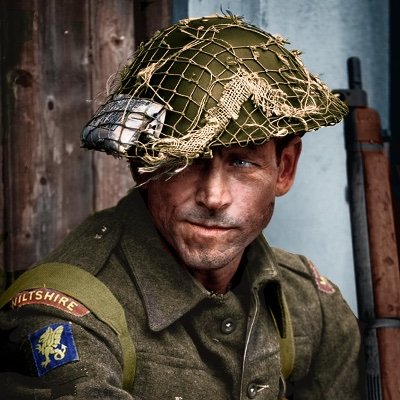
Ask most people to name the best British general of World War Two and they will say Montgomery. Ask the historians who study it closely and a lot of them will quietly tell you the real answer is a man most people have never heard of. His name was William Slim, and his soldiers just called him Uncle Bill. Slim was not born into any of it. No fortune, no famous family, no smooth path through the elite schools that produced most British generals. He was a working class kid who had been a teacher and a clerk, and he only slipped into the army through a technicality before the First World War. He got shot up at Gallipoli, wounded again in the Middle East, and clawed his way up the ranks the hard way, on merit, one rung at a time. By 1942 he was handed one of the worst jobs in the entire war. The Japanese had smashed the British in Burma, and Slim was put in charge of the retreat. It became the longest fighting withdrawal in British military history, close to a thousand miles back to the border of India, through jungle and mountains, hounded the whole way. Most commanders are remembered for the battles they win. Slim first had to prove himself by saving a beaten army from being wiped out, and he brought it home still fighting. Then he did the thing that should make him a household name. He took that broken, sick, forgotten army, an incredible mix of British, Indian, African, and Gurkha soldiers, and he rebuilt it from the ground up. He got a grip on the malaria that was dropping more men than bullets. He fixed the food, the training, the supply, and above all the morale. He walked among the troops constantly, talked to them like human beings, and made them believe again. They started calling themselves the Forgotten Army, half proud and half bitter, because the war in Europe got all the headlines while they bled in the jungle. In 1944 the Japanese threw everything into a massive invasion of India, aimed at Imphal and Kohima. Slim let them come, stretched their supply lines to breaking, and then broke them. The fighting at Kohima was so brutal it has been called the Stalingrad of the East, with men grenading each other across a district commissioner's tennis court. When it was over, the Japanese had suffered the single greatest defeat their army had ever endured on land. Tens of thousands of them never went home. And Slim was not finished. In 1945 he pulled off a masterpiece of deception, faked out the Japanese about where he would cross the Irrawaddy river, seized the town of Meiktila and cut the enemy in half, then drove all the way to Rangoon and finished the reconquest of Burma. He had taken the most humiliating defeat in British Far Eastern history and turned it completely inside out. He literally titled his memoir Defeat into Victory, and it is still considered one of the finest books a soldier has ever written. What his men remembered was not the strategy. It was that he never lied to them, never wasted them, and never forgot they were people. In a war full of commanders who spent lives cheaply and hungered for glory, Uncle Bill did the opposite, and they loved him for it. He ended his life as a viscount and the Governor General of Australia, but the title that mattered was the one his soldiers gave him. Montgomery got the fame. Slim got the respect of the people who actually knew.
Voices of WW2 tweet media
English
106
679
3.2K
91.6K
Australia Defence Association retweetledi
The Diplomat
The Diplomat@Diplomat_APAC·
A decade ago, in July 2016, an arbitral tribunal in The Hague issued a ruling in a landmark case pitting the Philippines against China over their competing claims to the South China Sea. The verdict was a bombshell. buff.ly/kurJ3QR
English
5
4
12
2.8K