B1900pilot

5.6K posts

B1900pilot banner
B1900pilot

B1900pilot

@b1900pilot

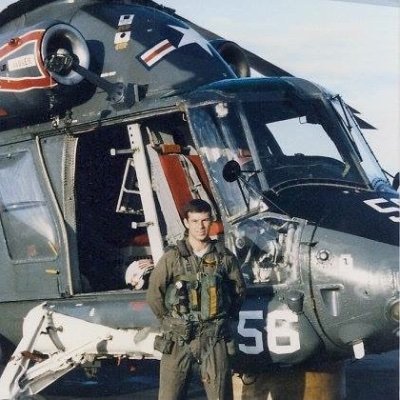
Navy veteran, Naval Aircrewman/Helicopter Rescue Swimmer (H-2/H-60), retired airline pilot (BE1900C/D, SF-340B, DHC-8-100/300/400, CL-65 and now an instructor.

Philadelphia,PA Katılım Şubat 2022
749 Takip Edilen377 Takipçiler
B1900pilot
B1900pilot@b1900pilot·
@muginekosikikan I wonder if they just said, “Here, figure it out” or were former IJN personnel left behind to train the Chinese on operating the ship?
English
0
0
0
102
むぎねこ提督
むぎねこ提督@muginekosikikan·
#日本海軍 賠償艦として中華民国に引き渡された直後の駆逐艦宵月(汾陽)
むぎねこ提督 tweet mediaむぎねこ提督 tweet media
日本語
1
33
374
10.6K
B1900pilot
B1900pilot@b1900pilot·
@muginekosikikan Was it used for the filming of “Tora Tora Tora”? They had to use many live action and full-sized props for that movie. The sets of IJN sets were full-scale, highly detailed for that phase of the movie.
English
0
0
0
47
むぎねこ提督
むぎねこ提督@muginekosikikan·
鶉野飛行場名物 謎の日本海軍機塗装テキサンくん
むぎねこ提督 tweet media
日本語
11
24
465
12K
B1900pilot
B1900pilot@b1900pilot·
@maguro0314ss I think it was improved with armor later in the war, with the associated drop in performance. Are there any in Japan flying? I think a zero is flying now? Need to get a “George” flying…Best overall fighter design by any Japanese designers. Kawanishi was the best at seaplanes
English
1
0
1
23
マグロ🇯🇵🍟
マグロ🇯🇵🍟@maguro0314ss·
@b1900pilot That's right, I agree. It was a superior aircraft in the low to medium altitude range until the end of the war.
English
1
0
1
12
マグロ🇯🇵🍟
マグロ🇯🇵🍟@maguro0314ss·
44年5~6月 一式戦闘機 隼二型(XJ004) ニューギニア島/ホランディアで米軍 第49戦闘航空群が鹵獲した第59戦隊の 機体 ほぼ無傷で発見され 米軍が複数の隼の残骸から修復した 日本軍塗装を剥がされ米軍マーキングが されている フィリピンで鹵獲されたとの誤認が出回って居るので注意が必要
マグロ🇯🇵🍟 tweet media
日本語
2
10
54
593
B1900pilot
B1900pilot@b1900pilot·
@maguro0314ss My knowledge on Army acft isn’t as good as Navy acft, but I’m learning all the time. I think the “Oecar” is the prettiest airplane of WWII. And, other than someone shooting at you must have been a joy to fly;-)
English
1
0
1
37
マグロ🇯🇵🍟
マグロ🇯🇵🍟@maguro0314ss·
@b1900pilot You seem to know well. I believe that from Type 1, bulletproof equipment was supposed to be attached.
English
1
0
0
28
Today in History
Today in History@TodayinHistory·
Today in 1995, Veteran Shawn Nelson stole a tank from the armory in San Diego and went on a rampage through the streets of the city.
English
228
731
6.6K
641.9K
B1900pilot
B1900pilot@b1900pilot·
@Osinttechnical These growler crews aren’t too impressive the last couple of years…
English
0
0
0
12
OSINTtechnical
OSINTtechnical@Osinttechnical·
Footage of the mid air collision between a pair of Navy Super Hornets/Growlers during the Gunfighter Skies Air Show at Mountain Home Air Force Base moments ago.
English
2.2K
6.5K
42.5K
6.6M
WeAreGhalib
WeAreGhalib@WeAreGhalib·
@Osinttechnical Another video is out. Check out how pilots ejected from the planes.
English
14
56
408
50.2K
B1900pilot
B1900pilot@b1900pilot·
@AmazingNature00 I had a nesting pair of hummingbirds right outside my door many years ago…This is AI BS
English
0
0
3
186
Amazing Nature
Amazing Nature@AmazingNature00·
I can't handle this level of cuteness...
English
157
2.2K
14.3K
397.9K
B1900pilot
B1900pilot@b1900pilot·
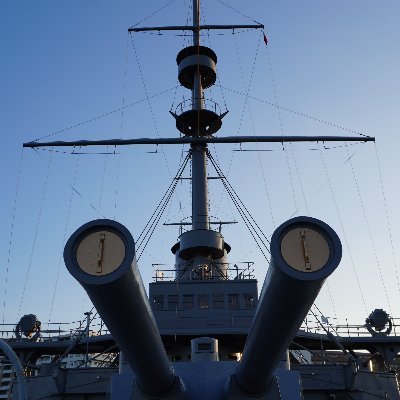
@KinenkanMikasa Seen her many, many times during my tour of duty in Japan:-) I visited twice and she’s in very good condition!
English
0
0
0
30
記念艦 三笠
記念艦 三笠@KinenkanMikasa·
〈横須賀カレーフェスタ協賛〉 16日、17日は協賛として入艦料が300円となっています。是非お越しください。
日本語
2
260
941
25.5K
B1900pilot
B1900pilot@b1900pilot·
@6zzOp You can see damage to the engine cowling and oil leaking…
English
0
0
1
4K
海軍
海軍@6zzOp·
1942年5月17日09:20 海軍航空作戦 零戦17機(台南空)は戦場を離脱。帰途に第二中隊第三小隊は高度500m・機速100ノットで飛行する零戦1機(山口馨中尉)を発見、坂井三郎一飛曹は何があったのか問うと、同中尉はエンジンを指差し、(もう駄目だ)というように、首を振った。
海軍 tweet media
日本語
5
26
450
39.6K
むぎねこ提督
むぎねこ提督@muginekosikikan·
#日本海軍 三段甲板時代の空母赤城とそれを眺める和服姿の女性
むぎねこ提督 tweet media
日本語
15
101
1.1K
19K
マグロ🇯🇵🍟
マグロ🇯🇵🍟@maguro0314ss·
44年11月 B-26爆撃機 ドイツ/ヴィットリヒ上空 ドイツ軍高射砲の直撃を受け撃墜され 乗員6名全員が戦死している
日本語
6
15
75
827
War Monitor Clips
War Monitor Clips@WarMonitorClips·
Japanese naval aircraft ditches into the Pacific - 1942
English
22
145
2K
181.1K
B1900pilot
B1900pilot@b1900pilot·
@maguro0314ss I wonder if anyone survived? Must have hit ammo or boiler…
English
1
0
1
27
マグロ🇯🇵🍟
マグロ🇯🇵🍟@maguro0314ss·
44年 米海軍機の機銃掃射で日本軍 弾薬輸送船が爆破された映像
日本語
2
5
31
402
海軍
海軍@6zzOp·
1942年5月7日09:35 珊瑚海海戦 空母「祥鳳」の艦首からは凄まじい蒸気が吹き出し、艦体は二つに折れて沈没。 戦死者601名、生存者205名 ※日本海軍で最初の空母喪失。
海軍 tweet media
日本語
7
34
406
13.6K
B1900pilot
B1900pilot@b1900pilot·
@6zzOp Looks like “Battleship Rock” that still sits at the entrance of Manila Bay.
English
0
0
1
25
海軍
海軍@6zzOp·
1942年5月7日12:00過ぎ 比島攻略作戦 第十六師団の一部(歩兵第三十三連隊、工兵第十六連隊の各一個中隊)は、カラバオ島、エル・フレイル島を攻略。
海軍 tweet media
日本語
1
4
26
762
B1900pilot
B1900pilot@b1900pilot·
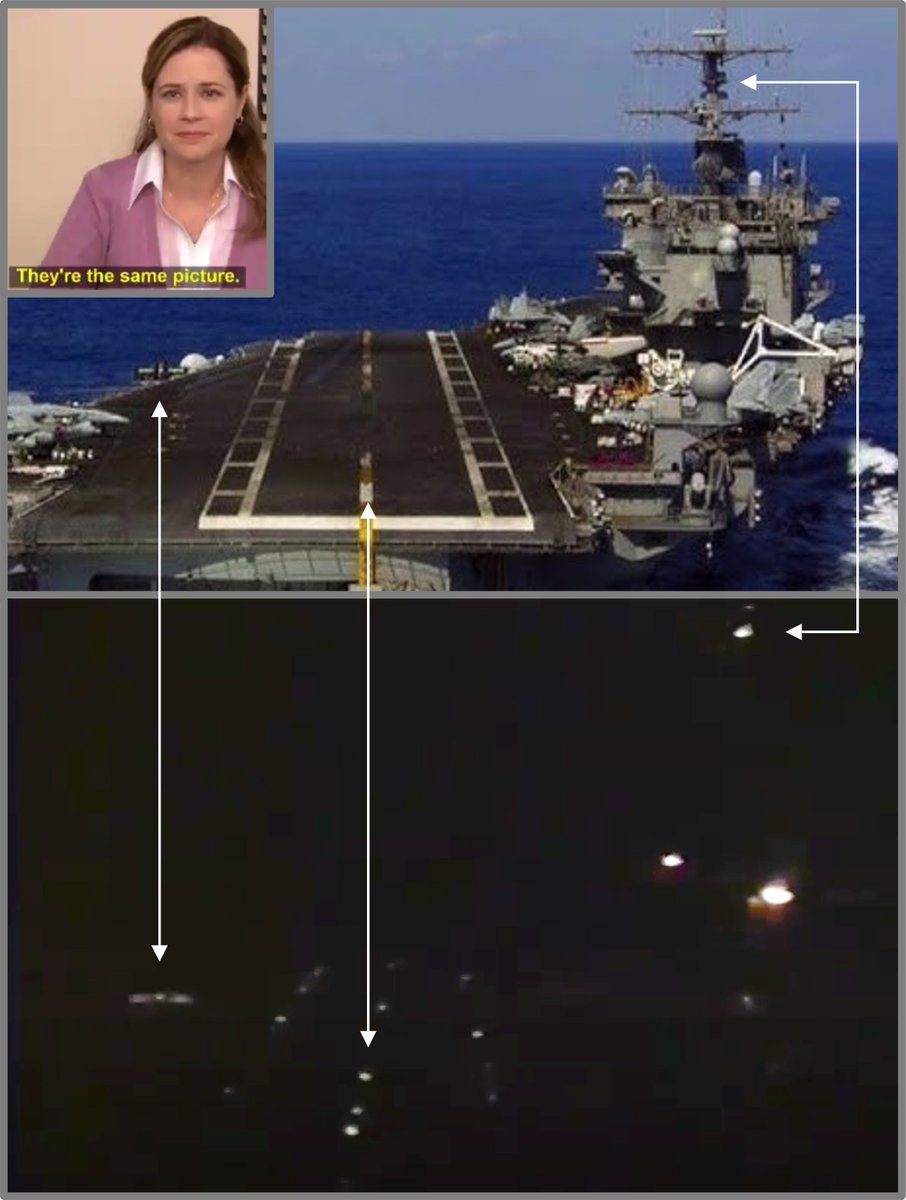
@RSE_VB USS Kitty Hawk, Blue Water Ops Dec 1992, transiting the I.O. To coast of Somalia for “Operation Restore Hope”. Young JG on his bigger cruise…6 bolsters before he got aboard. Was in PG waiting…
English
1
0
1
29
Rich "Corky" Erie
Rich "Corky" Erie@RSE_VB·
#TomcatTails Number 37 #TomcatTuesday “You’re Signal Divert. Miramar Bears 070° For 85 Miles” or “Weather Sucks; Go Home.” I’ve spent quite a few words talking about landing on an Aircraft Carrier (“the boat”), relating how it’s recognized as one of the most difficult feats in aviation. While daytime Carrier Ops can be quite fun when the weather is good and your jet’s operating normally (we called it “the sport of Kings” on those days), if you have system problems, or the sun sets, or the weather and sea state trend toward “varsity”, it can rapidly ratchet up from “fun” to “terrifying” pretty quickly. Most Naval Aviators have their “Night in the Barrel” story, meaning that ONE night they’ll never forget where all of the above distractions combined into a truly memorable, adrenaline-laced struggle to get the jet on deck safely while battling “snakes in the cockpit” as we would say. Dark no-moon-night, weather, heavy seas, and pitching deck can (and often do) make for supremely challenging conditions that test your mettle behind the boat. While Flight Pay was a nice little $-bump, I always said that Navy Pilots earned that year’s extra pay on that ONE pass. And when you factor in Blue Water Ops (too far from any land to go anywhere else), that calculus gets exponentially harder. Recall too, earlier discussions about the normal landing parameters aboard the ship. The landing area is about 700 feet long and 80 feet wide (Tomcat wingspan is 64 feet…..you got eight feet each side) and the arresting wires decelerate you to a full stop in about 320 feet (150mph to 0). The deck is angled to the left 10° so it’s moving away from you at an angle. If everything is perfect and you cross the back of the ship (“the ramp”) exactly on altitude, exactly on speed, exactly on glideslope (3.5°), and exactly on centerline, your tailhook passes over the ramp at about 14’, the body of your jet at about 19 feet. At 150mph. That’s it. If it sounds really challenging, that’s because it is. This one feat alone sets Carrier Pilots apart from all others. “But Corky. What if the weather is bad and the sea state is really wavy?” Well, then the deck starts to pitch, up and down, up and down. Deck pitch can be minor like 4-5 feet, or it can be really bad, like 15-20 feet. “But doesn’t that eat up any safety margin?” Yes. Yes it does. Factor in as well that along with deck pitch in heavy sea states, the Carrier will also roll a bit (or a lot), and also “heave” where the entire ship lifts up. One of the more interesting things about this cyclic movement is that every Carrier has a unique signature in heavy sea states. There are a variety of elements that form that signature. There are plunges, where the bow of the ship goes down (ramp comes up), rolls left and right based on direction of the swells, and often a little “shimmy” where the ass end will wiggle a bit. And all of these elements form that particular Carrier’s signature. What’s also interesting is that Carriers are so big, they’ll execute their signature series of movements, and then magically stabilize for some number of seconds (10, 20, 40…etc.) and smooth out…..and then start all over again. LSOs (Landing Signal Officers) are uniquely attuned to their boat and they know when that smooth part is coming so on a rough night they can determine if a jet on final is going to clear the ramp at the right moment in time (up, down, or steady) and not hit the back of the ship (ramp strike). If it looks too dicey or the timing is off for a particular jet, they can wave them off at the last moment so they come around and try again (thanks, Paddles!!!). This particular #TomcatTails is about that timing and how sometimes you just can’t make it work out. The year was 1994 and we were between cruises in the VF-24 Renegades out of Miramar. As often happens, a Carrier will head off the coast for CQ Ops (carrier qualification) primarily for training for the RAG students landing for the first time. It’s also training for the Carrier deck crews and everyone else on the boat too. And if there’s a chance to work in any fleet bubbas, the ship will offer it up and squadrons will go out to CQ just to get some off cycle practice. Such was our chance in January of that year. My logbook shows that it was January 19th, 1994 and the boat in question was the USS Kitty Hawk (CV 63), a boat I’d get MUCH more time on when I was stationed in Japan 1998-2000. It also shows that it was 2.6 hours of flight time, and I got 2 traps, 2 bolters (missed the wires) out of a total of 7 approaches. The Kitty Hawk’s signature (from what I recall) was kind of a plunge….plunge…..plunge…..a little shimmy……then she’d steady out for 30 seconds or so and then start all over again. The night in question was what we in the industry call “dog squeeze”. Dark, heavy overcast, rain, and a very difficult sea state, like maybe 10 to 12 foot swells. Naturally, as she was doing her dance the deck was pitching about 15 feet either way, so the timing would be critical to successfully landing (or “successfully not dying”). This "timing" by the way is not something you can affect. It is what it is on arrival. All you can do is react to it. And the sky conditions made for complete IFR approaches in the clouds (total blackness) and somewhere along the approach at a mile out you’d get under the clouds and see the ship in all here plunging and shimmying glory, landing area lights and centerline lights just a-wiggling all over the place. Neat. What made this night unusual was that most of the other jets had gotten sent home, and me and Trigger were the lone Tomcat in the pattern, trying to get aboard on multiple attempts. He and I flew together quite bit and made a great team. If anyone could have gotten any valid training out of those conditions, it would be us two. As we headed out to the boat, we had the distinct honor of checking into our approach frequency right when paddles was delivering a screaming power call to some unfortunate aircrew that were probably just a wee bit low on the glideslope as the deck was coming up. Nothing instills confidence like changing to the approach freq and hearing “POWER-POWER-POWER-WAVE-IT-OFF-WAVE-IT-OFF!!!!!!!!!” I’m sure Trigger and I joked “Well, this should be fun” as they told that guy to go home. We got our marshal instructions (radial, distance, and altitude to hold) and headed for it in the goo (clouds). We took one turn in the holding pattern and the boat came up and said “Your signal Charlie” which means “c’mon down and land.” We got settled into the Case 3 recovery, a 1,200 foot straight in until you hit about 1.2 miles and you started your decent approach based on instruments. I’d generally fly ILS (or “bullseye”) which was a glide slope needle and an azimuth needle on the primary attitude display. While all the Carriers also had ACLS (Automatic Carrier Landing System) which put needles on your display AND they could fly the jet for you, when the weather was especially sh*tty I’d opt for ILS. Reason being that if you set your switches for ACLS and it dropped lock on you, the needles went away. Naturally, that seemed to happen only when you were getting close to landing and were assholes and elbows flying the jet. And when it did, you had to switch hands (left on stick to fly the jet) and manually toggle over to ILS bullseye with your right, then switch hands back. Thanks, but no thanks. I’ll take ILS for the win here. While I can’t recall the order of events throughout the 7 approaches, I can VERY specifically recall the LAST one that I’ll get to in a few paragraphs. Our first look at the boat was about what we expected. We came out of the clouds at about 1 mile and sure enough the Kitty was doing her dance. Interesting to note as well that the visual landing aide (the “ball”) system was gyro stabilized to a certain extent, meaning that the ship could move around some and it would still give you correct glide slop information. Up to a point. And that point was about 10 or 12 feet (any Paddles here to confirm?). Our first look seemed relatively OK, and we continued the approach but you could definitely see the deck was moving pretty good. We crossed the ramp a little high and a little fast as it was dropping and boltered (missed the wires). Paddles called out “Bolter, bolter, bolter….hook skip”, meaning it wasn’t our fault for grading purposes. Made sense given the conditions. We got back in the pattern and came back around for another try and got a trap. Cool. So it’s actually possible. While on the deck and taxiing to the catapult, Trigger and I talked back and forth about the obvious motion on the deck and remarking about how being the “sacrificial Tomcat” was always so fun. This meant the ship would work a Tomcat longer than anyone else because we had the legs (gas) to stick with it longer than most. That’s a blessing and a curse, as you may expect. We banged off Cat 1 and back into the dog squeeze weather for some more fun, coming back around for pass # 3. As we broke out of the clouds, the deck was moving pretty good again and we pressed the approach to the in-the-middle position when Paddles called “Wave it off….pitching deck”, indicating that the wave off wasn’t due to pilot technique. These “sugar calls” are important for the Pilot and RIO so we can keep our heads in the game. Basically, “you’re doing fine, keep it up.” After another 3 tries in which we got a bolter, a trap, and another pitching-deck-wave off, we were getting a little skosh on gas (/skōSH/ or “low”) we figured we had one more to go. This was the memorable one. We came around the pattern, hit our final bearing and cruised in for one more. I didn’t really notice if the sea state was getting worse but apparently it had been deteriorating from bad to holy-crap. As we broke out at one mile, I noticed that I couldn’t see the ball. I immediately called “CLARA” which tells the LSO I can’t see a ball on the lens. Paddles comes back with “Deck is down, you’re looking good.” And then I looked. At the deck. First rule in Carrier Aviation is NEVER look at the deck on the whole. Look at the ball, look at the centerline, and look at your speed. Meatball, lineup, angle of attack. Over and over and make the appropriate corrections to keep those centered, on lineup, and on speed respectively. But you NEVER focus right on the deck. You’ll just scare the sh*t out of yourself, which I did. My memory can literally SEE the deck being WAY down and my mind tells me I could literally count the arresting wires because they were SO visible, almost as if I was looking straight down at the flight deck. “Oh look. One, two, three, and four wires” followed by “Oh shit, I’m not supposed to be able to see that.” Paddles then said “hold what you got”, meaning do NOT chase the ball downward by pulling some power. That would be ramp-strike-territory. OK, Paddles. I’ll see your “hold what you got” and raise you just a teeny bit of extra power ("for mom and the kids" as we used to say) n order to avoid ending up as a flaming fireball in the jet shop on the back of the boat. And then the deck came up. WAY up. The memory in my head recalls that I saw the top of the screws of the boat come out of the water. The. Screws. I’m just outside the in-the-middle phase, about 15 seconds from landing and my eyes have lost all discipline as I’m staring at the water being roiled up by these massive screws on the ol’ Kitty. Gulp. My mind could be filling that picture in a bit, but I don’t think so. It was at once an awe-inspiring spectacle at the sight of it, and a shot of cold piss to the heart (maximum fear inducing). Paddles must have sensed that huge pitch because he hit the wave off lights right after his call. Honestly, I think I was probably already on the way there recognizing that a safe landing here was not in the cards on this pass. The funniest part here is when we’re waving off, Trigger says something like “WTF, man? Why the waveoff??” I came back with “Uh, no. That was good one, a good idea.” He knew right then that if his buddy Corky is thankful for a wave off, then it sure must have been a doozy of a sight picture. We got the “Your signal divert; Miramar bears 070° for 85 miles” call and headed home. We landed, and then went to the O’Club for the debrief and I described that final sight picture in detail. Conveniently, it was a Wednesday night at the Miramar O’Club so a good time was had by all. Unsurprisingly, our wives had to come get us that night. For all my Hook brethren and sistren out there; ain’t night carrier ops grand????
Rich "Corky" Erie tweet media
English
63
70
599
39.4K
B1900pilot
B1900pilot@b1900pilot·
@MatthewModine That’s a really amazing story! My Dad flew B-24s in the Pacific theatre. I think your uncle deserved a higher award for his valor and not leaving a severely wounded crewmember behind.
English
0
0
0
30
Matthew Modine
Matthew Modine@MatthewModine·
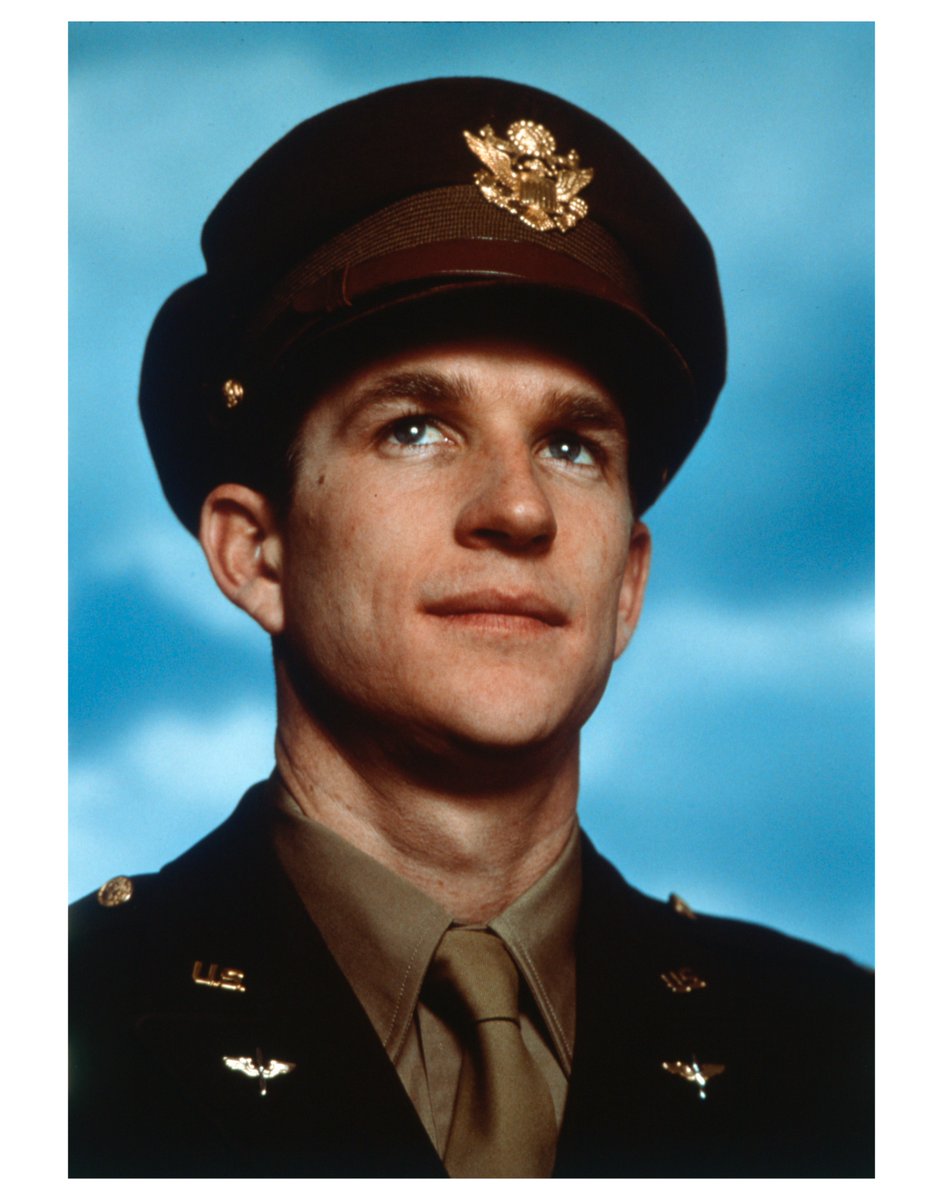
My uncle, Captain Wylder Modine, was a real B-17 "Flying Fortress" pilot during WWII. After returning from a bombing mission, he got hit by anti-aircraft fire and almost had his right arm taken off. He had his crew bail, but his co-pilot was shot up really bad and couldn’t parachute, so my uncle, with one arm, landed the heavily damaged B-17 in a field behind enemy lines. He was awarded the Air Medal and Purple Heart. I talked with him before making MEMPHIS BELLE in 1989. He gave me his dress uniform to wear in the film and said, “when you put that on, don't disrespect it.”
Matthew Modine tweet mediaMatthew Modine tweet media
English
778
1.6K
16.9K
296.2K