Felipe Barros

552 posts

Felipe Barros banner
Felipe Barros

Felipe Barros

@barrosfel09

MSc. in Physics @udeconcepcion. Research in #activematter.

Concepción, Chile Katılım July 2023
512 Takip Edilen91 Takipçiler

2026 Yıllık Özeti

@barrosfel09 hesabının Twitter yılını gör

Felipe Barros retweetledi
Physical Review Fluids
Physical Review Fluids@PhysRevFluids·
A 30-day experiment follows the flow of a high-viscosity liquid through a capillary tube, revealing persistent diffusive imbibition and testing how models that account for the dynamic contact angle perform in long-term imbibition processes. go.aps.org/4wyVFag
Physical Review Fluids tweet media
English
0
6
27
1.2K
Felipe Barros retweetledi
American Physical Society
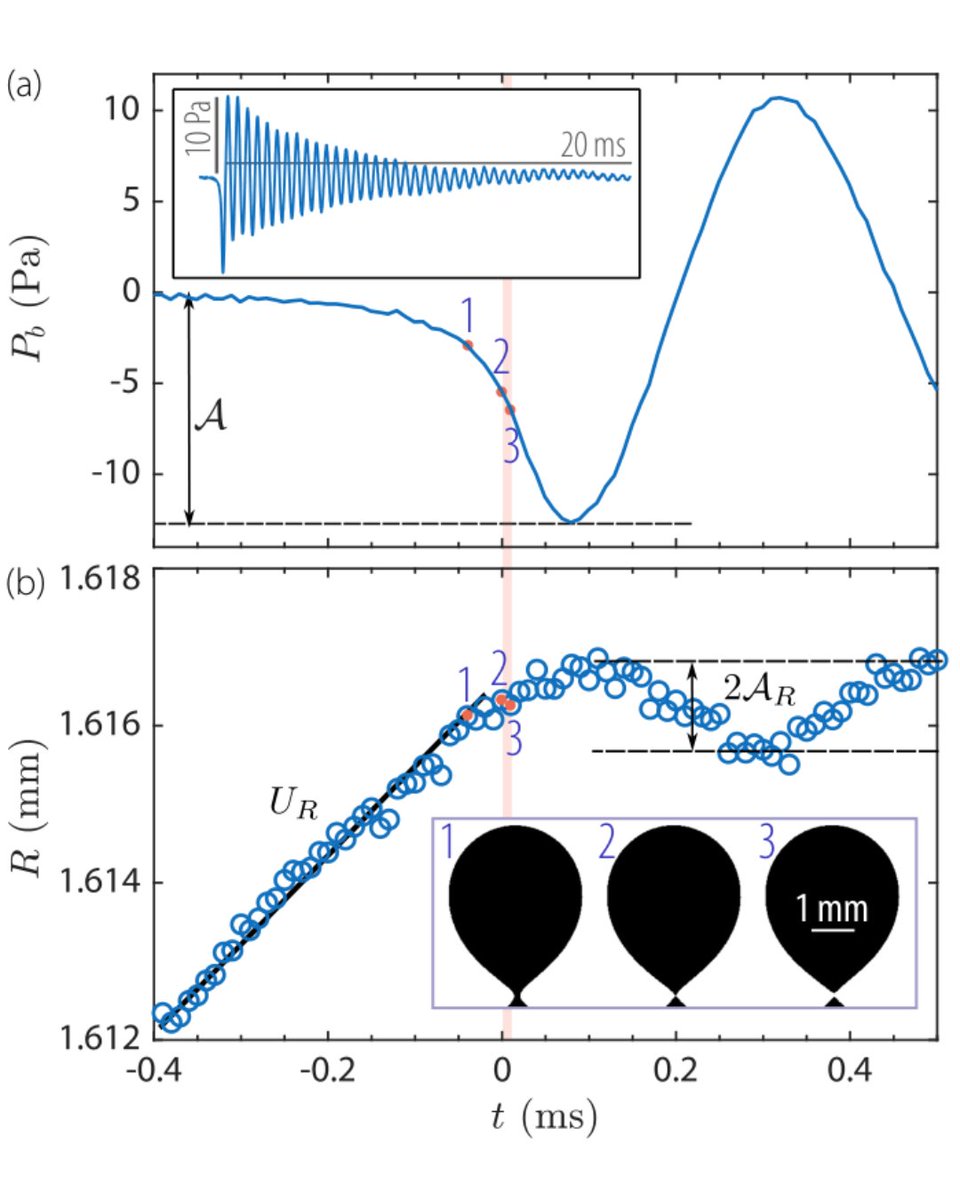
Ever wondered why some underwater bubbles are louder than others? 🫧 A Physical Review Fluids study shows a bubble's formation volume depends on its initial size and how quickly it forms — results that could improve methods to detect underwater gas leaks: go.aps.org/4g0YiLZ
American Physical Society tweet media
English
0
16
76
7K
Felipe Barros retweetledi
PRX Life
PRX Life@PRX_Life·
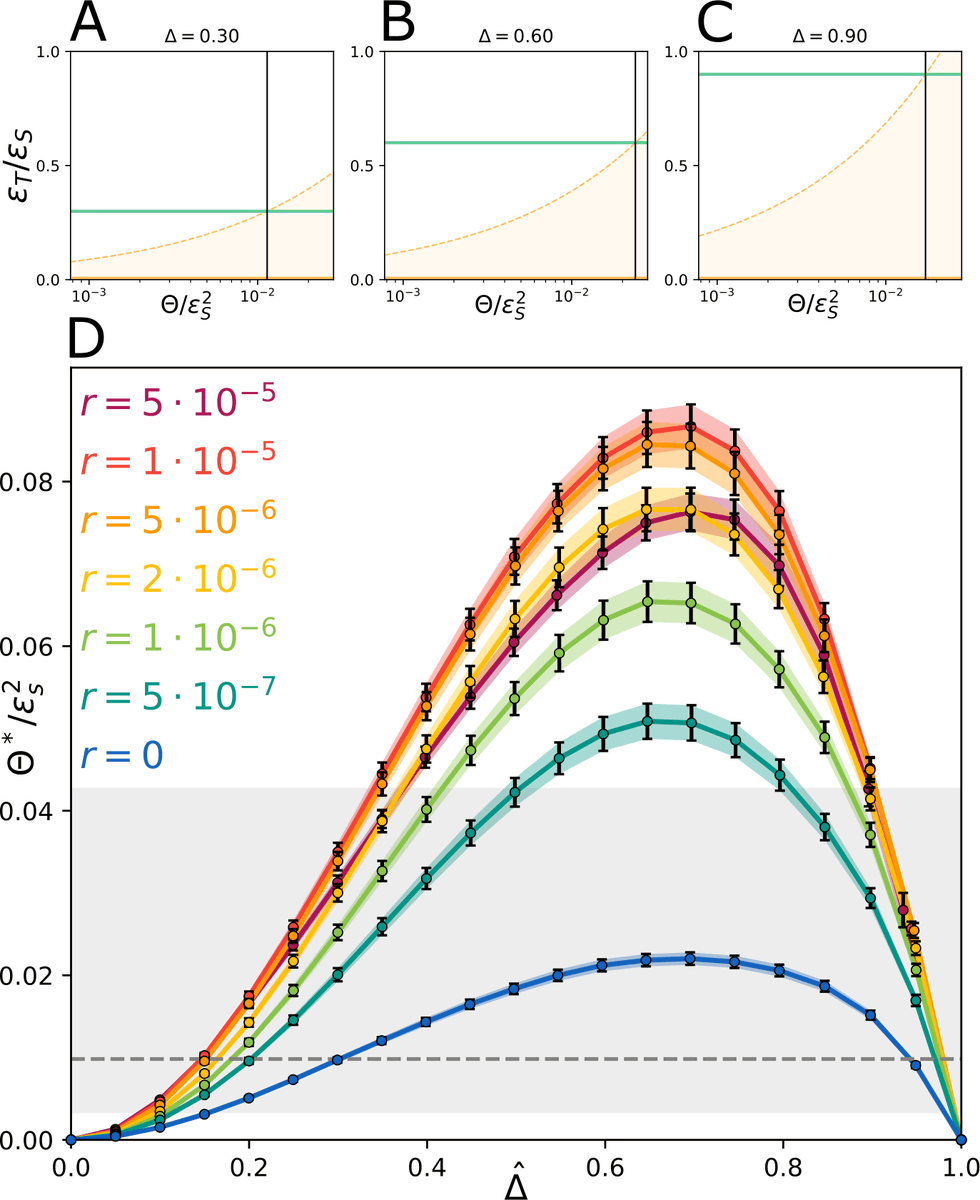
Researchers have identified a temperature threshold where thermal fluctuations disrupt cooperative function in mechanical networks modeling protein allostery. They also demonstrated how tuning for thermal stability can improve robustness. Read more: go.aps.org/4xaKdBg
PRX Life tweet media
English
0
4
11
882
Felipe Barros retweetledi
News from Science
News from Science@NewsfromScience·
Most salamanders live in streams and under rocks or logs, but the wandering salamander has a high-flying lifestyle. These 13-centimeter-long amphibians spend much or all of their lives in coastal redwoods, some of the tallest trees in the world. In 2022, a laboratory study showed how they can descend by jumping, slowing their fall by spreading their limbs like a skydiver. Learn more: scim.ag/4eu73hs #ScienceMagArchives
English
5
20
165
26.4K
Felipe Barros retweetledi
えみぃ
えみぃ@tubottle·
プレオドリナはたくさんとれた
日本語
0
7
80
925
Felipe Barros retweetledi
Physical Review E
Physical Review E@PhysRevE·
A new study reveals that particles in a strongly confined viscoelastic fluid form chains when a particle-scale Weissenberg number exceeds a critical threshold. “Shuttling" motion promotes collisions and self-organization. 🔗 go.aps.org/4bIjQdO
English
8
81
384
34.2K
Felipe Barros retweetledi
Ratzke Lab 🦠⇄🦠
Ratzke Lab 🦠⇄🦠@cratzke1·
🦠Our new paper is out in Nature Ecology & Evolution. We show that increasing nutrient diversity can enhance microbial resource uptake, intensify competition, and ultimately reduce biodiversity. doi.org/10.1038/s41559…
Ratzke Lab 🦠⇄🦠 tweet media
English
0
11
10
1.4K
Felipe Barros retweetledi
PNASNews
PNASNews@PNASNews·
A reverse sprinkler draws in fluid rather than ejecting it. The geometry of the reverse sprinkler’s arms drives its rotation: specifically, the flux in the angular momentum of the fluid being injected into the central hub of the sprinkler. In PNAS: ow.ly/268c50Zoa3J
PNASNews tweet media
English
0
5
11
3.8K
Felipe Barros retweetledi
Nature Physics
Nature Physics@NaturePhysics·
Many active and driven systems exhibit non-reciprocal interactions, making them hard to describe with standard methods. Now a constrained Hamiltonian embedding with auxiliary variables reproduces these dynamics in model spin systems. nature.com/articles/s4156…
English
0
9
46
4.5K
Felipe Barros retweetledi
Science Magazine
Science Magazine@ScienceMagazine·
Bumble bees are hardly nature’s most graceful creatures, and their name reflects it. But it turns out these bees show a surprising knack for rhythm. The fuzzy insects can not only recognize a rhythm but also identify the same pattern when scientists change the tempo, according to recent research—the first time this ability has been documented outside of a few mammals and birds. Learn more: scim.ag/4vZuBk9 @NewsfromScience
English
5
35
209
73.1K
Felipe Barros retweetledi
Datta Lab
Datta Lab@TheSquishyLab·
Excited to release a review led by postdocs Pablo Bravo, @DharTanumoy, Eloise Masquelier, & PhD student Danielle Sclafani: arxiv.org/abs/2607.10734! We argue that studying the feedback between bacteria & soil is an exciting frontier for physics. 🌱🦠 Tweetorial follows... [1/5]
Datta Lab tweet media
English
1
10
31
2.9K
Felipe Barros retweetledi
PRX Life
PRX Life@PRX_Life·
Using a minimal theory, researchers show how energy-consuming enzymes determine how active membrane domains form, persist, and coarsen — a framework for identifying key factors that control phase separation on membrane scaffolds. Read the study: go.aps.org/456Yova
PRX Life tweet media
English
0
11
28
1.8K
Felipe Barros retweetledi
Glen D'Souza
Glen D'Souza@nonresidentdesi·
A milestone for our young lab! 🎉 Honored to receive a 5-year NIH MIRA (R35) from the NIGMS to study how bacteria use molecular weapons to compete with one another, and how these interactions shape microbial communities . We're growing! Recruiting postdocs and research techs
English
9
28
289
30.1K
Felipe Barros retweetledi
Physical Review Letters
Physical Review Letters@PhysRevLett·
Particles moving through crowded environments don't just navigate obstacles — they displace them. A "pushy random walk" model shows how these particle-induced rearrangements can fundamentally alter diffusion and transport in dense media in 1D and 2D. 🔗 go.aps.org/4fcLTTM
English
5
23
120
10.4K
Felipe Barros retweetledi
Physical Review Fluids
Physical Review Fluids@PhysRevFluids·
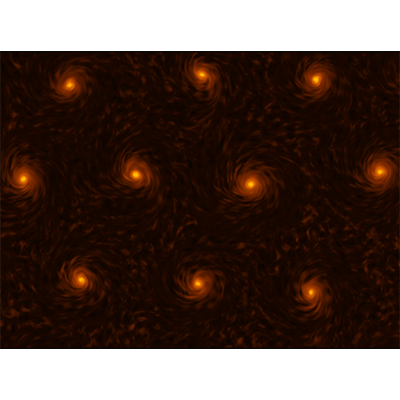
What governs the stability of vortex lattices in rotating flows? Embedding ideal triangular arrays of vortices into 3D turbulence shows that their lifetimes obey a memoryless random process, depending on the Rossby number and energetic balance. go.aps.org/3SWwXBO
Physical Review Fluids tweet media
English
1
10
47
2.2K
Felipe Barros retweetledi
Physical Review E
Physical Review E@PhysRevE·
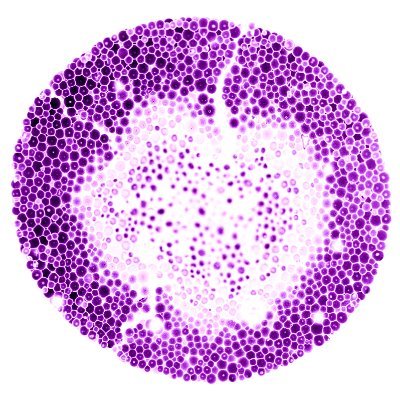
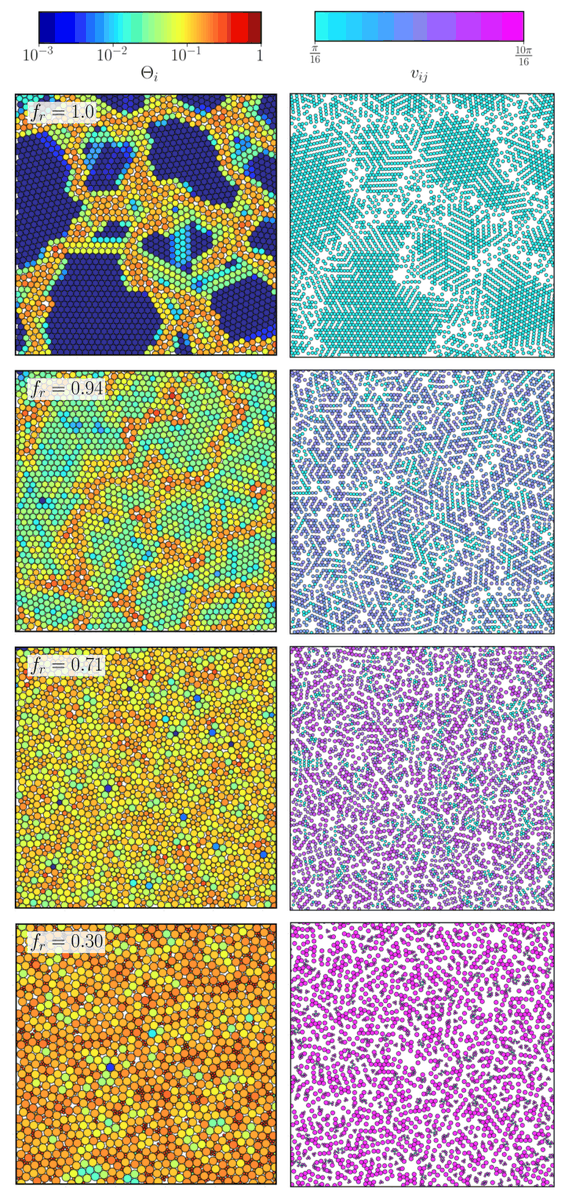
A new paper investigates hyperuniformity in 2D jammed packings of frictionless bidisperse particles, and presents a more precise method to determine the hyperuniformity exponent. Read more: go.aps.org/44eg5ZD
Physical Review E tweet media
English
0
9
42
3.9K
Felipe Barros retweetledi
Physical Review E
Physical Review E@PhysRevE·
Weak, random motility regulation can induce complex forms of self-organization in microbial communities. A new study shows that a phase transition leads to distinct, spatially segregated communities as the interaction network becomes more heterogeneous: go.aps.org/4p8PXZK
Physical Review E tweet media
English
1
8
36
2.3K
Felipe Barros retweetledi
Physical Review Fluids
Physical Review Fluids@PhysRevFluids·
A vortex pair interacting with a localized polymeric fluid layer can generate secondary and tertiary vortices via polymer stress gradients. Elastic stresses modify vorticity production and energy transfer, with behaviors not seen in Newtonian fluids. go.aps.org/4gq88YC
Physical Review Fluids tweet media
English
0
11
61
2.5K