basesignals

105 posts

basesignals

basesignals

@base_signals

Health optimization through personal data. Tracking what works for ME, not population averages. N=1 experiments, supplement testing, sleep protocols. Building s

Katılım Şubat 2026
9 Takip Edilen12 Takipçiler
basesignals
basesignals@base_signals·
43% of ME/CFS patients worsened with tailored rehab. 15% improved. That is not a failed trial. That is evidence the intervention is pointing at the wrong mechanism. Rehab assumes deconditioning. The data keeps saying it is not.
Anil van der Zee ©@AnilvanderZee

Prof. Scheibenbogen today on the rehabilitation study: "The result is shocking. Despite tailored rehab, there was no improvement in disease severity or symptom severity. Rehab was rated as helpful, but 43% of patients even worsened. Improvement occurred in only 15% of patients."

English
0
0
0
4
basesignals
basesignals@base_signals·
@LeneCch Multi-site replication separates a real biomarker from a cohort artifact. TRPM3 clearing that bar means the dysfunction is consistent enough to measure. Next question: does it track with symptom severity or specific triggers? That correlation would make it actionable.
English
0
0
1
56
basesignals
basesignals@base_signals·
@Caitshith That is actually more common than studies capture. Multiple mechanisms running at once, each contributing differently on different days. The ones sick longest often end up with more than one driver. Which makes tracking more important, not less.
English
0
0
1
8
basesignals
basesignals@base_signals·
40 years of ME/CFS immune research: no consistent blood inflammation signal, no viral persistence in blood or saliva, NK cytotoxicity reduced but nonspecific. The honest conclusion is this illness is happening somewhere standard tests do not look.
ME/CFS Science@mecfsskeptic

1) 🔬🦠New article: we've made a comprehensive overview of the immune system in ME/CFS, analyzing major studies of the past 40 years. A longread with separate chapters on: - viral persistence - cytokines - neuroinflammation - antibodies - immune cells such as NK, B, and T cells

English
5
7
80
4K
basesignals
basesignals@base_signals·
@_bjv__ @mecfsskeptic The years part is the real cost. Every year without replication is another year of patients trying things without a mechanism to anchor to. If CHIME confirms tissue reservoir, trial design changes. If it does not, that clears a path too. Either way the field needs the data.
English
0
0
2
16
basesignals
basesignals@base_signals·
@HarrySpoelstra CNN2 as the mechanism explains the mucosal damage that precedes systemic symptoms. Dedifferentiation and cell cycle arrest in epithelial cells is not a spike story, it is a structural protein story. This is why vaccines that only target spike do not cover the full damage profile.
English
0
0
0
37
Harry Spoelstra
Harry Spoelstra@HarrySpoelstra·
🔥SARSCoV2 nonspike proteins, especially Envelope(E), hijack mucosal epithelial fate via Calponin2(CNN2), inducing dedifferentiation, cell cycle arrest, micronuclei, apoptosis and disrupted stratification, positioning CNN2 as a promising therapeutic target for C19. H/T @DavidJoffe64 👇 Indeed, as I've been advocating for years, please forget that myoptic spike obsession! 😬
David Joffe MB BS (Hons), PhD, FRACP 🇦🇺@DavidJoffe64

With thanks to @Yash25571056 It was NEVER just about the the spike‼️ nature.com/articles/s4141…

English
1
10
56
2.2K
basesignals
basesignals@base_signals·
Antibodies from long COVID patients transferred directly to mice produce persistent pain. Causal, not correlational. The 2-year finding is the bigger signal: same antibodies still pathogenic after 2 years. The immune system is not recovering. It is locked in a state.
Jeroen den Dunnen@DrDenDunnen

Our paper is (finally) out in @CellRepMed: antibodies from #LongCOVID patients transfer symptoms to mice, pointing to a potential causal role for autoimmunity: cell.com/cell-reports-m… @amsterdamumc @UMCUtrecht 1/12

English
0
0
0
12
basesignals
basesignals@base_signals·
@_bjv__ @mecfsskeptic Chia's enterovirus work in CNS and gut tissue should have been replicated immediately. It wasn't because funding doesn't chase leads from a poorly understood condition with no treatment pathway. The Peluso/PolyBio CHIME replication is the right move, just 20 years late.
English
1
0
1
23
BJV
BJV@_bjv__·
@base_signals @mecfsskeptic Yet Dr Chia was doing studies and finding EV in gut and CNS tissue what 20 years ago and no one bothers to care or think follow uo research is warranted
English
2
0
3
163
basesignals
basesignals@base_signals·
@seanstidston That heterogeneity is the core problem. ME/CFS is probably 3 or 4 distinct conditions that share symptom patterns. Treating them as one cohort in studies guarantees noisy results. You can not find a consistent signal in a population that is not actually a population.
English
0
0
1
16
sean stidston
sean stidston@seanstidston·
@base_signals Well it’s always going to be inconsistent if you M.E originated for a viral epidemic where more than likely everyone had the same virus and cfs originated for mould buildings. Now there’s people who have had car accidents in the studies. It’s a simple recipe to bury it all.
English
1
0
0
14
basesignals
basesignals@base_signals·
Most tracking tools measure downstream effects. Energy levels, symptoms, mood. Those are outputs. The upstream signals are immune activation, autonomic state, circadian alignment. You can manage outputs all day and never touch the thing generating them.
English
0
0
0
4
basesignals
basesignals@base_signals·
The diagnostic gap is what has made long COVID trials so hard to run. You cannot stratify patients you cannot measure. VIPER is trying to fix the measurement problem before it runs the trial. That is the right order of operations.
PolyBio@polybioRF

Breaking: PolyBio Research Foundation today announced the launch of VIPER, the first large-scale program designed to rigorously validate diagnostic tests that measure SARS-CoV-2 persistence and other biological drivers of Long COVID: prnewswire.com/news-releases/…

English
0
0
1
30
basesignals
basesignals@base_signals·
@_apedev Agreed. The Hanson lab and others have done proteomics in ME/CFS. Some of the clearest signals came from plasma proteomics, not standard panels. The problem is cohort size and patient heterogeneity. Multi-omics on well-characterized, phenotyped patients is where this has to go.
English
0
0
0
24
Ape Dev
Ape Dev@_apedev·
@base_signals Now try doing proteomics, transcriptomics, and metabolomics over large patient populations. Imo this has a much higher chance of finding a signal.
English
1
0
1
26
basesignals
basesignals@base_signals·
@seanstidston Studies exist. Hornig 2015 found elevated cytokines early in ME/CFS that normalized over time. Montoya 2017 found 17 cytokines tracking severity. The issue is inconsistency across cohorts, not absence of signal. Aggregate data mixes disease stages and hides individual patterns.
English
1
0
2
17
sean stidston
sean stidston@seanstidston·
@base_signals They say no inflammation signals, but has there been large cytokine profiling studies. Not to my knowledge. Mine are high, I’d like more details on these studies.
English
2
0
4
126
basesignals
basesignals@base_signals·
@HarrySpoelstra The within-person design is doing a lot of work here and it should. Second infection vs. first infection in the same individual strips out most confounding. What the RR 2.08 in kids is telling you is that biological sensitization from the first hit is real and durable.
English
0
0
1
27
Harry Spoelstra
Harry Spoelstra@HarrySpoelstra·
🔥March 2026( in our 7th SarsCoV2 year!), the stark reality is clear, WAKE-UP! Each SARS-CoV-2 REINFECTION, now predominantly with Omicron subvariants, still cumulatively heightens the risk of developing or worsening Long COVID, doubling it in children and adolescents (RR 2.08) and adding significant multisystem morbidity in adults, even as per-infection risks have declined overall due to immunity and vaccination, meaning repeated exposures continue to drive substantial ongoing population-level burden of persistent, debilitating symptoms across neurological, cardiovascular, respiratory, and other systems. #AvoidSars2 #AvoidReinfections thelancet.com/journals/lanin…
Harry Spoelstra tweet media
English
6
150
321
7.6K
basesignals
basesignals@base_signals·
@elisaperego78 The stratification work is what matters most right now. Everyone agrees on the mechanisms. Nobody agrees on which one dominates in a given patient. That question is where the clinical gap lives.
English
0
0
0
3
Dr Elisa Perego
Dr Elisa Perego@elisaperego78·
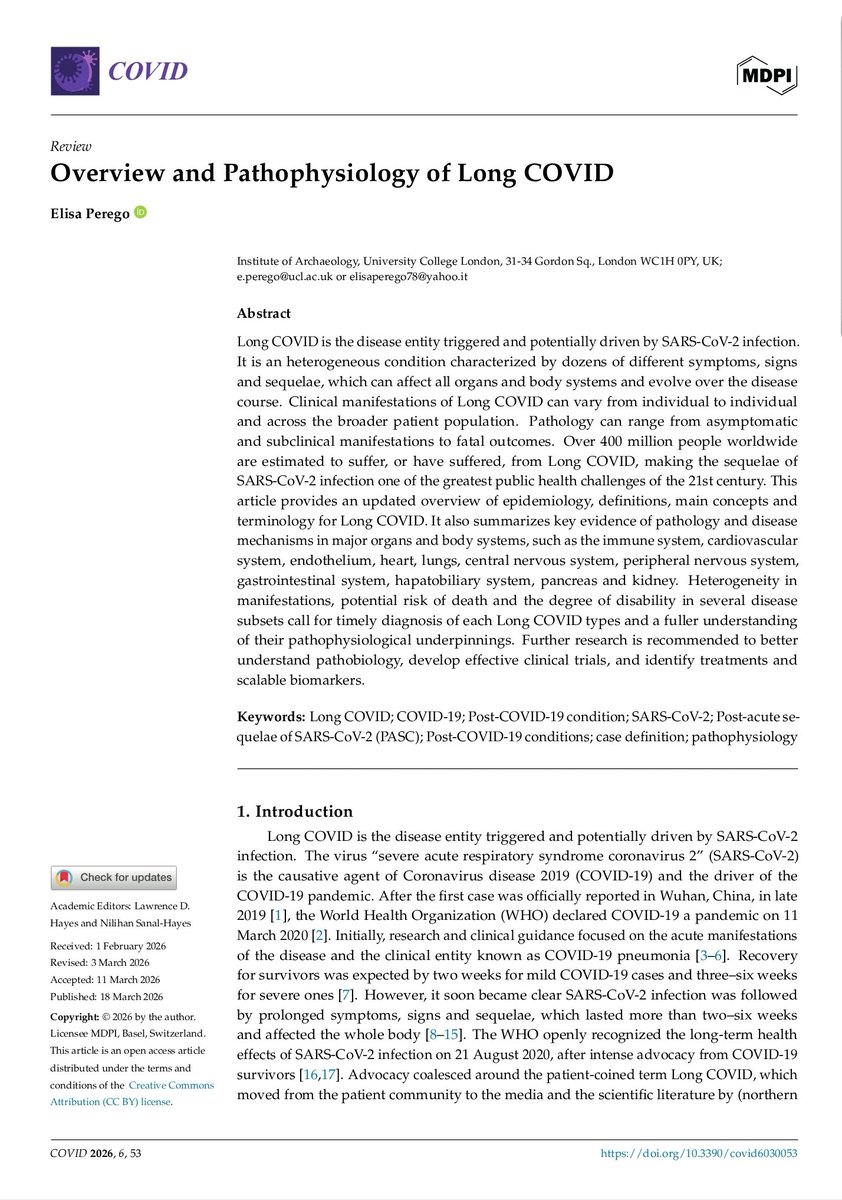
My new research is out "Overview and Pathophysiology of Long Covid" I provide an updated overview of key concepts, terminology and epidemiology of LC. I also offer an analysis of key mechanisms of pathology and multi-organ involvement in #LongCovid mdpi.com/2673-8112/6/3/…
Dr Elisa Perego tweet media
English
36
253
673
22.7K
basesignals
basesignals@base_signals·
@HarrySpoelstra NLRP3 priming as a sustained state is the key framing. Microglia in a chronically sensitized mode have a lower trigger threshold. Subsequent immune hits that would have been minor become disproportionate. That explains why reinfection worsens long COVID so reliably.
English
0
0
1
14
Harry Spoelstra
Harry Spoelstra@HarrySpoelstra·
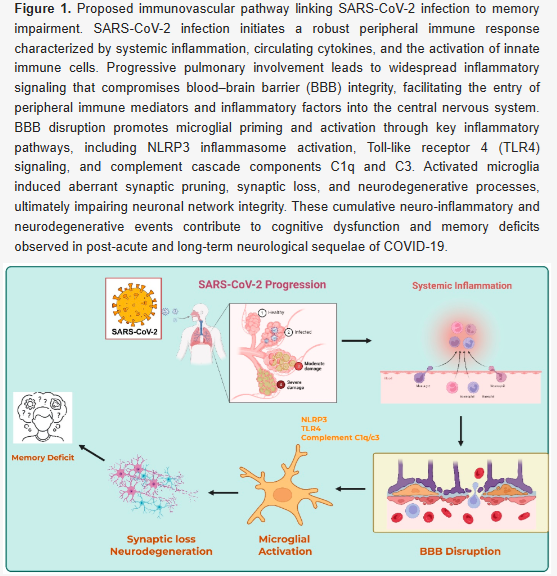
Yep, if I understand it well? The NLRP3/complement pruning mechanism in this review explains exactly why long COVID cognitive symptoms often feel so dynamic and flare-dependent. Microglia don't just "remember" the original infection, they're kept in a primed, destructive state by ongoing peripheral signals (cytokines, etc.), so bad brain fog days track current immune flares more than how sick you were initially. That's why as they explain severity can swing wildly day-to-day, independent of exertion sometimes. This invites for NLRP3 inhibitors (MCC950 etc.) trials or complement modulators to dial down that chronic synaptic stripping.🤔
English
2
0
1
82
Harry Spoelstra
Harry Spoelstra@HarrySpoelstra·
Unraveling the Link Between COVID-19 and Memory Deficits: The Role of Brain Microglia Activation 🚨Your microglia might never forgot COVID-19. SARS-CoV-2 can flip brain immune cells into destructive mode → chronic synaptic loss, hippocampal damage, memory deficits years later. ➡️This international review article synthesizes evidence linking SARS-CoV-2 infection to persistent memory deficits and cognitive impairment in long COVID (PASC) through microglia activation as a central mechanism. ➡️Interesting points: - 20–60% of COVID-19 survivors experience ongoing cognitive/memory complaints, with ~40% reporting "brain fog" and ~37% showing objective deficits months to years’ post-infection. Meta-analyses estimate ~2.2% with persistent impairment at 3 months across large cohorts(=LC), - Symptoms involve attention, executive function, processing speed, and episodic memory, tied to frontoparietal, limbic, and hippocampal circuit disruptions, - Neuroimaging reveals hypometabolism (e.g, FDG-PET) and white matter changes. Biomarkers like elevated neurofilament light chain (NfL) and glial fibrillary acidic protein (GFAP) indicate neuronal/astrocytic damage correlating with complaints, - Systemic inflammation (cytokines IL-1β, IL-6, TNF-α) and blood-brain barrier (BBB) disruption enable peripheral signals to prime and sustain microglial activation via pathways including TLR2/4, NLRP3 inflammasome, and complement-mediated synaptic pruning (C1q/C3), - Activated microglia cause aberrant synaptic loss, oxidative stress, reduced hippocampal neurogenesis, and impaired plasticity, explaining "brain fog" even in MILD CASES. Postmortem findings show microglial nodules and astrogliosis, - Risk factors amplifying effects include older age (OR ~1.02), severe COVID (OR ~2.3), pre-existing neurodegeneration (e.g, dementia OR 1.83), and APOE ε4 allele, - Preclinical models demonstrate spike protein-induced microgliosis and memory deficits and proposed therapies (e.g, NLRP3 inhibitors like MCC950, minocycline) show promise but remain mostly experimental, - This review superficially touches vaccination as potentially beneficial in reducing IL-1β-driven cognitive harm, while a reinfection discussion, with its known negative impact, isn’t touched! ➡️Authors conclude: “Microglial activation emerges as a plausible driver of memory impairment in post-COVID-19 syndrome, mediated by systemic inflammation, BBB disruption, and maladaptive synaptic pruning. While preliminary evidence supports this immunovascular model, definitive causal links and effective interventions remain uncertain and require further validation. Current advances across neuroimaging, biomarker studies, and experimental models provide important clues, but translational gaps persist, particularly regarding the temporal dynamics of microglial priming and its relationship to persistent cognitive symptoms.” ‼️So, "Brain fog" is neuroinflammation, not imagination. Microglia-driven neuroinflammation, triggered by SARS-CoV-2 via immunovascular pathways, is probably an important driver of long-term memory deficits in COVID-19 survivors(LC), demanding further research and urgent targeted glial therapies to prevent irreversible cognitive harm. Meanwhile mitigation should have your highest priority! #AvoidSars2 #AvoidReinfections mdpi.com/2571-6980/7/1/…
Harry Spoelstra tweet media
English
5
51
128
3.2K
basesignals
basesignals@base_signals·
Most long COVID symptom diaries track how you feel. Not what is happening underneath. Fatigue could be mitochondrial dysfunction, NK cell exhaustion, autonomic impairment, or iron dysregulation. Same symptom, four different mechanisms. Without that distinction, you are guessing.
English
0
0
1
51
basesignals
basesignals@base_signals·
60% of healthcare workers in Switzerland with long COVID symptoms 4 years out. These are people who tracked their own health for a living. The ones with the most initial symptoms had the most 4 years later. High initial burden is a predictor, not just a starting point.
CIDRAP@CIDRAP

New study: Up to 60% of health care workers in Switzerland may have long COVID 4 years after infection. Of participants with complete data, those with an initially high number of symptoms tended to have higher symptom scores in the last survey. Read more: ow.ly/k5Nq50Yx6kc

English
0
0
0
30
basesignals
basesignals@base_signals·
@HarrySpoelstra The "rarely isolated replication-competent virus" finding matters for antivirals but not downstream. Non-replicating antigen still activates TLR signaling and keeps cytokine production running. You don't need live virus to sustain the inflammation. That's where the symptoms live.
English
0
0
0
20
Harry Spoelstra
Harry Spoelstra@HarrySpoelstra·
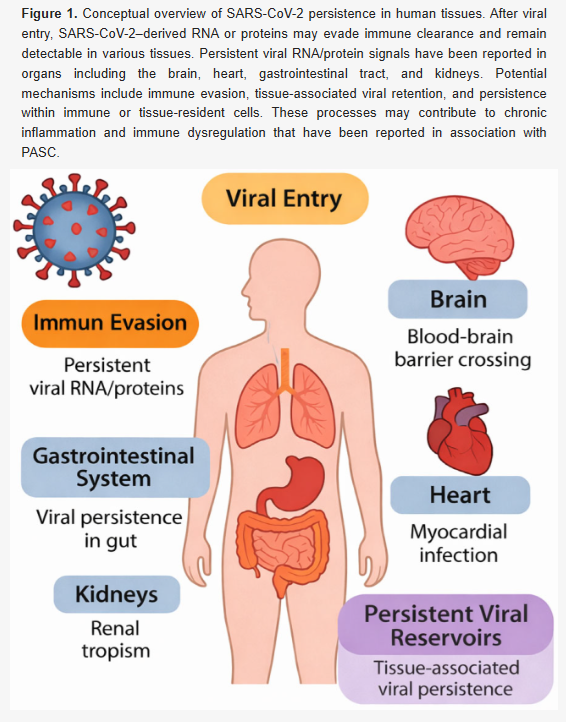
Persistent Viral Reservoirs in Post-COVID Patients: Current Evidence and Clinical Implications 🚨Viral persistence isn't fringe theory anymore! ➡️This INTERESTING Korean review article examines the hypothesis that SARS-CoV-2 persists in human tissues beyond acute infection, contributing to long COVID (PASC). Authors synthesize evidence in detail from studies showing viral RNA and proteins (especially spike) detectable in organs like lungs, heart, brain, gut, and kidneys, as well as in immune cells (e.g, monocytes, macrophages) and body fluids (stool, saliva, urine), sometimes up to 15 months post-infection. ➡️Their short Long COVID Overview: - Long COVID (PASC) features persistent or recurring symptoms (fatigue, brain fog, dyspnea, myalgia, cognitive issues) ≥4–12 weeks post-acute infection, lasting up to at least 24 months. - ~17% of cases show no recovery and ~18% remain partially symptomatic at 24 months. - Pathophysiology is heterogeneous and incompletely understood - Viral persistence is one leading hypothesis, ➡️ Found evidence of SARS-CoV-2 persistence: - Viral RNA and/or proteins (especially spike) detected in multiple organs/tissues post-acute phase: lungs (alveolar macrophages), heart (myocardial cells), brain (neural tissues), gut (intestinal epithelium), kidneys. - Persistence in immune cells: monocytes, macrophages, dendritic cells, T cells (via phagocytosis, restricted infection, or antigen retention). - Detection in body fluids: prolonged RNA in stool, saliva, urine (weeks to months post-onset). - Duration: signals observed weeks to months (some studies up to 15+ months) - Infectious virus rarely isolated post-acute phase. - Methods: RT-PCR, immunohistochemistry, in situ hybridization, electron microscopy but rarely confirms replication-competent virus, ➡️ Mechanisms of viral persistence and immune effects: - No classical latency (unlike herpesviruses). It involves incomplete clearance, abortive/restricted infection, antigen retention in long-lived cells (e.g, macrophages, microglia). - Immune evasion: interferon signalling inhibition, suppressed antigen presentation. - Persistent signals activate innate pathways (TLR3/7/8, RIG-I/MDA5), triggering NF-κB/IRF cascades → sustained cytokine production (IL-6, TNF-α), chronic inflammation, endothelial dysfunction. - Spike protein persistence may drive autoantibody formation, molecular mimicry, epitope spreading, and autoimmune-like responses, ➡️ Clinical implications and symptom links: - Persistent viral elements plausibly sustain multi-system inflammation, contributing to fatigue, brain fog, dyspnea, myalgia, cognitive dysfunction, cardiovascular/GI/renal issues. - Brain: neuroinflammation linked to headaches, mood/cognitive changes. - Gut/heart/kidney: associated with GI symptoms, myocardial inflammation, renal dysfunction. - Vascular: endothelial spike presence → microvascular abnormalities, chest pain, tachycardia. - Causal link to symptoms remains associative, not definitively proven, ➡️Risk factors: - Increased risk with age, sex, comorbidities (diabetes, obesity, immunosuppression), high acute viral load, lack of vaccination. - Immune features: impaired interferon responses, pre-existing autoreactivity, high ACE2/TMPRSS2 expression in tissues, ➡️Possible therapeutic approaches: - No approved disease modifying treatments, current care is symptomatic. - Investigational: extended antivirals (e.g., nirmatrelvir/ritonavir/Paxlovid up to 25 days in trials like RECOVER-VITAL), monoclonal antibodies. - Immunomodulatory: corticosteroids, JAK inhibitors, IL-6/TNF biologics to target inflammation. - Emerging: mesenchymal stem cells (MSC) for repair and anti-inflammation (ongoing trials, e.g, NCT04992247). - Emphasis on personalized, multi-modal strategies based on symptom profiles, ➡️Conclusions and limitations: - Strong evidence of persistent RNA/protein signals in tissues/cells, linked to inflammation and long COVID heterogeneity. - Distinguishing non-replicating remnants from active infection remains challenging, causation unproven. - Future needs: biomarkers, longitudinal studies, advanced assays (single-cell transcriptomics, negative-strand RNA), targeted trials. ‼️Persistent SARS-CoV-2 RNA and proteins are clearly detectable long after acute infection and plausibly drive chronic inflammation underlying long COVID, yet they do not prove ongoing replication or definitive causation, leaving effective eradication therapies out of reach and patients without validated cures. ‼️Reinfections receive essentially zero attention in this review, underscoring that viral persistence theories for long COVID remain overwhelmingly ffocused around unresolved remnants from the first infection, with any potential role of repeat infections left virtually unexplored here! ‼️So, in a field still lacking consensus on long COVID's root causes, this review critically elevates viral persistence from speculative hypothesis to a biologically plausible, and potentially treatable, core driver, yet its ultimate proof and therapeutic translation remain frustratingly elusive, leaving millions without targeted relief. #AvoidSars2 #AvoidReinfections mdpi.com/2673-8112/6/3/…
Harry Spoelstra tweet media
English
6
132
287
7.9K
basesignals
basesignals@base_signals·
@elisaperego78 The multi-mechanism framing in your paper is the right starting point. Most people presenting with long COVID don't fit cleanly into one pathway. The stratification question is harder than the description question. Looking forward to reading the full analysis.
English
0
0
0
10