
Ben

413 posts

Ben banner
Ben

Ben

@bebinoy

Co-Founder & Product @Ledgy, Physics @ETH

Katılım Ağustos 2015
368 Takip Edilen149 Takipçiler
Ben retweetledi
Ingwar Perowanowitsch
Ingwar Perowanowitsch@Perowinger94·
Unfassbar! Der Abriss der 🇩🇪 Klimapolitik geht weiter! Die Bundesregierung will jetzt das Heizungsgesetz abschaffen. Das Gesetz, mit dem Habeck damals garantieren wollte, dass die Klimaziele, die Union und SPD einst beschlossen haben, auch eingehalten werden. Die neuen Pläne lesen sich wie feuchte Träume der fossilen Lobby: Öl- und Gas- heizungen im Neubau weiter erlaubt, lächerliche 10% an Biomethan bis 2029 und 1% an Wasserstoff oder sog. „klimafreundliches Heizöl“ was auch immer das sein soll. „Der Heizungskeller wird wieder Privatsache“ sagt Jens Spahn. So ein populistischer Unsinn! Das war er nie! Und die SPD betont man stehe zu den Klimazielen, was aber bei den jetzigen Plänen nur eine glatte Lüge sein kann. Wie sehr kann man sich von Rechtspopulisten und Krawall-Medien derart einschüchtern lassen, um jetzt mühsam erkämpften Fortschritt mit einem Schlag zunichte zu machen? Ein absolutes Armutszeugnis🤬
Ingwar Perowanowitsch tweet media
Deutsch
161
194
878
12.4K
Ben retweetledi
Assaad Razzouk
Assaad Razzouk@AssaadRazzouk·
The North Sea is officially becoming Europe’s green engine. 10 countries just signed a historic pact to build 100GW of offshore wind - enough for 143m homes A new subsea "supergrid" will connect nations directly, securing energy independence and 90k+ jobs ft.com/content/e9c90d…
English
45
172
652
14.5K
Ben retweetledi
Andrej Karpathy
Andrej Karpathy@karpathy·
A few random notes from claude coding quite a bit last few weeks. Coding workflow. Given the latest lift in LLM coding capability, like many others I rapidly went from about 80% manual+autocomplete coding and 20% agents in November to 80% agent coding and 20% edits+touchups in December. i.e. I really am mostly programming in English now, a bit sheepishly telling the LLM what code to write... in words. It hurts the ego a bit but the power to operate over software in large "code actions" is just too net useful, especially once you adapt to it, configure it, learn to use it, and wrap your head around what it can and cannot do. This is easily the biggest change to my basic coding workflow in ~2 decades of programming and it happened over the course of a few weeks. I'd expect something similar to be happening to well into double digit percent of engineers out there, while the awareness of it in the general population feels well into low single digit percent. IDEs/agent swarms/fallability. Both the "no need for IDE anymore" hype and the "agent swarm" hype is imo too much for right now. The models definitely still make mistakes and if you have any code you actually care about I would watch them like a hawk, in a nice large IDE on the side. The mistakes have changed a lot - they are not simple syntax errors anymore, they are subtle conceptual errors that a slightly sloppy, hasty junior dev might do. The most common category is that the models make wrong assumptions on your behalf and just run along with them without checking. They also don't manage their confusion, they don't seek clarifications, they don't surface inconsistencies, they don't present tradeoffs, they don't push back when they should, and they are still a little too sycophantic. Things get better in plan mode, but there is some need for a lightweight inline plan mode. They also really like to overcomplicate code and APIs, they bloat abstractions, they don't clean up dead code after themselves, etc. They will implement an inefficient, bloated, brittle construction over 1000 lines of code and it's up to you to be like "umm couldn't you just do this instead?" and they will be like "of course!" and immediately cut it down to 100 lines. They still sometimes change/remove comments and code they don't like or don't sufficiently understand as side effects, even if it is orthogonal to the task at hand. All of this happens despite a few simple attempts to fix it via instructions in CLAUDE . md. Despite all these issues, it is still a net huge improvement and it's very difficult to imagine going back to manual coding. TLDR everyone has their developing flow, my current is a small few CC sessions on the left in ghostty windows/tabs and an IDE on the right for viewing the code + manual edits. Tenacity. It's so interesting to watch an agent relentlessly work at something. They never get tired, they never get demoralized, they just keep going and trying things where a person would have given up long ago to fight another day. It's a "feel the AGI" moment to watch it struggle with something for a long time just to come out victorious 30 minutes later. You realize that stamina is a core bottleneck to work and that with LLMs in hand it has been dramatically increased. Speedups. It's not clear how to measure the "speedup" of LLM assistance. Certainly I feel net way faster at what I was going to do, but the main effect is that I do a lot more than I was going to do because 1) I can code up all kinds of things that just wouldn't have been worth coding before and 2) I can approach code that I couldn't work on before because of knowledge/skill issue. So certainly it's speedup, but it's possibly a lot more an expansion. Leverage. LLMs are exceptionally good at looping until they meet specific goals and this is where most of the "feel the AGI" magic is to be found. Don't tell it what to do, give it success criteria and watch it go. Get it to write tests first and then pass them. Put it in the loop with a browser MCP. Write the naive algorithm that is very likely correct first, then ask it to optimize it while preserving correctness. Change your approach from imperative to declarative to get the agents looping longer and gain leverage. Fun. I didn't anticipate that with agents programming feels *more* fun because a lot of the fill in the blanks drudgery is removed and what remains is the creative part. I also feel less blocked/stuck (which is not fun) and I experience a lot more courage because there's almost always a way to work hand in hand with it to make some positive progress. I have seen the opposite sentiment from other people too; LLM coding will split up engineers based on those who primarily liked coding and those who primarily liked building. Atrophy. I've already noticed that I am slowly starting to atrophy my ability to write code manually. Generation (writing code) and discrimination (reading code) are different capabilities in the brain. Largely due to all the little mostly syntactic details involved in programming, you can review code just fine even if you struggle to write it. Slopacolypse. I am bracing for 2026 as the year of the slopacolypse across all of github, substack, arxiv, X/instagram, and generally all digital media. We're also going to see a lot more AI hype productivity theater (is that even possible?), on the side of actual, real improvements. Questions. A few of the questions on my mind: - What happens to the "10X engineer" - the ratio of productivity between the mean and the max engineer? It's quite possible that this grows *a lot*. - Armed with LLMs, do generalists increasingly outperform specialists? LLMs are a lot better at fill in the blanks (the micro) than grand strategy (the macro). - What does LLM coding feel like in the future? Is it like playing StarCraft? Playing Factorio? Playing music? - How much of society is bottlenecked by digital knowledge work? TLDR Where does this leave us? LLM agent capabilities (Claude & Codex especially) have crossed some kind of threshold of coherence around December 2025 and caused a phase shift in software engineering and closely related. The intelligence part suddenly feels quite a bit ahead of all the rest of it - integrations (tools, knowledge), the necessity for new organizational workflows, processes, diffusion more generally. 2026 is going to be a high energy year as the industry metabolizes the new capability.
English
1.6K
5.4K
39.4K
7.6M
Ben retweetledi
Ben Norton
Ben Norton@BenjaminNorton·
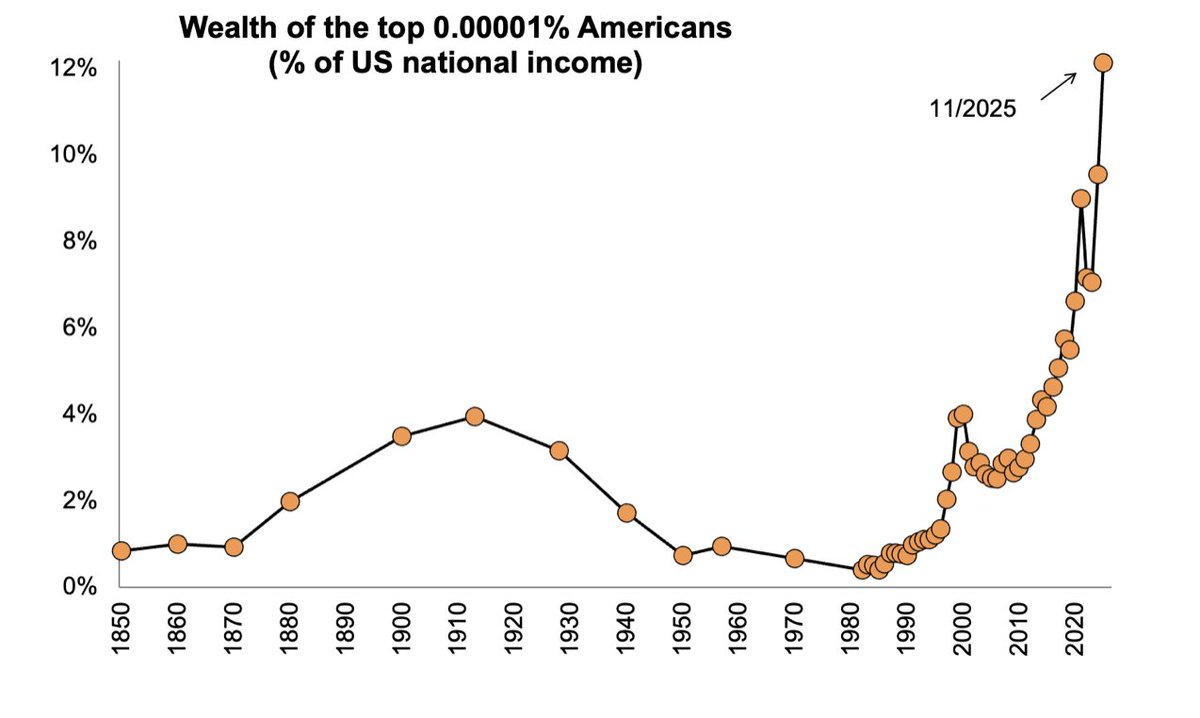
At the peak of the Gilded Age in 1910, the richest 0.00001% of the US population owned wealth equal to 4% of national income. Now, the richest 0.00001% owns 12%. US billionaire oligarchs today are even wealthier than the original robber barons. Source: open.substack.com/pub/gzucman/p/…
Ben Norton tweet media
English
569
6.9K
21.7K
1.5M
Ben retweetledi
Signal
Signal@signalapp·
We are alarmed by reports that Germany is on the verge of a catastrophic about-face, reversing its longstanding and principled opposition to the EU’s Chat Control proposal which, if passed, could spell the end of the right to privacy in Europe. signal.org/blog/pdfs/germ…
English
711
8.8K
30.2K
4.8M
Ben retweetledi
Founders Pledge
Founders Pledge@FoundersPledge·
📣 HUGE news: We've received a $50 million anonymous donation to our Climate Fund – the largest single gift in our ten year history! 🎉 Featured in @heatmap_news latest article here >> heatmap.news/climate/founde…
English
1
3
5
819
Ben retweetledi
Isar Aerospace
Isar Aerospace@isaraerospace·
With this test flight, we were able to successfully gather valuable data and experience for future missions. Thanks to strict safety procedures from both Isar Aerospace and Andøya Spaceport, all personnel remained safe at all times.
Isar Aerospace tweet media
English
154
290
2.4K
191.8K
Ben retweetledi
Luciana Lixandru
Luciana Lixandru@LucianaLix·
9/And lastly, a call to arms…instead of writing another opinion piece on why Europe sucks, let’s get to work to make it better.
English
15
17
192
7.9K
Ben retweetledi
Luciana Lixandru
Luciana Lixandru@LucianaLix·
3/At the same time, comparing America's past success in tech to Europe's is simply the wrong way to look at it. It's like a running competition between a one year old learning how to walk and a teenager. Silicon Valley started growing five decades ago while Europe's tech scene really started developing a decade or so ago. We are simply earlier in our journey.
English
5
3
49
7.9K
Ben retweetledi
Luciana Lixandru
Luciana Lixandru@LucianaLix·
Over the past months I’ve increasingly encountered questions about “Europe’s decline in tech”. I wanted to share my response to these questions here. While I am realistic about Europe's modest past success, and that there are no trillion dollar companies, I am optimistic about its future. In fact, I "put my money where my mouth is" and chose to bet my career on it – I have been doing venture on the continent for over a decade instead of moving to Silicon Valley. Here are some of my thoughts on the topic.
English
38
96
530
106.2K
Ben retweetledi
Dr. Aaron Thierry
Dr. Aaron Thierry@ThierryAaron·
🚨 When we fight, we win! I've put together a thread giving a quick run down of some of the #climate movement's hard won victories from 2024 to inspire us for the year ahead! 🧵 #ClimateActionNow #EndFossilFuels
Dr. Aaron Thierry tweet media
English
25
135
283
22.3K
Ben retweetledi
Ledgy
Ledgy@Ledgy·
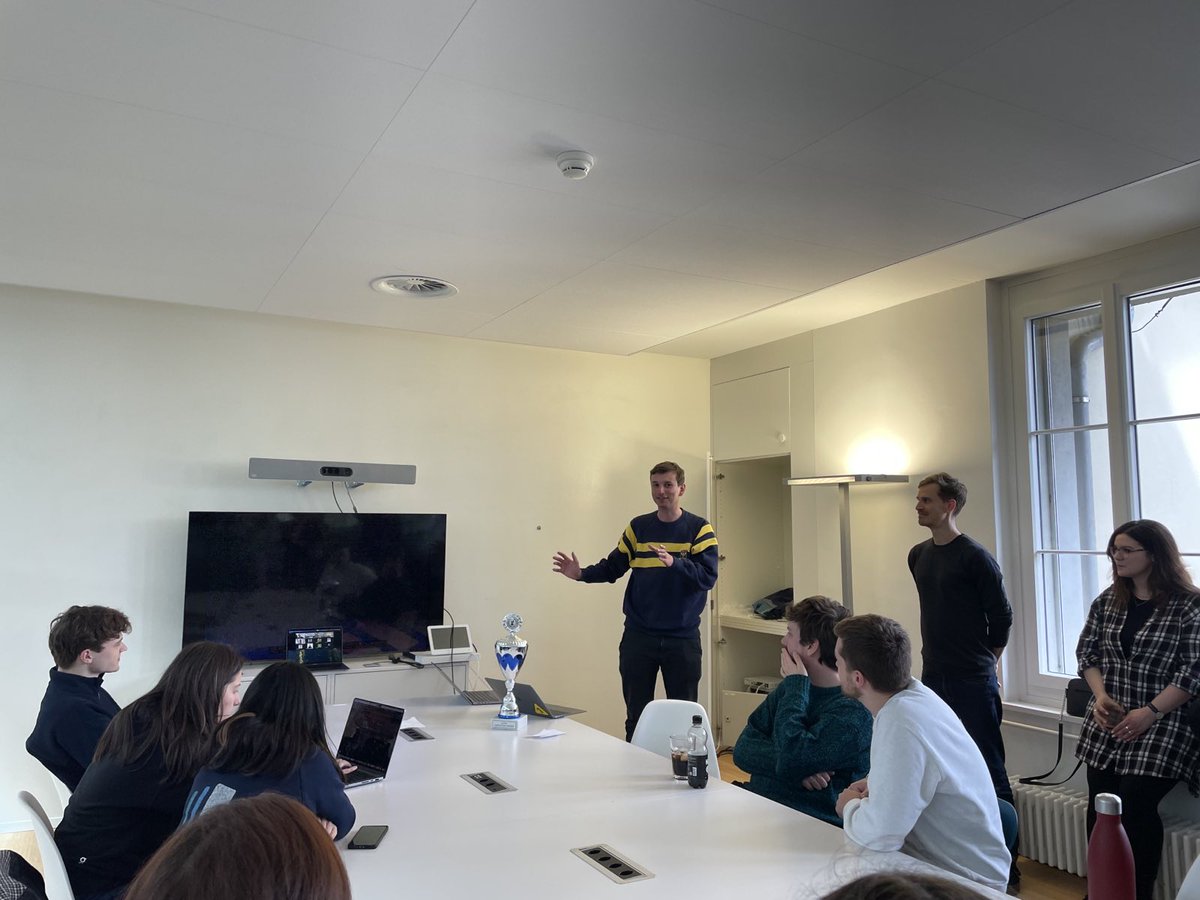
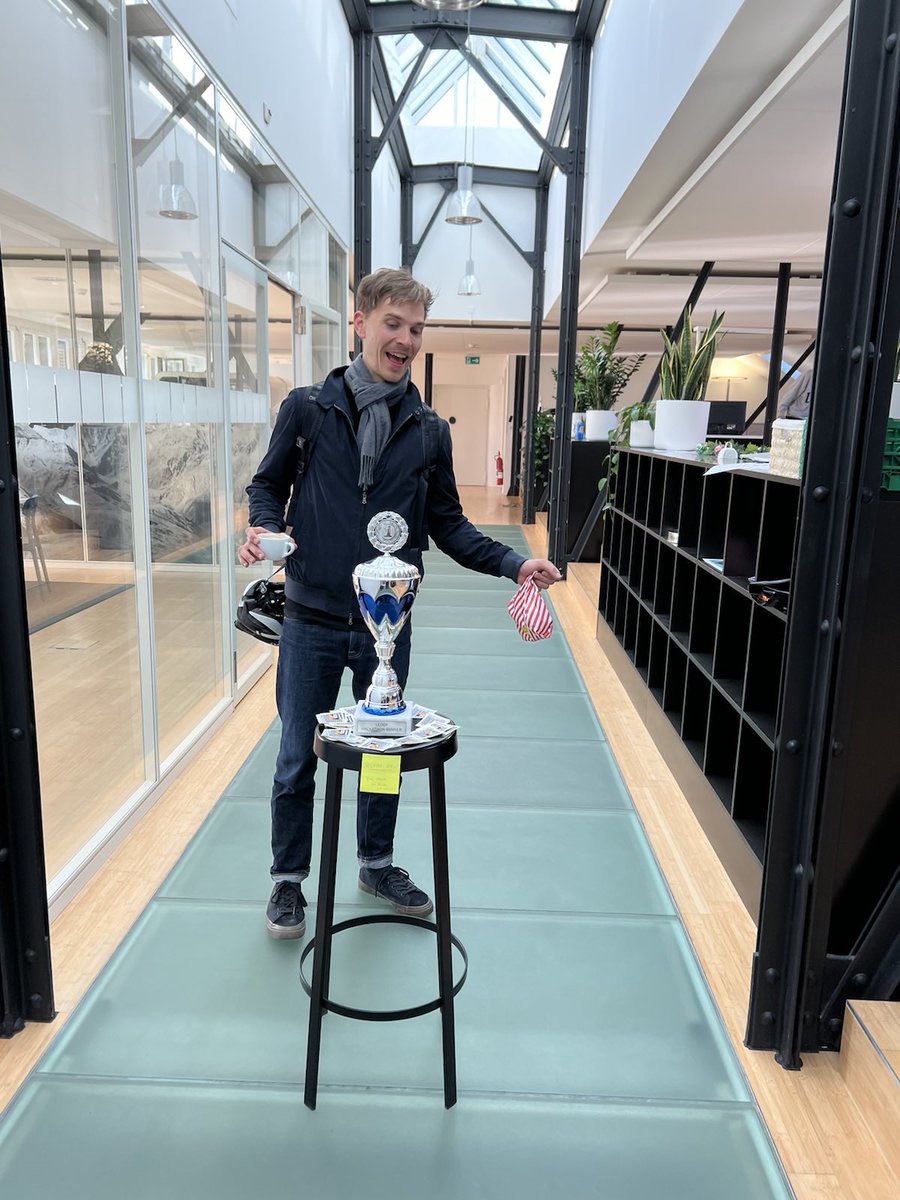
It was #hackathon time in the Zürich office this week! After pitching ideas, we broke into teams and coded late into the night, powered by vegetarian snacks and old-fashioned inspiration. The winners will be announced later today! Could LedGPT be coming to an app near you soon?
Ledgy tweet mediaLedgy tweet mediaLedgy tweet mediaLedgy tweet media
English
0
1
7
706
Ben
Ben@bebinoy·
Opposed and sabotaged by conservative-right parties until the end made its success very uncertain
English
0
0
1
88
Ben retweetledi
Meredith Whittaker
Meredith Whittaker@mer__edith·
IT IS HAPPENING! Today, Signal launches phone number privacy & usernames! These features let you use Signal w/o sharing your phone number with the people you talk to Proud to add more privacy to Signal, & proud of the smart, careful work the team did to make this happen ♥️
Signal@signalapp

Introducing usernames and phone number privacy on Signal! We’re making it possible for people to connect with each other without having to share phone numbers. Now launching to beta users, available for everyone soon. signal.org/blog/phone-num…

English
41
479
2.3K
250.8K
Ben retweetledi
Andreas Goeldi
Andreas Goeldi@agoeldi·
Thrilled to announce the launch of the 'Scale-up Navigator' together with Wiley today – a book that encapsulates our shared experiences and insights into scaling startups in a sustainable manner. I've contributed perspectives and best practices from my background in entrepreneurship and startup investing that I hope will empower and inspire entrepreneurs. It was amazing to co-author this book with Dietmar Grichnik, Manuel Heß and Michael Greger from the University of St. Gallen (HSG) as well as b2venture founder Florian Schweitzer. Thank you everybody for the wonderful collaboration! The book contains structured scaling frameworks, many best practices, digital tools, and compelling case studies, such as @Ledgy , @DeepLcom , @Raisin_EN and @SumUp. Find more information via: stgaller-navigator.unisg.ch/scale-up-navig…
Andreas Goeldi tweet media
English
0
2
15
550
Ben retweetledi
Rutger Bregman
Rutger Bregman@rcbregman·
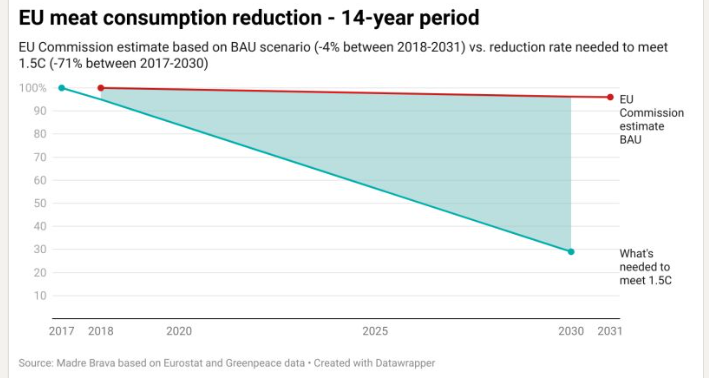
So maddening how little most 'green' politicians talk about this elephant in the room. It's not just fossil fuels we need to get rid of. So what's the plan here? We need billions of investment in alternative proteins. Not saying so is a form of climate denial.
Rutger Bregman tweet media
English
39
116
444
60.7K
Ben retweetledi
Yoko Spirig
Yoko Spirig@YokoSpirig·
Lately, companies have been worried about data privacy in the equity space—rightly so! At @Ledgy, this was top prio from the start — all customer data is stored in 🇪🇺 (thank you GDPR 🙃) with highest security standards. Our doors are wide open to anyone caring about this 👋 👇🧵
English
1
2
16
2.1K