
Antoine
25 posts


Antoine
@betterAntoine
Good things move fast Better things stay stable Optimism wins
exploring the unknown Katılım Nisan 2026
17 Takip Edilen2 Takipçiler

Sarah lost $1,280 on this single transfer.
She does this 4 times a year.
Plus 8 smaller payments to her Indian supplier.
Annual loss : around $9,500.
Not catastrophic. Not enough to lose sleep over.
But that's exactly the trap.
3 to 5% on every wire. Silent. Recurring.
English
Most importers have no idea how much they're losing
on international wire transfers.
3 to 5% disappears on every single payment to
your suppliers.
On 300,000€ of annual transfers, that's up
to 15,000€ gone every year.
Into the banking system. Not into your business.
Peter Schroeder@peterschroederr
Stablecoins are the highest velocity form factor of money in existence.
English
More stablecoin settlement → more stablecoin balances.
B2B, merchants, agents, apps, treasuries — it’s all moving on-chain.
The real unlock isn’t just digitization, it’s productive stablecoins.
👉 The era of idle dollars is coming to an end.
a16z@a16z
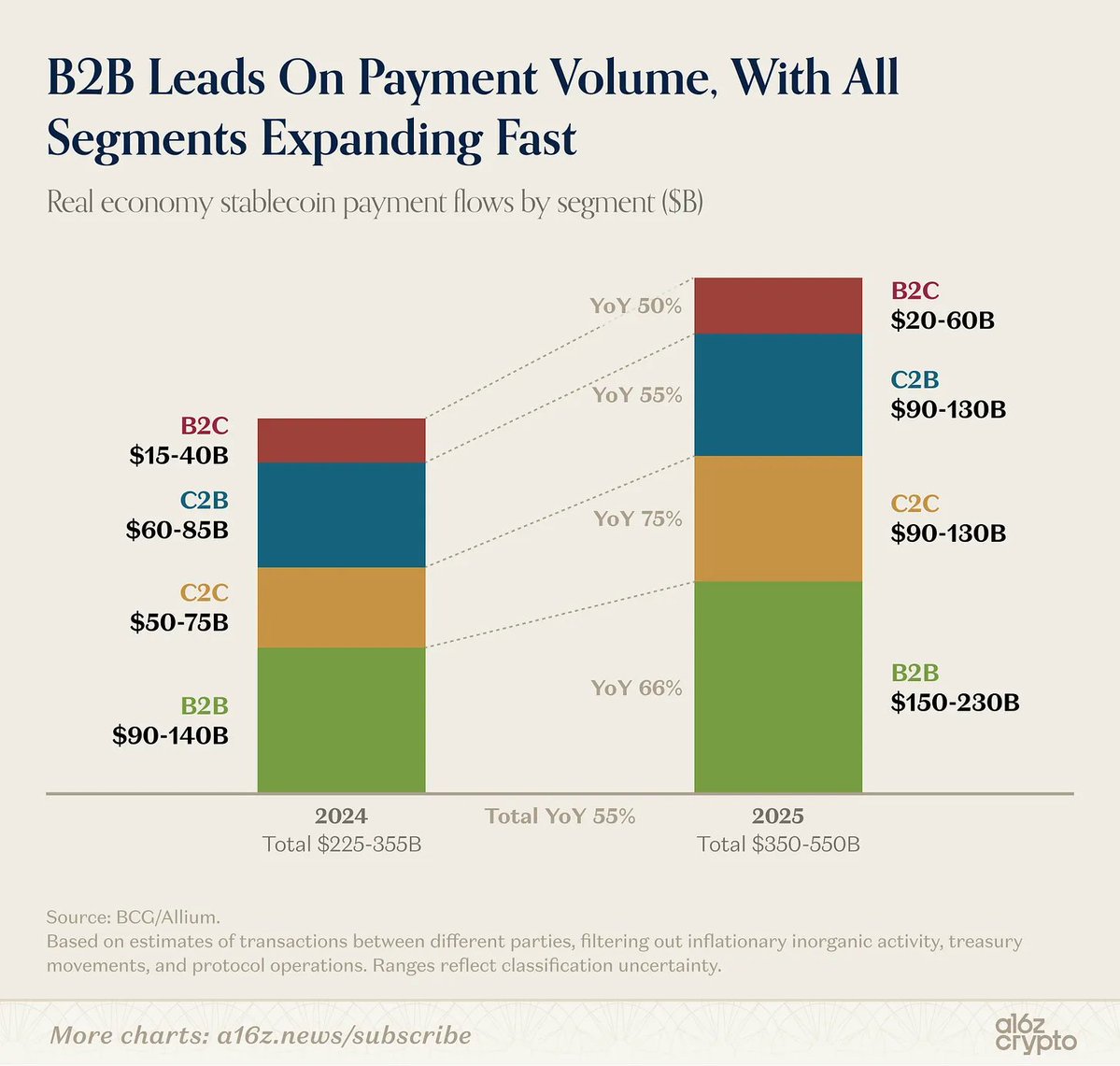
Stablecoin volumes are shifting from transfers to payments More charts: a16z.news/p/charts-of-th…
English


Stablecoin volumes are shifting from transfers to payments
More charts: a16z.news/p/charts-of-th…
English

more stablecoin settlement eventually means more stablecoin balances.
b2b, merchants, agents, apps, treasuries.
the biggest unlock beyond digitization is the productive stablecoin
the death of idle dollars is near
a16z@a16z
Stablecoin volumes are shifting from transfers to payments More charts: a16z.news/p/charts-of-th…
English

#5 - Since early 2024, stablecoin velocity, adjusted monthly transfer volume relative to circulating supply, has roughly doubled, climbing from 2.6x to 6x. A rising velocity means demand for stablecoin transactions is outpacing new issuance, so existing supply is working harder

English
9 charts on what stablecoins are becoming - @a16zcrypto
@rhackett @jeremyzhang01 @DarenMatsuoka @nlevine19
#stablecoins

English

@Chatterjee_arn Even if the rails are already built and apps are lowering access barriers, onboarding is still a completely different challenge.
The reality is: access ≠ adoption.
They need guidance
What do you think?
English

The stablecoin rail is built. Nobody's driving it.
SWIFT moves $5 trillion a day. That's $1.8 quadrillion a year.
Stablecoins? $390 billion annually. Less than 0.03% of what SWIFT moves.
And yet the growth numbers are extraordinary. B2B stablecoin payments grew 733% year over year in 2025. Total payment volume doubled. The momentum is real.
But momentum at a tiny base is still a tiny base.
Today that $390 billion is mostly concentrated in B2B payments across Singapore, Hong Kong, and Japan. The corridors that need this the most barely register.
Merchants in emerging economies like Nigeria, India, and Brazil still pay 4 to 8% on every cross-border transaction and wait 3 to 7 days for settlement. In 2026.
The rail isn't the problem. USDC settles in seconds. Fees in basis points. Finality on-chain.
The problem is everything above the rail.
Who invoices in stablecoins? Who auto-converts at the right FX rate? Who handles VAT on a USDC payment? Who reconciles it into existing accounting systems? Who onboards the merchant who has never touched a wallet?
None of this is a blockchain problem. It's an infrastructure problem.
The corridors that need this the most, Latin America, Africa, South Asia, barely register. Not because the rail is slow. Not because the fees are high. Because the layer above the rail isn't built.
That gap isn't a technology gap. It's a missing stack.
The builders who win the next decade aren't building new chains. They're building the boring stuff. Invoicing. Reconciliation. Compliance middleware. The unsexy layer that turns a rail into a network.
SWIFT didn't win because wires were fast. It won because it built the plumbing that banks could trust.
That's the job now. Build the stack. Close the gap.
English

Institutional stablecoin use triples: Why B2B payments are crypto’s new frontier
English

Every fintech with a Series C is now asking the same question: issue our own stablecoin or partner with one. A year ago that conversation didn't exist. The default infra for B2B payments quietly became crypto.
English

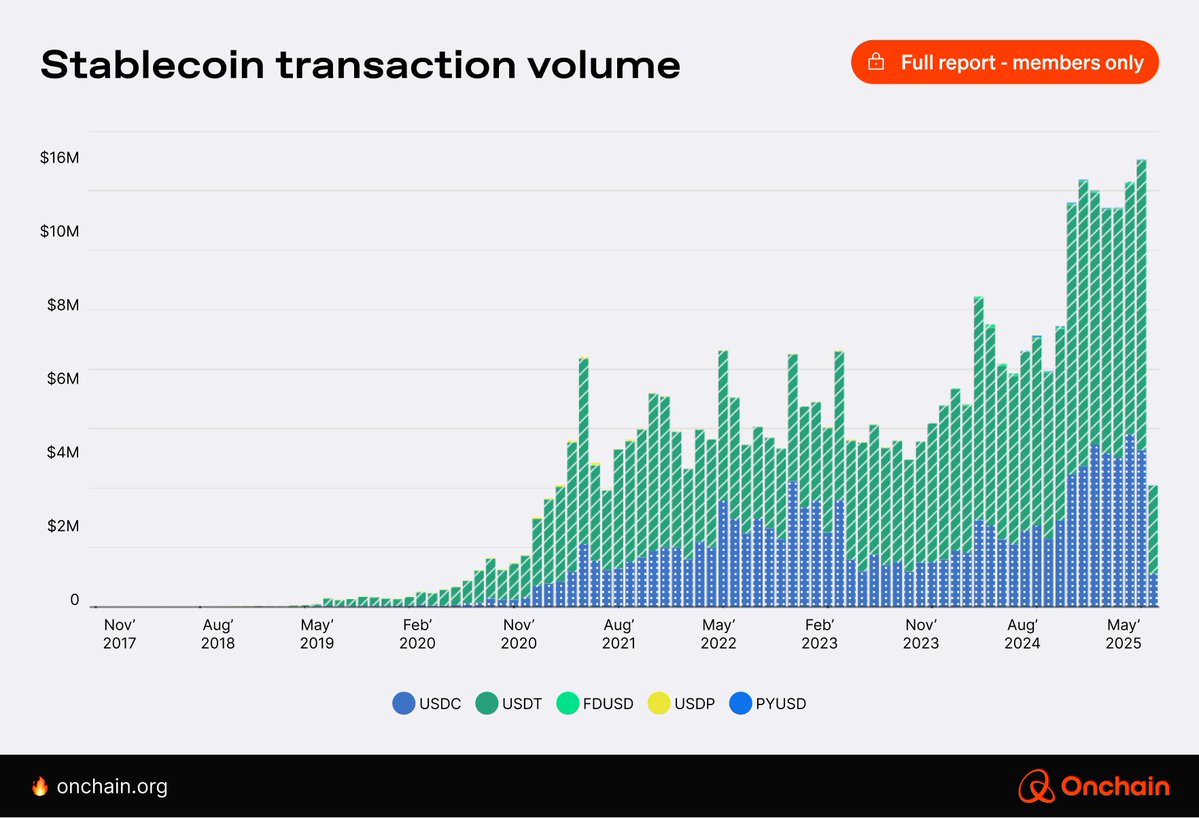
Stablecoin usage in LatAm B2B payouts grew 340% YoY in 2025-2026, according to industry reports.
Companies in CO, VE, CL and AR are moving to USDT rails not just for speed, but for predictable costs and 99%+ success rates.
Kollat is built on this trend: institutional-grade infrastructure with zero subscription fees.
What’s your company’s stablecoin adoption rate this year?
onchain.org/research/token…
English

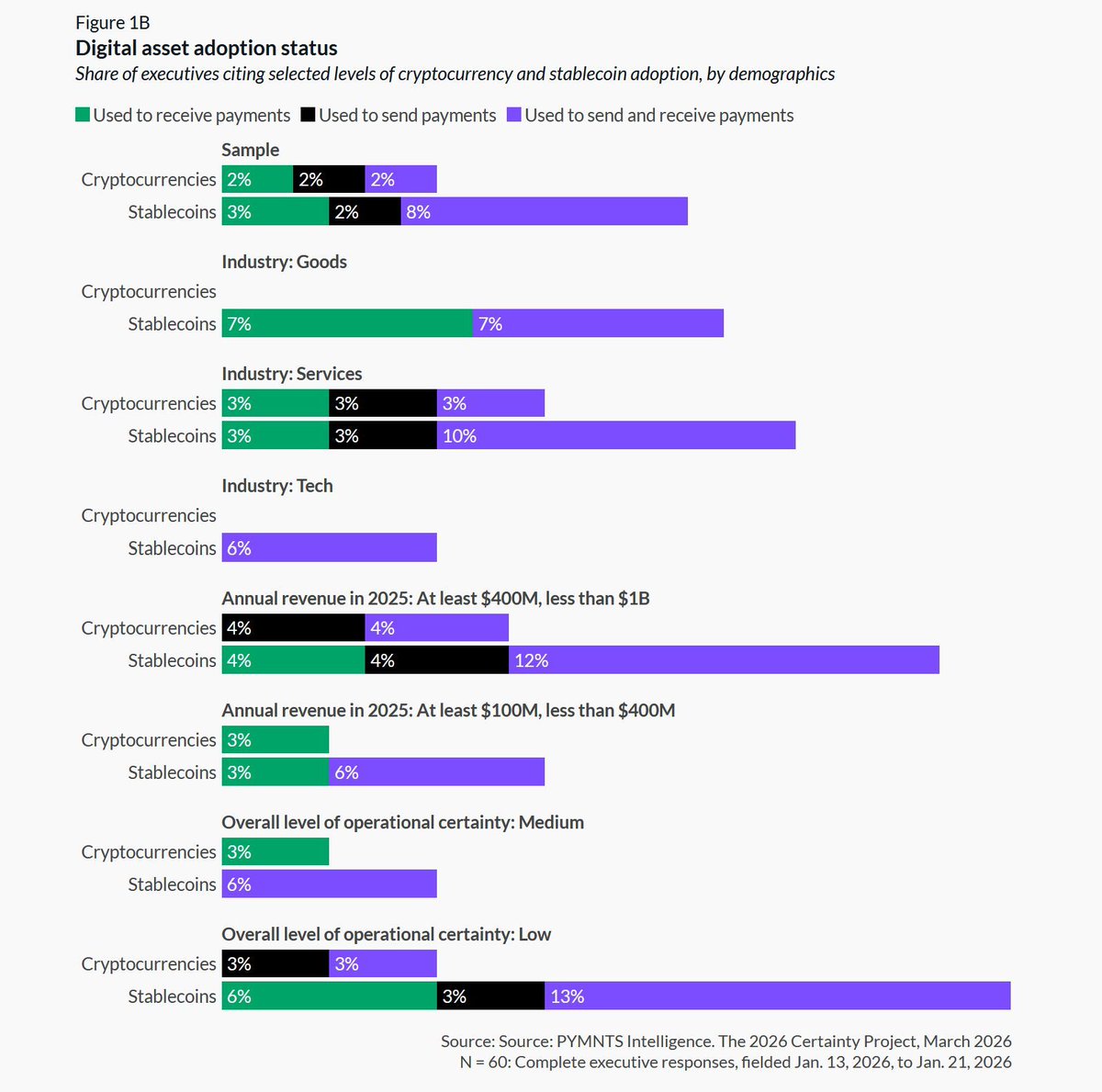
The bigger the middle market firm, the more likely stablecoins are already live! 📊
🔹 CFOs at $400M to $1B firms: 20% use stablecoins to send, receive, or both
🔹 CFOs at $100M to $400M firms: only 9%
🔹 Goods industry: 14% live on stablecoins. Crypto: 0%
🔹 Services industry: 16% live on stablecoins. Crypto: 9%
Scale and physical-goods flows pull stablecoins into production.
Crypto stays optional. Stablecoins become infrastructure.
Data via @PYMNTS
English