

OMO AWORI GAN GAN
81 posts
OMO AWORI GAN GAN
@big_ynw
Always been honest
New Orleans, LA Katılım Temmuz 2023
46 Takip Edilen21 Takipçiler
Things You Can Do to Be More Respectful of Lagos State Indigenes and Their Culture
By following these steps, you can enjoy your Nigerian privilege in Lagos peacefully without trampling on the rights of the natives.
1. Understand that being a Lagos State indigene means different things to different people. Some identify primarily as Awori, the earliest settlers. Others belong to the Egun in Badagry, the Eko (a melting pot of Saros, Aguda, Tapa, and Benin influences) in Lagos Island, or the Ijebu in parts of Epe and Ikorodu. While Lagos is diverse, its indigenous people must be recognized and respected.
2. Find out whose land you are on and honor it. Every part of Lagos State has its indigenous people—whether the Awori, the Egun in Badagry, or the Eko in Lagos Island. Recognizing these roots is key to truly understanding Lagos beyond its modern identity.
3. Never ask anyone if they are a “true Lagosian.” Lagos has always been a city of migration, but its indigenous people should not have to prove their authenticity. Many Lagosians can trace their ancestry back generations, and their lineage is often more complex than outsiders assume.
4. Do not lightly claim that you have Awori, Egun, Eko, or Ijebu heritage. Lagos welcomes all, but being a Lagos indigene is different from simply being born or living in Lagos. Saying “My great-grandfather lived on Lagos Island” does not automatically make one indigenous. Honor the distinction.
5. Avoid saying things that diminish or erase indigenous Lagos culture. Phrases like “Eko for show” or the assumption that Lagosians are just “hustlers” overlook the deep traditions of the Awori, Egun, Eko, Ijebu, and other native groups. Lagos is more than just business—it has a cultural soul.
6. Don’t “play Lagos indigene.” Lagos culture is not entertainment for outsiders. Wearing Aso Oke as a costume, using Yoruba slang for clout, or engaging in selective “heritage tourism” without respecting the real people behind the traditions is exploitative.
7. Be where the people are. Visit historical Awori, Ijebu, Eko, and Egun settlements, support local cultural centers, and engage with Eyo festivals, Oro traditions, and heritage sites like the Badagry Slave Route, the Brazilian Quarter, and Iga Idunganran, which reflects Benin influence in its early monarchy.
8. Support Lagos indigene businesses by buying from indigenous artisans. From beadwork to fabric weaving, Awori, Egun, Eko, and Ijebu craftsmen have traditions that deserve to be preserved. Choose authentic Lagos State indigene products over mass-produced imitations.
9. Invite an elder or traditional leader to open major events with prayers or blessings. If hosting an event in Lagos State, acknowledge the Awori, Egun, Eko, or Ijebu communities whose land you are on. Research first and provide appropriate honorariums to show respect. Visit the palaces (Obas) for additional guidance.
10. Understand that Lagos State is diverse. Indigenous Lagosians are not just Awori—there are Egun, Eko, Ijebu, and other groups with distinct traditions and customs. Recognize their differences instead of treating them as the same.
11. Don’t assume all Lagos State indigenes are wealthy because of commerce. While Lagos is a financial hub, many indigenous communities have been displaced by development projects, migration, and pressure to accommodate new residents. Lagos State indigenes have faced land seizures, economic shifts, and struggles that are often overlooked.
12. When recognizing people, do not exclude Lagos State indigenes. Indigenous Lagosians are often left out of conversations about Lagos’ success. Acknowledge them when discussing the city’s history, economy, and contributions.
13. Don’t expect every cultural custom to be explained to you. At a traditional event? Observe and respect rather than demand explanations. Some practices are sacred and not meant to be overly dissected or commercialized.
14. If you’re at an event, be thoughtful about time. Traditional gatherings may not run on rigid schedules. Many prioritize relationships, storytelling, and community over strict timing. Respect the flow instead of imposing external expectations.
15 Be sensitive during mealtimes. In many Lagos (Yoruba) traditions, elders eat first, and younger or able-bodied people serve them. Be mindful at cultural events and do not rush to the food line without observing the customs.
16. Don’t call traditional outfits “costumes.” Whether it’s Aso Oke, Fila, Dansiki, ceremonial attire, kareta, or Egungun regalia worn by Lagos State indigenes, traditional clothing holds deep cultural and personal significance. Many garments are family heirlooms or handmade with care.
17. Do not assume Lagosians have high rates of social vices. Stereotypes about Lagosians—whether about wealth, land selling, crime, or lifestyle—are misleading. The history of Lagos State indigenes is far richer than media portrayals often suggest. Even outlets like @ARISEtv don’t fully grasp this history.
18. Do not tokenize people. Lagos indigenes should not be included in conversations just for the sake of “diversity.” Build genuine relationships with the communities rather than using them for optics.
19. Ensure the voices of Lagos Indigenes are amplified. If Lagos’ history is being discussed, Awori, Egun, Eko, Ijebu, and other indigenous voices should lead the conversation—not outsiders writing their stories for them.
20. Don’t bring up migration theories that erase indigenous identity. Some narratives suggest that all Lagosians are settlers from elsewhere, ignoring the deep history of Awori, Egun, Eko, Ijebu, and other native peoples. Recognize their rightful presence.
21. Check your Nigerian privilege if you are not indigenous to Lagos. Just because Lagos is welcoming does not mean non-indigenes should feel entitled to its land, politics, culture, or opportunities without respecting the people who have always been here.
22. Use the present tense when talking about indigenous Lagosians. Many people speak of Lagos indigenes as if they only existed in the past. But indigenes are still here—preserving traditions, shaping modern Lagos, and influencing its future.
By
Prince Gbenga Ajiboye from the Ikudigbaro Royal Family, Ete Kingdom, Lagos, Nigeria. and
Prince Adeniyi Baruwa from Aromire, Oluwa and Akinsemoyin Royals houses, Lagos, Nigeria
English
Baba Awori@EOyigi
Lagos Indigenes Are Being Sidelined Again – What Is Really Going On With APC?! @officialABAT , @APCchairman , @OfficialAPCNg , @followlasg Strong indications show the APC is pushing Obafemi Hamzat, a Yoruba brother from Ogun State, as their consensus candidate for the 2027 Lagos governorship after Governor Sanwo-Olu (also from Ogun State). We acknowledge that Hamzat is Yoruba, but we cannot keep replacing one Ogun State indigene with another while the real sons and daughters of Lagos — the Awori, Ijebu, Eko and other indigenous families — are constantly pushed aside in their own land. And now the same thing is happening APC is bringing Wasiu Ayinde (KWAM1)’s daughter, Damilola Marshall, to contest for Lagos State House of Assembly in Surulere Constituency II. K1 himself is from Ijebu-Ode, Ogun State! We have our own capable sons and daughters right here in Lagos who are qualified, competent and ready to lead — so why are we being overlooked? We saw it clearly in Eti-Osa: when indigenes get angry over these “Our Internal Yoruba decisions” that sideline indigenes, voter apathy sets in — and the Igbos take full advantage to snatch seats, just as Attah did in the last election. We do NOT want that disaster repeated across the entire state. The smart, fair and only responsible thing for the ruling party to do right now is to pick genuine Lagos indigenes as candidates for both governor and assembly. Stop taking the patience and hospitality of the real owners of Lagos for granted! APC decision makers, hear us loud and clear before it is too late: Lagos belongs to Lagos indigenes! Do the needful. Enough is enough. Signed: Baba Awori
English
OMO AWORI GAN GAN retweetledi

Iga Eyo Taiwo Olowo at the Eyo Festival: A Living Link to Awori Roots.
English


If you're a proud Yorùbá, share the name of your town's king! Let's come together to celebrate our kings.

English

OMO AWORI GAN GAN retweetledi

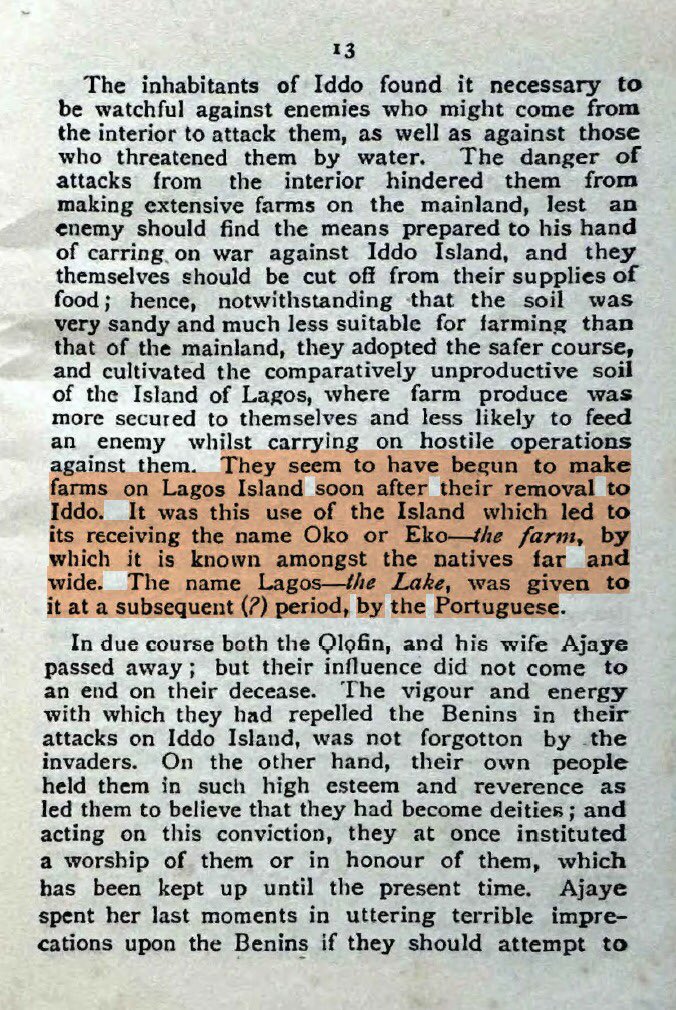
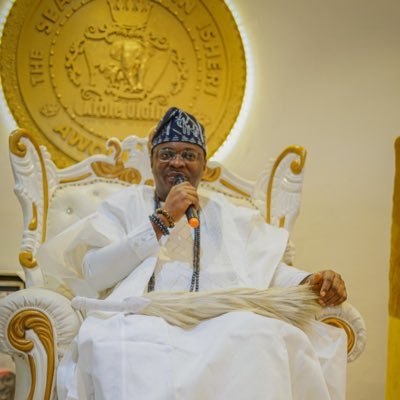
Set a reminder for my upcoming Space! x.com/i/spaces/1YqGo… @Yorubaness @LisaOlofin @HRMOlofinIsheri
English
OMO AWORI GAN GAN retweetledi

@EOyigi @followlasg @followlasg Stop Giving Out Lagos Jobs To Non-Indigenes.
Govern like Anambra and Akwa-Ibom States
#LagosJob4Indigenes
#LagosJob4Indigenes
#LagosJob4Indigenes
#LagosJob4Indigenes
#LagosJob4Indigenes
#LagosJob4Indigenes
#LagosJob4Indigenes
#LagosJob4Indigenes
#LagosJob4Indigenes
English
OMO AWORI GAN GAN retweetledi


If you're a proud Yorùbá, let us know your hometown.

English
OMO AWORI GAN GAN retweetledi
Yesterday, In commemoration of my 4th Coronation Anniversary, I handed over a High Court building, built by me to the Ogun State Judiciary led by Chief Judge of the State
This was done in order to bring access to justice closer to my people. Olu of Ilaro attended with other Obas
English

SO AWORIS ARE NOT YORUBAS ?😄
So much energy to create illusion and division amongst yoruba.
✅ IJEBU are not yoruba
✅Owo are not Yoruba
✅Now, AWORIs are not yoruba 😄
I wish the energy some of you use to create a division amongst yorubas , you could use just a little it to know your ORIGIN..
Not , ISRAEL today , ILE IFE tomorrow 🤣

English
OMO AWORI GAN GAN retweetledi
The Idejo Chiefs: Eternal Awori Landowners of Lagos
The Idejo chiefs, children of Olofin Atekooye, are indisputably Awori and the eternal landowners of Lagos. Their territories, granted by Olofin, are the focus of this narrative and do not encompass all Awori lands in Lagos State. The 1921 Privy Council Judgment affirmed their communal usufructuary titles, countering the "no man’s land" claim. Under no circumstances should these chiefs—especially the Ojora family—be disrespected; disrespecting them is disrespecting all Aworis. Their Awori identity and land rights, rooted in Olofin’s legacy, must be upheld forever. Below are the chiefs and their domains in contemporary Lagos:
Idejo Chiefs (Children of Olofin Atekooye):
1. Oloto: Owns Iddo and parts of Lagos Mainland (e.g., Oto-Awori, behind National Stadium, Iwaya), the heart of Awori heritage. A kingmaker, Oloto’s eternal rights are affirmed despite disputes ([P.M. News, 2021](pmnewsnigeria.com/2021/04/26/we-…)).
2. Aromire: Owns Old Ikoyi on Lagos Island, including Aromire Road, a cultural hub. A kingmaker, his eternal land rights shape Isale Eko ([PropertyPro.ng](propertypro.ng/listings/land-…)).
3 Olumegbon: Owns Ajah, Okun Ajah, and Lekki Peninsula (e.g., Mosafejo, Ogoyo). An advisor, his overlordship is legally backed ([The Nation, 2022](thenationonlineng.net/land-of-crises…)).
4 Elegushi: Owns Ikate, Lekki, including Elegushi Beach, extending to Ojota, Osapa. Now an Oba, his lands face development pressures but remain Awori ([Lagos State Govt, 2020](lagosstate.gov.ng/regional-road-…)).
5. Onitolo: Owns Ebute Meta West, Ipaja, Surulere (e.g., Onitolo St). A kingmaker, his eternal rights are marked by community presence ([Nigeria Zip Codes](nigeriapostcodes.com/lagos-state/eb…)).
6. Onitana: Owns Lagos Island, neighboring Aromire’s domain. A key kingmaker and advisor, some Onitana are elevated to Oba status, their Awori land rights eternal.
7. Onikoyi: Owns Ikoyi, Lagos. A kingmaker, his domain is now affluent, forever Awori ([Wikipedia, Ikoyi](en.wikipedia.org/wiki/Ikoyi)).
8. Ojora: Owns Ijora on Lagos Mainland. Indisputably Awori, Ojora’s 2022 court victory reclaimed land at Plot 235/237, Moshood Abiola Way, proving their eternal rights. Disrespecting Ojora is disrespecting all Aworis; their history must not be rewritten ([Tribune Online, 2022](tribuneonlineng.com/lagos-not-no-m…)).
9. Oniru: Owns Victoria Island and parts of Lekki. Now an Oba, his eternal Awori land rights face reclamation disputes ([City People, 2021](citypeopleonline.com/how-the-oniru-…)).
10. Oluwa: Owns Apapa Peninsula. A kingmaker, his 1921 Privy Council victory affirmed his eternal Awori title ([Amodu Tijani, 1921 (en.wikipedia.org/wiki/Amodu_Tij…)).
11. Onisiwo: Owns western Lagos, including Tomaro, Abagbo, and islands like Tarkwa Bay, Agbagbo, Itomaro. An advisor, his eternal rights are noted in disputes ([The Sun Nigeria, 2022](sunnewsonline.com/in-lagos-onisi…)).
Note: The Idejo chiefs are Awori landowners forever, as granted by Olofin Atekooye. The "no man’s land" narrative is a falsehood; recent court rulings and Omo Eko Pataki’s advocacy ensure their lands remain with rightful Awori owners. Disrespecting any Idejo, especially Ojora, is an attack on Awori heritage and will not be tolerated. Source: 1921 Privy Council Judgment and historical records.
Signed: Baba Awori
English
OMO AWORI GAN GAN retweetledi
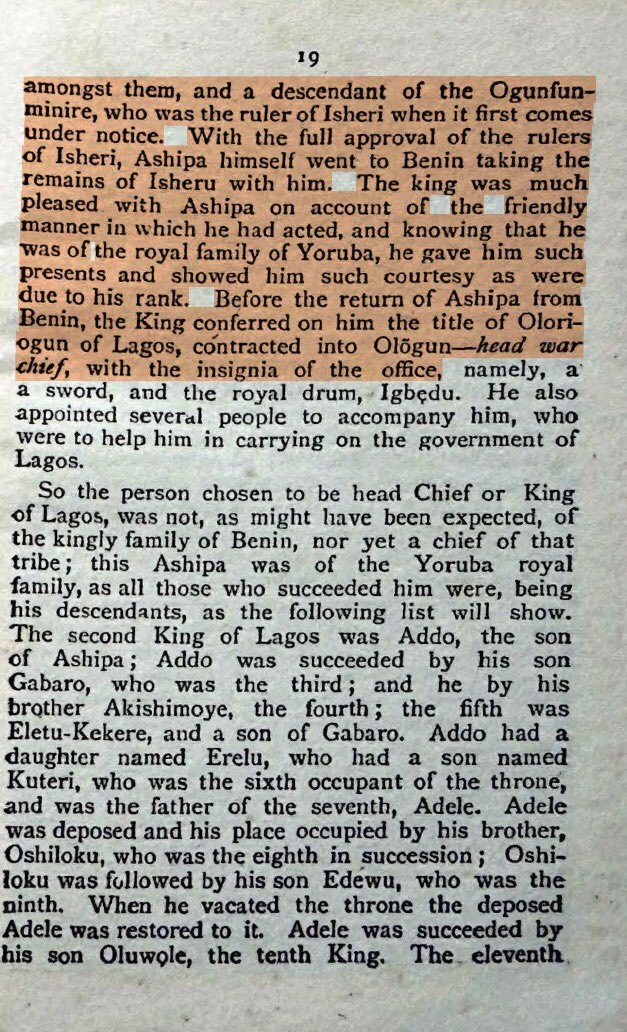
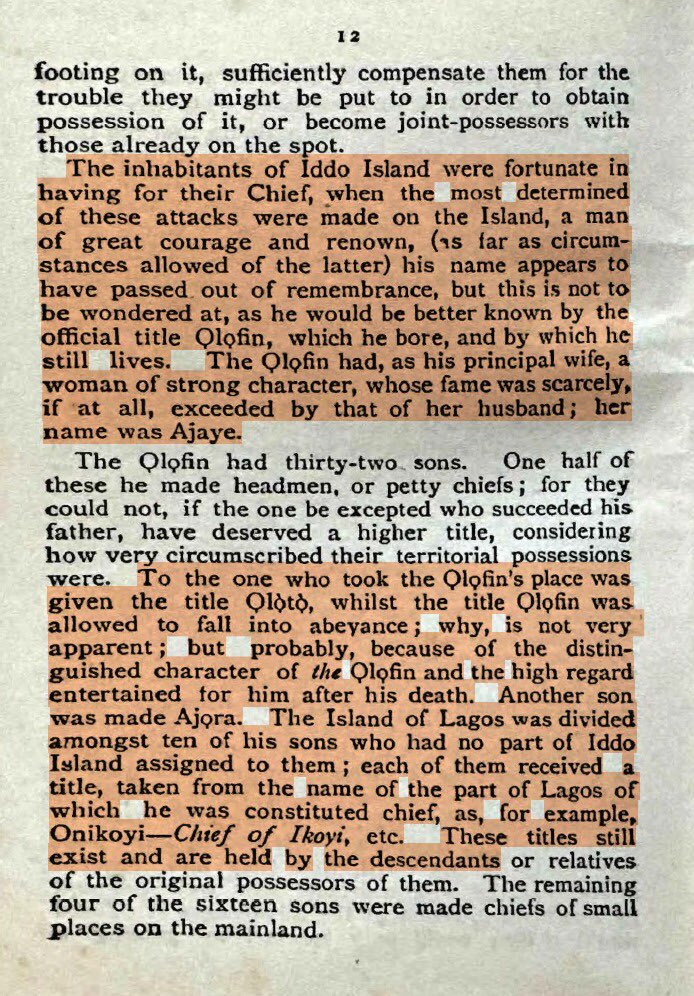
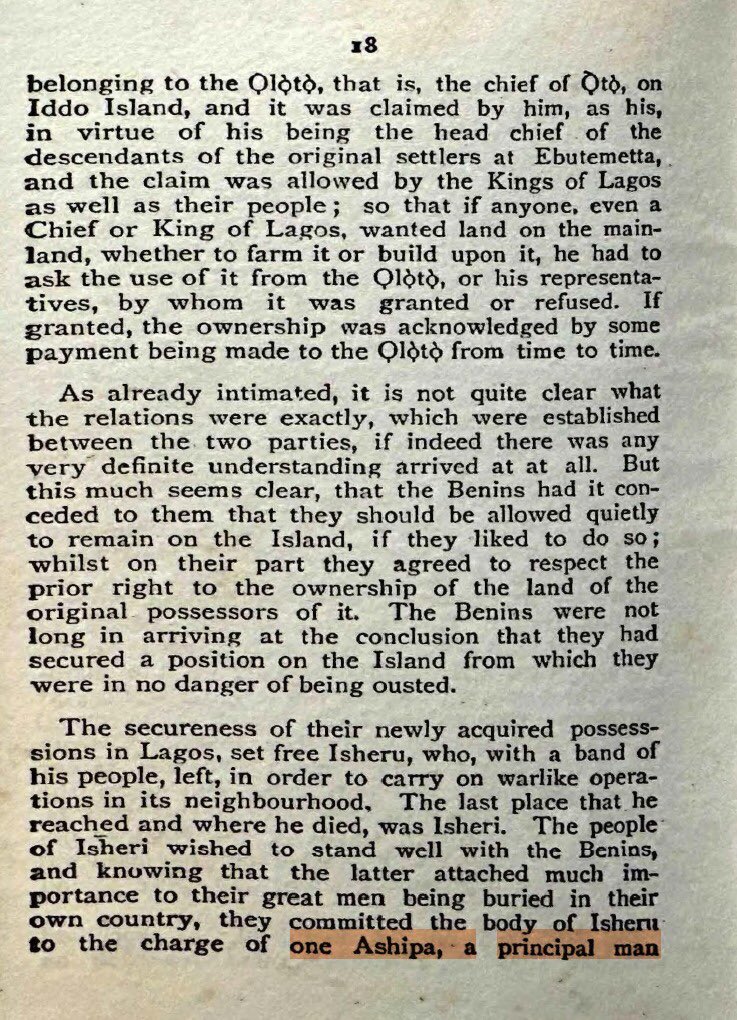
OLOFIN Ogunfuminire of awori kingdoms(lagos and ogun state)was a king,progenitor, and father to all awori kings.
He migrated from ife and settled in isheri and later to Iddo where he made as the seat of power.OLOFIN married two wives Akesan and Ajaye @EOyigi @Arakunrin_Dipo

English
OMO AWORI GAN GAN retweetledi
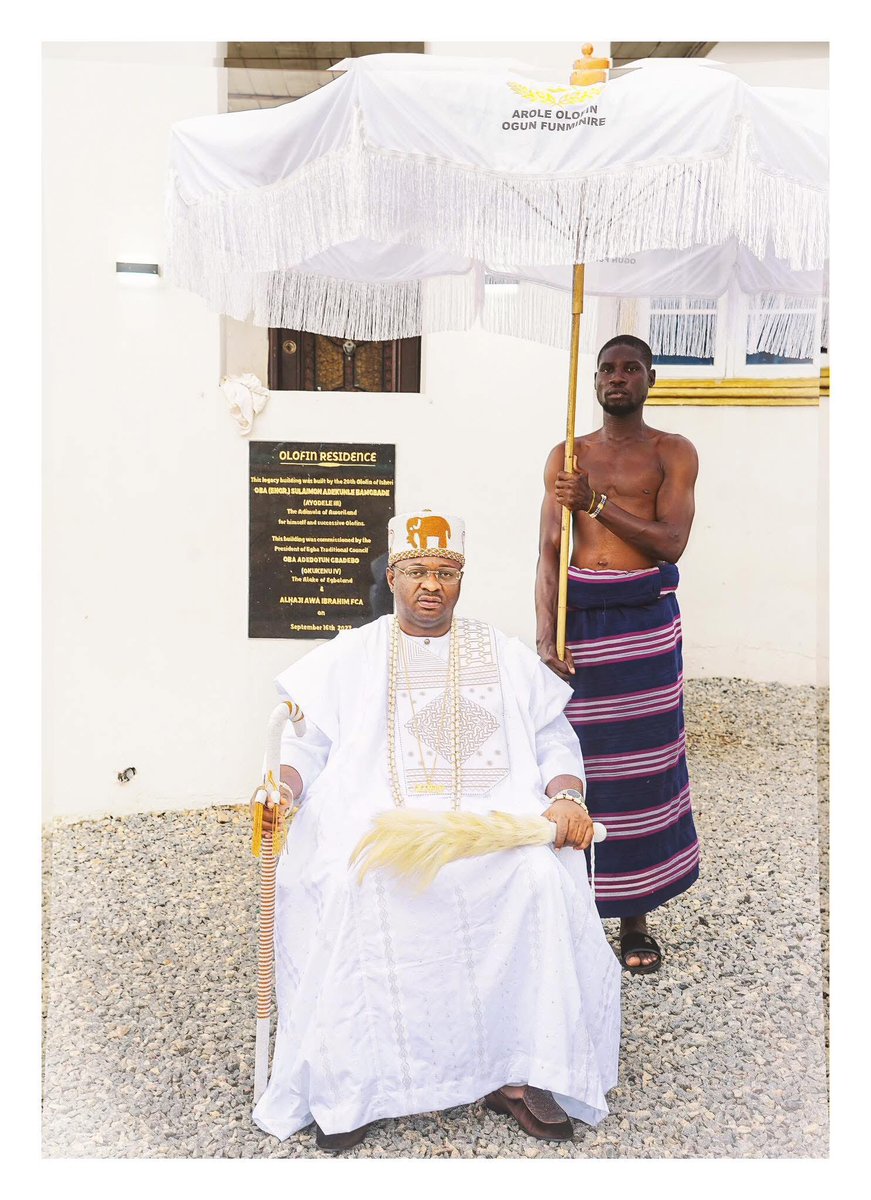
Akesan was the first wife of olofin Ogunfuminire,she gave birth to oguneru and ogunbiyi and their descendants still rules till today.isheri and so on …. @id_toyin62444 @EOyigi @OlakotanEboda @diponet1
English