🫐 Blueberry Capital 🫐

559 posts

🫐 Blueberry Capital 🫐 banner
🫐 Blueberry Capital 🫐

🫐 Blueberry Capital 🫐

@blubercap

Katılım Ocak 2025
1.2K Takip Edilen265 Takipçiler
Hiroo Onoda
Hiroo Onoda@OnodaCapital·
Leopold’s 13F is extremely gross
English
40
6
747
237.1K
RiverRoadPartners
RiverRoadPartners@partners_road·
The few 13F’s I’ve seen so far are truly awful. The lack of creativity and herding across the ”widely followed” firms are an embarrassment.
English
21
1
155
41K
dalibali
dalibali@dalibali2·
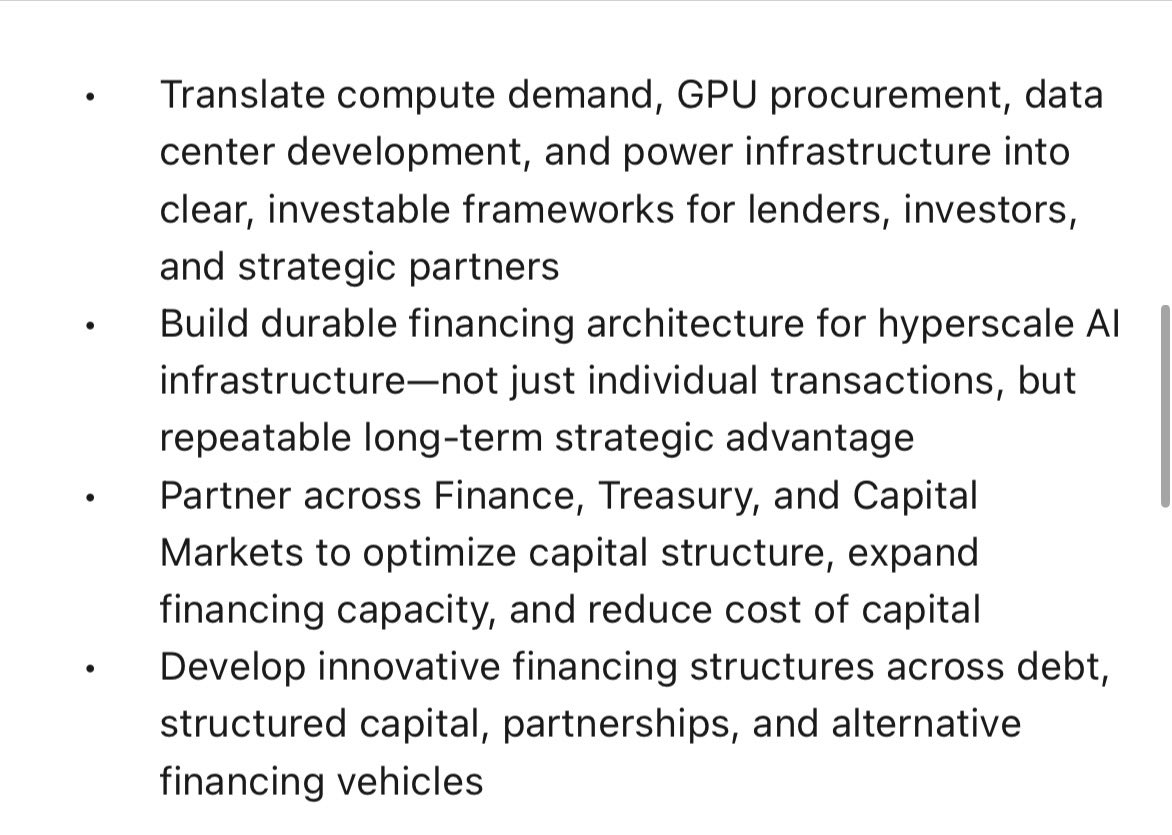
Explaining infra to investors is now a full time job
dalibali tweet media
English
1
0
18
3.5K
Jared L Kubin
Jared L Kubin@JaredKubin·
Dusting this $NBIS one off… to be fair they signed some major deals after this… but wow the 2030 Rev estimates are now at… kinda hard to believe… $35bn !!!! 15x increase in ~8 months I think the “coverage” improved in the last 6 months lol
Jared L Kubin@JaredKubin

Vibe Valuation 101: $NBIS *This is for illustrative purposes only and not investment advice* First, this name has very little coverage (green flag for me). Second, this deal is massive. I expect all the idio L/S guys to pick it up now (yellow flag). THESE are the big opportunities in the market beyond a day 1 move. You are never late. Its easy to say "valuation doesn't matter in this environment so why do the work", that's weak sauce and amateur hour. I am NOT close to the name and have never talked to mgmt, what I get wrong... point it out & we can vibe together. What are the 4 key facts of this deal? From my agent Stanley: - The agreement has a five-year term and provides Microsoft access to dedicated GPU infrastructure -Deployment will roll out in tranches during 2025 and 2026. -Total contract value is about $17.4 billion through 2031, with options that could raise it to about $19.4 billion if Microsoft acquires additional services/capacity. -If Nebius misses agreed delivery dates for a GPU tranche and can’t provide alternative capacity after a grace period, Microsoft may terminate that GPU Service; either party can also terminate for cause (e.g., unremedied material breach) or certain insolvency events (with a Chapter 11 reorganization carve-out). Here is 3 diff ways to look at it: 1. First: What is the incremental impact to GM $'s? +$8.5bn?(on track for ~$360m this year) is a first guess... more work talking to mgmt + sensitivity tables would be next to get more conviction on pace of growth + expense schedule (I have no idea) 2. Break into 2 segments and EV/Sales (quick and dirty for day 1-5 move). Core business + MSFT Business now. What multiple do people on the 2 businesses vs peers? That's the art 3. Hard: If I had more time I would try to figure out via old school primary research (next 12-18 month move) - Full MSA + GPU Services SOWs; effective dates, tranche schedule (MW/GPU counts), energization and acceptance milestones - Pricing schedule by segment: GPU/hr (by SKU), storage GB/mo, network egress, managed services; indexation/escalators; FX currency - Commitments: take or pay minimums, burst capacity rules, overage pricing, prepayments/deposits - SLA & credit schedule, service credits’ cash vs. non-cash treatment - Change orders / expansion options, volume caps, MFN/exclusivity/MFN clauses -EPC contracts, site/land, shell/core/fit out budgets, electrical & mechanical line items, network/optics, racks, software licenses -Payment milestones, vendor prepayments, warranties, liquidated damages -IDC (interest during construction) methodology, contingency and escalation -Termination/penalty mechanics (grace periods, cure rights), make-good obligations -Pass-throughs (e.g., power costs, carbon fees) and who bears curtailment risk * I would have the ANALYST DO A DETAILED REV BUILD ** MY FOCUS would be on the risks - Delivery/energization slippage per tranche - Utilization ramp distributions (P95/P50/P5) - Power-price/PUE stochastic paths (hedge effectiveness) - SLA credit frequency/severity - Contractual option events: expansions, terminations, make-goods I would compare a Reverse DCF of current prices to our forward expectations. The wider those are, the more I would own. The more narrow those are, the less I would own from a risk standpoint.

English
5
2
36
13.6K
RiverRoadPartners
RiverRoadPartners@partners_road·
CEO at the MoffattNathanson Conference today explaining why the math doesn’t work for neoclouds. Explained both the supply & demand sides In excruciating detail. On same panel was a guy from $CRWV who was scrambling to follow the math. I’m told it was quite funny.
English
10
3
178
35.6K
🫐 Blueberry Capital 🫐
Yeah I’m looking at my notes right now, the cogent guy did not give any supply demand run down on AI training/ inference. He actually said compute as a % of total capex will increase. He also said the competitive AI landscape is “great for infrastructure layer of businesses, such as CoreWeave”
English
2
0
10
674
RiverRoadPartners
RiverRoadPartners@partners_road·
@blubercap So it happened. The “fossil” was there on a panel with a Corweave guy who explained the s/d? Is that what you’re saying, douchebag? Whether it was today or yesterday, who fines a shit. You’ve shown yourself to be a joke.
English
1
0
0
712
🫐 Blueberry Capital 🫐
@partners_road Dude I was in the room. It was yesterday, that guy was a fossil but nonetheless he said the demand was there for CRWV. Idk where you get your information to spew nonsense like this
English
2
0
9
709
RiverRoadPartners
RiverRoadPartners@partners_road·
@blubercap It did happen. The Cogent Communications guy who detailed the supply/demand dynamic was on a panel this morning with a guy from Coreweave. Nice try, though.
English
1
0
3
1.3K
Pythia Cap: Partially Conductive
“Appetite to buy dips in AI feels at an all time low, which is different from this time last week post the $NVDA selloff when some industrial investors were still arguing that sell offs are overdone.” - JPM industrial spec sales
English
6
0
25
16.3K
RiverRoadPartners
RiverRoadPartners@partners_road·
Not sure industrial/machinery investors understand the price premiums data center builders are paying for product (to get it on an expedited basis) & how decremental margins work when this normalizes (as it inevitably will). Price premium to price discounts crushes earnings.
English
7
3
72
12.2K
Negligible Capital
Negligible Capital@negligible_cap·
The $CBRS proxy trades are getting a little out of hand here. Could be some interesting sell-the-news shorts here on the CBRS IPO Thursday. Polymarket has Cerebras at a 90% chance of closing above a $50B market cap on IPO day, which should be around $240+ / share
Negligible Capital tweet media
English
13
8
163
24.2K
Shanu Mathew
Shanu Mathew@ShanuMathew93·
1 GW AI data center economics are mostly a sensitivity table based on the assumptions you use. Three revenue cases: Low: ~$7B (500k GPUs × 80% utilization × $2/GPU-hour × 8,760 hours) Mid: ~$17B (750k GPUs × 85% utilization × $3/GPU-hour × 8,760 hours) High: ~$32B (1M GPUs × 90% utilization × $4/GPU-hour × 8,760 hours) Against ~$50B of capex, revenue payback looks like ~7 years, ~3 years, and ~1.6 years. That framing is incomplete because the operating cost stack is large: Power: ~$0.7–1.5B (1M kW × 80–90% utilization × 8,760 hours × $0.08–0.15/kWh × 1.15–1.25 PUE) Facilities operations: ~$0.2B (1,000 MW × ~$175k/MW/year) IT service and maintenance: ~$1.5–3.0B (3–6% of $50B capex) Labor, software, insurance, security, admin: ~$0.2–1.0B (2–3% of revenue, case-dependent) Depreciation: ~$6.5–8.0B ($15B GPUs/servers over ~4 years + $7.5B networking over ~6 years + $17.5B power/cooling over ~15 years + $10B shell over ~25 years) That changes the payback math: Low case: likely uneconomic. EBIT is minimal or negative after full cost burden. Mid case: roughly ~8–10 years to EBIT payback. High case: roughly ~3 years to EBIT payback, but only if GPU density, utilization, and rental pricing all hold near the bull-case end of the range. The key variables have to include other factors beyond just power cost. They are GPU count per GW, realized rental price, sustained utilization, service burden, depreciation life, and refresh economics. The main question is what happens in year five onward. A cluster still earning $3/GPU-hour has a very different return profile than one earning $0.50/GPU-hour after the next hardware cycle. We’ve seen demand and rental prices hold up, if they compress for whatever reason, the math changes very quick.
David Sacks@DavidSacks

Back-of-envelope numbers for 1 gigawatt data center: All-in Capex: ~$50 bn Enterprise revenue generated: ~$25-30 bn/year Electricity cost: $1-2 bn/year ~2 year payback. The boom is real.

English
38
71
623
115K
Bucket Shop Capital
Bucket Shop Capital@bucketshopcap·
Every post here now is a version of “my biggest error of omission was…”/“I sold it too early”/“concentrate your positions aggressively”. Probably nothing.
English
2
0
70
7.3K
Larry
Larry@LongOnlyLarry·
When the AI labs go public and we shove them in IGV so everyone can’t just short the index>>>>>>>>>>>>>>>>>>>>>>>>>>>>>>>>>>>>>>>>>>>>>>>>>>>>>>>>>>>>>>>>>>>>>>>>>>>>>>>>
English
6
0
80
6.8K
 Q-Cap 
 Q-Cap @qcapital2020·
Micron has now a bigger Mkt Cap than JP Morgan If they overtake Berkshire’s mkt cap it will officially be a bubble but until we can all stay drunk and high at the party
 Q-Cap  tweet media
English
18
9
152
19.1K
Rittenhouse Research
Rittenhouse Research@RHouseResearch·
Over/under how many sell-side analysts publish a "Who Let the Dogs Out?" Datadog $DDOG note today?
English
3
0
14
2.4K
Scrooge McDuck
Scrooge McDuck@ScroogeCap·
This is a catastrophic signal for neoclouds like $CRWV and $NBIS. These companies exist because compute was scarce. When someone like SpaceX enters the rental market with 220,000 GPUs at once, they become the 800lb gorilla. SpaceX has the advantage of vertical integration and they can underprice neoclouds into oblivion just to keep their utilization rates at 100%. Anthropic was a crown jewel customer for specialized clouds. If they are moving their heavy lifting to SpaceX then the moat for neoclouds just evaporated. Now regarding xAI: Colossus 2 is supposed to bring them toward 1 million GPUs, but if they can't even utilize the first 200k for a winning internal model, the Gigafab becomes a massive, expensive monument to overcapacity for them. If xAI had a model capable of leapfrogging GPT-5 or Claude 4, they would be using every single one of those 220,000 H100s/GB200s to train it. You don’t let a direct competitor take over your primary training ground unless: - xAI’s research might have hit a wall where throwing more compute at Grok isn't yielding proportional returns. - Maintaining a 300MW facility with 200k+ GPUs costs billions in power and debt service. If they can’t justify the internal training run right now, they have to rent it out to stop the bleeding. - Musk will clean up the books for a SpaceX IPO. Renting out the hardware makes SpaceX a high-margin infra provider rather than a high-risk research lab. $TSLA
Claude@claudeai

We’ve agreed to a partnership with @SpaceX that will substantially increase our compute capacity. This, along with our other recent compute deals, means that we’ve been able to increase our usage limits for Claude Code and the Claude API.

English
124
48
625
293.9K
Hiroo Onoda
Hiroo Onoda@OnodaCapital·
How did CORZ have a hyperscaler walk away from a deal?
English
10
0
31
13.1K