Erik Rostad (Books of Titans)

11.2K posts

Erik Rostad (Books of Titans) banner
Erik Rostad (Books of Titans)

Erik Rostad (Books of Titans)

@booksoftitans

Seeking the ancient paths and reading The Great Books by 200 authors chronologically over the next 40 years.

Franklin, TN Katılım Ocak 2017
902 Takip Edilen14.1K Takipçiler
Sabitlenmiş Tweet
Erik Rostad (Books of Titans)
Erik Rostad (Books of Titans)@booksoftitans·
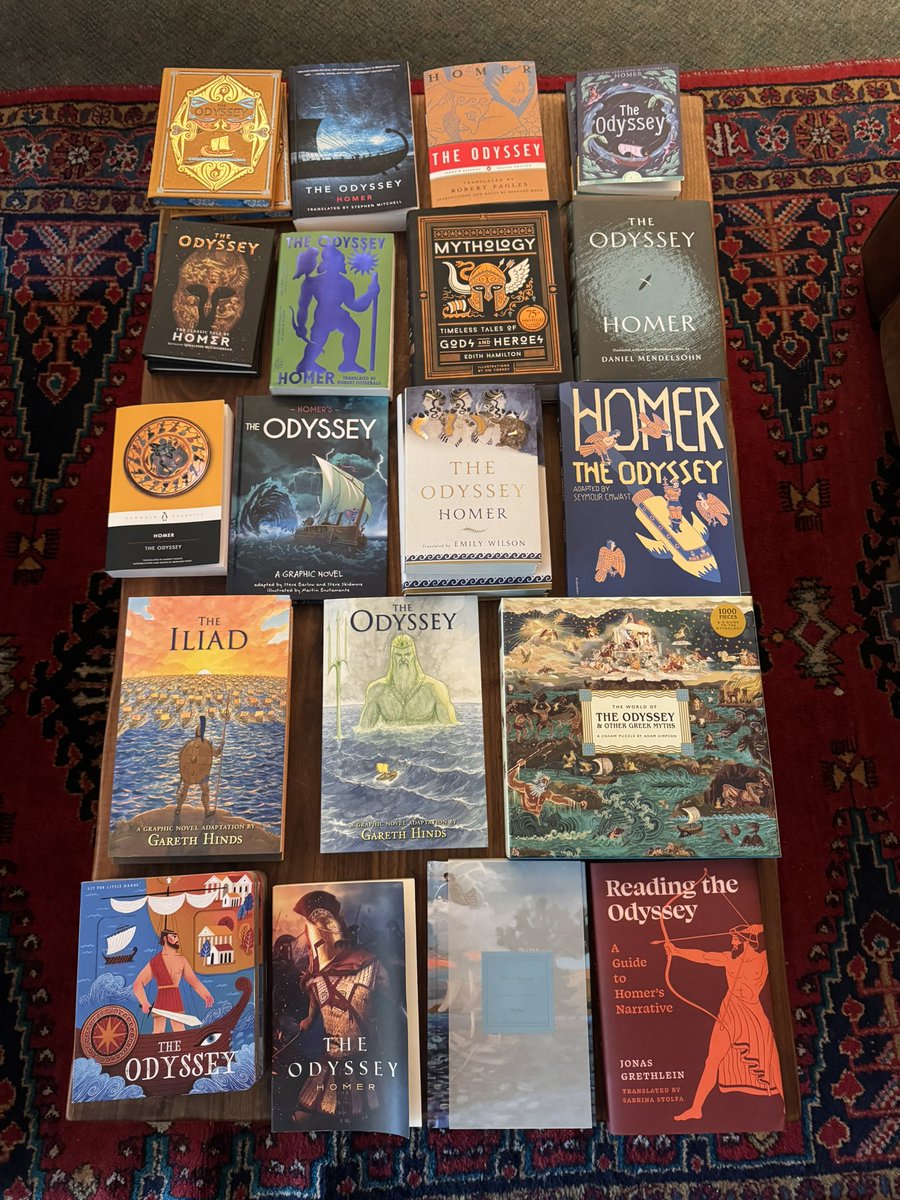
You can now view my list of 200 Great Authors in both table and image formats. I'll be reading the Great Books by each of these authors over the next 40 years (I'm in year 4 and the 40 years leaves plenty of room for rabbit trails) - books.booksoftitans.com/great-authors/ And here is the full list here (year of author's death): 1 - Enheduana - 2250 BC 2 - The Epic of Gilgamesh - 2100 BC 3 - Writings from Ancient Egypt - 2000 BC 4 - Enuma Elish (Creation Epic) & Atrahasis (Flood Myth) - 1700 BC 5 - The Rig Veda - 1500 BC 6 - Homer - 700 BC 7 - Hesiod - 700 BC 8 - Sappho - 570 BC 9 - Aesop - 564 BC 10 - Lao Tzu - 531 BC 11 - Sun Tzu - 496 BC 12 - Confucius - 479 BC 13 - Aeschylus - 456 BC 14 - Herodotus - 425 BC 15 - Sophocles - 406 BC 16 - Euripides - 406 BC 17 - Thucydides - 400 BC 18 - Aristophanes - 386 BC 19 - Xenophon - 354 BC 20 - Plato - 348 BC 21 - Aristotle - 322 BC 22 - Chuang Tzu - 286 BC 23 - Epicurus - 270 BC 24 - Euclid - 270 BC 25 - Archimedes - 212 BC 26 - The Ramayana - 200 BC 27 - Terence - 159 BC 28 - Lucretius - 55 BC 29 - Cicero - 43 BC 30 - Virgil - 19 BC 31 - Ovid - 17 AD 32 - Livy - 17 AD 33 - Seneca - 65 AD 34 - The Bible - 100 AD 35 - Josephus - 100 AD 36 - Quintilian - 100 AD 37 - Tacitus - 117 AD 38 - Plutarch - 120 AD 39 - Epictetus - 135 AD 40 - Ptolemy - 168 AD 41 - Marcus Aurelius - 180 AD 42 - The Mishnah - 200 AD 43 - The Bhagavad-Gita (in the Mahabharata) - 200 AD 44 - St. Irenaeus of Lyons - 202 AD 45 - Clement of Alexandria - 215 AD 46 - Origen - 253 AD 47 - Plotinus - 270 AD 48 - Eusebius - 339 AD 49 - St. Athanasius of Alexandria - 373 AD 50 - St. Basil the Great - 379 AD 51 - St. Gregory of Nazianzus - 390 AD 52 - Gregory of Nyssa - 395 AD 53 - St. John Chrysostom - 407 AD 54 - St. Jerome - 420 AD 55 - St. Augustine - 430 AD 56 - The Talmud - 500 AD 57 - Boethius - 524 AD 58 - The Koran - 632 AD 59 - Beowulf - 1000 60 - Murasaki Shikibu - 1014 61 - Abolqasem Ferdowsi - 1020 62 - Sei Shōnagon - 1025 63 - The Song of Roland - 1100 64 - Saint Anselm of Canterbury - 1109 65 - Anna Komnene - 1153 66 - Hildegard of Bingen - 1179 67 - The Mabinogion - 1200 68 - The Forest of Thieves and the Magic Garden - 1200 69 - Moses Maimonides - 1204 70 - Magna Carta - 1215 71 - Saint Francis of Assisi - 1226 72 - The Saga of the Volsungs - 1270 73 - The Poetic Edda - 1270 74 - Rumi - 1273 75 - Thomas Aquinas - 1274 76 - Njal's Saga - 1280 77 - The Sundiata - 1300 78 - Dante Alighieri - 1321 79 - The Tale of the Heike - 1330 80 - Giovanni Boccaccio - 1375 81 - Geoffrey Chaucer - 1400 82 - Sir Gawain and the Green Knight - 1400 83 - Julian of Norwich - 1416 84 - Margery Kempe - 1438 85 - The Arabian Nights - 1450 86 - Thomas à Kempis - 1471 87 - Niccolò Machiavelli - 1527 88 - Thomas More - 1535 89 - Desiderius Erasmus - 1536 90 - Nicolaus Copernicus - 1543 91 - Martin Luther - 1546 92 - The Book of Common Prayer - 1549 93 - François Rabelais - 1553 94 - John Calvin - 1564 95 - Teresa of Avila - 1582 96 - St. John of the Cross - 1591 97 - Michel de Montaigne - 1592 98 - Edmund Spenser - 1599 99 - The Story of Hong Gildong - 1612 100 - William Shakespeare - 1616 101 - Miguel de Cervantes - 1616 102 - Francis Bacon - 1626 103 - John Donne - 1631 104 - George Herbert - 1633 105 - Galileo Galilei - 1642 106 - Miyamoto Musashi - 1645 107 - René Descartes - 1650 108 - Blaise Pascal - 1662 109 - Molière - 1673 110 - John Milton - 1674 111 - Baruch Spinoza - 1677 112 - Thomas Hobbes - 1679 113 - John Bunyan - 1688 114 - Matsuo Bashō - 1694 115 - Jean Racine - 1699 116 - John Locke - 1704 117 - Isaac Newton - 1727 118 - Daniel Defoe - 1731 119 - Alexander Pope - 1744 120 - Jonathan Swift - 1745 121 - Charles-Louis Montesquieu - 1755 122 - David Hume - 1776 123 - Jean-Jacques Rousseau - 1778 124 - Voltaire - 1778 125 - Founding Fathers - 1787 126 - Adam Smith - 1790 127 - Edward Gibbon - 1794 128 - James Boswell - 1795 129 - Olaudah Equiano - 1797 130 - Immanuel Kant - 1804 131 - Jane Austen - 1817 132 - John Keats - 1821 133 - William Blake - 1827 134 - Georg Wilhelm Friedrich Hegel - 1831 135 - Johann Wolfgang von Goethe - 1832 136 - Sir Walter Scott - 1832 137 - Samuel Taylor Coleridge - 1834 138 - Alexander Hamilton, John Jay, James Madison - 1836 139 - Alexander Pushkin - 1837 140 - Emily Brontë - 1848 141 - Edgar Allan Poe - 1849 142 - William Wordsworth - 1850 143 - Mary Shelley - 1851 144 - Søren Kierkegaard - 1855 145 - Charlotte Brontë - 1855 146 - Alexis de Tocqueville - 1859 147 - Arthur Schopenhauer - 1860 148 - Nathaniel Hawthorne - 1864 149 - Alexandre Dumas - 1870 150 - Charles Dickens - 1870 151 - John Stuart Mill - 1873 152 - George Eliot - 1880 153 - Gustave Flaubert - 1880 154 - Fyodor Dostoyevsky - 1881 155 - Charles Darwin - 1882 156 - Ralph Waldo Emerson - 1882 157 - Karl Marx - 1883 158 - Victor Hugo - 1885 159 - Emily Dickinson - 1886 160 - Herman Melville - 1891 161 - Walt Whitman - 1892 162 - Alfred Tennyson - 1892 163 - Frederick Douglass - 1895 164 - Harriet Beecher Stowe - 1896 165 - Friedrich Nietzsche - 1900 166 - Anton Chekhov - 1904 167 - George MacDonald - 1905 168 - Mark Twain - 1910 169 - Leo Tolstoy - 1910 170 - William James - 1910 171 - Henry James - 1916 172 - Marcel Proust - 1922 173 - Joseph Conrad - 1924 174 - Franz Kafka - 1924 175 - Thomas Hardy - 1928 176 - G.K. Chesterton - 1936 177 - Edith Wharton - 1937 178 - Sigmund Freud - 1939 179 - William Butler Yeats - 1939 180 - Mikhail Bulgakov - 1940 181 - James Joyce - 1941 182 - Virginia Woolf - 1941 183 - Dietrich Bonhoeffer - 1945 184 - Sigrid Undset - 1949 185 - George Orwell - 1950 186 - Ludwig Wittgenstein - 1951 187 - Albert Einstein - 1955 188 - Thomas Mann - 1955 189 - Dorothy Sayers - 1957 190 - Zora Neale Hurston - 1960 191 - Ernest Hemingway - 1961 192 - William Faulkner - 1962 193 - W.E.B. Du Bois - 1963 194 - C.S. Lewis - 1963 195 - Flannery O'Connor - 1964 196 - T.S. Eliot - 1965 197 - John Steinbeck - 1968 198 - J.R.R. Tolkien - 1973 199 - Daphne du Maurier - 1989 200 - Aleksandr Solzhenitsyn - 2008
Erik Rostad (Books of Titans) tweet media
English
10
35
191
12.7K
Spencer A. Klavan
Spencer A. Klavan@SpencerKlavan·
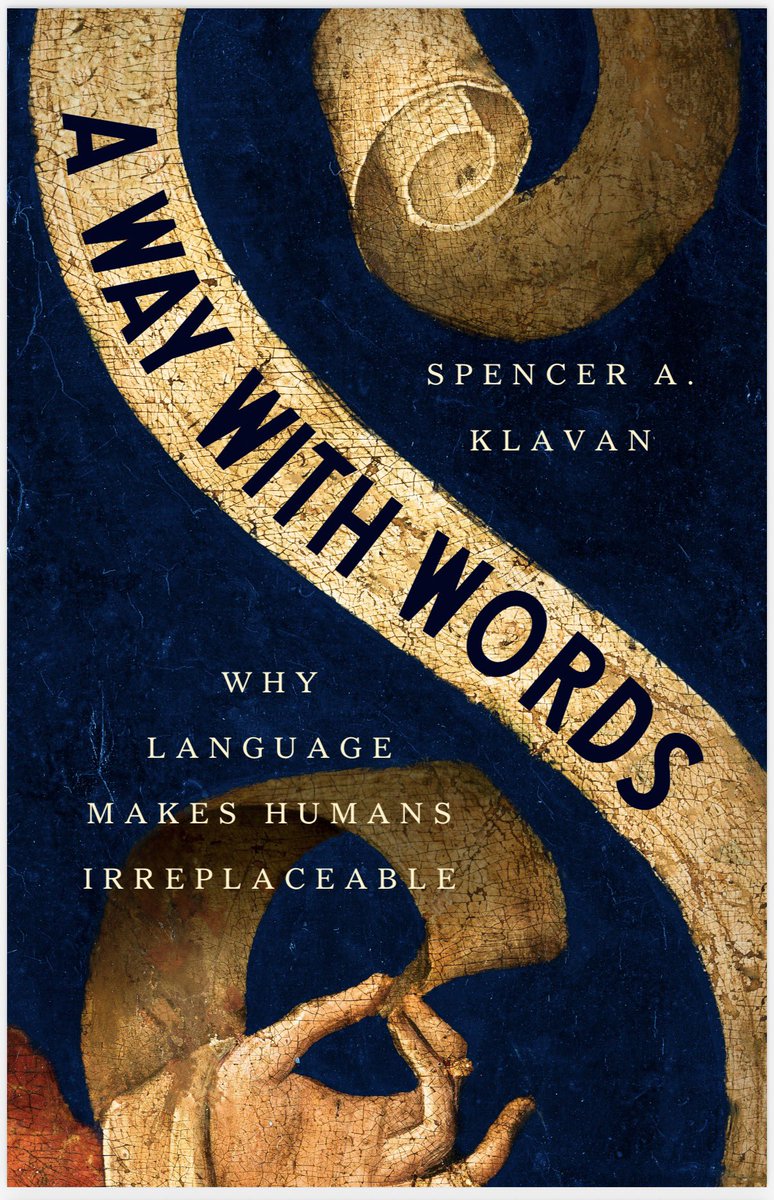
Pretty overjoyed at the cover for my new book, A Way With Words: Why Language Makes Humans Irreplaceable. It’s an ancient idea that man is the animal with logos—not just spoken sentences but a whole inner universe of understanding. Not just outer words, but the inner word. With the explosion of AI, this foundational idea faces a new challenge—suddenly there are machines that look like they can talk, raising the possibility that one more fundamental aspect of our humanity is being usurped by code. But this is a book about the beauty of human language, our universal but endlessly varied power, and what it still tells us about why our species is unique. Presale link is live below. Book comes out February second. Join me on a romp through ancient history, Japanese internet slang, deep learning models, and much more. Can’t wait to share this with you all.
Spencer A. Klavan tweet media
English
36
46
459
17.2K
Erik Rostad (Books of Titans) retweetledi
Alex & Books 📚
Alex & Books 📚@AlexAndBooks_·
Shooting my shot: I've been doing more speaking gigs and would like to give more talks at events, conferences, and companies. I recently spoke to 400+ authors about how to use social media to promote their books. I've also spoken at companies about how to get employees to read more books. If you're looking for a speaker to talk about: -Being a content creator -Advice for writers and authors -The importance of books & how to read more Or something else, feel free to DM me to chat more.
Alex & Books 📚 tweet mediaAlex & Books 📚 tweet mediaAlex & Books 📚 tweet media
English
10
8
81
14.9K
Erik Rostad (Books of Titans)
Monday morning reading 📖: continuing my second reading of Plato’s Phaedrus. This one is translated by Robin Waterfield. I’m also referencing the Myths book, which extracts some of the myths Plato uses in his dialogues and provides some interesting background.
Erik Rostad (Books of Titans) tweet media
English
0
5
46
990
Erik Rostad (Books of Titans) retweetledi
Ascend: The Great Books Podcast
Post-Odyssey Episode Schedule📅 ➡️What are we reading next?!🧐📚 1. Short, strange dialogues of Plato 2. Short Story September! 3. Plato's Republic Schedule: TBD - Post-Movie Breakdown 📚July 21, 2026 - An interview with Dr. Patrick Deneen (@PatrickDeneen) on his new book, the American Odyssey. 📚July 28, 2026 - Holy Eros: An exploration of eros in Plato, the Bible, and Christian thought Then we return to our studies on Plato. 📚August 4, 2026 - Plato's Hipparchus 📚August 11, 2026 - Plato's Lovers 📚August 18, 2026 - Plato's Hippias Minor 📚August 25, 2026 - Plato's Ion with @booksoftitans Then we have "Short Story September." 📚September 1, 2026 - Enduring Chill by Flannery O’Connor 📚September 8, 2026 - Red Shadows by Robert E. Howard with @AlbertoMiguelF5 September 15, 2026 - Chivalry by Neil Gaiman with @EduardHabsburg September 22, 2026 - Bartleby, the Scrivener with @MTClassical September 29, 2026 - TBD And then we start Plato's Republic October 6, 2026 - Republic Bk 1: Intro, Prologue, & Cephalus (327a-331d) with @alexpriou! And beyond! We have over 30 episodes planned for Plato's Republic and most are already recorded. It is going to be amazing. We will mainly be using the Bloom translation or you can you the translation in the Complete Works. Let us know what you think! Good things ahead on Ascend! ascend-the-great-book.captivate.fm
Ascend: The Great Books Podcast tweet mediaAscend: The Great Books Podcast tweet media
English
1
3
26
5.4K
Jessica Hooten Wilson
Jessica Hooten Wilson@HootenWilson·
Got in to ABBEY ROAD STUDIO with a friend who was recording there! once in a lifetime. so cool! 😎
Jessica Hooten Wilson tweet mediaJessica Hooten Wilson tweet media
English
5
1
44
1.7K
Erik Rostad (Books of Titans)
@Hillsideviews Recollection of Plato’s Forms. The soul’s exposure to the Form of Beauty pre-embodiment and the recollection amidst glimpses of beauty while the soul is embodied.
English
1
0
3
46
Erik Rostad (Books of Titans)
Robin Waterfield provides a concise summary of Plato’s Phaedrus: “Love prompts recollection, recollection is the precondition for knowledge, and knowledge is the precondition for the right handling of words (rhetoric).”
Erik Rostad (Books of Titans) tweet media
English
1
9
84
2.6K
Erik Rostad (Books of Titans)
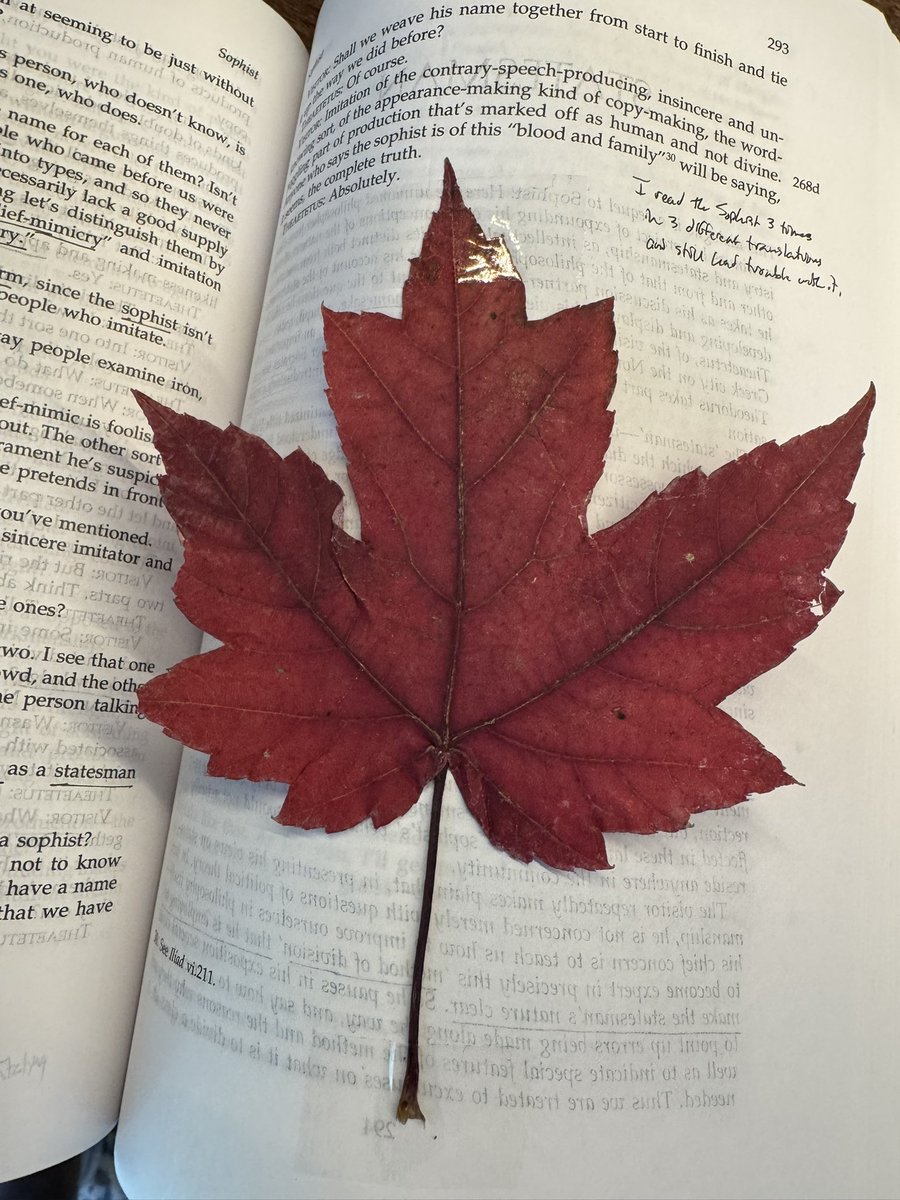
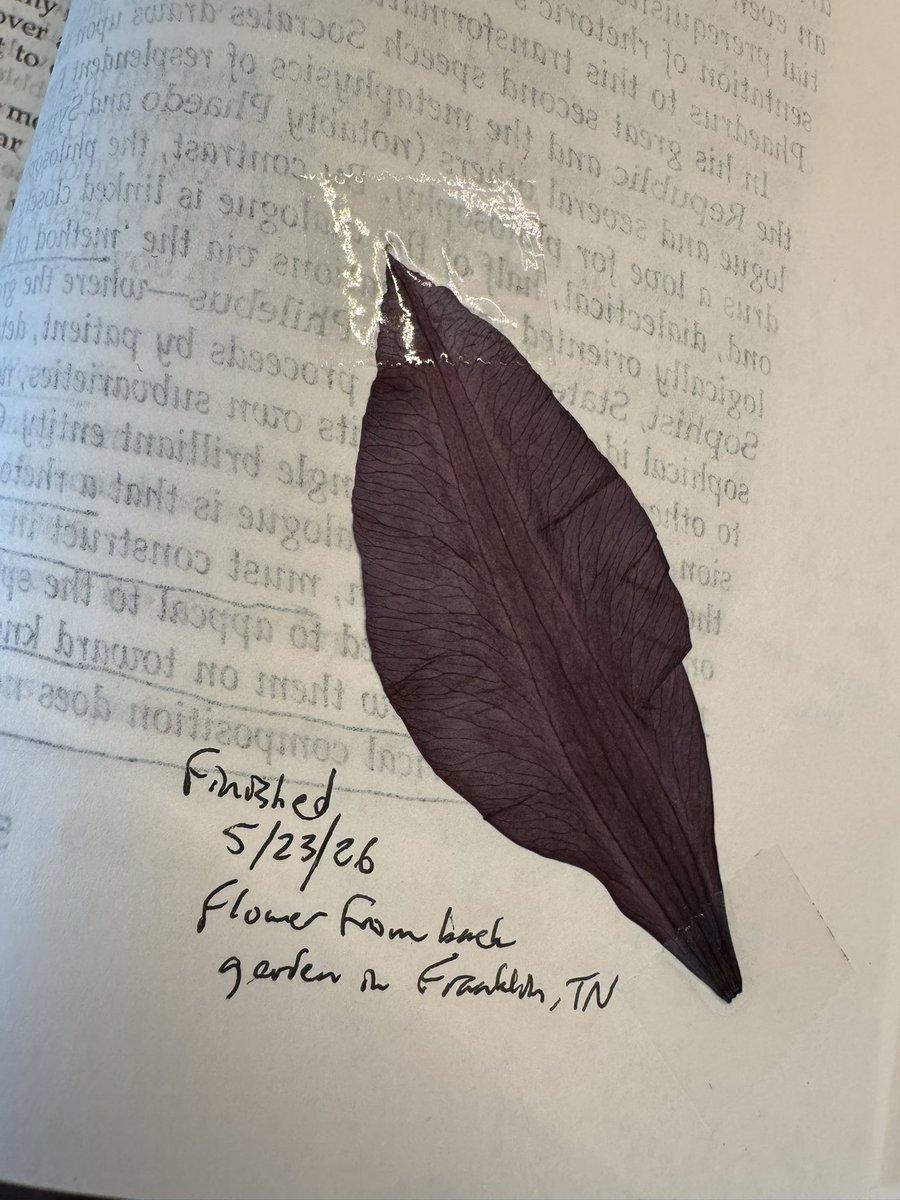
Continuing my practice of placing some sort of leaf or plant life at the end of each Plato dialogue when I finish it. Partly to show the time of year and also to preserve beautiful things from nature. Last night, I finished Phaedrus and added a Purple Coneflower leaf (not pictured).
Erik Rostad (Books of Titans) tweet mediaErik Rostad (Books of Titans) tweet mediaErik Rostad (Books of Titans) tweet mediaErik Rostad (Books of Titans) tweet media
English
5
2
33
1.7K
Erik Rostad (Books of Titans)
Friday morning reading: doing a second reading of Plato’s Phaedrus, this time using Robin Waterfield’s translation and intro. I require multiple readings of these dialogues and the introductions sure do help.
Erik Rostad (Books of Titans) tweet media
English
4
5
108
2.1K
Erik Rostad (Books of Titans)
“It would awaken a terribly powerful love if an image of wisdom came through our sight as clearly as beauty does.” ~ Socrates in Plato’s Phaedrus
Erik Rostad (Books of Titans) tweet media
English
0
6
44
1.5K
Erik Rostad (Books of Titans)
“If anyone comes to the gates of poetry and expects to become an adequate poet by acquiring expert knowledge of the subjet without the Muses' madness, he will fail, and his self-controlled verses will be eclipsed by the poetry of men who have been driven out of their minds.” ~ Socrates in Plato’s Phaedrus (Woodruff translation)
English
1
3
21
840
Erik Rostad (Books of Titans)
Erik Rostad (Books of Titans)@booksoftitans·
Back to Plato and the Phaedrus dialogue. I’m attempting to read the complete works of Plato and will be spending now until November with these dialogues.
Erik Rostad (Books of Titans) tweet mediaErik Rostad (Books of Titans) tweet mediaErik Rostad (Books of Titans) tweet mediaErik Rostad (Books of Titans) tweet media
English
2
3
45
1.8K