

Brian Gold
68 posts

In a novel environment, the fastest way to iterate is often to collect conceptual lessons but then just, well, start over.
For that, it helps that our original measuring stick for DSPy was “is this effective multi-step program even shorter than a typical single prompt?”
English
I mentioned a DSPy design goal yesterday: make it easy to *localize ambiguity*.
Today’s: make it easy to *start over*. A complete DSPy system is often ~30 LoC. You can evolve simple systems to highly sophisticated ones without feeling committed to them.
Everything is throwaway.
DSPy@DSPyOSS
In building DSPy programs, remember: "A complex system that works is invariably found to have evolved from a simple system that worked. A complex system designed from scratch never works and cannot be patched up. You have to start over with a working simple system." -Gall's Law
English
@kingprotty This is roughly how select() works in my not-worked-on-for-a-year async runtime:
#L766" target="_blank" rel="nofollow noopener">github.com/briangold/vort…
Seems to work. And at some point when async is back in Zig, I’ll get back to this.
English

This scheme allows all variants to run until completion before Select wakes, where cancellation is just a error which can be propagated (run destructors/cleanup without custom syntax) or ignored (if variant isn't cancellable) enabling intrusive-memory for storage & more.
4/4
English
@fuzzycz If you can run a recent (6+) kernel, you could do this with ublk. There’s a sample app for writing a loop device, which you could modify to inject anything you want in the I/O path.
github.com/ming1/ubdsrv
English
@penberg Intel made network processors (IXP 2400) that had “microengines” supporting multiple task contexts and asm-level suspend/resume. Could suspend on memory access or I/O. I wrote a workshop paper on DB scans and hash joins with it back in 2005. Was fun but niche.
English

Are the examples of async/await implemented at the (virtual) machine instruction set level? For example, for performing asynchronous memory reads or I/O?
English
@muratdemirbas Reading lists from the very few grad-level storage courses:
CMU: course.ece.cmu.edu/~ece746/readin…
UCSC: users.soe.ucsc.edu/%7Ecarlosm/cmp…
Wisc: pages.cs.wisc.edu/~remzi/Classes…
English

What are some foundational storage systems papers?
Is there a list someone wrote on this?
English
@phil_eaton Otherwise, it depends. Some HPC codes use multi-TB (and beyond!) files. Need to avoid inode contention if you have multiple writers.
Splitting into separate files just moves the problem, though. Now directory inode is contention point.
Depends on access patterns & scale.
English
@phil_eaton For the WAL and LSM examples, you may split to make deletes (reclaiming space) easier. An LSM level/tier is immutable, but after merging the old one needs to get deleted.
English

When working with files (on Linux, let's say), is there an optimal size where it becomes more performant to split the file up versus continuing to grow a single file?
This is unrelated to how you index/query data.
I'm wondering more about file system/disk.
English
@palvaro Perhaps: homepages.inf.ed.ac.uk/wenfei/qsx/rea…
I came across this while reading dsf.berkeley.edu/cs286/papers/m…
English
Brian Gold retweetledi

ece.cmu.edu/news-and-event… Today with @AlbaOrbital we launched the Tartan-Artibeus-1 pocketqube (as UNICORN-2TA1), the first batteryless, intermittent, orbital edge computing nanosatellite aboard the @SpaceX Falcon-9 Transporter-3 mission!
English
@jarredsumner @wheybags has a nice starting point (in C++): github.com/wheybags/wcp
There’s a companion blog here: wheybags.com/blog/wcp.html
English
@jarredsumner @andy_kelley @axboe Performant large directory tree traversal is tricky with or without io_uring. This thread may help with some pointers: lwn.net/Articles/84386…
English

what’re the best links / code snippets to read on io_uring? How fast can it get for copying large directory trees of small files?
English
@HenryR @palvaro Great list! A lifetime ago I was working with the (inscrutable) register allocator in the hotspot C2 backend.
Preston Brigg’s thesis was a lifesaver and one of the most readable PhD theses I’ve ever seen. cs.utexas.edu/users/mckinley…
English

I recently changed role at Slack, to focus on the HHVM runtime that executes so much of our product code.
This is the first time I’ve worked primarily on a compiler and VM, so had to get myself up to speed. Here are some fantastic resources that have helped me do so *quickly*.
English
Brian Gold retweetledi

I'm hiring multiple PhD students for Fall'22 at CMU. My research bridges computer architecture & systems software to enable datacenter computing. If you're interested in related topics, come work with me! RTs appreciated!
More info: akshithasriraman.com
ece.cmu.edu/admissions/ind…
GIF
English
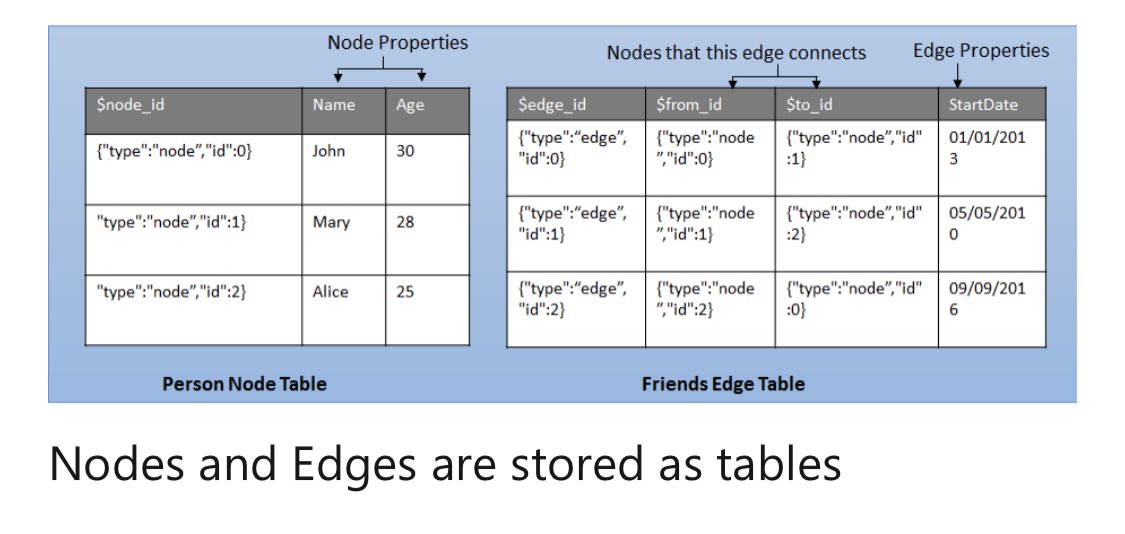

The DAGs that I work on these days are actually graphs, not databases
#AcronymsAreHard
English
Brian Gold retweetledi

@MarkCallaghanDB @andy_pavlo @danavanaken @SocieteGenerale @CBILIEN @Oracle @OtterTuneAI Most storage servers and even SSDs are internally complex “database” systems (with LSM tree or similar structures). So maybe we need to (Otter)tune the whole stack?
English

This is @danavanaken's new #VLDB2021 paper on deploying OtterTune at @SocieteGenerale in collaboration with @CBILIEN. We used OtterTune on a production 1TB @Oracle DBMS and compare 3 ML algos.
TLDR: @OtterTuneAI outperforms human tuning but noisy cloud VMs made it tricky.
PVLDB@pvldb
Vol:14 No:7 → An Inquiry into Machine Learning-based Automatic Configuration Tuning Services on Real-World Database Management Systems vldb.org/pvldb/vol14/p1…
English
@nvachhar @rolanddreier Related - from FAST this year, writing filesystem drivers (in kernel) in rust, with a shim/harness allowing user-space development and testing: usenix.org/conference/fas…
English


Brian Gold retweetledi

Science, engineering, and entrepreneurship, and venture capital at its finest! Congrats to @SilaGene on the fundraise to scale production. (And kudos to @shv and @laserlikemike for believing early!)
English
@codyhosterman I expect to see you sign-off from future emails with “We are FlashArray”. 😂
English