

Bryan Cano
2.2K posts
Bryan Cano
@BryanECano
Building. | Prev: Head of Marketing at True Classic, VP at Nood
Austin, TX Katılım Ağustos 2020
1.4K Takip Edilen3.7K Takipçiler

Google Gemini Omni is f*cking insane for UGC ads 🤯
Google just dropped their new video model and I spent the past 24 hours putting it through its paces.
Multi-shot UGC ads -> Consistent creator across every scene ->Agent mode that runs the whole session.
Perfect for DTC brands and agencies who need UGC creative at volume without hiring creators or paying per-video platform fees.
If you're briefing creators every week, waiting days for footage, paying $150–$300 per UGC video, and still getting ads that miss the brand vibe...
Gemini Omni eliminates the entire loop:
→ Generate a realistic AI creator from a single image prompt
→ Upload your creator + product image, reference both by filename in every prompt
→ Agent mode writes and runs your full production session
→ Creator stays consistent across every scene change and outfit
→ Product label accurate, correct color, readable text
→ 5-shot direct response ad in one briefing
No creator briefs.
No waiting for footage.
No per-video platform fees.
What you get:
→ Multi-shot UGC ads with a locked creator across every scene
→ AI creator image prompt tuned for realism — not plastic AI faces
→ Asset tagging system that keeps your product consistent shot to shot
→ A reusable workflow: new product, new angle, same pipeline
I also built a Claude Cowork skill that writes your entire production package before you generate a single frame:
Creator prompt, shot list, dialogue, asset-tagged prompts, and voiceover script.
I put together a full playbook with the Claude skill file and the exact workflow to run this yourself.
Want access for free?
> Like this post
> Comment "OMNI"
And I'll send it over (must be following so I can DM)
English


@MrYoniLevy Thank you for being an incredible voice — excited for what’s next. If we’re lucky, it’ll be in eCom
English
Nine years at Meta.
I leave with deep gratitude. For the people. For the products. For the privilege of working alongside the sharpest marketing leaders and founders in the world on their biggest growth challenges.
What stays with me most is what I learned. About advertising and ad products. About building businesses and managing teams. About people. About myself.
Somewhere along the way, one lesson clicked harder than the rest. I could hire people smarter than me, with specialized skills I'd never have, and organize them around the highest-impact opportunities for advertisers and for Meta.
Executing on that one insight unlocked so much. Stronger teams. New performance advertising playbooks adopted globally. Measurement businesses could confidently act on. Sharper performance testing. Better results for the brands we served.
To the team I'm leaving behind: I'll be cheering you on, proudly and loudly, as you do even better things. You will.
To the people who taught me, backed me, partnered with me, and challenged me when I needed it: thank you. Most of what I'm taking with me, I learned from you. You know who you are.
As for me, there were posters on the walls over the years. Sayings that landed differently depending on the chapter. The one loudest right now: "What would you do if you weren't afraid?"
I'm going to spend some time with that one.

English
If you liked my article, you’ll want to read @Chris_Wichert ‘s linked write up.
It adds a layer that I missed — what are the non-AI advantages.
This is incredibly well said:
“Taste. Point of view. The vision for what this product should be, who it's for, and why it exists in the first place. The understanding of your customer that no spreadsheet captures. The instinct for what to make next, what to say, and how to position against a market that moves faster every quarter.”
Chris Wichert@Chris_Wichert
@BryanECano That's actually a great article, you're summarizing the different phases of DTC brands well.. I wrote about where this trends leads a couple months ago: commercecatalyst.ai/blog/micro-mon…
English
@DavidBaker_2_0 There is an immense gravitational pull to make it easier and easier and easier and easier…. And easier.
Everyone is incentivized to remove friction and smoothen the learning curve
English

@BryanECano The more I build out my AI Stack and gbrain the more convinced I am about how condensed of learning loops new brands are about to have.
English

@adelbucetta I think data is tablestakes and commoditized — think about how much data you have access to!
But the organization of data is where you may find some advantage, but with where LLMs are headed I don’t think it’s a moat. Data is tablestakes
English

@BryanECano what if the moat isn't branding or performance, but data ownership instead?
English
The Everlane acquisition honestly made me stop and think.
It feels like every era of ecommerce creates its own “moat” that brands become obsessed with.
2010–2017:
digitally native branding was the moat.
2018–2025:
performance sophistication became the moat.
and with the adoption of AI I've found myself asking:
What will the next generation of brands look like?
That question led me down a rabbit hole on:
- why some DTC brands struggled
- how AI changes competitive advantages
- why operational leverage is becoming branding
- why ecommerce org charts are about to collapse
- what brands should build next to stay durable
read about it below:
Bryan Cano@BryanECano
English
@chrishume_ Plus he’s been consistent & loud amongst the DTC community in wanting to see more US based manufacturing
English

Knocking Sean for giving out money to a startup manufacturing company is insane
It’s not hypocritical to manufacturer overseas while wanting and helping America build
There are millions of products developed overseas, should we have none of those? What about 50%? 20%?
I’ll never knock someone for putting their money where their mouth is.
If you want to build a MiUSA metal wallet brand then do it!
No one is stopping you.

English

@BryanECano For the current MOAT I would add SKU-level LTV architecture. Some SKUs: Acquisition SKUs, margin SKUs, retention SKUs.
English
Good builds
Re: being in the real world to a certain degree — so much signal pointing towards this.
1. People are burned out from newsfeeds.
2. AI prevalence is going to create massive digital distrust — people want to touch, feel it to know it’s real and quality.
3. Creator distribution is getting increasingly more competitive.
When I have enough capital I’m going to acquire and license run clubs, dinner clubs, stroller clubs, etc.
VCs will probably beat me to it though — they’ve already started acquiring YouTube channels & creators.
English

Mostly agree, I’m ready to start calling new marketing hires “member of the marketing staff”
I think that brands have to go back to being in the real world to a certain degree - how do you physicalize the feeling? Great, caring customer service is one way. I agree that there needs to be a lot of intentionality about how a brand makes customers feel. It’s critical. People want to buy a feeling. It’s funny because brands like tide / Folgers have been hammering feeling marketing forever. Layer on membership and community connection and you got a winner. Everyone in Dtc ought to rewatch mad men from the begging.
English
@iamshackelford 🙏 thank you — want to start doing this more consistently
This was helpful for me to get thoughts on paper and really think about what I’m building towards
English
@marcbarros That’s about 400mm in 2026 dollars too — Andy is brilliant
English

@BryanECano makes andy dunn look even more like a genius selling early to walmart for +$300M.
English
Definitely — it was ecom being operated like tech. Raise, capture market share aggressively, turn profit.
But agree— there are dropshippers and affiliates >3 years into their careers who understand performance marketing significantly better than marketing leaders from the VC era.
English

Most of the first wave brands were built on cheap equity and ridiculous valuations. Most were not profitable, or well run. Then the cheap equity ran out and they imploded. I'm sure you have talked to a lot of ex-marketing people from some of those brands and laughed, because I have been very underwhelmed VS the cracked bootstrapped guys
English

This is my fiancée Elissa.
At 1, her family fled war in the dead of night
At 15, she moved to the US. She didn’t speak English
In college, she worked multiple jobs at the same time to support herself
She’s the first in her family to go to college
Today, she became a doctor

English
Last Click as this assumes the acquisition funnel (ad click > landing page > product > price > offer > purchase) for a new customer is the biggest factor for LTV.
For example — I don’t think that offer A (shown as the first click) will be as impactful as offer B (the last click before purchase).
English
Under which attribution model? Would you really be happy with just getting LTV for Last Click?
And even then you'd probably want to count only the Last Click ad before the FIRST purchase, and not count any intermediate ads customers might see in-between repurchases or any promote email they might get.
English
I wish there was a way for me to measure LTV by Ad.
This would help tremendously in understanding
1. If different messaging is setting the right or wrong expectations — impacting return rates and retention.
2. Which ad formats attract the right/wrong quality of customers.
3. How different funnels/offers impact the stickiness of a customer.
(When you’re not sprinting to launch 100 ads per week you give yourself space to think about these things).
English
@oliviaakory You guys have been killing it with the goodies. I saw the taste testing cookies. Bravo 👏
English

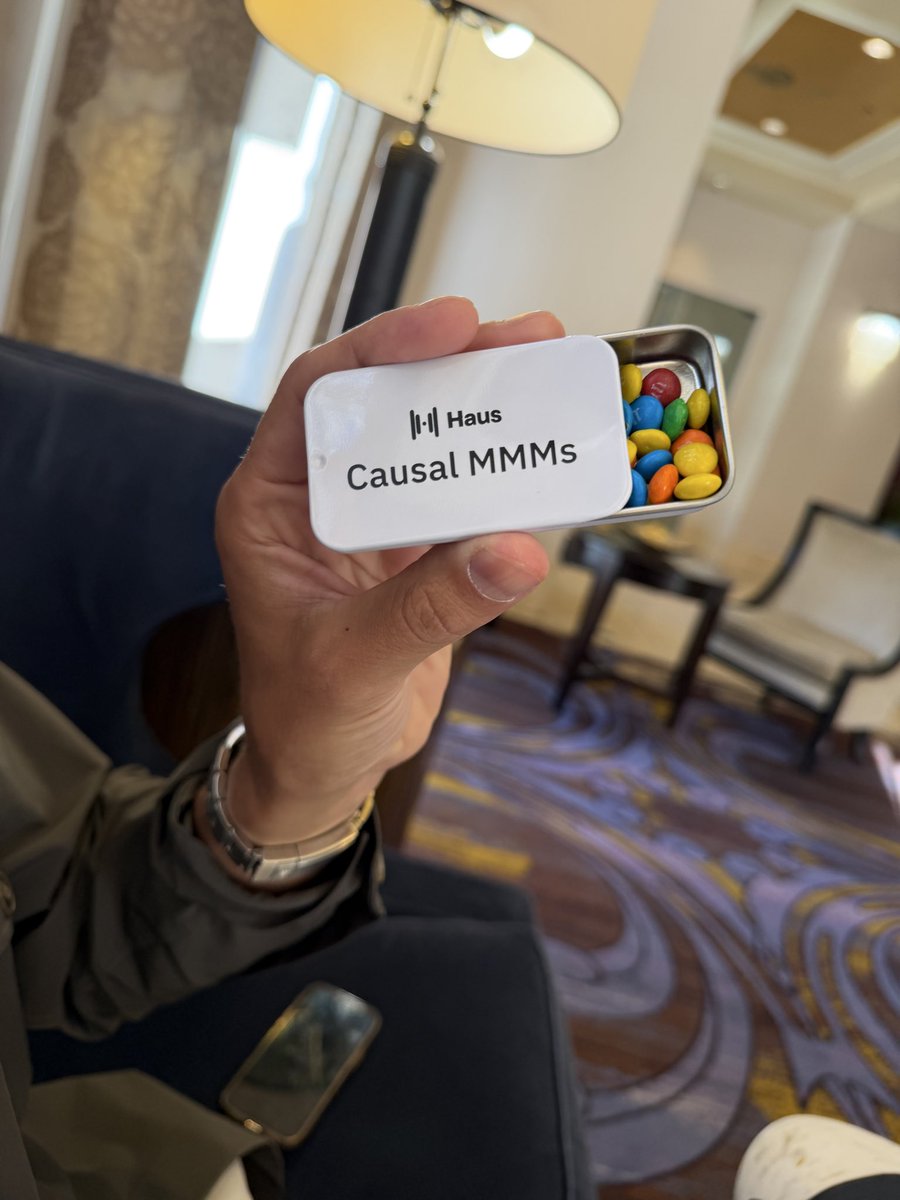
This would be such great marketing if people knew the difference between causal and casual
English