

buhh
72 posts

buhh
@buhhfps
Gamer || Linux || Zed || Pi || Keyboards
Katılım Aralık 2025
150 Takip Edilen4 Takipçiler

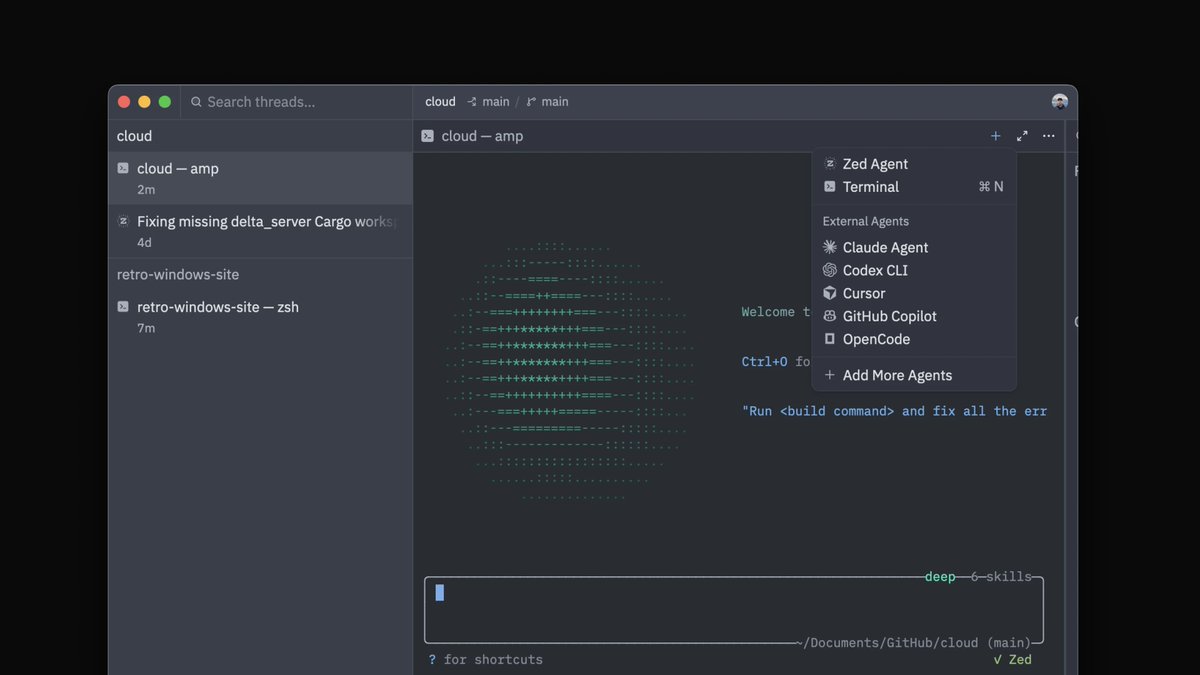
@zeddotdev is there a keybind which I can setup which toggle chat side bar + terminal in full screen?. I would like to go back and fourth with normal editor.
for eg: space + a = agent editor ( when i press it again I can see my text editor view )
English


@buhhfps @shaun_on_x I’m hoping to have a video soon but official docs are decent
longbridge.github.io/gpui-component/
English


We’re having way too much fun working through your feedback.
(Please, keep it coming.)
Keyboard shortcuts are now customizable.
Set Codex up around how you actually work, then tweak shortcuts from settings instead of adapting to our defaults.
English


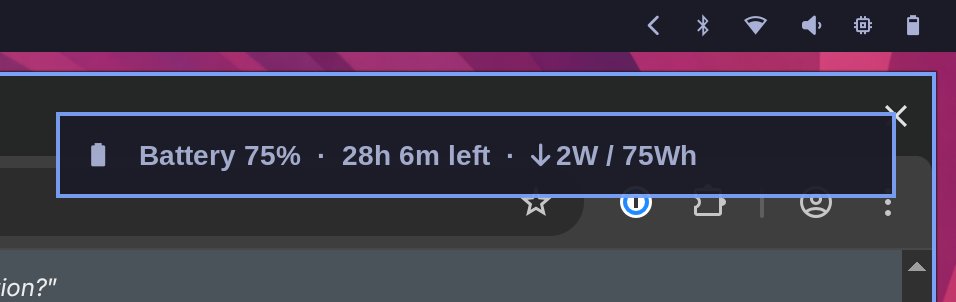

Our biggest breakthrough in efficiency yet, the Framework Laptop 13 Pro with 20 hours of battery life. In Graphite.
Linux-first with options for Ubuntu pre-installed. Featuring Intel® Core™ Ultra Series 3 processors, LPCAMM2 Memory, a new haptic touchpad, and a touchscreen display.
Pre-orders for the Framework Laptop 13 Pro open now: frame.work


English

@badlogicgames @fatihxkarahan btca-local skill by @davis7 does the same thing you mentioned #getting-started" target="_blank" rel="nofollow noopener">github.com/davis7dotsh/be…
English

have you considered letting the agent clone the actual source code of the dependency you are using and inspect that instead of having it work through possibly outdated docs on the web, which whatever web search/fetch tool you use won't even push into your agent's context in full? bonus point: most repos of dependencies also contain the latest docs.
English
as more and more people start using pi, i now get this question often:
"what are essential extensions i should install?"
none. zero. start vanilla. only build/install something if you feel a recuring pain that you can't get rid of by reevaluating your workflow learned with another harness.
i have 2 extensions:
- promot-url-widget.ts in pi-mono/.pi/extensions: if a git issue/pr url is mentioned in a user message, it displays a little widget above the editor with the issue/pr title, submitter account id, and link to cmd+click. if i have multiple sessions open i know immediately what it's about
- pi-diff-viewer, simple slash command spawning a GUI that lets me annotate a diff or any file in the working directory. once done, annotations are feed back to pi as a prompt, with a request for the model to act on the annotations.
this is all i ever use. no, i don't use web search, mcp, multi-agents, whatever. i'm likely still outperforming you productivity wise with less token usage.
English



So, uh, what subscription should I be using for my OpenClaw now? 🙃
English

@mil000 No more button shenanigans! Agree this has been frustrating, more on the story here.
x.com/leerob/status/…
Lee Robinson@leerob
Meet the new Cursor! Very excited about this. Wanted to share a bit more of the story of how we landed here, how the product evolved, and some of the technical details on the new interface. I've been coding primarily with agents since Opus 4.5, but hadn't found an interface I loved (including our own). Agent sidebars or CLIs worked but still felt limiting to me. And our first iteration of the "agent window" wasn't good enough yet. So we went back to the drawing board to build a completely new interface for agents in December. The trend seemed pretty clear that increasingly less time would be spent in traditional IDEs. But as we started to dogfood early versions, it was very hard to give up some parts of an editor. Even if agents write 98% of the code, that last 2% of viewing files, debugging, many small edits and refactors, and having all the niceties like go to definition, LSPs, and more were really important. We couldn't remove those. So @ryolu_ and I started prototyping some ideas late Dec for a new interface. It would start simple/zen, but then allow you to still go deeper as needed. And slowly we developed enough conviction to make it real. The Cursor eng/product team then took some of those early ideas and made something 10x better than I imagined. Seriously major kudos to the team! We started fresh with this new UI in a lot of ways. "Deleting the product" is especially important as models continue to improve and the UX needs to be continually rethought. However that doesn't mean you have to throw out *all* the good ideas. Making it easy for existing users to adapt is also very important. In this new interface, we own all the pixels. We were able to design a system/architecture that takes all the learnings from Cursor 1/2 and moves away from some of the VS Code constraints we were limited by. I definitely empathize with feedback that in Cursor 2 we were moving around the UI too much and changing icons/buttons. Agents were taking over more and more work, and they started to break out of the IDE UI. We needed to iterate and try a bunch of things, and that was annoying for those of you expecting a more consistent editor experience. Making this new agent interface as a separate window actually also makes the Cursor 2.0 IDE *better*! Rather than continuing to try and extend the IDE to have agents own the entire UI, we were able to simplify and delete a lot of code by using existing VS Code patterns. Namely, agent chats are now just normal tabs like any other file. This is much more stable and familiar for doing splits/panes and all related keyboard shortcuts. A win-win-win, as they say. But also in this architecture refactor, we were able to address some local vs. cloud divergence and tech debt that had accumulated over time. The core Cursor agent harness is the same across the desktop app, web app, CLI, etc. So there really shouldn't be two code paths like: if (local) { ... } else if (cloud) { ... } Cloud agents were not used much until we gave them the ability to use a computer and record demos of their work, so now that usage has grown considerably in the past few months, it was even more important to nail this abstraction. We think cloud usage will continue to grow and be a big part of 2026. Finally (this is already a long post, oops), we have been able to really focus on performance in the new interface. I'm sure there will still be things to improve (please send them to us) but we've spent considerably more time profiling, investigating, and patching memory/cpu leaks. We are also now using the React Compiler! s/o @poteto who has also been making a bunch of perf improvements. The end result here is that Cursor 3 feels much more pleasant to use. Faster, more reliable, less UI jank. You get to use all your favorite models, local or cloud, run automations, install plugins, get back demo videos, and more. Give it a try and lmk your feedback! We're gonna be shipping updates quickly in the coming days.
English

lemme guess, all the buttons are moved again and it just takes me 2 days to get used to again
Cursor@cursor_ai
We’re introducing Cursor 3. It is simpler, more powerful, and built for a world where all code is written by agents, while keeping the depth of a development environment.
English

@amanvarshney01 i tried the crimson dessert one , its vanguard and their script doesn't comply i don't want to get banned lol
English
Crazy stuff is going on in the piracy gaming community, with a new hypervisor workaround bypassing all the denuvo games🤭
English
Petition to add UPI as a payment option in @Cloudflare idk what but they always reject my card and i cant figure out the reason :(
English
. @Siumauricio thank you for building @getdokploy . It's the best OSS platform I have used :salute:. cannot be more thankful.
English