🌐 CBM 🌐

34.5K posts

🌐 CBM 🌐 banner
🌐 CBM 🌐

🌐 CBM 🌐

@cbmrey

cgo @retetisanctuary. advisor @tejoventures. community @summit. #100 of @fastcompany's most creative.

Lisbon, Portugal Katılım Aralık 2008
1.7K Takip Edilen10.4K Takipçiler
🌐 CBM 🌐 retweetledi
jack
jack@jack·
we're making @blocks smaller today. here's my note to the company. #### today we're making one of the hardest decisions in the history of our company: we're reducing our organization by nearly half, from over 10,000 people to just under 6,000. that means over 4,000 of you are being asked to leave or entering into consultation. i'll be straight about what's happening, why, and what it means for everyone. first off, if you're one of the people affected, you'll receive your salary for 20 weeks + 1 week per year of tenure, equity vested through the end of may, 6 months of health care, your corporate devices, and $5,000 to put toward whatever you need to help you in this transition (if you’re outside the U.S. you’ll receive similar support but exact details are going to vary based on local requirements). i want you to know that before anything else. everyone will be notified today, whether you're being asked to leave, entering consultation, or asked to stay. we're not making this decision because we're in trouble. our business is strong. gross profit continues to grow, we continue to serve more and more customers, and profitability is improving. but something has changed. we're already seeing that the intelligence tools we’re creating and using, paired with smaller and flatter teams, are enabling a new way of working which fundamentally changes what it means to build and run a company. and that's accelerating rapidly. i had two options: cut gradually over months or years as this shift plays out, or be honest about where we are and act on it now. i chose the latter. repeated rounds of cuts are destructive to morale, to focus, and to the trust that customers and shareholders place in our ability to lead. i'd rather take a hard, clear action now and build from a position we believe in than manage a slow reduction of people toward the same outcome. a smaller company also gives us the space to grow our business the right way, on our own terms, instead of constantly reacting to market pressures. a decision at this scale carries risk. but so does standing still. we've done a full review to determine the roles and people we require to reliably grow the business from here, and we've pressure-tested those decisions from multiple angles. i accept that we may have gotten some of them wrong, and we've built in flexibility to account for that, and do the right thing for our customers. we're not going to just disappear people from slack and email and pretend they were never here. communication channels will stay open through thursday evening (pacific) so everyone can say goodbye properly, and share whatever you wish. i'll also be hosting a live video session to thank everyone at 3:35pm pacific. i know doing it this way might feel awkward. i'd rather it feel awkward and human than efficient and cold. to those of you leaving…i’m grateful for you, and i’m sorry to put you through this. you built what this company is today. that's a fact that i'll honor forever. this decision is not a reflection of what you contributed. you will be a great contributor to any organization going forward. to those staying…i made this decision, and i'll own it. what i'm asking of you is to build with me. we're going to build this company with intelligence at the core of everything we do. how we work, how we create, how we serve our customers. our customers will feel this shift too, and we're going to help them navigate it: towards a future where they can build their own features directly, composed of our capabilities and served through our interfaces. that's what i'm focused on now. expect a note from me tomorrow. jack
English
8.8K
6.6K
51.1K
64.1M
🌐 CBM 🌐 retweetledi
Jannick Malling
Jannick Malling@malling·
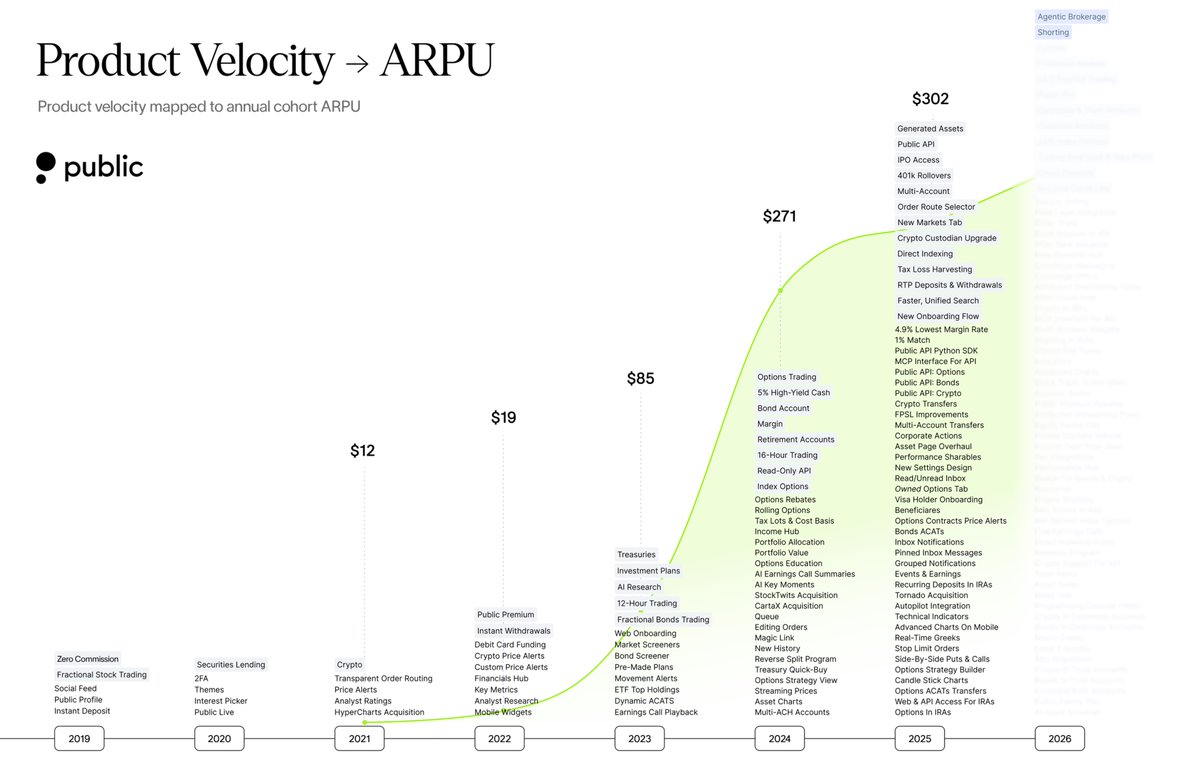
Product velocity is the #1 leading indicator for growth. In 2025 @public shipped one major product or feature every week. With the same number of engineers as last year. Excited to roll out Agentic Brokerage, Shorting and so much more in 2026.
Jannick Malling tweet media
English
3
7
27
4K
🌐 CBM 🌐 retweetledi
The Daily Show
The Daily Show@TheDailyShow·
Turning Point USA is serving up an alternative halftime show for people who love ICE and hate music
English
154
755
5.5K
323.1K
🌐 CBM 🌐
🌐 CBM 🌐@cbmrey·
The immigration lines at @AirportLisbon are OUT OF CONTROL always… and they’ve had the machines to make them more efficient just sitting there for 1 year plus now 💩
English
0
0
2
495
🌐 CBM 🌐 retweetledi
Heath Mayo
Heath Mayo@HeathMayo·
This dude is a patriot. My goodness.
English
587
6.3K
21.3K
1.4M
🌐 CBM 🌐 retweetledi
Moms Demand Action
Moms Demand Action@MomsDemand·
.@Tim_Walz and @KamalaHarris know we can respect the Second Amendment AND enact measures that prevent gun violence. We have two weeks to make sure they’re elected. Text PLAN to 644-33 to make a plan to vote.
English
12
74
184
13.4K
🌐 CBM 🌐
🌐 CBM 🌐@cbmrey·
Also my 2.5 year old daughter’s name is Romy so it felt particularly poignant! @FoodieScience 🩷
English
0
0
0
58
🌐 CBM 🌐
🌐 CBM 🌐@cbmrey·
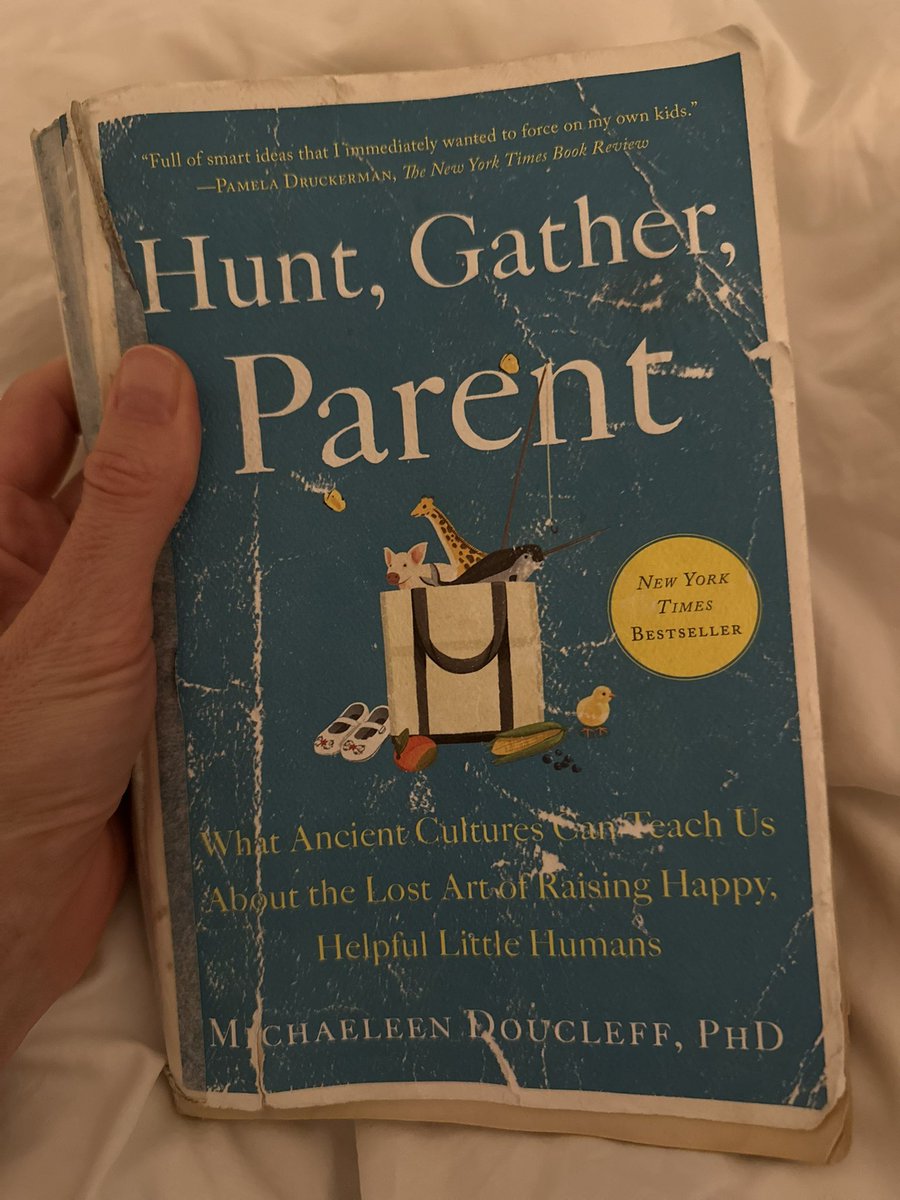
Thank you for writing the most empowering and inspiring parenting book @FoodieScience 👏📚 As you can tell, it was very loved! 🥰 Congrats.
🌐 CBM 🌐 tweet media
English
1
0
0
128
🌐 CBM 🌐
🌐 CBM 🌐@cbmrey·
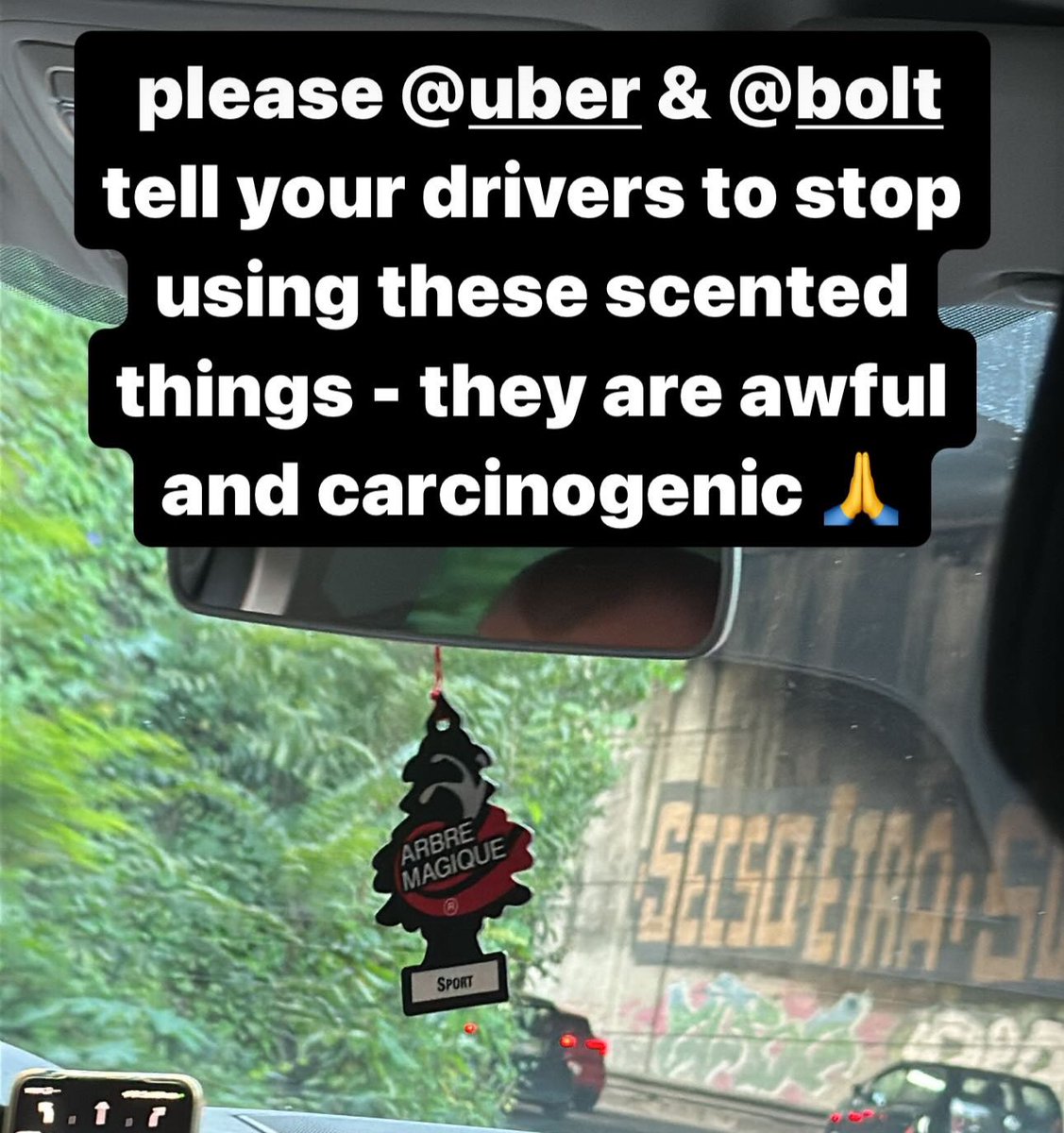
Dear @Uber & @boltapp - PLZ 4 the LUV of all that is right in this world tell your drivers to STOP using these scented products that give us headaches, make us want to puke, & cause cancer. And make me want to buy a car so I never have to smell these again!
🌐 CBM 🌐 tweet media
English
0
0
0
165
🌐 CBM 🌐 retweetledi
Moms Demand Action
Moms Demand Action@MomsDemand·
We need a president who leads with compassion for survivors of gun violence, not one who pivots to gun industry talking points when pressed on this critical issue. Make a plan to vote for @KamalaHarris, @Tim_Walz, and other Gun Sense Candidates up and down the ballot. Text PLAN to 644-33.
Moms Demand Action tweet media
English
3
8
26
3.5K
🌐 CBM 🌐 retweetledi
Unfiltered☢Boss
Unfiltered☢Boss@Unfilteredboss1·
In what is the craziest thing that I've ever seen in politics, Donald Trump spent the last 38 minutes of his Pennsylvania townhall just listening to music and dancing on stage, alone. 8 different songs played in that time. This is more embarrassing than Biden's debate. Sad!
English
252
173
899
180.2K
🌐 CBM 🌐 retweetledi
Andrew Wilkinson
Andrew Wilkinson@awilkinson·
“Can you believe Jeff Bezos just dropped $165 million on what, his tenth house?” he said. “Unreal! He’s just so fucking rich!” “Wait, aren’t you worth billions of dollars?” I replied, genuinely confused. “What can Bezos buy that you can’t?” The billionaire thought for a moment, then his eyes went glassy. “I have nice yacht money. Bezos has superyacht money.” I couldn’t believe what I was hearing. This man had more wealth than the GDP of entire nations, but his demeanour was that of someone who believed he was falling short. Chris and I sat by the pool of our host's palatial mansion, exchanging silent glances, both struggling to hide our disbelief. It was the summer of 2021, and we were in the middle of one of the most exciting periods of our lives. We were on the verge of taking our company, Tiny, public, having spent months in late-night strategy meetings and intense negotiations. The highlight of it all? We had struck a deal with none other than Charlie Munger. We met Charlie through my friend Andrew Marks, who had introduced us when Charlie needed help with a software company he owned. What started as a casual connection evolved into a once-in-a-lifetime opportunity: Charlie suggested we merge our companies, making Tiny a publicly traded entity in the process. It was exhilarating, a dream deal with our investing hero. But little did we know, this very trip would cause us to reconsider everything. Since we were newbies to the world of high finance and public markets, we spent weeks meeting with some of the most successful financiers and business leaders in our network. We wanted their valuable advice and guidance to help us on our journey. As we looked through the names of people we were going to talk to, we realized that there had been a strange, almost comical, fluke in the scheduling: each meeting had been set up with someone who was progressively richer than the person from the prior meeting. The first investment banker we met with, a guy who was worth around $50 million, immediately greeted us in his beautiful waterfront home by referring to it as his “shack.” We didn’t know if he was kidding or what, but it turned out that his home, which was easily a $10 million property, was sandwiched between two other homes that were each worth around $25 million—and this bothered him, immensely. We chatted over coffee about his career and potential investment opportunities. While he was pleasant and cordial, he kept mentioning his “shack.” Like his home was embarrassing. His mood turned downright sad when he asked who else we were meeting with. It was clear he knew all of the people on our list and that they were all wealthier than him. “If I’d invested in Airbnb when I had the opportunity, I’d be worth double what I am now,” he quipped sadly. “I’d be the guy in the house next door.” Chris and I both noted the banker’s melancholic tone. But he wasn’t alone. When we made it to Woodside in San Francisco, where the homes were even more expensive, we heard a similar sentiment. “My neighbor won’t let me tear down those trees over there,” a startup founder who was worth over $250 million lamented to us, while standing in the foyer of his $25 million second home. “I just need to buy the adjacent property and do it myself.” Another investor in Silicon Valley walked us through his mega mansion and said, unironically, “You know, I could’ve gone for a bigger house. I just opted for something more modest.” Not everyone we met on our trip was ostentatious with their wealth, and most were actually very nice people. But each had their own uniquely surprising behavior and lamentations. We had breakfast with one investor who was worth well over a billion dollars, but who lived in the same suburban home he had been in with his family since before he had made his fortune. As we sat in his kitchen eating bagels, which he made clear he had personally picked up at the nearby bagel store, like he was just a regular Joe, he leaned in and whispered about his net worth to us, even though we were in his house, for fear that someone would hear him say it aloud. He wanted people to think he was poor because he didn’t want to deal with the slew of problems that came with the wealth. From people he had just met asking him to invest in some far-flung idea, or a distant family member needing help with some debt, or people simply treating him differently because they knew how wealthy he was. To him, being rich seemed like the world’s worst burden, and the weight of it was clearly all he could think about. And yet, he was obsessed with making more when he had many lifetimes’ worth. Continuing to invest and buy businesses, obsessively counting his winnings. Having learned something of this burden earlier that year, I nodded in sympathy. We weren’t getting advice from these people. We were hearing the envy they had of other people’s lives, completely blind to what was exceptional about their own. When we made it to Bel Air, where the homes are the same size as the hotels, the irony was truly astounding. The investors and CEOs we met there, many of whom were vacationing in their second, third, or even fourth or fifth homes, complained about the idiocy of the super-super-super rich, who lived nearby. An investor who had made a billion dollars investing in tech startups gave us a tour of his nine-bedroom, sixteen-bathroom home—yes, sixteen bathrooms, for what reason I don’t know—complete with a movie theater and indoor swimming pool, but spent the entire time complaining that a neighbor had a home with three swimming pools (yes, three). “Who needs three swimming pools?” he asked, then, without the slightest bit of irony, changed the topic to one even more garish, asking, “What kind of plane did you guys fly down here on?” We told him we had chartered a Challenger, a plane twenty years older than his $44 million Gulfstream G650. “Oh... nice,” he replied as he fiddled with his phone. We’d lost his interest. All of them seemed to be caught up in a game of Who Has What, and yet they had everything. Even those who lived in normal-sized homes by most standards still managed to “leak” (a term Chris and I had come up with to describe when someone told us something they pretended they didn’t want us to know) the amount of money they had spent by making their yacht less grandiose. “I kept telling the builder to make it 30 percent smaller,” one billionaire told us, while showing off photos of the custom superyacht he was building. “Sherry and I don’t need all this stuff; we don’t need twenty staterooms and a helicopter.” Ignoring the fact that he was still spending many tens of millions of dollars on a yacht he’d likely use a few weeks a year. (Chris had started referring to this kind of “leaking” as “grandiose humility.”) By the time we got to our last meeting with the richest of them all, a CEO worth several billion dollars, we were in shock at the amount of wealth we had been around in the past couple of days, and we both felt inadequate and gross all at the same time. The last house we pulled up to told us this person was different. I’ve stayed in smaller hotels. It was filled with glass and marble and massive, strange sculptures. His home felt more like a sprawling office complex than a family home. This CEO had a quality to him that I can only describe as being tiger-like, an apex predator incredible at what it did, charming, fleet-footed and regal, but still, four hundred pounds of brawn with adamantine teeth and claws as sharp as Ginsu knives. You can’t get close, you can’t pet it, you certainly don’t want to step in the cage with it, because that tiger simply can’t help himself: he’s going to rip your fucking throat out. He had a cabal of servants who waited on our every whim as he talked about his latest acquisitions and how he’d taken down this competitor or that one. He also had a way of telling us how much everything cost without seemingly realizing how crass he sounded. “Eighty-two Lafite Rothschild,” he said, motioning to the wine a servant was pouring me. “Four-and-a-half-grand a bottle.” “Wow, it’s... really something,” I said, unsure what else to say about the wine, which tasted like... wine. Later, as I looked over at a huge painting that was just a solid flat color, he interrupted my gaze to let me know that it was an “original Newman,” and boasted that “we paid two for it. Two, can you believe it? It’s worth about twenty now.” (Chris and I looked at each other, unsure if he paid two thousand or two million.) It wasn’t until after dinner that he showed us his most recent purchase. We walked through the house, and he opened a door to reveal a vast garage filled with all kinds of vehicles that he had probably only driven once or twice. He walked us past a Bentley and a custom, completely blacked-out Tesla Model X until we came upon a Porsche 911 that was unlike anything I’d ever seen before. “What is this?” I asked, mesmerized. “A Singer,” the tiger said, as he opened the door and invited me to sit in the driver’s seat. Nothing he had shown me had tweaked my desire, but this, this was different. It was a custom, mid-’90s Porsche that had been restored with meticulous detail and glistened like a piece of automotive jewelry. As we were told, it was as bespoke as a tailor-made suit with a molded carbon fiber body, hand-stitched leather, and a hand-crafted exposed manual shifter that looked like it might have been made from a rare, polished metal. I had purchased a Porsche 911 Turbo a few years earlier, but I had never felt the need to upgrade it. That was, until now. “This only cost me $600,000,” the CEO said. “It’s gorgeous,” I said. “Yeah,” Chris echoed. “Never seen anything like it.” “Maybe,” I thought to myself, “I’ll buy myself one as a present once the Munger deal closes.” Half a million—the cost of an entire home for most people. The CEO knew what I was thinking. “I’ll give you the guy’s number who makes them,” the CEO boasted. “There’s a five-year wait, but I’m sure we can get you moved up on the list.” The following day, Chris and I drove to the airport in silence and boarded our jet back to Victoria. We were both lost in thought about the trip. We had set out to glean some wisdom from these business titans, which we did. However, we came away feeling that they lived in a bottomless pit of envy. There was something that I couldn’t shake about these individuals: no matter what they owned, they were always comparing themselves to their increasingly wealthy peers—looking up, never down. They never took a moment to appreciate what they had, obsessively trying to add more zeros than the next billionaire. What could be more miserable than that? More disturbingly, I was starting to realize that I might be no different. I often criticized the garishness and waste of owning a yacht while traveling in private jets. Grandiose humility: “I’m not like those other rich people—that’s just silly.” If I liquidated all my assets, I’d be worth close to a billion dollars, and yet I still wanted to be worth more. I could already afford to fly on a bigger jet if I wanted, but for what? There were already ten empty seats on the one I was currently flying in. And ultimately, what about my kids? Would I, should I, give them my money? On this, I was torn. At fifteen, my parents had told me that if I wanted nice clothes or other non-critical items, I had to buy them myself. There would be no handouts: money was something that had to be earned. It built a work ethic, but you know how that turned out. The difference was that I knew my parents were broke—it’s not like they were withholding anything from me; they flat-out didn’t have the money. I’d recently bought my eldest son his first piggy bank and had started building little business lessons into our daily life. I explained that when we purchased things at a café, it came from my bank account, and that money came from working. I then shared all the different ways that I made money. He nodded along sagely. I had just helped him put his first lemonade stand together, and he’d made $45. Yes, I want my children to have a work ethic, to understand the value of money and the privileges it affords them. But was it not insane to make them go through the same, sometimes torturous path I had if we already had so much? One friend had posed an interesting question on this topic: “If you came from a long line of subsistence farmers who had been toiling in the fields for millennia just to survive, with a total inability to pursue their true intellectual passions and interests, but you, due to luck and timing, built an industrial farm and went from a subsistence farmer to a millionaire, would it be logical to teach your children how to toil the soil and grow root vegetables?” The answer seemed deafeningly obvious. And then there was the potential resentment. If you have a warehouse full of chocolate chip cookies and your child asks you for one, it feels a bit harsh, and maybe even borderline psychopathic, to tell them to bake their own. All this was bubbling in my head as our plane began its descent into Victoria. “Did we learn anything from this trip?” I asked Chris, who sat across from me in the same melancholic state. “How not to be a whacko?” he replied. ---------- This is an excerpt from my book, Never Enough. If you want to keep reading, you can buy it on Amazon or get the first chapter free at the website linked on my Twitter profile. Enjoy :-)
English
86
50
750
195.4K
🌐 CBM 🌐 retweetledi
Headquarters
Headquarters@HQNewsNow·
Vice President Harris: Why don't you tell the 800,000 Polish Americans right here in Pennsylvania how quickly you would give up for the sake of favor, and what you think is a friendship with a dictator who would eat you for lunch?
English
1.6K
9.6K
57.9K
11.4M
United Airlines
United Airlines@united·
The world's most advanced high-speed Wi-Fi is coming to United with @Starlink. For free. You’ll be able to stream, game, shop and more on seatback screens and personal devices simultaneously. Expect the same internet you get on the ground… at 35,000 feet. We expect to have Starlink on all 1,000+ United planes over the next several years. Learn more: uafly.co/3B3CDRv
English
1.3K
2.3K
18.6K
21.8M