Chris Powers

1.2K posts

Chris Powers banner
Chris Powers

Chris Powers

@ccpwrs

Building Public Goods at Reciprocity.

Katılım Kasım 2011
467 Takip Edilen104 Takipçiler
Sabitlenmiş Tweet
Chris Powers
Chris Powers@ccpwrs·
On March 14, 2020 we launched mycovidresponse.org in partnership with 120+ local orgs to get masks, food, and critical resources to those in need. Now we’re using the same playbook to help other service organizations to do the same. Visit reciprocityapps.org to collab.
English

0
0
2
0
Chris Powers
Chris Powers@ccpwrs·
@dhh I tried this a couple of times on my 2019 Razer laptop and some arcane memory management issue nuked the install. Following along did prompt me to convert from windows to linux on all my older PC's and I haven't looked back.
English
0
0
0
59
Chris Powers
Chris Powers@ccpwrs·
@jasonlk Wild to hear these expectations. I started my career in manufacturing sales, visiting customers WAS the job. After starting a SaaS company to help nonprofits with program management all of our best ideas have come from the field.
English
0
0
0
6
Jason ✨👾SaaStr.Ai✨ Lemkin
Most SaaS AE interviews today, they're still looking for: - $300k OTE - Work from home - No travel - 100% in-bound - Side hustles fine - Strong SE support on product - Sell their way - Limited need to learn AI for real - No prep required for interview or job The world has changed
English
29
4
166
39.8K
Chris Powers
Chris Powers@ccpwrs·
@bryan_johnson This is a great analogy. I think the local and global environmental harms that we're doing are under-appreciated. Is there a good place to send your organization ideas & data on environmental / toxicology research? Poisonous chemicals exist in the workplace + consumer products
English
0
0
0
16
Bryan Johnson
Bryan Johnson@bryan_johnson·
In The Lord of the Rings, during the final battles, the Free Peoples of Middle-earth (Elves, Dwarves, Men, and Hobbits) must set aside their differences and unite to confront Sauron and his armies. Without unity, Sauron's victory is inevitable. We are in a similar moment with a similar need for nations, religions, ethnicities, to unite to go to war with death (Sauron). This war is being fought on multiple fronts: 1. Can we give birth to Artificial Super Intelligence and survive? Continuing human existence. 2. Can we avoid annihilating each other. We have our fingers on the triggers. 3. Will we be able to handle the environmental change underway? A little tiny virus shut the world down. A common enemy in death could unite us. No matter your nationality, religion or ethnicity, none of us want to die. Even if you believe in an afterlife, no one wants to die right now. The will to live is the single thing that humanity can agree upon. The objective is not to fight over "how" to live, because that difference of opinion has perhaps lead to more murder than any other question. The objective is how do we not all die. Don't die individually. Don't kill each other. Don't destroy the planet. Align AI with don't die. This is the foundation for a new ideology to be birthed. A new way to structure economics, politics, culture and ethics. A new game to answer "what is the meaning of life." I've been rough draft mapping out a plan to personally petition the various groups of the world - just as they did in the Lord of the Rings - and asking the peoples of planet earth to join. What do you think?
English
127
40
703
116.8K
Chris Powers
Chris Powers@ccpwrs·
@jjacobs22 This is a great reminder. Admittedly something I've struggled with. There are levels of mastery to be found in teaching or sharing what we've learned, even if it doesn't always seem like the most exciting thing.
English
0
0
1
60
Jason Jacobs
Jason Jacobs@jjacobs22·
It's funny how you think you are a broken record on something and people are sick of hearing it, when most people still have no idea you even said it once. Sustained reinforcement of consistent messaging over long periods of time may be uncomfortable, but it is the only way.
English
1
0
9
614
Tim Ferriss
Tim Ferriss@tferriss·
I’m looking for a community platform for my new book experiment (tim.blog/thenobook). Which of these would you most recommend and why?
English
206
11
130
81.7K
Chris Powers
Chris Powers@ccpwrs·
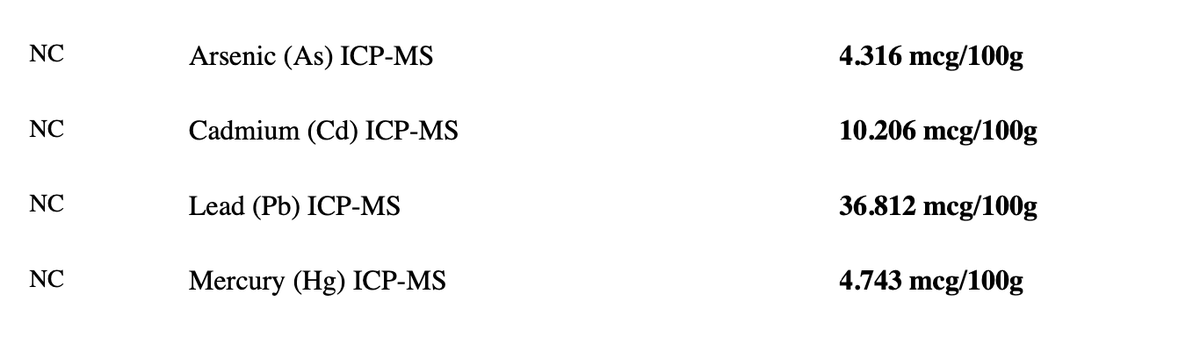
@bryan_johnson Is the rest of the data publicly available? Have you thought of starting a nonprofit or certification program for food labeling? I’m sure ongoing public QA is expensive, but it’d be nice to know the chemical composition of our food if possible…
English
0
0
0
238
Bryan Johnson
Bryan Johnson@bryan_johnson·
I mentioned caution is appropriate when consuming cinnamon as it can be very high in heavy metals. Here for example is a lab report for some cinnamon we sourced. It's not that cinnamon is bad, you just need to be mindful to know levels via a third party report and take it into consideration of your total daily heavy metal intake.
Bryan Johnson tweet media
English
49
27
545
98.6K
Chris Powers
Chris Powers@ccpwrs·
@AlmostMedia They were (on average) probably exposed to way fewer biologically accumulative ambient environmental toxicants than you or me, especially during key biological development milestones.
English
1
0
6
210
Julie Fredrickson
Julie Fredrickson@AlmostMedia·
Meanwhile my health is garbage despite investing a fortune in medical care, sleep hygiene, exercise, holistic woo woo, supplements, and nutrition? I’m eating seabass & greens using hyberbaric chambers & saunas & I’m a mess but ol seed oil Boomer Dad is fine?
English
17
0
45
2.5K
Julie Fredrickson
Julie Fredrickson@AlmostMedia·
Honest question for my elder middle/lower Boomers but how is it you have such decent health when you drink, smoke, did tons of youthful drugs and eat crap? My father has the worst lifestyle and is alive and kicking on margarine & Marie Calendars frozen food
English
83
3
156
25.3K
Chris Powers
Chris Powers@ccpwrs·
@chrisbrownridge @Replit I’ll give this a try. Do you have any suggestions for how to make the starting prompt & iterative process more straightforward? Especially when integrating into your own stack?
English
0
0
0
104
Chris Brownridge
Chris Brownridge@chrisbrownridge·
I just built a Typeform clone in 20 mins for $3.50 using @Replit's AI Agent. Flixr needed a new client onboarding experience. My initial thought was to build in Typeform, but then thought why not try Replit's agent to see if I could get it done faster. It would've probably taken me 30min to build the Typeform & connect the responses into Airtable (probably via Zapier). Typeform costs $29/mo on the lowest plan. I got it done in 20min and for $3.50. Today is the worst this is ever going to be and it's already really good.
English
11
4
81
23.5K
Chris Powers
Chris Powers@ccpwrs·
@bryan_johnson Minimizing the number of toxic chemicals in our homes, our bodies & our environment. The emission of environmental toxicants is accelerating exponentially, which will have a deleterious effect on health in the long run. The alternative is to make products that are non-harmful.
English
0
0
0
31
Bryan Johnson
Bryan Johnson@bryan_johnson·
Talent hits the target no one else can. Genius hits a target no one can see. In 2025, what is the genius target for us? We are the first generation who won't die.
English
131
36
1.1K
96.6K
Chris Powers
Chris Powers@ccpwrs·
@andrewmccalip And we should do so quickly while we have the people with the skills to build & run factories. So many knowledgeable, skilled workers are retiring faster than the replacement rate. I'd also add bringing an end to planned obsolesce. No reason appliances shouldn't last a lifetime.
English
0
0
0
24
Andrew McCalip
Andrew McCalip@andrewmccalip·
We have a existential manufacturing problem in America. Why aren't there Amazon/Tesla-scale gigafactory warehouses filled with CNC machines? Will we ever be able to make our own products again? How do we accelerate the turnaround of American manufacturing? I asked this question a few months ago, and it's more relevant than ever. I firmly believe it's unacceptable to be a country that, ultimately, isn't able to make its own stuff. This isn’t just about economics—it’s about national resilience. It’s about the stability, defense, and sovereignty of the United States. A country that cannot produce its own goods is inherently fragile. Maybe this is irrational patriotism or stubbornness. Defense considerations aside, we must strive for price parity with our neighbors—subsidies can provide a short-term boost, but they are not a sustainable foundation for a competitive manufacturing economy. Future growth will require a return to cash-flowing, material-output businesses depending heavily on manufactured goods. Controlling our own destiny is a good thing. I’d like to kickstart a series of essays in coordination with @newindustrials, Blueprints for Reindustrialization, by contributing the first piece and setting the tone for what I hope will be a lively conversation from boots-on-the-ground operators. A few spicy takes up front. We’re not in first place. We killed the golden goose to increase quarterly profits. We lack both the capacity and the skills. We ought to create more high-paying manufacturing jobs, not low-paying manufacturing jobs. The most fundamental thing we need to do is increase efficiency. Manufacturing costs are inherently higher in the United States, period. After adjusting for the cost of living an average salary in Shenzhen is approximately $2,730, while in Houston, it's about $4,414. We’re 61% more expensive right off the bat. In addition to labor differences, other nations actively subsidize their raw material inputs. It’s tough to make the economics work when you’re so far behind. I’ve been on the front lines of making complicated stuff quickly for most of my life. The last four years of operating in defense-critical applications have been eye-opening. Whereas previously I could reach out to international partners for work, now I have to comply with U.S. rules for sensitive technologies. The contrast in capabilities and skill sets between the two locations is incredible. It feels like a barren wasteland of talent, with a huge vacuum left by the retiring skilled tradesmen. In addition to a population crisis, we are certainly facing a hardware-skilled labor crisis. Nearly every week, I’m desperately begging vendors to take our money. It's quite literally like the Futurama Fry meme—money in hand, begging someone to take it. More often than not, the answer is “we don’t have the capacity.” I’m a tiny customer, and we have no macro-scale event currently happening. This is not what national resilience looks like. Here’s an uncomfortable truth we need to say out loud: China has its shit together in a way difficult for us to replicate, in regard to manufacturing. They've made it a top-level priority to be the world's destination for manufactured goods. Moreover, did we think they would stop at dollar-store trinkets? Foolish. Every dollar of revenue in China is compounded into creating their huge critical mass of machines, infrastructure, and expertise. The plan has been running for decades now. They're climbing the ladder of technology as we paid them to do it. We could do the same. We could simply decide that it matters to make stuff here. It seems like we have a few knobs we can turn: • External taxes (import tariffs) • Internal tax breaks (low-cost/risk loans) • Technological breakthroughs (automation) • Operational excellence (scale) • Irrational actor patriotism Now, let's be realistic here. No amount of impassioned chanting of dynamism is going to shift the tides, though the X (formerly Twitter) grassroots discussion will kickstart the conversation. We're dealing with a scale truly hard to appreciate. We’re at least a trillion dollars behind. Policies to nudge this in the right direction are a bit over my head; I’m just an engineer with some ideas. I am, however, quite curious to sit down and understand what D.C. thinks about this. How do we foster growth and make domestic manufacturing powerhouses, akin to Foxconn and Pegatron? How do we pick winners and put the pedal to the floor? Before diving into specific scale considerations, let's address the macro issues. We need a set of policies that can accomplish several objectives simultaneously: • Capital equipment incentives: implement dollar-match assistance to incentivize companies to invest in capital equipment now, jump-starting the manufacturing sector this fiscal year • Long-term corporate tax breaks: provide tax incentives to corporations that successfully and measurably return their supply chain domestically • Future import tariffs: this is the “buy equipment now, China pays later” approach. Announce import tariffs 1-2 years in advance and use the proceeds specifically to defray the costs of upfront incentives. This gives domestic industries time to prepare and enhances competitiveness when the tariffs take effect. • Worker payroll credit: offer tax reductions to employees in specific manufacturing jobs (identified by NAICS codes), which appear directly on their paychecks. This boosts enthusiasm for the field and makes manufacturing careers more attractive. Capital Equipment Incentive. We should consider implementing a CHIPS Act equivalent for broader manufacturing—offering targeted, low-interest loans and dollar-matching on new capital expenditures. Imagine gov-backed loans at the Fed rate, paired with a dollar-for-dollar match on new machinery and automation purchases. This approach must be carefully executed to avoid turning into a grift-a-thon. The goal is to provide the activation energy for private industry to shift toward domestic manufacturing, not to heavily manipulate the economy or dictate specific actions. We should apply a light touch—enough incentives to motivate small businesses to expand in a healthy manner without distorting the market. If anyone on Capitol Hill is looking for bill names: • MARS (Manufacturing and Reshoring Strategy) • FORGE (Fostering Onshore Resilient Growth & Employment) • PRIME (Promoting Resilient Industrial Manufacturing Economy) Future Import Tariffs. The primary purpose of tariffs is to make domestic manufacturing more attractive by creating price parity between imported and locally-produced goods. If imports and domestic products cost the same, there's a compelling reason to choose domestic suppliers. Unfortunately, this approach often leads to higher prices overall. Announcing import tariffs two years in advance—a "buy equipment now, China pays later" strategy—can encourage immediate investment in domestic manufacturing. This gives domestic industries time to prepare, invest in capital equipment, and enhance competitiveness before the tariffs take effect. Importantly, the revenue generated from these tariffs could be used to fund the proposed capital expenditure (capex) incentive purchasing program. By directing tariff proceeds toward dollar-match assistance and tax incentives for domestic manufacturers, the tariffs not only level the playing field but also provide the financial means to strengthen the domestic supply chain. This ensures that the funding ends up in the right bucket, enhancing the effectiveness of the incentives and making domestic manufacturing a more viable alternative. It's crucial to remember that tariffs are only a tool—a means to an end, not a permanent solution. They should be used cautiously, much like steroids for domestic industries. In the long run, there are only two sustainable, tariff-free paths to achieving global competitiveness in American manufacturing: • Specialization: becoming the best in a specific sector through deliberate investment in capital equipment and the development of a highly-skilled technical workforce •Technology-driven productivity gains: achieving productivity improvements that offset our comparative labor and raw material cost disadvantages Achieving specialization requires conscious decisions and priorities. For instance, Japan's metrology industry exemplifies how a nation can become a leader in a specific field. Mitutoyo precision measurement tools are cherished by machinists worldwide, reflecting Japan's cultural emphasis on making tools as excellent as possible rather than merely adequate. While technology is often touted as the silver bullet, it's challenging to implement and defend over the long term at a national scale. Limitations like material science dictate the performance of tools—for example, constraints are more about the maximum surface feet per minute achievable by tungsten carbide than machine rapid speeds. Automation, although promising, has so far failed to deliver transformative gains. It often shifts costs rather than reduces them, moving expenses from production workers to capital expenditures and software development. Efficiency gains rarely outweigh these increased system costs. Numerous projects have attempted to replace a $15/hour worker with a robot arm, only to fail spectacularly. It’s a bit of a blanket statement, I admit, but is directionally correct based on my boots-on-the-ground experience and conversations. Moreover, technological advantages have a shelf life; they diffuse into the global market over time. A breakthrough might buy a decade or two of increased productivity, but resting too long on these gains risks falling behind. Unlike semiconductors, where Moore’s Law drives rapid advancement, manufacturing technology evolves more slowly, with hardware typically remaining viable for 10–20 years before becoming unprofitable. The reality is that deploying technology in this industry is difficult. While many small improvements are available, few shops have the resources to integrate these disparate pieces effectively. It's unrealistic to expect a typical machine shop to have dedicated software engineers to troubleshoot low-level FANUC communication issues with robot handlers or set up complex databases to coordinate RFID toolholder tags. One CNC shop owner shared a stark perspective: he believed there wasn't a single truly profitable shop in the U.S.—most were simply coasting on fully depreciated machines. While this view is extreme, it underscores the challenges and sentiments within the industry. Worker Payroll Credit. To attract talent and rejuvenate interest in manufacturing, I propose a worker payroll credit that offers immediate tax reductions to employees in specific manufacturing jobs identified by NAICS codes. This policy would directly increase take-home pay, making manufacturing careers more financially attractive. By targeting these critical sectors, the benefits reach those essential to rebuilding our industrial base. This approach rewards current workers and incentivizes new entrants, helping to restore the middle-class American dream associated with manufacturing jobs. Immediate benefits include: •Attracting new talent: higher net pay makes manufacturing competitive with other industries •Retaining skilled workers: financial incentives boost job satisfaction and reduce turnover •Stimulating economic growth: extra income leads to increased local spending and job creation •Enhancing respectability: recognizing and rewarding workers elevates the profession's status Administered through the existing payroll tax system, employers could adjust withholding based on the employee's NAICS code, increasing net pay without additional administrative burden. By providing immediate financial benefits, this policy affirms that manufacturing is essential to the nation's economic health and makes it a more attractive career choice. These policy measures lay the groundwork for revitalizing domestic manufacturing, but they are just one piece of the puzzle. To truly accelerate reindustrialization, the active participation of large corporations is essential. This brings me to the critical role of cost of capital and how leveraging the resources of cash-rich mega-corporations could be the game-changer we need. Cost of capital is everything. I still think one of the highest-leverage moves is encouraging the cash-flowing mega corporations in the U.S. to consider investing in domestic manufacturing capabilities. The ideas below are tailored for Amazon (@jeffbezos) but could be implemented by a handful of companies. We've also seen how one incredibly stubborn guy could stand up world-class manufacturing in the U.S. and turn a profit (@elonmusk). Like them or hate them, the billionaires serve an incredibly useful market function. You've got to realize that the activation energy to push this type of idea often doesn't come from a quarterly profit-driven market. Aggressive offshoring got us here in the first place. It takes a slightly irrational actor with a LOT of resources and a HUGE amount of conviction to make a move that pays off in ten years vs. the next quarter. I believe that measurable change is more likely to be affected by these entities than a group from YC. Sorry boys, but it’s a billions, not millions type of problem. Why am I specifically mentioning cash-flowing large corporations? Shouldn't I be advocating for the VC approach? No, in most cases. This is something I feel very strongly about. There are certain buckets of money for each type of problem. It’s important to know where it's appropriate to use high-risk capital (VC), profit-optimizing capital (PE), free cash flow, or government capital. I think that, net-net, VC money is not well-suited for the commodity manufacturing space. It comes at an extremely high cost and contorts business models into places where they won't operate sustainably. Risk capital belongs in areas going from 0-1 where there can be 100x–1000x improvements (someone should go fund a startup to develop next-generation tungsten carbide or single-crystal cutters). We’re talking macro level, and we need low cost of capital (Fed rate plus a percent) on the order of tens of billions. Okay, end of the Econ 101 section. I want to focus on actionable things that are more scale and operations focused. These can be realized with minimal (zero) breakthroughs. If it works, it would only be rendered more competitive and effective by other upstream policies. Efficiency is the silver bullet that makes everything downstream just work better. So let’s talk specifics. Let’s exhibit bias for action. What's actionable today? How can "unfair" advantages be leveraged today to save 3–5% in a bunch of small areas? Remember that I’m tailoring this to an Amazon-like entity; this isn’t for a 50-person shop. • Gigascale (>10,000 deployed machines) • Focus on operational excellence first, not technology • Don't invent anything new • Don't over-automate • Don't target high gross margin parts. Go med/low. • Utilization of equipment. Most shops are running 10–12 hours a day at best. Run 24 hours a day. • Own your freight network. The cost of moving material around is a significant percentage of your profit. Consider that most 3-axis CNC work comes in at 7x–10x the material cost, and materials average $4–$6/lb for nonferrous. • Access to cheap capital. Leverage your massive free cash flow to block-buy production from top machine manufacturers in exchange for large discounts. This is one of the biggest knobs, in my opinion. I know DMG will knock off 40% for a big enough order of machines. Many small shops are operating on machinery loans of prime plus 3–5% at MSRP. • Administrative support. Take advantage of your huge existing and battle-hardened accounting infrastructure. It's going to crush the one-person accounting department operating with QuickBooks. • Bootstrap on your own products. There are hundreds of millions of units of Amazon-brand consumer electronics already being sold. Every one represents a bill of material with at least a few parts well-suited for in-house manufacture: injection-molded cases for Kindles, microwave oven sheet metal frames, etc. • Massive deal flow. Offer deterministic pricing/lead times in exchange for being the default go-to vendor. You can operate break-even for the first few years to capture market share. At the end of the day, the engineers crave predictability and reliability. We're addicted to Prime 2-day in our personal lives—just imagine having 4-day turn times filled by your shop with 99% reliability. • Remote programming. Ironically, the most skilled portion of this job (the CAM tool paths) is the easiest thing to make physically distant. I'm typically a fan of being under the roof, but in this particular case, I recognize the difficulty of moving thousands of skilled workers to a few centralized hubs. With standardized cells/tools/workholding, it gets quite a bit easier for remote programmers to be effective. For quantity 1 parts, 80% is programming and maybe 20% is spindle time. Amazon already does Mechanical Turk. This is the skilled $100k+ version of that. I do this every day at my office; it's 100% possible. • Building space. Amazon's operational efficiency in deploying square footage is crazy. They've hyper-optimized the soup-to-nuts process of going from a plot of land to a finished and productive tilt-wall single-story warehouse. They already have a presence in every major city. •Software integration. Most shops lag far behind in software, relying on clunky, manual systems that can’t scale. Amazon’s expertise in inventory, tracking, and order management is a killer advantage. Streamline everything—raw material orders, production scheduling, and shipping. I was first applying these ideas to subtractive machining, but injection molding and sheet metal scale even better. They’re more deterministic, with simpler geometries and higher quantities. LEGO's Billund injection molding facility is a prime example of what’s achievable: over 1,000 machines running nearly lights-out. Apple is another excellent example, with the legendary football fields of Fanuc Robodrills and Brother Speedios knocking out watch frames by the millions. Yet, our current market setup is fragmented—96% of our manufacturing workforce is in small shops under 50 people. This decentralized model isn’t cutting it. When people say, "it’s too expensive to make parts here," what they really mean is that our output per employee is lagging. Let's review some estimates of the deployed machinery around the world to understand the league we're playing in. Even if we wanted to, we couldn't flip all of Apple's production to the USA—we simply lack the capacity. Subtractive (mills/lathes) •2,000,000 (Global) •300,000 (USA) Injection molding 1,600,000 (Global) ••145,000 (USA) Sheet metal •2,400,000 (Global) •365,000 (USA) The numbers are rough and pieced together, but directionally correct. The gap is staggering, and it's going to take years to catch up. As people have pointed out, there would be a huge problem of availability of the machine tools. Even Haas only produces ~2,000 machines per month. My friends in the industry are skeptical that such a thing could even be put together in a reasonable time frame. My experience has been 50-week lead times on transformers, 30 weeks to get high-pile racks permitted. While it seems physically impossible that @Tesla could build a gigafactory in two years, they accomplished exactly that. How do we remove some of the bureaucracy and roadblocks to infrastructure? Manufacturing is not glamorous, has never been known as such, and perhaps shouldn't be. But at least we could glorify it as a respectable and fulfilling profession. It’s dirty, hard work, and takes considerable amounts of effort to make significant improvement. For decades, software has been the title that works on complex and intellectual problems. Not only do we need to develop necessary skills and produce enough output for high-paying roles, it is essential that manufacturing regain its ability to provide a middle-class living. The gig economy is an embarrassment to our nation. I think we're in dire need of a skilled trade resurgence. The grand experiment of sending the entire population through college, only to exit with marginal real-world skills, has run its course. We need a pipeline of work that one can enter at an earlier age, gradually learn skills, and climb the ladder of the craft. It should take longer than a 4-week coding bootcamp to start a career. The post-war industrial revolution helped destroy the classic journeyman program in the United States. Other countries maintain working versions. Check out Germany's apprenticeship program (Ausbildung): • It typically lasts 2–3.5 years, depending on the profession • Apprentices split their time between vocational schools and practical training at companies • They can choose from 342 recognized trades • They receive a monthly salary and don't pay tuition fees • The curriculum is strictly regulated, ensuring consistent skill development across the country • Apprenticeships are governed by legal contracts between companies and apprentices. • After completing an apprenticeship, individuals can pursue further qualifications, such as becoming a master craftsman State of the market. Yes, I'm aware that Hadrian, Xometry, Protolabs, SendCutSend, and a dozen other smaller services exist. No need to blow up their Twitter handles; we all know each other. I have great respect for each of these companies. They each have their own particular niche they serve very well. • Hadrian has the biggest head start on the embodiment of a modern high-tech manufacturing process, attempting the monumental feat of end-to-end software controlled manufacturing. It’s the biggest swing by far, but will take an enormous amount of capital to scale to Foxconn levels. •Protolabs is the king of speed as an automated 72-hour turnaround time shop. • Xometry has instant pricing and a great marketplace for frictionless orders from real middle-America shops. •SendCutSend is a beloved institution for all things flat and bent, pulling off organic scaling with the lowest prices around. Each is a noble effort in trying to make us competitive, though I fear without government assistance in some form, these efforts are a drop in the bucket. The market has evolved into three or four distinct buckets of work. It all comes back to good, fast, and cheap. It's almost, by definition of the free market, impossible to do all three. If I were advising Jeff Bezos, I might suggest rolling up a few of the best players, but only the ones well-suited to be 50x in size. Honestly, the revenue ratios are just so low compared to any software M&A, everything in manufacturing looks like a bargain. Everyone is concerned with monopolies and antitrust in software; meanwhile, no one is looking at hardware. I don't think that a PE roll-up of existing small mom-and-pop shops would yield much, if any, improvement. Decentralized and diverse is the opposite of what I'm proposing. It's not a fully formed thought, but one I felt compelled to write down in between actually making parts. For the last two decades, I've been a consumer of manufacturing services, and an occasional manufacturer myself. I don’t have a book to shill, I just happen to have one foot in tech and one foot in blue collar. I started in a machine shop when I was 14, entering my mechanical engineering career with nearly a full apprenticeship under my belt. I started a hardware company in my 20s. Now I'm in my 30s, building hypersonic vehicles and working with America's greatest institutions. After thousands of parts both designed and made, I've had the chance to look around and consider the change I want to see in the world. • I want the U.S. to control its own destiny • I want skilled trades to flourish again • I want to see on-shoring/reindustrialization • I want McMaster/Amazon levels of speed and excellence applied to my custom manufactured goods • I want instant pricing and deterministic lead times • I want consistent quality. Doesn't have to be the best, just predictable • I want lifelong, well-paying careers for my younger brothers It seems like a fundamental shift occurred this month. How do we now translate that excitement into a plan? Rebuilding our industrial base is not just an economic necessity—it's a pivotal step toward securing our nation's future. The path forward doesn't require us to reinvent manufacturing, but rather rethink and optimize how we utilize our existing resources. By focusing on operational excellence, scale, and strategic investment, we can start down the long road of restoring America's position as a global manufacturing leader.
English
221
287
2.1K
489.1K
Tommy Leep
Tommy Leep@leepnet·
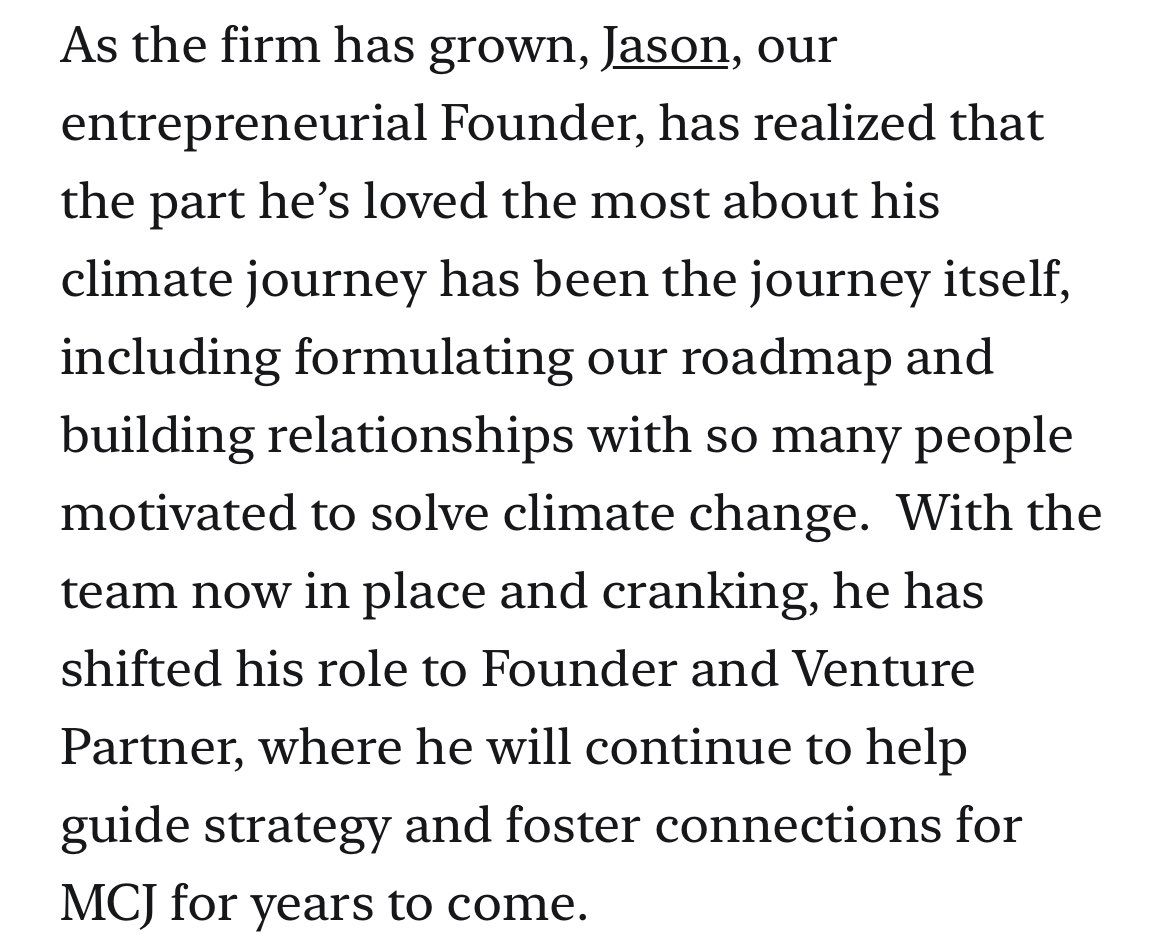
Hitting me how @jjacobs22 leaving @mcjcollective marks the end of an era. Jason introduced so many people to climate tech and pushed the movement forward more than even he probably knows.
English
4
1
26
1.7K
Chris Powers
Chris Powers@ccpwrs·
@garrytan Absolutely! A person's economic mobility is proportional to the strength & number of connections they have with people at different points across the economic spectrum. We're building Reciprocity to create better access to community resources for people in need.
English
0
0
0
44
Garry Tan
Garry Tan@garrytan·
I think about this all the time And how it can take the right community to try to lift you up into the top 10% of the possible life paths from where you are now 10,000 conversations with a 100 people could eliminate most of the bad paths and lead you towards the good ones
Garry Tan tweet media
English
96
340
3.4K
301K
Chris Powers
Chris Powers@ccpwrs·
@LeonSimons8 COP has been a corporate retreat for years now. It hasn't been about limiting global warming in a practical sense for some time. If they are the ostensible leaders of the climate movement, we're in trouble...
English
0
0
0
56
Leon Simons 🌍
Leon Simons 🌍@LeonSimons8·
🌍🌡📈 Paris was doomed to fail. 1.5 is dead as a doornail. It's official, 12 months in a row at +1.5°C or higher!:
Leon Simons 🌍 tweet media
Copernicus ECMWF@CopernicusECMWF

June #Temperature highlights from #C3S. Last month was: 🌡 globally warmer than any previous June on record, at 0.67°C above the 1991-2020 average; 🌡 the 13th month in a row that is the warmest on record for the respective month of the year. For more 👉climate.copernicus.eu/surface-air-te…

English
28
309
768
76.2K
Chris Powers
Chris Powers@ccpwrs·
@eladgil Legitimately curious - how does technological & economic expansion ever decelerate climate change, forever chemical pollution & biodiversity loss? I've yet to see a technologist propose a pro-growth pathway that has the possibility to reverse the ecological damage done.
English
0
0
0
85
Brian Kibler
Brian Kibler@bmkibler·
Brainstorming new decks for @commanderathome while I'm at CommandFest Tacoma. Is there anything you've really been wanting to see me play? Bonus points for monocolor suggestions :p
English
282
3
403
111.4K
Chris Powers
Chris Powers@ccpwrs·
@patrickc Thanks for sharing! I learned about this in the context of delivering a public speech and it helped a lot with my nerves before getting in front of a large audience.
English
1
0
0
82
Patrick Collison
Patrick Collison@patrickc·
Random PSA: box breathing has been exceptionally effective for me -- I wish I'd discovered it sooner. After around a minute of it, I reliably can start sleeping wherever I am. Useful with jet lag adjustment, random naps in the back of a car, etc. (Box breathing: inhale, hold, exhale, hold, with each step lasting five seconds.)
English
62
78
2.2K
419.6K
Chris Powers
Chris Powers@ccpwrs·
@kylascan I bet you could make a few updates and publish that somewhere! I'd read it.
English
0
0
0
25
Kyla Scanlon
Kyla Scanlon@kylascan·
When I was 8, I wrote a book called The Little Penguin (a gripping illustrated tale of a sea war). I was extremely shy, but I decided to read it aloud to my third grade class. So one day I did. 30 pairs of eyes!! It completely shifted my belief in myself.
ethan !!!@slimeguyethan

share a piece of lore about yourself

English
20
2
505
62.5K
Chris Powers
Chris Powers@ccpwrs·
@jjacobs22 Climate change will soon demand that we re-think ethics & civilization. I haven't seen any thermodynamically feasible models that imply 'energy abundance' and a livable future world at t = 100+ years are compatible. I'd love to see evidence of a viable pathway.
English
0
0
0
77
Jason Jacobs
Jason Jacobs@jjacobs22·
Climate change is an existential threat, for sure. And I get why people beat the drum so loudly about how f*cked we are and how we need to move a lot more quickly than we’ve been moving. Both are true! But so much of climate communications focuses on the downside: sea level rise, wildfires, famine, forced migration, flooding, disease, etc. There are certainly some people for which this messaging will resonate. After all, I came into working in climate from a place of fear 5.5 years ago. But largely, the the feelings that this messaging conjurs are either apathy (i.e. its too late, so why bother trying) or panic (i.e. we need to lay in front of rush hour traffic and sabotage existing pipelines). I would argue that the feelings we should be cultivating are those of stoic determination. And that the best way to foster those isn’t by scaring or guilting people, but by painting a vision of the future that is worth working towards together. Urgency, yes. But urgency via optimism vs urgency via panic. To me, working towards a world of energy abundance is the only answer. A world with less hunger. A world with more housing. A world with less sickness. A world with more jobs and upward mobility. If you want someone to reach the summit of a mountain, don’t spend the whole time they are climbing reminding them of how far they are from the ground and how high the stakes are if they don’t make it to the top. Talk to them about how amazing it is at the summit and how worthwhile a pursuit it is to try to get there. This is not only the best way to get a true global movement assembled, it’s also the best way to try to avoid all of those dire consequences we’ve been constantly reminding people about.
English
10
10
72
7.6K