
Jackie
7.6K posts

@chanman2087 You might be stuck with me for a while.
English
This quarter delivered the strongest macro test for the digital gold thesis in Bitcoin's history.
Live military conflict. Trade war escalation. Fed transition. Equity volatility.
Every force should have driven capital into gold.
Gold declined by as much as 13%
Bitcoin went up over 25%
The Sunday issue shows you what serious holders see in this data that even some respected macro players, like Ray Dalio, miss.
btcintelligencereport.com
English
@AlpacaAurelius Used to be normal eating like that, now considered radical, extreme, etc
English

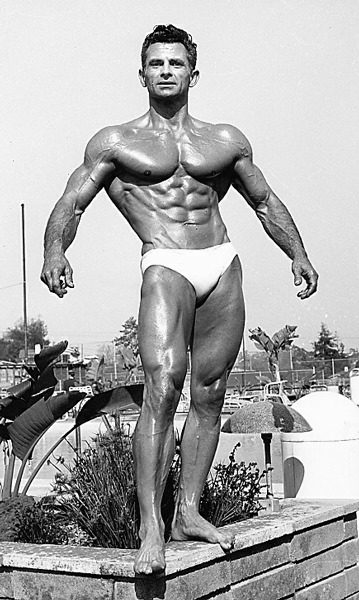
gym bros in the 1950s just ate steak and eggs
you dont need protein bars to be healthy
English
There’s no “Napster” with a CEO to be taken down. The music industry learned the hard to that this is just 1s and 0s being sent around the planet and were forced to get on board. Bitcoin is doing that now with money: permission-less value transmission across the planet. Publishing and everything else will transition to the Information Age whether they like it or not. The better tech wins
English

The largest open library in human history, Anna's Archive, has been ordered to pay Spotify and the three largest record labels on the world $322 million.
The defendant has not appeared in court and is not going to. The site is still up with two backup domains standing by and there's nothing the censors can do.
Anna's Archive currently holds 63 million books, 95 million academic papers, and 1.1 petabytes of mirrored torrents. It is free. It is searchable. It is run by a pseudonymous person nobody has identified after four long years of searching.
In the four months since the music industry filed the first of three coordinated lawsuits, the library has lost six domain names and added two million books to the catalogue. The cartel is suing it faster every month, and it is growing faster every month.
In December, Spotify and the major labels filed. In January, OCLC, the company that runs WorldCat, won a default judgment of its own. On March 6th, thirteen of the largest book publishers in the United States, including HarperCollins, Penguin Random House, Simon and Schuster, Macmillan, Hachette, Elsevier, Wiley, and McGraw Hill, filed a third lawsuit in the same federal court.
The publishers' complaint runs to seventy-four pages. They call Anna's Archive a "brazen pirate operation." They call it "an illegal supplier of stolen content to the AI industry."
The same publishers are simultaneously suing Anthropic, Meta, OpenAI, and NVIDIA for training their models on the same corpus the publishers want Anna to destroy. The cartel argues, in two parallel federal courts, that the corpus cannot be used by anyone. Not the pirate who built it. Not the AI company that downloaded from it. Not the graduate student who pulls a paywalled paper from it at two in the morning.
Anna did not respond to any of the three complaints. Anna has never responded to any complaint. Anna is a name on a blog and a public key on a server and a person, or maybe several people, in a jurisdiction nobody has identified after four years of searching.
The judgment is uncollectable. The permanent injunction binds Cloudflare, Public Interest Registry, Njalla, the Switch Foundation, Tucows, and nine other named intermediaries. The Greenland registry is not on the list. The Greenland registry has not complied.
The site currently lives at .gl, with .pk and .gd standing by. The corpus has always moved faster than the censor. The censor has always called the corpus piracy. The corpus has always survived the censor by becoming the readers themselves.
The publishers' lawsuit cannot reach the torrents. The torrents are already seeded across continents and IPFS nodes and personal NAS drives owned by people the publishers will never find. The default judgment is paper. The corpus is everywhere.
The cartel will win every lawsuit but they will lose the war. The publisher who walks into court next month with a fresh filing will be filing against a defendant who has, in the time since the last filing was sealed, mirrored another half million books to another seven hundred volunteers in another forty countries.
There is no defendant to find. There is only the next upload. It is already seeding.

English
While Bitcoin gets a lot of attention, it hasn’t played the safe-haven role many expected. In my view, there are a few reasons why.
First, Bitcoin lacks privacy. Transactions can be monitored and potentially controlled, which is why central banks aren’t looking to hold it.
Second, it also has a high correlation with tech stocks. When investors get squeezed in other areas of their portfolio, they sell their Bitcoin to cover it.
Third, it’s a relatively small and controllable market, whereas gold stands alone. There is only one gold.
Ultimately, gold is more widely held, deeply established, and still plays a central role in the global system.
English

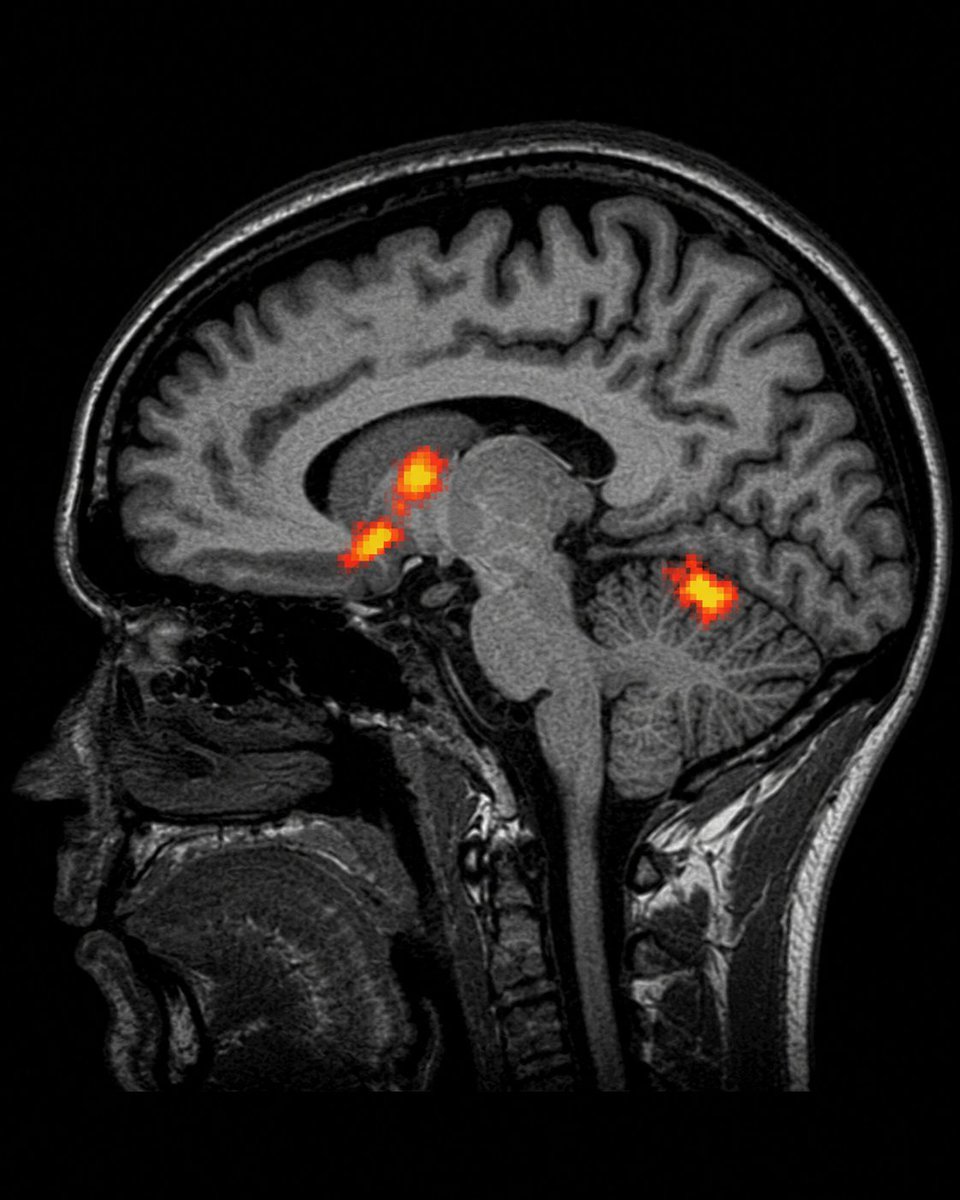
Music is the most evolutionarily inexplicable hit of dopamine your brain gives you for free.
Every other reward in the human body has a survival logic. Food keeps you alive. Sex propagates genes. Even cocaine works by hijacking pathways built for actual functions. Music has no equivalent justification. It's patterned vibrations of air that trigger the same response in your nucleus accumbens as any of them.
The Salimpoor study at McGill scanned people listening to their favorite songs and found something stranger than the dopamine release itself. The peak emotional moment and the dopamine release happen in different brain regions at different times. The caudate fires roughly 15 seconds before the chills hit. By the time you feel goosebumps, the dopamine has already peaked. Your brain rewards you for predicting the climax. The climax itself arrives after the chemistry is already done.
That's why every great song uses the same trick. Build a pattern. Violate it just enough that your prediction was almost right. Resolve it. The chills come when reality confirms a slightly better version of what you anticipated.
Music engages more brain regions simultaneously than almost any other human activity. Motor cortex tracks rhythm even when you sit still. Auditory cortex parses pitch. Limbic system handles emotion. Prefrontal cortex layers memory on top. Cerebellum runs timing. You use more neural surface area listening to a 3-minute song than you use driving a car.
And it's the last thing to go. Late-stage Alzheimer's patients who can't recognize their children can still sing every word of a song they loved at 22. Music is encoded somewhere the disease doesn't reach.
Patterned air. That's the whole input. Everything else is your brain.

Ajibola@4jibola
music is honestly one of the best parts of being alive.
English
@aakashgupta You just perfectly encapsulated the essence of the book This is your Brain on Music
English

The reason music gives you chills and what it means:
1. It has a name,Frisson. The chills you feel from music have a scientific name called Frisson. It is a French word meaning aesthetic chills. It causes goosebumps, shivers down your spine and a wave of emotion. All triggered by nothing but sound entering your ears.
2. Not everyone feels it. Only 55% of people on earth experience music chills. The other 45% never feel it at all in their entire life. If you feel it, your brain is literally wired differently from most people around you. It is not dramatic. It is biological.
3. Your brain releases dopamine. When frisson hits, your brain releases dopamine. The same chemical released when you eat your favorite food, when you fall in love with someone, when you win something you worked hard for. Music hijacks the exact same reward system in your brain.
4. It happens at very specific moments in a song. A sudden unexpected key change. When a powerful voice enters out of nowhere. When an instrument joins that you did not expect. When lyrics describe something you personally lived through. Your brain gets surprised and floods you with emotion as a reward for noticing.
5. It is connected to how your brain is built. Scientists at USC discovered that people who feel music chills have more nerve fibers connecting two specific parts of the brain. The auditory cortex which processes sound and the areas that process emotion. More connections between these two areas means deeper and stronger emotional response to music.
6. Sad songs trigger it more than happy songs. Minor chords, slow tempos and falling melodies cause frisson more often than upbeat music. Because your brain processes musical sadness very similarly to real sadness. But in music it feels safe. So your brain allows itself to go deeper into the emotion without fear.
7. Memory makes it stronger. A song you heard during an important moment in your life hits differently forever. Because your brain stores music alongside the emotions you felt when you first heard it. Years later the song plays and the emotion comes back instantly. The music is no longer just sound. It becomes a memory you can hear.
8. Anticipation is more powerful than the moment itself. The chills often begin just before the best part of the song arrives. Not during it. Before it. Your brain predicts the drop, the high note, the key change and rewards itself early just for knowing it is coming. This is called prediction and reward and music is one of the few things that triggers it this strongly.
9. It is directly linked to empathy. In multiple studies, people who experience frisson scored significantly higher in empathy than those who do not. You are not just hearing what the artist made. You are feeling what the artist felt while creating it. Your brain crosses the gap between their emotion and yours through sound alone.
10. It means you have an open personality. Psychologists found that people who feel music chills score extremely high in one specific personality trait called openness to experience. This means deep curiosity about the world, strong imagination, rich inner emotional life and the ability to feel things at a level most people simply cannot access.
11. Live music hits harder than recorded music. The energy of a crowd, the physical vibration of speakers, the presence of the artist. All of these combine to make frisson happen more easily and more intensely at live concerts. Your brain picks up on collective emotion around you and amplifies your own response.
English
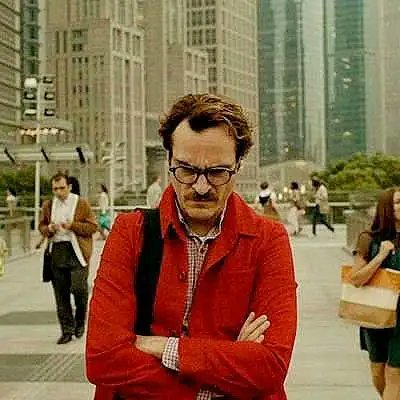
Russell Crowe from 1997 to 2003 really felt like one of the last great old-school movie star runs. Every year he’d show up in another massive film and completely dominate it without ever feeling like he was repeating himself.
cinesthetic.@TheCinesthetic
Which actor had the greatest 5 year run in film history?
English
Jackie retweetledi

Bitcoin isn't real! It's not physical!
Yeah? Neither is the number seven, but I bet you'd notice if your bank balance dropped by seven figures.
Let me break the spell for you: money has never been "real."
Money is a collective hallucination—a social construct we all agree to pretend exists so we don't have to barter chickens for dental work.
Gold wasn't money because it fell from heaven with "LEGAL TENDER" stamped on it.
We picked gold because it was the least-bad physical object that checked the boxes:
- Scarce
- Durable
- Divisible
- Portable
- Verifiable
It was the analog solution to our shared idea.
But here's the thing about analog: it's slow, heavy, and requires armed guards.
And here's the thing about humans: we engineer better tools.
We went from abacus to iPhone. From carrier pigeons to satellites.
From gold bars locked in vaults to Bitcoin—verified by thermodynamics, secured by energy, and transmitted at the speed of light.
Bitcoin is the digital versioin of money. Just like X is the digital version of town hall.
Gold was the best we could do for many centuries.
Bitcoin is what we can do now that we have cryptography, distributed consensus, and proof-of-work anchored in physics.
Your grandpa trusted gold because he could hold it.
You trust Bitcoin because you can verify it.
One required faith in a metal. The other requires faith in math.
Guess which one has never been debased, diluted, or confiscated by executive order?
The concept of money is a human mental construct.
Always has been. Always will be.
The only question is: do you want your construct built on scarcity enforced by governments—or scarcity enforced by code?
Gold was monetary technology for the industrial age. Bitcoin is monetary technology for the information age.
Welcome to the upgrade.
English

The Cossacks were what you got when European peasants ran from their landlords, rode east into the steppe, and refused to come home.
The word kazak is Turkic. It means free man.
They settled along the Don and the Dnieper. They kept horses. They kept cattle. They hunted, they fished, and by every surviving account they ate an enormous quantity of meat. They governed themselves by elected assembly. They paid no serf-dues to any landlord.
They were also the finest light cavalry in Europe for three centuries.
When Napoleon's Grande Armée, the largest army Europe had ever assembled, retreated from Moscow in the winter of 1812, it was Cossack horsemen working in small mobile bands who tore it apart on the road home. They picked off the foragers. They rode down the stragglers. The German soldiers in Napoleon's ranks coined a new verb for what was happening to them. Kosakiert. Cossacked. The mere shout of "Cossacks!" was enough to break a French column.
The Bolsheviks understood exactly what the Cossacks represented and dealt with them in the standard way.
On 24 January 1919, the Central Committee passed a secret resolution ordering "merciless mass terror" against the Cossacks. Lenin compared the Don to the Vendée and proposed the same treatment.
The policy was called Raskazachivaniye. Decossackization.
Mass executions. Hostage-taking. Concentration camps in the cold and the mud. Deportations of entire stanitsas to the Arctic. Confiscation of horses. Confiscation of herds. Forced collectivisation of the rest. The death toll runs to the hundreds of thousands.
What survived was settled, fed grain, given vodka, and recorded in census data for the first time in five hundred years.
The free man on the horse with the herd became the registered worker in the apartment block with the ration card.
This was framed as progress.
It always is.

English
@SamaHoole Man, what you are doing is way more important than I think some on here realize
English

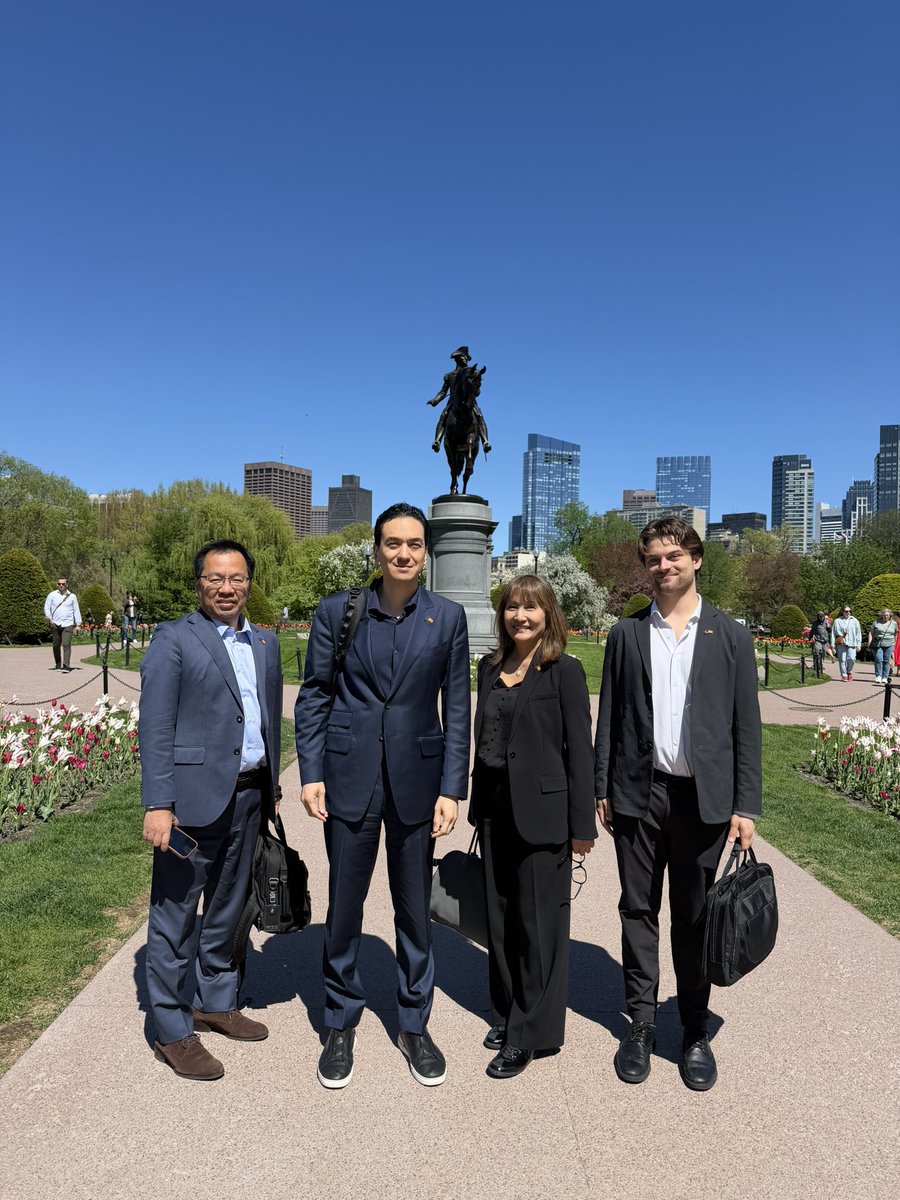
Week-long US investor roadshow, telling the Metaplanet story. Guess where we are today 👀
English

Jackie retweetledi

Fiat pushes you to consume now and earn later because prices go up over time as your purchasing power falls
Borrowing fiat works to your advantage because you pay back loans with devalued dollars
Bitcoin pushes you to earn now and consume later because prices go down over time as your purchasing power rises
Saving Bitcoin and waiting to make purchases works to your advantage
English
@lichthauch Man cannot remake himself without suffering, for he said s both the marble and the sculptor - Alex Carrell
English
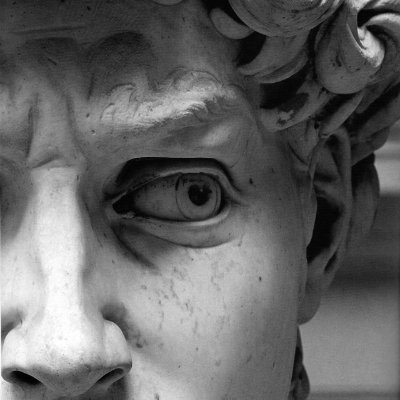
There is no shortcut to strength and this is why most men are weak. they want muscle without the tearing, they want wisdom without the years of being stupid, they want God without the desert. the body does not lie. you cannot fake a squat, you cannot charm a deadlift. the weight does not care about your story or your childhood or your excuse, it is just there and either you move it or you dont. and in that moment every lie you told yourself that week dies, because iron does not negotiate. iron is a prophet that only speaks one word, truth. and every rep is true and every set is true. and when you finally walk out of that room you are cleaner than you were when you walked in, because you are more honest. the weight took the lies out of you
English
@lichthauch Heraclitus: “Out of every one hundred men, ten shouldn't even be there, 80 are just targets, nine are the real fighters, and we are lucky to have them, for they make the battle. Ah, but the one, one is a warrior, and he will bring the others back.”
English
@lichthauch We treat the body rigorously so that it will
Not be disobedient to the mind
-Seneca
English
@lichthauch "No man has the right to be an amateur in the matter of physical training. It is a shame for a man to grow old without seeing the beauty and strength of which his body is capable."
— Socrates
English