
Sabitlenmiş Tweet
(Hedged)🦀
5.2K posts


(Hedged)🦀 retweetledi

Alternatively, the data clearly shows just how left-skewed both AI content and chatbot conversations are
Stefan Schubert@StefanFSchubert
While social media is polarising, evidence suggests AI may nudge people towards the centre. This holds true of all studied models. Grok is more right-leaning than other models, but also has depolarising effects. By @jburnmurdoch.
English
(Hedged)🦀 retweetledi

The permanent suspension of @xmrbazaar is pure absurdity.
An account devoted to peacefully spreading the P2P digital cash movement gets banned for “illegal and regulated behaviors” on a “free speech” platform.
Yet X happily condones porn, spam AI bots, and endless evil/useless accounts.
Why punish a tool of freedom while platforming endless crap?
Reinstate @xmrbazaar !
Like and share so @elonmusk is forced to tell us why X is working to hurt the growth of the most successful p2p crypto marketplace for legal goods and services.
Expose the hypocrisy! Elon please fix this.

English
@colejaczko @minordissent Wait- I’ve been sitting in the cuck chair my whole life?
English

"Do the thing you'd be jealous of if someone did first."
It was this advice that brought me to my true purpose.
English
@nikitabier @elonmusk This is great!
FEATURE REQUEST:
Can you make Japanese auto-translate with an option to see original instead of option to translate?
English

If you’re seeing a bunch of Japanese posts, here are some fun facts:
Japan has more daily active users and more time spent on X than any other country in the world.
Over two thirds of the country is monthly active on X.
X in Japan has one of the highest penetration rates of any social network in history.
English
(Hedged)🦀 retweetledi

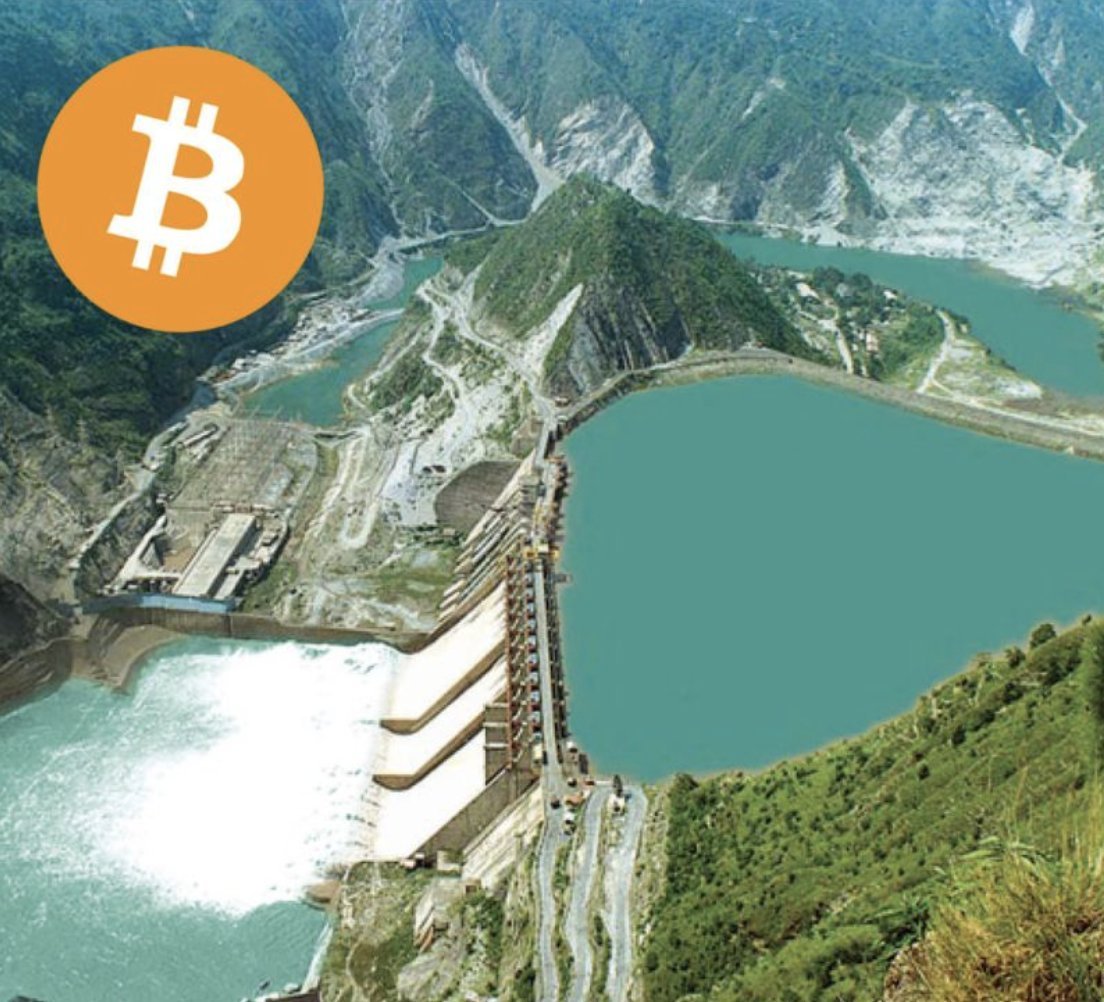
We now have official EEP data that shows Bitcoin mining has nearly doubled Ethiopia’s annual net transmission grid expansion rate
Even more importantly, it has catalyzed an unprecedented level of new construction activity never before reported by EEP at this scale.
Consider this context:
Delivery of power to rural Africa, alongside combatting youth unemployment is one of the two biggest political changes in sub-Saharan Africa.
Bitcoin mining has just demonstrated it can be a viable solution for one of them
Let's dig in.
Ethiopia made $220 million from Bitcoin mining in 2024/25 which is expecting to increase to $312 million this year (source: capitalethiopia.com/2025/11/02/eep…
This electricity would otherwise have been wasted
Why?
Although Ethiopia has the capacity to generate 6 Gigawatts from the new dam, Ethiopian Electric Power (EEP) hasn't yet built the transmission lines to supply all that electricity generated.
So, in the meantime the dam authorities sell electricity to Bitcoin mining companies.
These electricity sales to Bitcoin miners were 67% of EEP's total Foreign Exchange revenue last year, vastly improving profitability.
source: birrmetrics.com/ethiopia-elect…
What do they do with that unexpected extra profit?
EEP has stated repeatedly that the revenue from Bitcoin mining is used to support "infrastructure expansion" and "rural electrification" source: eep.com.et/?article=ethio…
News channel Aljazeera recently confirmed
"Ethiopia doesn't yet have the distribution network to take electricity to 1/2 the population...The idea is the fees paid by the Bitcoin miners will go towards funding the expansion of the grid."
source: youtube.com/watch?v=mqie7b…
Significantly, EEP's own data shows revenue from Bitcoin mining supported EEP's 2024/25 fiscal year
* 28,571 km new power lines built
* 8,700 substation bays installed
Source: birrmetrics.com/ethiopia-elect…
Bitcoin mining revenue has already almost doubled EEP's rate of energized network buildout from ~358 km/year average to +662 km last year.
But more important is what is in the imminent pipeline: the 28,571 km of new power lines is larger than the entire size of their grid!
source: eep.com.et/wp-content/upl…
Let's be clear, we cannot say that "Ethiopia build more than their whole grid in a year" because not all of that new capacity has been fully energized yet, so that would be an apples-for-oranges comparison.
But it is still an unprecedented rate of new construction.
The good news is that the bulk of this infrastructure constructed but not yet fully energized is not “waiting years”, it is in active commissioning right now and is expected to come online progressively over the next 12–18 months.
Source: Birr Metrics (EEP’s 2025/26 budget announcement) birrmetrics.com/electric-power…
When that new network is fully energized, the increase in the speed of energized network buildout will not be 2x. It will be substantially higher, potentially more than 10-20x the historical average as the backlog comes online.
Read that last sentence again.
A forecast 10-20x faster buildout of Ethiopia's electrical grid.
Rural electrification of Sub-Saharan Africa is a key strategic focus for over 20 global institutions and development banks, including the UN, World Bank, IRENA, African Development Bank, and Rockefeller Foundation.
It is even explicitly one of the UN’s Sustainable Development Goals (SDG 7), where Target 7.1 calls for “universal access to affordable, reliable, and modern energy services by 2030.” Sub-Saharan Africa accounts for 85% of the world’s people still without electricity (mostly in rural areas), making this one of the biggest global priorities.
How Ethiopia is achieving this should be one of the biggest stories at the UN right now.
Far from “taking renewable power away” from people, Bitcoin mining’s use of otherwise wasted renewable energy is catalyzing the accelerated delivery of electricity to rural Africa. Bitcoin mining has created a pragmatic solution to an issue that has plagued powerful global institutions for decades.
If you are still gaslighting Bitcoin mining in 2026 (based on early studies, now been widely debunked), you are no longer just uninformed. You are perpetuating harmful myths that slows down power delivery to people living without electricity.

YouTube
English
(Hedged)🦀 retweetledi

Nikita decided that he'd demonstrate he doesn't understand what he is doing on a daily basis.
It is relatively easy to get this metric trend higher by completely enslopifying the platform, which he's indeed very successful at doing.
The problem with that strategy, is that it works by spending the platform's reputation, a metric that does not appear on any dashboard.
When you run out of reputation, the curve collapses as everybody moves on on another platform, and there are virtually no ways to recover from this.
The metric to track is whether people find more of what they came on the plateform to find, not whether you are able to waste as much of their time as you can.
Nikita Bier@nikitabier
Higher.
English
Perfect example of @ItIsHoeMath’s levels of consciousness chart. It’s hard to comprehend just how real this is.
Samantha Smith@SamanthaTaghoy
Interviewer: “Do you ever think about the consequences of rape?” Illegal migrant: “Like, if she screams and wakes someone up?” Interviewer: “No, I’m talking about the girl.” Illegal migrant: “Yeah. When we rape her we might get an STD.” THIS IS WHAT’S COMING TO THE WEST.
English

TurboQuant compresses KV cache memory to ~3 bits per value (6x reduction) with zero accuracy loss and negligible runtime overhead—Google calls it "lightweight" and "accelerator-friendly," with near-zero quantization time.
The 8x speedup is from slashing memory bandwidth bottlenecks in attention, not ramping chip clocks or utilization. No added stress on compute units; memory access (a big power hog) drops sharply.
No data supports shortened chip lifespan (7→3 years) or "immense stress"—GPUs are built for sustained high loads, and this enables cheaper hardware overall. Energy/cooling per inference falls due to efficiency; total bills trend down despite higher throughput potential.
Early ports (e.g., Apple Silicon) confirm easy drop-in with net gains.
English

Google just dropped a compression algorithm that makes AI 8x faster while using 6x less memory. Zero accuracy loss.
It's called TurboQuant. Here's why it matters in plain English:
Every time you talk to ChatGPT or any AI, the model has to remember everything you've said in the conversation. That memory is called the "key-value cache." The longer the conversation, the bigger the cache, the more expensive it gets to run.
This is the single biggest bottleneck in AI right now. A 128,000-word conversation on a large model eats 40GB of GPU memory just for that one user. Scale that to thousands of users and you're burning millions in compute costs reprocessing the same data over and over.
TurboQuant compresses that memory down to just 3 bits per value (from 32 bits) without losing any quality. Independent developers tested it within hours and got exact matches against full-precision output.
What this actually means:
- AI models that needed a $10,000 workstation could now run on a MacBook
- Always-on AI agents become dramatically cheaper to operate
- Open-source models that were too big for consumer hardware suddenly fit
- The cost curve for every company running AI infrastructure just shifted
Developers are already porting it to Apple Silicon. No retraining required. It drops into existing AI systems without modification.
The AI cost problem isn't being solved by building bigger data centers. It's being solved by mathematicians figuring out how to do more with less.

English

At some point, people, particularly on the left, are going to appreciate the value of a neutral, censorship-resistant monetary network.
Ramy Abdu| رامي عبده@RamAbdu
French judge Nicolas Gouyou, who issued an arrest warrant for Netanyahu at the ICC: • Visa and Mastercard have blocked all my cards • I cannot make any purchases • I am a judge, yet treated like a criminal • Judges, lawyers, and politicians are being intimidated • A colleague told me my name won’t be removed from the blacklist until Trump’s term ends • Despite intervention by the French president, U.S. authorities have not responded
English

(Hedged)🦀 retweetledi

let's do something fun
if Wagyu ends up winning in this poll, i'll give away 0.1 XMR to anyone who voted for Wagyu
must like, repost and share a screenshot of the vote with your XMR address in the comments in order to win
Joe IO@Joe_IO
Which swap provider should Monero One integrate first?
English
@ArtemisConsort The conclave movie is just the playbook lmao absolutely delulu
English

Sorry to any Catholic followers but this is comically unserious. Childish “let’s just be heckin nice” nonsense.
BNO News Live@BNODesk
Pope Leo says airstrikes should be banned: "No one should have to fear that threats of death and destruction might come from the sky." - Reuters
English
(Hedged)🦀 retweetledi

Accelerationism... "hasten the collapse for a glorious rebirth" is a moronic toddler level mentality of delusional, historically ignorant thinking.
>Rome collapsed and never came back.
>Sparta became irrelevant after 2 generations and was dissolved.
>The fall of the Weimar Republic birthed the Nazis.
>The french revolution led to the old regime's fall, guillotines, and 20+ years of war.
>Russian empire collapse, then the bolshevik revolution and Stalin's famines.
>Mao led revolution in China that led to the deaths of tens of millions.
>The fall of the old powers in Japan birthed imperial Japan, with overreach that led to its collapse.
>The end of the Ottoman Empire led to massive balkanization, and the Arab Middle East fractured into states with endless conflicts, instability, even today, with the Iran war.
If America falls, there will be no global hegemon, and China will become the next superpower as we follow the UK's track to become an irrelevant power, with no benevolent power to lean on.
China will lock down Taiwan and the entire indo pacific, belt and road will spread, and China's authoritarian model will become the global new normal.
There will be no "rebirth" of america and we will be speaking mandarin until China collapses and a new power takes its place.
Apex Imperialist@ApexImperialist
Nick Fuentes finally admits that his goal is to destroy America ...
English
(Hedged)🦀 retweetledi


(Hedged)🦀 retweetledi

If you ask a liberal what “American values” are, they’ll just list the tenets of liberalism—which turn out to be indistinguishable from the values of any other liberal state (Britain, New Zealand, etc.) outside America. 'Civic nationalism’ is really just inconsistent globalism.
Vivek Ramaswamy@VivekGRamaswamy
American identity isn’t a scalar quality that varies based on your ancestry. It’s binary: either you’re an American, or you’re not. You are an American if you believe in the rule of law, in freedom of conscience & freedom of expression, in colorblind meritocracy, in the U.S. Constitution, in the American dream, and if you are a citizen who swears exclusive allegiance to our nation. That’s the truth & it’s why I wrote this piece.
English