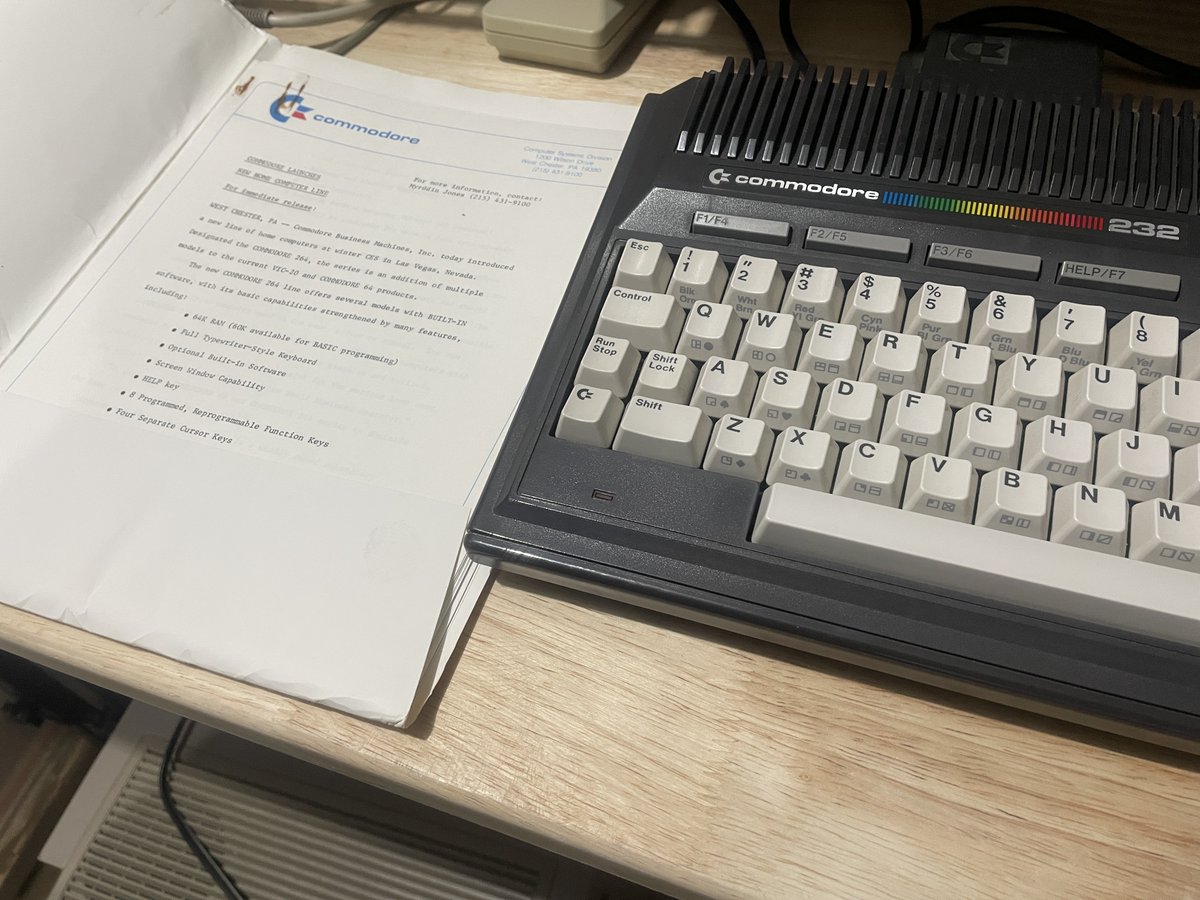
@testerlabor There is special place I my heart for the C64 and especially VIC-20, my first ever computer. I stayed up for 3 days programming nonstop when I got it for the sheer love of coding.
I'm able to participate in MarioDay despite not owning any Nintendo gear thanks to the amazing ZeroPaige's 2019 release for the Commodore 64. I'm blaming my Epyx 500xj for my poor game play here, but the reality is I just suck at video games.
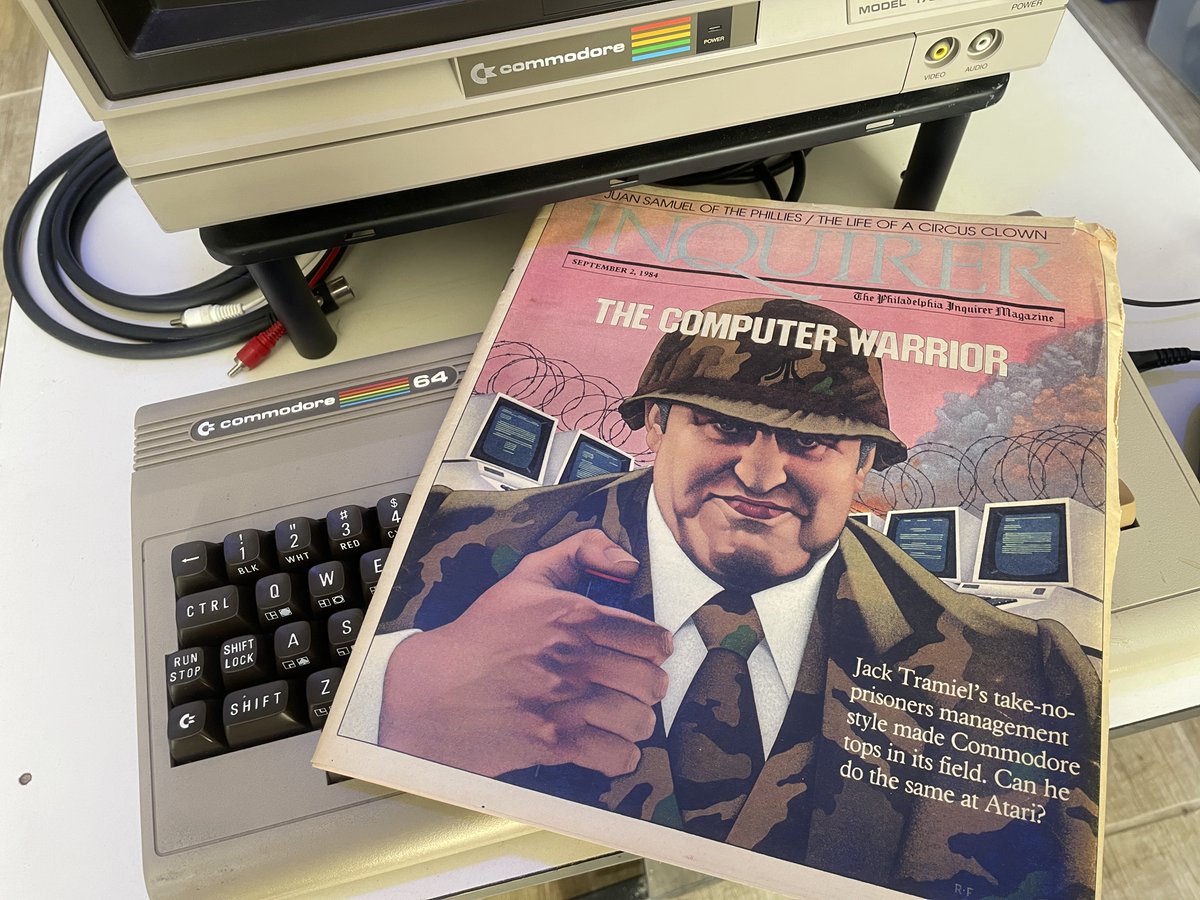
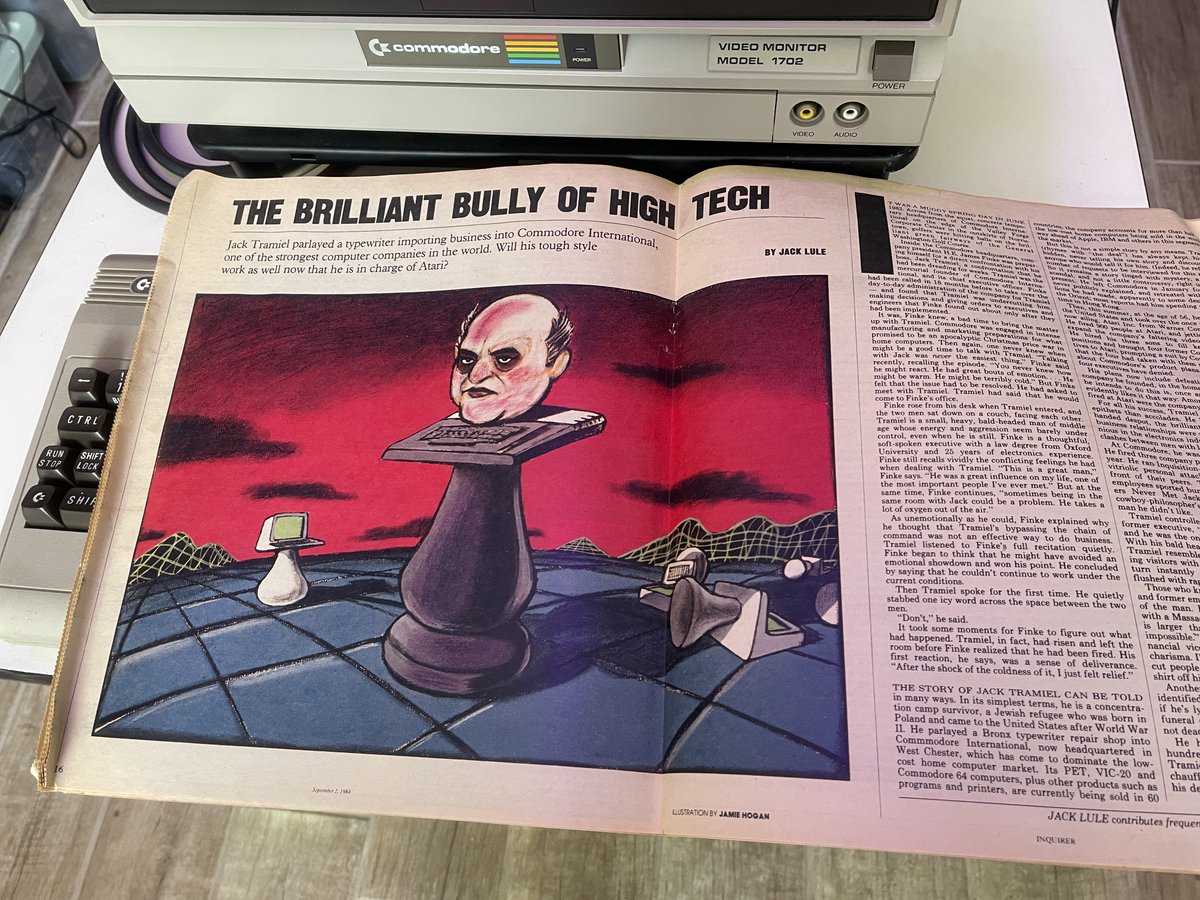
Legally, Commodore International was a Bahamian company, but their corporate headquarters tended to move to wherever the action was, from Canada, to California, to the MOS Technology building in Norristown, Pennsylvania, then eventually to it's final resting place at 1200 Wilson Drive in West Chester, PA (now the home of QVC Studios). From the early 80s through Commodore's demise in 1994, its headquarters were in the Philadelphia region in eastern Pennsylvania. With Commodore being a major employer in the region, it's fitting that the Philadelphia Inquirer Magazine did a cover story about Jack Tramiel in their September 2, 1984 issue - the year Tramiel left Commodore. The cover artwork, created by illustrator Russell Farrell, depicted Jack Tramiel as the businessman's version of General George Patton.
@CommodoreLad@herdware Folks do refer to it as the Porsche PET, but Porsche design didn't actually design the case. Commodore apparently sought that out but it was too expensive. I think Ira Velinsky did the case design.
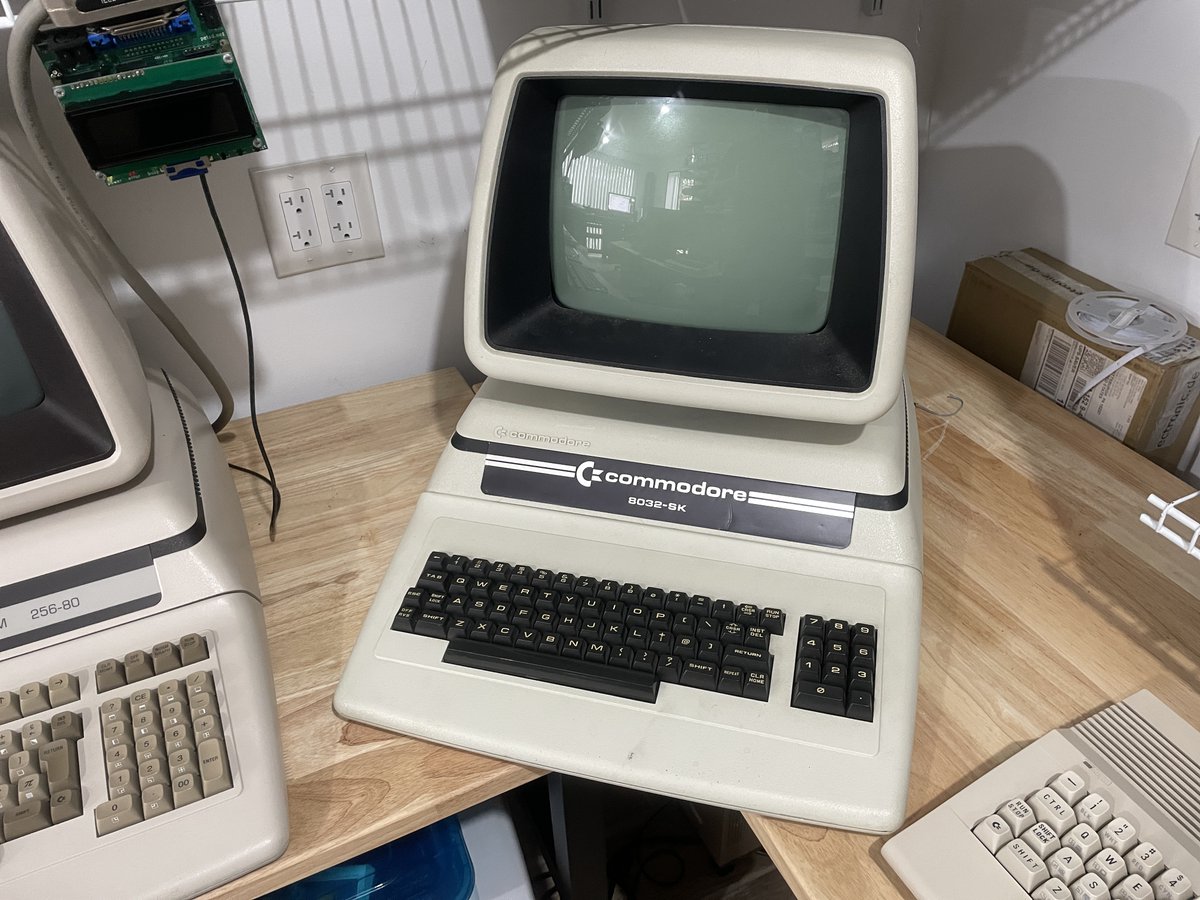
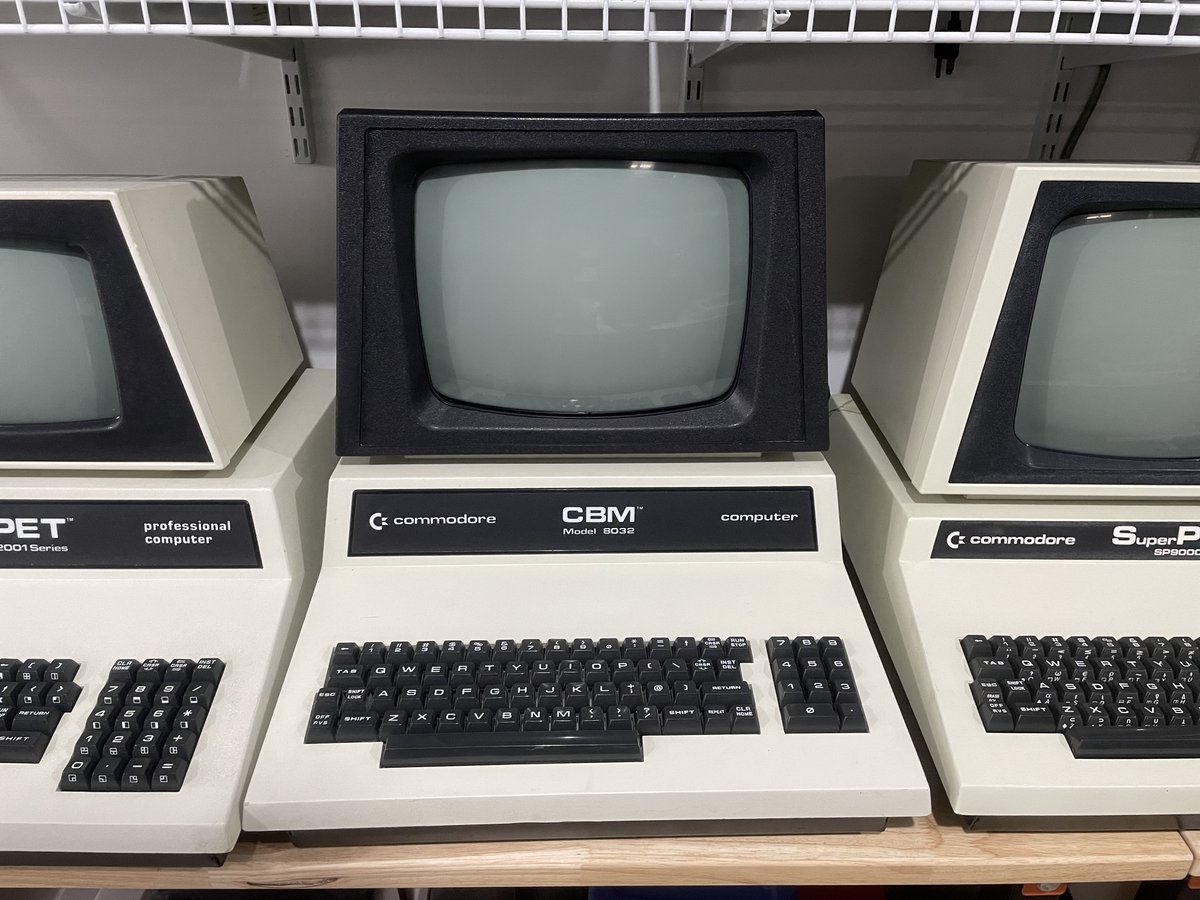
This beautiful Commodore 8032-SK has been added to the collection. The name indicates 80 columns, 32K RAM, and Separate Keyboard. Meaning, the keyboard isn't integrated into the case as it was on the 8032 (also pictured).
Unfortunately, this one has a 220V transformer. Does anyone have a 110V transformer from an 8032 they'd be willing to sell? I'm not interested in doing a modern MeanWell swap for appearance reasons. Help, please!
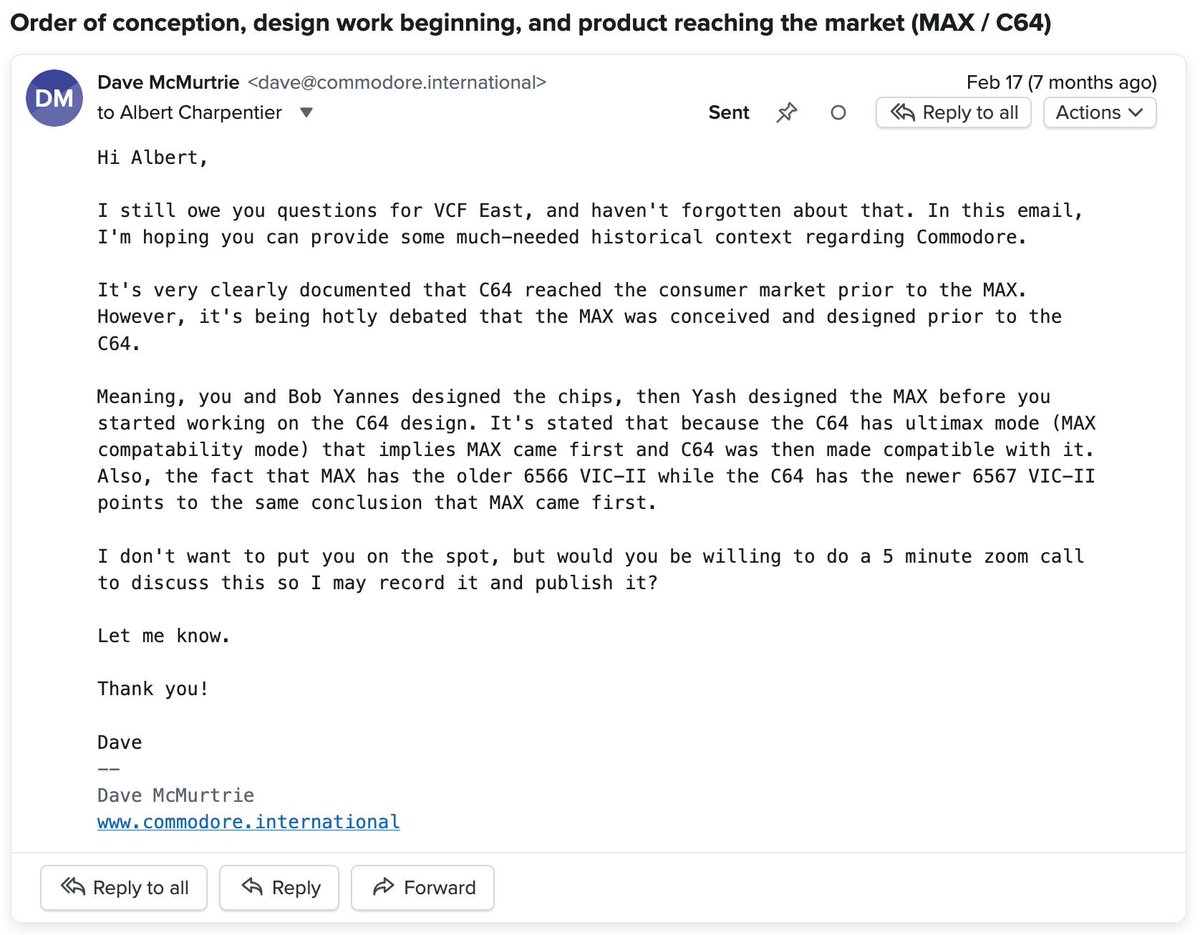
You may recall I was trying to nail down the precise history of the Commodore Max Machine, and specifically, where that fit in the timeline along with the C64.
Without any doubt, we know the C64 beat Max to the consumer market. The C64 hit retail stores in August, 1982 while the Max didn't start shipping until the end of November, 1982, in Japan only.
However, it's widely believed that the Max design came before the C64 design. Popular folklore has it that Albert Charpentier, Charles Winterble, and Bob Yannes began working on the chips for a new system (they were calling it VIC-40 at the time, but that's what eventually became the C64), but for whatever reason, their work stalled after the 6581 SID and 6566 VIC-II were completed, and during this time, Yash Terakura designed the Max around those chips. Eventually, Albert and crew got back to working on the C64 and given that Max already existed, they added Max compatibility mode to their C64 design.
I talked to as many folks as I could about the history of this. Yash was kind enough to respond to me but said he really couldn't recall the exact order of things. Albert Charpentier answered a few emails, and spoke on the phone with me for over an hour. He was adamant that the C64 was conceived first, designed first, and hit the market first. I couldn't convince him to do a recorded Zoom call with me, nor could I convince him to join Facebook, but he did give me permission to share the content of his emails here.
Based on my conversations with Albert, and based on John Feagans recollection that the Max was ordered by Jack Tramiel as a lower cost C64 after the C64 design was already underway, I believe the history went something like this:
Early 1981: MOS Engineers conceive a 40-column color computer and pitch the idea to Jack Tramiel.
April 1981: work begins on the VIC-II (Albert Charpentier) and SID (Bob Yannes)
mid/late 1981?: VIC-40 (eventual C64) system design begins. (Norristown, PA)
mid/late 1981?: Jack Tramiel orders the Max as a low cost version of the in-progress VIC-40. Max design happens at CJL (Japan).
January 1982: Max and C64 are shown at Winter CES. Both are running a 6566 VIC-II chip, and apparently only capable of 38 columns at this show.
May 1982: 6567 VIC-II is completed and the VIC-40 (C64) design is updated to utilize it.
August 1982: C64 hits retail stores.
Late November 1982: Max hits retail stores.
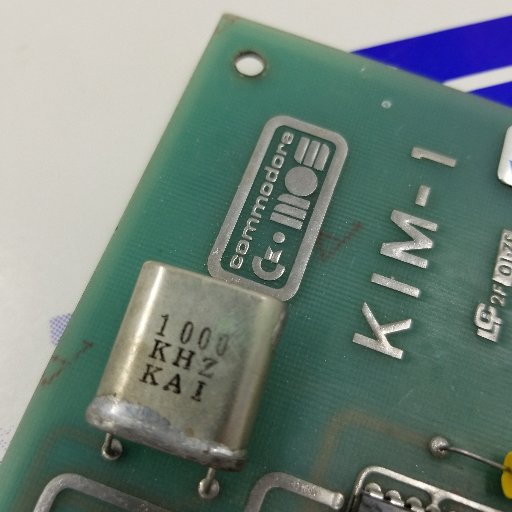
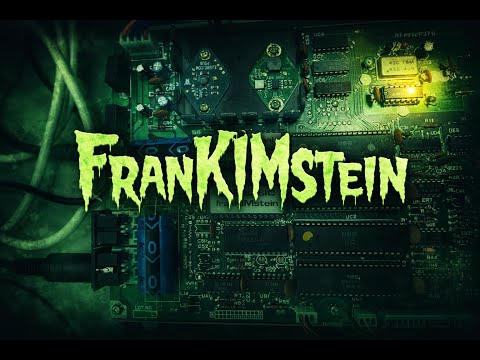
Full video of the KIM-1 kernal, functional disk drive, and authentic Commodore BASIC all running directly on a Commodore 1541 disk drive!!! Meet FranKIMstein:
youtube.com/watch?v=yyDtIB…
Progress! My wife recorded a demo of the current state of FranKIMstein. I now have the Commodore BASIC interpreter running on a 1541 disk drive and I can run BASIC programs, then save them and load them on a Commodore 64.
@CAD_Diabolo The 1541 has a mere 2K RAM and 16K ROM. So I basically mashed together the KIM-1 kernal, parts of the DOS 2.6 code, and the Commodore MAX BASIC interpreter in the 16K ROM. I modified the KIM-1 kernal to do TTY serial communication over the existing wires of the drive's IEC bus.
@commodoreihs not sure she was impressed but amazing works! seeing new things on a 40+ years computer is banana. I don't recall how much memory is on the 1541?
@CAD_Diabolo That's the thing -- this doesn't need, and can't use, a C64. It talks RS232 serial over the native disk drive serial bus, so you can connect to the 1541 using any standard terminal.
Still have some bugs to track down, but I now have the Commodore BASIC interpreter running on a 1541 disk drive, and I got load, save, and format working on the disk drive. It's truly becoming a stand-alone computer!
I added disk drive support to my FranKIMstein project. You can now run the KIM-1 monitor on a Commodore 1541 disk drive, and you can format disks, and load and save from disk on the 1541. Code uploaded to github: github.com/commodoreihs/1…
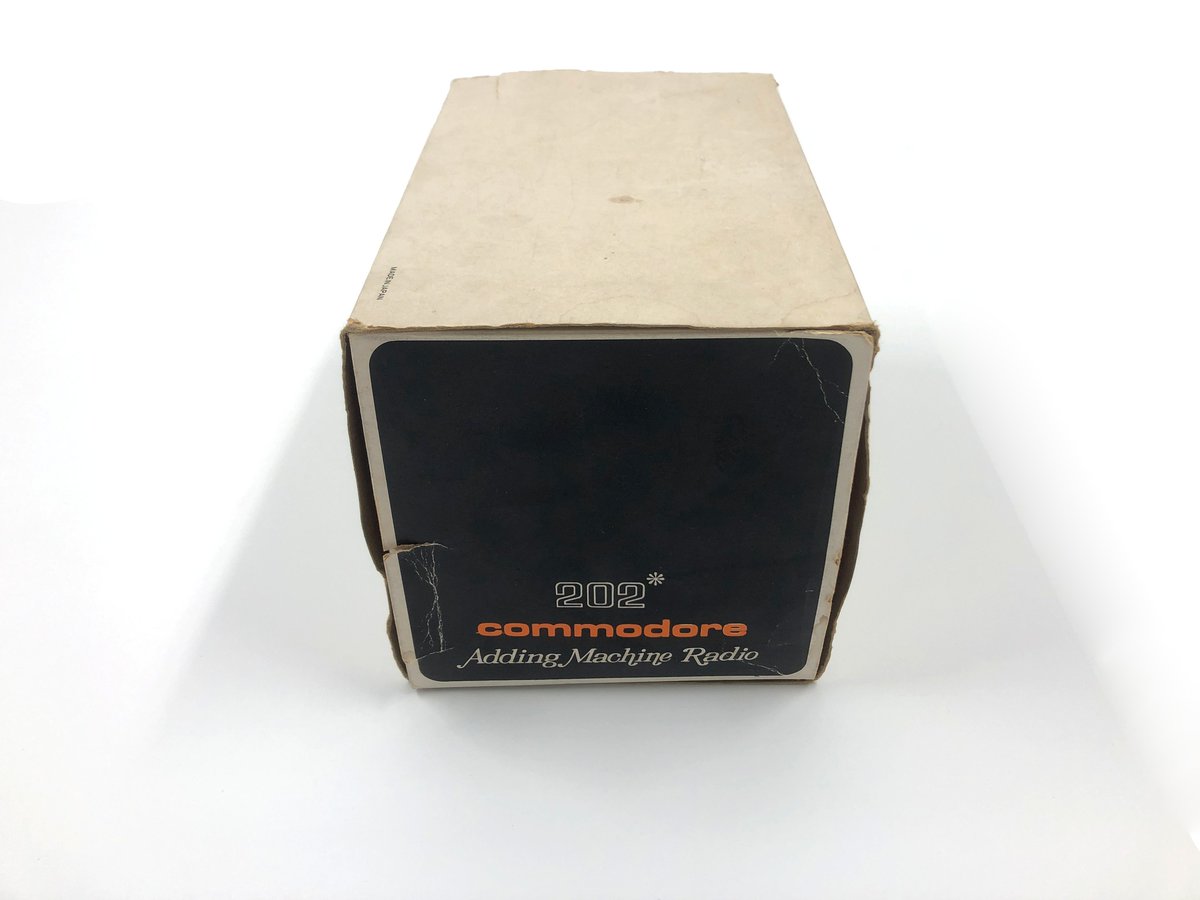
As best I can tell, these AM radios from the late 1960s were Commodore promotional items for their Commodore 202 adding machines. The 202 was an electro-mechanical adding machine made by Ricoh in Japan, and sold as the Commodore 202 in an OEM deal.
What's the coolest thing in the world if you're a nerdy, 54 year old guy? When @hackaday features my KIM-1 running on a 1541 disk drive hack!
hackaday.com/2026/01/05/com…