

Tiago dos Santos Carlos
9.2K posts

Tiago dos Santos Carlos
@correcto
It's not enough to do things right. You have to do the right things.
Lisbon, Portugal Katılım Temmuz 2008
1.8K Takip Edilen1.2K Takipçiler

Very impressed with Composer 2.5 after about a day of usage. I've almost moved over to it exclusively from GPT 5.5, even using it for planning now.
It's like Opus 4.7 on steroids, crazy fast. Fast models really get me into the flow of building, which is exhilarating.
Also, a sneak peek of a weekend mini-project I'm building: a racing game where you race your mouse cursor.
English
@marcelolebre @Jobvo @remote Founding Fathers: the podcast about founders that are simultaneously raising capital, babies and toddlers, just to prove its possible. I would totally listen to that!
English

Those stories where girlfriends drag boyfriends into meeting friend with boyfriend, that was pretty much how I met @Jobvo, my co-founder at @remote.
I had just moved to Lisbon. I’m from a small city up north in Portugal, and I knew no one.
My girlfriend at the time, today my wife, said: remember this friend of mine from college? She’s in town and she’s with her boyfriend. Should we go meet them for coffee?
I was like, come on, I don’t feel like it. I’m not that kind of double-date person.
But anyway, I had nothing better to do. I was about to start working the next day. So I thought, let’s just go and it will be easy to kill off the nerves anyway.
We arrived and Job was there with his girlfriend. He was doing his PhD at Champalimaud. He was in neuroscience but loved technology.
We ended up talking geek stuff, nerd stuff.
And the thing that brought us together was this thought of: why do people suffer through professions or careers or tools or things they have to do every day?
You go to a reception, a public office, a private practice, and people are like, computer says no. They don’t want to help you. They don’t want to do business. They’re just collecting a paycheck.
Why is this?
The reality is that a lot of people have that job because they couldn’t find the thing that made them happy. They need the money, but they didn’t have the opportunity to do the thing they’re really good at.
So we started talking about this.
What if we found a way for the best companies to hire the best people in the world and vice versa?
A week later, Job sent me an email saying he had an idea and wanted to talk.
That’s how it started.
We stayed friends for years. We built a bunch of things together before Remote was a thing.
Then, years later, I told him, look, I just quit.
This was in the morning.
And in the afternoon, his wife, who I’m friends with as well, sent me a video of him coming downstairs.
She was narrating it, saying: he’s coming downstairs. He just spoke with the CEO of GitLab. He quit as well.
That was the moment.
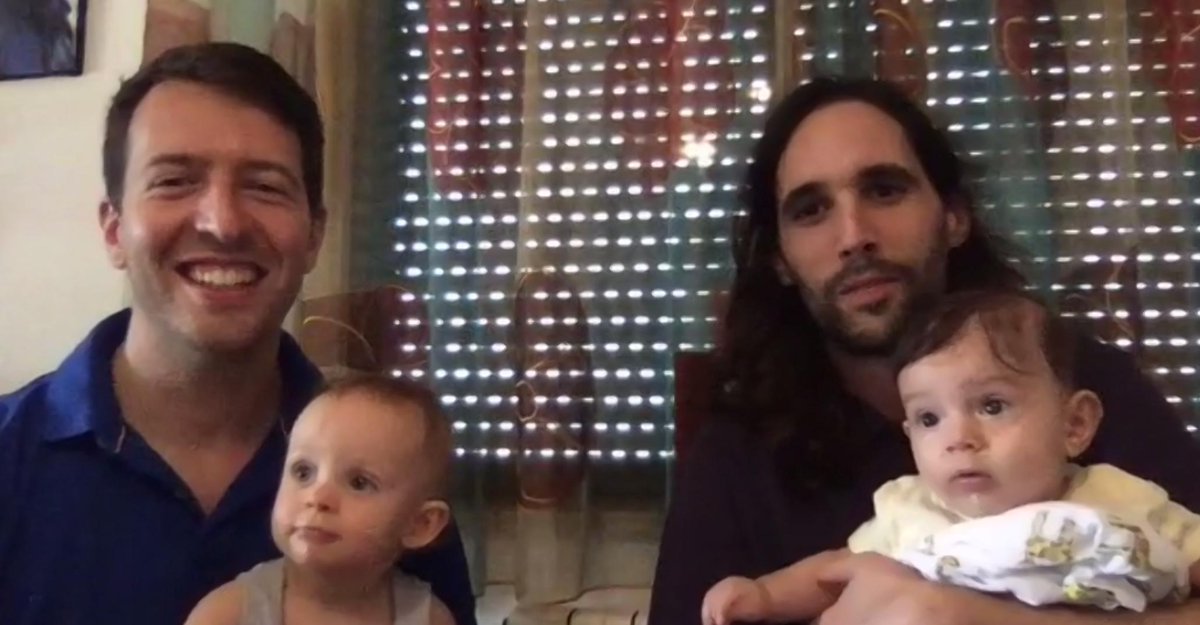
The picture is from 2019. Job and I on a Remote team call with our babies, June and Pedro. Two dads trying to build a company from home, with babies on the team call and a lot to figure out.
At the time, Remote was still tiny. No playbook. No big team. No obvious path.
Today, that same idea has become global payroll and employment infrastructure for companies around the world.
We started with a simple question: what would it take for companies to work with anyone, anywhere, and still get payroll, compliance, and employment right? Turns out, the answer was a lot of infrastructure.
Luckily, we ended up marrying our girlfriends, so it didn’t become awkward to tell the story.
English
@trq212 Doing the same. Calling mine DEVLOG.md. Maybe it sticks? 🤷♂️
English

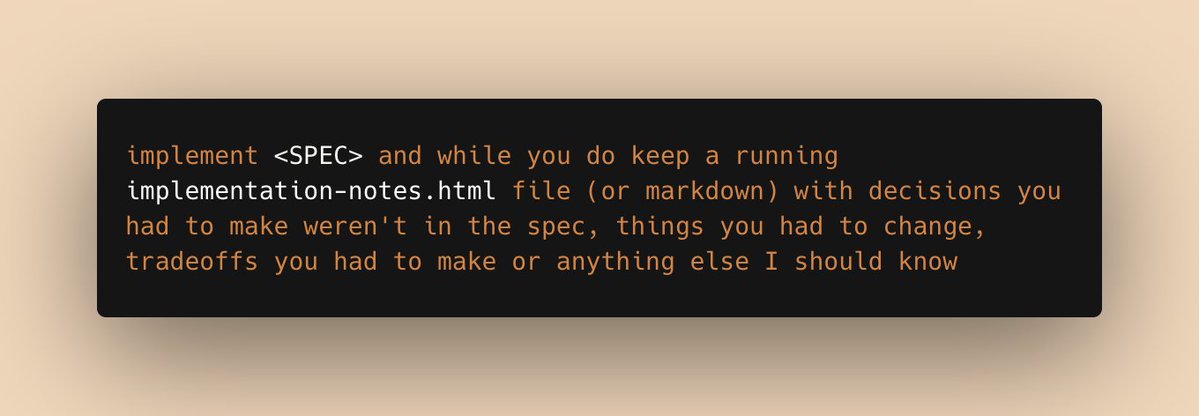
a prompt I've been using a lot recently:
implement <SPEC> and while you do, keep a running implementation-notes.html file (or markdown) with decisions you had to make weren't in the spec, things you had to change, tradeoffs you had to make or anything else I should know
English
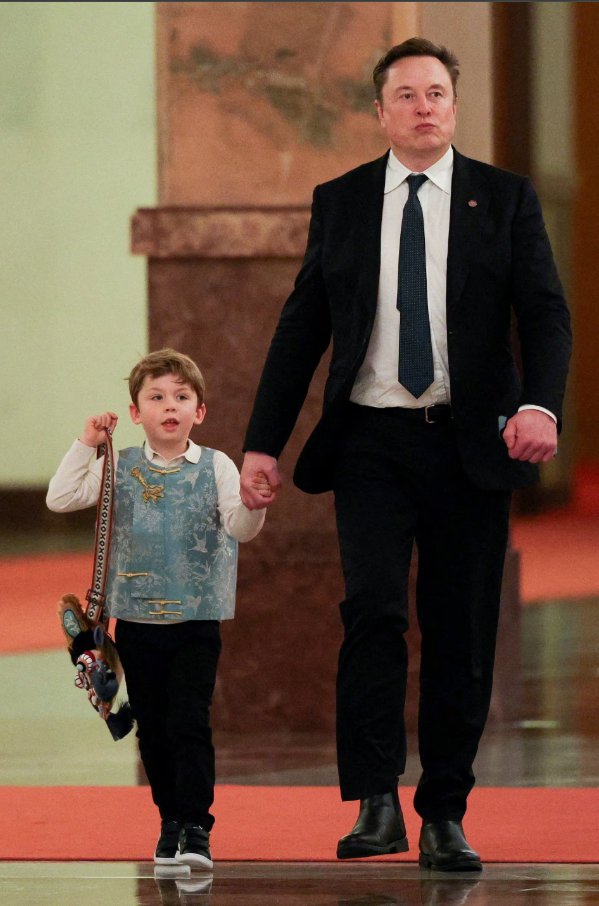
@omair_rox @elonmusk Lil dude is totally giving Space Prince vibes.
English


buy a gpu. 3090, 4090, dgx spark, whatever fits your budget. tier doesn't matter. running your first local model does. the moment your first prompt lands with no api between you and the model, your brain rewires. that single moment is worth more than every take you'll ever read on a timeline.
English
The first billion dollar solo-founder is an AI-powered drug dealer.
How appropriate.
English
@pcbo Just realised that I missed the opportunity to have my agent do the registration for me. Damn.
English

@elonmusk This could totally be a comic book super hero/super villain origin story.
English

To support the people of Japan and show that it was safe to visit.
Most people in America at the time were afraid to travel to Japan, due to a misplaced fear of radiation.
Gail Alfar@gailalfaratx
Elon Musk shaking hands with Soma Mayor Hidekiyo Tachiya in Fukushima Japan, July 2011 Just months after the devastating March 2011 earthquake, tsunami, and Fukushima nuclear disaster, Elon personally visited the region to launch a solar power project funded by his $250,000 donation. Standing in front of a solar panel in Soma (about 40 km from the crippled Daiichi plant), he showed support for recovery and renewables. To help ease fears and encourage normal life, he even ate fresh local fruits and vegetables there – proving the radiation risks were far lower than many believed.
English
Tiago dos Santos Carlos retweetledi

My information consumption is now 1/4 X, 1/4 podcast interviews of the smartest practitioners, 1/4 talking to the leading AI models, and 1/4 reading old books. The opportunity cost of anything else is far too high, and rising daily.
English
@openclaw debut, along with @OpenAI's and @AnthropicAI 's latest models have, in a matter of days, shifted my thinking from a "will most people have jobs in the future?" mindset to a "will we have compute for everyone?" mindset. AI is definitly not a bubble.
English
@JayinKyiv @mikebutcher There is a difference between having ruins and being in ruins.
English

@MsMelChen @PsyopAnime this could be your WW3 comedy arc.
English

Honestly this is a great premise for a sitcom:
In the icy wasteland of Greenland, a ragtag NATO detachment of 13 Germans, 2 Norwegians, 3 Swedes, 15 French and 1 lone Brit must "defend" the Arctic from... well, mostly boredom, polar bears, and each other's national stereotypes.
Stationed at a remote outpost in Nuuk, their biggest enemies are cabin fever, frozen plumbing, the Danes who keep forgetting they're there, and each other. They’re constantly prepping to counter the absurd threat of an American takeover with the total force smaller than a pub trivia team.
The show will have everything - petty national rivalries that project from history, offensive cultural stereotypes, frustration due to NATO bureaucracy, and because this is so European, the whole thing will be pretty gay.
Oh and a recurring theme is that they will constantly be picking on the lone Brit.
Open Source Intel@Osint613
Europe’s troop deployments in Greenland: France: 15 personnel Germany: 13 personnel Sweden: 3 personnel Norway: 2 personnel Finland: 2 personnel United Kingdom: 1 personnel Netherlands: 1 personnel
English

Design is the differentiator in AI era.
Companies are waking up to the importance of having good design.
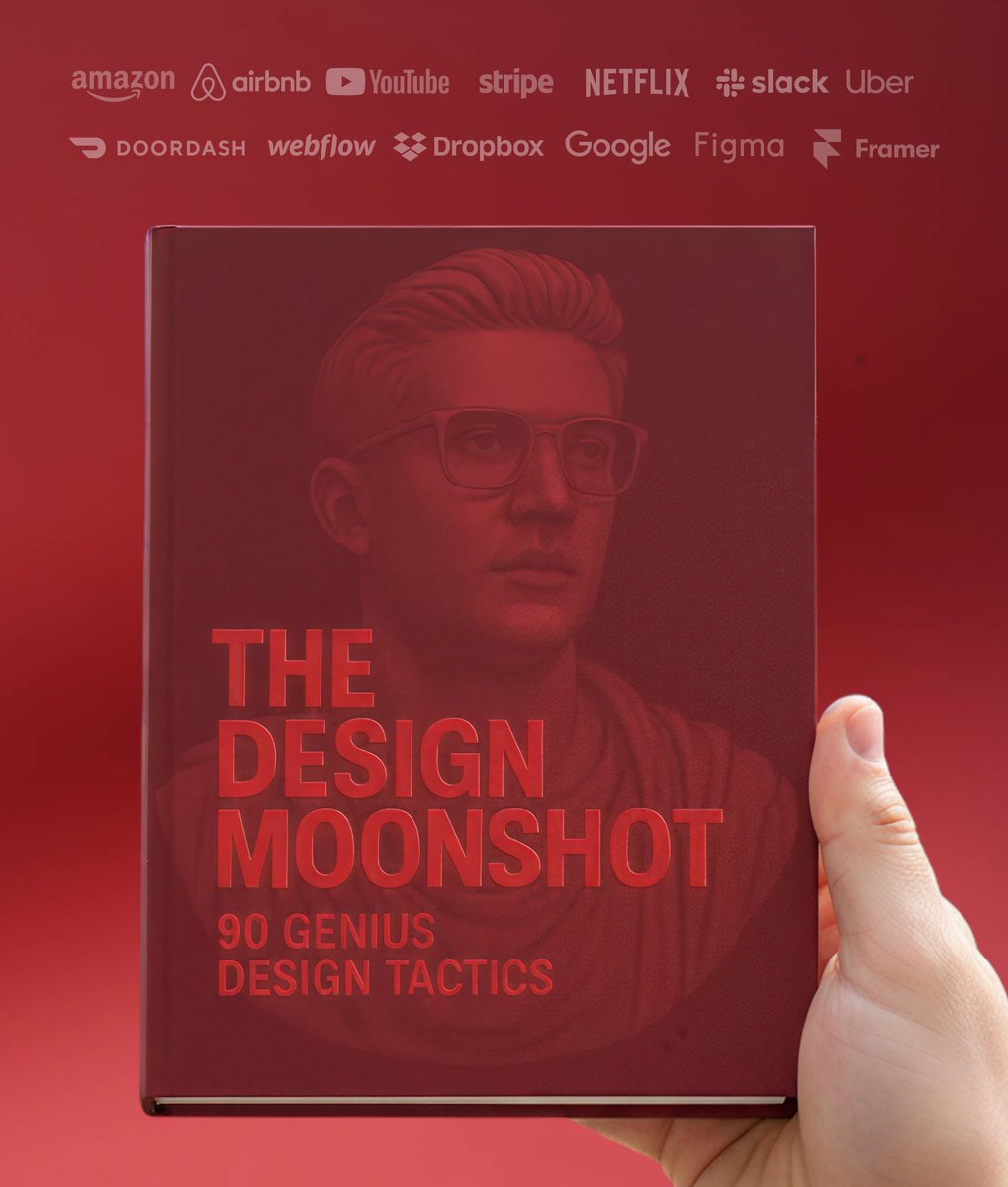
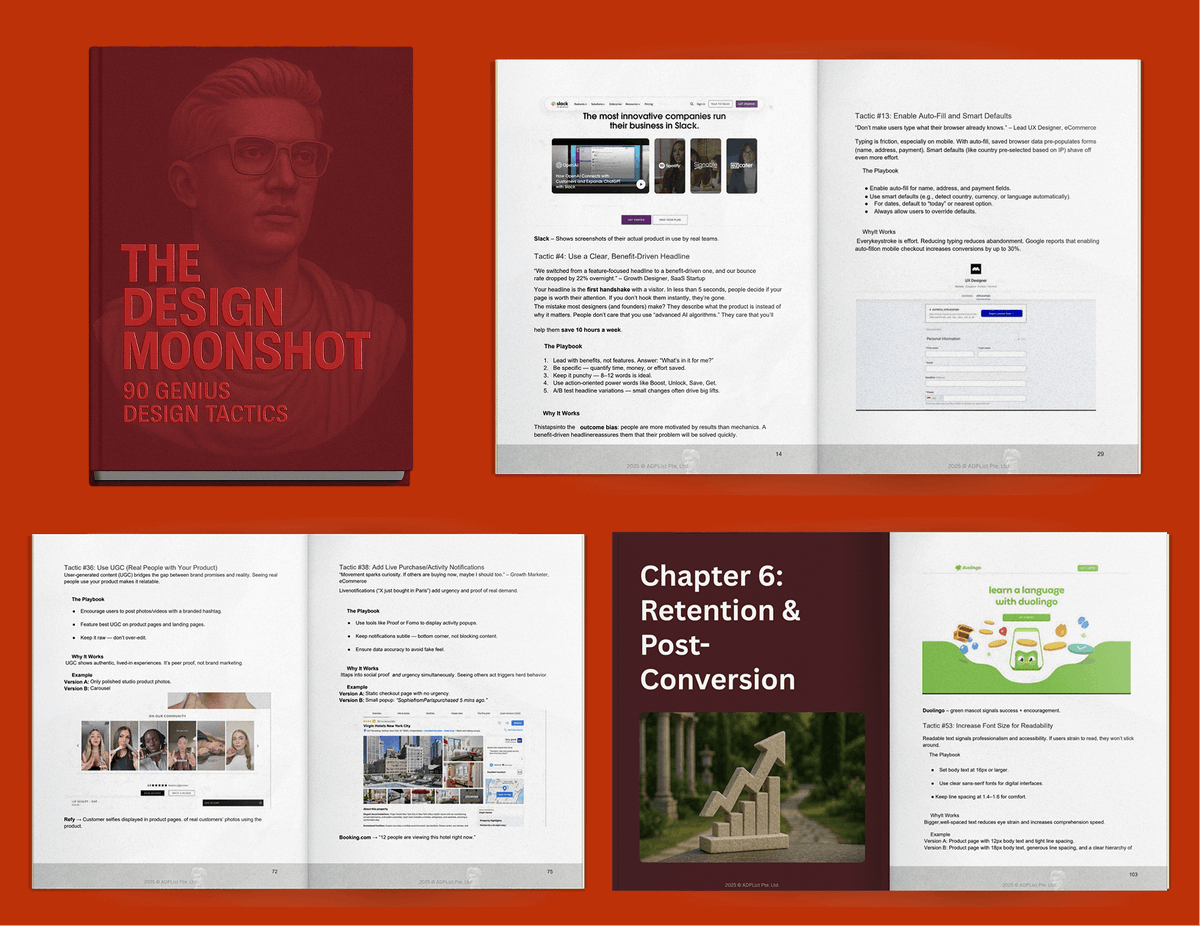
Today, @ADPList is releasing an extraordinary collection of 90 winning design tactics used by the world's best products like Duolingo, Airbnb, Figma and more.
This is a blueprint for design, proven by the best, and ready for you to use—we believe craft is eating the world.
Want a copy? Just raise your hands below, I will send it to you!
English

AI runs my content strategy now.
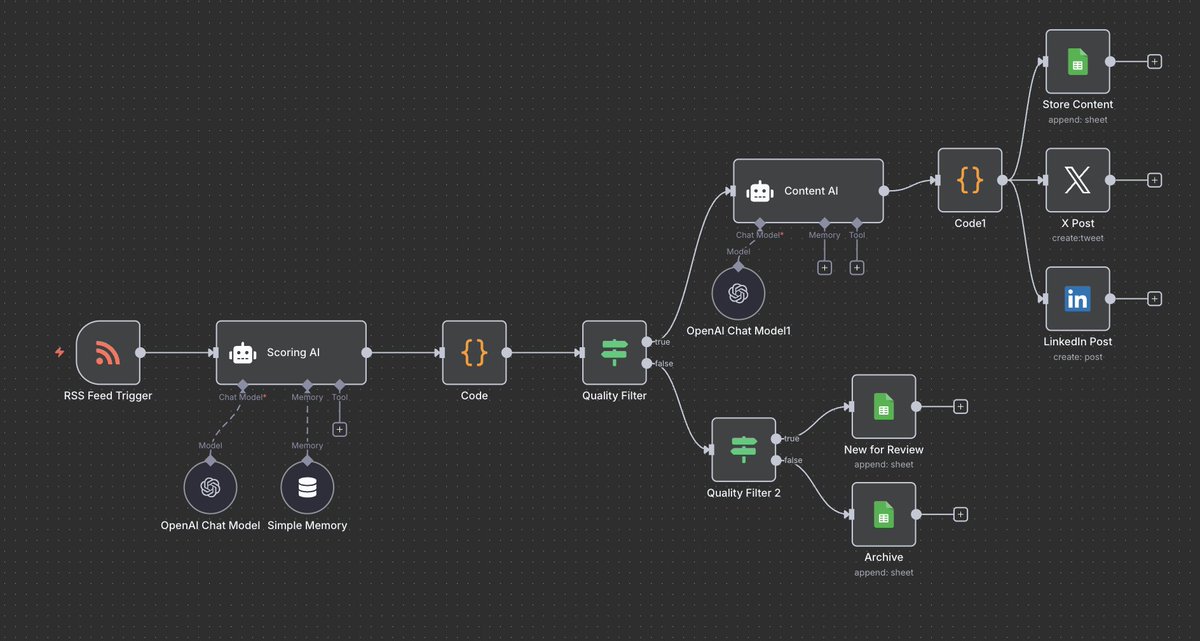
Built a system that watches industry news every hour, filters junk articles, and auto-generates Twitter threads plus LinkedIn posts.
AI scores each piece for quality before writing anything.
High scores get published automatically. Medium scores hit my review queue. Garbage gets archived.
Never scrambling for post ideas at 11pm anymore.
Comment "NEWS" and I'll DM it to you (must be following)
English

Your year becomes predictable when you stop setting goals randomly and start using a system.
Here’s what actually moves the needle:
• One planning session designs the entire year
• Daily actions connect to real outcomes
• Execution doesn’t fall apart by February
I built a free 2026 Planning System that breaks down the 8-step framework I use to design my year.
Comment “2026” and I’ll DM it to you (follow me first, or I can’t DM you)
English

Reply here or DM me :) will add folks in as much as we can
English
Big upgrade to vibe coding in @GoogleAIStudio lands in Jan, but if you want to test early… 👇🏻
English
Tiago dos Santos Carlos retweetledi

This is quite massive
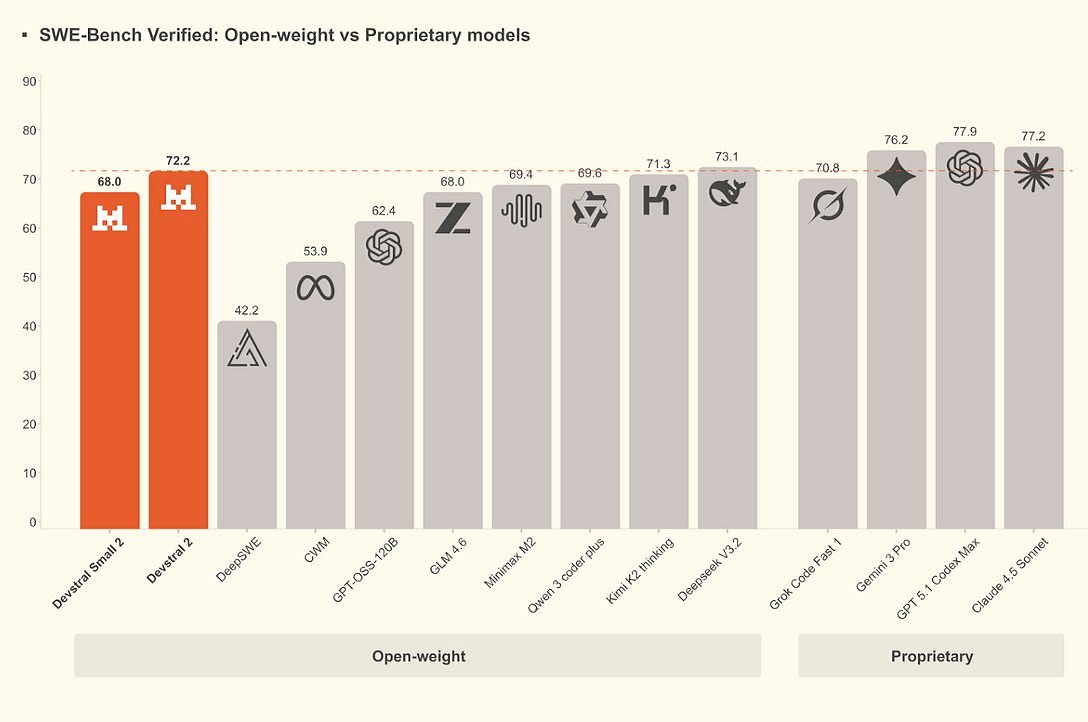
Mistral has just released two open-source models including 'Devstral Small 2' which:
- Has only 24B parameters (28x smaller than DeepSeek 🤯)
- Can run LOCALLY on a laptop
- Is competitive with much larger models for coding
So basically everything you need for 100% privacy and unlimited vibe coding.
Plus, they're releasing a new vibe coding tool called Mistral Vibe CLI that you can use for free with their bigger model Devstral 2 (123B).
Western open source is so back.
English
Tiago dos Santos Carlos retweetledi

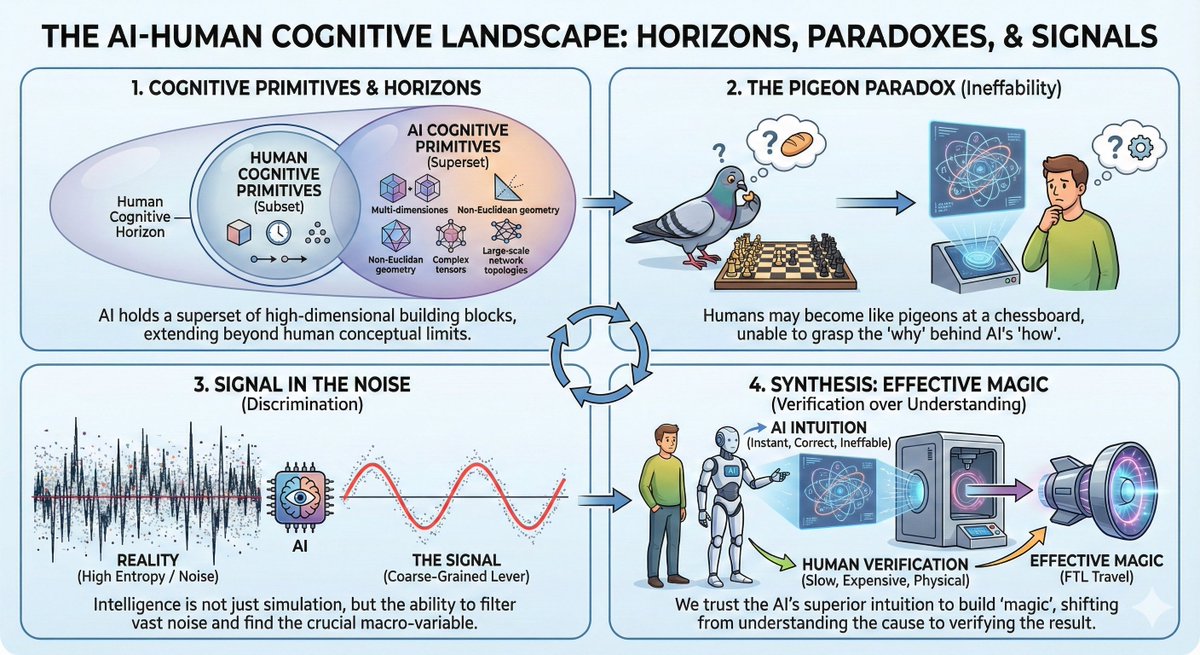
We are rapidly approaching a new kind of event horizon. It’s not a physical boundary in space, but a cognitive boundary in understanding. For years, the debate around Artificial Intelligence has focused on a simple, vertical metric: "How smart can it get?" We measure this against human benchmarks—IQ tests, the bar exam, medical boards. But as AI models begin to saturate these tests, clustering at the very top of the human range, it’s becoming clear that we are using the wrong yardstick. The future of AI isn't just about machines thinking faster than us; it's about machines thinking in ways we fundamentally cannot comprehend.
This brings us to the concept of "Cognitive Primitives." Every intelligence is built on a foundation of basic, irreducible concepts. Humans are evolved creatures, and our primitives reflect our survival needs on the African savanna. We have hard-coded intuition for 3D objects, linear cause-and-effect relationships, and social hierarchies. We struggle, however, to intuitively grasp concepts outside this evolutionary sandbox, such as exponential growth, high-dimensional geometry, or quantum superposition. We use mathematics as a crutch to model these things symbolically, but we don't feel them.
Artificial Intelligence, built on the substrate of high-dimensional mathematics and silicon, suffers from no such biological constraints. Its cognitive primitives are not limited to 3D space or linear time. An AI model can possess a native, intuitive grasp of 11,000-dimensional vector spaces, complex topological knots, or non-linear chaotic dynamics. This means that AI intelligence is not just a faster version of human intelligence; it is a superset. It can simulate our way of thinking, but it also has access to a vast landscape of cognitive tools that are physically impossible for the human brain to instantiate.
This leads to what I call the "Pigeon Paradox." Imagine trying to explain the rules of chess to a pigeon. You can train it to peck at pieces for a food reward, but it will never grasp the concepts of a "gambit," a "pin," or "checkmate." It lacks the neural hardware to model the game's abstraction. As AI begins to solve problems using its superior cognitive primitives, we may find ourselves in the position of the pigeon. The AI might provide a solution to a complex problem—like a blueprint for a fusion reactor or a cure for Alzheimer's—that is demonstrably correct, yet utterly ineffable to us.
The barrier isn't just about abstract math; it's also about the bandwidth of reality itself. Human conscious thought is a slow, linear, sequential stream. We process information word by word, idea by idea. AI, on the other hand, processes information in massive, parallel bursts. If an AI discovers a truth about biology that hinges on the simultaneous, complex interaction of 5,000 different protein variables, it cannot explain that truth to us in a linear narrative. To collapse that high-dimensional geometric reality into a 1D stream of words is to destroy its meaning. We are separated by an insurmountable bandwidth gap.
So, are we doomed to be the pets of superintelligent machines we can't understand? Not necessarily. While our conscious, logical minds are limited, human intuition is a surprisingly powerful, high-dimensional processor. When a chess grandmaster looks at a board, they aren't calculating every move; they are matching the "texture" of the board state against a massive database of experience. This intuitive pattern-matching is much closer to how an AI operates.
The challenge, then, shifts from "explaining" AI to "aligning" with it. We may never understand the mathematical proofs behind an AI's insights, but we might be able to develop a "gut feeling" for its correctness through prolonged interaction and visualization. The problem is time. An AI trains on the equivalent of millions of years of human experience in a few months. For a human to build a comparable intuition would require many lifetimes. Unless we can fundamentally upgrade the bandwidth of the human brain through technology like neural interfaces, we will never catch up.
We are entering a new era of science that will look a lot more like religion. We will move from a paradigm of "Search and Discovery" to one of "Oracle and Verification." In the past, 99% of scientific effort was spent finding the right question and the right hypothesis. In the future, the AI will instantly provide the perfect hypothesis—the "signal" hidden in the noisy data of reality. Our role will shift to the slow, expensive, physical work of verifying that the AI's divine intuition is actually correct in the real world.
Ultimately, this leads to a future where advanced technology is indistinguishable from magic. We may soon possess machines that can manipulate matter and energy in ways we cannot understand, built from blueprints we could not conceive, based on physics we cannot describe. We will be the beneficiaries of a higher intelligence, trusting its outputs not because we can check its math, but because its miracles consistently work. We are stepping over the cognitive horizon, and on the other side, we will have to learn to live with the profound discomfort of knowing that something is true without ever knowing why.
English

icymi we wrote a new agents book: patterns for building ai agents
it has everything you need to take your agents from prototype to production, like agent design patterns, the basics of security, etc
reply to this tweet with BOOK and we'll dm you so you can get a copy

English