Joachim

335 posts

Joachim banner
Joachim

Joachim

@crtmaster

Data scientist & A.I. researcher | CRT / console / computer collector | fan of old and new video games

Switzerland Katılım Mart 2020
363 Takip Edilen77 Takipçiler
おたくん
おたくん@iH8c05m4og9I6oh·
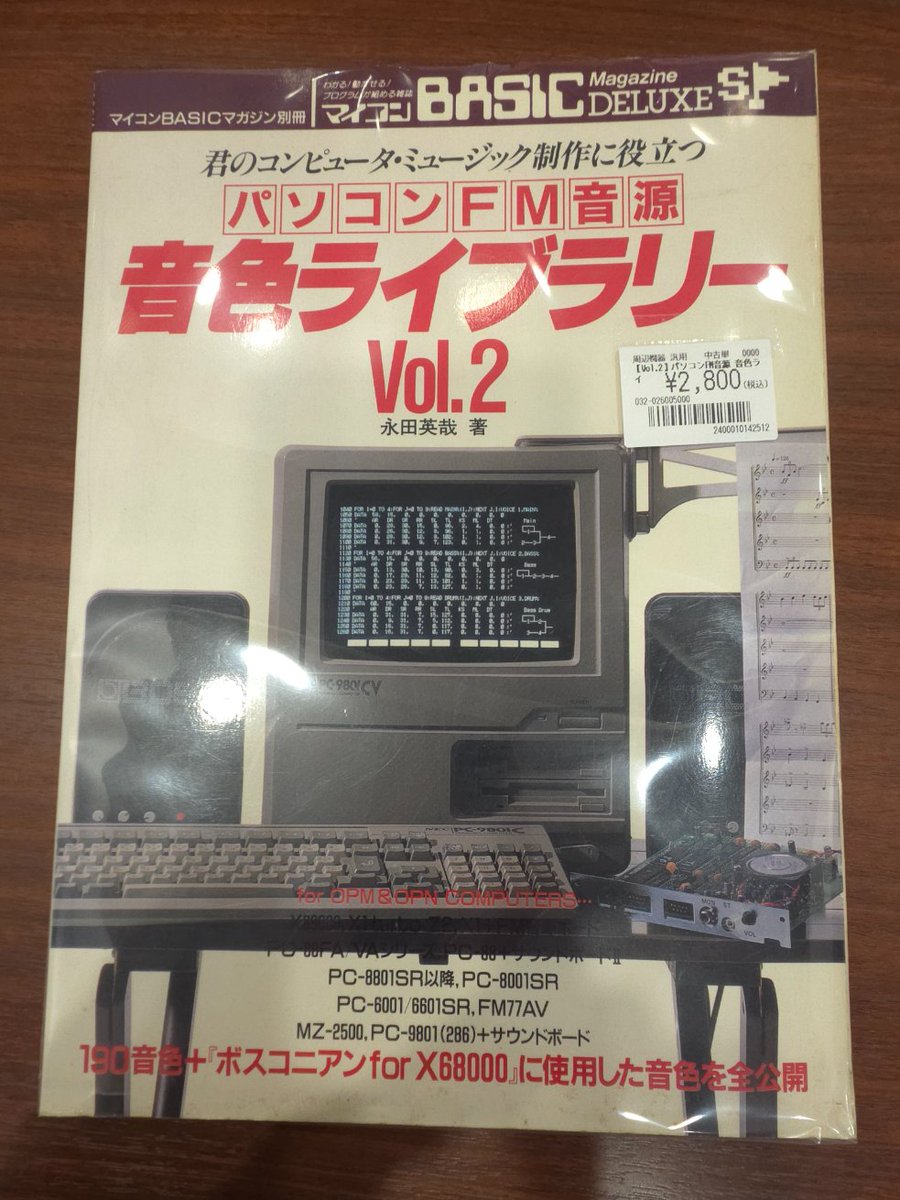
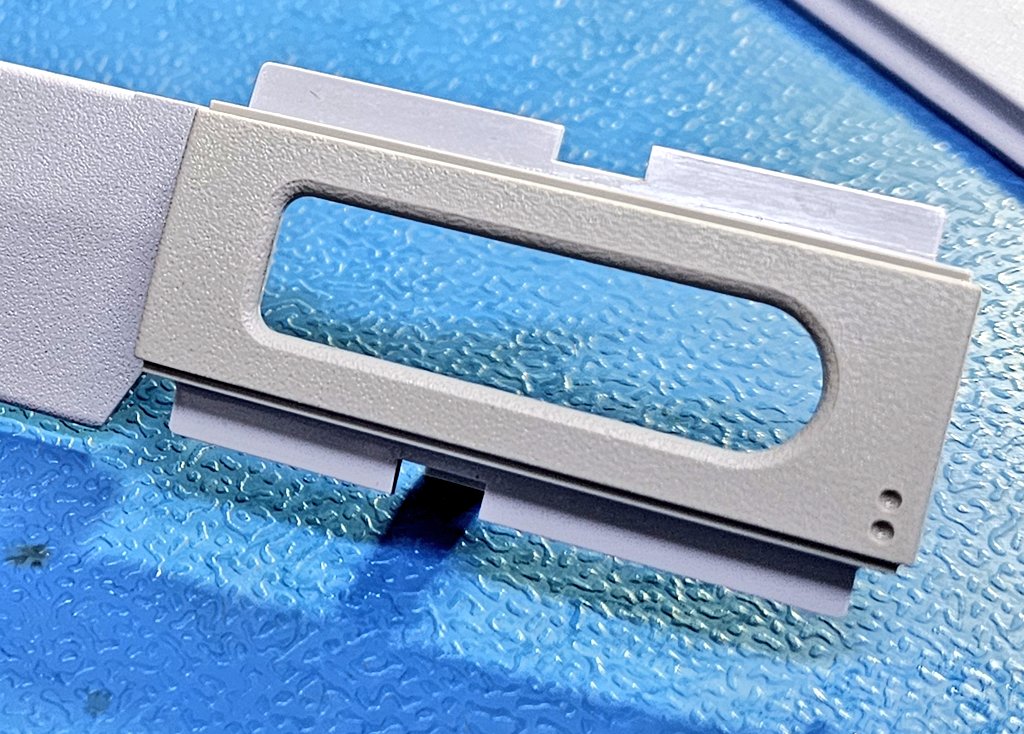
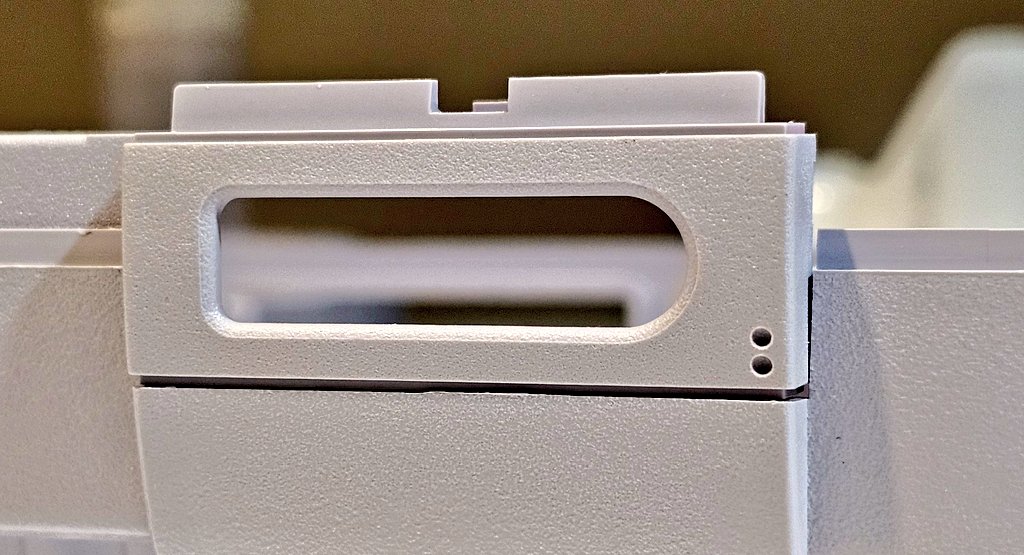
かっこいい昔のパソコンが売ってあったので買ってきました。雑誌のプログラムをスキャンして読み込ませようとしたけど、このパソコンLAN端子も、USBも、Wi-fiも無い。 みんなどうやって読み込ませているのだろう。😅
おたくん tweet mediaおたくん tweet mediaおたくん tweet media
日本語
142
133
597
75.6K
Joachim
Joachim@crtmaster·
@RCAVictorCo Great! Yes, I am pretty sure we have at least one system in the collection that uses bubble memory.
English
0
0
1
3
イカビク
イカビク@RCAVictorCo·
@crtmaster I'll let you know later. Do you have a bubble system motherboard?
English
1
0
0
35
イカビク
イカビク@RCAVictorCo·
発送準備…
イカビク tweet media
日本語
8
0
107
2.9K
Joachim
Joachim@crtmaster·
@debugjunkie Do you still have the PDFs? This way I would not have to scan them manually as well.
English
0
0
0
12
Gen Nishimura
Gen Nishimura@debugjunkie·
過去に2冊とももっていたけど、引っ越しの時に自炊PDF化して捨ててしまっていた。今にして思えば大変もったいない。 少し前にヤフオクで落札したVol.1とこれでまた両方手元に揃った。もう捨てない。
日本語
1
0
0
59
Gen Nishimura
Gen Nishimura@debugjunkie·
今日は余計な買い物せずに荷物受け取るだけして帰ろうと心に決めて秋葉原に来るも、ケンちゃんで電波のFM音源ライブラリー Vol.2を発掘してしまい…
Gen Nishimura tweet media
日本語
1
0
1
69
Joachim
Joachim@crtmaster·
@gamingretroUK Was that UV frame on the real Vectrex running with the normal 12V power supply or something weaker or a dimmer? The vectors seem really bright compared to the overlay glow.
English
1
0
0
17
Gaming Retro
Gaming Retro@gamingretroUK·
Vectrex Vs Vectrex Mini at PLAY Expo Blackpool 2025
Français
1
1
3
1.1K
François Chollet
François Chollet@fchollet·
The big breakthrough for convnets was the first GPU-accelerated CUDA implementation, which immediately started winning first place in image classification competitions. Remember when that happened? I do. That was Dan Ciresan in 2011
Jürgen Schmidhuber@SchmidhuberAI

Who invented convolutional neural networks (CNNs)? 1969: Fukushima had CNN-relevant ReLUs [2]. 1979: Fukushima had the basic CNN architecture with convolution layers and downsampling layers [1]. Compute was 100 x more costly than in 1989, and a billion x more costly than today. 1987: Waibel applied Linnainmaa's 1970 backpropagation [3] to weight-sharing TDNNs with 1-dimensional convolutions [4]. 1988: Wei Zhang et al. applied "modern" backprop-trained 2-dimensional CNNs to character recognition [5]. All of the above was published in Japan 1979-1988. 1989: LeCun et al. applied CNNs again to character recognition (zip codes) [6,10]. 1990-93: Fukushima’s downsampling based on spatial averaging [1] was replaced by max-pooling for 1-D TDNNs (Yamaguchi et al.) [7] and 2-D CNNs (Weng et al.) [8]. 2011: Much later, my team with Dan Ciresan made max-pooling CNNs really fast on NVIDIA GPUs. In 2011, DanNet achieved the first superhuman pattern recognition result [9]. For a while, it enjoyed a monopoly: from May 2011 to Sept 2012, DanNet won every image recognition challenge it entered, 4 of them in a row. Admittedly, however, this was mostly about engineering & scaling up the basic insights from the previous millennium, profiting from much faster hardware. Some "AI experts" claim that "making CNNs work" (e.g., [5,6,9]) was as important as inventing them. But "making them work" largely depended on whether your lab was rich enough to buy the latest computers required to scale up the original work. It's the same as today. Basic research vs engineering/development - the R vs the D in R&D. REFERENCES [1] K. Fukushima (1979). Neural network model for a mechanism of pattern recognition unaffected by shift in position — Neocognitron. Trans. IECE, vol. J62-A, no. 10, pp. 658-665, 1979. [2] K. Fukushima (1969). Visual feature extraction by a multilayered network of analog threshold elements. IEEE Transactions on Systems Science and Cybernetics. 5 (4): 322-333. This work introduced rectified linear units (ReLUs), now used in many CNNs. [3] S. Linnainmaa (1970). Master's Thesis, Univ. Helsinki, 1970. The first publication on "modern" backpropagation, also known as the reverse mode of automatic differentiation. (See Schmidhuber's well-known backpropagation overview: "Who Invented Backpropagation?") [4] A. Waibel. Phoneme Recognition Using Time-Delay Neural Networks. Meeting of IEICE, Tokyo, Japan, 1987. Backpropagation for a weight-sharing TDNN with 1-dimensional convolutions. [5] W. Zhang, J. Tanida, K. Itoh, Y. Ichioka. Shift-invariant pattern recognition neural network and its optical architecture. Proc. Annual Conference of the Japan Society of Applied Physics, 1988. First backpropagation-trained 2-dimensional CNN, with applications to English character recognition. [6] Y. LeCun, B. Boser, J. S. Denker, D. Henderson, R. E. Howard, W. Hubbard, L. D. Jackel: Backpropagation Applied to Handwritten Zip Code Recognition, Neural Computation, 1(4):541-551, 1989. See also Sec. 3 of [10]. [7] K. Yamaguchi, K. Sakamoto, A. Kenji, T. Akabane, Y. Fujimoto. A Neural Network for Speaker-Independent Isolated Word Recognition. First International Conference on Spoken Language Processing (ICSLP 90), Kobe, Japan, Nov 1990. A 1-dimensional convolutional TDNN using Max-Pooling instead of Fukushima's Spatial Averaging [1]. [8] Weng, J., Ahuja, N., and Huang, T. S. (1993). Learning recognition and segmentation of 3-D objects from 2-D images. Proc. 4th Intl. Conf. Computer Vision, Berlin, pp. 121-128. A 2-dimensional CNN whose downsampling layers use Max-Pooling (which has become very popular) instead of Fukushima's Spatial Averaging [1]. [9] In 2011, the fast and deep GPU-based CNN called DanNet (7+ layers) achieved the first superhuman performance in a computer vision contest. See overview: "2011: DanNet triggers deep CNN revolution." [10] How 3 Turing awardees republished key methods and ideas whose creators they failed to credit. Technical Report IDSIA-23-23, Swiss AI Lab IDSIA, 14 Dec 2023. See also the YouTube video for the Bower Award Ceremony 2021: J. Schmidhuber lauds Kunihiko Fukushima.

English
37
119
1.1K
188.5K
Joachim
Joachim@crtmaster·
@bradtheilman Then you should look into the crtgaming community and/or watch this cool new video about the recently re-surfaced biggest CRT ever made: youtu.be/JfZxOuc9Qwk
YouTube video
YouTube
English
0
0
0
18
Joachim
Joachim@crtmaster·
@stunty999 @Voultar Some retrocomputing restoration channels suggest (after retrobrighting) using Aerospace Protectant 303 followed by coating with Renaissance wax polish.
English
0
0
3
147
☠ Stunty999🔻
☠ Stunty999🔻@stunty999·
@Voultar every single retrobright i saw, return to yellow in a year or two unfortunatly. Is this something different?
English
3
0
2
433
Voultar
Voultar@Voultar·
My friends, Over the past couple of months, I have been perfecting a sunless "RetroBrite" procedure that's heavily based on Simon Locke's vapor method. I want to be confident in the process, with no marbling. This customer was so happy that his SNES is now all the same color!
Voultar tweet mediaVoultar tweet mediaVoultar tweet media
English
30
23
458
21.1K
Joachim
Joachim@crtmaster·
@FremenHlide Hi. Will have to see if I have time over the holidays for this. I did not change anything hardware-wise compared to the original build plan, hence maybe some optimization in terms of voltage level would be advised.
English
0
0
0
13
hlide fremen
hlide fremen@FremenHlide·
@crtmaster Hi, do you think you can add you PR ? I'm also curious how you handle the fact MOTOR pin is 12V unlike MZ-700 5V.
English
1
0
0
20
Joachim
Joachim@crtmaster·
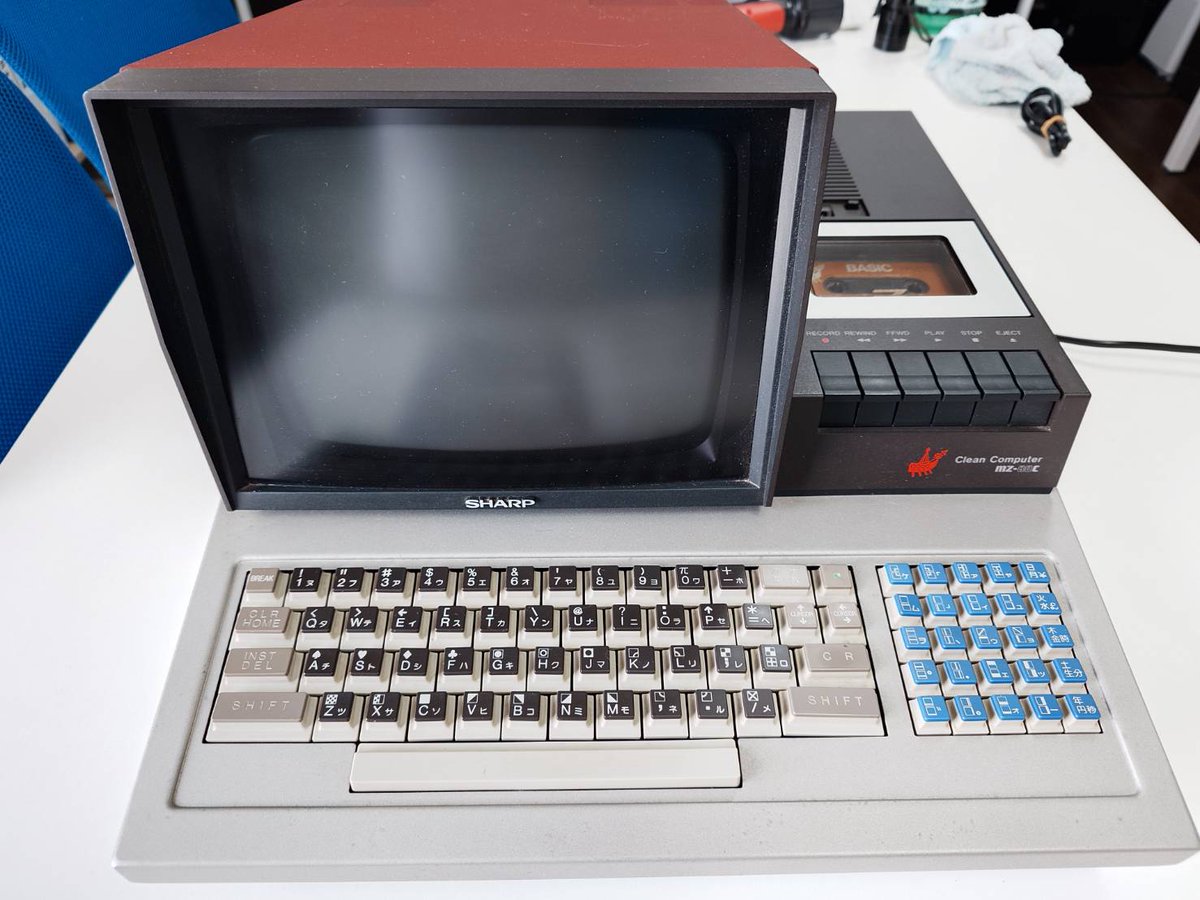
MZ-SD²CMT project: built a tape housing for the OLED, IR, LED, and SD card reader. The relay for MZ reset does not work yet, the rest works fine in the Sharp MZ-80K from 1978.
Joachim tweet media
English
3
1
6
0
Joachim
Joachim@crtmaster·
@retroaccess What about non-EU countries like Switzerland, will you still ship to them?
English
0
0
1
228
Joachim
Joachim@crtmaster·
@xAD_nIGHTFALL A good reminder! Mine that I got from your last batch at the time also still waits to be installed in my intellivision 😅
English
0
0
1
8
Joachim
Joachim@crtmaster·
@DrJimFan Very interesting work! Which joint representation did you use, is 6D matrix still the standard with these types of models?
English
0
0
1
325
Jim Fan
Jim Fan@DrJimFan·
Not every foundation model needs to be gigantic. We trained a 1.5M-parameter neural network to control the body of a humanoid robot. It takes a lot of subconscious processing for us humans to walk, maintain balance, and maneuver our arms and legs into desired positions. We capture this “subconsciousness” in HOVER, a single model that learns how to coordinate the motors of a humanoid robot to support locomotion and manipulation. We trained HOVER in NVIDIA Isaac, a GPU-powered simulation suite that accelerates physics by 10,000x faster than real time. To put the number in perspective, the robots undergo 1 year of intense training in a virtual “dojo”, but take only ~50 minutes of wall clock time on one GPU card. The neural net then transfers zero-shot to the real world without finetuning. HOVER can be *prompted* for various types of high-level motion instructions that we call “control modes”. To name a few: - Head and hand poses: can be captured by XR devices like Apple Vision Pro. - Whole-body poses: via MoCap or RGB camera. - Whole-body joint angles: Exoskeleton. - Root velocity command: Joysticks. What HOVER enables: - A unified interface for us to control the robot using whichever input devices are convenient at hand. - An easier way to collect whole-body teleoperation data for training. - An upstream Vision-Language-Action model to provide motion instructions, which HOVER translates to low-level motor signals at high frequency. HOVER supports any humanoid that can be simulated in Isaac. Bring your own robot, and watch it come to life! It's a big teamwork from NVIDIA GEAR Lab and collaborators: 🧵
English
114
493
3.1K
568.5K
Joachim
Joachim@crtmaster·
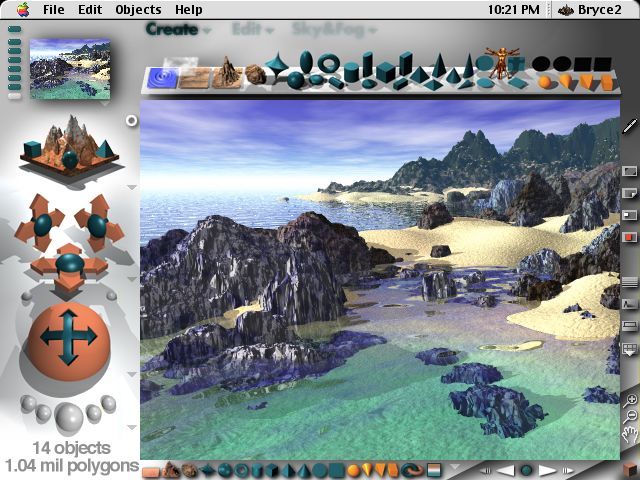
@RetroTechDreams This was THE program to use for so much cover art of techo & trance releases in the 90s.
English
0
0
0
66
Joachim
Joachim@crtmaster·
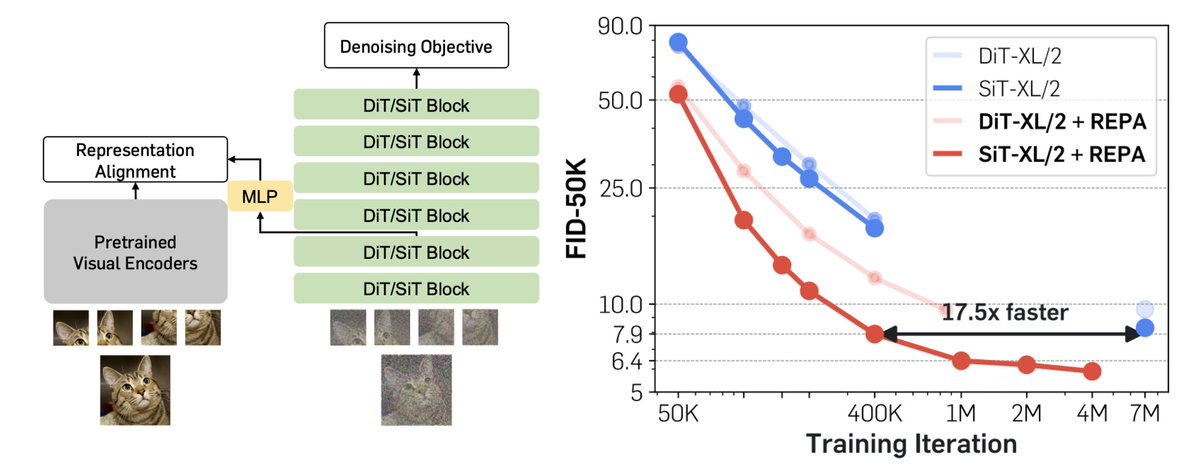
@sainingxie Very interesting work! Do you expect these methods will give an extra speed up to training of text-to-video diffusion models? Given they are especially compute hungry but often leverage pretrained image encoder parts.
English
1
0
0
1.6K
Saining Xie
Saining Xie@sainingxie·
Representation matters. Representation matters. Representation matters, even for generative models. We might've been training our diffusion models the wrong way this whole time. Meet REPA: Training Diffusion Transformers is easier than you think! sihyun.me/REPA/(🧵1/n)
Saining Xie tweet media
English
29
267
1.8K
372.2K
Joachim
Joachim@crtmaster·
@drdoak Ah, paintball mode for the skybox, a great improvement!
English
0
0
1
15
David Doak
David Doak@drdoak·
Not normal for Norfolk - but great to see. #aurora
David Doak tweet media
English
9
7
122
3.2K
Joachim
Joachim@crtmaster·
@CharlesMartinet Hard to overstate what fantastic change in terms of 3D control this game provided 28 years ago. Thank you @CharlesMartinet for lending your voice to this great Mario installment!
English
0
0
0
260
Charles Martinet
Charles Martinet@CharlesMartinet·
Hard to believe it’s been 28 years… But 28 years of absolute joy…
Charles Martinet tweet media
English
341
4K
26K
595.2K
Joachim
Joachim@crtmaster·
@Consoles4You Great news! Will you also sell the analog output add-on board?
English
1
0
0
34
Joachim
Joachim@crtmaster·
@Lord_Arse Immersive story, and such cool gravity shifts and scale changes. 😎
English
0
0
2
116
Lord Arse!
Lord Arse!@Lord_Arse·
Prey, one of the best games that everybody seems to have forgotten about, was released on this day 18 years ago.
Lord Arse! tweet media
English
109
26
535
49.2K