Sabitlenmiş Tweet
AGC
714 posts

AGC
@cryptoAGC
Founder, https://t.co/TNs2o3WJ8c

Lisbon, Portugal Katılım Kasım 2020
653 Takip Edilen6.9K Takipçiler

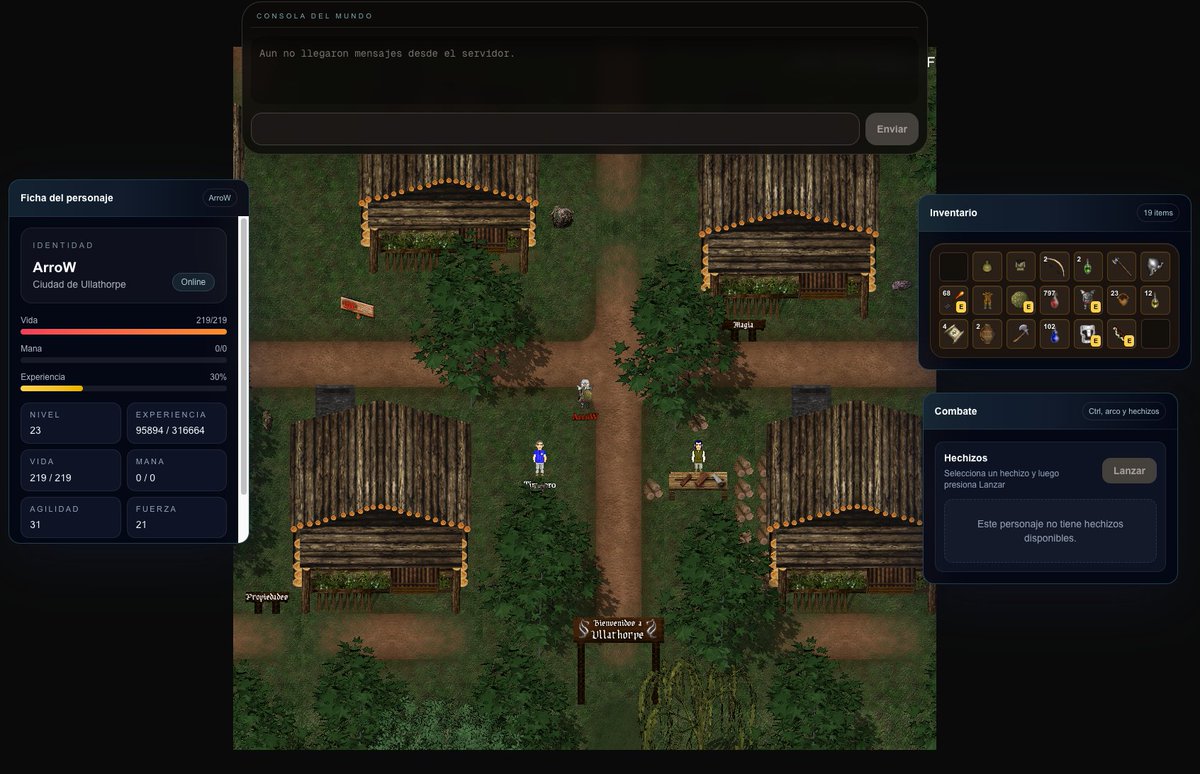
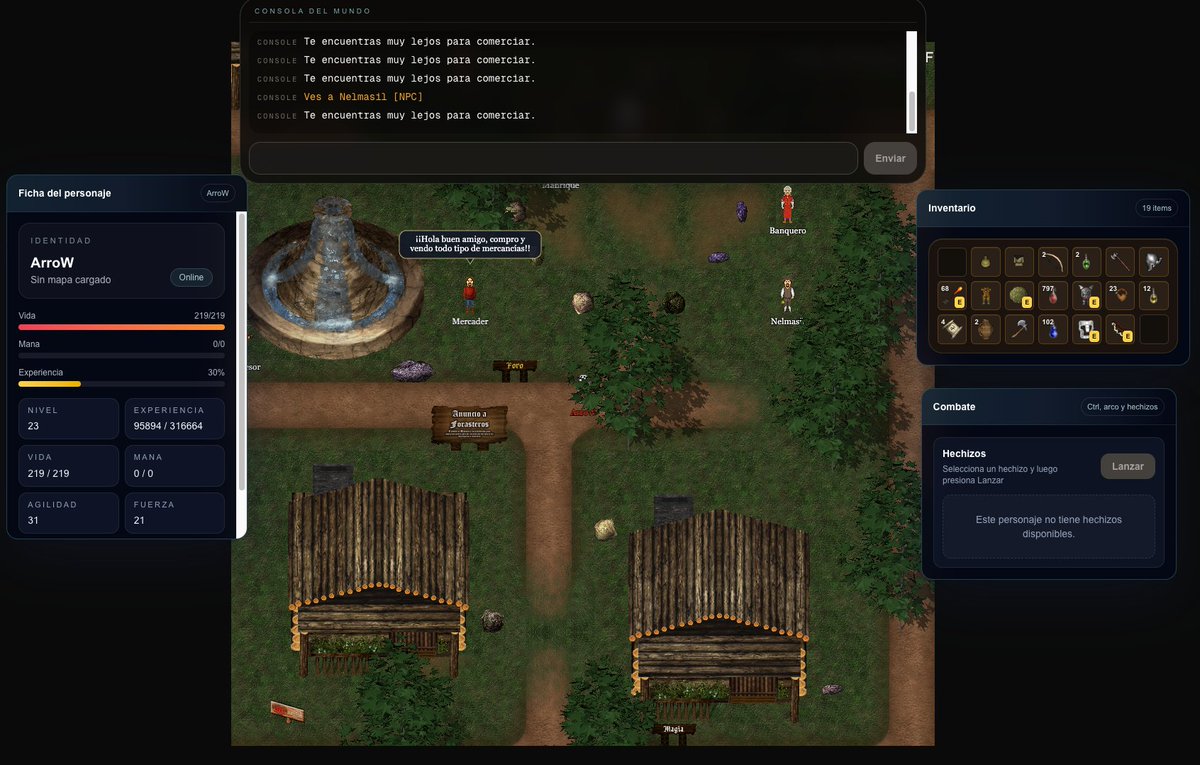
Volvi a programar Argentum Online Web, 11 años después y teniendo LLMs que hacen gran parte del código creo que puedo lanzar de nuevo un proyecto que me hizo muy feliz con tecnología actualizada, es un experimento que estoy haciendo, no le den bola a la UI es simplemente para probar que funcione todo bien desde el servidor.
Quiero dejar un servidor prendido y que cualquiera pueda entrar y jugar, estuve probando y hasta con el nuevo engine corre bien en celulares (desde Chrome) pero es un juego bastante incomodo para jugar desde ahi.
Lo mas probable es que deje prendido 2 servidores, uno de PvE como tenia antes, donde puedas entrar al mundo del AO y jugar normalmente y uno 100% dedicado al PvP para entrar con una arena con amigos o gente que haya dando vueltas por ahi.


Español

@KyleSamani @rasmr_eth Now that you’re no longer at Multicoin, is there a specific place you’ll be sharing your writings going forward?
English

@rasmr_eth Gas fees don’t matter for valuation
multicoin.capital/2025/01/22/the…
English
AGC retweetledi

We’re now part of the @CoinMarketCap Accelerator partner network.
Projects going through CMC Labs will have access to our support to help optimize token design before launch.

English

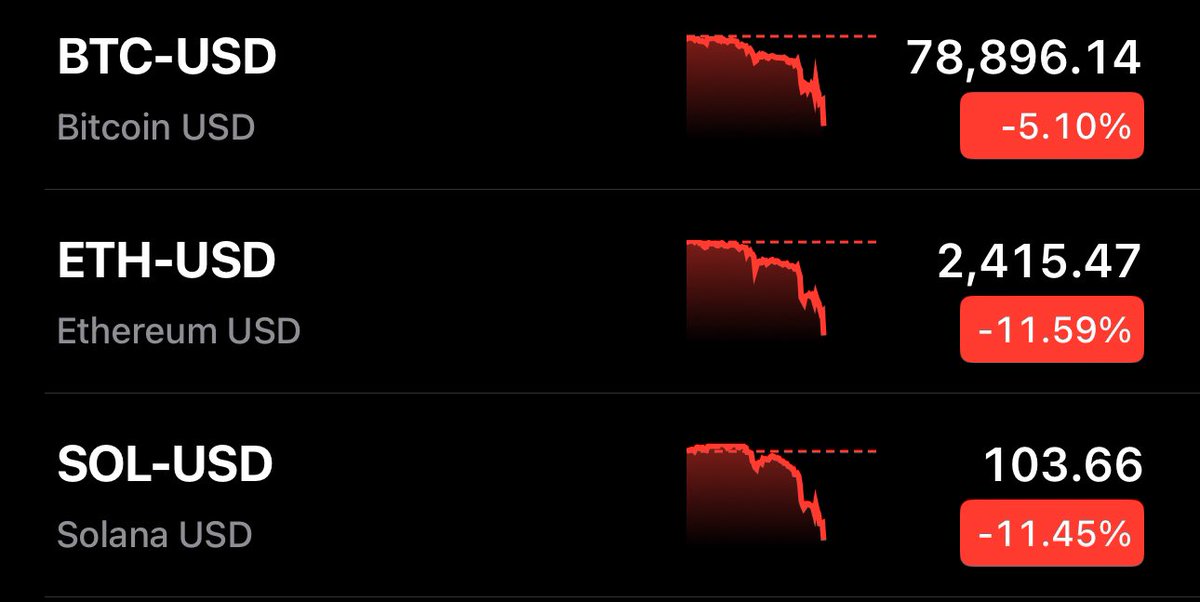
@AutismCapital Why would you expect a made up “currency” and 2 L1s that accrue no economic value from the apps built on them to be “safe”? Revenue producing applications like $PUMP $HYPE and other DeFi apps are more likely to be safe havens than these 3
English

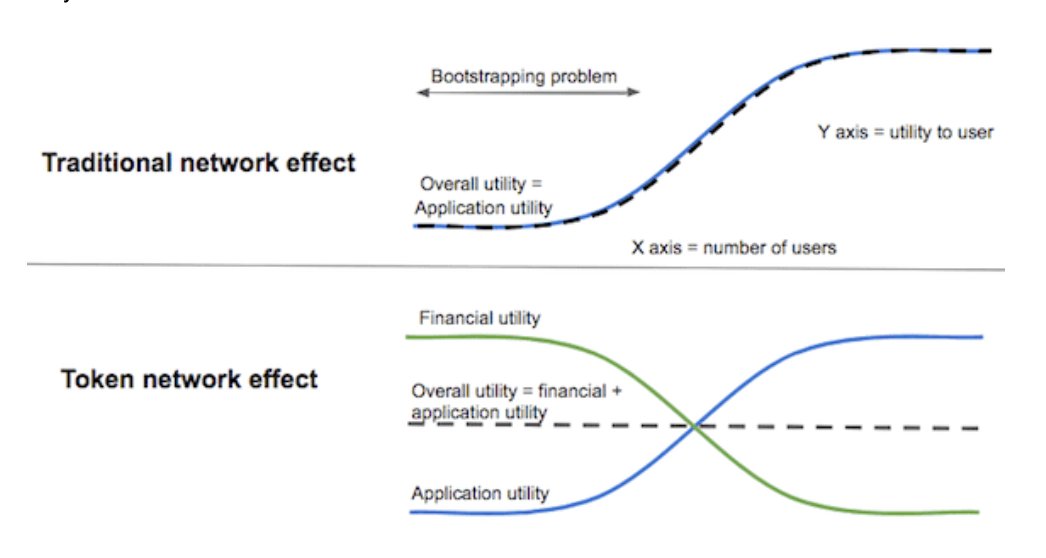
Great presentation guy, I’m completely aligned under the theory that early on during the bootstrapping phase when network effects haven’t kicked in, you need to provide users with financial utility via token rewards to make up for the lack of native utility.
But what most DePIN protocols lack, is that once the network reaches critical mass, it MUST start accruing value back into the token (buybacks for example)
If you analyze it from first principles, early on it’s not only the project itself bearing the cost of the bootstrapping phase; it’s also effectively subsidized by early investors through dilution.
users, builders, and early investors should benefit from the the network effects rather than only funding the growth without participating in the upside.
Incentives will only be truly aligned when value starts accruing back into the token.

English

Here you have a clear breakdown of their vesting schedule:
docs.google.com/spreadsheets/d…
The $FOGO token schedule was reconstructed directly from their documentation:
fogo.io/blog/introduci…
Worth adding a clause that if tokenomics change in any way, the bet terminates immediately.
From first principles: they launched with a low float. (based on whats truly in the public's hands)
Vesting compounds inside the cliff and unlocks in September 2026, creating a material supply shock as effective float expands.
Token was listed yesterday, but vesting started long before.
Hope it helps Kyle, take his soul.

English

Would you like to structure a “relative performance” prop bet related to your below tweet? @KyleSamani
Now until EOY?
When I win: $USDC settled on @fogo via @infinex
Kyle Samani@KyleSamani
@CatfishFishy Then you should short SOL and long FOGO
English

Nerdy tokenomics post...
Venice released an experimental token design for accessing AI compute back in Sept, called DIEM
Staking DIEM grants access to any AI model on Venice for free (1 DIEM = $1 of renewing daily credits): it makes the marginal cost of compute free.
At first, it was API access only (no web), and only a few open-source models.
In Oct-Nov we allowed its use on the Venice web app (no longer API only), and then started adding all the leading external AI models to Venice.
Today, users can access Claude Open 4.5, Gemini 3, Nano Banana Pro, GPT 5, etc from Venice. This is both convenient (all the models in one interface), but also provides additional privacy (pseudonymity vis-a-vis Anthropic, Google, OpenAI, etc). These models are unequivocally the best in their respective categories.
Meanwhile Venice's userbase (both app and API) has continued growing.
And now we're seeing the tokenomics of DIEM start to play out... seven consecutive weeks of green candles amid a sideways or down broader market.
Why is it happening?
Imaging paying $100 to get $1 every day of AI credit. No brainer... especially because you can sell the DIEM back when done.
So people bought at $100 to use it and price of DIEM rose
At $200 it's still a no brainer, so price kept rising. Today it hit $300. What's $1/day worth as an asset?
Here's the mechanical part... as DIEM is bought and staked for AI compute, the rising price incentivizes VVV holders to mint more of it.
DIEM can only be created ("minted") from VVV, but as DIEM supply rises, the "mint rate" also rises, meaning it takes more VVV to mint 1 DIEM. This occurs along an algorithmic exponential curve.
Minting DIEM locks the VVV in an amount according to the mint rate. It can only be unlocked by repaying same qty of DIEM at any later date. This destroys the DIEM and releases the VVV.
DIEM's utility is flowing it toward usage and price is rising. This means increasing amounts of VVV are getting locked away (today over 6.3m VVV is locked, nearly 10% of total supply).
The more useful AI consumers find DIEM, the higher they'll bid for its scarce supply, which raises price, and locks further VVV on an exponential curve.
Equilibrium is eventually found when opportunity cost of capital paid for DIEM is no longer lower than marginal utility of the AI compute it can obtain. Someone should happily pay $100 for $1/day but prob shouldn't pay $10k for the same... as the NPV of the yield of $10k should be higher than just paying $1/day of cash for credits. Once that DIEM price is found, the amount of VVV locked also finds equilibrium.
As VVV is locked for this purpose, a portion of emissions flows to Venice, compensating for the costs of the AI compute its providing for free. Venice can control something called the "Target Supply" of DIEM, raising it up or down, which changes the mint rate which affects (but doesn't control) supply. If costs become too onerous to Venice, it reduces Target Supply, and it disincentives further minting, bringing equilibrium of supply back down at any given DIEM price.
We have no idea where these equilibria will or should be, but we know they exist.
Perhaps you'll find this set of mechanisms interesting, and I hope they'll inspire other experiments.
I wonder how long until sophisticated AI agents truly dive into the exploration of tokenomics as a vast design space... perhaps they already are? Perhaps they were involved in DIEM's design?
venice.ai/blog/introduci…
$DIEM $VVV @AskVenice

English

One of the most powerful yet least well-understood token types is the arcade token. 👾🪙👀
The name comes from the idea of an arcade where you swap cash for physical tokens you can use to play Tekken Gator Panic – but the idea encompasses all manner of tokens-as-medium-of-exchange, including reward points and in-game currency.
Like with other token models, arcade tokens promote network effects and brand loyalty (there's a reason airlines have frequent flyer programs!).
But critically, arcade tokens exist in infinite supply and support an exchange economy by design. They are freely available from the issuer at a public "faucet price" and redeemable for a variety of goods or services. This economic model enables builders to print and provision value within their ecosystem, while keeping the token stable so that users can easily reason about what they're worth and when to redeem them.
This inverts a common (incorrect) assumption about tokens: neither fixed supply nor speculation are necessarily required for creating value. Arcade tokens aren't the right model for every business, but they're perfect for spend-centric economies, as well as blockchain-based reputation and reward programs.
@milesjennings, @eddylazzarin, @Tim_Roughgarden, and I have been helping teams think through arcade token designs for years at this point, and today we released an @a16zcrypto long-form to share our learnings on the model's opportunities, design trade-offs, and regulatory outlook.
Link to the full article below the fold, and [ARCADE] GAME ON, QED 👇

English

0/ Today Forward Industries (@fwdind ) closed on a $1.65B PIPE cosponsored by my firm, @multicoin along with @jump_ and @galaxyhq . 100% USD, no in-kind
I am now Chairman of the company
In addition to Multicoin's investment, I invested $25M personally into the PIPE


English

@KyleSamani @Matt_Hougan This is a masterpiece.
Probably read this article over 15 times
English

@Matt_Hougan UNI has never produced a dollar of cashflow, and never will
multicoin.capital/2021/09/16/dao…
English

@jdorman81 Love this, lets connect.
Maybe an easier similar solution would be unlocked MCAP, technically not that efficient but easier to apply, and still a great step forward.
Float (MCAP) > Unlocked MCAP > FDV
Unlocked MCAP - Float (MCAP) = potential selling pressure.
English

@KyleSamani they have first mover moat, but there's no way to compete with a one sided marketplace
Tesla and Waymo are in critical mass from day zero.
no bootstrap problem
English

New paper with @jason_of_cs @0xSerious @josephbonneau @skominers developing some of the foundations for DePIN (decentralized physical infrastructure) networks, and specifically the key problem of verifying that the agreed-upon services/resources are indeed being provided
Jason Milionis@jason_of_cs
🔥 When can a network prove an object is where it says it is, even if it lies? We nail down the answer in our new paper on DePIN with @0xSerious @josephbonneau @skominers @Tim_Roughgarden. More below. 1/n 👇

English

No it's not.
Dont get me wrong Nils, it's better than most value accrual mechanisms out there.
But the problem with burn mechanics is that they reward all holders equally, whether they’re driving the protocol forward or just holding.
Real value accrual should favor value creation/contribution, not passive exposure.
Otherwise it’s just another misaligned incentive loop and we’re back to the same misaligned incentives that broke Web2.
Also small note: a potential flaw with Auki’s model is that if token price outpaces network adoption, usage gets expensive, builders pull back, and burn pressure dries up.
English

The reason most founders launch their token way too early and then it flops:
They don’t treat it as the beginning of the journey, they treat it as the exit.
That mindset needs to die.
No more bullshit tokenomics or worthless governance tokens just to squeeze more liquidity from users.
Make your token on-chain equity or gtfo.
English

@vc_blondie smart founders know loan option deals with market makers usually do more harm than good.
English