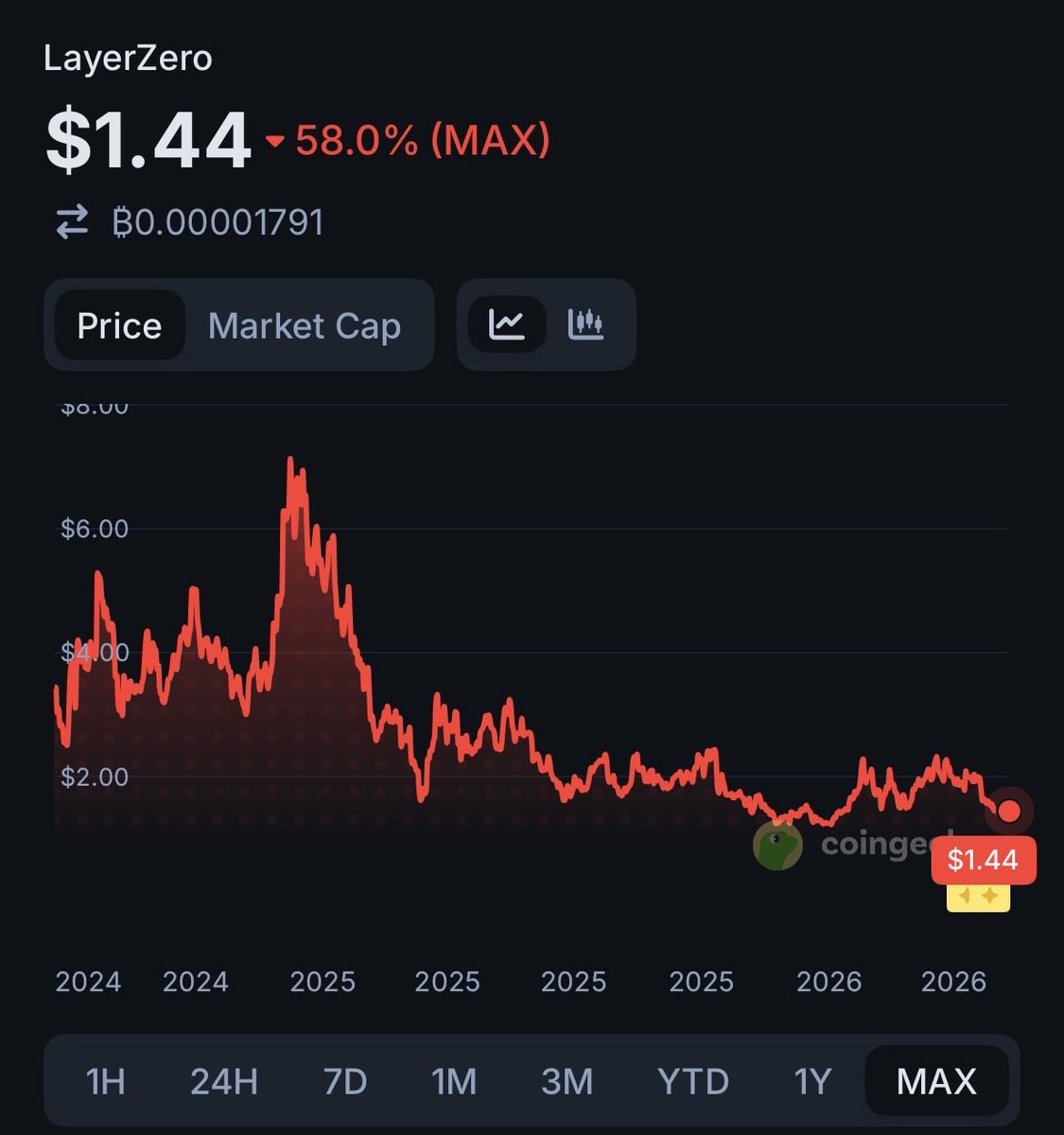
@rookie_of_Ph Maybe because chainlink CCIP is secure enough without relying on additional DVNs that are secured by keys held by meme trading moon bois
English
CryptoY2K
12.4K posts



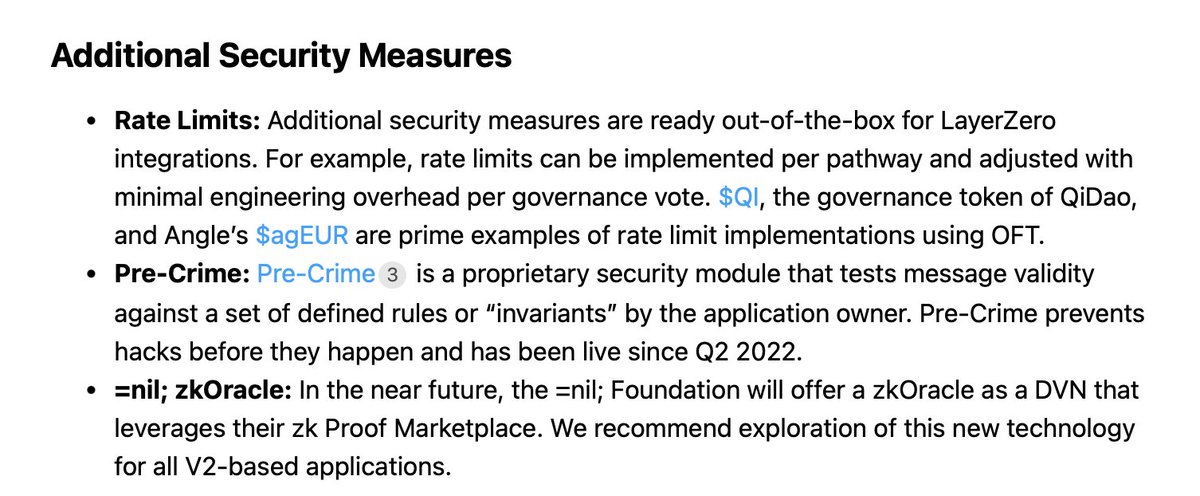

Following recent bridge exploits, Lido contributors are publishing the security principles behind wstETH’s multi-chain strategy, and why @chainlink CCIP was selected as the official cross-chain solution. The analysis covers how Chainlink CCIP delivers strong decentralization, native safeguards, and issuer control as default protocol-level guarantees, which insulates wstETH from a number of attack vectors behind the Kelp / LayerZero exploit. This decision was made last November by the Network Expansion Committee, with CCIP securing wstETH via 16 independent node operators, native rate limiting, and no vendor lock-in over token contracts. Read the full breakdown from Lido contributors: blog.lido.fi/cross-chain-se…




Kraken is deprecating its existing cross-chain provider and migrating to @Chainlink CCIP as its exclusive cross-chain infra to secure Kraken Wrapped Bitcoin (kBTC) & all future Kraken Wrapped Assets. Kraken chose Chainlink CCIP because it offers enterprise-grade infrastructure with strict security & risk management requirements, including: • ISO 27001 and SOC 2 Type 2 certifications • Secure by default architecture • 16 independent nodes • Native rate limits, and more. Together, Chainlink and Kraken can help accelerate the global adoption of crypto by unlocking utility and distribution for all Kraken Wrapped Assets across DeFi. For kBTC customers, no action is required. More details on the migration process to follow on official Kraken channels.




@ankr @LayerZero_Core Is this a parody? Why risk not using Chainlink?

NEW: @jpmorgan files to launch a tokenized Treasury money market fund ($JLTXX) designed as GENIUS Act-compliant reserve assets for stablecoin issuers.

NEW: @The_DTCC is integrating @Chainlink into its Collateral AppChain to unlock 24/7 collateral management This integration enables the seamless pairing of asset prices, valuations, and movement, overhauling how market risk is managed globally Chainlink CRE and the data standard provide a resilient data and orchestration layer at institutional scale, automating advanced collateral workflows Rather than relying on one-off integrations, CRE provides a reusable framework that enables DTCC’s Collateral AppChain to scale across new data types, asset classes, and collateral use cases As a shared infrastructure platform, the Collateral AppChain provides a common, interoperable foundation for collateral providers, receivers, managers, triparty agents, and custodians Publicly unveiled during DTCC’s Great Collateral Experiment, the platform is expected to go live in Q4 2026 In 2025, DTCC’s subsidiaries processed $4.7 quadrillion in securities transactions and provided custody for $114 trillion in securities from over 150 countries and territories




Today we announced progress toward our goal of advancing 24/7 collateral mobility. DTCC’s Collateral AppChain, a shared infrastructure platform for collateral, will leverage the Chainlink Runtime Environment (CRE) and @chainlink data standard to enable near real-time collateral management across financial markets and blockchains. The integration will enable the seamless pairing of asset prices, valuations, and movement, with the aim of overhauling how market risk is managed globally and unlock greater capital efficiency. This milestone reflects our broader vision to enable 24/7, near real-time collateral management across the global financial system. Read the full announcement: dtcc.com/news/2026/may/…


NEW ALL-TIME LOW: Nithya Raman has a 16% chance of winning the LA Mayor race, her lowest point after a high of 59% in late April
Solv's foundational cross-chain architecture is now unified under @chainlink's CCIP standard. Check this one pager on how Solv leverages @chainlink's security standards to make $BTC more productive in DeFi ↓