The Curious Mind

3.7K posts

The Curious Mind banner
The Curious Mind

The Curious Mind

@curiousmindlabs

Writing The Curious Mind — big ideas on markets, technology & the good life for time poor investors, founders and operators. Fewer, better sources of insight.
Katılım Haziran 2015
2.3K Takip Edilen5.8K Takipçiler
The Curious Mind
The Curious Mind@curiousmindlabs·
Your body produces ~7,000 peptides that control nearly everything: hunger, sleep, healing, mood, immunity. We spent 100 years studying them. Now AI can design new ones in hours. The peptides that will matter most in 2035 haven't been invented yet. I wrote a deep primer on what's real, what's hype, and what it means for markets: afewthings.substack.com/p/the-peptide-…
GIF
English
0
0
0
174
The Curious Mind
The Curious Mind@curiousmindlabs·
Peptides are everywhere. Injected by SF tech founders. Debated in the Senate. Fueling a $328M grey market. Novo Nordisk and Eli Lilly are in a multi-billion dollar arms race to turn them into pills, but the real story is much deeper. A primer on the peptide wars: open.substack.com/pub/afewthings…
GIF
English
0
0
1
313
The Curious Mind
The Curious Mind@curiousmindlabs·
@ChrisWillx with Cal Newport on the cost of AI slop was powerful and hard to miss it now that he's mentioned it!
GIF
English
0
0
3
140
The Curious Mind
The Curious Mind@curiousmindlabs·
@LukeGromen @PeterMcCormack Hugely powerful conversation and its worth squaring it with @pmarca chat with @lennysan. I think what the tech guys don't get it is that if there was no debt, then deflation would be probably ok. But not at the level of debt we have!
English
0
0
0
25
Luke Gromen
Luke Gromen@LukeGromen·
Thanks for having me on for an in-depth discussion on the interplay between AI-led deflation, pressure on employment, v. already-straining sovereign bond markets, @PeterMcCormack!
Peter McCormack 🏴‍☠️🇬🇧🇮🇪@PeterMcCormack

New pod with @LukeGromen on why the West may already be in a sovereign debt spiral. We cover: - Why governments can’t pay the debt - Why the system requires inflation - What deflation breaks - Why AI accelerates the pressure - The AI economic cycle Full episode 👇

English
31
33
380
45.4K
The Curious Mind
The Curious Mind@curiousmindlabs·
@InvestLikeBest John had a super point on the energy bottleneck, but also on the power of the seat! It tied well with what @tferriss just discussed with Jim Collins on return on luck.
English
0
0
0
35
Invest Like the Best
Invest Like the Best@InvestLikeBest·
John Arnold's story is about what it takes to be the best in the world at something, and the sacrifices it demands along the way. At the peak of his power, John's brother told him he had "changed", kicking off an introspection that ended with John walking away at the top. John grew up in Dallas in the late 1980s, when the baseball card market was booming. He noticed the same card was worth dramatically different amounts depending on where you were in the country. Hockey cards had almost no demand in Texas but strong demand in New York or Montreal. He was 14 years old. He talked his way onto a bulletin board of wholesale baseball card dealers and started flying around to card shows across the country every weekend. "It turns out there were a lot of similarities between doing that and the trading," he later said. "I was, in a way, doing market making in sports cards. I was taking advantage of arbitrage opportunities in sports cards." The same instinct that made him good at baseball cards would later make him one of the greatest natural gas traders who ever lived. "I just always had this sense of value, of what something was worth at the time." In 1995, at 21 years old, John joined Enron straight out of Vanderbilt, which he finished in three years. He was put on the natural gas trading desk and became consumed by it. By 22 he was running the Texas natural gas trading desk. In 2001, the year Enron collapsed, Arnold made the firm $750 million. When Enron went bankrupt, he could have followed the trading floor to UBS. Instead, he started Centaurus Energy in 2002. From the beginning, he was deliberate about building what he called "the best seat in the market." The fund economics – no intermediary between him and the returns – allowed him to hire the best people and reinvest in the business. He built proprietary trading systems, and paid for data sources nobody else had. For the next seventeen years, he worked at his screen from six in the morning to six at night, going out with people from the industry at night, and thinking about trading in the shower in the morning. What followed was arguably the greatest decade of performance in hedge fund history. Centaurus returned 160% in 2005. In 2006, the year Amaranth Advisors blew up on the wrong side of a massive natural gas bet and John was on the other side of it, the fund returned over 300%. By 2007, Arnold had become the youngest self-made billionaire in the United States. Over ten years, Centaurus compounded at roughly 130% annually. His returns were so good, and demand to invest so high, he eventually raised his fees from the industry standard 2 and 20 all the way to 3 and 35. He later described what it took to achieve this. "I just loved the battle, the puzzle, the game of it." He was completely locked in for 17 years. But he was also honest about what that kind of obsession costs. He wasn't a great friend during that period. Not a great partner. It wasn't a healthy lifestyle – mentally, physically, or in terms of relationships. At some point his brother pulled him aside and told him he had changed. He later called it the kindest thing anyone had ever done for him. In 2012, at 38, Arnold closed Centaurus. His closing letter said they had achieved outstanding returns – often in the triple digits – while staying true to their core focus. Then he walked away entirely. He has spent the years since building what may be the most rigorous philanthropic enterprise in America. The Laura and John Arnold Foundation (now Arnold Ventures) has invested across criminal justice reform, healthcare, infrastructure, education, and journalism. He applies the same systems thinking to philanthropy that he applied to natural gas markets. John ultimately decided there were other problems worth solving, and that the same obsessive focus that built Centaurus could be pointed somewhere else.
Invest Like the Best tweet media
Patrick OShaughnessy@patrick_oshag

My conversation with John Arnold (@johnarnold). Few people I've spoken with have as wide a view of the global system as John. He was one of the most successful energy traders of all time, and after stepping away from markets he built a foundation devoted to solving America's most critical systemic problems in a principled way. John's recent trip to China was the catalyst for this conversation, and I feel lucky we all get to learn from him. We discuss: - His trip to China and what it taught him about robotics, AI, and EVs - What it takes to be the best (and what it costs) - Building the best seat in the market - The state of energy markets today - NIMBYism as the impediment to progress - What he thinks about the wave of nuclear startups - Fixing America's broken systems: healthcare, criminal justice, education, and journalism Enjoy! Timestamps: 0:00 intro 0:45 China’s Rapid Transformation 3:53 Lessons from the Chinese EV Market 6:12 Robotics 11:22 The Discipline of an Elite Trader 15:42 Leveraging Scale and Proprietary Data 17:36 Lessons from the Baseball Cards 21:15 Trading Natural Gas and Market Dynamics 25:34 Innovation in the Modern Energy Sector 27:02 High-Level Goals of the U.S. Energy System 32:59 Overcoming NIMBYism 36:10 The Challenges of U.S. Transmission Lines 37:55 The Future of Nuclear, Fusion, and SMRs 44:00 The Economics of Solar and Battery Storage 48:28 Data Center Demand 50:28 Housing Reform 53:32 Rethinking the Role of Philanthropic Foundations 57:05 Improving the Criminal Justice System 1:01:58 Privacy and Security 1:05:03 Education and Life Outcomes 1:06:41 The Promise and Pitfalls of EdTech and AI 1:09:12 Identifying Market Failures in Healthcare 1:12:10 The Role of Regulation Across Different Systems 1:14:06 Journalism as the Fourth Estate 1:16:41 The Kindness of Hard Truths

English
3
7
97
16.7K
Tim Ferriss
Tim Ferriss@tferriss·
“Never confuse scale of impact with scale of enterprise.” — Jim Collins Listen to my interview with Jim Collins: tim.blog/2026/03/04/jim…
English
11
8
126
46K
The Curious Mind
The Curious Mind@curiousmindlabs·
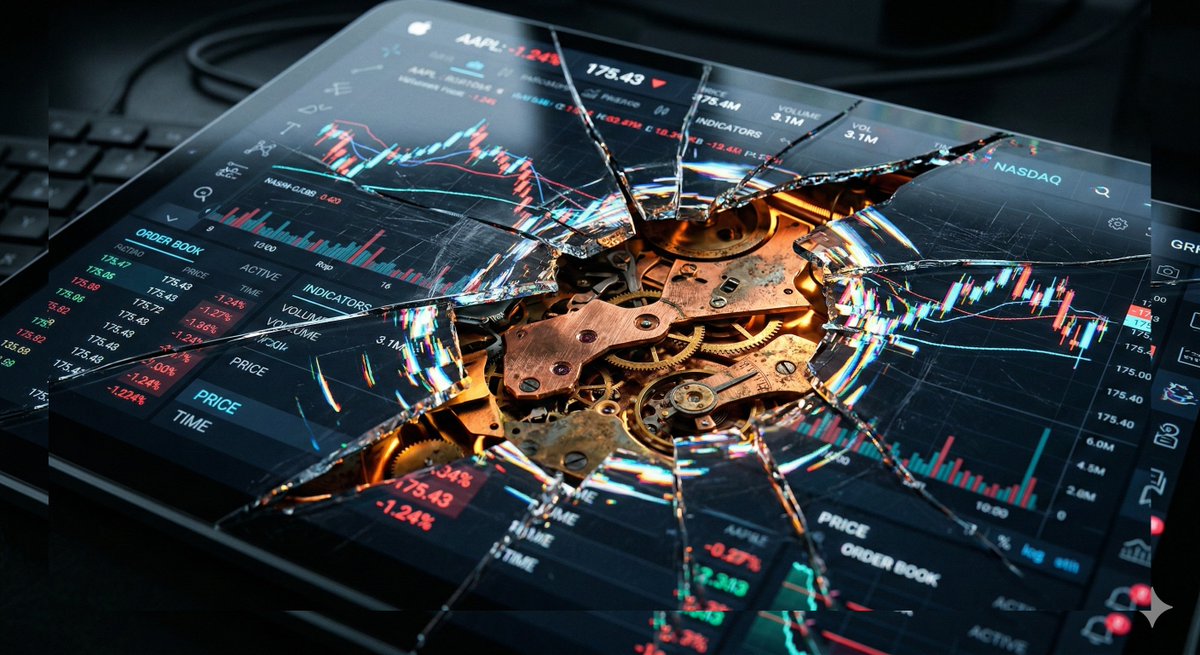
The 15-year scoring system in equity markets is breaking. For a decade and a half, "great business" simply meant "looks like software." Recurring revenue, 80%+ gross margins, capital-light, globally scalable. AI was supposed to be the ultimate confirmation of this thesis. Instead, it's destroying it. afewthings.substack.com/p/the-scoreboa…
The Curious Mind tweet media
English
0
0
1
193
The Curious Mind
The Curious Mind@curiousmindlabs·
My HRV drops after staying up late with a friend, after a cocktail with someone I love, after the kind of conversation that reminds me why I'm alive. A life lived by HRV-maxing would be a profoundly boring life. There is no fitness-tracker metric for good friendships. The philosopher C. Thi Nguyen calls this "value capture", when a simplified measure takes over a richer set of values. You stop doing what you value and start doing what you can score. This turns out to explain the biggest rotation in global markets right now. For 15 years, "great business" simply meant "looks like software." Asset-light, high-margin, scalable, digital. The scoring system became the game. Then AI arrived, not as confirmation of the thesis, but as its destroyer. If AI can automate software workflows, the moat around a SaaS company isn't its code. The world is now asking for things that are heavy, physical, slow to build, and impossible to automate. Copper. Grids. Shipyards. Energy. The old scoreboard doesn't measure any of them. That's the opportunity. Full essay in The Curious Mind: afewthings.substack.com/p/the-scoreboa…
The Curious Mind tweet media
English
1
0
1
187
The Curious Mind
The Curious Mind@curiousmindlabs·
A hospital's productivity software flagged its best cardiac nurse as non-compliant. She'd spent "too long" with one patient. Three shifts of building trust with that man is what got him to finally say "my chest feels different." They found a 94% blockage. He went home to his family in eight days. The dashboard recorded one efficiency violation. New essay on what we've been counting wrong , and what it's costing us. afewthings.substack.com/p/the-unseen
English
0
0
1
350
The Curious Mind
The Curious Mind@curiousmindlabs·
@LukeGromen flagged something that stopped me: for two consecutive months in late 2025, America's single largest export was gold. Not semiconductors. Not aircraft. Not IP. Gold. I built a section of a new essay around what that photograph is actually showing us, through the lens of Bastiat's broken window, the depletion of institutional trust, and what happens when everything we left off the ledger becomes undeniable. afewthings.substack.com/p/the-unseen
English
0
0
0
217