Ronnie Cutler

2.6K posts

Ronnie Cutler banner
Ronnie Cutler

Ronnie Cutler

@cutleraging

PhD candidate studying the role of somatic mutations in human aging with Vijg & Sidoli Labs @EinsteinMed

Bronx, NY Katılım Haziran 2018
934 Takip Edilen515 Takipçiler
Ronnie Cutler retweetledi

Aging Science News
Aging Science News@AgingBiology·
Astaxanthin, meclizine, mitoglitazone, pioglitazone, alpha-ketoglutarate, mifepristone, methotrexate, and atorvastatin-telmisartan do not increase lifespan in UM-HET3 mice link.springer.com/article/10.100…
Română
2
8
45
12K
Ronnie Cutler retweetledi
Mathematica
Mathematica@mathemetica·
These aren't real jellyfish... they're born from simple trigonometry alone! Pure sine + cosine magic just created this hypnotic underwater masterpiece. Math is so beautiful it swims! Who knew equations could feel this alive?
English
30
163
894
35.6K
Ronnie Cutler retweetledi
Prof. Nikolai Slavov
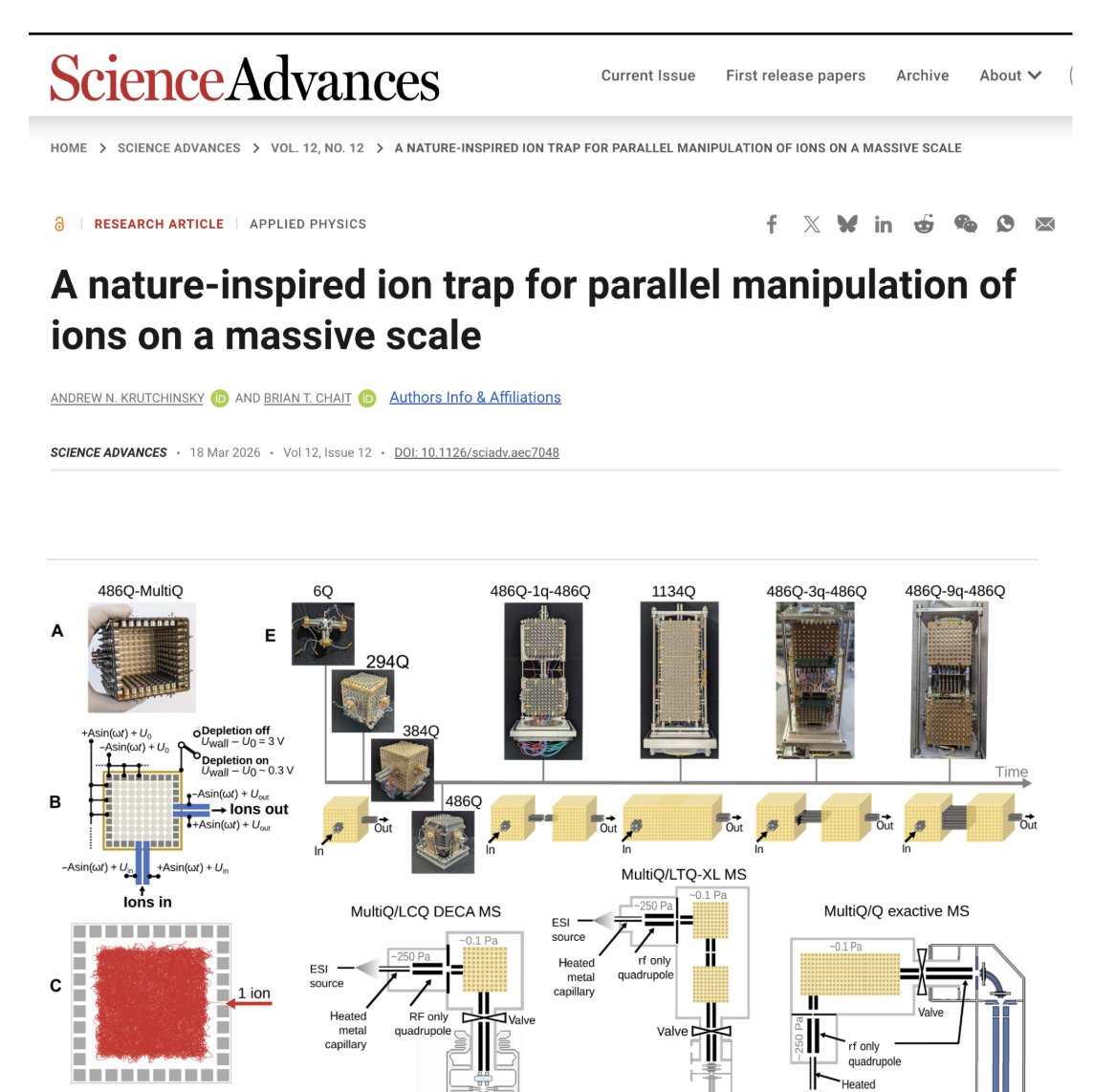
Thus prototype can help scale up proteomics. A central challenge in proteome analysis is the enormous size and dynamic range of proteomes. A typical human cell contains billions of protein molecules, with some present at just a few copies and others at tens of millions. 1/n
Prof. Nikolai Slavov tweet media
English
3
6
34
3.5K
Ronnie Cutler retweetledi
Geoffrey Miller
Geoffrey Miller@gmiller·
A mini-rant abut AI and longevity. They say "Artificial Superintelligence would take only a few years to cure cancer, solve longevity, and defeat death itself'. This is a common claim by pro-AI lobbyists, accelerationists, and naive tech-fetishists. But the claim makes no sense. The recent success of LLMs does NOT suggest that ASIs could easily cure diseases or solve longevity, for at least two reasons. 1) The data problem. Generative AI for art, music, and language succeeded mostly because AI companies could steal billions of examples of art, music, and language from the internet, to build their base models. They weren't just trained on academic papers _about_ art, music, and language. They were trained on real _examples_ of art, music, and language. There are no analogous biomedical data sets with billions of data points that would allow accurate modelling of every biochemical detail of human physiology, disease, and aging. ASIs can't just read academic papers about human biology to solve longevity. They'd need direct access to vast quantities of biomedical data that simply don't exist in any easy-to-access forms. And they'd need very detailed, reliable, validated data about a wide range of people across different ages, sexes, ethnicities, genotypes, and medical conditions. Moreover, medical privacy laws would make it extremely difficult and wildly unethical to collect such a vast data set from real humans about every molecular-level detail of their bodies. 2) The feedback problem. LLMs also work well because the AI companies could refine their output with additional feedback from human brains (through Reinforcement Learning from Human Feedback, RLHF). But there is nothing analogous to that for modeling human bodies, biochemistry, and disease processes. There are no known methods of Reinforcement Learning from Physiological Feedback. And the physiological feedback would have to be long-term, over spans of years to decades, taking into account thousands of possible side-effects for any given intervention. There's no way to rush animal and human clinical trials -- however clever ASI might become at 'drug discovery'. More generally, there would be no fast feedback loops from users about model performance. GenAI and LLMs succeeded partly because developers within companies, and customers outside companies, could give very fast feedback about how well the models were functioning. They could just look at the output (images, songs, text), and then tweak, refine, test, and interpret models very quickly, based on how good they were at generating art, music, and language. In biomedical research, there would be no fast feedback loops from human bodies about how well ASI-suggested interventions are actually affecting human bodies, over the long term, across different lifestyles, including all the tradeoffs and side-effects. It's interesting that most of the people arguing that 'ASI would cure all diseases and aging' are young tech bros who know a lot about computers, but almost nothing about organic chemistry, human genomics, biomedical research, drug discovery, clinical trials, the evolutionary biology of senescence, evolutionary medicine, medical ethics, or the decades of frustrations and failures in longevity research. They think that 'fixing the human body' would be as simple as debugging a few thousand lines of code. Look, I'm all for curing diseases and promoting longevity. If we took the hundreds of billions of dollars per year that are currently spent on trying to build ASI, and we devoted that money instead to longevity research, that would increase the amount of funding in the longevity space by at least 100-fold. And we'd probably solve longevity much faster by targeting it directly than by trying to summon ASI as a magical cure-all. ASIs has some potential benefits (and many grievous risks and downsides). But it's totally irresponsible of pro-AI lobbyists to argue that ASIs could magically & quickly cure all human diseases, or solve longevity, or end death. And it's totally irresponsible of them to claim that anyone opposed to ASI development is 'pro-death'.
English
76
55
332
126K
Ronnie Cutler retweetledi
Anshul Kundaje
Anshul Kundaje@anshulkundaje·
Great to the see the flurry of single gene knockdown Perturb-seq like atlases from cell-lines, mouse brain etc over the last few days. These are undoubtedly very valuable datasets. I just want to re-iterate a few other very important expt. design considerations 1/
English
2
67
272
26.9K
Ronnie Cutler retweetledi
Stephen Quake
Stephen Quake@StephenQuake·
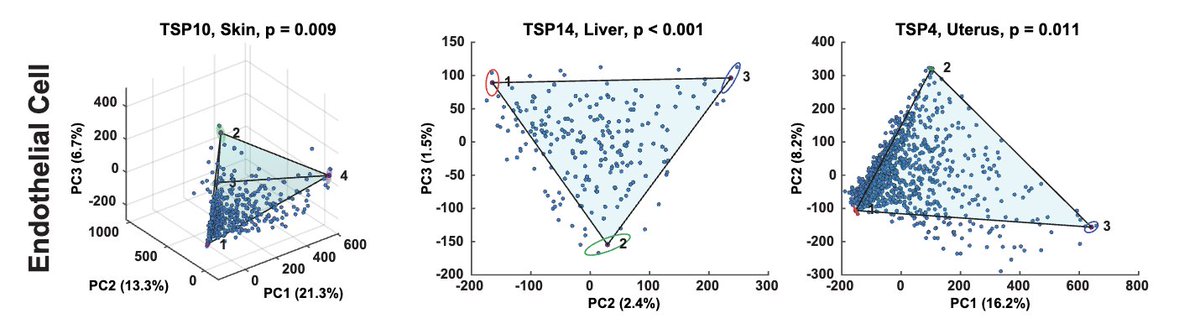
How do cells balance competing tasks? In @PNASNews, George Crowley, Uri Alon, and I apply Pareto optimality to the Tabula Sapiens atlas to reveal the geometric "archetypes" of human cell type diversity: pnas.org/doi/epdf/10.10…
Stephen Quake tweet media
English
1
14
111
10K
Ronnie Cutler retweetledi
Xinyu Yuan
Xinyu Yuan@XinyuYuan402·
Cells are NOT the right unit to model perturbations. Distributions are. 🔥 We present PerturbDiff — a functional diffusion model that treats distributions as random variables and predicts population responses, outperforming STATE, CellFlow & Squidiff 👉 arxiv.org/pdf/2602.19685…
English
13
21
148
17.2K
Ronnie Cutler
Ronnie Cutler@cutleraging·
@DrSamuelBHume I think before approaching that question we must understand the more basic question of why it ages so fast in the first place. I would speculate because most immunity is developed during development and is not really needed thereafter for historical 30 year lifespan
English
0
0
1
80
Samuel Hume
Samuel Hume@DrSamuelBHume·
The big question is: how do we rejuvenate the aging thymus?
English
3
1
11
1.2K
Samuel Hume
Samuel Hume@DrSamuelBHume·
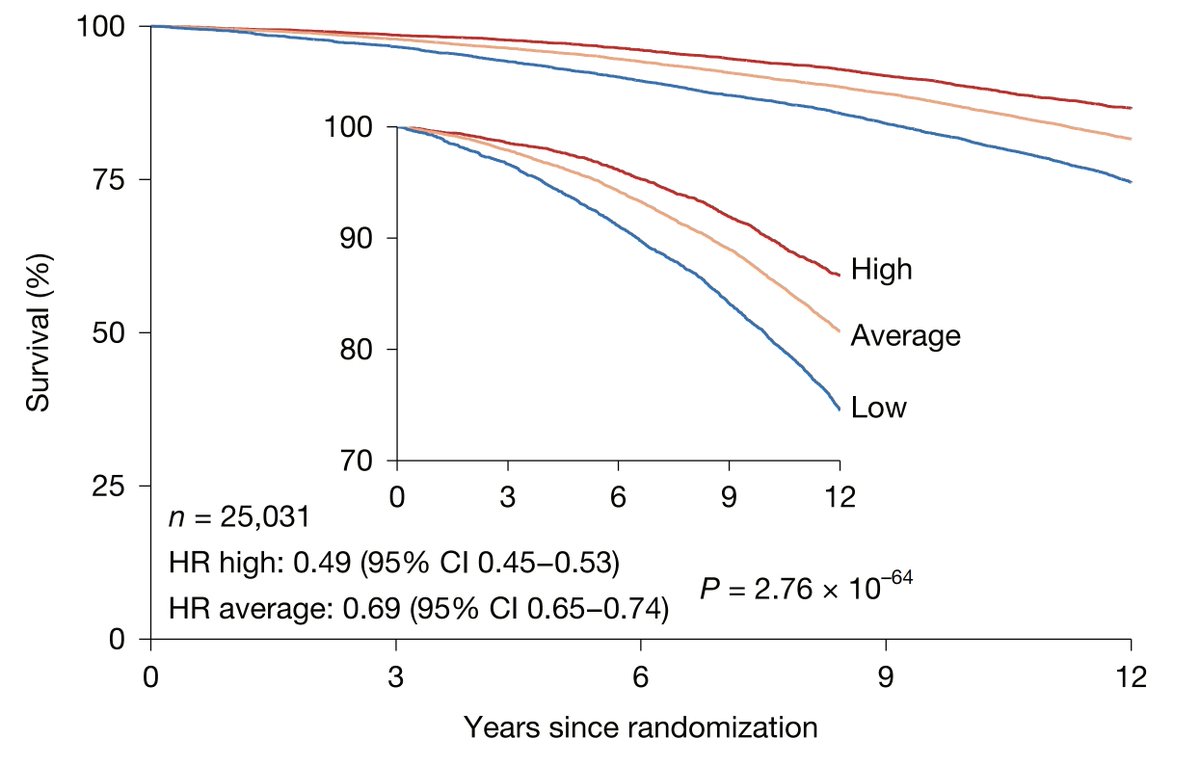
The thymus shrinks as we get older, so is it actually doing anything useful? This study (nature.com/articles/s4158…) measured thymic health based on CT scans, and found: 1. Better thymic health is associated with longer survival
Samuel Hume tweet media
English
6
18
78
9.6K
Ronnie Cutler retweetledi
Elizabeth Wood 🧬🖥️🥼
Our paper on variational synthesis is out now in Nature Biotechnology. Manufacturing-aware generative models — AI architectures that know how to physically build their own designs — enabling synthesis of DNA encoding ~10^16 AI-designed proteins at a cost that would be roughly a quadrillion dollars using conventional methods.
Elizabeth Wood 🧬🖥️🥼 tweet media
English
6
36
196
28.1K
Ronnie Cutler retweetledi
David J Glass MD
David J Glass MD@davidjglassMD·
Humans with function-disrupting variants in the myostatin gene (MSTN) have increased skeletal muscle mass and strength, and less adiposity nature.com/articles/s4146…
English
5
22
83
31.8K
Ronnie Cutler retweetledi
Zane Koch
Zane Koch@zanehkoch·
for a while i've had a slight fear that the bluetooth from my airpods could be frying my brain this weekend i pulled the raw data from a $30m government study of 1,679 mice blasted with cell phone radiation and reanalyzed it what i found was...not what I expected? 🧵
English
404
692
9.2K
4.3M
Ronnie Cutler retweetledi
Prof Steve Horvath
Prof Steve Horvath@prof_horvath·
A model that predicts cellular age from Cell Painting microscopy images alone. No DNA methylation needed. The model captures morphological aging hallmarks across nuclear and cytoplasmic compartments, correlates with chronological age AND epigenetic clocks. The promise: screen for rejuvenation compounds at scale. Eleni Patili, Mark RN Kotter, Joana M Tavares (2026) imAgeScore, a Cell Painting-Based Predictor of Cellular Age for High-throughput Drug Screening Applications biorxiv.org/content/10.648…
English
0
15
53
4.7K
Mac Baconai
Mac Baconai@Macbaconai·
We are so back!
Mac Baconai tweet media
English
25
149
1.5K
27.6K
Ronnie Cutler
Ronnie Cutler@cutleraging·
@prof_horvath Very well put. Entropy constrained by the underlying genetic architecture. Although I still cannot imagine a program as there cannot be selective pressure to shape aging. Certainly evolution does shape some upstream process that governs these rates across species of var lifespans
English
0
0
0
4
Prof Steve Horvath
Prof Steve Horvath@prof_horvath·
Good question. I think the framing of stochastic versus programmatic is a false dichotomy. Epigenetic clocks track CpG sites where methylation drift is directional and site-specific while constrained by local chromatin context and sequence composition. That makes the process thermodynamically biased entropy acting on a structured substrate. Epigenetic clocks emerge because certain genomic regions are reproducibly vulnerable or sensitive to change. This does not preclude the existence of an active program or imply that damage lands at completely at random: both stochasticity and programmatic features can be at play.
English
1
0
1
37
Prof Steve Horvath
Prof Steve Horvath@prof_horvath·
A completely novel axis of epigenetic aging. N6-methyldeoxyadenosine (N6medA), i.e. NOT the usual 5 methyl cytosine, increases linearly with age in human prefrontal cortex (r=0.95). Genome-wide profiling reveals age-associated ADENINE methylation changes reminiscent of classic CpG based epigenetic clocks. Abdur Rahim, Natalia Tretyakova 2026. DNA Adenine Methylation Clock in Brain Aging and Alzheimer's disease progression. doi.org/10.64898/2026.…
English
1
11
69
4.9K
Ronnie Cutler retweetledi
青木 航 / Wataru Aoki
青木 航 / Wataru Aoki@mighty_tora·
クレイグ・ベンター研究所から、非生命から生命を合成する方法がプレプリントとして発表されました。人類がゼロから生命を創れるようなるための大きなマイルストーンです。 biorxiv.org/content/10.648…
日本語
1
102
396
39.5K
Ronnie Cutler retweetledi
Markus J. Buehler
Markus J. Buehler@ProfBuehlerMIT·
Scientific discovery is reaching the limits of human capacity: too much data, too many disconnected fields, and too few ways to connect ideas fast enough to matter. The next breakthroughs in materials, medicine, energy, and beyond will not come from scaling today’s AI paradigm alone or from relying on serendipity alone. They will require a new kind of AI for knowledge discovery that not only models the world but shapes what it could become. At Unreasonable Labs, we are building superintelligence for knowledge discovery: systems that reason across disciplines, generate novel hypotheses, test them through simulation and experimentation, and help guide real-world discovery. Our AI engine is not confined to what it has seen in training. It creates new data, builds new tools, and maintains a persistent world model that grows more powerful as it reasons. Why now? Even today's most powerful AI models face a core limitation: they are trained on what we already know. True discovery begins when a system encounters something its current model cannot explain. This is why you cannot train your way to a discovery - a system has to reason through new problems, update its beliefs, and revise its understanding of the world as it thinks. Another critical insight is that rich knowledge already exists, but is not yet applied to solve pressing problems. It sits in millions of papers, patents, and datasets, trapped in isolated silos, often in legacy data vaults. What's missing is a way to connect it, scale it, unlock the potential, and synthesize genuine novel predictions. The time is now to build a system that enables practitioners to design, explore, and direct discovery, whether through human guidance or full automation, while capturing the tacit insight that domain experts bring. Steerable reasoning That is why we built an operating system for scientific discovery - one that replaces chance with steerable reasoning. Rather than retrieving static facts, our AI builds and continuously updates a living world model - a representation of knowledge the system can actively reason over, question, and revise. A concrete example: say you want to create "smart concrete" that can flex - a concept that doesn't exist yet. Our AI maps relationships across domains, finds a path from morphable smart materials to concrete, and identifies the most efficient way to bridge those concepts. It then autonomously writes simulations, tests the hypothesis, and refines the idea. Then it interacts with hardware to produce a physical artifact, and the loop expands into the real-world, where the machine becomes world-shaping. Our AI gives users full visibility into how the system arrived at a conclusion. It delineates which existing patents and papers it drew upon versus what is genuinely new - protecting IP and competitive concerns from the start, and offering deep compositional insights into technology advances. It takes unreasonable people to make progress Our team reflects the interdisciplinary expertise required to build this next breakthrough - my co-founder Yuan Cao @caoyuan33 (formerly DeepMind) and Andrew Lew, @HaiqianYang, Matt Insler, Jennifer Kang and Julia McLaughlin. We are backed by $13.5M in seed funding led by @PlaygroundVC with participation from @aixventures, @e14fund, and MS&AD. We are guided by advisors including Robert Langer (1,000+ patents), Kostya Novoselov (Nobel Prize in Physics), and @Thom_Wolf (Co-founder of Hugging Face). We already have multiple pilot programs underway with leading industrial partners in materials science and engineering, with additional engagements developing across energy, logistics, bioengineering, and other strategic domains. The biggest challenges of our time - fusion energy, sustainable materials, new medicines - demand exponentially more innovation than humans alone can produce. We are not replacing scientists, and instead are making every scientist capable of leading their own team of AI-powered researchers. Abundant innovation leads to abundant prosperity. Watch our launch video below to see what we're building @unreasonable_ai 👇
English
58
71
373
52.5K
Ruslan Rust
Ruslan Rust@rust_ruslan·
I currently have three papers in review at "high impact" journals. One of them has been sitting there for two years. In that time my daughter was born and learned how to walk, but apparently publishing a PDF was still not possible for me. For another one, after four months in review the editor told me they cannot find a second reviewer and asked me to suggest more reviewers. A third one sent me a message in 2026 saying the PDF I uploaded was larger than 10 MB and that I should please reupload everything to make the file smaller. All of this just to eventually pay between 7,000 and 12,000 USD per paper so someone can officially approve that the science we do is "legitimate". Reminder: not a single reviewer will be compensated here. I still don't understand how we as scientists can collectively be so smart when doing science and still tolerate a system like this when it comes to sharing our findings. We should move to preprints plus open review, whether human or AI, asap. So frustrated about it. I'd suggest sharing your work on bioRxiv or medRxiv, reading and reviewing preprints when you can, and highlighting good research, especially if it is still a preprint. Try platforms like ResearchHub (that pay for peer review) and experiment with AI based reviewers for faster feedback. Instead I read this as a proposed "revolutionary" measure:
Ruslan Rust tweet media
English
61
183
1.2K
193.7K
Ronnie Cutler retweetledi
Yash Rathod
Yash Rathod@YashRathod_75·
Today, we're excited to release 10,000 fully AI-designed enhancer sequences for the research community. Axis was prompted to design sequences with targeted activity in one of three widely used cell-lines. AI allows us to explore a vast design space, going beyond the natural genome.
English
15
52
299
93.7K