
Danny Freed

1.3K posts

Danny Freed banner
Danny Freed

Danny Freed

@dannyfreed

Founder and CEO @blueprint_hq Previously: @trunkclub @getcompanion

Chicago, IL Katılım Ocak 2011
790 Takip Edilen449 Takipçiler
Sabitlenmiş Tweet
Danny Freed
Danny Freed@dannyfreed·
Today, we're announcing that Blueprint has raised a $9M Series A co-led by @ensemblevc and @lightbank. We're on a mission to transform mental healthcare into a system where each person receiving care benefits from all those that came before them. axios.com/pro/health-tec…
English
4
1
26
1.5K
Jeff Weinstein
Jeff Weinstein@jeff_weinstein·
i loved this interview, a must listen/watch for product builders. such attention to detail and care applied to critical important minutiae. side note: i wrote to @stewart years ago about wagon’s release notes (an homage to slack’), and he kindly replied: x.com/stewart/status…
Lenny Rachitsky@lennysan

Stewart Butterfield (@stewart) rarely does interviews. After 2 years of trying, I finally convinced him to come on. In this special conversation, Stewart shares the frameworks and mental models that most helped him build two of the most important products in tech history (@Flickr, and @SlackHQ—which he sold for $28B, and which powers how basically every company collaborates these days). We discuss: 🔸 "Utility curves" — his framework for prioritizing ideas 🔸 "The owner's delusion" — why restaurant websites suck 🔸 "Tilting your umbrella" — a hilarious Slack core value 🔸 "Hyper-realistic work-like activities" — my new favorite concept 🔸 "Don't make me think" — Stewart's foundational design philosophy 🔸 The story behind "We don't sell saddles here" Listen now 👇 • YouTube: youtu.be/kLe-zy5r0Mk • Spotify: open.spotify.com/episode/42JBWU… • Apple: podcasts.apple.com/us/podcast/sla… Thank you to our wonderful sponsors for supporting the podcast: 🏆 @WorkOS — Modern identity platform for B2B SaaS, free up to 1 million MAUs: workos.com/lenny 🏆 @getmetronome — Monetization infrastructure for modern software companies: metronome.com 🏆 @Lovable — Build apps by simply chatting with AI: lovable.com

English
3
7
96
51.1K
Danny Freed
Danny Freed@dannyfreed·
@Kazanjy Agreed on all but cost. Depends on product, but in our case we’ve found that once their team (clinicians in our case) starts using product, it’s damn near impossible to rip out. So goal became less friction, more users in pilot. 70% win rate now.
English
1
0
2
452
Peter Kazanjy
Peter Kazanjy@Kazanjy·
Founders: Here's how to structure pilots that actually close: - Max 30 days - 3 mandatory training sessions - Weekly usage metrics reviews - 2 required use cases completed - Success criteria defined up front Charge 25% of annual fee for the pilot. No more endless trials.
English
9
10
290
27.9K
Morgan Cheatham, MD
Morgan Cheatham, MD@morgancheatham·
in the not-too-distant future, the most complete record of a patient's symptoms may live in the memory of a consumer-facing language model.
English
15
16
168
33.2K
jacobgordon
jacobgordon@jacobrossgordon·
You’re telling me I have to come home after Michigan football getting waxed only to hear Matthew Mcconaughy narrating the US Open Women’s final introduction. Epitome of brutality. CC @JonRothstein
English
1
0
1
295
Olivia Moore
Olivia Moore@omooretweets·
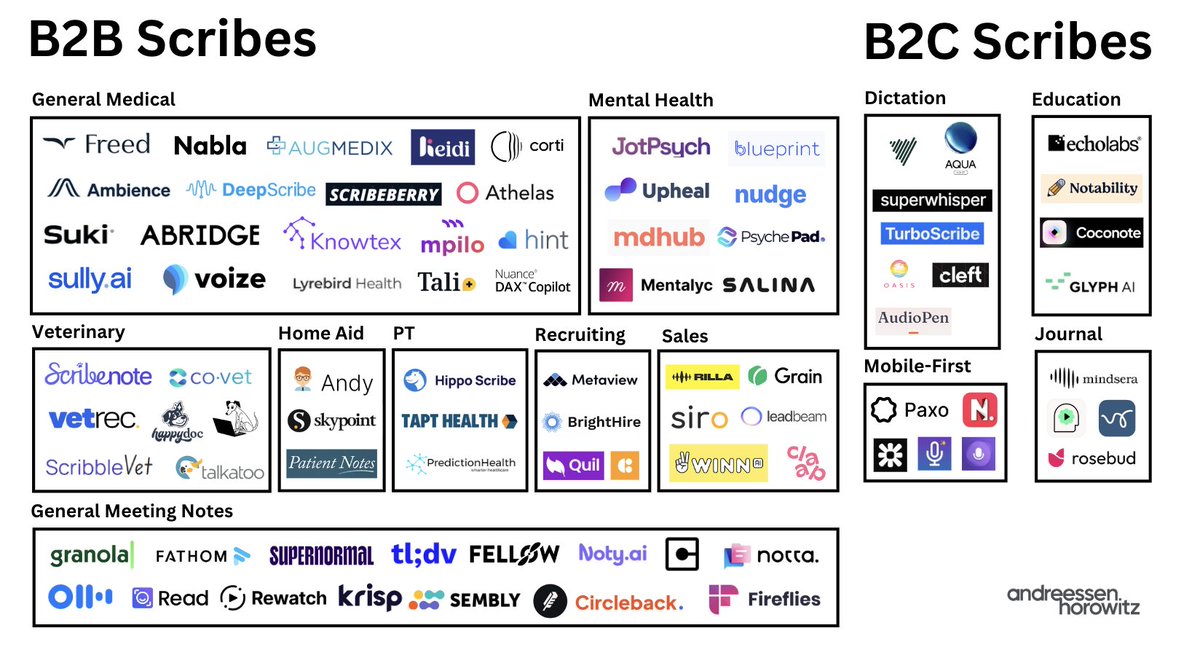
🚨 New @a16z investment thesis: AI scribes. Imagine if you had a superhuman assistant that listened to your conversations, took perfect notes, and flagged follow-ups. And, it could make you smarter by surfacing insights or trends you missed. More from me & @illscience👇
Olivia Moore tweet media
English
75
173
1.4K
311.5K
Jason Fried
Jason Fried@jasonfried·
The 37signals Guide to Internal Communication The how, where, why, and when we communicate. Long form asynchronous? Real-time chat? In-person? Video? Verbal? Written? Via email? In Basecamp? How do we keep everyone in the loop without everyone getting tangled in everyone else’s business? It’s all in here. Rules of thumb, and general philosophy Below you’ll find a collection of general principles we try to keep in mind at 37signals when communicating with teammates, within departments, across the company, and with the public. They aren’t requirements, but they serve to create boundaries and shared practices to draw upon when we do the one thing that affects everything else we do: communicate. 1. You can not not communicate. Not discussing the elephant in the room is communicating. Few things are as important to study, practice, and perfect as clear communication. 2. Real-time sometimes, asynchronous most of the time. 3. Internal communication based on long-form writing, rather than a verbal tradition of meetings, speaking, and chatting, leads to a welcomed reduction in meetings, video conferences, calls, or other real-time opportunities to interrupt and be interrupted. 4. Give meaningful discussions a meaningful amount of time to develop and unfold. Rushing to judgement, or demanding immediate responses, only serves to increase the odds of poor decision making. 5. Meetings are the last resort, not the first option. 6. Writing solidifies, chat dissolves. Substantial decisions start and end with an exchange of complete thoughts, not one-line-at-a-time jousts. If it’s important, critical, or fundamental, write it up, don’t chat it down. 7. Speaking only helps who’s in the room, writing helps everyone. This includes people who couldn’t make it, or future employees who join years from now. 8. If your words can be perceived in different ways, they’ll be understood in the way which does the most harm. 9. Never expect or require someone to get back to you immediately unless it’s a true emergency. The expectation of immediate response is toxic. 10. If you have to repeat yourself, you weren’t clear enough the first time. However, if you’re talking about something brand new, you may have to repeat yourself for years before you’re heard. Pick your repeats wisely. 11. Poor communication creates more work. 12. Companies don’t have communication problems, they have miscommunication problems. The smaller the company, group, or team, the fewer opportunities for miscommunication. 13. Five people in a room for an hour isn’t a one hour meeting, it’s a five hour meeting. Be mindful of the tradeoffs. 14. Be proactive about “wait, what?” questions by providing factual context and spatial context. Factual are the things people also need to know. Spatial is where the communication happens (for example, if it’s about a specific to-do, discuss it right under the to-do, not somewhere else). 15. Communication shouldn’t require schedule synchronization. Calendars have nothing to do with communication. Writing, rather than speaking or meeting, is independent of schedule and far more direct. 16. “Now” is often the wrong time to say what just popped into your head. It’s better to let it filter it through the sieve of time. What’s left is the part worth saying. 17. Ask yourself if others will feel compelled to rush their response if you rush your approach. 18. The end of the day has a way of convincing you what you’ve done is good, but the next morning has a way of telling you the truth. If you aren’t sure, sleep on it before saying it. 19. If you want an answer, you have to ask a question. People typically have a lot to say, but they’ll volunteer little. Automatic questions on a regular schedule help people practice sharing, writing, and communicating. 20. Occasionally pick random words, sentences, or paragraphs and hit delete. Did it matter? 21. Urgency is overrated, ASAP is poison. 22. If something’s going to be difficult to hear or share, invite questions at the end. Ending without the invitation will lead to public silence but private conjecture. This is where rumors breed. 23. Where you put something, and what you call it, matters. When titling something, lead with the most important information. Keep in mind that many technical systems truncate long text or titles. 24. Write at the right time. Sharing something at 5pm may keep someone at work longer. You may have some spare time on a Sunday afternoon to write something, but putting it out there on Sunday may pull people back into work on the weekends. Early Monday morning communication may be buried by other things. There may not be a perfect time, but there’s certainly a wrong time. Keep that in mind when you hit send. 25. Great news delivered on the heels of bad news makes both bits worse. The bad news feels like it’s being buried, the good news feels like it’s being injected to change the mood. Be honest with each by giving them adequate space. 26. Time is on your side, rushing makes conversations worse. 27. Communication is lossy, especially verbal communication. Every hearsay hop adds static and chips at fidelity. Whenever possible, communicate directly with those you’re addressing rather than passing the message through intermediaries. 28. Ask if things are clear. Ask what you left out. Ask if there was anything someone was expecting that you didn’t cover. Address the gaps before they widen with time. 29. Consider where you put things. The right communication in the wrong place might as well not exist at all. When someone relies on search to find something it’s often because it wasn’t where they expected something to be. 30. Communication often interrupts, so good communication is often about saying the right thing at the right time in the right way with the fewest side effects.
English
27
100
718
103.5K
Luke Sophinos
Luke Sophinos@lukesophinos·
Vertical SaaS 1.0 put simply.. Build a product that digitizes a key workflow Build a second product that digitizes another key workflow Build a third, fourth, and fifth product that digitizes more key workflows Achieve platform/OS Layer in FinTech (payments, lending, etc.)
English
4
4
54
6.2K
Danny Freed
Danny Freed@dannyfreed·
@blakeir Wow. Just went through my old ebay listings... 🙈
English
0
0
1
69
Blake Robbins
Blake Robbins@blakeir·
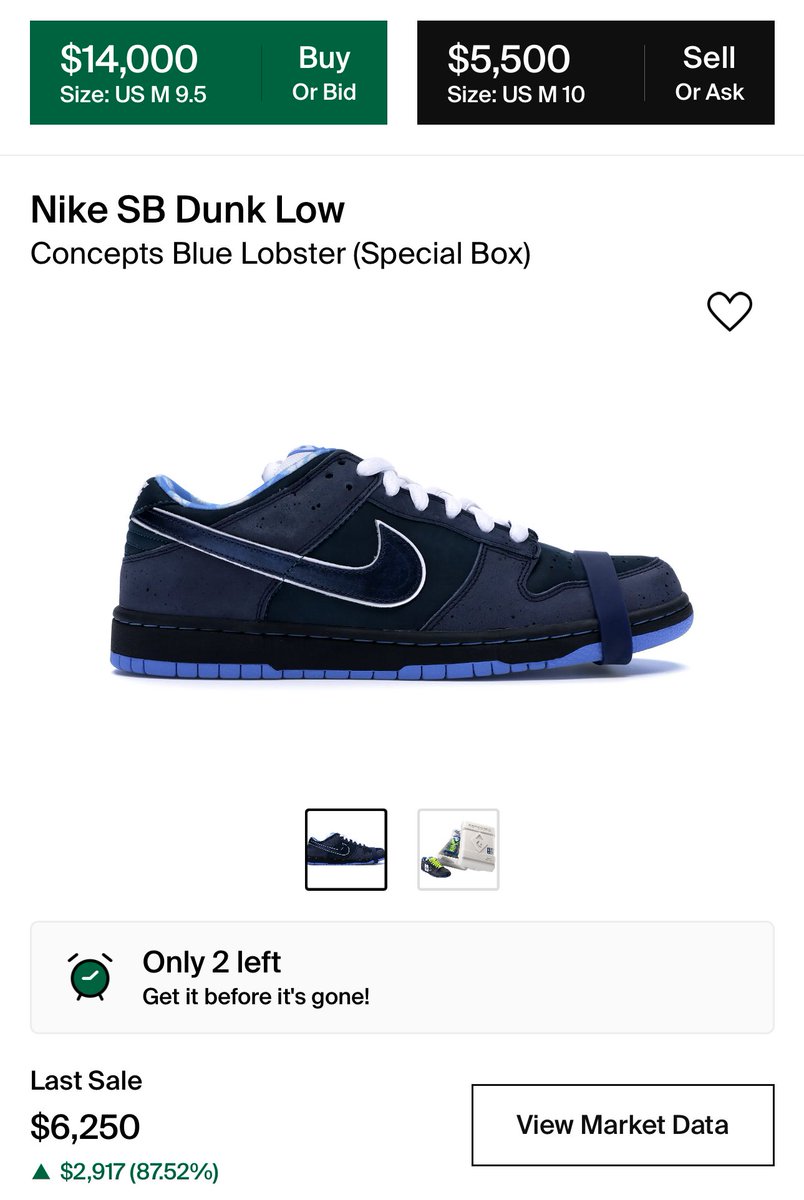
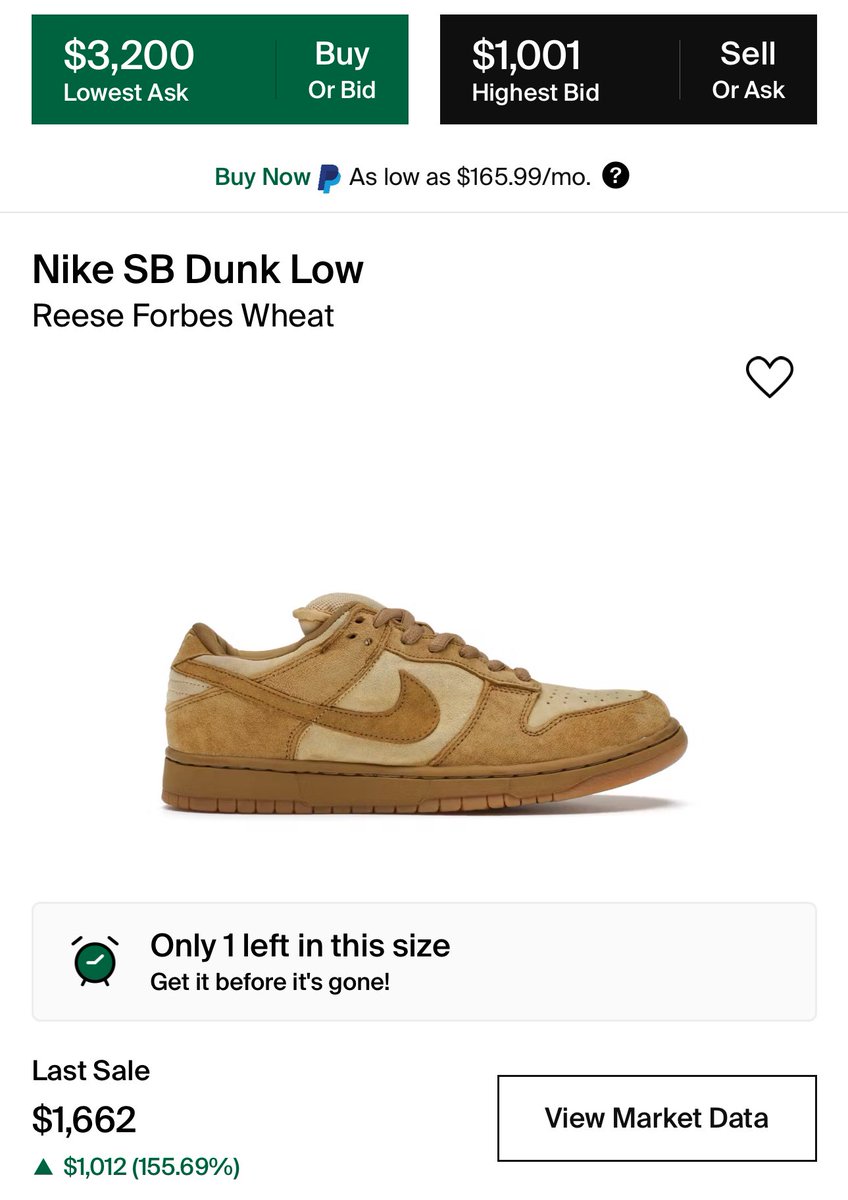
Every now and then I look at what my old Nike SB collection would be worth today… I can’t believe I wore these and destroyed them.
Blake Robbins tweet mediaBlake Robbins tweet mediaBlake Robbins tweet media
English
6
2
35
9.3K
Blake Robbins
Blake Robbins@blakeir·
99designs but for interior design
English
7
0
20
10.4K
Danny Freed retweetledi
Anastassia Gliadkovskaya
Anastassia Gliadkovskaya@gliadkovskaya·
I wrote about a new framework for measuring outcomes at scale in behavioral health. Measurement-based care improves clinical outcomes. Yet less than 20% practitioners use it. The BQI aims to change that: fiercehealthcare.com/providers/blue…
English
2
5
12
543
Danny Freed
Danny Freed@dannyfreed·
Without a shared definition of what high-quality behavioral healthcare looks like, it's impossible to improve outcomes. The Blueprint Quality Index solves this. The first-ever set of benchmarks in behavioral health based on the largest real-world outcomes dataset to date.
Blueprint@blueprint_hq

Today, we're excited to announce the Blueprint Quality Index, a new way to benchmark behavioral healthcare quality based on the largest anxiety/depression data set in over 15 years. Read the report: blueprint-health.com/blog/introduci…

English
1
0
4
412
Bobby Pinero
Bobby Pinero@bobbypinero·
We tried freemium with @heyequals. It didn't work. In fact, it broke the business for a bit. We've since adjusted and we're back on track 🙂 Free isn't for every product. Here's an open look into why we tried it, how it failed, and what we learned. wraptext.equals.com/the-fallacy-of…
English
30
25
300
105.7K
Danny Freed retweetledi
Trey Yingst
Trey Yingst@TreyYingst·
Imagine the worst things possible that can be done to humans. Hamas did all of that and more to Israeli civilians. Babies beheaded. People burned alive in their homes. Women raped and dragged through the streets. Don’t look away.
English
3.7K
15.6K
46.4K
6.6M
Danny Freed
Danny Freed@dannyfreed·
@DanReich Agreed. Can't get too high on the highs. Nor too low on the lows. Just keep on truckin'
English
0
0
2
43
Dan Reich
Dan Reich@DanReich·
Stoicism is maybe one of the most underrated characteristics to embrace when building a company. Shit will break. Victories will be had. Gotta keep a cool head and mind to navigate the uncharted waters.
English
3
9
22
747
Danny Freed retweetledi
Chicago Inno
Chicago Inno@ChicagoInno·
Find out how Chicago startup Blueprint is using data to help mental health clinicians find the best treatment plan for their patients. bizjournals.com/chicago/inno/s…
English
0
2
2
463
Danny Freed retweetledi
Collin West
Collin West@collinrwest·
1/4 We're thrilled to announce that Ensemble VC has co-led a $9M Series A round in @blueprint_hq and @dannyfreed alongside Lightbank, Bonfire Ventures, Revolution, Tau Ventures, and Data Tech Fund! This investment is a testament to Blueprint's incredible work in mental health.
English
1
1
12
837