
DG.

9.7K posts

DG. banner
DG.

DG.

@dataghees

cofounder, caestro prev:training LLMs @rimelabs the future is willed into existence. care about discovering new science, industrial policy, local politics.

Toronto Katılım Eylül 2019
6K Takip Edilen1.4K Takipçiler
Sabitlenmiş Tweet
DG.
DG.@dataghees·
This is amazing. Ever since I heard @balajis talk about the pseudonymous economy, I've been thinking about how to make it easier to start a YouTube channel with total privacy. Recent advances in deepfakes, AR and CV will make this as easy as a click. You won't need a 30k suit
Rex Woodbury@rex_woodbury

This is Miko. She's a virtual streamer who is controlled by a real-life woman known only as The Technician. The Technician uses the Unreal Engine and a $30,000 motion-capture suit to create Miko. Thread 👇

English
18
60
477
0
DG.
DG.@dataghees·
@stochasticchasm @WenhuChen I have done a few experiments with SFT’d base and they turned out to be pretty decent. It’s possible but just better to have the base, most likely
English
0
0
1
21
stochasm
stochasm@stochasticchasm·
@WenhuChen @dataghees i also don't think it's the best move, but i don't see it completely failing. especially with another round of post-training after, and also 3x more compute than the base model, and also code domain only, not a generalist
English
1
0
0
31
Wenhu Chen
Wenhu Chen@WenhuChen·
@dataghees It's only possible if there are base models released. But most of open source ones are RLed
English
1
0
11
1.9K
DG.
DG.@dataghees·
@Afinetheorem What’s your takeaway? My sense is the system is quite reactive in both directions. Generally, more attuned to polling and people still trust the govt to some extent.
English
1
0
1
88
Kevin A. Bryan
Kevin A. Bryan@Afinetheorem·
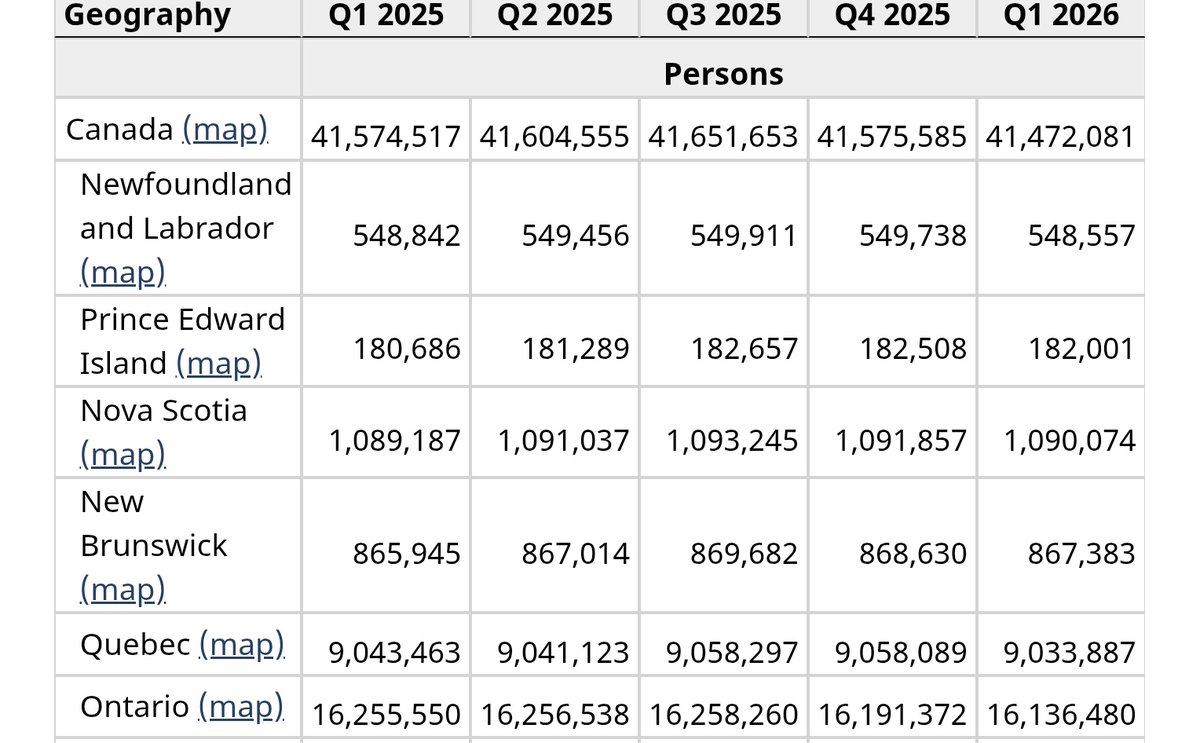
For someone from a divided government country, it is so interesting how rapidly policy changes in a parliamentary system like Canada. Same party in charge, but Trudeau -> Carney and population growth goes from 3.2% per year (Like Chad or Congo) to outright YoY population decline.
Kevin A. Bryan tweet media
English
2
0
14
1.6K
DG.
DG.@dataghees·
@snoble @mattgurney Activity based funding! Alberta is moving in that direction fwiw.
English
0
0
1
39
Steven Klaiber-Noble
Having spoken to a doc that has practiced in both Canada and Australia I think it would help for more Canadians to hear this perspective. There are so many things broken in the Canadian system that even doctors in Canada can’t see because the US is the only alternative they can imagine.
English
1
1
8
180
Matt Gurney
Matt Gurney@mattgurney·
Given how every time I say our health care could be better, Canadians line up to tell me how great it is, I think some Canadians DO believe that.
Jim Wiedrick@JimWiedrick

@mattgurney Why do folks believe to be Canadian is to agree to long delays?

English
45
11
182
8.6K
DG. retweetledi
roon
roon@tszzl·
the value of this technology will mostly not be captured by its inventors, the labs, or even the chipmakers, but rather will be captured by the consumers as surplus. these are highly competitive markets without any natural monopolistic effects like many other technologies before it, machine intelligence democratizes abilities previously only available to the wealthy, in this case by commoditizing the services of the white collar elite who mostly live in rich countries it’s not that there are no programmers, it’s that really anybody can make software now now so the “rents” of the “human capital” of knowing how to write JavaScript for example should shrink dramatically this will reduce the inequality between countries: services that previously required lots of human capital now require chatbot subscriptions at worst, or may even be given away for free you can receive medical advice worthy of a $1000/hr American specialist doctor likely for free while living under a thatched roof in eg Papua New Guinea somewhere while I think Americans have plenty of reason to be excited by AI, I would be more excited as someone in a poor country
Olivia Moore@omooretweets

The U.S. has a weird cultural relationship with AI Despite the fact that we’ve driven the vast majority of AI breakthroughs, we still rank among the lowest countries in terms of consumer trust (Data from Edelman 2025 study) 👇

English
124
140
1.6K
211.1K
DG. retweetledi
Shane Gu
Shane Gu@shaneguML·
To build a frontier lab, you need the best in product, best in modeling, best in infra, and best in data quality to appreciate, understand, and respect each other's work, despite any firefighting, mistake costing $$$, burnout, and departure. Culture is the hardest.
English
17
11
334
24.8K
DG.
DG.@dataghees·
@jaxson great work!
English
1
0
1
56
DG. retweetledi
Percy Liang
Percy Liang@percyliang·
I think it’s pretty clear that simulation is the next frontier for AI. The most impressive feats of AI to date are when we have a clear environment + reward, whether it be beating Le Sedol at Go, winning an IMO gold medal, or writing entire apps from scratch. In these cases, the RL algorithm can try different actions, and observe the well-defined consequences in the safety of a docker container. But what about messy real-world situations involving people? The rewards are unclear, the stakes are high, and you can’t experiment in the real world. But these situations are precisely where the next big opportunity in AI is. To crack this, we need to *simulate* society (“put society into a docker container”). Concretely, this means building a model that can predict what will happen in any given situation (real or hypothetical). If we can do this, we are only limited by our imagination: predict the future, optimize for better outcomes, answer hypothetical (“what if”) questions. Ultimately, this goes beyond making better decisions, but it’s about giving us a better understanding of ourselves and the world. Simulation is the whole enchilada. And this is exactly the research that @simile_ai is working on. Read more here: simile.ai/blog/simulatio…
English
44
111
1.1K
106.5K
DG.
DG.@dataghees·
@Afinetheorem If no one is publishing, the Attention moment will likely split between people who have the inside knowledge.
English
1
0
1
52
DG.
DG.@dataghees·
@Afinetheorem Yes because most of them are spin outs of these internal teams.
English
1
0
1
141
Kevin A. Bryan
Kevin A. Bryan@Afinetheorem·
Love the attempts to build alternative AI models w/ AMI, TM, SSI, World Labs, etc. Clearly LLMs will not do all tasks we want. But a bird on my shoulder whispers, "are we sure you'll come up that new structure before the frontier LLM folks w/ internal models and their teams do?"
English
3
0
15
2.2K
DG.
DG.@dataghees·
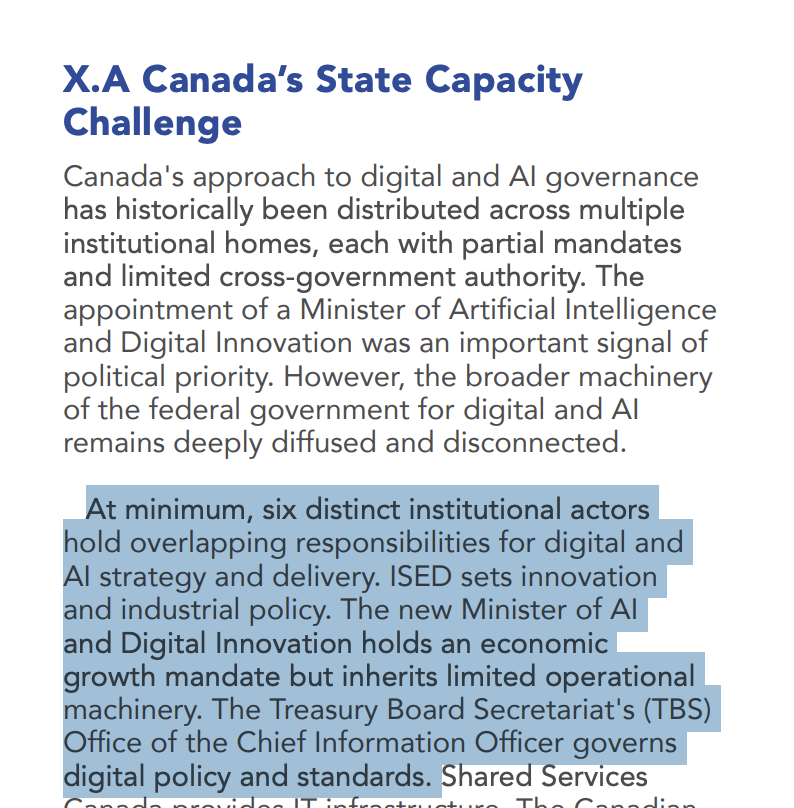
After listening to @jbsteinberg, I’m convinced that Canada needs to move away from industrial policy altogether, bar narrow exceptions. Good industrial policy requires disciplined governance. The goal should be to protect nascent industries as they become national champions. Governments do the opposite where it’s a mechanism for protecting incumbents but also no strategic direction. We subsidize anything and everything. Instead of focusing on our strengths, we spread them too thin and across 2, sometimes 3, levels of governments. We should be saying no to more things but captive pressure keeps us from steering in the right direction. Better to just reform taxation and make legible regulation changes. Less distortionary and might even surprise us.
Joseph Steinberg@jbsteinberg

The overarching problem with Canada's trade & industrial policy paradigm is that we only listen to industry & labor stakeholders who benefit from insulation from competition. We really need a loud, organized group that advocates for consumer interests. hilltimes.com/story/2026/03/…

English
1
0
6
294
DG.
DG.@dataghees·
Great time to have some 'overcapacity' problems...
English
0
0
0
114
DG. retweetledi
Nabeel S. Qureshi
Nabeel S. Qureshi@nabeelqu·
If you'd shown Claude Code or Codex on 5.4xhigh to any reasonable person in 2020 they'd have concluded it was AGI
English
163
136
5.5K
220.6K