Dave Rossiter

10K posts

Dave Rossiter banner
Dave Rossiter

Dave Rossiter

@davearossiter

Roaming. Charges may apply. Katılım Kasım 2013
4.4K Takip Edilen3.6K Takipçiler
Dave Rossiter retweetledi
Isabelle Kirkham 💛
Isabelle Kirkham 💛@IsabelleKirkham·
Hello Twitter 👋 I’m on the hunt for some texts/scripts/plays that are about Care (and written by Care Experienced people ideally!!) Any recommendations?
English
2
1
2
148
Dave Rossiter retweetledi
Chloe Apter (she/her)
Chloe Apter (she/her)@ChloeSApter·
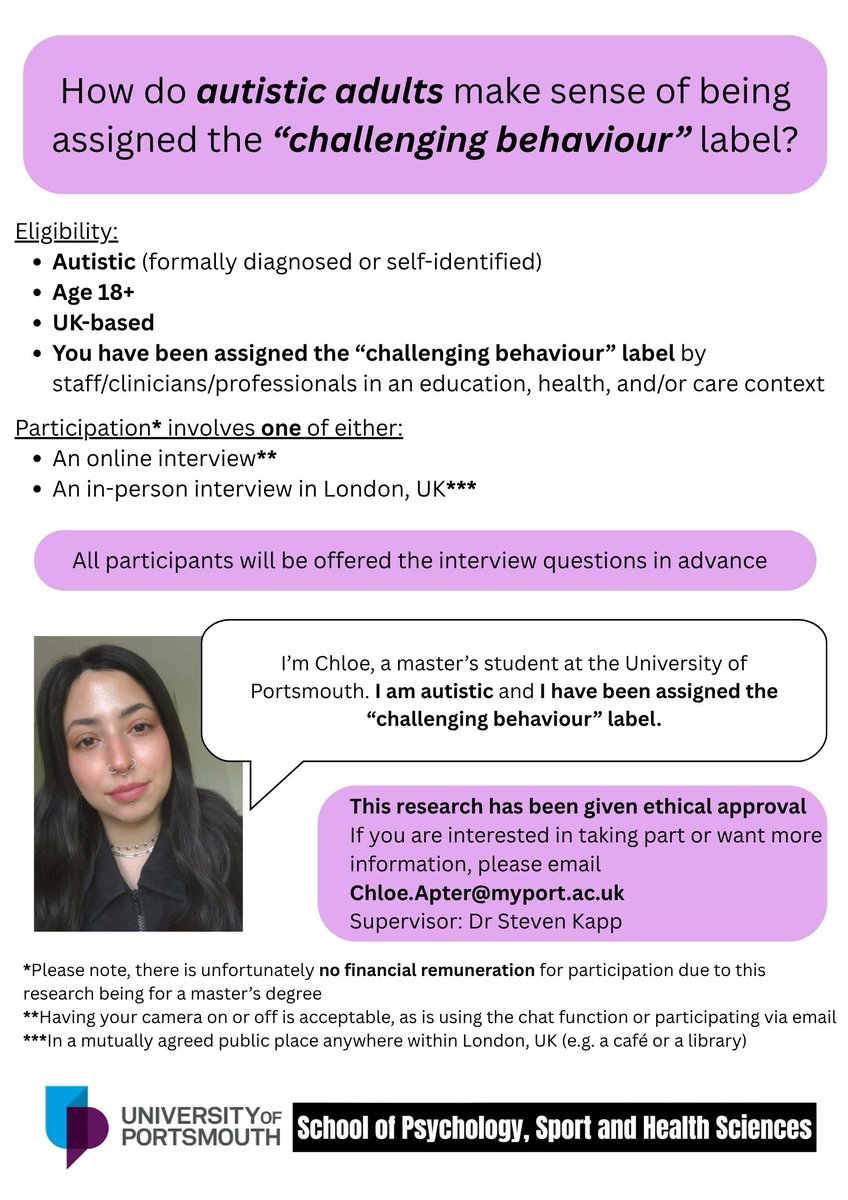
I am still looking to speak to more UK-based autistic adults who have been assigned the "challenging behaviour" label (like I have). Participation in my research can be over email, video call/chat (camera on or off), or in a public place in London. Supervisor: @drstevenkapp
Chloe Apter (she/her) tweet media
Chloe Apter (she/her)@ChloeSApter

They say: "You have challenging behaviour". I say: "I am a multiply neurodivergent, traumatised person - who has faced immense iatrogenic harm - experiencing overwhelming distress & sensory overload in a highly activating, triggering environment. I am doing my best to cope".

English
3
10
14
929
Dave Rossiter retweetledi
Aakash Gupta
Aakash Gupta@aakashgupta·
The scariest finding in this paper: the subjects couldn't tell it was happening. UPenn ran this study on 48 healthy adults. One group slept 8 hours. Another slept 6. Another slept 4. For 14 straight days. They tested cognitive performance every 2 hours from 7:30am to 11:30pm. The 6-hour group's reaction times, working memory, and sustained attention deteriorated on a near-linear curve. By day 14 they were performing at the same level as someone who hadn't slept at all in 48 hours. The 4-hour group hit that threshold by day 6. Here's the part that should unsettle everyone who thinks they "do fine" on 6 hours: the subjects' self-reported sleepiness flatlined after the first few days. Their brains kept getting worse. Their perception of how impaired they were stopped updating. The cognitive decline was invisible to the person experiencing it. The researchers found a hard threshold. Any wakefulness beyond 15.84 hours in a day produces cumulative neurobiological cost. That cost compounds every single day you exceed it and does not reset with a weekend of sleeping in. About 35% of American adults sleep less than 7 hours a night. 40% of those get 6 hours or less. In 1942 that number was 11%. We built an entire professional culture around a sleep schedule that this paper says is functionally equivalent to pulling consecutive all-nighters. "I'm fine on 6 hours" is the most common response to sleep research. The first thing chronic sleep debt destroys is your ability to notice chronic sleep debt.
Nicholas Fabiano, MD@NTFabiano

Sleeping <6h a night for 2 weeks reduces cognitive performance equal to 2 nights of total sleep deprivation.

English
221
3K
19.8K
5.4M
Dave Rossiter retweetledi
Chris
Chris@thehaggler·
@Joseph_Fasano_ Here he is again, summarising what good character looks like.
Chris tweet media
English
2
4
24
310
Dave Rossiter retweetledi
🤠
🤠@heavensbvnny·
I need more men to understand that two men crying and hugging in space after one of them announced they were naming a moon crater after the other one’s late wife is actually what peak masculinity looks like
English
123
6K
74.8K
477.3K
Dave Rossiter retweetledi
Aakash Gupta
Aakash Gupta@aakashgupta·
There's a physicist at Stanford named Safi Bahcall who modeled this exact principle and the math is wild. He calls it "phase transitions in human networks." When you're stationary, your probability of a lucky event is limited to your existing surface area: the people you already know, the places you already go, the ideas you've already been exposed to. Your opportunity window is fixed. When you move, your collision rate with new nodes in a network increases nonlinearly. Double your movement (new conversations, new cities, new projects) and your probability of a serendipitous encounter doesn't double. It roughly quadruples. Because each new node connects you to their entire network, not just to them. Richard Wiseman ran a 10-year study at the University of Hertfordshire tracking self-described "lucky" and "unlucky" people. The single biggest differentiator wasn't IQ, education, or family money. Lucky people scored significantly higher on one trait: openness to experience. They talked to strangers more, varied their routines more, and said yes to invitations at nearly twice the rate. The "unlucky" group followed the same routes, ate at the same restaurants, and talked to the same 5 people. Their networks were closed loops. No new inputs, no new collisions. Luck isn't random. Luck is surface area. And surface area is a function of movement. The lobster emoji is doing more work than most people realize. Lobsters grow by shedding their shell when it gets too tight. The growth requires a period of total vulnerability. No protection, no armor, soft body exposed to the ocean. That's the cost of movement nobody posts about. You have to be uncomfortable first. The new shell only hardens after you've already moved.
@d9vidson

a moving man will meet his luck 🥀

English
506
14K
67.5K
4.5M
Dave Rossiter retweetledi
Kevin Tanaka
Kevin Tanaka@ItsKevinTanaka·
Nice people stay silent. Kind people speak up.
English
9
127
453
22.4K
Dave Rossiter retweetledi
⚡︎
⚡︎@_sorrengailll·
They might find something new on the moon now they’ve sent a woman up to look.
English
306
4K
60.1K
824.8K
Dave Rossiter retweetledi
Zelex
Zelex@OBEhizele·
Urban nihilism is what happens when a society retains material comfort but loses its moral centre. Order no longer feels meaningful, so disruption becomes stimulating.
English
6
38
999
100.7K
Dave Rossiter retweetledi
Kristin Raworth 🇨🇦
Kristin Raworth 🇨🇦@KristinRaworth·
I've never sen anything more accurate
English
669
47.4K
225.5K
8.9M
Dave Rossiter retweetledi
Meidas_Charise Lee
Meidas_Charise Lee@charise_lee·
The biggest metaphor of life‼️
English
139
1.5K
21.9K
1.1M
Dave Rossiter retweetledi
Physics In History
Physics In History@PhysInHistory·
When you change the way you look at things, the things you look at change. - Max Planck (1858 - 1947)
English
75
1.2K
6.2K
502K
Dave Rossiter retweetledi
Reads with Ravi
Reads with Ravi@readswithravi·
This sentence by Dostoyevsky hits so hard. “You sensed that you should be following a different path, a more ambitious one, you felt that you were destined for other things but you had no idea how to achieve them and in your misery you began to hate everything around you.”
English
75
883
6.5K
170.3K
Dave Rossiter retweetledi
Cian McCarthy
Cian McCarthy@arealmofwonder·
An amazing poem. • Paul Durcan •
Cian McCarthy tweet media
English
41
251
1.5K
33.6K