Peter Crane

144 posts

Peter Crane banner
Peter Crane

Peter Crane

@peterkcrane

Building in bio x AI to improve human physical resilience. @entelobio (ex automation @synthace , Chem @oxforduni )

Oxford, UK Katılım Ocak 2014
3.1K Takip Edilen1.3K Takipçiler
Peter Crane
Peter Crane@peterkcrane·
I’ve seen the value these programmes have brought. New thinking, better global networks, more ambition and something that wasn’t being served by existing programmes. Ignore the haters @sethbannon , if the best they can do is roll out the “us tech billionaires and VCs”, only “20% offshore!!!” and what about the north tropes, then it’s time to push even harder 🚀
English
1
0
2
153
Seth Bannon
Seth Bannon@sethbannon·
We wanted to share our perspective following today’s article on ARIA in The Guardian. We are highly optimistic about the future of innovation in the UK and hope to play a meaningful role in supporting it, in partnership with ARIA. For background, you can see our launch of the activation partnership with ARIA here: x.com/sethbannon/sta… We believed UK scientists would benefit from our 5050 programme to help them start companies. However, as a small team of 12, we would not have been able to bring it to the UK without ARIA’s partnership. It is a free, no-equity, no-obligation educational programme, and ARIA’s support in bringing it to the UK has been instrumental. If we get this right, the return to the UK will not be incremental but exponential – more companies, more jobs, and a stronger UK economy that repays the investment many times over. We hope to exceed outcomes such as the 1,300 jobs created through the partnership between Seagate Technology and Invest Northern Ireland, or the 6,000 jobs created through the partnership between Nissan and the UK Government. 5050 has already helped create over 90 companies in the US and we aim to replicate that in the UK. Done well, 5050 UK should not only create jobs but also increase tax revenue for the UK Government. Building great companies expands the tax base. Dyson, a single company, has paid over £1 billion in taxes. On our side, Fifty Years is investing over £5M per year in UK staff salaries, has funded two companies formed through 5050 UK, and has supported 5050 graduates in raising over £7M. We are only just getting started. Home to four of the top ten universities in the world, the UK has one of the highest ceilings for an innovation economy anywhere. Unlocking that potential is good for the UK and good for the world. In partnership with ARIA, we aim to help make that happen.
English
10
13
94
7.9K
Peter Crane
Peter Crane@peterkcrane·
@shelbynewsad And the second to echo @MattyKirsh, Peak Sales AND terminal value erosion of the NPV leading to asset value deflation driven by both herding and fast followers.
English
0
0
1
30
Peter Crane
Peter Crane@peterkcrane·
@shelbynewsad Two of my favs atm: The coming asset implosion in 12-18M as every board pushes their portfolios into "binary by stealth" asset-centric risk profiles, unpricing the financing risk to exitable inflexion, in a market which is very constrained for assets outside core syndicates.
English
1
0
2
70
Dr. Shelby
Dr. Shelby@shelbynewsad·
writing a blog on the bear and bull case for biotech's biggest questions over the next 10 years. questions so far are: - neolabs in bio will become very large, independent companies - next-gen contract research organizations (CROs) that generate data for frontier and neolabs (along with biotechs) will become very big businesses - China will become the global hub of biotech - there will be more drug approvals per year in the US - there will be a collapse of incumbent drug distribution what other doom or bloom questions are folks thinking through? would love to include in this week's release
English
14
3
86
4.6K
Peter Crane retweetledi
Ash Jogalekar
Ash Jogalekar@curiouswavefn·
The fact of the matter is that there’s certain kinds of data in chemistry and biology that is high volume, high-quality and accessible; the PDB is a classic example. But there’s still tons of data that is simply not out there, for instance, toxicological data or data on non-rodent species. It is very difficult or impossible to simply simulate this data. Therefore no matter how good the models get, they will need this kind of data to reach accurate and novel conclusions.
Seth Bannon@sethbannon

Behind the scenes, all the frontier AI labs are inking partnerships with bio startups to get access to their data to improve model performance on bio tasks. Basically every startup that has a legit high throughput platform has been approached about a data licensing deal.

English
4
12
123
12.7K
Brian Armstrong
Brian Armstrong@brian_armstrong·
Some of the most underinvested areas in frontier biology that could accelerate civilizational progress: - Cheap, large-scale DNA synthesis (writing entire chromosomes or full organisms) - Real-time, non-destructive RNA sequencing in living cells - Highly accurate AI-powered polygenic scores for complex traits (disease risk, cognition, longevity) → enabling full genome design - Ultra-precise, multiplex genome editing (far beyond CRISPR) with minimal off-target effects, scalable across millions of cells - Safe, efficient, tissue-specific in vivo delivery systems - Safe and effective human germline engineering - Accelerated clinical trials via testing on decedents (with consent) - Next-gen human enhancement: muscle, cognition, mood — beyond GLP-1s - Ectogenesis / artificial wombs Who’s actually building in these areas? Drop names, companies, or researchers below 👇
English
394
288
2.3K
319.7K
Peter Crane retweetledi
Alexey Strygin
Alexey Strygin@strygah·
Turns out it's not an M&A but a massive ($115M upfront, up to $2.75B in milestones) deal between @InSilicoMeds and @EliLillyandCo Indications and other details are unspecified but @FinancialTimes hints at inter alia a GLP-1 small molecule from Insilico's pipeline Congrats @biogerontology this is HUGE
Alexey Strygin tweet media
English
1
3
15
545
Jessica Sacher, PhD
Jessica Sacher, PhD@JessicaSacher·
idk what's more mortifying — the fact that this small pack of foam is $50, or that my initial response was literally 'omg so cheap!' because i've been in science too long imagine how little grant money we'd need if real price competition was a thing in science
Jessica Sacher, PhD tweet media
English
9
1
50
4.1K
David Li
David Li@davidycli·
earendil labs $787M financing is eye catching for sure but the AI x China biotech theme is only getting started have spoken with a number of chinese biotechs (many which the west has not heard of) that are beginning to develop proprietary models. Including RNA therapies, cell therapies, degraders, small mlc's in a world where time and $ to FIH signal is king, combining AI's ability to cut time to DC and Chinese early clinical execution is going to be hard to beat
English
4
3
40
5.2K
Peter Crane
Peter Crane@peterkcrane·
Really good to see this out in Cell/Nature. Opportunity in Human Resilience is larger and more pressing than ever. Hopefully, we can now all get back to solving real issues and not developing GLP1a add-ons built on false assumptions. #muscle #ageing nature.com/articles/d4158…
English
1
0
1
46
Peter Crane
Peter Crane@peterkcrane·
We are building some of these datasets in the real, messy world of patients, not cell lines.
Geoffrey Miller@gmiller

A mini-rant abut AI and longevity. They say "Artificial Superintelligence would take only a few years to cure cancer, solve longevity, and defeat death itself'. This is a common claim by pro-AI lobbyists, accelerationists, and naive tech-fetishists. But the claim makes no sense. The recent success of LLMs does NOT suggest that ASIs could easily cure diseases or solve longevity, for at least two reasons. 1) The data problem. Generative AI for art, music, and language succeeded mostly because AI companies could steal billions of examples of art, music, and language from the internet, to build their base models. They weren't just trained on academic papers _about_ art, music, and language. They were trained on real _examples_ of art, music, and language. There are no analogous biomedical data sets with billions of data points that would allow accurate modelling of every biochemical detail of human physiology, disease, and aging. ASIs can't just read academic papers about human biology to solve longevity. They'd need direct access to vast quantities of biomedical data that simply don't exist in any easy-to-access forms. And they'd need very detailed, reliable, validated data about a wide range of people across different ages, sexes, ethnicities, genotypes, and medical conditions. Moreover, medical privacy laws would make it extremely difficult and wildly unethical to collect such a vast data set from real humans about every molecular-level detail of their bodies. 2) The feedback problem. LLMs also work well because the AI companies could refine their output with additional feedback from human brains (through Reinforcement Learning from Human Feedback, RLHF). But there is nothing analogous to that for modeling human bodies, biochemistry, and disease processes. There are no known methods of Reinforcement Learning from Physiological Feedback. And the physiological feedback would have to be long-term, over spans of years to decades, taking into account thousands of possible side-effects for any given intervention. There's no way to rush animal and human clinical trials -- however clever ASI might become at 'drug discovery'. More generally, there would be no fast feedback loops from users about model performance. GenAI and LLMs succeeded partly because developers within companies, and customers outside companies, could give very fast feedback about how well the models were functioning. They could just look at the output (images, songs, text), and then tweak, refine, test, and interpret models very quickly, based on how good they were at generating art, music, and language. In biomedical research, there would be no fast feedback loops from human bodies about how well ASI-suggested interventions are actually affecting human bodies, over the long term, across different lifestyles, including all the tradeoffs and side-effects. It's interesting that most of the people arguing that 'ASI would cure all diseases and aging' are young tech bros who know a lot about computers, but almost nothing about organic chemistry, human genomics, biomedical research, drug discovery, clinical trials, the evolutionary biology of senescence, evolutionary medicine, medical ethics, or the decades of frustrations and failures in longevity research. They think that 'fixing the human body' would be as simple as debugging a few thousand lines of code. Look, I'm all for curing diseases and promoting longevity. If we took the hundreds of billions of dollars per year that are currently spent on trying to build ASI, and we devoted that money instead to longevity research, that would increase the amount of funding in the longevity space by at least 100-fold. And we'd probably solve longevity much faster by targeting it directly than by trying to summon ASI as a magical cure-all. ASIs has some potential benefits (and many grievous risks and downsides). But it's totally irresponsible of pro-AI lobbyists to argue that ASIs could magically & quickly cure all human diseases, or solve longevity, or end death. And it's totally irresponsible of them to claim that anyone opposed to ASI development is 'pro-death'.


English
0
0
0
85
Jason Shuman
Jason Shuman@JasonrShuman·
The best robotics wedge nobody’s talking about: Industry-specific form factor → teleop deployment → proprietary workflow data → agentic automation layer on top built into the systems of the end customer → full autonomy explodes margin over time Lower COGs than general-purpose humanoids. Real revenue on day one. Switching costs before you’ve touched autonomy. Distribution, cost structure, process power, counter-positioning and cornered resources are moats. Robots aren’t exempt from this.
English
23
7
131
16K
Peter Crane retweetledi
Martin Picard
Martin Picard@MitoPsychoBio·
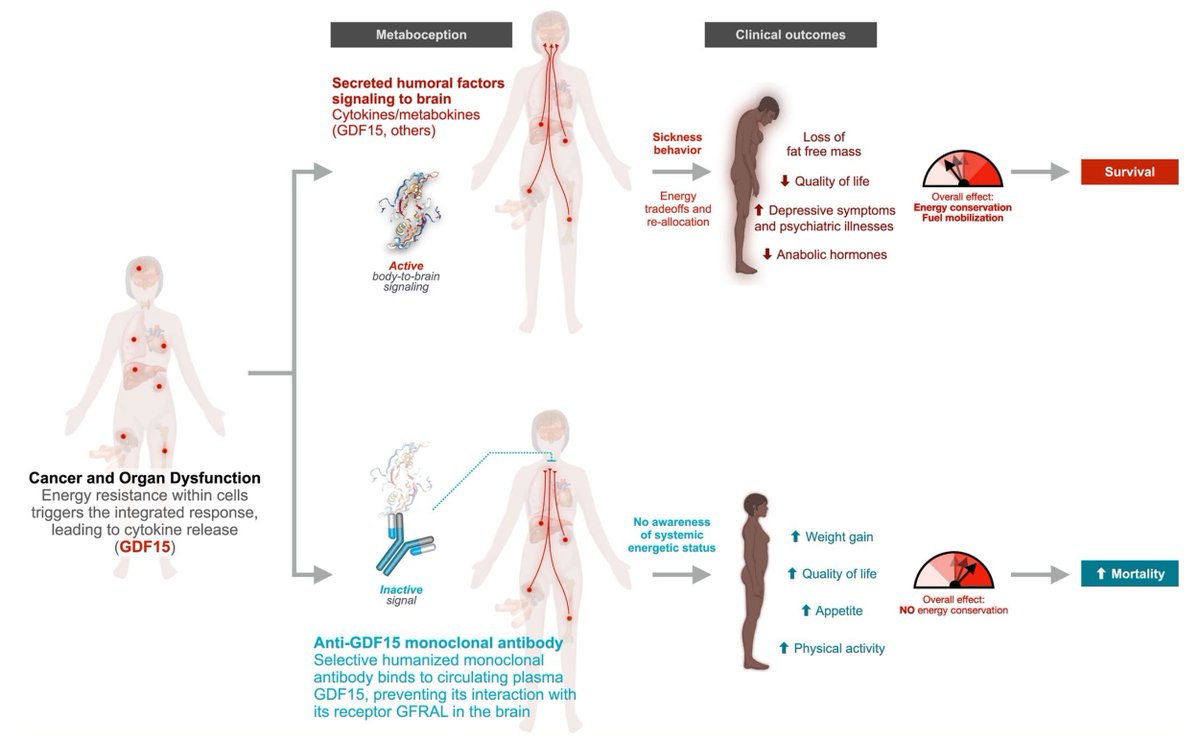
Energetic stress indexed by GDF15 is associated with many acute and chronic illnesses, where high GDF15 is linked to poor outcomes and mortality. Thinking about this reductively, it made sense to try to inhibit GDF15 signaling from the body to the brain, where it triggers sickness behavior, reduced appetite, and appears to trigger malaise and fatigue. A paper published in the New England Journal of Medicine at the end of 2023 showed that blocking GDF15 with an antibody reduced weight loss in patients with cancer cachexia... so it seemed promising in terms of preventing weight loss, but it also seemed to increase mortality. In a new perspective with @cohenaginglab we discuss the risks of inhibiting GDF15-based brain energy sensing.
Martin Picard tweet media
English
8
17
66
7.4K
Peter Crane
Peter Crane@peterkcrane·
@agingroy @UCBerkeley Can certainly take a look re. TGF-beta. We see different splicing patterns, ncRNA, gene expression by sex. And for preclinical (cell) models sex of complex systems was a big debate for us.
English
0
0
1
32
Avi Roy
Avi Roy@agingroy·
That's really interesting, and it fits the broader pattern. What kind of tissue-specific differences are you seeing? In this study, the females showed identical proteomic rejuvenation at day 7, then lost it completely by 4 months. The Conboy group didn't identify the mechanism behind that loss. I'd be curious whether your datasets point toward hormonal modulation of the TGF-beta pathway, or something more tissue-autonomous. Feels like the field needs to stop treating sex as a confounder.
English
1
0
1
58
Avi Roy
Avi Roy@agingroy·
With age, one critical signal drops: oxytocin. Another rises: TGF-beta. The Conboy lab at @UCBerkeley asked what happens if you restore the first and suppress the second. In 25-month-old male mice (roughly 75 human years): 73% longer remaining lifespan, 14% total extension. Nearly 3x less likely to die at any point. Strength, endurance, memory all improved. Blood proteins shifted younger. This lab pioneered parabiosis research. Young blood rejuvenates old tissue. This study is the pharmacological version: recalibrate the signals that drift with age, without the young blood. But it only worked in males. Females had the same molecular response at 7 days, then lost it by 4 months. No lasting benefit. The reason is unknown. Small study, 26 males. The specific ALK5 inhibitor isn't a clinical compound. But oxytocin is already FDA-approved, and clinical ALK5 inhibitors (Vactosertib) are in Phase II trials. Young blood was the proof of concept. These two drugs are the translation attempt.
Avi Roy tweet media
English
7
12
67
7.1K
Anshul Kundaje
Anshul Kundaje@anshulkundaje·
Strongly recommend folks be extremely skeptical of "virtual cell" models until they are independently vetted. This shud be the case for all scientific claims but the virtual cell literature in particular has an unfortunate history of misleading & massive overhyping.
English
5
17
263
10.2K