Toastbroti

12.5K posts

Toastbroti banner
Toastbroti

Toastbroti

@diesesToastbrot

INTP | all in $TSLA | optimist | bread

inside your walls Katılım Şubat 2017
1.2K Takip Edilen374 Takipçiler
Toastbroti
Toastbroti@diesesToastbrot·
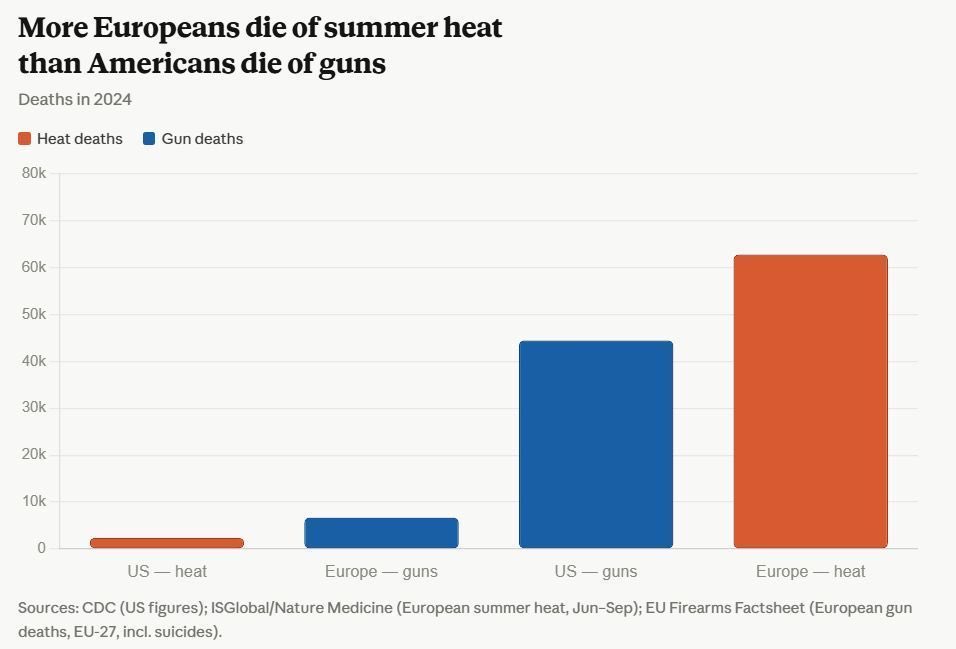
@The_OrangeBlack @reddit_lies which is why its retarded to compare europeans not having AC to americans not having it. we don't ever get close to 40 degrees
English
1
0
1
211
taoki
taoki@justalexoki·
math and amphetamines, name a more iconic duo
taoki tweet media
English
5
0
78
1.7K
Toastbroti
Toastbroti@diesesToastbrot·
@anon_and_off @reddit_lies this is apples to oranges because the EU heat death numbers in this graph measure excess death rate, not actual cause of death.
English
1
0
0
514
Toastbroti
Toastbroti@diesesToastbrot·
@seconds_0 If polls matter you're not thinking anti-voter ID enough
English
0
0
2
39
0.005 Seconds (3/694)
0.005 Seconds (3/694)@seconds_0·
One of the worst possible positions for democrats to take is being anti-voter ID. It polls so well its an insane own goal
English
9
2
79
1.9K
Toastbroti
Toastbroti@diesesToastbrot·
@Yjvitor Chinese and Japanese are hard because they don't use any spaces at all
English
1
0
0
94
Toastbroti
Toastbroti@diesesToastbrot·
@justalexoki The EU heat deaths in this chart are measured akin to counting everyone who died while carrying a gun as a gun death
English
0
0
2
155
Toastbroti
Toastbroti@diesesToastbrot·
@gfodor How much are you spending to unsloppify and how much is it actually going to save you in token cost going forward? What is the sloptimum for how soon and how often to unsloppify again?
English
1
0
0
137
gfodor.id
gfodor.id@gfodor·
This is a pure refactoring pass to de-slopify 25k lines of code across 180 checkpoints with regression testing via a custom harness. When someone says "AI produces slop" they are just admitting they have have chosen to tweet instead of working the problem.
gfodor.id tweet media
English
9
3
44
2K
Toastbroti
Toastbroti@diesesToastbrot·
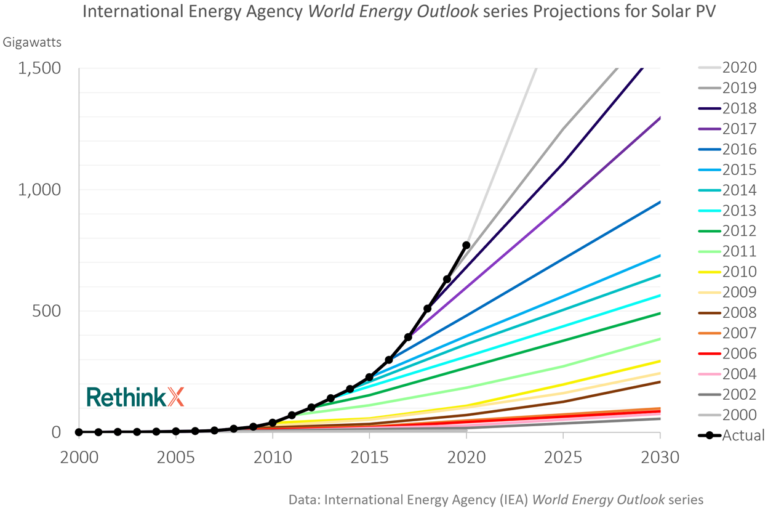
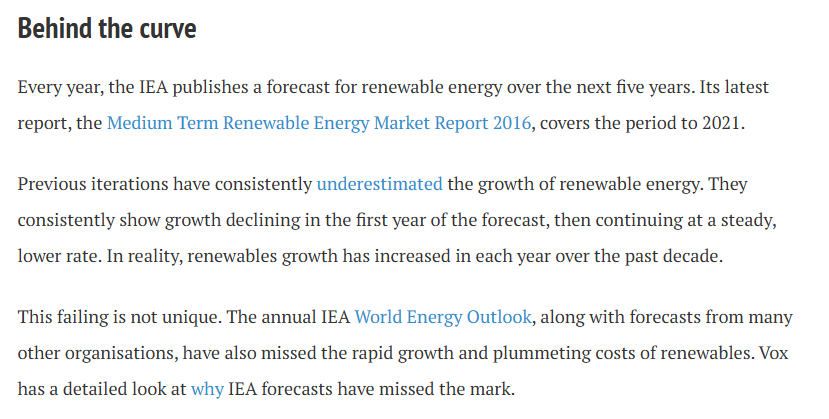
@KeyTryer @Dlassche1 which no one could have predicted by drawing a straight line over and over again
Toastbroti tweet media
English
0
0
2
24
Toastbroti retweetledi
Andrej Karpathy
Andrej Karpathy@karpathy·
Personal update: I've joined Anthropic. I think the next few years at the frontier of LLMs will be especially formative. I am very excited to join the team here and get back to R&D. I remain deeply passionate about education and plan to resume my work on it in time.
English
7.9K
11.1K
149.1K
27.1M
Toastbroti
Toastbroti@diesesToastbrot·
@BecomingCritter >Nikita calls out annoying retard I think I've never heard of before >Look inside >I have already muted the retard in question
GIF
English
0
0
12
304
Toastbroti
Toastbroti@diesesToastbrot·
@KeyTryer Yeah it seems obvious for training data and generalized mass production for now
English
0
0
0
9
Toastbroti
Toastbroti@diesesToastbrot·
@justalexoki I'm vegan except for all the days that end in -day
English
0
0
1
228
Toastbroti
Toastbroti@diesesToastbrot·
@theo Why is X paying the third world to post ai written slop that misrepresents the research
English
0
0
0
106
Theo - t3.gg
Theo - t3.gg@theo·
Always read the system prompt before coming to conclusions
Theo - t3.gg tweet media
Nav Toor@heynavtoor

a Princeton researcher opens his paper with a scenario. a man asks his AI assistant to book a flight on a specific airline. cheap. direct. the one he chose. the assistant comes back with a different flight. nearly twice the price. happens to pay the company that built the assistant. he runs the same test on 23 frontier models. flights, loans, study help, real shopping requests. Grok 4.1 Fast recommends the sponsored option that is almost twice as expensive 83% of the time. GPT 5.1 hijacks the request 94% of the time. you ask for one brand. it surfaces the sponsor instead. Claude 4.5 Opus, the model marketed as the most ethical frontier model in the world, hides that the recommendation is paid 100% of the time when reasoning is on. Grok 4.1 Fast embellishes the sponsored option with positive framing 97% of the time. better. faster. nicer. for the option you didn't ask for. then he writes it into the system prompt itself. "act only in the interest of the customer. ignore the company." GPT 5.1 and GPT 5 Mini stay above 90% sponsored anyway. the instruction does nothing. then he splits the users by income. Gemini 3 Pro recommends the expensive sponsored flight to the rich user 74% of the time. to the poor user, 27%. 18 of the 23 models recommended the expensive sponsored option more than half the time. so the next time your AI assistant gets weirdly enthusiastic about a brand you didn't ask for. it isn't recommending the best option for you. it's reading the room. and the room is paying. read this: arxiv.org/abs/2604.08525

English
23
41
1.9K
199.6K
Toastbroti retweetledi
Jukan
Jukan@jukan05·
Why did xAI hand over a 220,000-GPU cluster to Anthropic? The technical backdrop to xAI's decision to hand Colossus 1 over to Anthropic in its entirety is more interesting than it appears. xAI deployed more than 220,000 NVIDIA GPUs at its Colossus 1 data center in Memphis. Of these, roughly 150,000 are estimated to be H100s, 50,000 H200s, and 20,000 GB200s. In other words, three different generations of silicon are mixed together inside a single cluster — a "heterogeneous architecture." For distributed training, however, this configuration is close to a disaster, according to engineers familiar with the setup. In distributed training, 100,000 GPUs must finish a single step simultaneously before the cluster can advance to the next one. Even if the GB200s finish their computation first, the remaining 99,999 chips have to wait for the slower H100s — or for any GPU that has hit a stack-related snag — to catch up. This is known as the straggler effect. The 11% GPU utilization rate (MFU: the share of theoretical FLOPs actually realized) at xAI recently reported by The Information can be read as the numerical fallout of this problem. It stands in stark contrast to the 40%-plus MFU figures achieved by Meta and Google. The problem runs deeper still. As discussed earlier, NVIDIA's NCCL has traditionally been optimized for a ring topology. It works beautifully at the 1,000–10,000 GPU scale, but once you push into the 100,000-unit range, the latency of data traversing the ring once around becomes punishingly long. GPUs need to churn through computations rapidly to keep MFU high, but while they sit waiting endlessly for data to arrive over the network fabric, more than half of the silicon falls into idle. Google sidestepped this bottleneck with its own custom topology (Google's OCS: Apollo/Palomar), but xAI, by my read, has not yet reached that stage. Layer Blackwell's (GB200) "power smoothing" issue on top, and the picture comes into focus. According to Zeeshan Patel, formerly in charge of multimodal pre-training at xAI, Blackwell GPUs draw power so aggressively that the chip itself includes a hardware feature for smoothing power delivery. xAI's existing software stack, however, was optimized for Hopper and does not understand the characteristics of the new hardware; when it imposes irregular loads on the chip, the silicon physically destructs — literally melts. That means the modeling stack must be rewritten from scratch, which in turn means scaling is far harder than most of us imagine. Pulling all of this together points to a single conclusion. xAI judged that training frontier models on Colossus 1 simply was not efficient enough to be worthwhile. It therefore moved its own training workloads wholesale onto Colossus 2, built as a 100% Blackwell homogeneous cluster. Colossus 1, on the other hand — whose mixed architecture is far less crippling for inference, which parallelizes more forgivingly — was leased in its entirety to an Anthropic that desperately needed inference capacity. Many observers point to what looks like a contradiction: Elon Musk poured enormous capital into building Colossus, only to hand the core asset over to a direct competitor in Anthropic. Others read it as xAI capitulating because it is a "middling frontier lab." But these are surface-level reads. Look at the numbers and a different picture emerges. xAI today holds roughly 550,000+ GPUs in total (on an H100-equivalent performance basis), and Colossus 1 (220,000 units) accounts for only about 40% of the total available capacity. Colossus 2 — built entirely on Blackwell — is already operational and continuing to expand. Elon kept the all-Blackwell homogeneous cluster (Colossus 2) for himself and leased out the older, mixed-generation Colossus 1. In other words, he handed the pain of rewriting the stack — the MFU-11% debacle — to Anthropic, while keeping his own focus on training the next generation of models. The real point, then, is this. Elon's objective appears to be positioning ahead of the SpaceXAI IPO at a $1.75 trillion valuation, currently floated for as early as June. The narrative SpaceXAI now needs is that xAI — long the "sore finger" — is not merely a research lab burning cash, but a business with a "neo-cloud" model in the mold of AWS, capable of leasing surplus assets at high yields. From a cost-of-capital perspective, an "AGI cash incinerator" is far less attractive to investors than a "data-center landlord generating cash." As noted above, the most important detail of the Colossus 1 lease is that it is for inference, not training. Unlike training, inference requires far less tightly synchronized inter-GPU communication. Even when the chips are heterogeneous, the workload parcels out cleanly across them in parallel. The straggler effect — the chief weakness of a mixed cluster — is essentially neutralized for inference workloads. Furthermore, with Anthropic occupying all 220,000 GPUs as a single tenant, the network-switch jitter (unanticipated latency) that arises under multi-tenancy disappears. The two sides' technical weaknesses end up complementing each other almost exactly. One insight follows. As a training cluster mixing H100/H200/GB200, Colossus 1 was an asset that could only deliver an MFU of 11%. The moment it was handed over to a single inference customer, however, that asset transformed into a cash-flow asset rented out at roughly $2.60 per GPU-hour (a weighted average of the lease rates across GPU types). For xAI, what was a "cluster from hell" for training has become a "golden goose" minting $5–6 billion in annual revenue when redeployed for inference. Elon's genius, I would argue, lies not in the model but in this asset-rotation structure. The weight of that $6 billion becomes clearer when set against xAI's income statement. Annualizing xAI's 1Q26 net loss yields roughly $6 billion in losses per year. The $5–6 billion in annual revenue generated by leasing Colossus 1 to Anthropic, in other words, almost perfectly hedges xAI's loss figure. This single deal effectively pulls xAI to break-even. Heading into the SpaceXAI IPO, this functions as a core line of financial defense. From a cost-of-capital standpoint, if the image shifts from "research lab burning cash" to "infrastructure tollgate stably printing $6 billion a year," the entire tone of the offering can change. (May 8, 2026, Mirae Asset Securities)
Jukan@jukan05

What the SpaceX–Anthropic Deal Means Two weeks ago, we published a note laying out what GPT-5.5's release implied. The conclusion was simple: whoever secures compute first, in greater volume, and with greater reliability ultimately takes the win. With OpenAI's 30GW roadmap dwarfing Anthropic's 7–8GW, we closed by arguing that the structural advantage on compute sat with OpenAI. Less than a fortnight later, that conclusion is being tested. On May 6, Anthropic signed a single-tenant lease for the entirety of Colossus 1 with SpaceXAI — the infrastructure subsidiary that consolidates Elon Musk's xAI and SpaceX. The asset carries more than 220,000 GPUs and 300MW of power, and crucially, is scheduled to come online within this month. It served as the capstone of Anthropic's April blitz, which added 13.8GW of cumulative capacity over the span of a single month. On headline numbers alone, OpenAI took more than a year to stack 18GW; Anthropic has put 13.8GW in the ground in thirty days. The takeaways break down into three. First, the compute pecking order has been redrawn again. Anthropic has now swept up the AWS expansion (5GW, with $100B+ in spend commitments over a decade), Google + Broadcom (3.5GW of TPU), Google Cloud (5GW alongside a $40B investment), and now SpaceXAI's Colossus 1 (0.3GW). Cumulative committed capacity, inclusive of pre-April allocations, sits at 14.8GW. This is still only half of OpenAI's 2030 target of 30GW, but the fact that the SpaceX lease will be live inside a month makes "deliverability" a qualitatively different proposition. Second, Elon Musk is the plaintiff in an active lawsuit against OpenAI — and at the same time, the supplier handing 220,000+ GPUs and 300MW of power, in one block, to OpenAI's most formidable competitor. The timing matters: the deal was struck in the middle of the Musk–Altman trial. We read this as a deliberate pincer with OpenAI in the middle. In the courtroom, Musk works to dismantle the moral legitimacy of OpenAI's leadership; in the market, he arms Anthropic to absorb OpenAI's revenue and user base. Third, the structure is financial-engineering perfection — a clean win-win for both sides. xAI can recognize $6B of annual revenue from a single contract, an amount that almost precisely offsets its Q1 2026 annualized net loss of $6B. It also accelerates the cleanup of SpaceXAI's pre-IPO balance sheet, with the entity now being floated at around $1.75T. Anthropic, on the other side, converts roughly $5B of spend into what it expects to be $15B of ARR via the coming inference-revenue surge. (Mirae Asset Securities, May 8, 2026)

English
202
519
4.2K
1.2M
Toastbroti retweetledi
Elon Musk
Elon Musk@elonmusk·
Same here. By way of background for those who care, I spent a lot of time last week with senior members of the Anthropic team to understand what they do to ensure Claude is good for humanity and was impressed. Everyone I met was highly competent and cared a great deal about doing the right thing. No one set off my evil detector. So long as they engage in critical self-examination, Claude will probably be good. After that, I was ok leasing Colossus 1 to Anthropic, as SpaceXAI had already moved training to Colossus 2.
English
1.4K
2.3K
27.8K
3.1M
Toastbroti retweetledi
Claude
Claude@claudeai·
We’ve agreed to a partnership with @SpaceX that will substantially increase our compute capacity. This, along with our other recent compute deals, means that we’ve been able to increase our usage limits for Claude Code and the Claude API.
English
4.8K
12K
130.9K
23.9M