@BrilliantMaps And also the one country where you need to stop over in a foreign country if you want to take a domestic flight from one part to the other.
Kiribati: the country that broke the map 🌍✨
This tiny island nation is massive: not in land, but in spread.
Kiribati is made up of 33 coral atolls scattered across 3.5 million km² of ocean, bigger than India! 😮🌊
Oh, and get this: Kiribati is the only country that sits in all four hemispheres — north, south, east and west! 🧭
However, to keep them all on the same time it uses GMT +14, making it the first country in the world to ring-in the New Year.
More odd shaped countries: brilliantmaps.com/weird-country-…
Can a medieval town replace fossil heating with clean energy? Yes it can!
Here's an inspiring example from a place close to home for me - I grew up just a few miles from the German town of Lemgo founded in 1190. Many of Lemgo's buildings are very old and listed.
The city is using district heating in combination with advanced heat pump technology, extracting heat from its wastewater treatment plant and the nearby River Bega.
Lemgo has also installed solar thermal systems and aims to generate over 55% of its district heating from renewable sources by 2028.
Investments in large-scale heat storage are also underway to further support the transition.
⚡️🚘BREAKING: For the first time ever, more than half of cars sold in China last month were electric
New-energy vehicles, including EVs and PHEVs, reached a record-high 51.1% of retail sales in July, according to data from the China Passenger Car Association
EVs are already noticably trimming China's oil demand: Just the increase in EVs on the road since last year shaved ~4% off transport fuel demand:
carbonbrief.org/analysis-china…
This is how many diesel-only or petrol-only cars were sold in Norway last month👏😍:
🚗🚗🚗🚗🚗🚗🚗🚗🚗🚗🚗🚗🚗🚗🚗🚗🚗🚗🚗🚗🚗🚗🚗🚗🚗🚗🚗🚗🚗🚗🚗🚗🚗🚗🚗🚗🚗🚗🚗🚗🚗🚗🚗🚗🚗🚗🚗🚗🚗🚗🚗🚗🚗🚗🚗🚗🚗🚗🚗🚗🚗🚗🚗🚗🚗🚗🚗🚗🚗🚗🚗🚗🚗🚗🚗🚗🚗🚗🚗🚗🚗🚗🚗🚗🚗🚗🚗🚗🚗🚗🚗🚗🚗🚗🚗
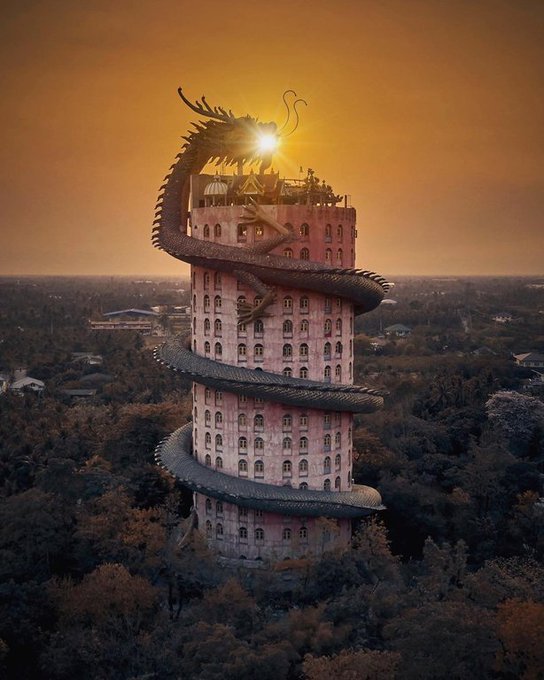
Most Strangest Buildings around the World
You won't believe these bizarre and astonishing buildings actually exist!
A Thread 🧵 👇
1. Wat Sam Phran Buddhist temple in Bangkok, Thailand
Why do American cities feel less "alive" than their European counterparts?
It's because of something called the "missing middle".
A century ago, American cities looked completely different... (thread) 🧵
Steeds meer mensen isoleren hun huis. Je woonplezier gaat ervan omhoog, je energierekening gaat ervan omlaag. En het is goed voor het klimaat. Kijk op verbeterjehuis.nl voor alle informatie die je nodig hebt om te verduurzamen. Want wie isoleert, profiteert.
If you think the energy transition is going well, look at this:
Not only is clean energy barely even visible on a graph of energy use globally,
But oil and gas is still growing.
What’s going on here? (🧵)
Biobased bouwen is goed voor de bouw, de boer en de natuur. Daarom investeren we €200 miljoen om de productieketen van biobased materialen op gang te brengen. Zodat als je door de polder fietst kunt zeggen: hier groeien onze huizen. volkshuisvestingnederland.nl/actueel/nieuws…
De urgentie om onze huizen te verduurzamen is groter dan ooit. We moeten van het gas af. Mooi dat Ikea bij die doelstelling aansluit door in Nederland als eerste land te stoppen met de verkoop van gaskookplaten. zeelandnet.nl/nieuws/ikea-ne…
12 Reasons Why Cities Need More Trees:
1. Temperature Control
One large tree is equivalent to 10 air conditioning units, and the shade they provide can reduce street temperature by more than 30%.
2. Noise Reduction
Trees can reduce loudness by up to 50%. In urban areas filled with the sound of cars, construction, sirens, aeroplanes, and music, trees are essentially the best way to block noise and keep cities — along with the homes and workplaces in them — quieter.
3. Air Purity
Trees remove an astonishing amount of harmful pollutants and toxins from the air. In urban areas air quality is often disastrously bad — with severe consequences for our health. Trees make the air we breathe much cleaner.
4. Oxygen
And, while absorbing all those pollutants, trees also put more oxygen back into the urban environment. Oxygen levels are significantly lower in cities compared to the countryside; trees help to solve that problem.
5. Water Management
Trees do more than just shelter us and our buildings from rain — which is, in fact, extremely important. They also absorb huge quantities of water, reduce run-off, neutralise the severity of flooding, and make flooding more unlikely altogether. Not to forget that their roots absorb pollutants and prevent them from feeding back into a city's water supply.
6. Psychological Health
Studies have proven what we instinctively know to be true: that human beings are significantly happier when surrounded by nature rather than sterile urban environments. Our emotions, behaviour, and thoughts are shaped by the places we spend time — and trees have a profoundly positive effect on our psychology. The consequential benefits of being happier and more peaceful — as individuals and as a society — are immense.
7. Physical Health
Beyond all the other ways in which trees improve air quality and the urban environment, much to the benefit of our health, they also encourage people to go outside. Cycling, running, and walking are all more common in urban areas with plenty of trees. A knock-on effect of people spending more time outdoors is also social integration and stronger communities.
8. Privacy
A simple point, but not inconsequential, is that trees provide privacy.
9. Economics
The total economic benefit of urban trees is hard to calculate. There are costs, of course, including the repair of infrastructure damaged by roots and maintaining the trees themselves. But the total economic benefit — a consequence of everything else in this list and more — far outweighs the expenditure. Trees make cities wealthier.
10. Wildlife
Trees are miniature cities all of their own, serving as a habitat for hundreds of different species, including birds and mammals and insects.
11. Light Pollution
Trees don't only block the light shining down, therefore keeping us and our cities cooler — they also disrupt light shining up, from street lighting, cars, houses, and billboards. Skies are clearer in cities with more trees.
12. Aesthetics
And, finally, trees are beautiful. They break up the potential monotony of urban environments — the sharp geometry, the greyscale roads and buildings, the endless rows of cars — with their trunks, boughs, canopies, and flowers.
Just think: the gold and red of falling leaves in autumn, the white and pink blossom of spring, the vast green canopies of summer, and the branches lined with hoar-frost in winter. Every single tree is a myriad of intricacy and texture, of colour and scent, of dappled light on the pavement, mottled bark, knotted roots, of clustered leaves and delicate petals and stern boughs.
Few streets would not be improved by the kaleidoscopic aesthetic delights of a tree, not to mention the many different species of tree, all over the world, whether willow, oak, lime, cherry, aspen, maple, birch, horse chestnut, dogwood, hornbeam, ash, sycamore... the list goes on.
There are some drawbacks to urban trees, most of them context-specific, and they are not — of course — universally appropriate. But it seems fair to say that many cities would benefit from at least a few more trees here and there.
Naar aanleiding van de mededeling van het tv programma Vandaag Inside dat zij ‘Frans Timmermans’ kapot gaan maken’ een draadje. Wij kennen in NL de trias politica. de overheidsmacht wordt in de wetgevende, uitvoerende en rechtsprekende macht verdeeld die elkaar controleren.