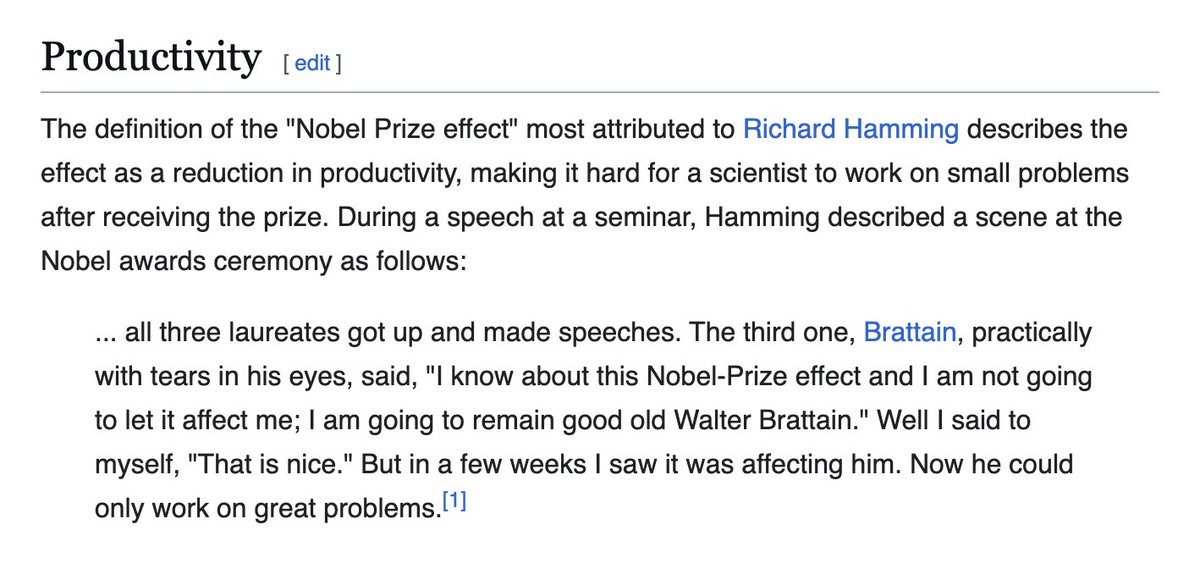
divyesh khatri

1.4K posts

divyesh khatri banner
divyesh khatri

divyesh khatri

@divyeshkrx

Looking to design useful AI products @Stanford

SF Katılım Ağustos 2022
1.5K Takip Edilen659 Takipçiler
divyesh khatri
divyesh khatri@divyeshkrx·
@allenakinkunle If we see ourselves as good people we cease to see ourselves as capable of harm, thereby allowing us to sidestep accountability and become more dangerous as a result
English
0
0
46
1.5K
Edgar Allen Poe
Edgar Allen Poe@allenakinkunle·
I think it's better to think of yourself as a not-so-good person who tries everyday to do right by people than to think of yourself as a good person who tries not to do wrong. To me, the former is freeing and more compatible with the human condition.
English
39
3.5K
18.5K
228.3K
Sonith
Sonith@_sonith·
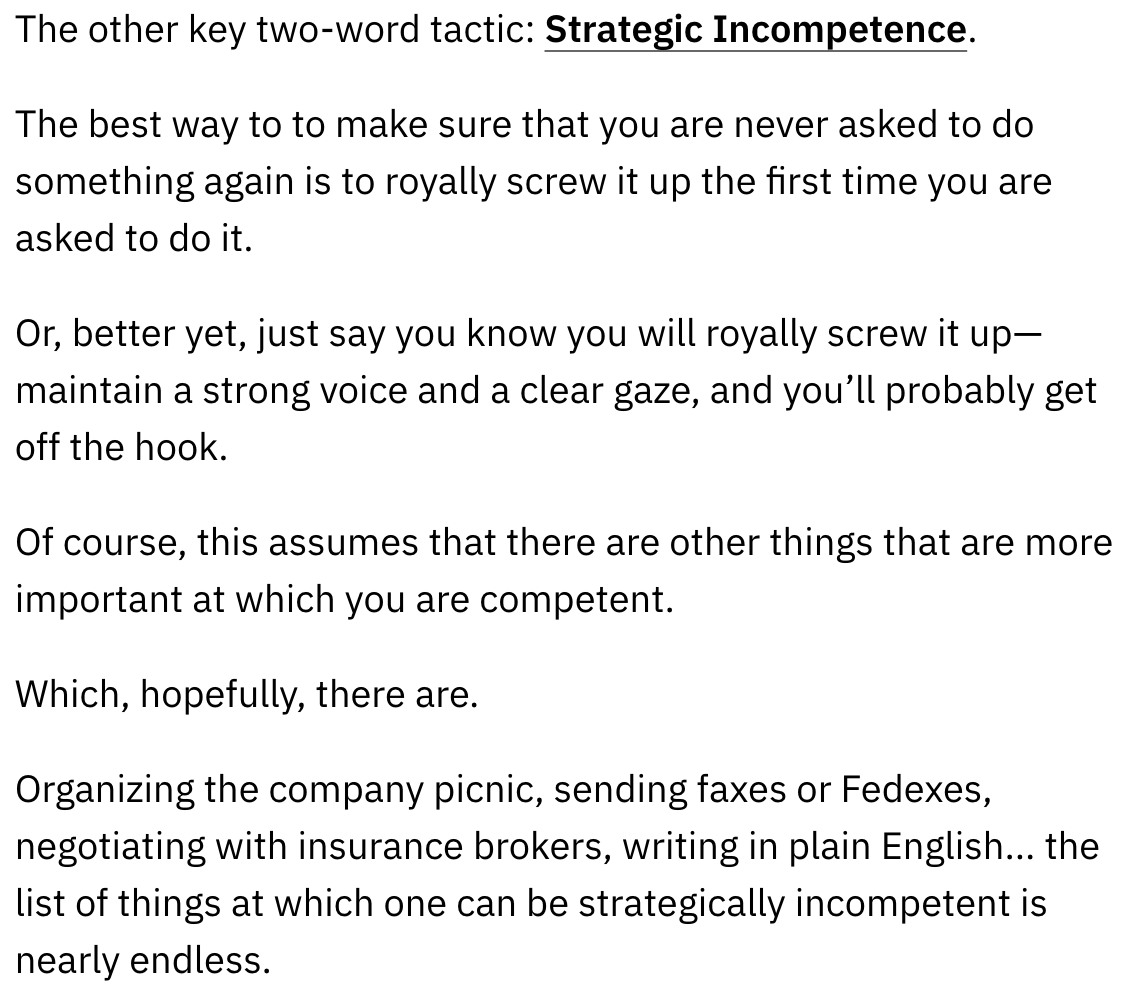
Someone recently directed me to @pmarca's blog. I've loved it a lot:
Sonith tweet media
English
3
0
35
2.2K
K Kulkarni
K Kulkarni@ks_kulk·
Kanye West said this in 2022 on @lexfridman: Lex: "What do you hope your legacy is?" Ye: "To be forgotten. There's ego in memory. Who designed the sidewalk? Who designed the water fountain? Who designed the stop sign? Who designed the stop light? These things are so ubiquitous that the person that designed them is forgotten. If it's a good idea, it's a God idea."
Ian Miles Cheong@ianmiles

Marc Andreessen just revealed the Elon Musk philosophy that completely broke his brain: "The best product in the world shouldn't even need a logo." We all know Elon is relentless about quality. As Marc puts it: "Do you want the best car in the world or not, right? Like that's Elon's mentality... And it's working very well." But at a recent event, Elon took this mindset to a completely different level. He dropped a perspective so jarring that Marc initially thought it was a joke. Elon’s thesis? "You shouldn't even have to have your name on the product. It's just obvious. Everybody knows." The logic is brutal but simple. If you build the undeniable, undisputed best thing in the world, everybody uses it. And because everybody uses it, you don't need to slap your branding all over it to prove it's yours. Think about that. We spend endless hours agonizing over marketing, tweaking brand colors, and putting our logos on every square inch of what we build. But the ultimate flex isn't a flashy logo. The ultimate flex is building something so undeniably brilliant that its mere existence is the brand.

English
138
2.6K
29.8K
4.3M
divyesh khatri retweetledi
Rudy Garza
Rudy Garza@rudymgarza·
I (native Texan) recently moved to SF from Austin. SF has its problems and quirks, sure. They just don’t feel top of mind when this is hitting my retinas
Rudy Garza tweet media
English
192
70
4.3K
108.2K
divyesh khatri
divyesh khatri@divyeshkrx·
@paulg I'm not gonna lie I stopped reading in 8th grade and I scored perfectly on the English section
English
0
0
0
52
Paul Graham
Paul Graham@paulg·
Your social status ≈ your college. Your college ≈ your SAT score. Your SAT score ≈ your SAT English score. Your SAT English score ≈ how much you've read. ∴ Your social status ≈ how much you read in high school. (Successive ≈s leak a lot, but still rather surprising.)
English
377
207
4.9K
491.8K
Sharif Shameem
Sharif Shameem@sharifshameem·
being comfortable looking stupid is so underrated
Sharif Shameem tweet media
English
20
20
477
28.6K
divyesh khatri
divyesh khatri@divyeshkrx·
@stoolpresidente In SF, Pizzeria Delfina is a sleeper on top of the other great pizzas people have shared here
English
0
0
0
19
Dave Portnoy
Dave Portnoy@stoolpresidente·
Give me the best SF pizza so I can cross check my list. Thank you
English
1.9K
51
2.7K
959.6K
divyesh khatri
divyesh khatri@divyeshkrx·
@stoolpresidente If going to Oakland, Mama’s Boy has great slices and and June’s Pizza has great whole pies
English
0
0
1
29
divyesh khatri
divyesh khatri@divyeshkrx·
@scottdomes I think courage is related to detachment. If your actions don't have the ability to impact your worth, you're more likely to take them.
English
1
0
27
834
Garry Tan
Garry Tan@garrytan·
Podium is a case study in how powerful it is to take your existing SaaS customers and enable AI agents for them
Eric Rea@ericwilliamrea

We just crossed $100M in AI agent ARR in under 24 months. Not because of a viral launch or AI hype. But because of a crazy bet we made in 2023. At the end of 2023, over 60k local businesses were using @PodiumHQ to centralize their leads and customer communication into one platform. It’s a great product. Customers convert more leads and make more money with it. But one reality became impossible to ignore: Our customers’ biggest constraint isn’t software. It’s staffing. → 75% annual turnover → 30% of leads come after hours → Every missed call can be $20,000+ in lost revenue Business owners don’t care about software. They care about making money. And the best software in the world doesn’t matter if there aren’t enough people to run it. So we built Jerry, the perfect user of our own platform. Not a chatbot. An AI employee that uses Podium to: - Qualify and schedule every lead - Handle objections and follow up - Learn through natural-language coaching - Work 24/7 Demos are easy. Real AI employees are not. To work in the real world, AI has to think, act, understand context, and use tools. It has to handle thousands of edge cases every day. It has to be coachable. Like a human. That leap is enormous. Agents aren’t a feature. They’re the foundation. That’s why we rebuilt Podium as an AI-first system of agents. Today: - 10,000+ AI agents live in production - AI now outperforms humans in many jobs - $100M+ in AI agent ARR, and accelerating This is still day one. The future isn’t software. It's AI employees that do the work and unlock growth for businesses. We’re early in building what we believe will become the most impactful AI employee ecosystem for the $3T SMB market. We’ve seen 300% year-over-year AI revenue growth and we’re just getting started.

English
29
31
436
133K
divyesh khatri
divyesh khatri@divyeshkrx·
@scottdomes One of the best reframes is also instead of looking at it like "I have to do this thing", try saying "I want to do this thing"
English
0
0
1
269
scott 🌞
scott 🌞@scottdomes·
sometimes when we feel stuck for an extended period of time, we're tempted to chalk it up to mere "laziness" e.g. "why can't I just do the thing? there must be something wrong with me" but Jung had the concept of "neurotic inertia", which is when part of the psyche is resisting the ego's agenda i.e. the conscious mind wants to move towards achievement, the unconscious mind wants to move towards growth, and between the two, we get stuck it does look like laziness, in that nothing is happening, but it's not really about energy conservation: it's about the internal tension usually this means the conscious mind/ego wants to do the HARD thing ("lock in" and strive to the next logical achievement) but the unconscious mind wants to do the SCARY thing (surrender and allow something new to emerge) in my experience, the conscious mind is not going to get its way 😬 at least not in the long-term so the question isn't, "how can I force myself to get to work", but rather, "what scary step am I trying to avoid *by* forcing myself to get to work?"
English
21
68
770
41.8K
Bryan Johnson
Bryan Johnson@bryan_johnson·
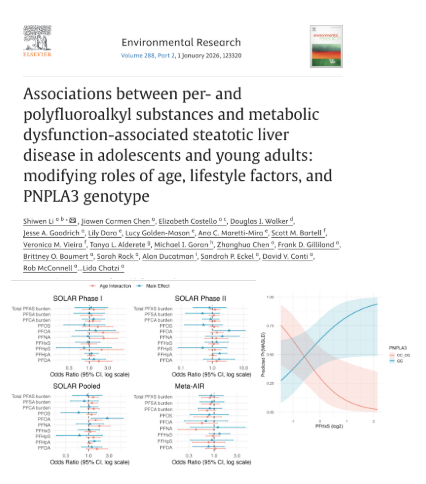
If you have a non-stick cookware. Get rid of it. New study: a 169% increase in the risk of fatty liver disease in adolescents is linked to PFOA, a forever chemical used in non-stick cookware, with every doubling of exposure. I've been meticulously measuring these toxin levels in myself and drinking water. Significant study findings: + PFOA showed the highest risk increase for fatty liver disease in adolescents; each doubling of PFOA plasma concentration was associated with a 169% increased odds of fatty liver disease. + In one cohort, each doubling of PFHpA was associated with a 73% increased risk of fatty liver disease in adolescents. + Age mediated the risk posed by PFOA in adolescents; each year increase in age added a 45% increased odds of fatty liver disease for every doubling of PFOA plasma concentration. + The high-risk PNPLA3 genotype significantly increased the risk of fatty liver disease with PFAS exposure in adolescents, particularly for PFHxS. Each doubling in PFHxS concentration was associated with a 552% increase in fatty liver disease odds in older adolescents carrying the PNPLA3 GG high-risk phenotype. + No basic association with increased risk was observed with increasing PFAS concentrations in young adults. + Smoking in young adults turned several PFAS, including PFDA, PFHpS, and PFNA, into significant risk factors for metabolic liver disease. Added Context: + MASLD definition: Having >5.5% liver fat in addition to at least one metabolic disease criterion (high BMI, fasting glucose, blood pressure, triglycerides, and/or low HDL). + PNPLA3: A gene involved in fat and cholesterol handling and storage in the liver and adipose tissue. The GG phenotype predisposes its carriers to an increased risk of developing fatty liver and metabolic (non-alcoholic) liver disease. Significance: Known as "forever chemicals," PFAS persist for years or decades in the human body (PFOA has a half-life of 1.5–5 years) and for decades to centuries in the ecosystem (PFOA has a half-life of 92 years in environmental water). PFAS are widely used as insulating and non-stick materials in non-stick cookware, clothing, electronics, and many other household and industrial applications. PFAS have long been known to cause metabolic and endocrine disruptions, affecting metabolism, insulin function, and liver fat metabolism. Adolescence and early adulthood are particularly sensitive phases due to hormonal changes around puberty and related rapid growth, making this age group especially vulnerable to the endocrine, hormonal, and metabolic damage caused by PFAS. This study successfully identified adolescents as an especially vulnerable risk group to specific types of PFAS (PFOA and PFHpA). Given that PFOA is used in non-stick ware and other food containers, this highlights the importance of avoiding these items in households with children, especially around and after the age of puberty. Furthermore, the study uncovered the exacerbation of genetic risk by PFAS, indicating that PNPLA3 GG carriers should be especially aware of the risk from PFHxS. This chemical is commonly used in firefighting foams, water-repellant clothing and polishes, as well as various electronics. Young adults showed no basic association between PFAS and liver disease risk, possibly indicating a special sensitivity before and around puberty. However, smoking altered this relationship, making young-adult smokers more susceptible to increased liver disease risk with PFAS exposure. Limitations While the study offers several actionable insights, more research is needed to determine if the findings hold for non-Hispanic adolescent populations (as the SOLAR adolescent cohort was solely of Hispanic background). Additionally, the somewhat small sample size limits the study's statistical power. Finally, the single-time point PFAS exposure assessment and the cross-sectional nature of the study make it impossible to assess cumulative exposures or draw any causative conclusions, limiting the insights to observational findings.
Bryan Johnson tweet media
English
480
630
6.5K
1.7M
Bryan Johnson
Bryan Johnson@bryan_johnson·
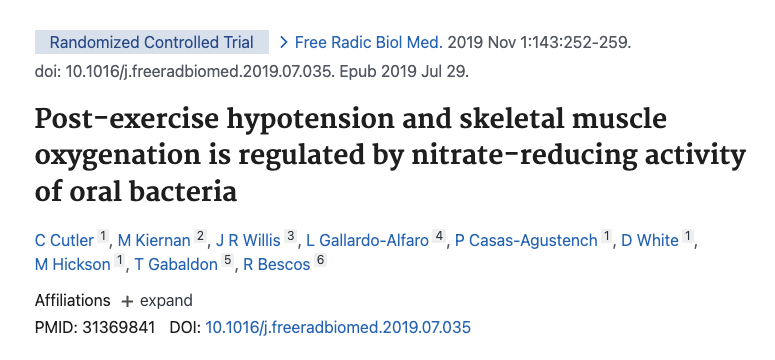
A reminder to avoid using mouthwash after a workout. Rinsing with antiseptic mouthwash after exercise can blunt the benefits of a workout. Antibacterial mouthwash cut over 60% of exercise’s blood-pressure-lowering effect after 1 hour. And fully canceled it 2 hours post-exercise.
Bryan Johnson tweet media
English
179
158
3.7K
1M
The White House
The White House@WhiteHouse·
Nicolas Maduro on board the USS Iwo Jima.
The White House tweet media
English
21K
65.9K
406.1K
138.6M
divyesh khatri retweetledi
Dr. Jon Slotkin
Dr. Jon Slotkin@slotkinjr·
I have a guest essay in @nytimes today about autonomous vehicle safety. I wrote it because I’m tired of seeing children die. Done right, we can eliminate car crashes as a leading cause of death in the United States @Waymo recently released data covering nearly 100 million driverless miles. I spent weeks analyzing it because the results seemed too good to be true. 91% fewer serious-injury crashes. 92% less pedestrians hit. 96% fewer injury crashes at intersections. The list goes on. 39,000 Americans died in crashes last year. More than homicide, plane crashes, and natural disasters combined. The #2 killer of children and young adults. The #1 cause of spinal cord injury. We’ve accepted this as the price of mobility. We don’t have to. In medicine, when a treatment shows this level of benefit, we stop the trial early. Continuing to give patients the placebo becomes unethical. When an intervention works this clearly, you change what you do. In driving, we’re all the control group. Cities like DC and Boston are blocking deployment. And cities are not the only forces mobilizing to slow this progress. It’s time we stop treating this like a tech moonshot and start treating it like a public health intervention that will save lives. Link to article below. 👀 this video of Waymo cars evading crashes with people and vehicles. I especially note the ones that require it having a 360° view. My sincere thanks to Alex Ellerbeck and @acsifferlin for their wisdom and sure hand in editing this piece.
English
333
1K
6.4K
1.8M
divyesh khatri retweetledi
Helen Toner
Helen Toner@hlntnr·
On self-driving cars: "In medicine, when a treatment shows this level of benefit, we stop the trial early. Continuing to give patients the placebo becomes unethical. When an intervention works this clearly, you change what you do. In driving, we’re all the control group."
Dr. Jon Slotkin@slotkinjr

I have a guest essay in @nytimes today about autonomous vehicle safety. I wrote it because I’m tired of seeing children die. Done right, we can eliminate car crashes as a leading cause of death in the United States @Waymo recently released data covering nearly 100 million driverless miles. I spent weeks analyzing it because the results seemed too good to be true. 91% fewer serious-injury crashes. 92% less pedestrians hit. 96% fewer injury crashes at intersections. The list goes on. 39,000 Americans died in crashes last year. More than homicide, plane crashes, and natural disasters combined. The #2 killer of children and young adults. The #1 cause of spinal cord injury. We’ve accepted this as the price of mobility. We don’t have to. In medicine, when a treatment shows this level of benefit, we stop the trial early. Continuing to give patients the placebo becomes unethical. When an intervention works this clearly, you change what you do. In driving, we’re all the control group. Cities like DC and Boston are blocking deployment. And cities are not the only forces mobilizing to slow this progress. It’s time we stop treating this like a tech moonshot and start treating it like a public health intervention that will save lives. Link to article below. 👀 this video of Waymo cars evading crashes with people and vehicles. I especially note the ones that require it having a 360° view. My sincere thanks to Alex Ellerbeck and @acsifferlin for their wisdom and sure hand in editing this piece.

English
43
295
3.1K
269.2K
divyesh khatri retweetledi
Tyler Bowyer
Tyler Bowyer@tylerbowyer·
The deficiency vs excess scales of virtue.
Tyler Bowyer tweet media
English
36
237
1.2K
179.9K