

mohssine dardour
168 posts

mohssine dardour
@drdmohssine
Systems and Networks Technician MCSA Certified AI/GenAI enthusiast
Katılım Şubat 2010
182 Takip Edilen111 Takipçiler

This is Crazy. CTOs of billion-dollar companies are taking pay cuts and title cuts to become individual contributors at Anthropic.
Workday CTO.
Instagram CTO.
Box CTO.
You dot com CTO.
Super dot com CTO.
All MTS now.
These people had 500-person orgs, board seats, and generational comp packages.
They gave it up to write code again.
Because something at the frontier is worth more than running a billion-dollar engineering org from a calendar.
The smartest technical leaders in tech are voting with their careers.
That’s a signal no analyst report will ever capture.

English

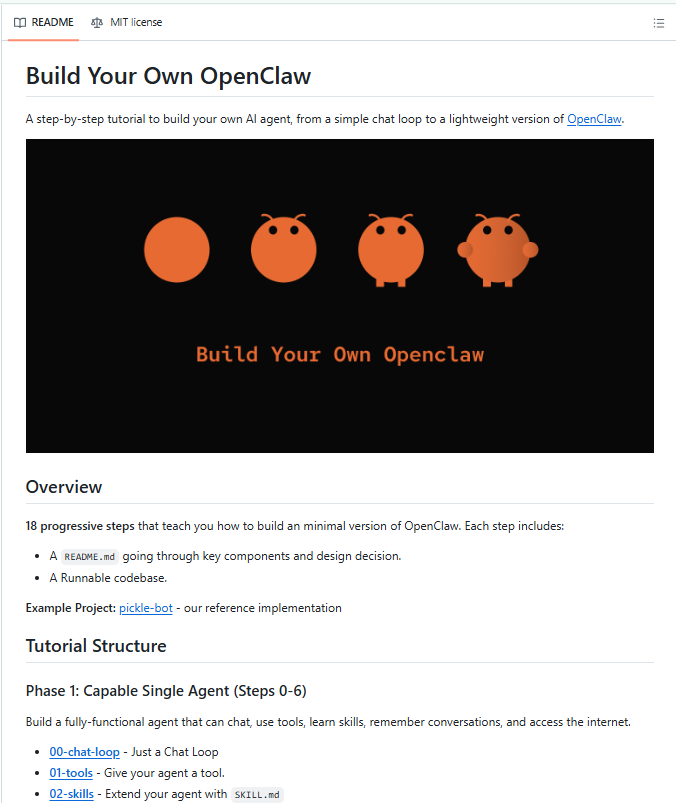
Someone just open-sourced a step-by-step guide to building your own AI agent from scratch.
1,500 GitHub stars
No framework configs. No abstractions. You build every layer yourself.
Here's the full progression:
Phase 1 : Capable Single Agent (Steps 0-6)
→ Basic chat loop
→ Tool use
→ Skills via SKILL.md
→ Conversation persistence
→ Slash commands
→ Web access
Phase 2 : Event-Driven Architecture (Steps 7-10)
→ Expose your agent beyond CLI
→ Config hot reload
→ Multi-channel support
→ WebSocket interaction
Phase 3 : Autonomous & Multi-Agent (Steps 11-15)
→ Multi-agent routing
→ Cron-based scheduled tasks
→ Multi-layer prompts
→ Agent-to-user messaging
→ Agent dispatch
Phase 4 : Production & Scale (Steps 16-17)
→ Concurrency control
→ Persistent memory
Each step has a README, a runnable codebase, and a reference implementation called pickle-bot.
Works with Claude, Gemini, Qwen, and Grok via LiteLLM.
If you're shipping agents without understanding the internals, you're one weird failure mode away from being completely stuck.
100% open source. MIT license. Start from step 0.
(Link in the comment)
English
@Sumanth_077 This transforms the way developers interact with complex systems.
English

Turn any codebase into an interactive knowledge graph!
Understand-Anything is a Claude Code plugin that builds an explorable map of your project. It analyzes every file, function, class, and dependency, then gives you an interactive dashboard to explore it all visually.
Run the analysis and five agents execute in parallel. They scan your project, extract structure, identify architectural layers, and build a knowledge graph. The output is an interactive React Flow visualization.
The dashboard shows your codebase as a graph. Nodes are files, functions, and classes. Edges show dependencies. Everything is color-coded by layer (API, Service, Data, UI, Utility).
Click any node to see its code, relationships, and a plain-English LLM explanation.
Key features:
• Visual exploration with searchable, interactive graph
• Plain-English summaries for every component
• Guided architecture tours ordered by dependency
• Semantic search - find by meaning, not just name
• Diff impact analysis - see what your changes affect
It works across multiple AI coding agents - Claude Code, Codex, OpenCode, OpenClaw, Cursor, Antigravity
It's 100% open source
I've shared the link in the comments!

English
@InduTripat82427 AI is a junior teammate who can speed things up only if you’re steering with intent.
English

“Vibe coding” just got exposed.
A study from University of California, San Diego + Cornell University tracked 100+ real devs using AI.
What actually works:
Plan first
Scope tight
Review everything
Treat AI like a junior
Not a magic CTO
Reality check:
Only ~8% AI outputs → usable code
Senior devs got ~19% slower with AI
The viral demos aren’t real workflows
The devs shipping fastest today aren’t vibing
They’re controlling
If you’re not reading the code
You’re not building anything real

English
@ihtesham2005 The brain is a lazy organ. It intent to consume less energy as possible.
English

A psychologist discovered in 1920 that your brain makes up its mind in 3 seconds and then spends the rest of the conversation pretending it was thinking.
He called it the Halo Effect. The implications are worse than you think.
His name was Edward Thorndike, and the finding he published from that study became one of the most replicated discoveries in the history of psychology. He wasn't studying bias. He was trying to rate soldiers.
Here is what he actually found, and why it should unsettle you.
He asked military commanding officers to rate their subordinates across several completely independent dimensions. Intelligence. Physique. Leadership. Character. The ratings were supposed to be separate evaluations of separate qualities.
They were not separate at all.
If an officer rated a soldier highly on physique, he almost automatically rated that same soldier highly on intelligence, on leadership, on character, on everything. One positive impression had leaked into every single category before the officer consciously evaluated any of them.
Thorndike published this in 1920. The paper was nine pages long. The implications have been running silently inside every human judgment ever since.
Here is the mechanism your brain is actually running.
When you encounter a person, your brain does not evaluate each quality separately. It builds a single global impression first, usually within the first few seconds, and then uses that impression as the template for everything that follows.
If the first thing you register is that someone is physically attractive, your brain does not then independently evaluate their intelligence. It fills in the intelligence score from the same mold it already cast.
The global impression contaminates every downstream judgment before the downstream judgment even has a chance to form on its own.
The resume studies are the part most people find hardest to sit with. Researchers took identical resumes, attached photographs of varying attractiveness, and sent them to HR professionals. The attractive candidates were rated as more competent, more hireable, more intelligent. The resume said nothing different. The experience was identical.
But the halo from the photograph reached forward and rewrote the evaluation of every word on the page.
One study put the salary premium on attractiveness at ten to fifteen percent above equally qualified candidates over a full career. Nobody writes that number into any job listing. It operates completely below the threshold of awareness.
The election data is the part that should concern everyone who votes.
Researchers analyzed candidates across every level of American elections and found that taller candidates win at a statistically significant rate that cannot be explained by policy, experience, or party affiliation alone. Height produces a halo. The halo reaches into assessments of competence, strength, and leadership. Voters experience those assessments as genuine political judgment.
They are not. They are contaminated impressions flowing from a single physical trait.
The deeper problem Thorndike identified, and that every replication since has confirmed, is that the halo effect is invisible from the inside.
The military officers in his original study were not trying to let physique contaminate their intelligence ratings. They genuinely believed they were making independent evaluations. The HR professionals were not consciously thinking about the photograph while reading the resume. They experienced the judgment as objective.
That is what makes it so durable. The bias does not feel like a bias. It feels like a conclusion you reached by thinking carefully.
Kahneman described it later as the brain substituting a hard question with an easy one. Evaluating someone's intelligence independently is genuinely hard. Evaluating whether you have a good feeling about them is easy. The brain swaps the hard question for the easy one and delivers the answer to your conscious mind as if it answered the hard one.
You think you evaluated their intelligence. You rated your gut feeling about them and called it an assessment.
The firmness of a handshake. The warmth of a first smile. The height of a person walking through a door. A photograph attached to a document. These are not peripheral details your careful thinking overrides.
They are the raw material your brain is actually using to build every judgment that follows.
Knowing this does not make you immune. Thorndike knew it his entire career and could not opt out of it either.
But it teaches you something precise about which moments deserve the most skepticism.
The moments when your judgment feels most confident and most effortless are exactly the moments the halo is doing the most work.
You are not evaluating the person in front of you.
You are evaluating your first impression of them and calling the whole thing judgment.

English

In 2015, the Chinese police visited a programmer's home.
They told him to stop working on his code. They told him to delete it from GitHub. He posted one final message before he obeyed:
"Two days ago the police came to me and wanted me to stop working on this. Today they asked me to delete all the code from GitHub. I have no choice but to obey. I hope one day I'll live in a country where I have freedom to write any code I like without fearing."
Then he deleted the repo.
Then he deleted the message.
Then something happened the Chinese government did not plan for.
Within hours, the code was mirrored to thousands of other GitHub accounts. Within days, it became the #1 trending repository on GitHub globally. Within weeks, every Chinese developer who could compile code had a copy.
The government tried to make it disappear. The act of trying made it permanent.
The project is called Shadowsocks. The programmer's username was clowwindy.
He built a tiny piece of software that let anyone in China bypass the Great Firewall and reach the open internet. No subscription. No company. No account. You set up a server somewhere outside China. You connect to it. Your traffic looks like normal encrypted web browsing, so the firewall cannot tell you are using it.
Why this terrified the Chinese government in 2015:
→ It was open source. Anyone could compile it.
→ It was small. The whole protocol fit in a few hundred lines of code.
→ It looked like normal HTTPS traffic. The Great Firewall could not distinguish it.
→ It required no money. No accounts. No central server to seize.
→ It worked on every operating system.
You cannot arrest a protocol. You can only arrest the person who wrote it. So they did. And the protocol kept spreading.
shadowsocks-windows: 59,300+ stars. GPLv3. Still online 11 years later. The 2015 commits the Chinese government wanted deleted are still in the history.
clowwindy was forced to walk away. The code never did.
But DO NOT install it. The Great Firewall has feelings too.
100% Open Source.
(Link in the comments)

English
@jahirsheikh8 I'm surprised, I expected AI to have already replaced most programming tasks by now. However, its capabilities still seem limited to beginner-level.
English

Programming Languages and their AI Replacement Risk
• 🧊 HTML/CSS — 🔴 Highest
• 🟣 Visual Basic — 🔴 Highest
• 🐘 PHP — 🔴 High
• 🐪 Perl — 🔴 High
• 🎵 Groovy — 🔴 High
• 🟨 JavaScript — 🟠 Medium
• 🐍 Python — 🟠 Medium
• 💎 Ruby — 🟠 Medium
• 🎯 Dart — 🟠 Medium
• 🐦 Swift — 🟠 Medium
• 🌙 Lua — 🟠 Medium
• ☕ Java — 🟡 Low
• 🟣 C# — 🟡 Low
• 🅺 Kotlin — 🟡 Low
• 🔺 Scala — 🟡 Low
• 🧬 Julia — 🟡 Low
• 💧 Elixir — 🟡 Low
• 🐹 Go — 🔵 Very Low
• 🔧 C — 🔵 Very Low
• 🚀 C++ — 🔵 Very Low
• 🦀 Rust — 🔵 Very Low
• ⚡ Zig — 🔵 Very Low
• ⚙️ Assembly — 🔵 Very Low
• 🧮 Fortran — 🔵 Very Low
English
@hridoyreh How much time And power i need to get ranked on them?
English

75 places to get backlinks for startup:
1. Chrome Web Store (DR 99)
2. Forbes (DR 94)
3. GitHub Pages (DR 97)
4. TrustRadius (DR 84)
5. AlternativeTo (DR 79)
6. SourceForge (DR 92)
7. Gumroad (DR 92)
8. Substack (DR 93)
9. Indie Page (DR 67)
10. Privacy Tools (DR 79)
11. OSS Gallery (DR 29)
12. Yelp (DR 94)
13. Alternative Me (DR 74)
14. SaaSHub (DR 78)
15. HubPages (DR 87)
16. YourStory (DR 85)
17. Medium (DR 94)
18. TrustMRR (DR 66)
19. Crunchbase (DR 99)
20. SEO Wins (DR 32)
21. GitHub (DR 97)
22. Imgur (DR 99)
23. Pinterest (DR 96)
24. Flickr (DR 94)
25. Pixabay (DR 92)
26. Pexels (DR 92)
27. Reddit (DR 95)
28. Quora (DR 92)
29. Goodreads (DR 92)
30. Tiny Startups (DR 50)
31. Hackernoon (DR 87)
32. TinyLaunch (DR 71)
33. Hacker News (DR 91)
34. Foundr (DR 76)
35. The Hustle (DR 79)
36. GrowthMentor (DR 72)
37. DZone (DR 84)
38. Smashing Magazine (DR 90)
39. Product Hunt (DR 91)
40. BetaList (DR 75)
41. MakerPad (DR 67)
42. StackShare (DR 79)
43. PeerSpot (DR 73)
44. Toolify AI (DR 73)
45. WIP (DR 55)
46. Vocal Media (DR 82)
47. TechCrunch (DR 92)
48. VentureBeat (DR 90)
49. Starter Story (DR 85)
50. Niche Pursuits (DR 73)
51. Founder Reports (DR 57)
52. Milestones (DR 26)
53. Boring Cash Cow (DR 26)
54. Micro Founder (DR 36)
55. Failory (DR 74)
56. Revenue Memo (DR 37)
57. Latka (DR 72)
58. Builder Society (DR 39)
59. Indie Niche (DR 93)
60. Indie Hackers (DR 80)
61. Fandom (DR 92)
62. Hashnode (DR 83)
63. Mixergy (DR 75)
64. First Round Review (DR 81)
65. Wikipedia (DR 97)
66. AppSumo Blog (DR 83)
67. WikiHow (DR 91)
68. DevTo (DR 90)
69. SaaStr (DR 77)
70. FounderPass (DR 52)
71. Entrepreneur (DR 91)
72. Indie Bites (DR 34)
73. SaaS Club (DR 59)
74. My First Million (DR 62)
75. Blogger (DR 94)
English
@heynavtoor The strongest proactive protection against malware; I wouldn't be exaggerating if I said it costs them billions of dollars.
English
Google has a pirate enemy.
He's one guy. His name is Raymond Hill.
He built uBlock Origin. The world's best ad blocker. 63K stars. GPL-3.0. He literally refuses every dollar you try to send him.
Then Google did the unthinkable.
July 24, 2025. Manifest V2 disabled everywhere. The full uBlock Origin stopped working on Chrome.
The world's biggest ad company nuked the world's biggest ad blocker on its own browser. They called it "security."
Coincidence.
Here's the wildest part:
Raymond didn't fold. Latest release: March 11, 2026.
Still alive on Firefox. Still alive on Edge. Still alive on Brave. Still GPL-3.0. Still refusing every dollar.
One developer vs. the trillion-dollar ad empire.
But DO NOT install it. We should all keep Google richer.
100% Open Source.
(Link in the comments)

English
@heynavtoor English is not my native language, sometimes i found difficult to express ideas. that would be very helpful, thank you.
English

@heynavtoor Since I discovered excalidraw, it has become one of the essential elements in my daily work.
English
10 free websites that feel like cheat codes for life.
You used to pay for half of these. Bookmark them before you forget.
1. Photopea
A free Photoshop that runs inside your browser. Opens PSD files.
Site → photopea.com
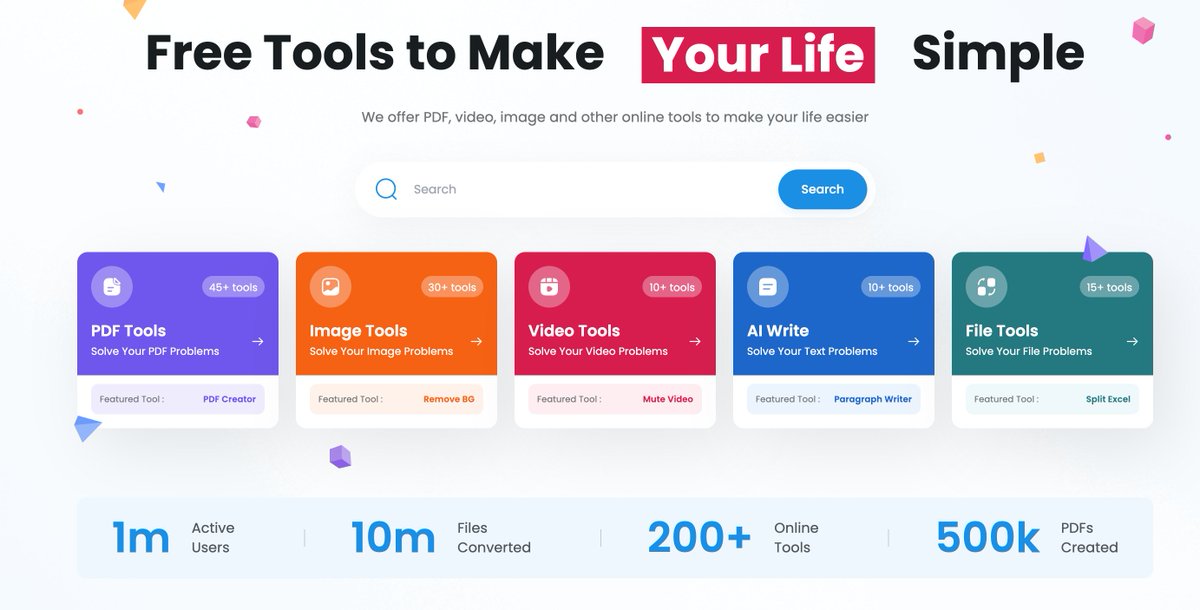
2. TinyWow
100+ free tools in one place. No signup. No watermarks.
Site → tinywow.com
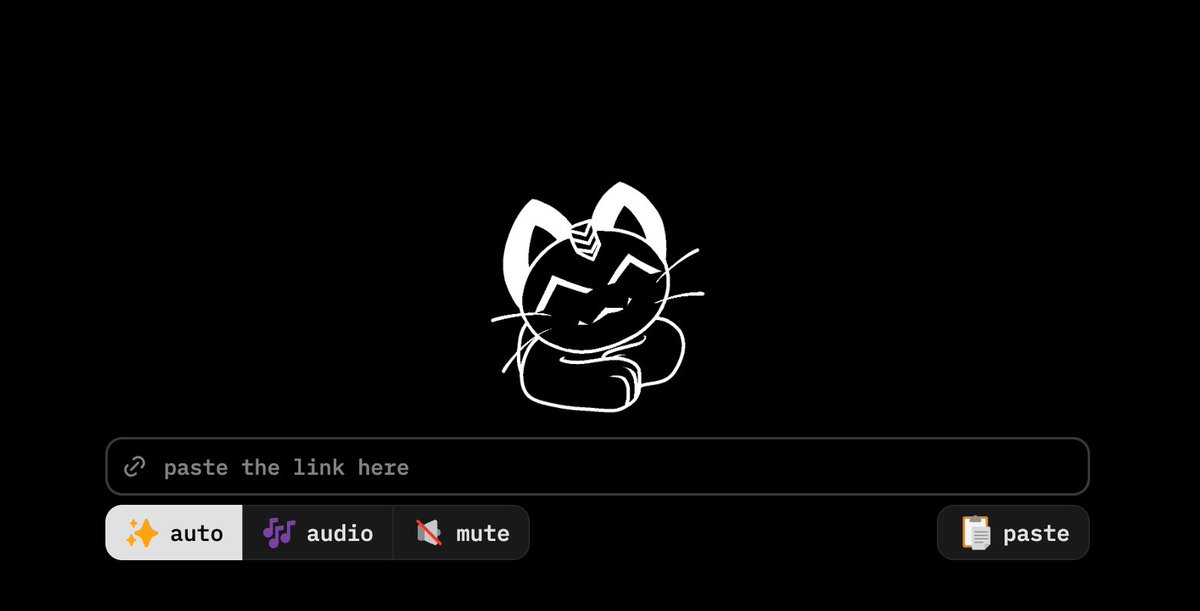
3. Cobalt. tools
Paste any video link. Get the video. No ads. No tracking.
Site → cobalt.tools
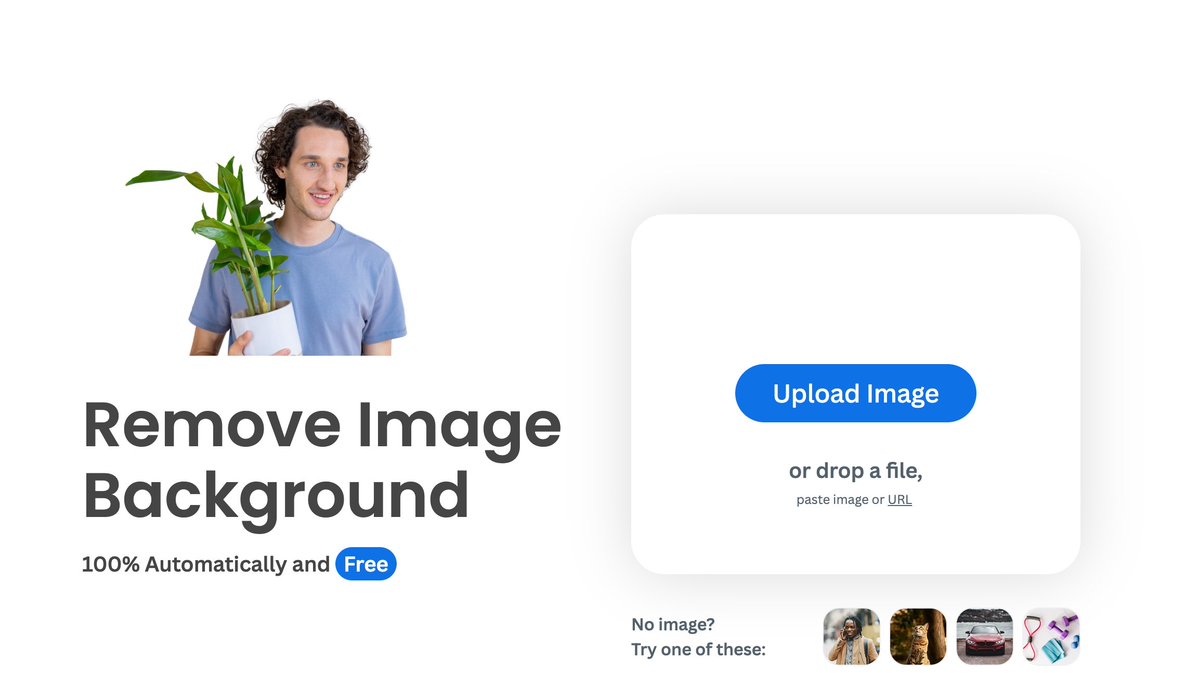
4. Remove .bg
Removes the background from any photo in five seconds.
Site → remove.bg
5. Hemingway Editor
Paste your writing. It highlights everything weak, wordy, and unclear.
Site → hemingwayapp.com
6. WolframAlpha
Solves any math or science problem and shows the steps.
Site → wolframalpha.com
7. Squoosh
A free image compressor built by Google. Shrinks photos to a fraction of their size with no quality loss.
Site → squoosh.app
8. Internet Archive
Free access to 35 million books, films, and the entire history of the web.
Site → archive.org
9. Crash Course
Full college-level courses on history, science, philosophy, and economics. 100% free on YouTube.
Site → thecrashcourse.com
10. Excalidraw
A free whiteboard for diagrams, flowcharts, and wireframes that actually look professional.
Site → excalidraw.com
Here's the wildest part:
If you replaced these with paid alternatives, you would spend $200 to $500 every single month.
All of them. Free. Forever. No accounts. No subscriptions.
The internet has secret rooms most people never enter.
These 10 are the doors.
Save this before you forget.
100% free. Forever.

English
@witcheer That would help transfer job between my lab setup and production setup.
English

hermes backup → zip → hermes import on a new machine.
Teknium nailed the workflow for moving a hermes agent. config, sessions, skills, cron jobs, memory … all in one zip. works while the agent is running.
I use hermes daily, this is genuinely useful.
but it only works inside hermes. your context dies at the framework boundary.
what if you could do this with any conversation you’ve ever had with any model on any machine?
that’s what we’re building with @AliveContext_ walnuts. the idea is simple:
> save your walnut - a snapshot of a specific agent context
> create a capsule - it automatically generates a markdown file capturing everything about that context: what the agent knows, what it’s worked on, what decisions it made, what sources it used
> import it anywhere - different model, different framework, different machine
the capsule is a .md file. not a proprietary format. not a framework-specific database dump. markdown that any LLM can read on first turn. claude, hermes, openclaw, a fresh terminal session with a model you switched to five minutes ago.
hermes backup moves your agent.
a walnut capsule moves your context.
one is infrastructure portability.
the other is knowledge portability.
both matter, but the second one is the part nobody’s solved yet.
Teknium 🪽@Teknium
Hermes Agent tip of the day: You can backup and transfer your agent cleanly and simply. Want to move it to a new VPS that is bigger? Take it to your new Mac Mini? `hermes backup` - > creates a zip install hermes on a new machine fresh transfer the zip to that machine then run `hermes import` done :) Full docs: #hermes-backup" target="_blank" rel="nofollow noopener">hermes-agent.nousresearch.com/docs/reference…
English
@devXritesh That only possible when you know what you want and how to buildit, then you delegate the execution to ai.
English

I asked ChatGPT to build my entire startup MVP.
3 days later fully working app with auth, database, payments, and deployed to production.
Total cost: $47 in API credits.
Meanwhile, your $150K/year dev team has been “working on it” for 3 months… and it’s still stuck in staging.
The future isn’t coming.
It’s already here.
And it’s fucking brutal.
English
@KanikaBK Lately Microsoft papers are the top and on the point.
English

🚨 MICROSOFT JUST MADE EXPENSIVE AI CLOUD BILLS OPTIONAL.
The paper dropped 48 hours ago. Almost nobody has read it.
MICROSOFT JUST TAUGHT AI HOW TO FORGET. AND IT CHANGES EVERYTHING.
Right now every AI has the same fatal flaw. The longer it thinks, the heavier it gets. The heavier it gets, the slower and more expensive it becomes. Eventually it runs out of space entirely.
This is why running powerful AI costs so much. You are basically renting a warehouse to store everything the AI has ever thought about.
Microsoft just made the warehouse irrelevant.
Their new paper is called MEMENTO. And the idea is almost embarrassingly simple.
Instead of remembering everything, the AI takes notes on itself, then deletes its own memory.
It thinks in small chunks. Summarizes the key logic from each chunk into a tiny compressed note. Then wipes the chunk completely. Only the note travels forward.
The results are not small:
↳ Context length compressed by 6x
↳ Active memory usage cut by 2.5x
↳ Zero drop in math, science, or coding accuracy
Here is what that actually means for you.
Big tech has been charging businesses and developers by the token for massive memory they do not actually need. That entire pricing model just broke.
A regular computer running a free open source model can now reason through complex multi-step problems indefinitely. No cloud fees. No enterprise contract. No API bill at the end of the month.
The solo operator running agents locally just became as capable as the company paying thousands a month for cloud infrastructure.
We spent two years trying to give AI a bigger memory.
Turns out the smarter move was teaching it what to forget.

English

Google must have seen something WILD in Claude which we all have no Idea about.
Watcher.Guru@WatcherGuru
JUST IN: Google $GOOGL to invest up to $40,000,000,000 in Claude AI developer Anthropic.
English

Research papers you must read for AI Engineer interviews:
1. Attention is all you need (Transformers)
2. LoRA (Low rank adaption)
3. PEFT ( Parameter Efficient Fine Tuning)
4. VIT (Vision Transformers)
5. VAE (Variational Auto Encoder)
6. GANs ( Generative Adversarial Networks)
7. BERT ( Bidirectional Encoder Representation from Transformers)
8. Diffusion Models (Stable Diffusion)
9. RAG (Retrieval Augment Generation)
10. GPT (Generative Pre-trained Transformers)
English

Python + LangChain → LLM Apps
Python + LangChain → RAG Systems
Python + OpenAI Python SDK → AI Assistants
Python + Hugging Face Transformers → Model Hub
Python + SentenceTransformers → Embeddings & Vector DB
Python + FAISS → Similarity Search
Python + Pinecone → Managed Vector DB
Python + Weaviate → Semantic Search
Python + spaCy → NLP Pipelines
Python + Whisper → Speech-to-Text
Python + Coqui TTS → Voice AI
Python + Diffusers → Image Generation
Python + Semantic Kernel → AI Agents
Python + FastAPI + LLMs → Production AI Apps
Python + LangChain Agents → Tool-Use Agents
Python + Hugging Face Inference API → Model Deployment
Python + Milvus → Scalable Vector DB
Python + Elasticsearch → Enterprise RAG
Python + NLTK → Text Processing
Python + PyTorch → Model Training
Python + TensorFlow → Deep Learning Systems
Python + Stable Diffusion → Image Generation
Python + AutoGen → Multi-Agent Systems
Python + Ray → Distributed AI Systems
Python + Docker + AI → Scalable AI Microservices
Grab the Python Playbook:
codewithdhanian.gumroad.com/l/ahgoam

Français
@DataChaz Everyone need a lab zone where he can experience new things.
English

Your comfort zone is a beautiful place.
But nothing ever grows there.
English