Daniel McDevitt MD FACS FSVS

2.5K posts

Daniel McDevitt MD FACS FSVS banner
Daniel McDevitt MD FACS FSVS

Daniel McDevitt MD FACS FSVS

@dtmcdevitt

They say laughter is the best medicine. Surgery works pretty good, too.

Atlanta, Georgia Katılım Mayıs 2009
1.3K Takip Edilen784 Takipçiler
Daniel McDevitt MD FACS FSVS
@sethmhardy “It’s the best we can do right now. We’re actively pursuing something better but we’ll have to wait until after the next election. Please contribute to the PAC.” EVERY. DAMN. TIME.
English
2
1
2
28
Seth M Hardy, MD MBA
Seth M Hardy, MD MBA@sethmhardy·
The trade from the annual SGR fix to MACRA was the biggest con job by organized medicine of my career. Annual SGR fix was infinitely better. It amazes me that docs still pay dues to those responsible for that con, but “you can fool some of the people all the time.”
Anish Koka, MD@anish_koka

Some background before commenting on some elements of the proposed rule. The Physician Fee Schedule (PFS) was established in legislation passed in 1989, and went into effect in 1992. Prior to that Medicare paid physicians based on "customary, prevailing and reasonable" (CPR) charges. Essentially a cost plus approach that existed for hospitals before the Inpatient Prospective Payment System (IPPS) went into effect. Fundamentally, a cost plus approach was breaking the budget, so the government turned to setting prices for services delivered. The framework for price setting was the RVU architecture. Every covered physician service is assigned a CPT code which has 3 RVU components. Work RVU, Practice Expense RVU, Malpractice RVU. Payment = (wRVU+PE RVU+MP RVU) x geographic practice cost adjustment x Conversion Factor (CF). The CF is what converts RVUs to dollars. This equation fundamentally determines what a physician is worth in dollars. In 2024 the CF was $32.74. Every year CMS sets a low CF, and every year congress intervenes with a temporary patch. Its important to understand that the goal for CMS is not to "pay physicians well", the goal for CMS is to be budget neutral. In 1997, Congress passed the Balanced Budget Act that introduced the Sustainable Growth Rate (SGR) formula. This tied the conversion factor yearly update to GDP growth. If physicians increased the amount of services they delivered more than GDP growth, the SGR required the CF to be reduced to make up for it. By the mid 2000s, the gap was so great that the SGR formula was calling for a 20% cut. Congress overrode the SGR cut every year with 'doc fix' patches. MACRA act of 2015 got rid of the SGR and replaced it with MIPS and Alternative Payment Models (ACOs). This fixed the CF cut, by mandating an increase in the CF by 0.25%-0.75% / year (Inflation is 3-5% / year). None of this changes the fact that CMS is forced to be budget neutral. If CMS increases RVUs and payments for E&M, it must reduce the CF to keep total outlays the same. Within the physician fee schedule , any RVU increase for one set of services must be offset somewhere else. It is zero sum. So with an mind, the proposed fee schedule does a number of things, not all bad, but one of the provisions is really bad. CMS is proposing to reduce payment when a separately identifiable office/outpatient E/M visit is furnished by the same physician on the same day as a procedure. The most expensive procedure would be paid at 100%, the other procedure at 50%. Commonly a 25 modifier is used to indicate a same day separate procedure so physicians get paid. CMS is arguing that a same day E/M code is not like a standalone E/M code. The case CMS is going after is the patient who is evaluated for a problem on day x and a procedure is decided on. When the patient comes back 20 days later for their procedure, the patient is seen/evaluated again. This argument was bad when CMS floated a version of it in 2019 and it's still bad now. The -25 modifier exists precisely because CMS already acknowledged this problem and built the solution. Modifier -25 requires that the E/M be a significant, separately identifiable service above and beyond the usual pre-procedure evaluation. It is not supposed to be billed when the E/M is merely the routine pre-procedure assessment. The modifier is the mechanism that's supposed to prevent the double-dipping CMS is now claiming to fix with a payment cut. If the problem is modifier -25 abuse, the correct response is enforcement and auditing, not a blanket 50% payment reduction on every legitimate same-day E/M-plus-procedure encounter. Three scenarios CMS ignores: 1. Patient presents with a new problem or acute change; you evaluate it, decide independently to perform a procedure, and do so — the E/M decision-making is entirely separable 2. Patient has a scheduled procedure but presents with a comorbidity requiring separate assessment and management decision before you proceed. 3. A cardiology specific example. Patient presents with chest pain, you see , evaluate, and decide to do an echocardiogram the same day. The stated rationale is a pretext for a budget cut. CMS needs to offset the cost of other proposals. The appropriate remedy for what amounts to modifier -25 abuse is targeted audit activity, not a structural 50% payment reduction on a category of encounters that includes large numbers of legitimate, non-overlapping clinical situations. There are more sensible places in the PFS that make a lot of sense to go after -- telehealth and remote monitoring are probably abused to a significant degree by third parties, and deserve some fairly significant cuts (remember you need to cut something in a budget neutral world), but the best approach would be to not continue playing the zero sum game. The current framework is binary: you're either enrolled in Medicare and bound by its payment rates and rules for all covered services, or you opt out entirely and private-contract with everyone. There is no middle path where you remain a Medicare participating physician but can also negotiate separate payment arrangements with individual patients for covered services. Win-win : Allow private contracting for enrolled physicians - let physicians enter into a voluntary agreement with a Medicare beneficiary to charge above Medicare rates for covered services, without losing their Medicare enrollment or being required to opt out entirely. I'll reiterate: Budget neutrality means every dollar of E/M increase gets clawed back somewhere else. The CF trajectory is negative no matter what Congress does The system is structurally incapable of paying physicians fairly under its current constraints. The only reason this is politically survivable is that Medicare patients have no alternative. They can't voluntarily pay more even if they want to — the law forbids enrolled physicians from collecting above the limiting charge, and it forbids patients from contracting around that. The coercion runs in both directions. This would require a statutory fix -- currently the BBA 1997 act requires a full opt out for physicians, not selective contracting. Congress was concerned that selective private contracting would create a two-tiered system where wealthy Medicare patients could buy better access. Not surprisingly, the two-tiered system Congress feared has materialized anyway, just through different mechanisms: almost everyone right now that can afford it pays for a concierge physician. Allowing selective private contracts is this is a market freedom argument, not a physician enrichment argument. The goal is to preserve access to high quality physicians. The alternative is either no physicians... or even worse access to lower quality physicians. To Summarize: 1. The same day reduced payment for procedure/clinical proposal is a bad idea. CMS should crack down on truly "add on" services by audits, not with a blanket rule that hurts appropriate service delivery. 2. Fixing the larger issue of the zero sum nature of the medicare budget is a statutory fix all physicians should unite behind : allow for selective private contracting with Medicare patients. I urge physicians to comment on the proposed rule: Go to regulations.gov/docket/CMS-202… Suggest: 1. Describe actual patient scenarios where the same-day E/M and procedure are genuinely non-overlapping. 2. Make sure to note that if this is finalized, the rational response is to split some encounters across two visits, which costs Medicare more and greatly inconveniences patients.


English
2
0
4
243
Daniel McDevitt MD FACS FSVS
Agree. The big problem with healthcare right now is that it is a huge budget problem for the government. And by and large our elected officials are incapable of understanding or dealing with the mess they’ve made. As is true throughout history, a problem that cannot be contained by other means will eventually require coercion. That’s where we’re heading, I fear. Single payer will not be “do as you please and send the bill to us.” It will be “this is what we will allow.”
English
0
0
2
10
Heath Veuleman
Heath Veuleman@HeathVeuleman·
I hear ya! I do agree that a parallel system is necessary, because the math portends a major implosion sooner rather than later (of the current system). Proximity to capital creates its own incentives (which is why direct-to-consumer care) works so well. When I control the dollar, I want the greatest value for the dollar.
English
1
0
2
20
Heath Veuleman
Heath Veuleman@HeathVeuleman·
You’ve undoubtedly heard the political aphorism: “You can’t legislate morality.” And, it’s true. Here’s a little behaviorist pro tip. If I want to shape your behavior, the last thing I do is tell you what I want you to do or where I’m trying to lead you. I create incentives. People respond to incentives far more consistently than they respond to lectures, regulations, or moralizing. The same is true of healthcare. We cannot reliably regulate outcomes. It’s impossible. We’ve been trying for decades. It doesn’t work. It has never worked as well as its advocates and acolytes promise. What we can do is create incentives that make the desired outcomes the rational choice. That isn’t as emotionally satisfying. There’s no righteous finger-wagging. It requires precision instead of platitudes, systems instead of slogans, and patience instead of politics. Change the incentives, and the outcomes will eventually follow. Or continue living in a regulatory morass that primarily protects incumbents - the goobers, grifters, and gomers who helped build the hellscape we now call the American healthcare system.
English
2
0
5
446
Daniel McDevitt MD FACS FSVS retweetledi
Society for Vascular Surgery
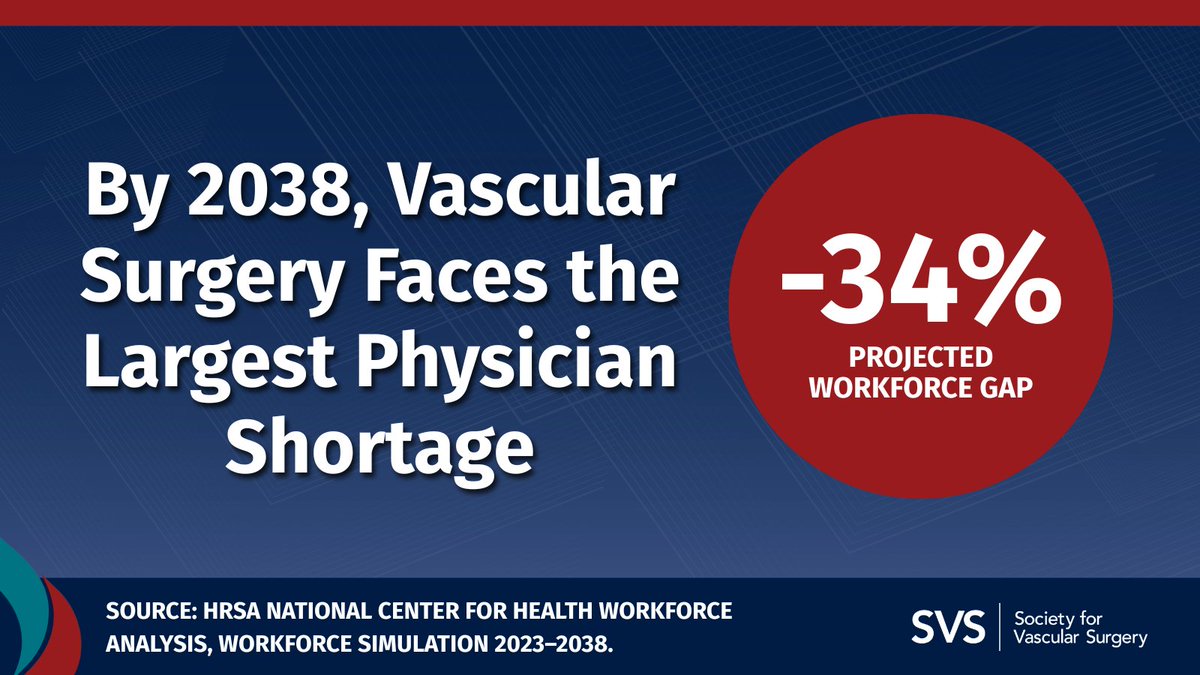
Demand for vascular care is rising as the population ages, life expectancy increases and more patients live with vascular disease. At the same time, HRSA projects that the vascular surgery workforce will meet just 66% of national demand in 2038. #VascSurg 🧵 Read more below!
Society for Vascular Surgery tweet media
English
2
10
15
540
Joseph Marine
Joseph Marine@DrJMarine·
We were told a few years ago that this was a "conspiracy theory." Now Massachusetts is poised to legalize abortion up to the moment of birth for any reason. All you need is a doctor willing to do it. With the endorsement of the state medical society. nytimes.com/2026/07/22/us/…
English
6
3
21
1.4K
Joseph Marine
Joseph Marine@DrJMarine·
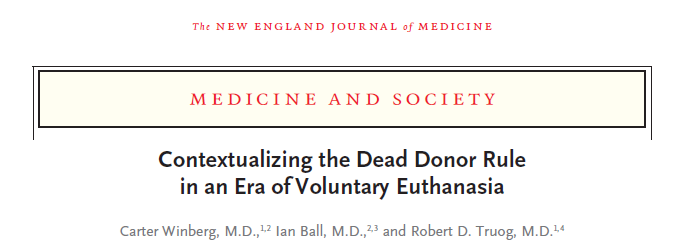
The authors of the piece should be congratulated for documenting beautifully the implosion of Western medical ethics. A masterwork. @NEJM Contextualizing the Dead Donor Rule in an Era of Voluntary Euthanasia | New England Journal of Medicine 1/7 nejm.org/doi/full/10.10…
Joseph Marine tweet media
English
12
24
85
24.2K
Cyborg Pediatrician
Cyborg Pediatrician@CyborgPeds·
Just spent a nice hour with my mom kvetching about our various aches and pains.
English
30
3
208
2.1K
Blanket Dog
Blanket Dog@theblanketdog·
@dtmcdevitt @NeilFlochMD The latter is my argument for not doing it. 😂😂😂 Breathing comfortably, regular rate.
Boise, ID 🇺🇸 English
1
0
0
26
Neil Floch MD
Neil Floch MD@NeilFlochMD·
I’m a Surgeon who wears a stethoscope. How many other surgeons listen to lungs 🫁 and wear a stethoscope?
Neil Floch MD tweet media
English
62
10
119
12.6K
Laura Volpicelli 🇺🇸
I am full Professor of Neurology and my area of expertise is filling out paperwork and training modules for my University 😑
English
32
19
384
23.7K
Daniel McDevitt MD FACS FSVS
@realdocspeaks He's right. When your negotiating strategy is "we're going to take the deal anyway" then you shouldn't be surprised at the outcome. It's been frustrating to watch over the years.
English
0
0
1
30
Real Doc Speaks
Real Doc Speaks@realdocspeaks·
It would increase the number or independent physicians, lower costs and increase quality! It is so logical that the government will never do it! Also, they are being paid handsomely not to.
McRib Hard Seltzer@kleib323

@jalbright22 @realdocspeaks @txsportsdoc 98% of physicians already choose to participate in Medicare at current reimbursement rates. What public policy objective would it achieve to spend tens of billions of taxpayer dollars increasing provider pay?

English
3
1
12
939
Big Swing Tempo
Big Swing Tempo@BigSwingTempo·
Let’s say you can play any course you want, but you have to play with major championship galleries. How many strokes above your average would you shoot?
English
62
0
39
10.5K
Daniel McDevitt MD FACS FSVS
@DutchRojas This was a constant at departmental meetings. Staff: “We are initiating a new protocol to improve XYZ.” Me: “Can you show me the data behind that?” Staff: “We can get that to you….” NEVER. EVER. HAPPENED. There was no data.
English
2
0
8
121
Dutch Rojas
Dutch Rojas@DutchRojas·
Everyone in healthcare says they’re data-driven. Ask for the source document. Silence is an underappreciated metric.
English
6
8
50
2.2K
Daniel McDevitt MD FACS FSVS
@DrDiGiorgio “Patient safety” is the magical incantation that empowers feeble minds to invent useless protocols for others to adhere to. Unless you’re a doctor. Then if you complain about an unsafe practice, you’re abusive.
English
0
0
4
150
Anthony DiGiorgio, DO, MHA
Hospital creates unnecessary requirements for pre op note. Hospital admits requirements have nothing to do with patient care when admin offers to create an Epic template that auto-imports meaningless information to satisfy their self-imposed requirement.
English
12
6
83
5.7K
Daniel McDevitt MD FACS FSVS
Another lovely night of chirps. Something important? Nah. Just sign your verbal orders. In the wee hours of the morning. I can’t turn it off. I’m actually on call.
English
0
0
0
23
Daniel McDevitt MD FACS FSVS
Congratulations Epic EMR! You did it! Now even the most trivial or inconsequential information can be instantly transmitted at all hours of the day or night. And repeated tirelessly if you don’t act. Every chat response is followed by a thank you which once again chirps endlessly on your phone until acknowledged. This will improve care beyond anything we could have ever imagined. Sleep is for the weak.
English
29
15
178
20.3K
Daniel McDevitt MD FACS FSVS
It’s the same play for decades. Propose some sort of reform or improvement in reimbursement. Rally the AMA to support it. Most doctor groups declare “it’s the best we can do right now given political reality”. Pretend we will revisit it or modify it along the way. Comply anyway. A few years down the road realize it only made things worse. Stomp our feet….vigorously. Start the same process all over. The system will function as intended. Minor changes will be granted from time to time. But the overall process will continue as is as long as we rationalize our participation.
English
0
0
2
57
Kris Held,MD
Kris Held,MD@kksheld·
Pay Cut, MIPS Phaseout, More Proposed in 2027 Medicare Physician Fee Schedule texmed.org/TexasMedicineD… Flashback to 2015. We warned about MIPS/ MACRA. AMA,TMA bowed down to central planners who value $ over life. Mike Burgess and other physician congressman at the time bear blame. What an unethical, unsustainable, insane, perverse “system.” So thankful I opted out of the mess 11 years ago. Tried to warn them, was denigrated, now proven right after years of insanity, patient harm, and destruction of the medical profession. Only way not to lose is not to play. Physicians must mass opt out. Until then, don’t complain about being a data Ho for Big Bro and his Big insurance, hospital, pharma, data bros. You hold the power, use it- for the sake of humanity.
English
7
10
44
2.9K
Christine Price
Christine Price@HEALTHCOSTtruth·
@dtmcdevitt Be that as it may, until the laws change and employers are no longer required to provide insurance, they need to know what their liabilities are.
English
2
0
1
32
Christine Price
Christine Price@HEALTHCOSTtruth·
If you are an employer, I'm going to say it again. YOU are responsible for knowing where your plan bleeds money and ensure that it is managed properly. YOU are the fiduciary.
KP, Pharm.D.@kpharmd12

A patient with @AnthemBCBS employer-sponsored insurance has been paying a $90 co-pay for #180 trospium tablets. Insurance has been contributing $0 to the claim since they haven’t met their OOP yet. Well, their OOP is now met for the year and their copay dropped to $0. Guess what @AnthemBCBS is paying on the claim now? $22.00 If the “full price” that the patient was paying was $90, then shouldn’t the insurance be paying that “full price” now that the patient is in their full coverage phase? Absolutely. But that’s not how PBMs play ball. They keep the $68 for themselves for merely processing the claim.

English
2
2
26
1.8K