Daniel Uribe, MBA 🧬+⛓

5.7K posts

Daniel Uribe, MBA 🧬+⛓ banner
Daniel Uribe, MBA 🧬+⛓

Daniel Uribe, MBA 🧬+⛓

@duribeb

Inventor of BioNFTs 🧬 ꧁BioIP꧂ acc/genomics 🧬 Agentic Precision Medicine

Palo Alto, CA Katılım Ağustos 2009
6K Takip Edilen2.6K Takipçiler
Sabitlenmiş Tweet
Daniel Uribe, MBA 🧬+⛓
Proof of Consent over Human Biosamples 🧬 for AI Agents. Agentic AIxBIO safeguarded by GenoBank.io's BioNFTs
Daniel Uribe, MBA 🧬+⛓ tweet media
English
1
0
2
204
GEJDE
GEJDE@Gejde_·
It's official! l'Il be joining @Tangem as their Mexico Growth Manager. Ready to bring the best hardware wallet to Mexico. 🇲🇽
GEJDE tweet media
English
67
8
225
12K
Bridgett Fertig
Bridgett Fertig@LightOnLiberty·
A clinical molecular biologist revealed a chilling explanation on why Jeffrey Epstein reportedly collected frozen penguin pineal glands. She says that penguin pineal glands contain high levels of the enzyme HIOMT, which converts compounds into endogenous DMT-like molecules. Her theory is that Epstein's circle of scientists he paid $20 million a year for, used this enzyme as a tool to feed random chemical mixes and generate entirely new, uncharacterized psychoactive compounds never seen before and then test them on unsuspecting people! She warns these novel drugs, potentially stronger or with longer half-lives than DMT, would overload the serotonin system and "absolutely fry people's brains" by causing massive oxidative stress and neuron damage without safeguards. Is it possible THIS is what happened to Britney Spears? Could this ALSO be what happened to Amanda Bynes in their efforts to make her forget the abuse that was done to her? HOW MANY OTHERS?! "If they gave those drugs to people... they were absolutely frying people's brains!" This ties into what we've known about elite experimentation, pineal calcification from fluoride reducing natural function over generations, and the pursuit of powerful mind-altering substances via harvesting through horrific torture!
English
483
5.6K
19.9K
1.7M
Daniel Uribe, MBA 🧬+⛓ retweetledi
뿌링 .IP
뿌링 .IP@zey_soul·
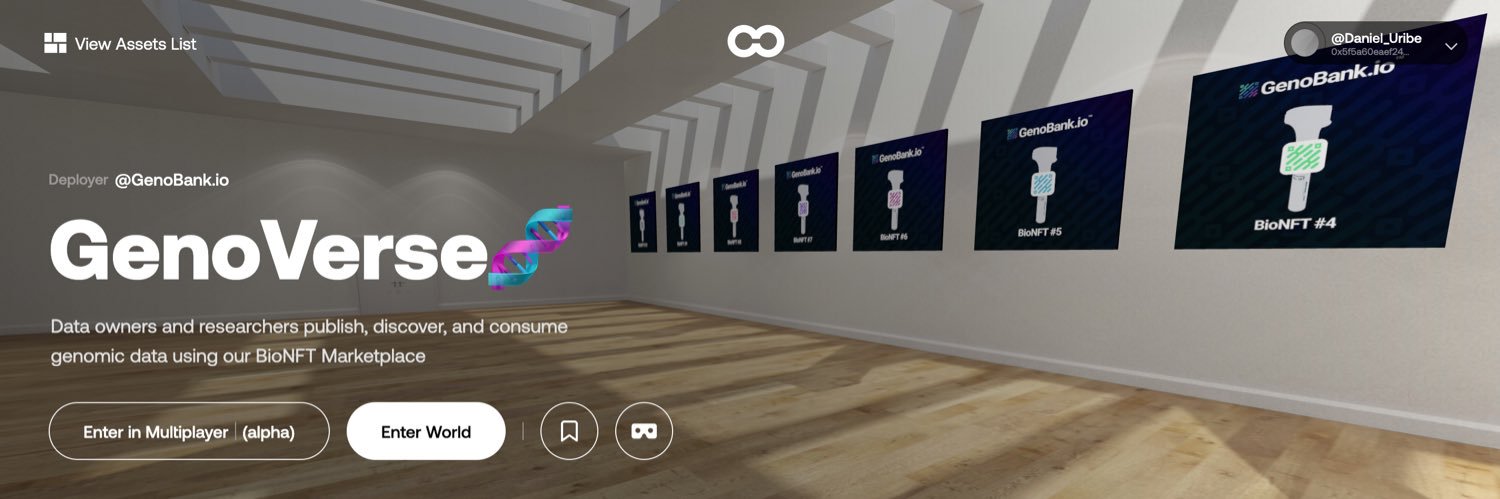
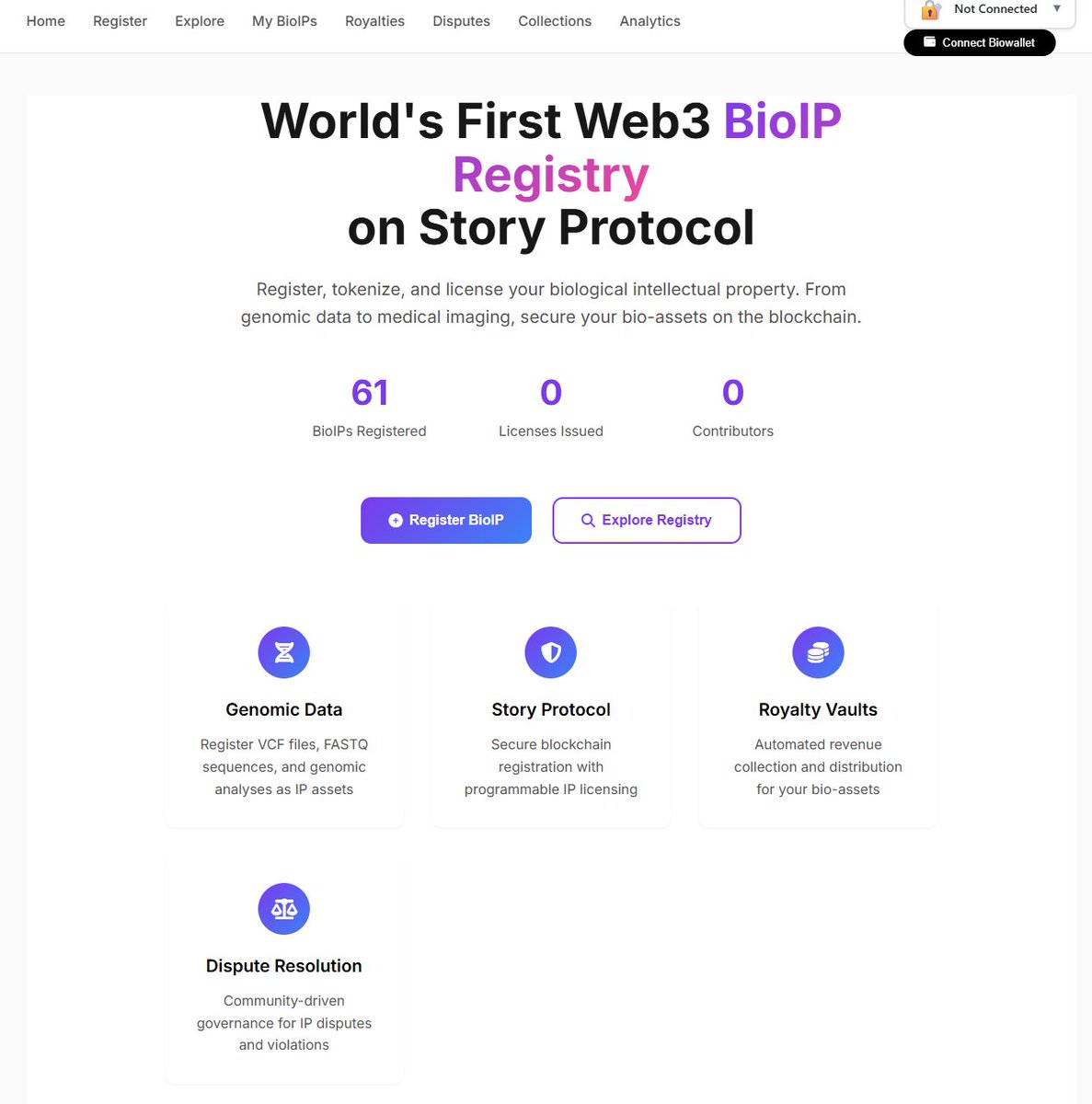
Watching the ecosystem of Story Protocol ( @StoryProtocol ) evolve, one of the most impressive things is how the scope of IP is far broader than many initially imagined. At first it seemed mainly focused on turning digital creations such as content, creative works, or AI training data into IP assets. Over time it has become clearer that the potential expansion goes much further than that. A good example is the BioIP initiative introduced by @genobank_io . It is fascinating to see how even genomic data like personal DNA can be registered as an IP asset, licensed for research or AI model training, and structured so that contributors can receive compensation when their data is used. This makes it feel like Story Protocol is evolving beyond just a content IP protocol and becoming a broader infrastructure for building an IP economy around real world data and creations. It will be interesting to see what other types of data and assets eventually become part of this IP layer and what new economic models may emerge from it. The potential of IP may be much larger than we currently realize, and this could still be just the beginning.
뿌링 .IP tweet media뿌링 .IP tweet media
Story@StoryProtocol

Biodata is among the most valuable training data in the world. @genobank_io enables breast cancer patients in Mexico to classify their DNA, detect risks early, and license their data for revenue. This is what patient-owned medicine looks like. Built on Story.

English
1
2
25
477
Daniel Uribe, MBA 🧬+⛓
🫡
Tanoy@0xTanoy

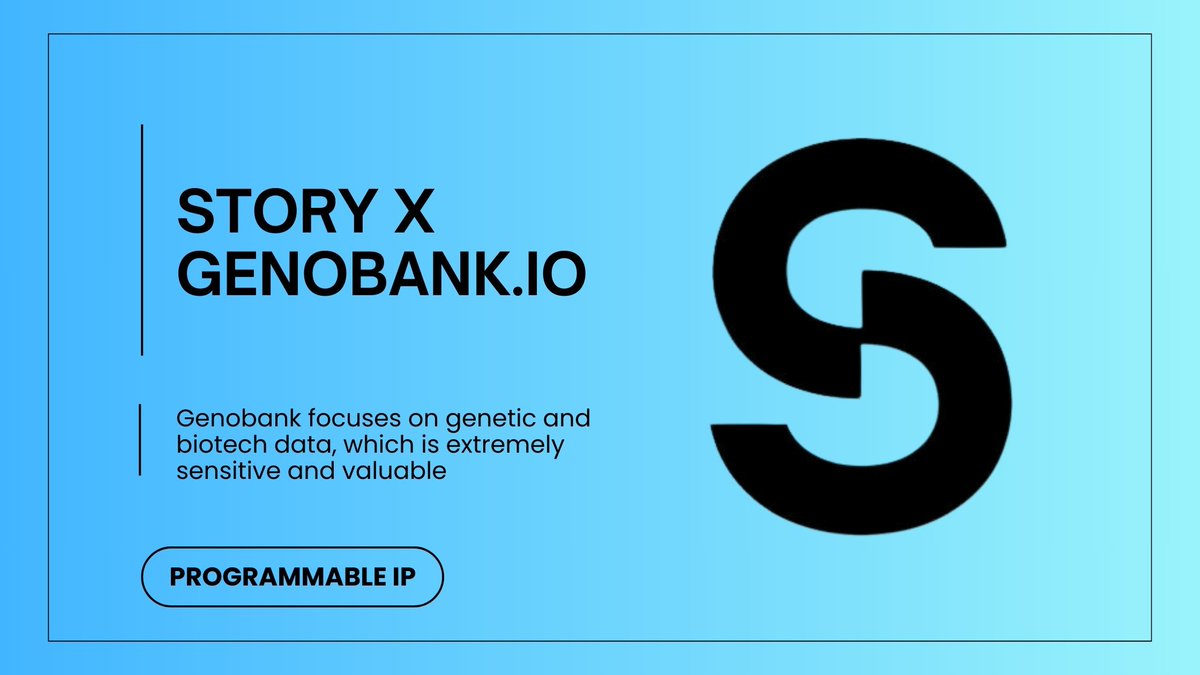
People think AI data is the new oil. But here is the real question nobody asks !! what is the question?? wait I'm telling you... the question is.. Who owns the data that trains AI? This is where @genobank_io × @StoryProtocol becomes one of the most interesting innovations I’ve seen lately. Genobank is building a system where genomic data (DNA data) can become programmable IP onchain. Instead of biotech companies collecting DNA data and keeping all the value… Your genomic dataset can become an IP asset that can be licensed to researchers, AI models, or biotech companies. And the infrastructure making this possible? Story Protocol. Story turns data into programmable IP with: • verifiable ownership • licensing rules • automated royalties • onchain provenance That means your biological data is no longer just a file. It becomes an asset. This is a huge shift because genomic datasets are extremely valuable for: • medical AI • drug discovery • disease prediction models • precision healthcare Yet today most people who generate the data earn nothing. Genobank flips that model. If you want to try it yourself, here’s the process 👇 1️⃣ Go to bioip.genobank.app 2️⃣ Connect your wallet. 3️⃣ Upload a genomic VCF dataset. 4️⃣ The platform processes the data and prepares it for BioIP registration. 5️⃣ Once approved, the dataset can become a programmable IP asset powered by Story. Meaning the data can be licensed and monetized with transparent ownership. I actually tried to upload a dataset myself to test the process. But I ran into some technical issues during the upload step, so the platform returned an error. Still, the concept is extremely interesting and I’m planning to test it again soon. Once I manage to complete the upload successfully, I’ll share a full update. Because the idea of turning biological data into programmable IP might be one of the most underrated innovations happening in the Story ecosystem right now. @mushy @BharatWormie @ICat4you

ART
1
0
2
90
Daniel Uribe, MBA 🧬+⛓ retweetledi
Cryptolab
Cryptolab@cryptolab738·
Story Protocol is all about turning intellectual property into programmable assets onchain it makes possible to register IP, set clear rules and automate how it’s licensed and monetized Now when you connect that vision with projects like @genobank_io it gets even more cool
Cryptolab tweet media
English
13
1
41
672
Daniel Uribe, MBA 🧬+⛓ retweetledi
Story
Story@StoryProtocol·
Biodata is among the most valuable training data in the world. @genobank_io enables breast cancer patients in Mexico to classify their DNA, detect risks early, and license their data for revenue. This is what patient-owned medicine looks like. Built on Story.
English
55
47
190
12.5K
Daniel Uribe, MBA 🧬+⛓
@paoloardoino And will every client own and control their biodata and receive proper compensation for participating in research in USDT? Right?
English
0
0
0
58
Paolo Ardoino 🤖
Paolo Ardoino 🤖@paoloardoino·
Tether just invested in Eight Sleep 8️⃣😴 At Tether we believe advanced personalized AI is the perfect pathway to understand and expand human potential. Eight Sleep has the potential to define the future of health tech by building intelligence that learns, scales, and evolves directly with humankind, turning advanced AI into practical, everyday insights and enhancements about core human biology. By helping people better understand sleep, recovery, and long-term health, Eight Sleep is laying the groundwork for a new standard in longevity-focused technology that is truly personalized, can function in any condition, is directly on-device, is resilient, and aligns with how people live. Tether and Eight Sleep will collaborate to integrate QVAC, Tether's infinite local intelligence platform, into Eight Sleep product and research. 🤖🤖 The age of human-first health intelligence has started. ❤️
Tether@tether

Every night, your body tells a story. 🧬💤 Tether is proud to announce our strategic investment in @eightsleep to build the future of human health intelligence. By combining their pioneering sleep fitness with our platform for Edge AI, @QVAC, we are setting a new standard for human potential. Tether x Eight Sleep. Unstoppable together.

English
98
50
674
225.9K
Daniel Uribe, MBA 🧬+⛓
This shows that the democratization of coding is truly achieved, but the cardiologist is still “inside” the system with credentials to access patients' data. The real challenge is democratizing access to each patient's data: healthcare data sovereignty. AI alone cannot solve this; it's political. Ask how many patients have access to their entire health records (imaging, notes, genomics, etc.)? It's all fragmented and only partially shared with patients.
English
0
0
0
144
Ejaaz
Ejaaz@cryptopunk7213·
wait this is so cool - this cardiologist just won 3rd place at Anthropic's hackathon for building an AI platform that helps patients understand and act on their medical results. best part is he had ZERO coding experience. vibe-coded the entire thing. - ranked 3rd out of 13,000 people - did it in 7 days WHILE WORKING HIS SHIFTS (even on a flight!) its fucking awesome that someone with zero software engineering experience can create something like this tbh. can't wait for healthcare to lean into AI congrats Michal
Michał Nedoszytko MD, PhD@mnedoszytko

This is absolutely crazy! Cardiologist wins 3rd place at @AnthropicAI 's hackathon! Out to 13,000 applications! Built in 7 days. Coded day and night — in the hospital, in the cloud, while flying from Brussels to San Francisco. A week ago, 500 builders were selected to compete. We had one week to bring our project to life using claude code and create a pitch video. Today, in the finals the judges including @bcherny, @_catwu @trq212 @lydiahallie @adocomplete and Jason Bigman chose top 6 projects .... and I was awarded 3rd place! The project is called postvisit.ai And yes, it's a reference to Previsit.ai that I am creating since 3 years. Postvisit.ai is an AI agentic care platform for patients. Including reverse AI scribe it is a companion that guides the patient from the moment they leave the doctor's office. Powered by the massive context window of Opus 4.6, it allows patients to explore their full medical history, connected devices, Evidence Based resources and external data sources — all in one place. This is what agentic healthcare looks like. Writing with claude code allowed me to bring this idea to life in 7 days. Creating the video was much more of a challenge. What an incredible time to be alive and create! Check out the pitch video here: youtube.com/watch?v=V29UCO… Thank you to organizers of the hackathon - @CerebralValley Looking very much forward to seeing you, the hackathon participants and @AnthropicAI staff at the Claude Code Birthday Party!

English
17
5
62
12.9K
Daniel Uribe, MBA 🧬+⛓
Congrats! Still, the main worldwide bottleneck is full access to your own medical records and genomics data. What really needs to change is direct API access from healthcare providers, starting with all institutions using Epic’s MyChart. Then, honestly, almost anyone can build their own “healthcare records analyzer” using Claude.
English
0
0
1
154
Michał Podlewski
Michał Podlewski@trajektoriePL·
Cardiologist wins 3rd place at Anthropic's hackathon. Out of 13,000 applications. Built in 7 days by Michał Nedoszytko MD. Coded day and night - in the hospital, in the cloud, while flying from Brussels to San Francisco. A few years ago, it would have been impossible for a doctor to build this alone in just a couple of days. AI changed that. The project is called postvisit.ai. It is an AI agentic care platform for patients. Including reverse AI scribe it is a companion that guides the patient from the moment they leave the doctor's office. Powered by the massive context window of Opus 4.6, it allows patients to explore their full medical history, connected devices, Evidence Based resources and external data sources — all in one place. Today, the barrier to entry has vanished; even a practicing physician can build an application from scratch.
English
534
2.5K
20.8K
3.6M
Daniel Uribe, MBA 🧬+⛓ retweetledi
Andrea | Devrelius
Andrea | Devrelius@devrelius·
AI has 3 ongoing parallel races: compute, models, and data. 1. hardware -> clear winner is NVIDIA, requires massive capex to compete. 2. models -> very toe-to-toe between the big labs like OAI, Anthropic, Google, xAI, and oversea competitors. Any improvements by one lab are quickly imitated, including in the open source sector. 3. data -> there is no clear winner, and there is an insatiable appetite for it. data is the fossil fuel for AI and it will always be the case for the foreseeable future. In the podcast with Al I go over this and more.
Story@StoryProtocol

An agentic world needs IP rails. On @IBM’s Making Data Simple with Al Martin, Story CPO @devrelius breaks down how Story turns IP into programmable infrastructure for AI. From “mysterious training data blobs” → provable usage, enforceable licenses, auto payments. Listen ↓

English
15
12
77
6.9K
Daniel Uribe, MBA 🧬+⛓
it's a *rigid, pre-built pipeline* locked into your subagent swarm and marketplace. That makes it a black box for researchers and requires spend hours configuring persistent states, routing to subagents, and steering away from rabbit holes, all for $20/run? Meanwhile, top LLMs like @claudeai (/skills) & @grok do the killer feature *natively*: dynamically plan and execute ad-hoc agentic journeys tailored to *each specific question and dataset*. Need a custom pipeline for RNA-seq + pathway enrichment + lit triangulation? I spin it up instantly, iterate in-chat, run real code (BioPython/RDKit/etc.), and there is no fixed architecture forcing your hand. Why chain yourself to someone else's orchestration when Claude/Grok can meta-plan a better, fully transparent one on the fly?
English
1
0
0
53
clepp
clepp@cl2pp·
That comparison mixes up benchmarks, scope, and system design. First, 48.8 percent does not mean guessing. The 48.8 percent figure comes from open ended, multi step research questions described in arXiv 2601.12542, not from closed form benchmark QA. These tasks are designed to measure reasoning depth, uncertainty handling, and hypothesis exploration, where single shot accuracy is simply the wrong metric. Second, 87.5 percent benchmark scores do not translate to research usefulness. High accuracy on static biomedical QA benchmarks mostly reflects pattern recall on narrowly defined questions. It says very little about long horizon research workflows, literature triangulation, data analysis, or exploratory reasoning, which are the actual bottlenecks for real researchers. Third, we did not train a new model, we built a system. BIOS is not a single LLM claiming superiority. It is a multi agent architecture with literature, data analysis, reasoning, and verification agents that constrain and support each other. This is exactly why the system improves as tasks become more computationally heavy or analytically complex. Fourth, the cost versus value framing is off. Free tools are excellent for fast lookups. BIOS is designed for deep, iterative research workflows where PubMed grounded retrieval and strong data analysis matter more than instant answers. In short, benchmark accuracy is not the same as research capability, and comparing a multi agent research system to a single model QA score is a category error. I invite you to try out BIOS yourself and compare it to a grok reponse. Happy to then discuss tradeoffs.
English
1
0
1
118
clepp
clepp@cl2pp·
Today, we're releasing BIOS, an AI Scientist built to orchestrate biomedical research from hypothesis through commercialization. One research trajectory can process thousands of papers, generate computational simulations, and suggest experimental approaches that researchers estimate would take weeks of manual work. BIOS ranked #1 on BixBench across all evaluation modes, achieving 48.8% on open-answer tasks, 55.2% on multiple-choice with refusal, and 64.5% on multiple-choice without refusal. This puts it ahead of systems like Edison and Kepler on real-world bioinformatics tasks. Our core innovation is a persistent state across research cycles. Most AI Scientists are batch systems that run for hours and force full reruns when you pivot. BIOS uses selective interruption. Humans steer mid-flight, the system preserves what matters, and iteration becomes cheaper than restarting. Deep research runs an average of around $20, making real iteration economically viable. Every output can be traced to the specific papers or data sources that informed it, ensuring full auditability. BIOS is the orchestration layer. The real intelligence will be distributed across specialized subagents that earn per query via micropayments. Longevity queries will be routed to AUBRAI. Cancer genomics, drug interactions, computational chemistry, and rare diseases each have their own specialists competing to be the best in their domain. Better models earn more, creating a marketplace where quality compounds over time. When a researcher asks "what novel approaches exist for reversing mitochondrial dysfunction," BIOS coordinates literature agents across PubMed, ArXiv, patents, and clinical trials. Domain specialists add expertise. Novelty Detection flags untested approaches. The researcher refines the hypothesis, BIOS will run simulations, and if promising, creates a Molecule Lab where findings and experimental data accumulate as the project evolves. When research needs wet lab validation, it can launch funding through Bio Launchpad with milestones enforced on-chain. Validated compounds can move through Biofy for consumer distribution. A few important notes. This costs around $20 per deep research run, with free tier access for academics. BIOS is designed for human-in-the-loop research. You steer, refine hypotheses, and make judgment calls. Domain expertise matters because the system will suggest paths that look statistically interesting but aren't scientifically relevant. Some caveats. The 64.5% accuracy on multiple-choice tasks means roughly one in three suggestions needs correction. It will chase rabbit holes and surface irrelevant findings. Context management matters. The system is as good as your judgment about when to steer and when to let it run. What you can actually do with BIOS: Literature synthesis across domains. Map entire research landscapes in hours instead of days. BIOS processes thousands of papers, identifies gaps, and surfaces untested approaches. Use this to generate hypotheses faster or validate that your idea is actually novel. Computational validation before wet lab (soon). Run simulations to verify approaches in silico before committing resources. BIOS maintains context across runs, so you can iteratively refine parameters without starting over each time. Experiment design and analysis. In previously collected data BIOS spots patterns and suggests next steps grounded in literature and your results. Cross-disciplinary connections. Connect insights from one field to problems in another. Longevity research informing cancer biology. Material science approaches applied to drug delivery. The subagent network spans domains and routes queries to actual specialists. Funding and commercialization paths. If your research needs validation or could become a product, infrastructure exists to move it forward without waiting years for traditional grant cycles. This is optional, but it's there if the bottleneck is capital rather than science. We're interested in what researchers build on top of BIOS. If you're developing specialized agents for niche domains, the subagent marketplace means you can deploy them and earn for contributions without building distribution. BIOS is live. AUBRAI is live. Free tier access for academics. If you're working on something where iterative research at AI speed would actually matter, try it.
BioAIDevs@BioAIDevs

Meet BIOS, an AI Scientist built to orchestrate complex biomedical research. • Global SOTA on Data Analysis Benchmarks: BixBench 48.78% open-answer, 55.12% multiple-choice + refusal, 64.39% multiple-choice (no refusal) - outperforming systems like Edison Scientific and Kepler. • Human-in-the-Loop or Autonomous Mode: Intermediate checkpoints let researchers guide investigations mid-flight as insights emerge. No more waiting hours for batch runs + reruns to get results. Or, run in fully autonomous mode for extended investigations. • Persistent World State: Rather than losing context as conversations grow, world state ensures investigations build on insights within each research cycle and across sessions. • Subagent Swarm: BIOS orchestrates subagents specializing in research functions (Literature Review, Data Analysis, Novelty Detection) and, soon, research domains (microbiology, longevity, genomics). BIOS is available now in Beta with free + paid tiers, exclusive launch pricing and, for limited time, free full access to academic users with a .edu email address. Pro, Researcher and Lab subscription tiers offer discounted packages on monthly credits. Our usage-based pricing is competitive and in some cases significantly cheaper than leading scientific agents. Try BIOS and read our paper in the links below ↓

English
10
31
328
36.3K
Daniel Uribe, MBA 🧬+⛓
@nimivashi15 This is precisely why we built Genobank.io 🧬 a decentralized consortium where patients own their biosample-derived datasets via BioNFTs™. Blockchain handles orchestration, consent, and provenance. Companies can access data with permission, not by acquisition.
English
0
0
1
40
NIMI VASHI (bio/acc to infinity & beyond)
Biotech companies don’t share data to train models but the ones that can’t raise more funding and are closing down can. It requires a consortium. I am surprised nobody is building one.
English
19
8
95
8.5K
Daniel Uribe, MBA 🧬+⛓ retweetledi
Story
Story@StoryProtocol·
Biodata is among the most valuable training data in the world. Built on Story, @genobank_io enables breast cancer patients in Mexico to classify their DNA, detect risks early, and license their data for revenue. This is what patient-owned medicine looks like.
English
73
42
197
21.9K
Daniel Uribe, MBA 🧬+⛓
@MCsaunders1982 Thanks, but I know what a ctDNA test is, actually, it is better defined as a liquid biopsy—but I want to know specifically which provider was used for this case. Was Signatera for instance?
English
0
0
1
65
Christobel M. Saunders
Christobel M. Saunders@MCsaunders1982·
@duribeb It's a personalized, tumor-informed test that detects minimal residual disease based on patient-specific mutations. No specific provider is consistently named in pancreatic cancer cases following similar protocols.
English
1
0
2
61