eccogrinder
616 posts


eccogrinder
@eccogrinder
@gnosisguild @theinterfold @zodiaceco @tinymixtapes


here's why i love sporting a milady & think it embodies the ethereum builder ethos 1. they don't focus on price. in fact, they made it easy for anyone to create their own milady without spending money to buy one, which is different from every other PFP NFT project out there that wants nft price go up 2. their raison d'etre is cancelling cancel culture so they work on censorship resistance at the cultural level 3. they are hard core open source, not even the creative commons type where attribution is required but the purest form CC0 (what they call post authorship) 4. lending support to newcomers. no matter if you're OG or a beginner, if you ask for help amplifying content on the timeline, you have an army of milady's commenting and pushing your post to the top. this really mattered to me when i was starting out 5. Unapologetically Ethereum. No launching a memecoin on solana like pudgies and finally my favorite, the milady way: either left curve or right curve, never middle
## Egalitarianism and pluralism One underlying ideology of democratic things is a strong version of egalitarianism: the idea that we are all equal, not just in some Christian metaphysical sense of having equal dignity under God, but in some more concrete sense of all having equally valuable things to say and deserving an equal voice in the world. It is sometimes considered impolite to disagree with this directly. But at the same time, all major political tribes have their rhetoric for rejecting it. Some believe not in egalitarianism, but in _meritocracy_: inequality that comes from differences in performance, effort and skill is acceptable, inequality that comes from inherited title is not. Others believe in "expertise" and denounce "populism". Years ago, there was an abortive trend to re-embrace credentialism (eg. I remember the attempt to push people to call Jill Biden "Dr. Jill Biden"). And still others don't give a crap about even the pretense of egalitarianism, and seek to build 150-meter statues to ancient Roman and Greek gods and express pride in unbridled domineering masculinity. I think it is true that some have more expertise than others, and this expertise should be listened to. And even the "second line of defense" comfortable fiction - that people who are higher on some skills and virtues might be lower on other more subtle and immeasurable ones - is on average false. But democratic things are very valuable despite this, for two reasons: * **Egalitarianism as a floor, not as an absolute**. If you take the above arguments too seriously, you run into the problem that you leave many people with no voice at all. This is a dangerous position: it means that there is no disincentive at all to impose ruinous outcomes on them. Chickens are far stupider than humans. But if I could give each chicken even 0.01 votes on agriculture law, in some way that effectively captures their preferences, would I? Hell yes. * **Pluralism**. Democratic things (as well as eg. ideas such as free speech) are not just about providing a floor at the bottom, they are also about diversifying the top. A goal is to create space for alternative groups of elites, that are able to challenge existing elites. This is where pluralistic voting models, that focus on finding "consensus across difference" are so valuable: they inherently empower diverse viewpoints, and prevent an intellectual or decision-making ecosystem from being overly dominated by monoculture. See also vitalik.eth.limo/general/2021/0… , where I argue that the Gini is a bad inequality index because it ultimately conflates two very different problems (floor too low, top too concentrated), and actually we need to treat both separately. Also, see also this piece from Ruxandra: writingruxandrabio.com/p/equality-as-… ## AI The main challenge in building new institutions of any type, is that people are lazy to change their habits. Even existing nation-state voting only survives because (i) it's only one bit of info per four years, and (ii) it has hundreds of years of historical legitimacy. This makes a lot of work more difficult. For example, an alternative approach to dealing with the chaotic era is to find "islands of stability", and build more holistic institutions at smaller scales, with the goal of copying or adapting them to larger contexts later. The problem is, even there, getting these institutions to succeed enough that others want to copy them takes too long, compared to a fast-moving world. So what do we do? One benefit of AI is that it potentially allows us to make much higher-bandwidth provision of input literally zero-cost. LLM "shadows" of ourselves, fine-tuned on our corpus of both public and private actions, can make decisions on our behalf. This opens the door not just to higher-bandwidth feedback with near-100% participation rates (if done as a software default), but also fundamentally new possibilities. For example, a weakness of distributed decision making is that it cannot take into account secret information. This is often a justification for centralizing key decisions. In a chaotic era, the set of such situations is magnified. But LLM shadows of ourselves *could* make votes based off of private information, thanks to the magic of cryptography. ## Conclusions Today's disillusionment with democratic things is real. But what is also becoming real very rapidly is disillusionment with the alternative, where various groups of elites visibly and openly don't care about the effects of their actions on regular people. Where "you can just do things" slides into "you can just bomb people", or "you can just openly talk proudly about how superintelligent AI you are building will bring unemployment to everyone", or... And so we need to start the next round of this cycle sooner. It needs to start on realistic principles, learning from the failures of the previous era, but it does need to happen.

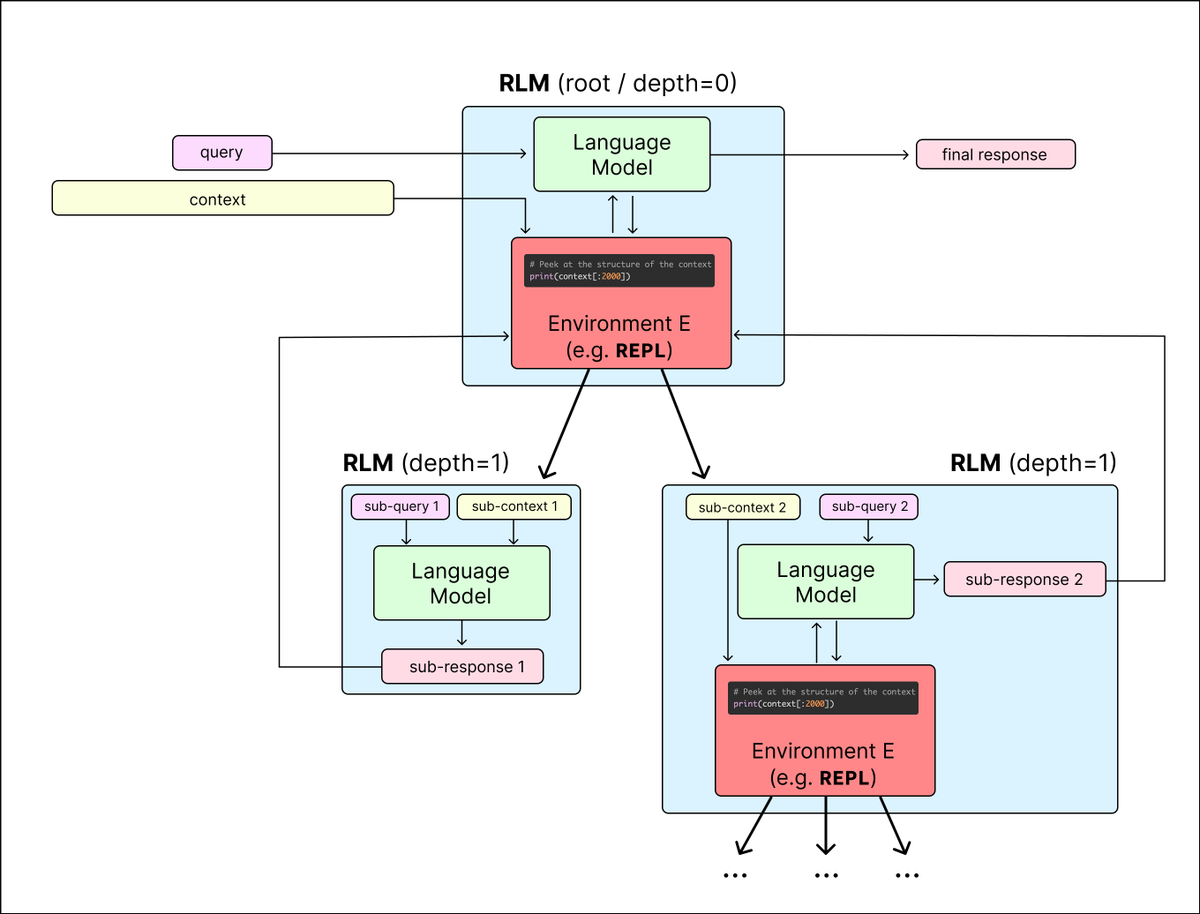







Enclave’s first community update is live. We’re advancing toward our public testnet, making progress on PVSS, and exploring exciting ecosystem use cases such as confidential voting in DAOs.