Barra Mamia

3.8K posts

Barra Mamia

Barra Mamia

@econcompassing

Indonesian dilettante. Macro, monetary, int'l econs, dev't econs, history, and more. My opinions are just that, not my employer's nor investment advice

Jakarta Katılım Kasım 2019
606 Takip Edilen6.7K Takipçiler
Barra Mamia retweetledi
Rosemary Kelanic
Rosemary Kelanic@RKelanic·
A new Brookings analysis finds the Strait of Hormuz closure will *really* bite within 1-2 months: -by mid-July, temporary price buffers will be exhausted -once markets figure out buffers are gone, prices could reach $150/barrel Have to hand it to @robin_j_brooks, a proponent of Trump's blockade, for doing crucial analysis on the timeline for costs hitting the US. I would add that as the costs of the Hormuz standoff become more apparent and severe, Trump's bargaining leverage vis-a-vis Iran will decrease accordingly. Better to reach a deal TODAY, when oil prices are still moderate, than try again in 1-2 months when prices -- and Trump's leverage -- will be worse. brookings.edu/articles/the-t…
English
48
229
515
71.2K
Barra Mamia retweetledi
Dr_Gingerballs
Dr_Gingerballs@Dr_Gingerballs·
The way to think about AI has always been cost/benefit. If I take the sum total impact of what AI has solved to date, and divide it by the cost, does that number look amazing or disgusting? Stated another way, do the aggregate revenues exceed the costs, and will they ever? Stated yet another way: will productivity go up or down? The Erdos solution going around today is very cool. If it feels like the model found a needle in a haystack, that's because it did. I don't say that to dismiss the accomplishment, but to put it in context. And to do that, you have to understand how the solver works. The strategy itself is actually not new, or even particularly innovative. At the heart is the same search type algorithms that have fueled advances in GO and Chess solvers. You have a wide parameter space, an objective function, and constraints. In chess, the parameter space is all of the moves that can happen in any game possible. The constraints are the size of the board and the rules. The objective is to checkmate. With enough compute, you can "play" every possible game in your head and choose the most productive moves. Moving the knight here leads to 80% winning outcomes vs 60% if I do not move the knight. This is similar to counting cards. Even similar to IBM Watson playing Jeopardy! The strategy is largely the same. What has changed is the amount of money spent on compute to solve problems. In the recent Erdos math solution, the solver is also simple. As far as I can see, the field of math is about creating lemmas (proven steps) and then combining existing lemmas to arrive at larger conclusions. Creating lemmas can be difficult, as it requires abstraction of some observable feature of the universe. Stringing lemmas together to come to a conclusion is also difficult, but in a different way. It's less about abstraction and more about search. It's a game of chess. So you train a model on every lemma that exists, as well as which lemmas can be strung together. Much like defining puzzle pieces to a puzzle with a lot of different possible valid solutions. You then define the objective (how many paths of equal length can I draw between points on a grid). Then you search through all of the possible combinations of lemmas that can optimize that number. So the most crucial aspect of this, and what appears to be somewhat hidden, is the cost of the solution. If it was $1, that is mind blowingly revolutionary. If it was $1M, that is starting to get pricy. If it was $10M+, that is a pretty inefficient use of compute. If all scientific breakthroughs are worth it no matter the computational cost, then we should stop running LLMs and start running density functional theory (DFT) calculations, which determine atomic interactions from quantum mechanics. We have barely begun to even begin to fathom how much compute we would need to brute force all possible large ensemble atomic interactions over relevant time scales. But the outcomes are also potentially revolutionary: finding better materials, better drugs, better, well, everything. The benefits and the costs are infinity, and dividing the two is pretty meaningless. And herein lies the problem. The models aren't getting any more efficient, they are just getting bigger. And they cannot continue to get bigger, and more expensive, forever if we are going economically solve large problems with brute force. The only way this strategy works is if the cost of the hardware and the electricity comes down by many orders of magnitude. Renting the compute of a 1 GW datacenter for $1000 per day would be truly revolutionary for scientific discovery. Just the electricity to run that datacenter would be about $4M. The chips themselves would cost another $1-10M. So the cost of compute and energy needs to drop 5,000-15,000x. That's like buying a GB100 for $5. So the hardware and energy costs are going in the wrong direction currently for any of this to make sense. The argument that brute force search is somehow going to get cheaper in software is the big lie that AI labs are pushing to lure investors into buying more compute. The models have always just been different flavors of brute force, and the bottleneck is the cost of hardware. I have seen two trends on X lately. The first is ballmaxxing, where people inject saline into their testicles to make the pouch appear larger. The second is the discussion of paradoxes (Yes, Jevon, you have a weird name and we are sick of Satya screaming it from his goon cave). Therefore, I propose The Gingerballmaxxing Paradox (GBP): where the cost of compute proportionally scales with desire to brute force solutions, while the long term success of the brute force strategy requires the cost of compute to drop. The logical conclusion of the GBP is that productivity will continue to decline as we pursue brute force into increasing hardware prices, and we cannot see the desired compute renaissance until the entire AI investment crashes and is liquidated for next to nothing. I, for one, am looking forward to the crash, and intend to try and capture compute actually cheap enough to brute force some valuable things.
Dr_Gingerballs tweet media
English
10
20
101
17.9K
Barra Mamia retweetledi
Eric Wallerstein
Eric Wallerstein@ericwallerstein·
stole this from Oxford Economics. EM is getting shellacked when you remove TSMC, Samsung and SK Hynix.
Eric Wallerstein tweet media
English
93
392
2.2K
352.8K
Barra Mamia retweetledi
Alex Imas
Alex Imas@alexolegimas·
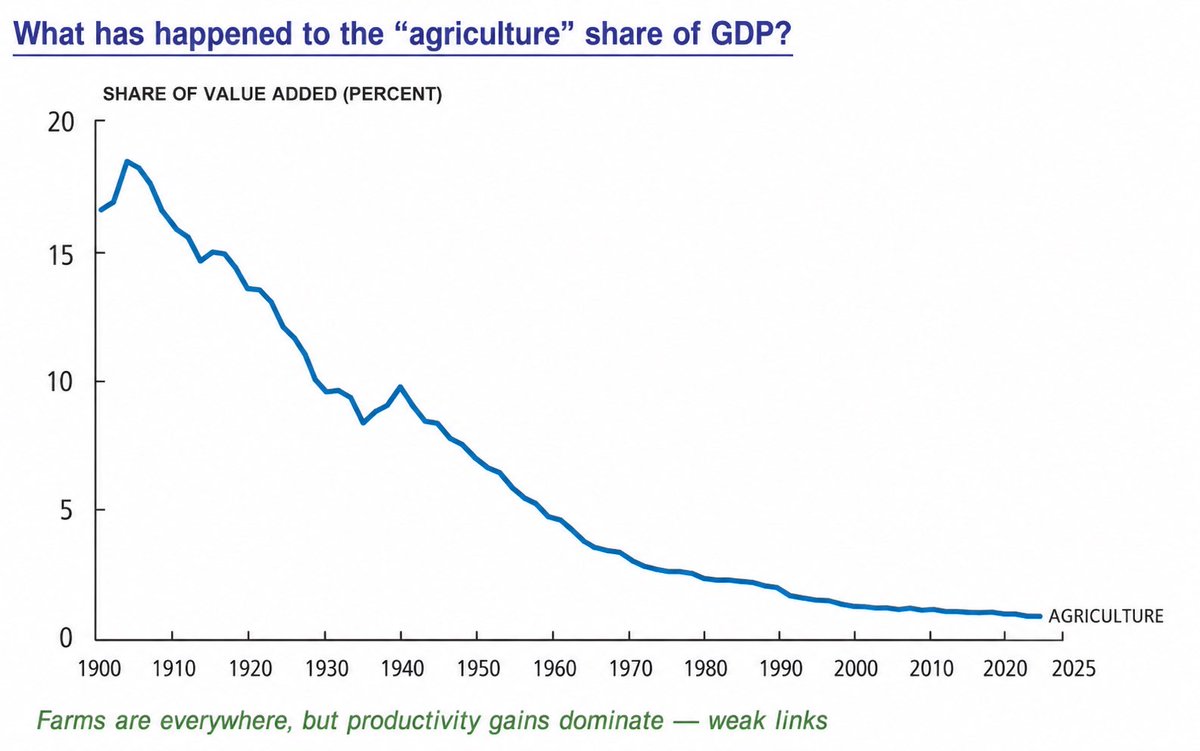
This is just the economics of scarcity. Here is agriculture—same graph. Once something becomes plentiful (eg through automation), value reallocated to something that is scarce. We don’t eat less than before, if anything we eat way more. We don’t use computers less, we use them more. But neither is scarce, so their share of GDP decreases.
Alex Imas tweet media
Kevin Frazier@KevinTFrazier

.@ChadJonesEcon shares a major narrative violation. Check out the “computer income” share of GDP over time.

English
16
80
576
73.6K
Barra Mamia retweetledi
Yoshik
Yoshik@AskYoshik·
The AI bubble math doesn't add up. Anthropic spends $3 to make $1 and that’s before you include any and all other costs like staff or electricity. Microsoft dumped $300B in capex, made ~$18B in AI revenue. OpenAI and Anthropic alone make up 43-54% of Microsoft, Google, Amazon and Oracle's entire revenue backlogs. Enterprises are burning through annual AI budgets in 4 months with zero measurable ROI. This is the most expensive science experiment in history, funded by your SaaS subscriptions.
Yoshik tweet media
English
368
995
4.8K
991K
Barra Mamia retweetledi
Abdi Zihaul
Abdi Zihaul@zhlbd·
Negara-negara Asia yang hari ini menguasai ekspor produk elektronik berangkat dari eksportir garmen. Tapi tidak semua eksportir garmen berhasil diversifikasi ke elektronik. Indonesia salah satunya. Kita sejajar dengan Sri Lanka, Bangladesh, dan bahkan dilampaui *Kamboja*
Abdi Zihaul tweet media
Indonesia
8
58
120
39K
Barra Mamia retweetledi
Yann LeCun
Yann LeCun@ylecun·
People are realizing that AIs are nowhere near human intelligence and learning abilities. Yet they have become very useful by compensating for their lack of common sense, lack of understanding of reality, and limited reasoning and planning abilities, by the accumulation of enormous amounts of declarative knowledge.
English
168
273
3.1K
227.3K
Barra Mamia retweetledi
Yam Peleg
Yam Peleg@Yampeleg·
The dumbest person you know is being told 'you are absolutely right' by some LLM right now.
English
633
4.7K
42.6K
1.5M
Barra Mamia retweetledi
Trinh
Trinh@Trinhnomics·
Subsidize unproductive endeavors, you get an unproductive economy. It's that simple. Look at governments' budgets and see who's spending more to reward capex (hard or soft infrastructure) and productivity and who is punishing or rewarding unproductive behavior and you can see macro stories down the road.
English
13
66
261
16.3K
Barra Mamia retweetledi
Ross Douthat
Ross Douthat@DouthatNYT·
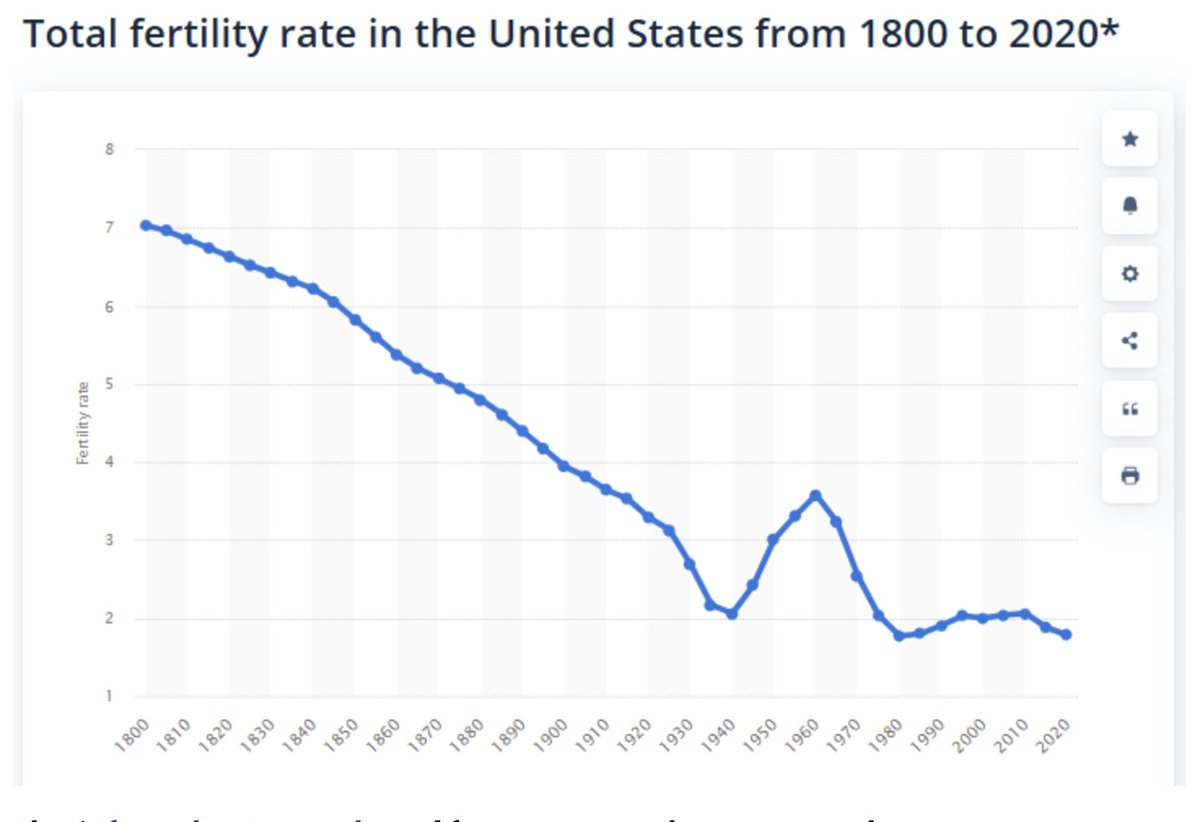
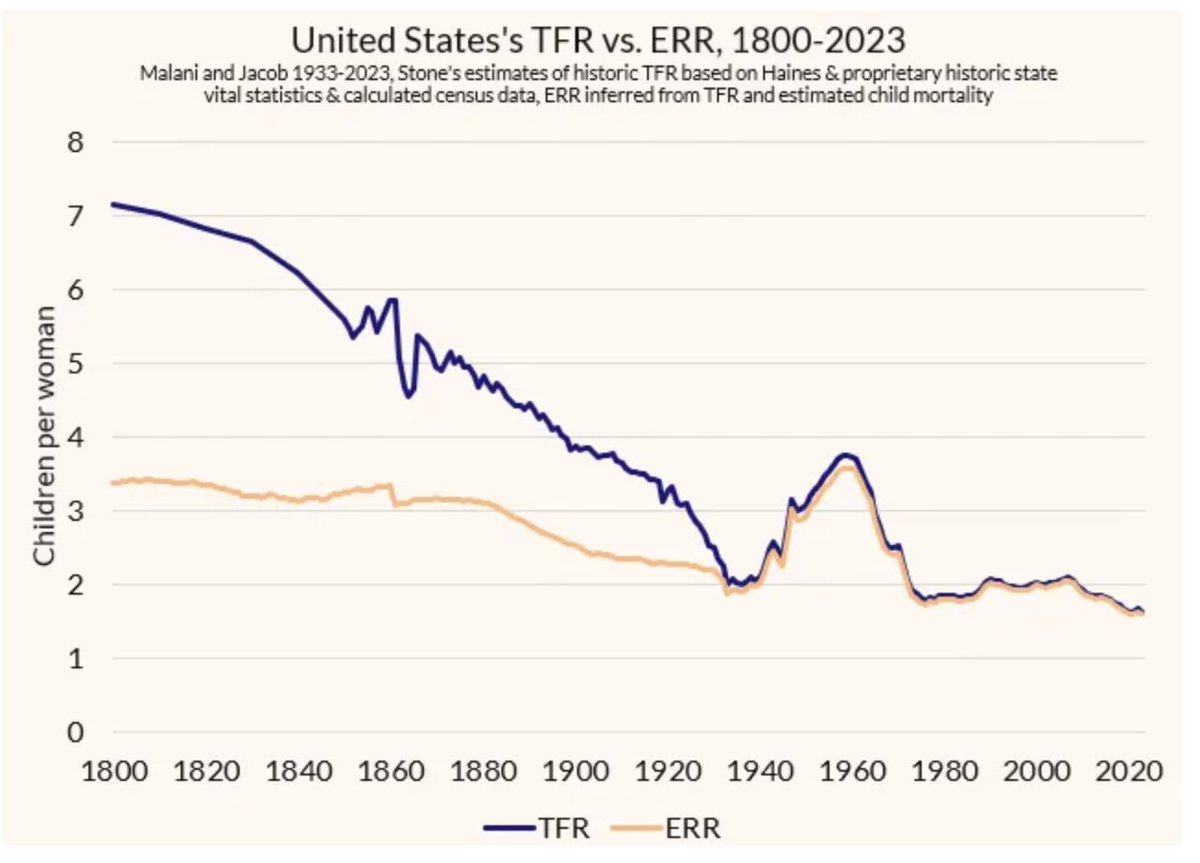
On the latest round of fertility discourse, friends don't let friends share chart 1 without the important context of chart 2, which is @lymanstoneky's child-survival adjustment:
Ross Douthat tweet mediaRoss Douthat tweet media
English
52
151
1.5K
330.2K
Barra Mamia retweetledi
Peter Berezin
Peter Berezin@PeterBerezinBCA·
AI companies really need to come up with a better pitch to the public than “You’re all gonna lose your jobs and end up paying way more for electricity”.
Peter Berezin tweet media
English
830
2.4K
10K
520.3K
Barra Mamia retweetledi
Jesús Fernández-Villaverde
Jesús Fernández-Villaverde@JesusFerna7026·
Same thing in economics: many of the truly influential papers from the 1930s to the 1950s would probably never get published today because the reaction would immediately be: “Did you run 126 robustness checks?” or “Is the identification strategy airtight?” Take Keynes’ General Theory. I doubt a major university press would accept it today. What we often end up with instead are countless papers that are extremely methodologically careful but focused on relatively minor questions. Of course, there are still genuinely outstanding papers being produced. But probably far fewer than there should be.
English
4
50
421
25K
Barra Mamia retweetledi
Ippei Tsuruga | Spesialis Jaminan Sosial
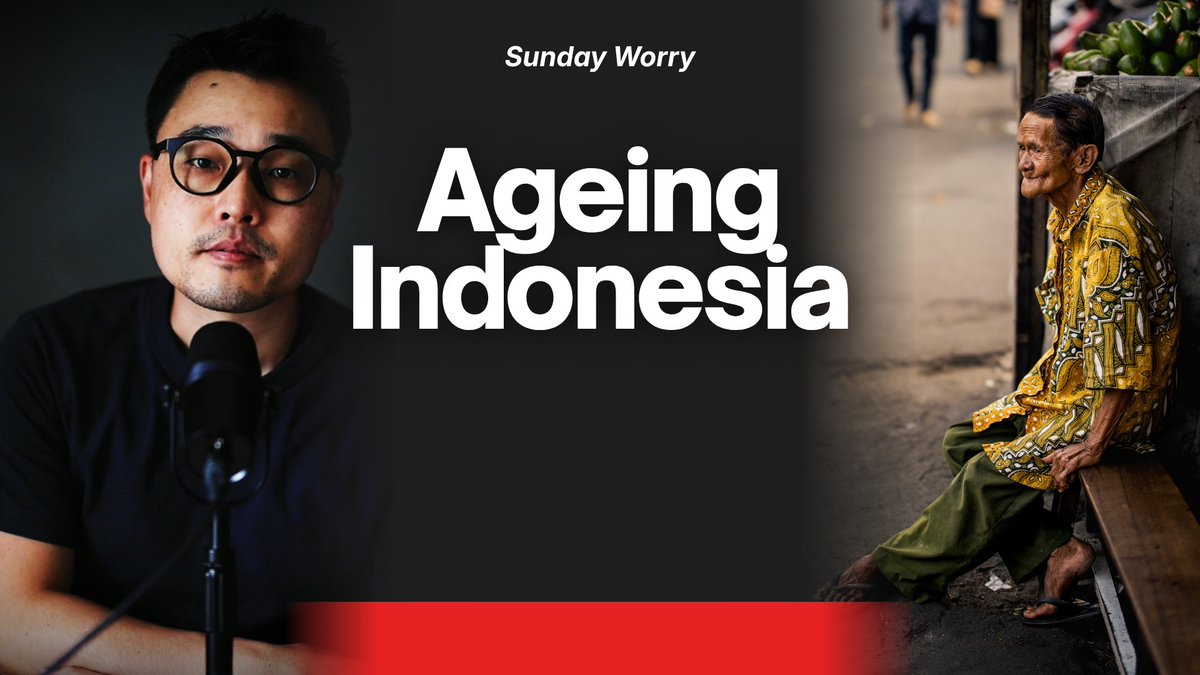
Hari ini Minggu, saya tidak bekerja — tapi pikiran saya tidak bisa lepas dari masa depan Indonesia. Di episode pertama Sunday Worry ini, saya membahas sesuatu yang sering luput dari perhatian: krisis penuaan penduduk yang sudah berjalan. Pada tahun 2044, Indonesia diperkirakan akan menjadi aged society — dan prosesnya hanya butuh 21 tahun. Jepang butuh 24 tahun. Prancis butuh 115 tahun. Indonesia tidak punya banyak waktu, tapi saat ini masih punya sesuatu yang berharga: penduduk muda dan bonus demografi yang tidak akan bertahan selamanya. Angkanya sederhana. Tahun 2020, 6 orang usia produktif menanggung 1 lansia. Tahun 2050, rasio itu turun menjadi 3 banding 1. Tanpa sistem pensiun publik yang dibangun sekarang, generasi mendatang akan menanggung beban yang seharusnya bisa dihindari. Saya sudah berkeliling Indonesia dan berbicara dengan banyak orang tentang rencana pensiun mereka. Sebagian besar bilang mereka mengandalkan anak-anak mereka. Itu yang membuat saya khawatir — dan seharusnya membuat Anda juga khawatir. Sunday Worry adalah percakapan santai tapi serius tentang masa depan Indonesia. Tidak ada studio, tidak ada naskah — hanya kopi dan kekhawatiran. *Ini adalah serial di YouTube. Silakan kunjungi Saluran YouTube kami.
Ippei Tsuruga | Spesialis Jaminan Sosial tweet media
Ippei Tsuruga | Spesialis Jaminan Sosial@ippeitsurugaEN

Apa yang membuatmu khawatir pada hari Minggu? Kita akan memulai serial baru di YouTube besok. Mari kita bicarakan sesuatu yang membuat kita khawatir.

Indonesia
1
22
70
5.2K
Barra Mamia retweetledi
Cal !
Cal !@HidsalJ·
Dalam banyak hal, kita harus akui Indonesia memang tidak punya kendali penuh atas ekonomi global. Kita bukan Amerika Serikat yang bisa mencetak mata uang reserve dunia. Kita juga bukan China yang punya kapasitas memengaruhi rantai pasok global sendirian. Sebagai small open economy, kita hidup di dunia yang arus modalnya bergerak cepat, harga komoditasnya ditentukan pasar global, dan sentimen investornya sering berubah hanya karena satu pidato The Fed. Kalau yield US Treasury naik, Rupiah bisa ikut tertekan. Kalau dolar menguat, biaya utang luar negeri naik. Kalau investor global masuk mode risk-off, pasar negara berkembang ikut kena imbas meski fundamental domestiknya tidak berubah drastis. Itu realitas yang memang tidak bisa sepenuhnya kita hindari. Karena itu kadang ada kecenderungan untuk merasa semuanya di luar kendali kita. Seolah apa pun yang dilakukan pemerintah tidak terlalu penting karena pada akhirnya kita hanya korban dari keadaan global. Padahal justru di situlah letak kekeliruannya. Memang ada banyak hal yang tidak bisa kita kontrol. Tapi ada juga banyak hal yang sepenuhnya ada di tangan kita sendiri. Kita mungkin tidak bisa menentukan arah suku bunga The Fed. Tapi kita bisa menentukan apakah fiskal kita kredibel atau tidak. Kita tidak bisa menghentikan capital outflow global. Tapi kita bisa membangun institusi yang cukup dipercaya sehingga investor tidak panik setiap kali dunia bergejolak. Kita tidak bisa mengontrol harga minyak dunia atau perang dagang antarnegara besar. Tapi kita bisa memperbaiki kualitas pendidikan, efisiensi birokrasi, kepastian hukum, dan arah industrialisasi domestik. Masalahnya, pembahasan ekonomi di Indonesia kadang terlalu fokus pada faktor eksternal sampai lupa bahwa banyak hambatan terbesar justru berasal dari dalam negeri sendiri. Logistik mahal bukan karena The Fed. Korupsi bukan karena dolar menguat. Produktivitas tenaga kerja yang stagnan bukan akibat yield US Treasury naik. Hilirisasi yang setengah matang juga bukan semata salah sistem global. Ada banyak hal yang sebenarnya bisa diperbaiki kalau ada konsistensi kebijakan dan keberanian politik untuk melakukannya. Justru negara-negara yang berhasil naik kelas biasanya bukan negara yang bebas dari tekanan global. Mereka tetap terkena krisis, tetap dihantam arus modal keluar, tetap menghadapi tekanan eksternal. Bedanya, mereka menggunakan periode tenang untuk memperkuat fondasi domestik sehingga ketika badai datang, ekonominya tidak mudah goyah. Korea Selatan tidak bisa mengontrol ekonomi Amerika. Taiwan juga tidak bisa mengendalikan siklus global. Tapi mereka fokus memperbaiki hal-hal yang bisa mereka kontrol mulai dari kualitas manusia, kapasitas inovasi dan teknologi, sampai dengan institusi. Indonesia juga seharusnya berpikir seperti itu. Karena pada akhirnya, menjadi small open economy bukan berarti tidak punya pilihan. Tapi, kita harus jauh lebih disiplin dalam mengelola hal-hal yang memang berada dalam rentang kendali kita sendiri. Dunia global memang keras. Tapi respons terhadap dunia itulah yang menentukan apakah sebuah negara hanya menjadi penonton atau benar-benar bisa naik kelas.
Cal !@HidsalJ

Teori World Systems dari Immanuel Wallerstein memang menarik dibaca. Tapi ada satu hal yang sering lupa disebut: teori itu lahir tahun 1974, sekitar lima puluh tahun lalu. Dunia hari ini sudah berubah sangat jauh. Kalau teori itu dipakai sebagai satu-satunya cara membaca nasib Indonesia, kita bisa terjebak pada cara pikir yang terlalu pasrah. Wallerstein melihat dunia sebagai sistem yang relatif kaku. Negara core tetap dominan, negara periphery tetap di bawah. Peluang naik kelas sangat terbatas. Sekilas masuk akal. Ketimpangan global memang nyata. Tapi masalahnya, sejarah beberapa dekade terakhir justru menunjukkan bahwa dunia tidak sesederhana itu. Korea Selatan dulu adalah negara miskin yang porak-poranda karena perang. Sekarang mereka masuk G20, memimpin industri chip, otomotif, sampai budaya populer global. Taiwan menjadi pusat produksi semikonduktor paling canggih di dunia. China yang dulu hanya dikenal sebagai pabrik murah sekarang punya CATL, Huawei, BYD, sampai DeepSeek. Kalau struktur global benar-benar se-kaku itu, lompatan seperti ini seharusnya hampir mustahil terjadi. Teori Wallerstein bukan sepenuhnya salah. Ketimpangan antarnegara memang ada. Negara maju tetap punya keunggulan modal, teknologi, dan pengaruh geopolitik yang besar. Tapi teori yang terlalu sulit menjelaskan perubahan besar juga perlu dibaca dengan lebih hati-hati. Apalagi dunia hari ini sudah jauh berbeda dibanding era 1970-an. Dulu teknologi memang terkonsentrasi di negara maju. Sekarang akses pengetahuan jauh lebih terbuka. Open-source AI bisa dipakai siapa saja. Developer dari Bandung bisa mengakses model yang sama dengan developer di Silicon Valley. Modal juga tidak lagi hanya berputar di pusat-pusat lama. Startup dari India, Brasil, Nigeria, sampai Indonesia bisa mendapat pendanaan global dan membangun ekosistemnya sendiri. Gojek, Tokopedia, dan Traveloka tidak muncul karena diberi belas kasihan negara core. Mereka tumbuh karena ada pasar, talenta, dan momentum yang berhasil dimanfaatkan. Yang justru perlu diwaspadai adalah sisi fatalistik dari cara berpikir seperti ini. Kadang semua masalah dilempar ke struktur global, seolah Indonesia tertinggal semata-mata karena dunia memang didesain tidak adil. Akibatnya, kesalahan di dalam negeri sendiri jadi kabur. Korupsi dianggap bagian dari nasib negara berkembang. Pendidikan yang tidak nyambung dengan industri dianggap wajar. Oligarki dianggap sesuatu yang tidak bisa dihindari karena kita cuma negara periphery. Padahal banyak hambatan kita justru lahir dari pilihan kebijakan dan kualitas institusi kita sendiri. Kritik terhadap struktur global tetap penting. Tapi jangan sampai membuat akuntabilitas domestik kita menghilang. Apalagi Indonesia sebenarnya punya posisi tawar yang tidak kecil. Cadangan nikel Indonesia termasuk yang terbesar di dunia dan jadi rebutan dalam rantai pasok kendaraan listrik. Pasar domestik Indonesia juga besar sekali. Posisi geografis Indonesia makin strategis di tengah rivalitas Amerika Serikat dan China. Posisi negara kita bukan sepenuhnya tidak punya ruang gerak. Masalahnya lebih sering ada pada bagaimana ruang itu dimanfaatkan. Bahkan negara-negara core sendiri sekarang tidak selalu stabil. Amerika menghadapi tekanan deindustrialisasi di banyak sektor. Eropa sempat terpukul karena krisis energi. Jepang mengalami stagnasi panjang. Dunia hari ini jauh lebih cair dan multipolar dibanding saat teori itu pertama kali ditulis. Justru di dunia yang lebih cair seperti ini, negara berkembang punya ruang manuver yang lebih besar. Jadi ya, ketimpangan global itu nyata. Hambatan struktural juga nyata. Tapi struktur bukan takdir yang otomatis menentukan masa depan sebuah bangsa. Yang sering membedakan negara yang berhasil naik kelas dan yang tertinggal bukan cuma posisi mereka dalam sistem dunia, tapi kualitas institusi, konsistensi kebijakan, keberanian mengambil keputusan sulit, dan apakah elitnya benar-benar bekerja untuk kepentingan jangka panjang bangsanya sendiri. Itu yang perlu terus ditagih. Karena kalau semua kegagalan selalu dijelaskan sebagai kutukan sistem global, yang paling diuntungkan justru elite domestik yang tidak pernah mau bertanggung jawab.

Indonesia
3
26
108
6.4K
Barra Mamia retweetledi
Marc Porter Magee 🎓
Marc Porter Magee 🎓@marcportermagee·
The Economist: “We found that graduates in fields more exposed to AI have suffered markedly worse outcomes.”
Marc Porter Magee 🎓 tweet media
English
135
1K
4.2K
812.4K
Barra Mamia retweetledi
Jim Bianco
Jim Bianco@biancoresearch·
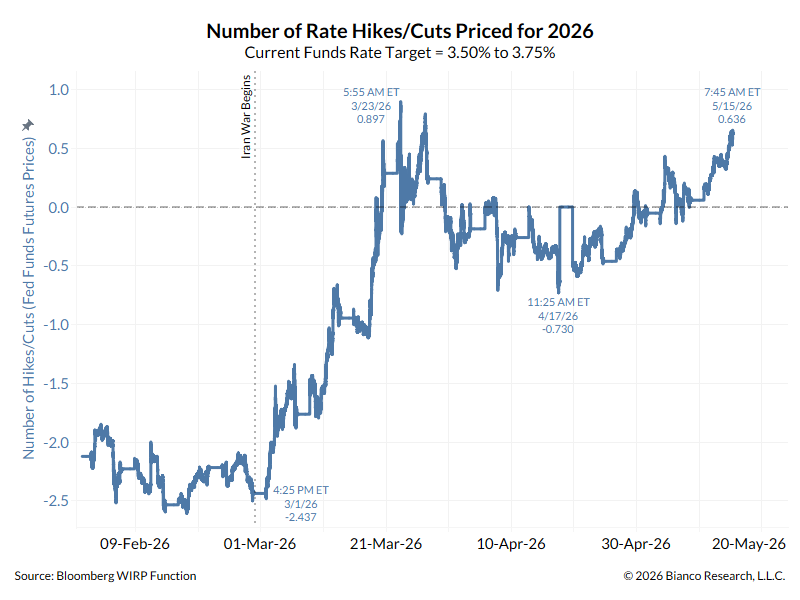
Dear Kevin Warsh Later today, you will be sworn in as the next Chairman of the Federal Reserve. Congratulations. You got the job by convincing the President you share his vision that the Fed needs to cut rates. The problem is that today, on your first day as Chairman, the market is pricing in a 64% probability that rates will HIKE before the end of the year. Good luck!
Jim Bianco tweet media
English
221
372
3.1K
309.6K
Barra Mamia retweetledi
Greg Ip
Greg Ip@greg_ip·
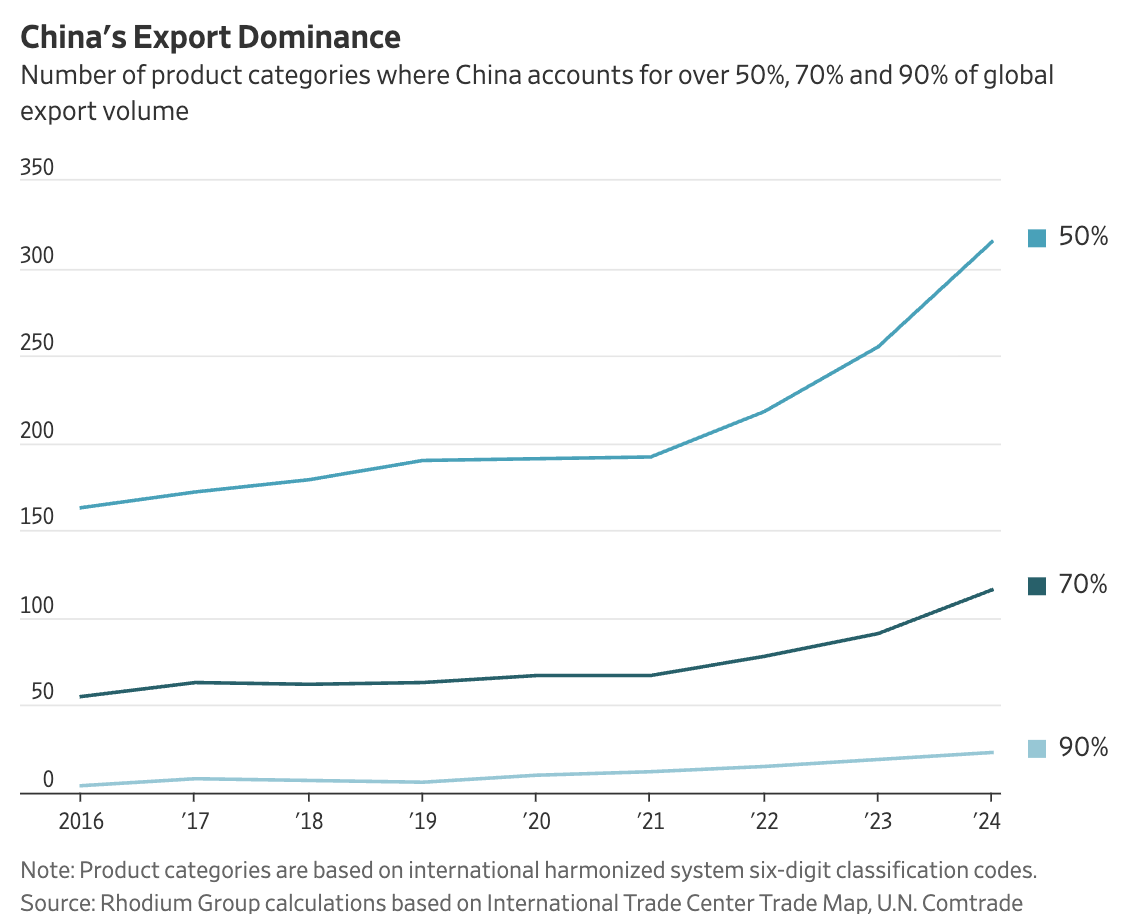
China dominates a growing number of industries and chokepoints, a @rhodium_group report shows. Its industrial policy is costly, wasteful and ultimately unsustainable, but China can stay irrational longer than foreign competitors can stay solvent. wsj.com/world/china/be…
Greg Ip tweet media
English
17
52
194
54.1K