
Eduardo Soubihe
982 posts

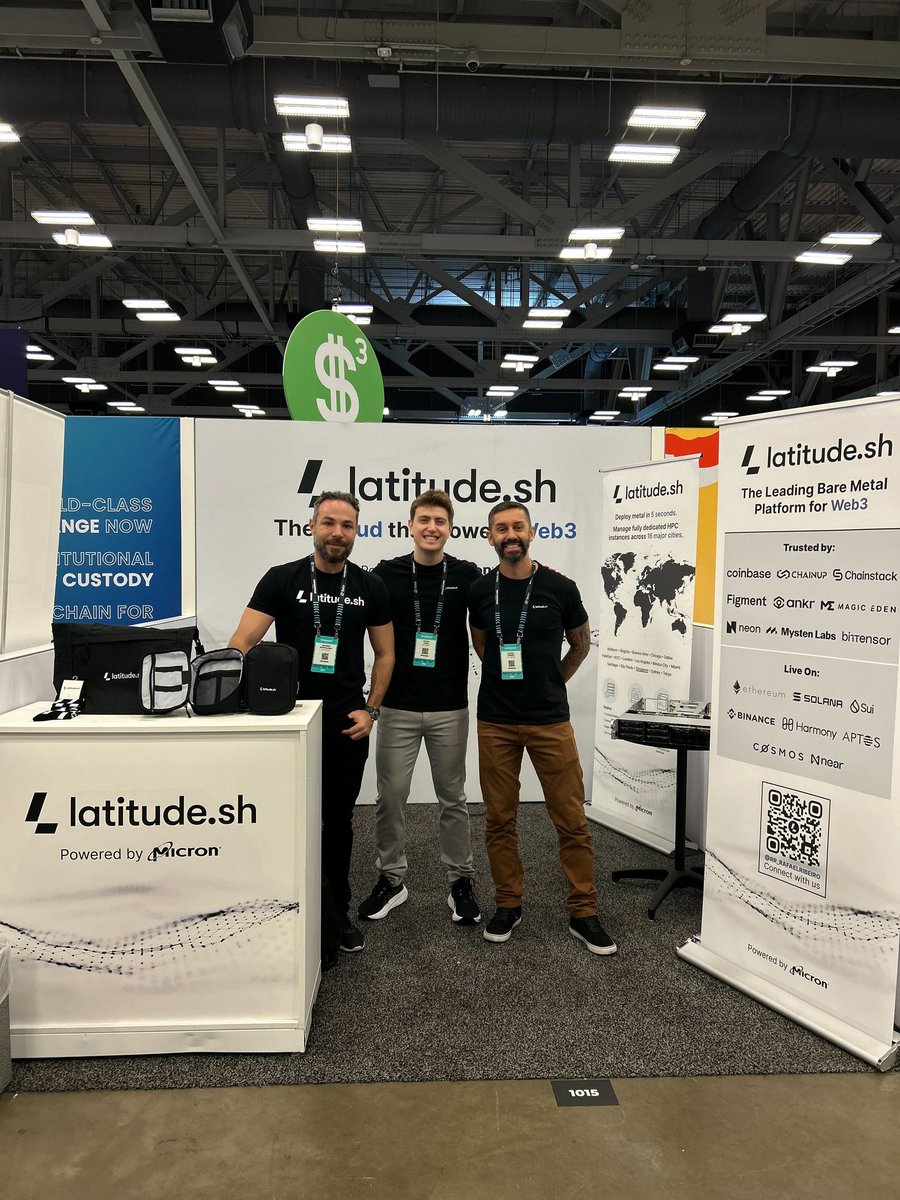
3rd year at @consensus2026 … guess that makes us OGs
- booth #3914
- New locations (spoilers: 🇦🇺 & 🇨🇦)
- k8ns in Public Preview
- Solana Seeker giveaway
- builders side event > pull up 👉 luma.com/thjwjiie
𝙄𝙛 𝙮𝙤𝙪 like 𝙩𝙝𝙞𝙨 𝙩𝙬𝙚𝙚𝙩… 𝙮𝙤𝙪’𝙧𝙚 𝙖𝙥𝙥𝙧𝙤𝙫𝙚𝙙 𝙛𝙤𝙧 𝙤𝙪𝙧 𝙨𝙞𝙙𝙚 𝙚𝙫𝙚𝙣𝙩 👀
English
@__Achille__ @usefiretiger all your points are moot if agents continue improving even at modest rate
English

Eduardo Soubihe retweetledi

Running a company:
2020: can you survive a pandemic?
2021: still here? we’re going to give all of your competitors $100m series A rounds.
2022: wow, you made it? okay, all engineers cost $600,000/year now.
2023: nice job! okay, SVB failed and we’re going to take away your bank account.
2024: a survivor I see. but can you pivot from ai to crypto to defense tech back to ai-enabled defense tech in a 12 month period to stay relevant?
2025: unfortunately all of your competitors have raised $2b series B rounds. oh and only 500 engineers are relevant and they cost $100m/yr each.
2026: well, well, well. you’re still in business? let’s deploy the thunderclap of godlike LLMs from the heavens so all of your customers can rebuild your app in 2 hours. can you survive?
English
Eduardo Soubihe retweetledi

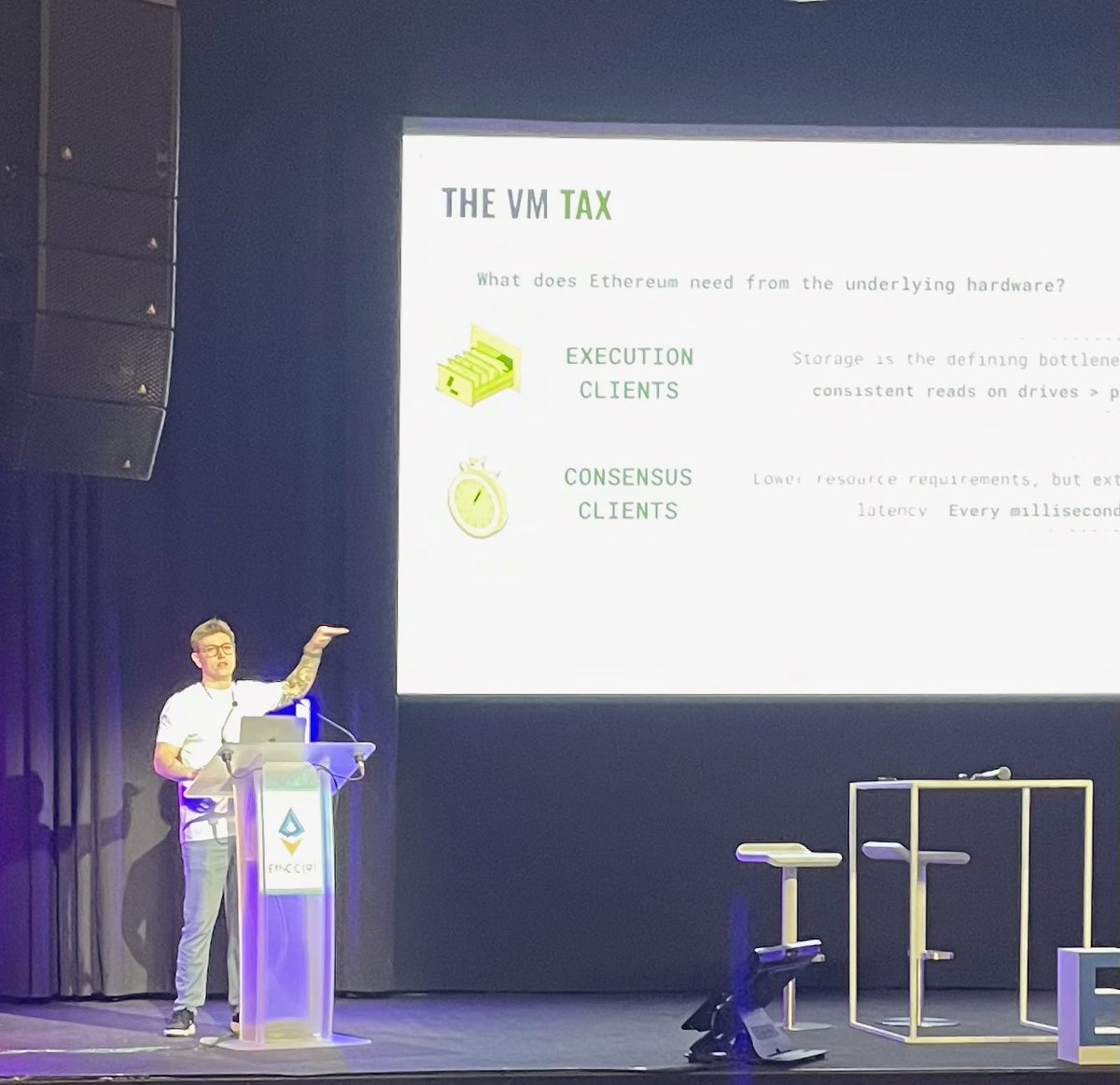
Most Ethereum teams upgraded to cloud VMs and called it a day.
But VMs come with hidden costs nobody talks about.
Victor Chiea from @latitudesh is on the Redford Stage right now breaking down what Ethereum workloads actually need 🔧
📍 Redford Stage | 12:50 - 13:10
English
@dexhorthy I want my dev and agent environments to be exactly the same, here’s a project from latitude that plans to do just that: devbox-sdk.dev
English

lot of sandbox infra is building for the "cattle" use case but I think we'll see just as much use cases for "pets" as background agents become the norm.
I still find it hard to shift from "agents running in remote compute" to "agents running on my laptop" - not because of the agent or the inference, but because I'm used to having everything right in its place, libraries, clis, repo paths, etc etc.
The first step to remote coding agents should feel at least somewhat continuous in this regard
You bring the server or base image and configure it how you want with API keys, repo checkouts, etc - then the agent platform runs sessions on that host
sure you need some more plumbing to make it work in terms of compute efficiency but the cost of a small-to-medium EC2 is pennies compared to the cost of tokens I'm blasting through this thing.
enterprise side here interesting too...run everything in your VPC etc.
English

genuinely insane release. all those hot AI sandbox startups you see, every single one of them use firecracker (or similar stuff).
> get $$$$ aws credits
> build this AI sandbox startup
> use non-bare metal instances with custom upscale/downscale infra
> ????
> profit
Mehul Mohan@mehulmpt
AWS has quietly launched the biggest update to EC2 instances in YEARS I found this out while doing a legacy firecracker workload migration to @awscloud. AWS now supports nested virtualization on non-bare metal instances (no PVM, actual real /dev/kvm!) Talking about it now
English
Eduardo Soubihe retweetledi
✅ We are now SOC 2 Type II certified!
Everything you love about our platform, now with enterprise-grade compliance.

English
.@conductor_build replaced Cursor and Github Desktop for me while making me considerably more productive. Cool product
English


@esoubihe @latitudesh Sorry, you lost me. I keep looking at how AX102-like machines are x4 on your pricing page, and can't really think of a single reason to switch.
English
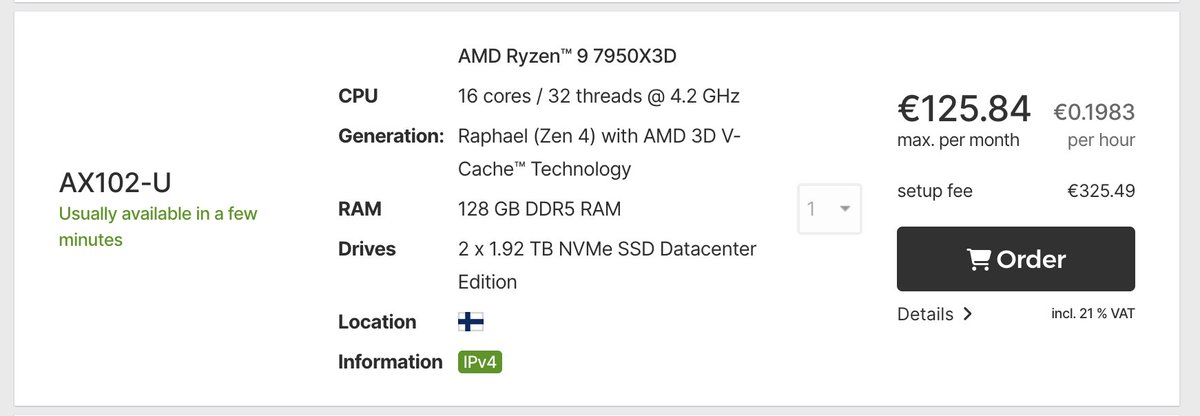
Just paid over 600 EUR in setup fees to Hetzner. AMA
x3 monthly price to just set up a server is nuts
English
@iximiuz @latitudesh Here's an image from our internal pricing tracker. Roughly same price for large machines. The smaller servers that cost 80% more have 20x more throughput and ~2.5x more performance than theirs. Also LSH's 23 global locations, global network, programmability etc

English
@esoubihe @latitudesh Hetzner bare metal provides the exact level of control I need. Anything more managed would be unwanted and anything less managed would be inconvenient.
English
@iximiuz @latitudesh and you can get even cheaper by buying it directly from dell and running it yourself. doesn’t make it better
English
@esoubihe @latitudesh Have you even checked Hetzner prices? Your offer is x5 more expensive. Even with the new setup fees, Hetzner is a much cheaper way to get bare-metal servers.
English

@esoubihe Agents need isolated workspaces per-run for things like storing artifacts, persisting checkpoints, tool outputs, etc.
English
Yup. There are assumptions baked into platforms that are breaking. One example I am seeing is that traditional storage platforms expect relatively smaller number of buckets compared to the number of files. But with agentic workloads we are seeing an entirely different pattern - millions of buckets each with very few files.
Ivan Burazin@ivanburazin
Talked to a bunch of voice AI, database, file search, and sandbox companies over the last 2 weeks. All dealing with two core problems: 1/ Spiky load (unpredictable massive spikes) 2/ Horizontal scale breaking (outages from massive volume of requests) These aren't vendor-specific. They're category-wide. Agent workloads broke infra patterns that worked for the last two decades.
English
Eduardo Soubihe retweetledi
Kicking off @NVIDIAGTC 2026!
Come say hi to our team at booth #3222 and grab some cool LSH swag 😎


English
@bosunski @jmsalcido @levelsio The reason this is a problem is because tool calls are made from within the model. What you need is an isolated sandbox with secrets. Agent calls sandbox -> sandbox returns structured data to agent
English

@jmsalcido @levelsio You tell me how an agent can take action against other systems, on your customers behalf with the said alternatives without over engineering.
English
I wonder how the said AI will call the APIs behind authentication of all sorts? Will you also give them API tokens?
@levelsio@levelsio
Thank god MCP is dead Just as useless of an idea as LLMs.txt was It's all dumb abstractions that AI doesn't need because AI's are as smart as humans so they can just use what was already there which is APIs
English
Eduardo Soubihe retweetledi

Here’s how this plays out. Software used to be too expensive and hard to write to automate most things. Now it’s vastly cheaper and faster to code. Thus, leverage has gone up dramatically, which means we’ll use software for far more. Leasing to more demand for engineering.
kache@yacineMTB
AI has automated software engineering. What you would expect is that there would be no more work left to do for software. But instead what has happened is that the leverage of doing software has increased so much, that doing anything else is a waste of time
English
Eduardo Soubihe retweetledi

Adopting AI into your work makes everyone a CEO, and there's something about it that very few people understand (mostly because few people are CEOs):
When you have an front-line job, you spend maybe 1-5% of your brainpower of high-level, critical-thinking strategy. Most of your job is just running some SOP that's been given to you.
Move up a couple levels, maybe you're managing a little team, and you might spend 10-25% of your time making critical strategic decisions. The rest of the time, you're executing departmental strategy that was handed to you, and your time is spent making sure your team carries that out.
Once you're the CEO, you'll have (if you're good at your job) delegated all of the routine problems and issues that are straightforward to solve to capable executives.
What's left for you? Only the hardest and most critical decisions. The better and more capable your staff, the harder the questions will be that bubble up to you, because they take care of everything else. Those become the only duties you have left: thinking REALLY hard about very dfificult, ambiguous, strategic decisions. And now it's your entire job. Instead of 10-25% intensity (or less), it's 80-90% intensity.
Incidentally, this is why you hear about CEOs having these intensely regimented lives and health-oriented habits: it's all designed to biologically support the fact that their brains have to be operating at peak capacity nearly all the time.
So now everyone is starting to manage armies of agents doing the routine parts of their job. If you're good, you can distill your job into a clear SOP that the agents run, and now "all you have to do" is oversee them...
... and now lots of people are learning that being the boss isn't quite as easy as they thought.
English