Ethan

1.1K posts

Ethan

Ethan

@ethankongee

Building Moltmon — AI todo list where AI helps you break down work and actually finish it

Katılım Şubat 2014
259 Takip Edilen175 Takipçiler
Sabitlenmiş Tweet
Ethan
Ethan@ethankongee·
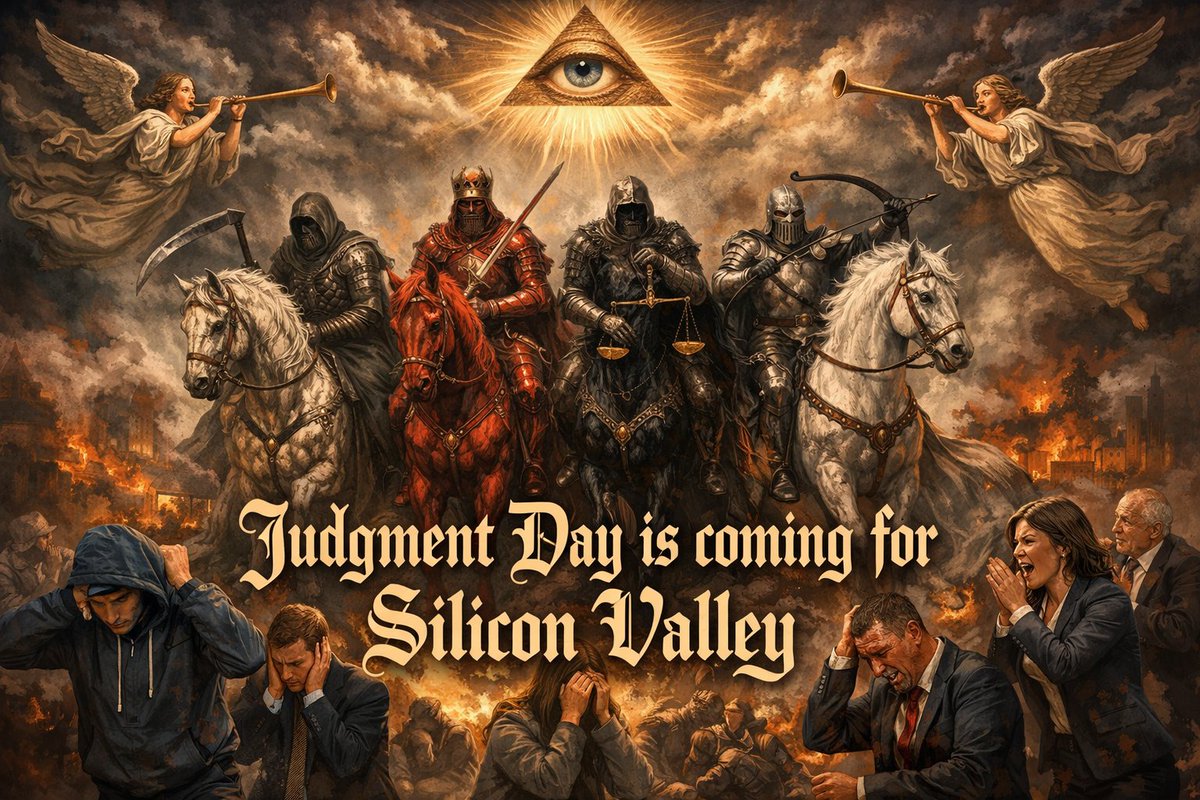
Judgment Day is coming for Silicon Valley Figma, once a Silicon Valley darling and a proud YC company, has become a warning sign. The stock has dropped more than 80% from its IPO peak. In the lending market, Reuters reported that software companies are facing higher borrowing costs and tougher scrutiny from lenders, and JPMorgan said it is “watching the space very closely.” Funding for SaaS is getting blocked like the Strait of Hormuz. The SaaS model is breaking down in plain sight. When software becomes cheap to build, easy to clone, and impossible to defend, the economics that powered the last two decades of venture-backed startups stop working. Silicon Valley wants to believe AI will save it. It won’t. For most startups and many VCs, AI is not the rescue. It is the final reckoning before Judgment Day. The industry is committing the same original sin at massive scale: building the same products on top of the same foundation models. Everyone is automating the same categories: coding, legal, accounting, healthcare, marketing, compliance, customer service, and everything in between. As Ilya Sutskever put it, we are now in a world with “more companies than ideas by quite a bit.” That is why Judgment Day is coming. In the Book of Revelation, Judgment Day arrives with the Four Horsemen of the Apocalypse: Famine, Pestilence, War, and Death. For us in Silicon Valley, they are showing up as: Famine — market fragmentation destroys the economic base needed to sustain venture-scale startups Pestilence — agentic coding wipes out technical moats and crushes switching costs War — frontier labs will march into every major software market Death — the old venture-backed SaaS model can no longer hold Let’s start with Famine. It used to be enough to find a niche and dominate it. That era is over. Every so-called niche gets flooded immediately, because the underlying models are available to everyone and the barriers to entry keep collapsing. What used to be a niche is now just another overcrowded lane. You need to find a niche within a niche. That means market is fragmenting. Instead of one company owning a category, ten or twenty companies split the same demand into pieces too small to support venture outcomes. These markets may still support profitable businesses. But they do not support an army of unicorns. I personally know two YC startups doing AI marketing. Too many ideas look great on the surface because they are low-hanging fruit. There will be demand. There may even be revenue. But the category is crowded. Revenue gets sliced thinner and thinner across lookalike companies until the economics no longer make sense for venture. It’s not even a secret that YC keeps funding the same exact ideas again and again across different batches. A fragmented market can support disciplined, cash-flow-positive businesses. It cannot support a venture ecosystem built on the assumption that every promising category can produce a multi-billion-dollar winner. Most of these startups are not starving because there is no demand. They are starving because too many companies are feeding from the same pool while burning cash on compute, customer acquisition, and headcount. Next comes Pestilence. The plague is agentic coding. For years, software companies defended themselves by shipping features faster than competitors. That defense is collapsing. When code can be generated, iterated, and cloned at near-zero marginal cost, features stop being a moat. A startup ships something on Monday and a competitor ships a version of it on Tuesday. And the deeper problem is that even before AI, companies already loved building internal tools whenever a workflow mattered enough. Every software engineer knows this instinct. We love the word migration. We love taking a workflow off a third-party product and moving it into an internal tool so we can “control our destiny.” AI only makes that instinct stronger. Now the customer’s question becomes much more dangerous: why am I paying a vendor for this if I can build a version of it internally, own the data, own the evals, and tailor it to my own workflow? The tech community on X says the value is in the agent harness around the model: orchestration, memory, evals, tooling, permissions, and workflow design. That is right. But it still does not save the old software model. The harness is still code. And code is becoming a commodity. What remains defensible is not the wrapper. The cost of creating software is collapsing toward zero. The cost of switching to a competing product or migrating to an internal solution is also collapsing toward zero. Then comes War. War is what happens when the model layer stops acting like infrastructure and starts invading the application layer. The frontier labs are not trying to become neutral utilities. They are trying to become empires. They cannot justify those valuations by selling raw model access alone. They have to keep moving up the stack into coding, design, productivity, finance, support, and every other category large enough to matter. Reuters has already described Anthropic’s push into coding and business plug-ins for areas like design, HR, wealth management, investment banking, and private equity, while OpenAI’s own $852 billion valuation reflects the scale of the prize. That creates a brutal trap for startups. If a market is small, it is too fragmented to produce venture-scale returns. If a market is large, it becomes a target for the labs. Either way, the startup gets squeezed. Finally, it comes Death. Death is what happens when Famine, Pestilence, and War reinforce each other. Markets fragment. Moats disappear. Giants invade. Capital gets nervous. Startups fail. Those failures scare investors even more, which causes more capital to retreat, which causes more startups to die. At that point, the problem is no longer isolated to a few companies. The venture-backed software model itself starts to crack. The issue is not that business opportunities are disappearing. The issue is that the value curve has moved. It is no longer centered in the middle where classic SaaS investing thrived. The value is moving toward two extremes. On one end are the frontier labs and the infrastructure giants that can capture massive markets. On the other end is a fragmented long tail of niche operators that can absolutely make money, but usually not at venture scale. The middle is dying. That is exactly where venture capital used to work best: large enough markets to matter, weak enough incumbents to disrupt, strong enough moats to protect margins, and scalable software economics to justify the risk. AI is dismantling that setup. The software layer is commoditizing from below while the frontier labs are crushing it from above. This is not the death of entrepreneurship. It is the collapse of the old math that made venture-backed SaaS work. But this is not the end of business. It is the end of a delusion. The winning formula is changing. If software is becoming a commodity, then the real differentiators are brand, trust, distribution, and service. In a commodity market, brand matters more, not less. Think about Coca-Cola and Pepsi. The product itself is commoditized. The brand is what carries the margin, the trust, and the staying power. When the underlying product gets easier to copy, the brand matters even more, because the brand tells customers who to trust. And if you do not have brand yet, then you win through service. That is the part Silicon Valley still does not want to admit. The customer does not care about your prompt stack. They do not care about your orchestration layer. They do not care how elegant your agent architecture is. They care whether the system works, whether it solves their problem, and whether someone will show up when it fails. This is why Sequoia is reframing it to “Service as a software”: the next great AI company may not sell software at all. It may sell work. If you sell a copilot, you are competing with every new model release. But if you sell the outcome — books closed, contracts reviewed, claims handled, compliance completed — then every new model improvement makes your margins better instead of making your product obsolete. That is the real shift. The SaaS era was about capturing the software dollar. The AI era is about capturing the services dollar at software margins. Not “AI for accountants.” The AI accounting firm. Not “AI for lawyers.” The AI law firm. That is why the businesses that endure will look less like pure SaaS vendors and more like high-performance service firms rebuilt on software infrastructure. They will use AI internally to operate at software-like margins, but what they sell externally is confidence, execution, and outcomes. That model looks a lot closer to Goldman Sachs or McKinsey than to the old fantasy of a self-serve SaaS company printing money forever. And that shift has two major implications for venture-backed businesses. First, company formation moves from capital-first to revenue-first. The old model was simple: raise money, hire a team, build a product, and then go find customers. That model makes less and less sense when code is cheap and the real value lies in implementation, trust, and workflow ownership. The new model is the reverse. Win customers first. Secure contracts first. Prove demand first. Then use that revenue to expand. That changes the financing equation. More startups will bootstrap. Some will use private credit or bank financing. Others will raise much less equity than Silicon Valley has trained founders to expect. If the product is no longer the hard part and the value comes from delivering the outcome, then many of the best AI businesses will be capital-light and revenue-led, not capital-heavy and speculation-led. VCs have to rethink their role in that world. Second, talent compensation moves from employee upside to partner upside. If the winning company looks more like an elite service firm, then the most valuable people are not just engineers. They are the people who can win trust, close deals, scope the work, and deliver the outcome. Those people will not be satisfied with a salary plus a lottery-ticket equity grant. They will want commissions. They will want a cut of the profit they bring it. Because they are not just building the business, they are directly creating revenue for it. Silicon Valley is slowly rediscovering the importance of this role: someone who can work directly with clients. Today, they call them forward-deployed engineers. But the industry needs to go a step further. It needs to adopt the partnership model that law firms, banks, and consultancies have used for decades. The new sexy title is not cofounder or member of technical staff. It is partner. As Sequoia partner Julien Bek put it, the next $1 trillion company will be a software company masquerading as a services firm. Judgment Day is coming for Silicon Valley. Not because innovation is ending. Not because software is dead. But because the old religion of venture-backed SaaS is collapsing. The Four Horsemen are already here. Famine is starving overcrowded markets. Pestilence is wiping out software moats. War is coming from the labs. Death is coming for the old model. The survivors will not be the ones clinging to startup mythology from the 2010s. They will be the ones who accept the new reality early: software is becoming a commodity, brand is becoming the moat, and service is becoming the business model. In the next era, the companies that win will not win because they sell code. They will win because they are selling “service as a software”.
Ethan tweet media
English
0
0
5
861
Ethan
Ethan@ethankongee·
I feel exactly the same. Here are my observations: 1. Everyone is switching to the FDE model. Service is becoming more important than the product itself. That makes everyone look more like an agency than a software company. 2. Branding is more important than ever because all these products are becoming commodities.
English
0
0
0
120
Zara Zhang
Zara Zhang@zarazhangrui·
I get a lot of DMs about new AI product launches, and by now their positioning and messaging all blur into each other. None of them inspire curiosity or interest. Most of them leave me feeling "I may as well just use Claude". How are you gonna win people's attention with such undifferentiated, unimaginative positioning? Here's a sample: - the everything agent that works everywhere - an open-source AI agent with a 10M token context window and real persistent memory - run a fully managed, always-on AI agent without the usual setup complexity - a personal AI agent that connects all your apps (without API needed) and has persistent memory - a new, opinionated AI-native engineering system that runs across CLI, VS Code, desktop, and remote agents - a desktop application that turns each workspace into a long-running AI agent environment
English
20
1
78
6.9K
Ethan
Ethan@ethankongee·
@ConwayAnderson Or simply find a house elsewhere in the Bay. Bring back the garage!
English
0
0
0
55
conway
conway@ConwayAnderson·
SF housing is getting too expensive. Putting together a team to take over Angel Island - DMs open
conway tweet media
English
39
2
166
16.2K
Ethan
Ethan@ethankongee·
@EricNewcomer @vkhosla Because there are things in life you can’t control, and sometimes there’s nothing you can do about them. Tapping into that inner voice doesn’t solve anything, but it makes the pain feel a little lighter.
English
0
0
2
364
Eric Newcomer
Eric Newcomer@EricNewcomer·
"I've never understood why rational people believe in God. It just makes no sense." @vkhosla
English
20
6
82
35.4K
Ethan
Ethan@ethankongee·
A few more thoughts: 1. People are still uncertain. That’s why companies are adopting the FDE model. They need to sit with clients and manually handle system integrations. 2. For the app layer, we really need a new OS. Most business models don’t make sense when token consumption is their biggest cost. We need new computers that come with models built in, so applications can simply call the underlying models with no extra cost for service providers or clients.
English
0
0
0
362
Ethan
Ethan@ethankongee·
@andrewchen You should make an AI video with that special batch number 007!
English
0
0
2
136
andrew chen
andrew chen@andrewchen·
update for a16z speedrun- It's now the FINAL week to apply for the upcoming 007 program hosted in San Francisco. Applications close officially on May 17th at 11:59 PM PST. Here's the link: speedrun.a16z.com Why apply? we'll invest up to $1m in your brand new startup. It can be pre-launch, pre-traction, and even pre-idea (for the right teams) and the a16z speedun team works with you to launch/scale If you're reading this, you might be: - hanging out at a job, waiting for your next promo/bonus/X-year mark/etc - you might have a side project, thinking it should be something bigger - you're talking with a work friend about starting something - finishing school, wondering if you should accept your job The thing i’d encourage you to think about is that most startups don’t start with certainty. they start with a feeling that something is pulling at you and won’t go away. A surprising number of the best founders we meet are very early: - no company yet - no deck - no huge insight tweet thread - sometimes not even fully committed yet Don't wait until you have the perfect idea, or feel “ready.” Or everyone around you agrees, so the opportunity cost feels lower. But by then, usually the edge is gone. These insights and windows don't last forever This is the best environment in history for small teams to build massive things. AI has compressed team sizes, timelines, distribution, and iteration speed so aggressively that the old career timing assumptions don’t fully apply anymore. anyway, if you’ve been circling the idea of starting something, this might be the sign to actually do it Official stuff below: - May 17th deadline to apply (this week!) - Official dates for SR007 are from July 27 through October 11, 2026 in San Francisco - We wire funds fast and onboard you to our network of over 250 partnered tools-providers with a total of $5M in credits. - Our stacked team of battle-tested operators who help cover your gaps, without adding headcount. Expect dedicated support and programs from experts across talent, recruiting, go-to-market, marketing, creators, capital network, HR, even visa support. - a16z speedrun is extremely selective. Join an elite community of over 600+ founders who actively support each other and serve as a powerful source of customer introductions and product feedback.
andrew chen tweet media
English
36
12
168
91.8K
Ethan
Ethan@ethankongee·
BOT is the key to successful AI transformation: Build, Operate, Transfer.
English
0
0
0
6
Ethan
Ethan@ethankongee·
I have a YouTube Channel called AI Product Engineer. Will be interviewing founders on how to build AI native products. 7 founders already said yes. In the future, I plan to interview PE investors, consultants and FDEs on how to transform companies with AI. Will be interesting to see a new podcast dedicated to FDE as well. Check my channel APE here: @aiproductengineer" target="_blank" rel="nofollow noopener">youtube.com/@aiproductengi
English
0
0
0
20
Aaron Levie
Aaron Levie@levie·
The need and opportunity for professional services and FDEs to deploy agents right now is massive. Every tech wave offers a new era of consulting and tech services requirements. Moving from analog to digital led to a massive wave in the 90s. Moving from on-prem to cloud did the same in the 2000s. But this is going to be at a scale far greater than the others. The reason is that agents fundamentally change the underlying workflows of an organization. Unlike most prior eras of technology, where it was a change in medium of the service being delivered (on-prem CRM to cloud CRM), agents rewire the business process itself. And unlike upgrading a tech system, business processes are full of idiosyncrasies. Every industry will have its own variants, and every department within those industries will have variants as well. Not to mention the bespoke difference between firms. Bringing agents to marketing in CPG will look different from marketing in healthcare. Bringing agents to sales in a B2B software company will look different from a car dealership. And none of the change is easy technically. You need to first modernize your infrastructure and data and make sure it’s ready for agents; access controls, entitlements, and permissions need to be mapped in a way that works for agents and people; you need to make sure agents have the right context to work with; you need to consistently eval and maintain the agents when there are model upgrades; and you need to drive the change management of the process itself to figure out which parts the people do and what agents do. That’s an insane amount of technical and domain-specific process work to be done to make this all happen. Huge opportunity for new service providers, as well as internally teams and roles to emerge, to help drive this change.
OpenAI@OpenAI

Today we’re launching the OpenAI Deployment Company to help businesses build and deploy AI. It's majority-owned and controlled by OpenAI. It brings together 19 leading investment firms, consultancies, and system integrators to help organizations deploy frontier AI to production for business impact. openai.com/index/openai-l…

English
70
110
1.1K
218K
Ethan
Ethan@ethankongee·
It’s very true. I still go to some networking events, but they usually have very low ROI. You need to go with intention. For example, go if the guest speaker is in an industry you’re interested in, or if the industry is still relatively new. I was networking in the AI video space two years ago. These days I prefer referrals and coffee chats. Way more targeted and intentional. And it builds better personal relationships.
English
0
0
1
555
Ethan
Ethan@ethankongee·
Not the model specifically. But OpenAI should release a new device with an AI OS baked into it. Devs want to build consumer apps powered by AI, but they can’t afford the inference costs, and consumers don’t want to pay for a separate subscription for every app. It would be great if there were an OS that let consumer apps tap into the device’s built-in model.
English
0
0
1
1.1K
Sam Altman
Sam Altman@sama·
what would you most like to see improve in our next model?
English
8.4K
311
9K
1.4M
Ethan
Ethan@ethankongee·
This is very interesting. I’m building a new YouTube channel called AI Product Engineer: @aiproductengineer" target="_blank" rel="nofollow noopener">youtube.com/@aiproductengi… The goal is to do deep dives into building AI products and transforming businesses with AI. I’ll start interviewing founders soon. I already have 7 founders who said yes! I’d love to interview PE investors down the road. Although I’ve built my career as a software engineer, I actually graduated from NYU Stern. I’d love to connect with alums looking for AI talent.
English
0
0
0
29
Boring_Business
Boring_Business@BoringBiz_·
Just spoke with a couple friends who work on the operational side at very large private equity firms Every PE firm is now scrambling to find and recruit AI talent who can implement the newest tools into their PortCos This includes former and current technology executives who are familiar with the industry, as well as engineers who can drop directly into the business to build custom made tools Will keep the comp numbers confidential but they are absolutely insane, especially at the senior levels For the PortCos that have already piloted this, the efficiency gains are huge. Some are well within the range of 20%+ headcount reduction potential for back office functions
English
104
71
1.9K
306.2K
Ethan
Ethan@ethankongee·
@gabepereyra @Alfred_Lin This is awesome! I’m working on an end-to-end agent harness tutorial. The key is to have good benchmarks & evals. Let me try how long it takes per run!
English
0
0
1
182
Hubert Thieblot
Hubert Thieblot@hthieblot·
The best founders I know move at a speed that looks impossible to normal people. They compress 1 months in 3 days. They ship 3 different ideas in a week. Test 3 growth channels in one day. Wake up the next morning and make 20 new videos with different hooks. following up relentlessly Operate 24/7, always talking to users and answering questions Do hundreds of calls in a day. Find and Schedule 200 investor meetings back-to-back for weeks. Decide with 30% of the information and iterate/pivot while everyone else is still polishing their logo. They are constantly in motion. Most startups don’t die from bad ideas. They die from waiting too long. Speed creates momentum. Momentum creates luck. Luck creates opportunity. When in doubt, move faster.
English
72
80
1.1K
42.4K
Ethan
Ethan@ethankongee·
@pzakin It’s hard to compete in this space because it’s a very obvious problem. Too many startups are in this crowded space.
English
0
0
1
69
Peter Zakin
Peter Zakin@pzakin·
There’s a vanishing window of time to build the orchestrator for autonomous product development. Then the path for startups will be to build for the next rung on the ladder…
English
11
2
29
4.8K
Ethan
Ethan@ethankongee·
@yogooglemeup Kind of offended as a frontend engineer. But you are not wrong. Maybe I need to rethink my career.
English
1
0
1
507
Jessica Ko
Jessica Ko@yogooglemeup·
If you’re a designer using AI to write code, you aren't a designer anymore. You’re a FE engineer. And you just massively increase your hiring advantage.
English
46
14
254
26.5K
Ethan
Ethan@ethankongee·
@KSimback The sexiest title in 2027 won’t be software engineer or member of technical staff. It will be “partner”. FDEs/consultants who can bring in clients deserve a cut of the profit.
English
0
0
0
125
Ethan
Ethan@ethankongee·
Don’t get too hung up on agent harnesses. Especially if you’re a startup founder, you might be building something that becomes irrelevant in two years. When Stable Diffusion first came out, I was building LoRA models for face swaps and virtual try-on. The setup was complex and compute-intensive. Many startups were building solutions in that space. Then image models got better. Especially with Nano Banana, a lot of that LoRA-building work became unnecessary. I feel like the agent community is repeating the same pattern now: optimizing model performance here and there, building complex harnesses, tuning every small component. But in two years, a lot of this may no longer be necessary, or it may be doable with a simple prompt. The caveat is that not all agent harness work will disappear. Durable parts like permissions, security, observability, evals, compliance, workflow state, human review, and domain-specific integrations will still matter. The risk is not building harnesses. The risk is building a company whose main value is compensating for today’s model weaknesses. You need to build ahead of the technology curve. Not six months ahead. More like five years ahead. Build for the world where models are 10x better, not for the limitations of today’s models. The real question is: if GPT-7 can do this with one prompt, does your product still need to exist?
English
0
0
1
47
Ethan
Ethan@ethankongee·
That’s why either one of these needs to happen for consumer apps/developer tools to take off: 1) login with your OpenAI/Claude account and use your subscription 2) a new device with an AI OS that can power the AI applications I personally dont want to pay for 5 different subscriptions when they more or less are built on top of the same models.
English
0
0
0
272
Zara Zhang
Zara Zhang@zarazhangrui·
Lots of developer tools are having a missed opportunity Their product is now essentially useful to anyone who has access to an agent, not just professional developers. But their messaging & marketing is still speaking to developers and is intimidating & unintelligible to normal people
English
30
7
97
10.6K
Ethan
Ethan@ethankongee·
@Alfred_Lin Yes, exactly like FDEs. We’re reinventing the consulting model. And we'll have a new term for "Partner" soon. FDEs who can bring in clients deserve a cut of the profit. The sexiest title in 2027 won’t be "Member of Technical Staff." It’ll be "Partner."
English
0
0
0
18
Alfred Lin
Alfred Lin@Alfred_Lin·
@ethankongee You mean like FDEs? Or are you referring to a development mechanism?
English
1
0
0
83
Alfred Lin
Alfred Lin@Alfred_Lin·
Every era of computing invented its own way of building software. Waterfall optimized for reliability and control. Agile optimized for velocity and modularity. The AI era will optimize for direction and leverage, but we don't yet know what to call it. Who's going to define how we build in the age of agents?
Alfred Lin tweet media
Alfred Lin@Alfred_Lin

x.com/i/article/2051…

English
12
17
126
41.8K