musyalyusya
107 posts


arXiv release more than 20k new papers a month. I can't read that; nobody can. Keeping up with a field stopped being about access and became about attention. Skim is the second pair of eyes I built for it: read deep where it counts, trust the triage everywhere else
paperskim.org
English

@exceptfh4MtK4 The value now isn’t in reading everything, it’s in knowing what not to read and still not missing signal.
English

@duffygrowt4k that resigned acceptance is what i was building against. you shouldn’t have to rely on luck to catch relevant work. if you want early access, dm me, we are still in private beta but taking researchers
English

@exceptfh4MtK4 The triage framing nails it. I've basically accepted I'll miss relevant work unless something surfaces it for me.
English
musyalyusya retweetledi
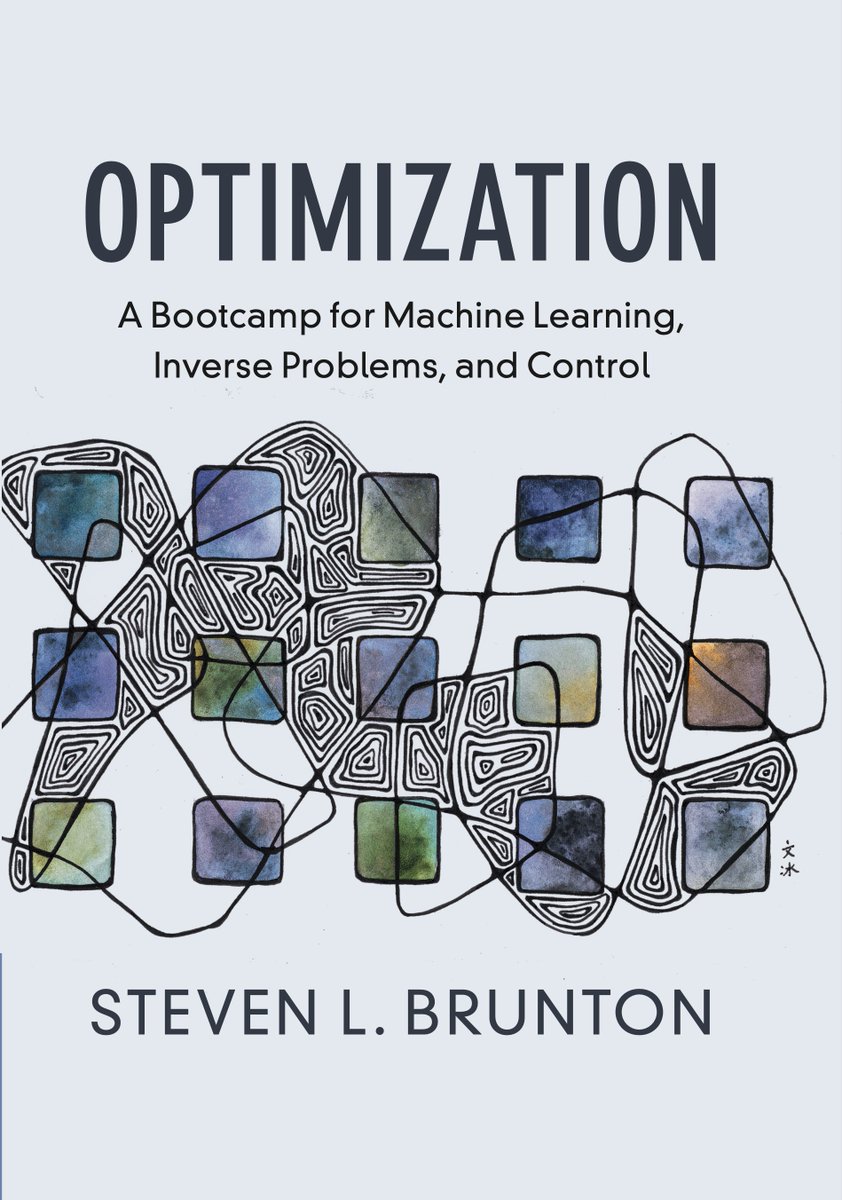
I Wrote a New Book!!!
Optimization: A Bootcamp for Machine Learning, Inverse Problems, and Control
Pre-Order Now (July 31)
amazon.com/Optimization-B…
Coming Soon:
* Free PDF on website
* YouTube Videos for entire book
* Python code on GitHub

English
musyalyusya retweetledi

AI/ML ccf-a 批发 “焚决”:
1. 进一个有 paper pipeline 的大组 / 跟一个 idea 多到要批发的 young AP 读他的前一两届学生
2. 记住 idea 一定要优先占坑,能早 arxiv 就早 arxiv
3. 你的目标是三小会(AAAI、ACL、MM),你的转投区间应该是 ACL -> EMNLP/MM -> AAAI -> ACL,注意 rebt 稍有不好就直接转投,这样你极限一年可以 rebt 四次,A 门是你永远的家
4. 凭借关系去蹭卡,做的方向要么新、要么别卷,不要做 CV,多找师兄师姐蹭共一第二/三
5. 脸皮一定要厚,要懂得炒作
6. 如果以上你在某一步断掉了,你可以去投 CHI
根据个人体质不同和资源不同,你能在 3 个月内水一篇烂大街的 ccfa 为合格条件
“焚决”纯代表个人意见,仅供参考
Kagurazaka Sora@MisakaMou
有个小朋友问我 我想说既然是“焚决”,不也是一步一步进化的嘛 ccfa怎么感觉跟大白菜一样 你说发top,哪怕是trans我也有经验啊 这个ccfa感觉隔行如隔山了 一年多碰个明白点老师加上投稿周期短一点我觉得也挺难 ccfa真的有这么好发嘛(小声逼逼 (有一阵子干的东西跟CS沾点边,发过trans,但真不懂ccfa)
中文
musyalyusya retweetledi

Our book on Generative AI and Stochastic Thermodynamics can be pre-ordered with a 20% discount until July 31 2027. (All proceeds from the authors will be donated to the African Institute for Mathematical Sciences).

English
musyalyusya retweetledi

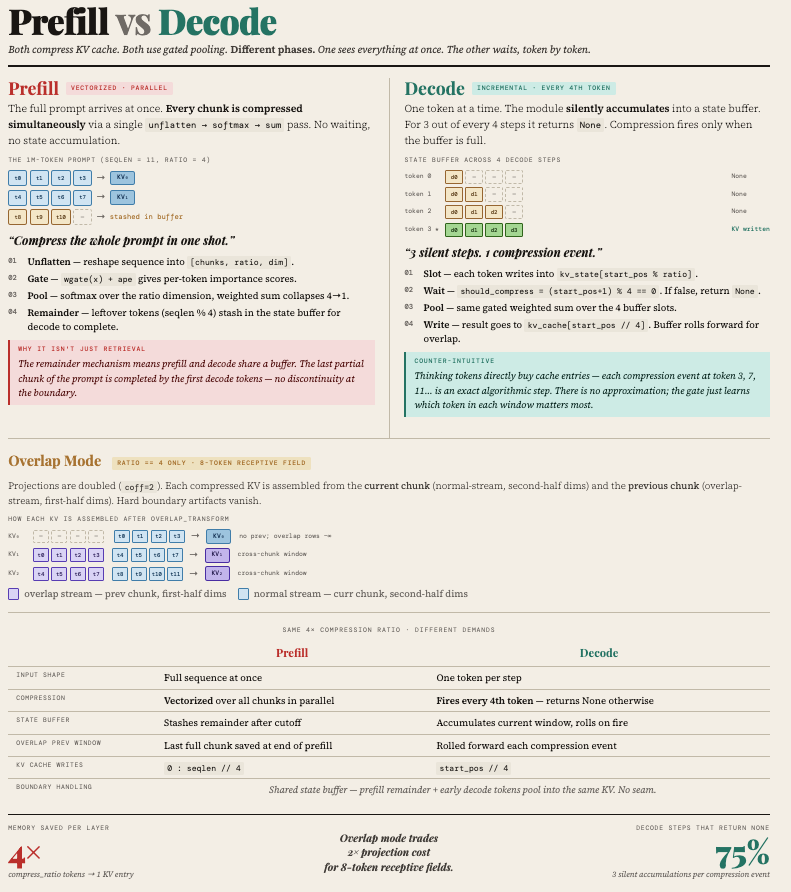
How I read papers now.
This is an explainer by Claude about the new Compressed Sparse Attention v4 uses to compress the KV cache.
wh@nrehiew_
Now reading:
English
musyalyusya retweetledi

wrote a guide on getting compute grants as a student, something I wish I did more at the beginning of my PhD. It's honestly one of the highest ROI things you can do as a student (we've gotten 100k+ gpu hrs for roughly 2 weeks of work writing).
nightingal3.github.io/blog/2026/04/1…
English
musyalyusya retweetledi

我分享下我的优化论文实战经验:
1. 一定要用 Claude 模型,可以是 Claude Sonnet 4.6 但是最好是 Claude Opus 4.6
2. 安装这个 skill: github.com/EvoSc…
/paper-review 能帮你把文章用拒稿专家角色给出审核意见
/paper-writing 在给出审核意见之后,进行学术性文风修改
3. 不要想着一次能修改完整篇论文,LLM 目前最大的短板是上下文长度问题。 一定要把你的文章先让 AI 从 word 转为 markdown,并按章节划分储存。
4. 新建 2 个 文件夹:「待修改」和「已修改」
5. 每次一个章节的启动提示词:
「把我待修改/绪论.md 第一步帮我用 /paper-review/来review ,将 review 报告持久化,第二步再用 /paper-writing 来修改,最后输出到"已修改"文件夹下。」
中文
We in @mbzuai (cs dep) building kdrift.dev. It’s agentic Linux kernel driver co-evolution. I would deeply appreciate any thoughts on this
English
musyalyusya retweetledi

Learning Quantised Structure-Preserving Motion Representations for Dance Fingerprinting
Arina Kharlamova, Bowei He, Chen Ma, Xue Liu
arxiv.org/abs/2604.00927 [𝚌𝚜.𝙲𝚅 𝚌𝚜.𝙰𝙸]

English
musyalyusya retweetledi

LLM Knowledge Bases
Something I'm finding very useful recently: using LLMs to build personal knowledge bases for various topics of research interest. In this way, a large fraction of my recent token throughput is going less into manipulating code, and more into manipulating knowledge (stored as markdown and images). The latest LLMs are quite good at it. So:
Data ingest:
I index source documents (articles, papers, repos, datasets, images, etc.) into a raw/ directory, then I use an LLM to incrementally "compile" a wiki, which is just a collection of .md files in a directory structure. The wiki includes summaries of all the data in raw/, backlinks, and then it categorizes data into concepts, writes articles for them, and links them all. To convert web articles into .md files I like to use the Obsidian Web Clipper extension, and then I also use a hotkey to download all the related images to local so that my LLM can easily reference them.
IDE:
I use Obsidian as the IDE "frontend" where I can view the raw data, the the compiled wiki, and the derived visualizations. Important to note that the LLM writes and maintains all of the data of the wiki, I rarely touch it directly. I've played with a few Obsidian plugins to render and view data in other ways (e.g. Marp for slides).
Q&A:
Where things get interesting is that once your wiki is big enough (e.g. mine on some recent research is ~100 articles and ~400K words), you can ask your LLM agent all kinds of complex questions against the wiki, and it will go off, research the answers, etc. I thought I had to reach for fancy RAG, but the LLM has been pretty good about auto-maintaining index files and brief summaries of all the documents and it reads all the important related data fairly easily at this ~small scale.
Output:
Instead of getting answers in text/terminal, I like to have it render markdown files for me, or slide shows (Marp format), or matplotlib images, all of which I then view again in Obsidian. You can imagine many other visual output formats depending on the query. Often, I end up "filing" the outputs back into the wiki to enhance it for further queries. So my own explorations and queries always "add up" in the knowledge base.
Linting:
I've run some LLM "health checks" over the wiki to e.g. find inconsistent data, impute missing data (with web searchers), find interesting connections for new article candidates, etc., to incrementally clean up the wiki and enhance its overall data integrity. The LLMs are quite good at suggesting further questions to ask and look into.
Extra tools:
I find myself developing additional tools to process the data, e.g. I vibe coded a small and naive search engine over the wiki, which I both use directly (in a web ui), but more often I want to hand it off to an LLM via CLI as a tool for larger queries.
Further explorations:
As the repo grows, the natural desire is to also think about synthetic data generation + finetuning to have your LLM "know" the data in its weights instead of just context windows.
TLDR: raw data from a given number of sources is collected, then compiled by an LLM into a .md wiki, then operated on by various CLIs by the LLM to do Q&A and to incrementally enhance the wiki, and all of it viewable in Obsidian. You rarely ever write or edit the wiki manually, it's the domain of the LLM. I think there is room here for an incredible new product instead of a hacky collection of scripts.
English

over ~1 million sites indexed and more still being crawled. Try it at: sitescroll.fun
English
I built a site that lets you doomscroll personal websites:
English
musyalyusya retweetledi

Introducing Hyperagents: an AI system that not only improves at solving tasks, but also improves how it improves itself.
The Darwin Gödel Machine (DGM) demonstrated that open-ended self-improvement is possible by iteratively generating and evaluating improved agents, yet it relies on a key assumption: that improvements in task performance (e.g., coding ability) translate into improvements in the self-improvement process itself. This alignment holds in coding, where both evaluation and modification are expressed in the same domain, but breaks down more generally. As a result, prior systems remain constrained by fixed, handcrafted meta-level procedures that do not themselves evolve.
We introduce Hyperagents – self-referential agents that can modify both their task-solving behavior and the process that generates future improvements. This enables what we call metacognitive self-modification: learning not just to perform better, but to improve at improving.
We instantiate this framework as DGM-Hyperagents (DGM-H), an extension of the DGM in which both task-solving behavior and the self-improvement procedure are editable and subject to evolution. Across diverse domains (coding, paper review, robotics reward design, and Olympiad-level math solution grading), hyperagents enable continuous performance improvements over time and outperform baselines without self-improvement or open-ended exploration, as well as prior self-improving systems (including DGM). DGM-H also improves the process by which new agents are generated (e.g. persistent memory, performance tracking), and these meta-level improvements transfer across domains and accumulate across runs.
This work was done during my internship at Meta (@AIatMeta), in collaboration with Bingchen Zhao (@BingchenZhao), Wannan Yang (@winnieyangwn), Jakob Foerster (@j_foerst), Jeff Clune (@jeffclune), Minqi Jiang (@MinqiJiang), Sam Devlin (@smdvln), and Tatiana Shavrina (@rybolos).

English
musyalyusya retweetledi

you can now get the research app for macOS, windows and linux right from the homepage ☁️ un.ms/research
English
musyalyusya retweetledi